

คู่มือนี้จัดทำขึ้นสำหรับผู้ที่มีประสบการณ์กับแผนภาพไฟฟ้าและเคยพบคำย่อ N/O หรือ NO เมื่ออ่านแผ่นข้อมูลรีเลย์หรือการตรวจสอบขั้วต่อบนคอนแทคเตอร์ N/O เป็นหนึ่งในคำย่อที่ใช้กันอย่างแพร่หลายในวิศวกรรมไฟฟ้าในปัจจุบัน รวมถึงเป็นส่วนสำคัญในการสร้างระบบควบคุม รีเลย์ คอนแทคเตอร์ สวิตช์ และระบบความปลอดภัย บทความนี้มีจุดมุ่งหมายเพื่ออธิบายความหมายของคำว่า normally open วิธีการแทนคำย่อ N/O ในแผนภาพวงจร ผลิตภัณฑ์ใดบ้างที่ใช้ขั้ว N/O ความแตกต่างระหว่าง N/O และ N/C (normally closed) และวิธีการใช้งานและตรวจสอบขั้ว N/O อย่างถูกต้อง.
คำตอบ: N/O เป็นคำย่อที่ใช้กันอย่างแพร่หลายในศัพท์ทางไฟฟ้าและหมายถึงคำว่า normally open คำนี้ใช้เพื่อบ่งชี้สวิตช์ที่อยู่ในสภาพเปิดในสถานะที่ไม่ได้ทำงาน จึงไม่มีการไหลของกระแสไฟฟ้า แผนภาพวงจรที่สอดคล้องจะแสดงด้วยเส้นที่มีช่องว่างคล้ายประตูที่เปิดอยู่ สถานะของสวิตช์นี้จะเปลี่ยนทันทีที่รีเลย์ทำงาน (เช่น การกระตุ้นขดลวด กดปุ่ม หรือยกลูกลอย) ตำแหน่งตรงข้ามกับ N/O คือ N/C (normally closed) ซึ่งหมายความว่าสวิตช์ N/C จะไม่ทำงานเว้นแต่จำเป็น: จะปิดอยู่จนกว่าจะมีการกระทำ ขั้ว N/O ใช้ในกรณีที่ต้องการให้บางอย่างทำงานหรือแจ้งเตือน ขั้วสวิตช์ N/O มักถูกกระตุ้นผ่านขั้ว N/C ด้วยเหตุผลด้านความปลอดภัย.

“normally open” หมายความว่าอย่างไร?
“normally open” อธิบายสถานะของขั้วไฟฟ้าหรือสวิตช์กลไกเมื่ออยู่ในสภาพพัก คำว่า “normally” หมายถึงช่วงเวลาก่อนที่สวิตช์จะถูกกระตุ้น ซึ่งหมายความว่าไม่มีใครกดปุ่ม ขดลวดสวิตช์ไม่ได้รับพลังงาน และไม่มีน้ำถึงระดับที่กำหนด คำว่า “open” หมายความว่าสวิตช์เปิดอยู่ ซึ่งหมายถึงมีช่องว่างอากาศระหว่างคอนแทคเตอร์ หรือกล่าวอีกนัยหนึ่งคือวงจรถูกตัดขาดและกระแสไฟฟ้าไม่ไหล.
แบบจำลองที่ง่ายที่สุดในการเข้าใจแนวคิดนี้คือการคิดว่าสวิตช์ N/O เหมือนประตูที่เปิดอยู่โดยค่าเริ่มต้นและอนุญาตให้คนผ่านได้เฉพาะเมื่อถูกดันเปิดไว้ เมื่อปล่อยปุ่ม ประตูจะปิดและวงจรจะถูกตัดอีกครั้ง วลี “สปริงกลับ” อธิบายพฤติกรรมนี้ ซึ่งเข้าใจได้ไม่ว่าจะใช้กับอุปกรณ์ประเภทใด – ไม่ว่าจะเป็นรีเลย์ คอนแทคเตอร์ หรือปุ่มในเครื่องซักผ้าของคุณ.
นี่คือบันทึกสั้น ๆ สำหรับผู้เริ่มต้น ผู้คนมักพูดว่าสวิตช์สามารถอยู่ในสถานะ “เปิด” หรือ “ปิด” แต่ในทางวิศวกรรมจะใช้คำว่า “open” และ “closed” ซึ่งอธิบายสถานการณ์เมื่อไม่มีเส้นทางและกระแสถูกตัดขาด และเมื่อเส้นทางสมบูรณ์ตามลำดับ.
N/O หมายความว่าอย่างไรในแผนภาพวงจร?
ในแผนภาพวงจร โดยเฉพาะแผนภาพบันไดที่ใช้ในระบบอัตโนมัติอุตสาหกรรม ขั้ว N/O และ N/C มีสัญลักษณ์มาตรฐานของตนเองที่ช่วยให้สามารถอ่านแผนภาพโดยไม่ต้องมีข้อความประกอบ.
| สัญลักษณ์ | ความหมาย | สถานะพัก |
|---|---|---|
| ช่องว่างในเส้น: —| |— | ขั้ว normally open (N/O) | เปิด — ไม่มีการไหลของกระแสไฟฟ้าจนกว่าจะถูกกระตุ้น |
| เส้นทแยงผ่านเส้น: —|/|— | ปกติปิด (N/C) คอนแทค | ปิด — กระแสไฟฟ้าไหลจนกว่าจะถูกกระตุ้น |
สัญลักษณ์ของ N/O คือเส้นที่มีช่องว่างตรงกลาง เช่นเดียวกับสะพานเปิด เมื่อเกิดเหตุการณ์ควบคุม (ขดลวดของรีเลย์บนรันก์ได้รับพลังงาน) ช่องว่างจะหยุดเป็นช่องว่างและกระแสไฟฟ้าจะเริ่มไหลตามเส้นนี้ไปยังอุปกรณ์ที่เส้นนี้จ่าย เช่น คอนแทคเตอร์มอเตอร์ ไฟสัญญาณ เป็นต้น ในลอจิกบันได คอนแทคแต่ละตัวจะมีชื่อที่สะท้อนถึงองค์ประกอบควบคุมที่ติดป้ายว่า “CR1” สำหรับรีเลย์ควบคุม 1 แต่รีเลย์ควบคุมเดียวกันสามารถมีคอนแทคหลายตัวที่แสดงในแผนภาพ บางตัวเป็น N/O และบางตัวเป็น N/C.
การอ่านภาพวาดเหล่านี้เป็นงานประจำวันของวิศวกรที่ออกแบบระบบควบคุมอุตสาหกรรม และแนวคิดพื้นฐาน — คอนแทคทำงานอย่างไร ขดลวดและคอนแทคล็อกกันอย่างไร แผนภาพกลายเป็นแผงควบคุมที่ใช้งานได้อย่างไร — เป็นแนวคิดเดียวกันที่ขับเคลื่อนบริการวิศวกรรมไฟฟ้าที่ใช้ในโครงการผลิตและก่อสร้าง ซึ่งเราศึกษาใน คู่มือแก้ปัญหาวิศวกรรมไฟฟ้าสำหรับผลิตภัณฑ์อุตสาหกรรม.
N/O หมายถึงอะไรในวิศวกรรมไฟฟ้า?
ในสาขาวิศวกรรมไฟฟ้า คำว่า N/O หมายถึงกลุ่มพฤติกรรมการควบคุมทั้งหมด เมื่อวิศวกรกล่าวว่ามีรีเลย์ที่มีคอนแทค N/O พวกเขาหมายถึงคอนแทคเอาต์พุตของรีเลย์อยู่ในสถานะ ‘เปิด’ ขณะที่กระแสไฟฟ้าปิด และปิดเมื่อมีกระแสไฟฟ้า คำว่า คอนแทค หมายถึงด้าน ‘เอาต์พุต’ ของรีเลย์ ส่วนคำว่า ขดลวด หมายถึงด้าน ‘อินพุต’ แนวคิดของ ‘อินพุตควบคุมเอาต์พุต’ ซึ่งให้การแยกทางไฟฟ้าระหว่างการควบคุมสองส่วน เป็นแก่นของลอจิกรีเลย์และระบบอัตโนมัติ.
ต้องกล่าวถึงการใช้งานจริงของแนวคิดนี้เพราะมีผลต่อการตัดสินใจออกแบบ:
- คอนแทค N/O เป็นตัวเลือกอันดับหนึ่งสำหรับ “ทำบางอย่างตามคำสั่ง” เช่น สตาร์ทมอเตอร์ เปิดโซลินอยด์ ส่งสัญญาณเตือน และล็อกวงจร.
- คอนแทค N/C เป็นตัวเลือกแรกสำหรับการทำงานของกระบวนการ เช่น ให้พัดลมทำงานจนกว่าสวิตช์อุณหภูมิจะเปิด ให้คนใช้เครื่องจักรจนกว่าจะถอดการ์ด และเปิดใช้งานสัญญาณเตือนจนกว่าระบบจะทำงานปกติ.
- ในกรณีของลอจิกความปลอดภัย (fail-safe) ต้องใช้วงจร N/C หากวงจรความปลอดภัยเชื่อมต่อผ่าน N/C เมื่อสายไฟขาด ขดลวดจะหยุดทำงานและเครื่องจักรจะหยุด ระบบจะปลอดภัย สายไฟ N/O จะนำไปสู่สถานการณ์เสี่ยงเมื่อสายไฟขาดดูเหมือนไม่ได้รับคำสั่งและทำให้เครื่องจักรทำงาน.
เมื่อทำงานกับวงจรเหล่านี้ บริบทของแรงดันไฟฟ้ามีความสำคัญ วงจรควบคุมในแผงไฟฟ้าเชิงพาณิชย์และอุตสาหกรรมในอเมริกาเหนือมักทำงานที่ 120 V AC ซึ่งได้จากเบรกเกอร์ขั้วเดียว ขณะที่ระบบควบคุมและจ่ายไฟสามเฟสที่หนักกว่าจะทำงานที่แรงดันสูงกว่า — และความแตกต่างระหว่างสายควบคุมแรงดันต่ำกับสายจ่ายไฟแรงดันสูงเป็นสิ่งที่ช่างเทคนิคทุกคนต้องเคารพก่อนสัมผัสแผง ตามที่อธิบายไว้ใน คู่มือแรงดันสูงกับแรงดันต่ำ.

ผลิตภัณฑ์ประเภทใดที่ใช้ N/O contacts?
Normally open contacts มีอยู่ในอุปกรณ์ควบคุมอิเล็กทรอนิกส์ส่วนใหญ่ที่เคยเห็นมาก่อน นี่คือสามประเภทหลักของอุปกรณ์รวมถึงตัวกระตุ้นหลายประเภท.
| อุปกรณ์ | อะไรเป็นตัวกระตุ้น N/O contact | การใช้งาน N/O ทั่วไป |
|---|---|---|
| รีเลย์ | ขดลวดที่ได้รับพลังงาน | การสลับสัญญาณควบคุม; วงจรล็อกอิน |
| คอนแทคเตอร์ | ขดลวดที่ได้รับพลังงาน | การสลับมอเตอร์และโหลดความร้อนตามคำสั่ง |
| ปุ่มกด (เริ่ม) | การกดด้วยนิ้ว | ปุ่มเริ่มบนเครื่องจักร, ประตู, กระดิ่ง |
| สวิตช์จำกัด | คันกลไกหรือโรลเลอร์ที่ถูกกระแทกโดยชิ้นส่วนที่เคลื่อนที่ | การตรวจจับจุดสิ้นสุดการเดินทาง, การตรวจจับการมีอยู่ |
| สวิตช์ลูกลอย | ระดับของเหลวที่เพิ่มขึ้นหรือลดลง | การเริ่มปั๊มเมื่อถังน้ำต่ำ / สัญญาณเตือนระดับสูง |
| เทอร์โมสตัท / สวิตช์อุณหภูมิ | การเปลี่ยนแปลงอุณหภูมิ | การควบคุมเปิด/ปิดฮีตเตอร์หรือพัดลม |
| สวิตช์แรงดัน | แรงดันที่เพิ่มขึ้นหรือลดลง | การเริ่ม/หยุดคอมเพรสเซอร์, สัญญาณเตือนแรงดันต่ำ |
| เอาต์พุตเซ็นเซอร์ระยะใกล้ | การตรวจจับวัตถุที่เข้าสู่สนามตรวจจับ | Counting, position detection in automation |
| Auxiliary contact on a breaker or contactor | The main device operating | Status feedback: “breaker is on,” “contactor pulled in” |
| Doorbell push button | การกดด้วยนิ้ว | The everyday N/O device everyone knows |
There are two points are worth mentioning because they demonstrate how N/O concept was used. First, auxiliary contacts of circuit breakers indicate to the control system the condition of the circuit breaker. The auxiliary contact either closes or opens as the breaker trips and sends either a signal to the PLC or alarm.This is why choosing the right protection family matters in industrial panels, and our RCCB vs RCBO guide explains the devices whose internal states those contacts report.
Another important point is that the market of relays, contactors, and circuit breakers is rather global. When a project mentions that certified controls have to be used, it means that the standards of certification provide the guarantee of an installation.For breakers used in the same panels as your control circuits, the UL 489 standard is the North American benchmark, and our คู่มือเบรกเกอร์ UL 489 explains what the certification actually guarantees.
In everyday language, we use words “on/off”, the same way as in household circuits, where switches are either mechanically driven on/off or turning the switch on or off with your finger.If you want to see how this terminology maps onto real wiring devices in the home, the switch-type primer from wiring-device manufacturer igotoele walks through the everyday hardware with the same N/O and N/C logic in mind: different kinds of electrical switches explained.

N/O vs N/C: what is the difference?
The distinction between N/O and N/C is simply based on which state of the switch is at rest when nothing is happening:
| Property | N/O (Normally Open) | N/C (Normally Closed) |
|---|---|---|
| Resting state | Open — no current flows | Closed — current flows |
| When actuated | Closes — current starts to flow | Opens — current stops |
| Drawing symbol | Gap in the line | Line with a slash |
| Mental model | Door held shut only while pressed | Door held open only while pressed |
| การใช้งานทั่วไป | Start signals, commands, “on” functions | Stop circuits, guards, alarms, interlocks |
| Failure behaviour if wiring breaks | Circuit stays off — may fail to start | Circuit opens — fails to a safe stop |
Many devices have both N/O and N/C contacts. For example, a relay can have a changeover contact in which during the resting state the moving blade contacts one fixed terminal at the N/C side and when it is energized at the N/O side. Because of the single-pole double-throw arrangement, relay sockets are constructed with terminals C, N/O, and N/C. When the control circuit is created, engineers select the appropriate side for use based on their logical requirements, and they frequently use both sides of the same device in different rungs.
It should be noted that for anything where off must be a default condition, whether it is emergency stop, guarding interlocks, over-temperature trips, and low-level cutouts, engineers use N/C contact method so that the machine stops in case of wire breakage or when the system is de-energized. If you are designing a circuit and think of using N/O contact in safety applications, better stop and think about what will happen in case the wire going there is cut.
How do you test an N/O contact?
It is quite straightforward to check the condition of an N/O contact with the help of a multimeter, set to measure continuity (or resistance), as this helps to determine both the status of the contact when not engaged and its performance at the moment:
- Disconnect power supply from the network, and ensure that the contact is not connected to a live circuit.
- Put one probe on each terminal of a contact. The N/O contact is supposed to not show continuity (infinite resistance) in its resting position, meaning that the contact terminals are separated.
- Activate the device. Press the necessary button, or apply the rated voltage to the relay coil, activate the float, or engage the limit lever. The multimeter should beep once again (showing very low resistance), confirming that the contact is closed.
- Release the action, and the multimeter should again not indicate contact continuity.
If the N/O contact indicates continuity when not engaged, or does not show continuity when activated, then it is in a welded, burned-out, or jammed position, and it needs to be replaced instead of repaired. The same test on the N/C contacts will give opposite results: continuity when not engaged and open circuit when activated.
N/O in other terms: what else is it called?
The concept of N/O is common across several industries; therefore, you will encounter the same concept in different forms:
- Form A contact — This is a relay section term that denotes N/O contact of a relay.
- Form B contact — This is a term used for N/C contacts.
- Form C contact — This refers to changeover (SPDT) contacts.
- SPST-NO switch — It tells us about the Single Pole Single Throw relay of a normally open circuit.
- Make contact — An old term used in control systems that refer to N/O contact as “make circuit.”
- NO / NC printed on devices — We often see the ‘NO/ NC’ stamped to indicate that electrical devices contain either N/O or N/C contacts.
What you need to keep in mind is that N/O represents a contact and not a device. A doorbell is not simply called as “N/O device”, as it is more specifically defined as a device consisting of an N/O contact. However, you can describe “dry contact” as an exception to this.
คำถามที่พบบ่อย
What does “normally open” mean?
In technical use, normally open, or N/O, describes a switch or contact that is perpetually in the open state unless triggered to close. It is used in reference to electrical devices, which allows their current to flow through the circuit only when a switch is activated, with the switch reverting back to the open position when released from a position of operation. Normally open contacts may be found along with normally closed contacts which are always active unless switched off or released by the switch mechanism.
What is NO in electrical terms?
NO stands for normally open. In layman’s terms, it defines a normally open contact that always exists in the unactuated position which means that the circuit can only get completed when triggered. Thus, if an electrician comes across a terminal labelled NO he realizes that the terminal connects to a switch that closes when the system is in operation.
What is a common terminal?
In the simplest manner of describing, common terminal, abbreviated as COM or C, indicates a terminal that connects with normally open and normally closed contacts of a changeover switch. By changing the energised state of the coil that activates the normal contact, a common terminal either connects the circuit with normally open contacts when electricity is on or normally closed contacts when electricity is off.
What does contact type normally closed mean?
Normally closed, abbreviated as N/C, means that the electrical circuit is complete and the electricity is flowing through current lines unless interrupted. N/C contacts are used in such devices as stop buttons, interlocks and alarms because the system is active as long as there is electricity passing through wires.
อ้างอิง
- Eaton — Industrial Control and Relay Fundamentals
- Rockwell Automation — Ladder Logic and Contact Basics
- Omron — Technical Guide: Relay and Switch Contacts
สรุป
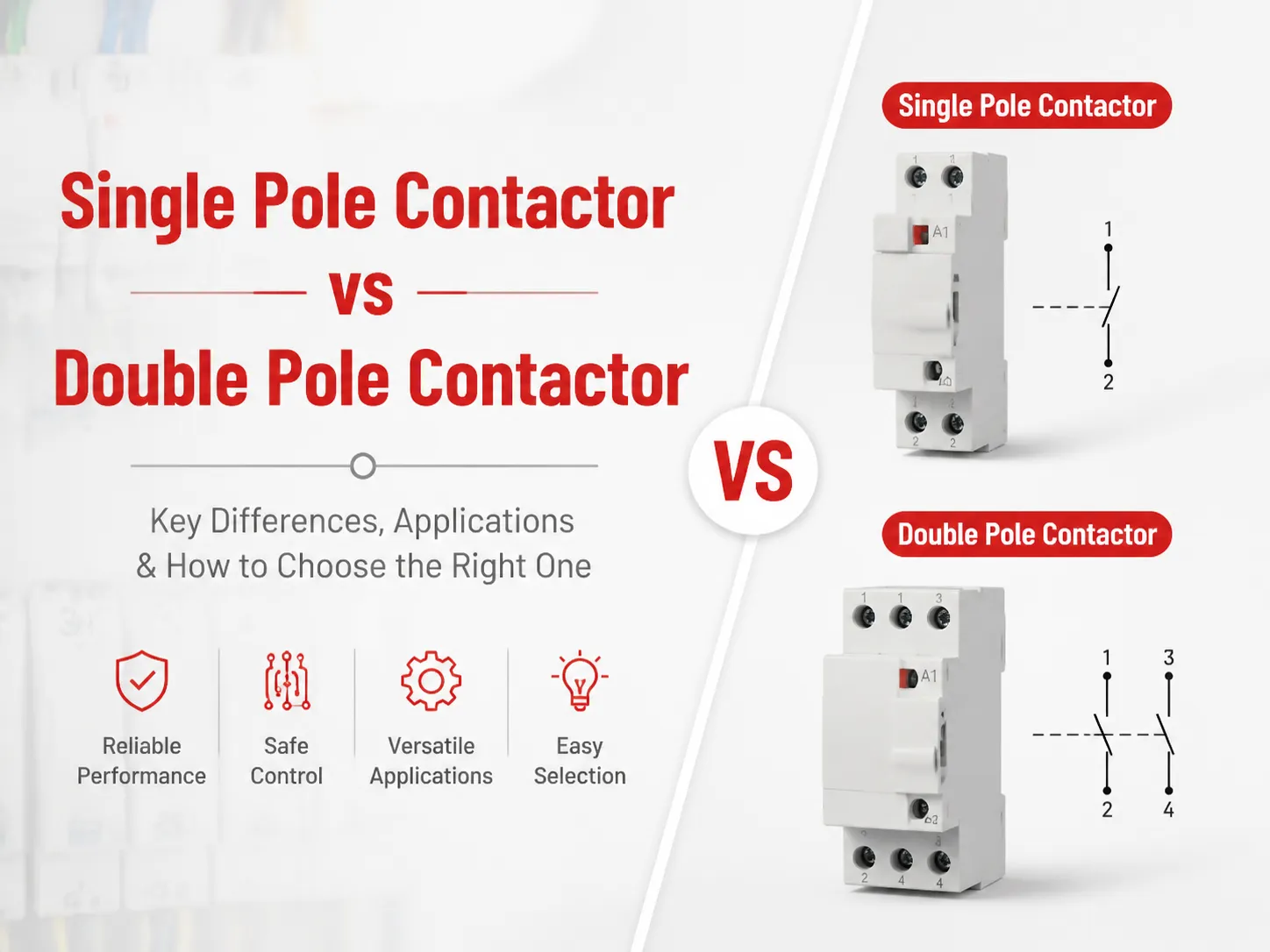
N/O is one of those small abbreviations that explain a lot about how electrical control works. It refers to a contact that usually remains open but closes when needed. This may refer to the start button you press, the relay contact, the float switch that activates a pump when the tank is empty, and the auxiliary contact that signals that the circuit breaker is tripped. It is illustrated in diagrams as a small gap in the line, and in logic terms, it refers to “make something happen,” which is the opposite of the abbreviation N/C, which usually remains closed and opens when needed. N/O contacts can be tested for continuity, while it is better to remember their different technical names (Form A, SPST-NO). The main piece of advice is not to forget the rule that when there are any risks of injury or damage, the circuit should be made through the N/C contacts, rather than using those through N/O contacts. It should be taken into account that control power and power needed for the operation process require different types of protection. The information about the use of a single-pole breaker versus double-pole breaker can be found in the relevant section of this website.