
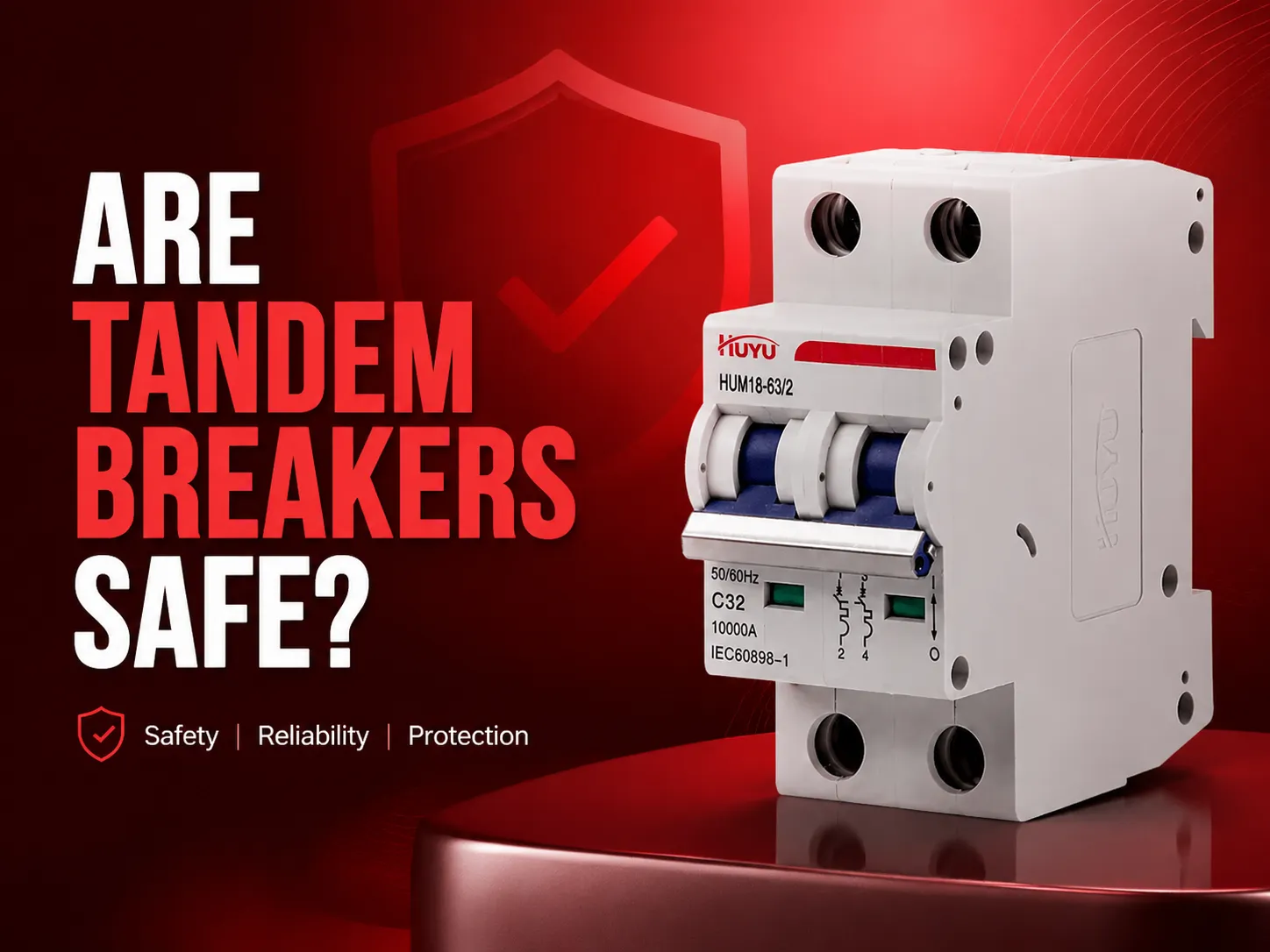
When there are no more physical slots on a homeowner’s electrical service panel and an electrician suggests using a tandem breaker (a device that fits two independent circuits into one physical slot), the most common question is “Are tandem breakers safe?” The answer is “Yes” – as long as three specific criteria are met: (1) the panel must be listed and labelled for tandem breakers; (2) the tandem must be installed in a location that is designated as compatible for use with tandem breakers per the panel label; and (3) the maximum combined load of all circuits connected to the panels’ bus bars cannot exceed the bus bar capacity. If any of these three criteria is violated, then the use of a tandem breaker moves from being an approved means of saving space to becoming a fire hazard. This article will explain what a tandem breaker is, how to use them properly, and what warning signs indicate that a panel or a tandem breaker has been overloaded.
What a Tandem Breaker Is and How It Differs from a Standard Breaker
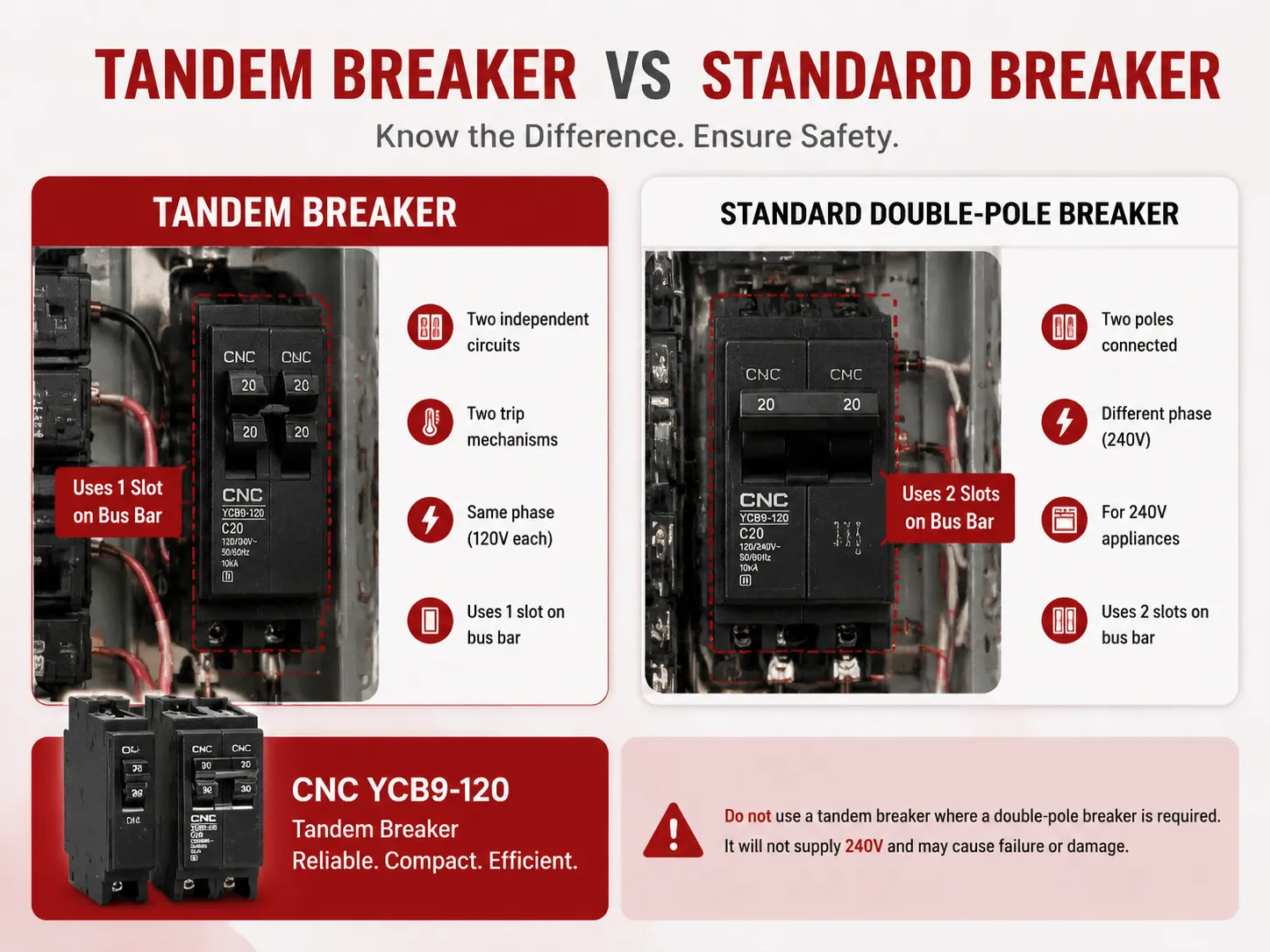
A tandem or double pole (though often mistakenly referred to by this name) circuit breaker is a device containing two Single Pole Circuit Breakers in one body, so it occupies one slot on the bus bar; however, it provides two separate twenty-eight (28) volt (120V) circuits. The tandem breaker has two (2) handles for operation of the two independent circuits, two (2) thermal magnetic circuit breaker trip mechanisms, and the two circuits are completely independent electrically so that either circuit can trip without affecting the other circuit. A Standard circuit breaker is one (1) pole circuit breaker that will occupy one (1) full slot on the bus bar and will control one (1) circuit.
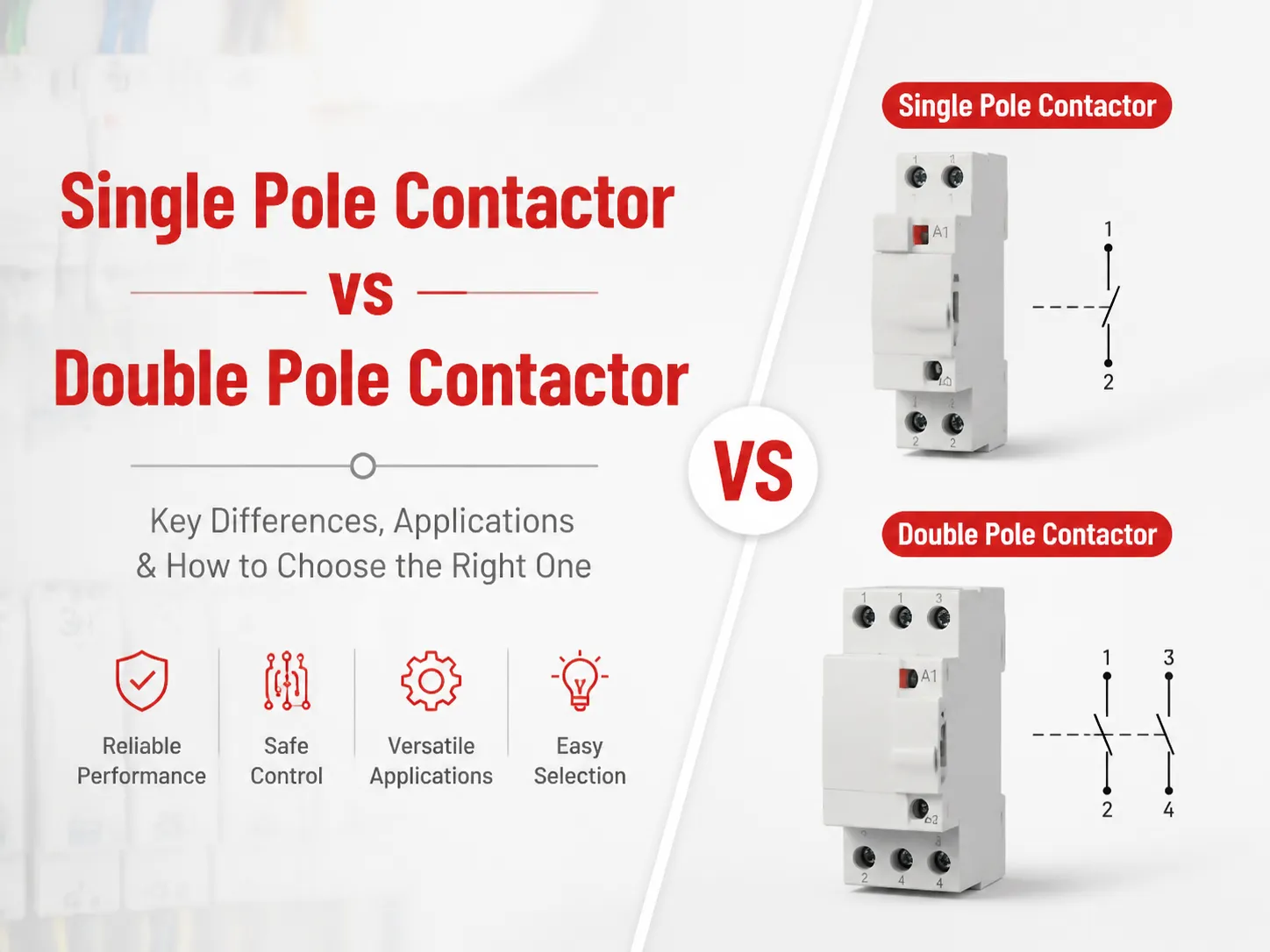
There is one major distinction between a tandem breaker and a double pole breaker: All two poles (or “sides”) of a tandem breaker connect to only a single bus bar stab, meaning they are part of the same electrical phase and have zero volts between them. As a result, you cannot use a tandem breaker to create 240 volts. A true double-pole breaker can create 240 volts because it takes up two adjacent slots in the panel and connects to both of the bus bar stabs, allowing 240 volts between the two poles.
It is common for people to confuse the terms “tandem” and “double-pole.” However, this difference is significant: If you install a tandem where a double-pole is needed, it will not supply power to a 240-volt appliance; and if you force a double-pole into a tandem-only location, it can damage the bus bar.
When Tandem Breakers Are Safe: The Three Conditions
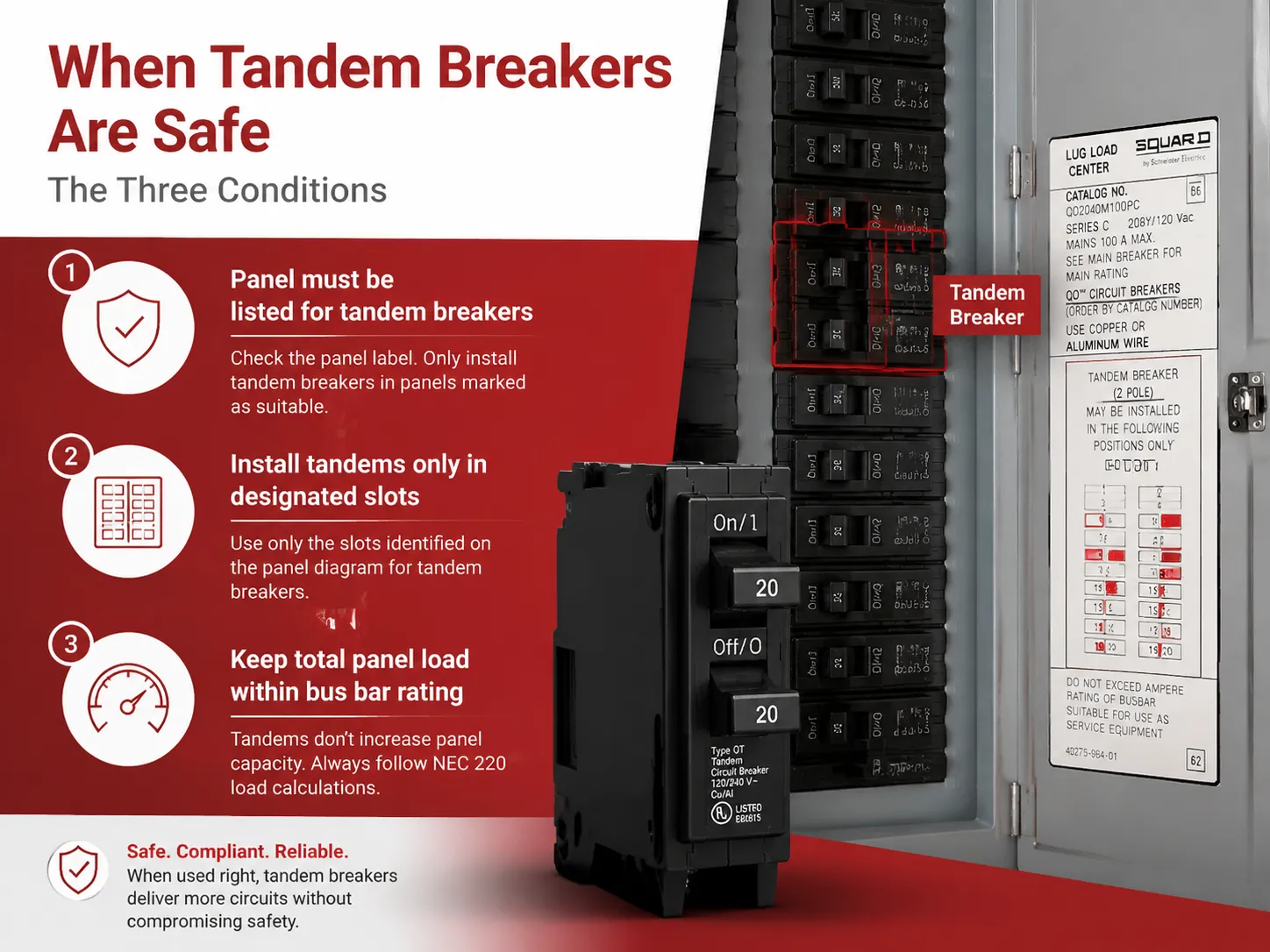
A tandem circuit breaker has the same UL 489 testing and listing as a full-size breaker and can be installed safely and in accordance with codes. The real question regarding safety of a tandem breaker is not its safety in isolation, but whether the panelboard in which it is installed was designed to accommodate the increased electrical and thermal load created by the tandem breaker.
1. The panel must be listed for tandem breakers. The panel label – which is located inside the electrical panel door – is considered the definitive source of information pertaining to the use of the circuit breaker types approved for use in that panel and also includes information on the number of slots that may be used for the installation of tandem circuit breakers. If a panel does not indicate that it is rated for the installation of tandem circuit breakers, then the panel will have bus bar stabs that were not designed to support two loaded circuits from a single connection point, and therefore installing a tandem circuit breaker in a non-rated panel is both a code violation and creates a potential fire hazard.
2. Tandems must be installed only in designated slots. Not all slots in a panel that accepts tandems are compatible with them. The panel labels will have a diagram identifying if a stab is able to accept both types of breakers. Forcing a tandem breaker into a non-tandem breaker slot can put an overload on the stab that could create localized heating causing deterioration of the bus bar or breaker’s connection jaw.
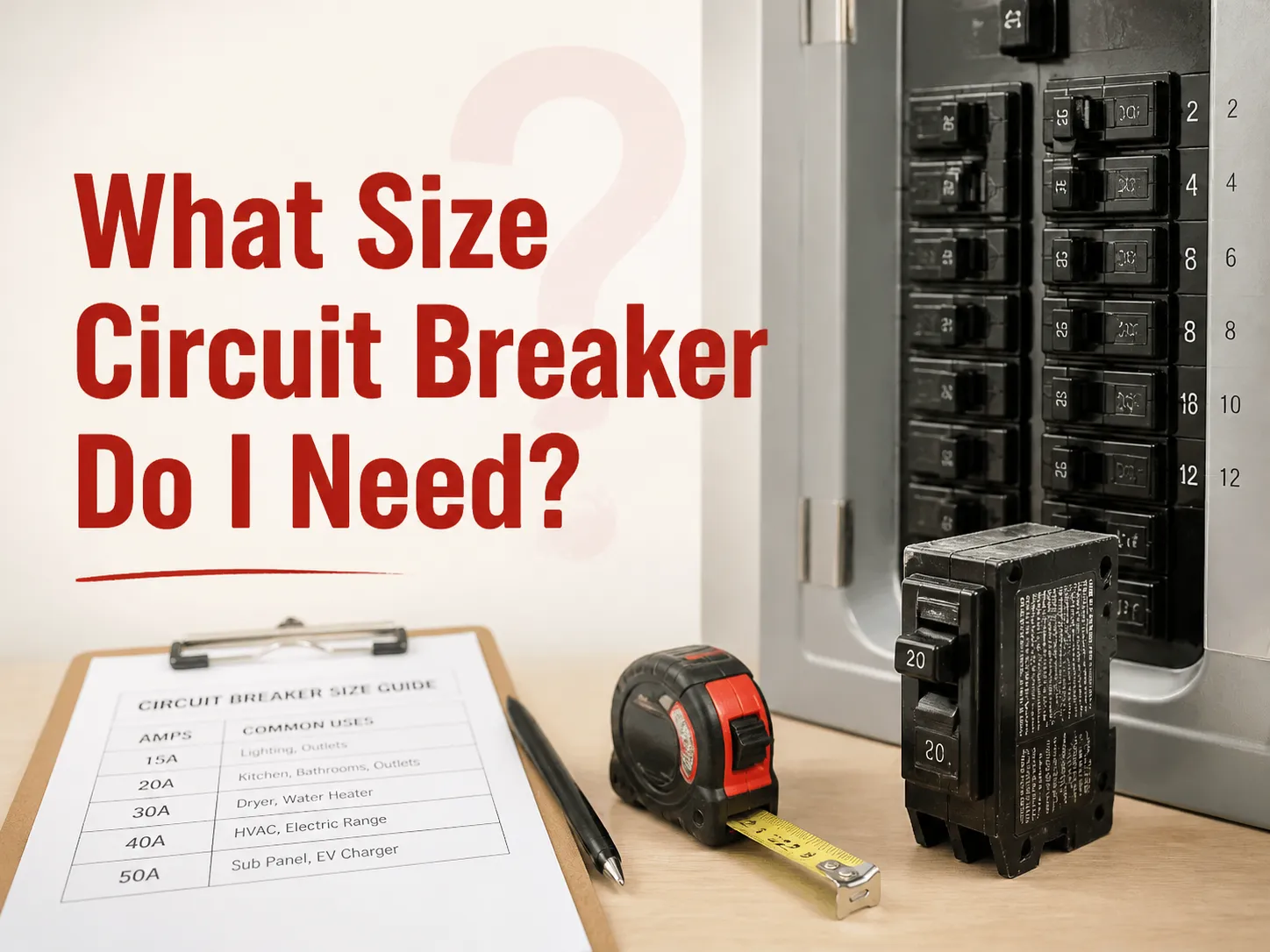
3. The total panel load must remain within the bus bar rating. While adding tandem breakers to a breaker panel does expand the number of circuits that can be fed by the panel, it does not provide additional maximum capacity in terms of total amperage. For example, if there are twenty tandem breakers installed in a 100-amp panel, the maximum (theoretical) number of circuits that could be provided is 40; however, the bus bar would still be rated at 100 amps. Additionally, the load calculation (NEC 220) for the panel must be met, and any panel that exceeds its rated capacity will overheat no matter how many of its breakers are standard or of the tandem type. For help with that load calculation, our guide on what size circuit breaker you need covers the NEC‑based method.
What the NEC Says About Tandem Breakers
The National Electrical Code (NFPA 70) does not prohibit tandem breakers. However, NEC 110.3(B) requires that all equipment be installed in accordance with its listing and labelling. This means that a tandem breaker can only be installed in a panel that the manufacturer has listed and labelled for tandem use. The NEC also limits the total number of circuit breakers in a panel to the number for which the panel was designed — a panel listed for 40 circuits cannot have 42 breakers simply because a few tandems were squeezed in. The code is clear: the panel label is the law. An inspector will check that label, and a tandem installed in an unlisted slot is a red‑tag violation.
The Downsides of Tandem Breakers: What Makes Them Less Safe When Misused
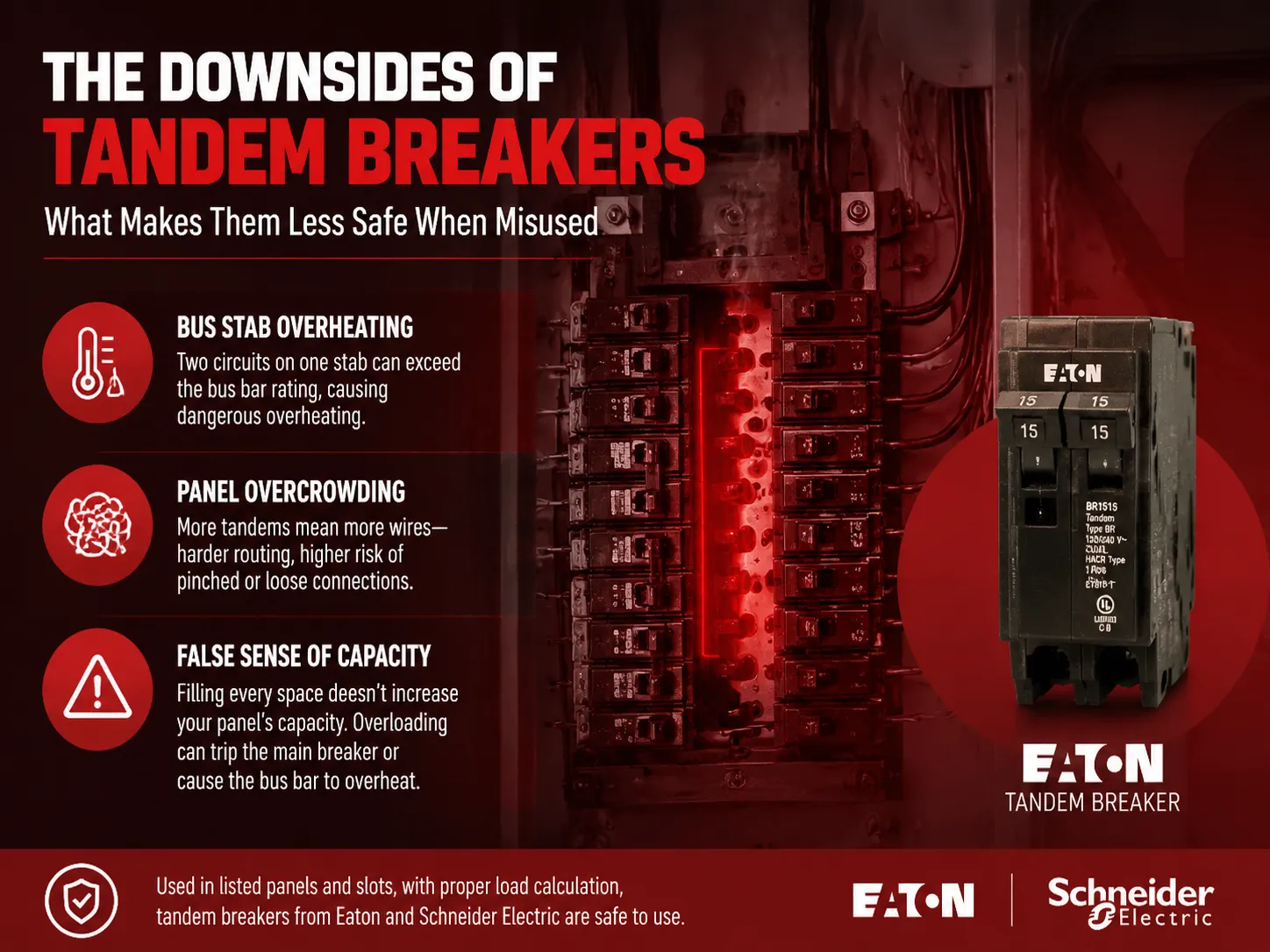
The negative aspect of a tandem breaker isn’t necessarily the breaker, but rather how much power the installer has put through one single bus stab (the connection point to the electrical panel) which could cause the panel to overload beyond what it was designed for. There are many potential problems with this; here are the listed risks:
- Bus stab overheating. A standard single-pole circuit breaker supplies one circuit through one stab. A tandem breaker supplies two circuits through the same stab. If both circuits are heavily loaded – for example, if one has a space heater and the other has a window unit air conditioner – then the total combined current through that single stab connection can exceed the rating of the bus bar at that point, resulting in localized overheating.
- Panel overcrowding. When adding extra tandems it can increase the amount of wires in the box which will make routing those wires more difficult and also creates a higher possibility of pinched create and/or loose connections on wiring.
- False sense of capacity. A homeowner that fills every space with a tandem may assume the expansion of their panel but it’s not expanded. The max amperage for the panel is still the same. If the total demand load exceeds the amp rated capacity, then the main breaker will trip or if the main breaker fails the bus bar will overheat.
The risks associated with tandem breakers can be controlled by properly loading the panel, placing tandems in the slots listed for installation, and having an electrician perform a load calculation before adding circuits. Manufacturers, specifically Eaton and Schneider Electric, have confirmed that if tandem breakers are used in the panels and slots for which they were designed, they are safe to use.
Are Tandem Breakers Still Legal?
The legality of tandem breakers has not changed; they are manufactured by all domestic circuit breaker manufacturers and are also sold by all domestic circuit breaker manufacturers. They have been used in many new construction projects and many upgrades to the electrical systems in homes, particularly those in which homeowners want to add a circuit that was not originally built into the panel (i.e., new appliance, home office, or garage workshop). They should be installed correctly (listed panel, designated position within the panel, total load within the limits specified by the manufacturer of the panel) and in accordance with the National Electrical Code (NEC), and there are no federal restrictions or code restrictions against using tandem breakers, so they are not scheduled to be phased out.
How to Tell If a Tandem Breaker Is Going Bad
Tandem breakers fail similarly than standard breakers, as both types of breakers share similar symptoms of failure. A tandem breaker may exhibit the following signs of failure: it may have tripped multiple times when trying to carry a load that was previously normal; the body of the tandem breaker may feel warm or hot to the hand; the tandem breaker may buzz; the exterior of the tandem breaker may have visible scorch marks or discoloration; finally, the circuits associated with the tandem breaker will each trip independently of the other, meaning that one circuit can trip while the other circuit continues to function properly, however, if one of the two circuits associated with the tandem breaker has tripped several times while carrying a load that is well within the rated capacity of the circuit, then the trip mechanism responsible for tripping on that circuit has likely failed, and the entire tandem breaker assembly must be replaced. In addition, any replacement tandem breaker that is installed must be of the same type, same amp rating, and must be installed in the same slot as originally specified by the tandem breaker manufacturer’s catalog. Home improvement authorities such as Family Handyman provide step‑by‑step guidance on safe breaker replacement.
Frequently Asked Questions
What is the downside of tandem breakers?
Tandem breakers have one primary disadvantage: they can create an overload of current on a single bus stab, which can lead to an overloaded panel that is operating above its designed rating. To eliminate this possibility, tandems must only be used in listed panels and in designated slots, and the total connected load must not exceed the ampacity of the panel.
Are tandem breakers a code violation?
No, tandem circuit breakers are not per se a violation of code. A tandem circuit breaker becomes a code violation when it is either installed in a panel that is not approved for tandem use, or when installed in a tandem circuit breaker slot, but in an approved panel. Section 110.3(B) of the NEC states that the manufacturer’s specifications (listing) shall be followed when installing approved equipment.
What does the NEC say about tandem breakers?
According to NEC regulations, the use of tandem breakers is permissible as long as they are installed according to the manufacturer’s issued label and listed by the manufacturer. If the panel’s issuer has not specifically stated that tandem breakers may be used or has not specifically provided a designator for the use of the slot for tandem use, then the installation of a tandem breaker in that slot would be in violation of NEC regulations.
Can you still use tandem breakers?
Indeed, tandem breakers are manufactured, sold, and installed in residential and commercial panelboards throughout North America. They are still legal and are an economical solution for adding circuits to a panel when there are no empty slots and the total load and circuit panel listing will allow it.
What is the difference between a tandem breaker and a double‑pole breaker?
A tandem breaker is used to make two separate independent 120-volt circuits in one box by using two separate poles that connect to the same bus stab (the same phase). A double pole breaker can be used to create a 240-volt circuit using two adjacent slots and connecting both bus bars to the same circuit. Tandem breakers cannot be used for 240 volts; double pole breakers do not fit in one slot.
Can I install a tandem breaker myself?
If you’re an experienced DIYer who practices safety when working with electricity (for instance turning off your main breaker, verifying that no voltage is present, using a proper replacement breaker, and torqueing the terminals), then you are likely able to replace a tandem breaker or install a tandem in an appropriate place on the same panel that you have previous experience working with. When creating new circuits for other areas of your home or your home requires additional current due to increased demands (e.g., appliances, lights), or you don’t have access to all of the information necessary to properly calculate how much current your panel can handle, call a licensed electrical contractor.
References
- NFPA 70 (National Electrical Code) — Article 110.3(B) and Article 408 — Equipment listing requirements and panelboard installation rules.
- Eaton — Tandem and Quad Circuit Breakers — Manufacturer product information and panel compatibility guidance.
- Schneider Electric — Square D Tandem Breakers — Product specifications and approved panel listings.
- Family Handyman — How to Install a Tandem Circuit Breaker — Step‑by‑step guidance for safe installation.
- This Old House — Tandem Breakers Explained — Homeowner‑focused guidance on when and how to use tandem breakers safely.
Are tandem breakers safe? In the right panel, in the right slot, with the right load, the answer is a clear yes. A tandem breaker is a UL‑listed, code‑compliant device that has been safely expanding residential panel capacity for decades. The hazard is not the breaker — it is the installation error that puts it where it does not belong or loads it beyond what the panel was built to carry. Respect the panel label, respect the load calculation, and a tandem breaker will serve safely for the life of the panel. HUYU supplies circuit breakers that meet the same international safety standards, because the device that protects the circuit must be trusted absolutely — whether it fills one slot or shares one.