
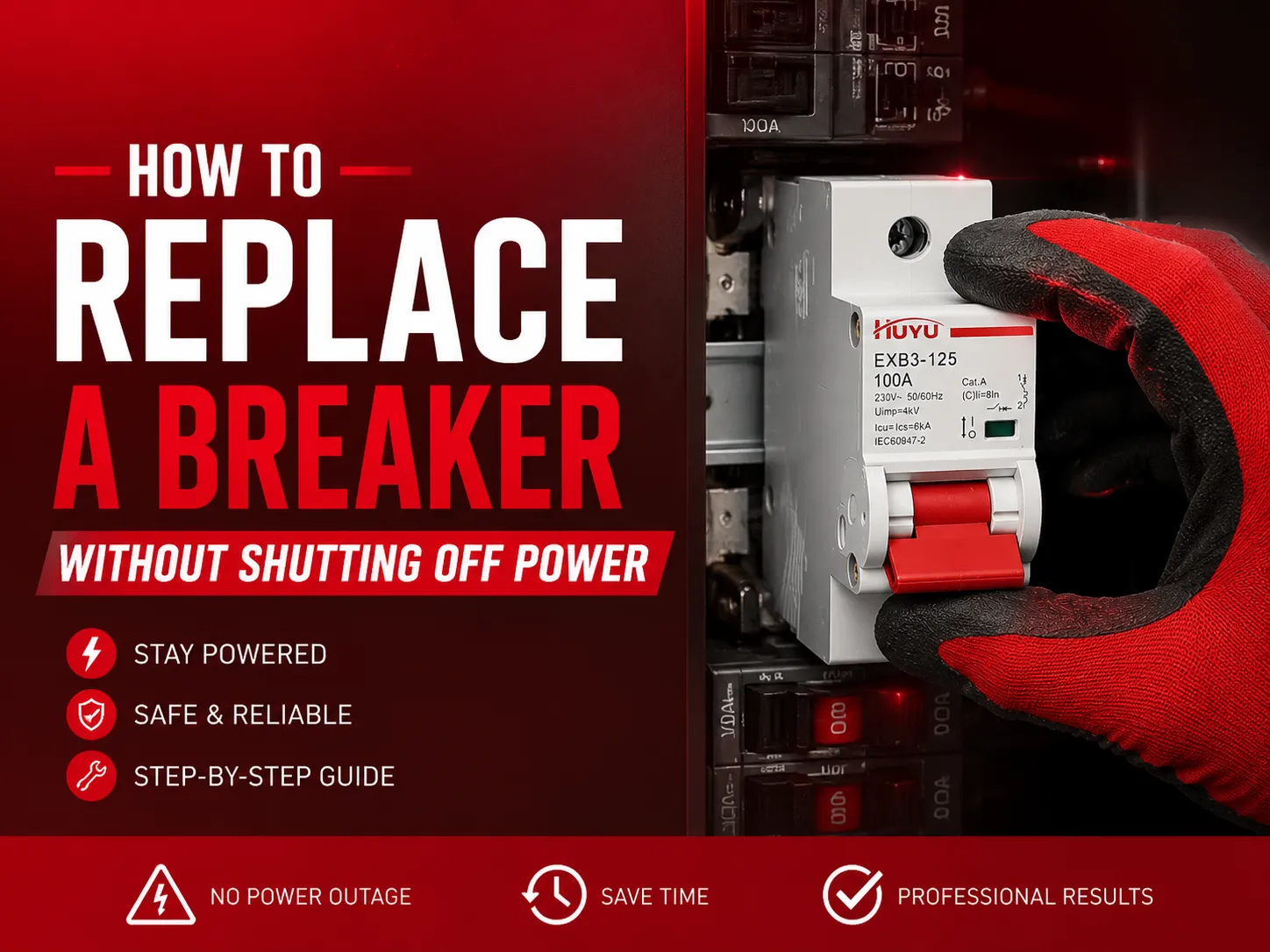
A homeowner in Florida was required to change a broken 20-amp breaker that supplied electricity to his refrigerator. The food had to be saved as the master breaker turned off the power, and the refrigerator would not be operating for an hour due to hot weather. He took off the cover panel and removed the dead front. With the bus bars up, he started to unlock the old breaker and place in the new breaker when he slipped and contacted the energized bus bar with his screwdriver. This caused an arc flash that resulted in the melting of the screwdriver tip, burning of his palm, and loss of a strip of copper from the bus. The panel was ruined. He managed to walk away.
This is the actual situation when trying to change a circuit breaker when there is power supplied. Although this can actually be done — electrical workers and electricians who work in industries do it professionally under certain safety measures, plus some special protection devices — for a home owner, and also a recreational electrician that works in a domestic panel, the answer is a plain and simple one: don’t do it. As this is not worth losing the time that could have been saved or the content of the refrigerator. This guide will tell you why it is important not to do this and how an inputfailure professional can do it if this becomes necessary.
Why Replacing a Breaker Hot Is So Dangerous
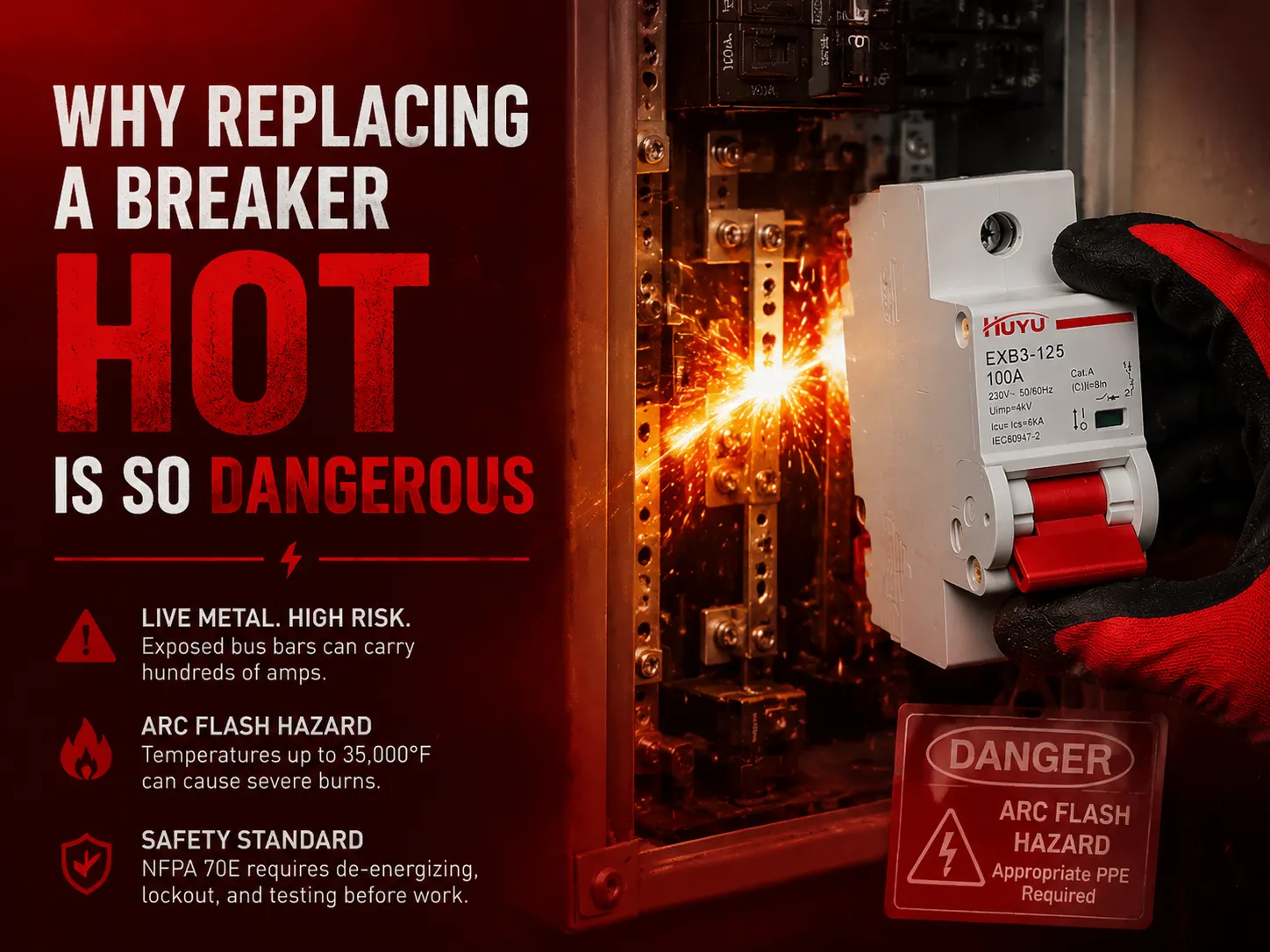
If the dead front is removed from a residential electrical panel, the main lugs and bus bars become accessible, presenting a situation with live metal carrying hundreds of amps of fault current. In this case, essential hazards exist because the circuit is only protected by the primary fuse of the transformer used by the utility company. The job of carrying out this work may involve the occurrence of an arc flash, which is the explosion of electrical energy from highly energised circuits. This arc flash can lead to the release of energy that reaches up 35,000 degrees Fahrenheit thus burning any materials found close to the area of occurrence. According to the standard of electrical safety set by the NFPA 70E, de-energisation, locking out of the circuit, and the testing of electrical wires and other equipment are necessary before work on electrical systems. This practice may be followed unless de-energizing the circuit is impossible based on the existing risks. Circuit breaker replacement is not among the exceptions provided because it is not impossible since the circuit must be switched off.
When a Professional Might Replace a Breaker Live (and How It Differs from DIY)
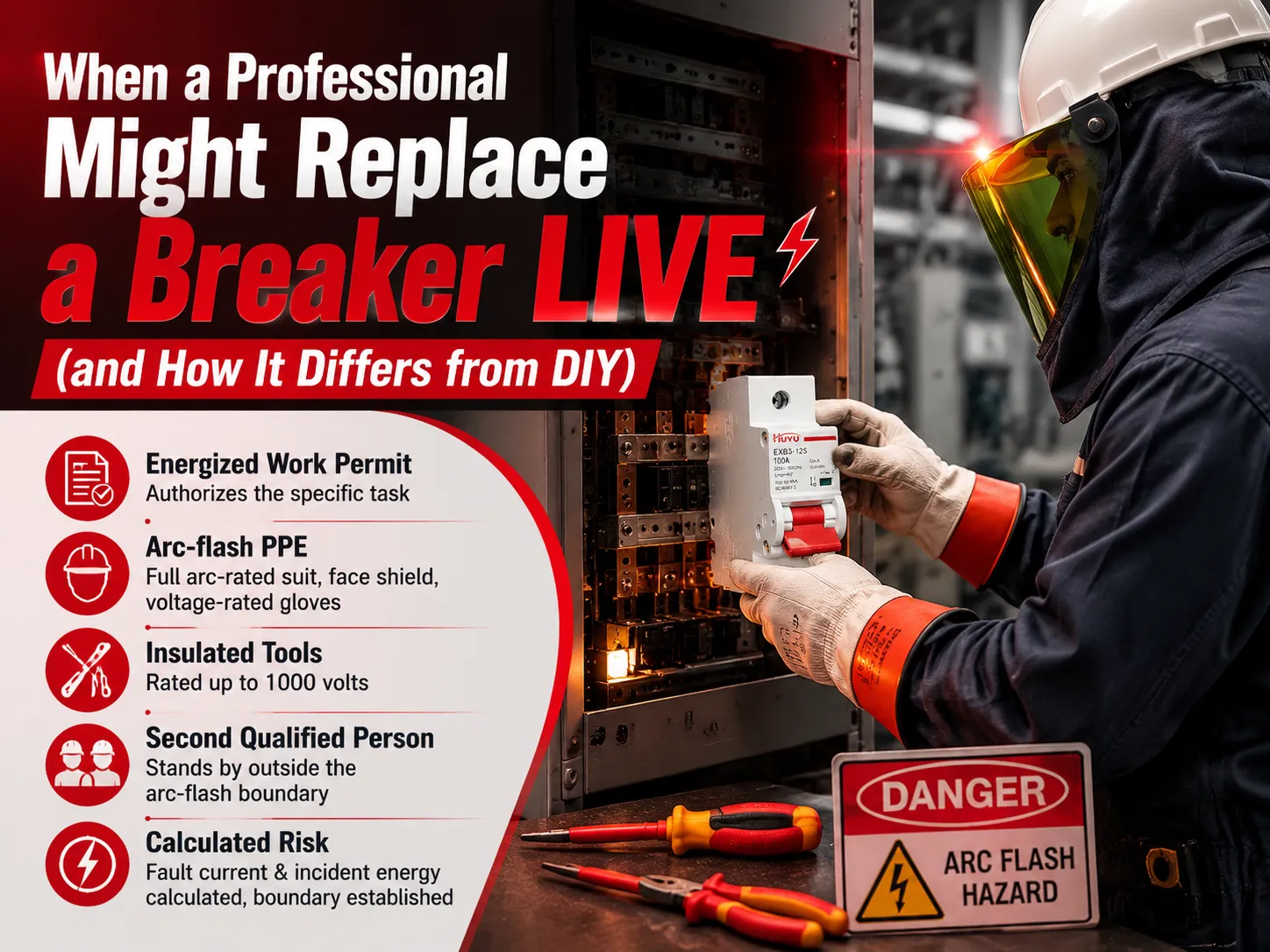
In a surgical theatre in a hospital, in the data centre that will not be allowed to remain inoperative, or a manufacturing production line whose shutdown would result in some catastrophic safety or economic incident happening, a competent electrical worker is allowed to install a power circuit breaker while the panel is still energised. This practice is termed “energised work,” and it needs to be performed under such rigorous conditions which are certainly not found in residential areas.
- An Energised Electrical Work Permit: is issued, per NFPA 70E, authorising the specific task.
- Arc‑flash PPE: you need to wear a full arc-rated suit, a suitable face shield for available incident energy, voltage-rated gloves with leather protectors, and hearing protection.
- Insulated tools: noted for the voltage rating are those tools such as screwdrivers, pliers and nut drivers which are rated up to 1000 volts.
- A second qualified person: If anything goes wrong, there is somebody who is positioned outside of the arc‑flash boundary, and at the same time, has the ability to call for help and provide first aid.
- The available fault current and incident energy have been calculated: The arc-flash boundary is established and demarcated. This information, however, is almost always unavailable for residential electrical distribution panels.
A homeowner has none of these conditions when he’s working on the residential panel. The existence of even one of them has made it unnecessarily dangerous. The electrical safety organisation Electrical Safety Foundation International (ESFI) consistently recommends residential electrical work should be done when the circuit is de-energised and tested.
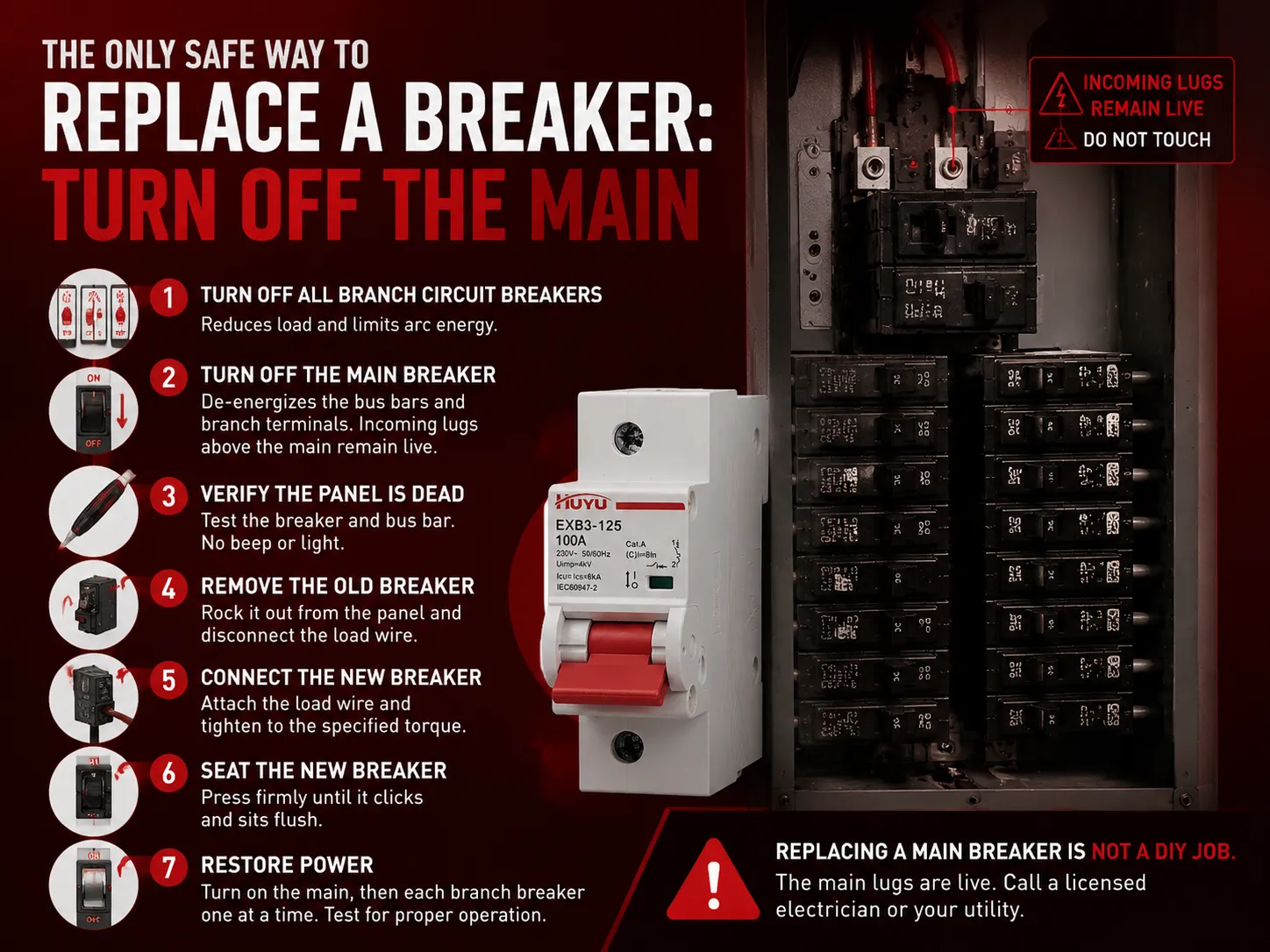
The Only Safe Way to Replace a Breaker: Turn Off the Main
The homeowner, the electrician, or the maintenance guy all have to follow the right way to replace a circuit breaker and that begins with turning off the main. This must be done in a step-by-step way so as to stay safe both for the person doing this and also for the equipment involved in the work.
- Turn off all branch circuit breakers. This relieves the burden from the main breaker and the bus bars, thus limiting the energy from an arc thereby making it safer in the case of an accidental short. Besides the scheme prevents a sudden surge of electricity into the system when the main is reactivated.
- Turn off the main breaker. In this way, the bus bars and the terminals of the branch breakers are de-energised. Furthermore, the lugs of the incoming line above the main breaker are still energized, as they are not insulated by the main breaker. Thus, one should always avoid touching or bringing anyone/any instrument close to the lugs.
- Verify that the panel is dead where you will be working. Take a non‑contact voltage tester and check the breaker that you are replacing as well as the bus bar. The voltage tester should not beep or light up. Remember to test your tester on a live circuit before and after this test. If the test shows that there is some voltage, it may be time to call an electrician.
- Remove the old breaker. Since the bus bar is de-energized, remove the old breaker by rocking it out from the middle of the panel. Now take the load wire off from the terminal of the breaker.
- Connect the new breaker. You need to connect the load wire to the terminal of the newly installed breaker and tighten it as specified on the device. Having a loose connection could result in a fire.
- Seat the new breaker on the bus bar. Press it firmly into place until it clicks and sits flush with the adjacent breakers.
- Restore power. Switch on the main circuit breaker. After that, turn one branch circuit breaker on at a time until you see that it’s functioning correctly. If the new circuit breaker does not work that means there is a fault.
In the event that you need to replace the whole main breaker, the main lugs leading to it are live in the cycle. Its main circuit cannot be shut off and thus this is not a DIY job. You will need a licensed electrician or utility company to undertake the job. There is a guide on locating where the main breaker is located and showing you how to recognize the different residential configurations of the breaker.
What to Do If You Cannot Turn Off the Main
In situations where the main breaker cannot be accessed — for instance, when it is located inside a secured room of an apartment, or in older homes when the breaker cannot be operated because of a malfunction — it is required that the task be carried out by a certified electrician. The electrician may either liaise with the appropriate utility and ask for the power to be turned off to the entire panel or decide to carry out the maintenance on a ‘live’ panel by making use of the electric safety protocols aforementioned. As a tenant or an owner of the house, always ensure that you have someone certified to carry out the task around the panel to avoid electrocution.
Does a Homeowner Need an Electrician to Replace a Circuit Breaker?
It is possible to change a breaker on your own if you know the basics of circuit breakers. In particular, be aware of the fact that it is vital to turn off the circuit breaker before proceeding to cutting it open. The voltage meter must be checked to make sure there is no electric current passing through it. If it does not match, you have to procure a different breaker depending on the specifications of the panel you own. You may find it useful to consult the manufacturers’ specification sheets of your electric device.
Frequently Asked Questions
Can I change a breaker without turning off the power?
From a technical point of view, it is possible for a qualified electrical worker with arc-flash PPE and insulated tools to change a breaker without switching off the main, but it is an energized procedure covered under NFPA 70E and is not a safe practice for a homeowner. The hazards of arc flash, burns, and death by electrocution are high.
Do I need an electrician to replace a circuit breaker?
The work of changing out a contemporary circuit breaker can only be done by someone with the necessary experience. While this task can be done by someone who possesses some skills in DIY, it must be done in a way that does not expose anyone to any danger. A licensed electrician must be hired when doing this work because of the higher safety involved in working with live electricity circuits compared to being about to do such work with an already dead panel.
What breakers work in a Westinghouse panel?
Older Westinghouse panels mostly utilize Eaton Type BR breakers, which is descendant break through from the original Westinghouse/Bryant design. Panel label, which is a sticker on a panel door, lists down the approved breaker types as per the manufacturer’s guideline. If a breaker is installed that is not listed on the label, it is termed as code violation that may lead to fire. In case the label is missing, an electrician will identify the suitable breaker to install without referring to the label.
Can I replace the main breaker myself?
Wrong. The main breaker is attached to the service wires and continues to be live even when the main is turned off. Changing a main breaker would involve removing the meter or working with live wires through the use of appropriate PPE and utility coordination.
References
- NFPA 70E — Standard for Electrical Safety in the Workplace. National Fire Protection Association. The definitive standard for energised work permits, PPE, and safe electrical work practices.
- Electrical Safety Foundation International (ESFI) — Home Electrical Safety. Guidance on safe practices for residential electrical work.
- Eaton — Residential Circuit Breaker Replacement Guide. Manufacturer of Eaton and legacy Cutler‑Hammer/Westinghouse breakers, with compatibility information.
- Schneider Electric — Square D Breaker Replacement. Manufacturer guidance on identifying and replacing Square D QO and Homeline breakers.
- UL — Electrical Panel Safety and Circuit Breaker Listing. Information on the listing and testing requirements for residential circuit breakers and panels.
Attempting to replace a breaker without shutting off power turns a simple, safe repair into a life‑threatening task. The main breaker exists to make the panel safe for exactly this kind of work. Turn it off. Verify that the bus is dead. Only then should a breaker be removed and replaced. For the homeowner, the electrician, and the maintenance technician, the procedure is the same every time: de‑energise, test, work, and restore. Skipping the first step is not a shortcut — it is a gamble that no refrigerator or air conditioner is worth. HUYU supplies circuit breakers that meet the international standards for overcurrent protection, and we believe that every one of them should be installed in a panel that is safe to work on — de‑energised, verified, and ready for the next decade of reliable protection.