
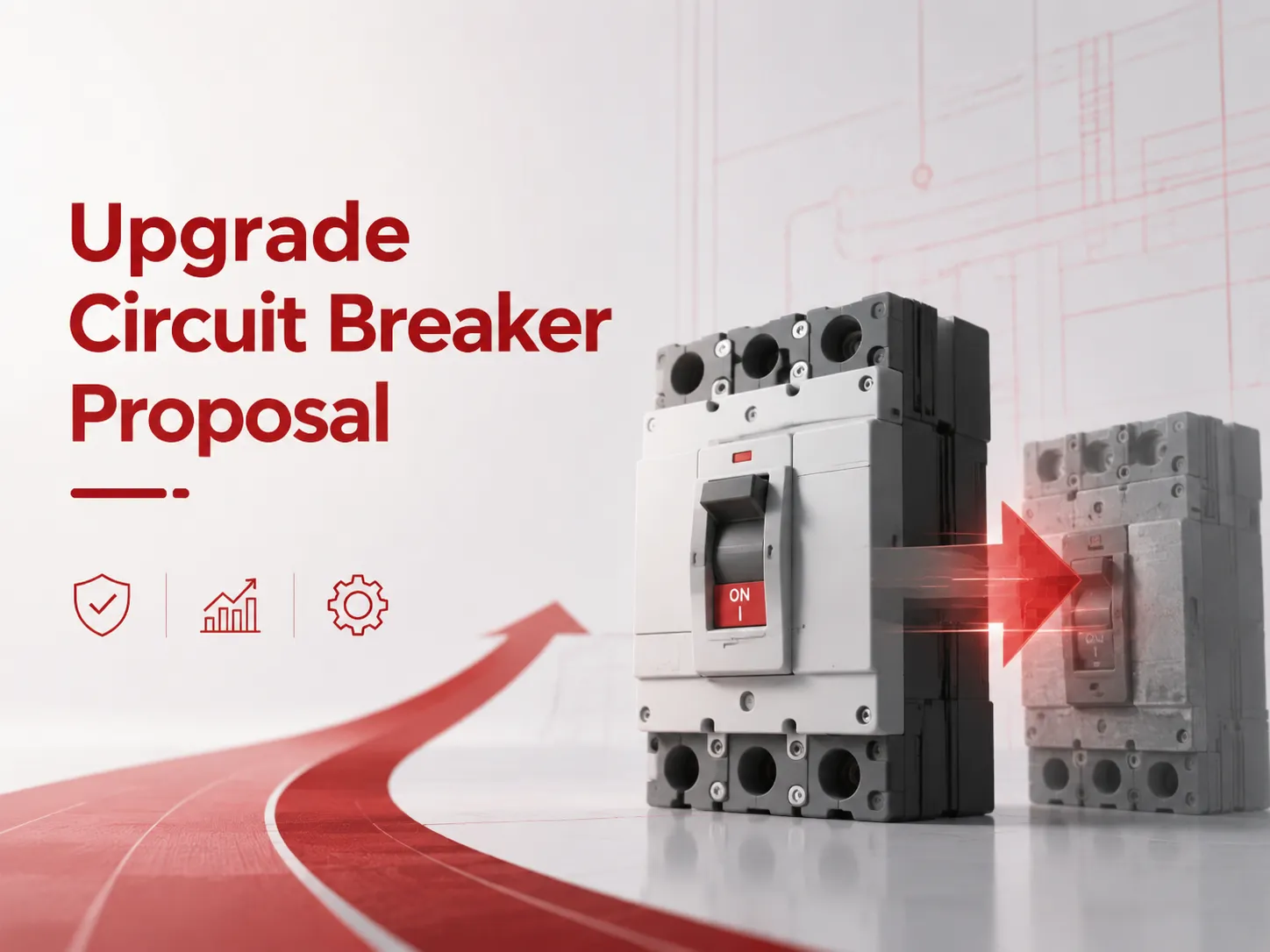
The electrical systems of a building act as the backbone of the facility but often go unnoticed until there is a critical failure. When facilities expand, utilize heavy equipment, or use renewable energy sources, they quickly begin to overload legacy electrical panels. Establishing a strategic upgrade circuit breaker proposal is not simply a matter of complying with regulations but rather it is an important step in protecting human life, protecting expensive capital assets, and eliminating catastrophic loss of operational time.
Modern circuit breakers do much more than just cut off power during an overcurrent event; they offer intelligent monitoring, fast isolation of faults, and specialized protection against earth leakage. This guide breaks down how to structure an enterprise-level upgrade proposal, what types of mechanical architecture to select according to your facility’s unique needs, and how to analyze the financial metrics for a system upgrade.
Engineering Insight: Upgrading your device responsible for overcurrent protection is an investment in resilience for your facility. Upgrading your older panels helps reduce the likelihood of arc-flash incidents and ensures compatibility with smart grid automation.
When and Why Your Facility Requires an Electrical Upgrade
To maintain a safe electrical grid, identifying operational warning signs prior to experiencing a catastrophic failure is critical; typically, a facility will require a complete system upgrade under many different types of operational scenarios.
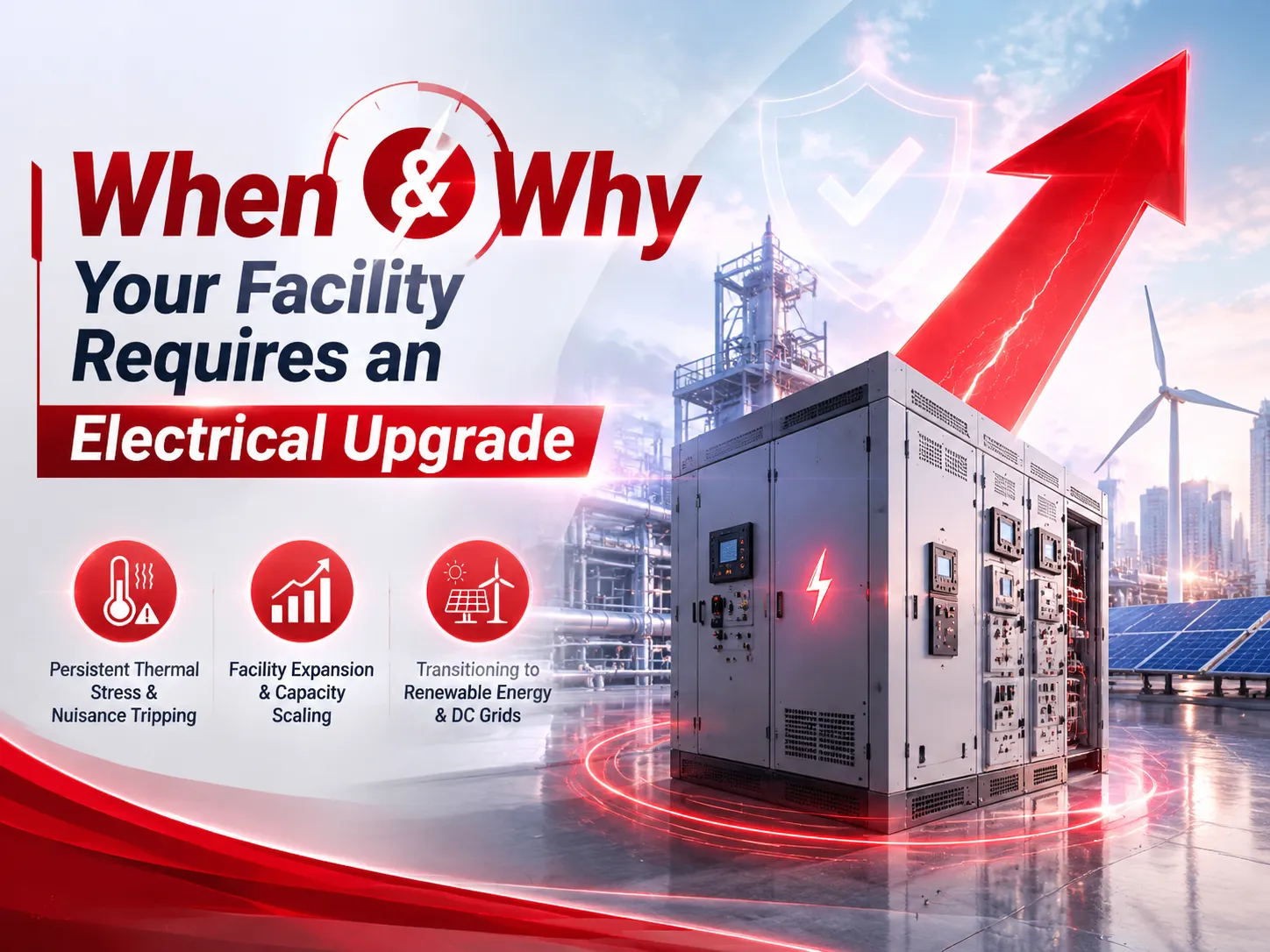
Persistent Thermal Stress and Nuisance Tripping
If your existing switchgear has frequent nuisance tripping, or if you consistently observe elevated thermal images of your switchgear through routine infrared imaging, it is likely the internal bimetallic trips or electronic trip devices in your switchgear are approaching the end of their usable life. There is a decrease in the overall quality of internal spring mechanics due to repeated minor overloading. As the internal mechanisms age from this type of degradation, they tend to trip earlier than normal under just about the normal amount of current used in everyday operation.
Facility Expansion and Capacity Scaling
When adding new processes (such as installing new production lines) or expanding already existing processes (adding to an existing data-centre rack, adding commercial air conditioning chillers), the total continuous load of the facility increases by the baseline amount of the new equipment being added. If the total amount of calculated load on an existing building approaches the maximum allowable load the structural upgrade to continue supporting the electrical loads without causing a severe drop in service voltage and potentially causing localised electrical fires will be unavoidable.
Transitioning to Renewable Energy and DC Grids
The rapid adoption of new technologies (such as photographing PV solar photovoltaic collector panels, battery energy storage systems, electric vehicle chargers, and other photonic collectors) has introduced new power flow types (multi-directional power flow). Such multi-directional flows of electrical energy cannot be cleared using traditional AC methods due to the presence of high-intensity DC arcs. This creates an urgent need for a technological transition away from utilizing traditional electrical protection methods.
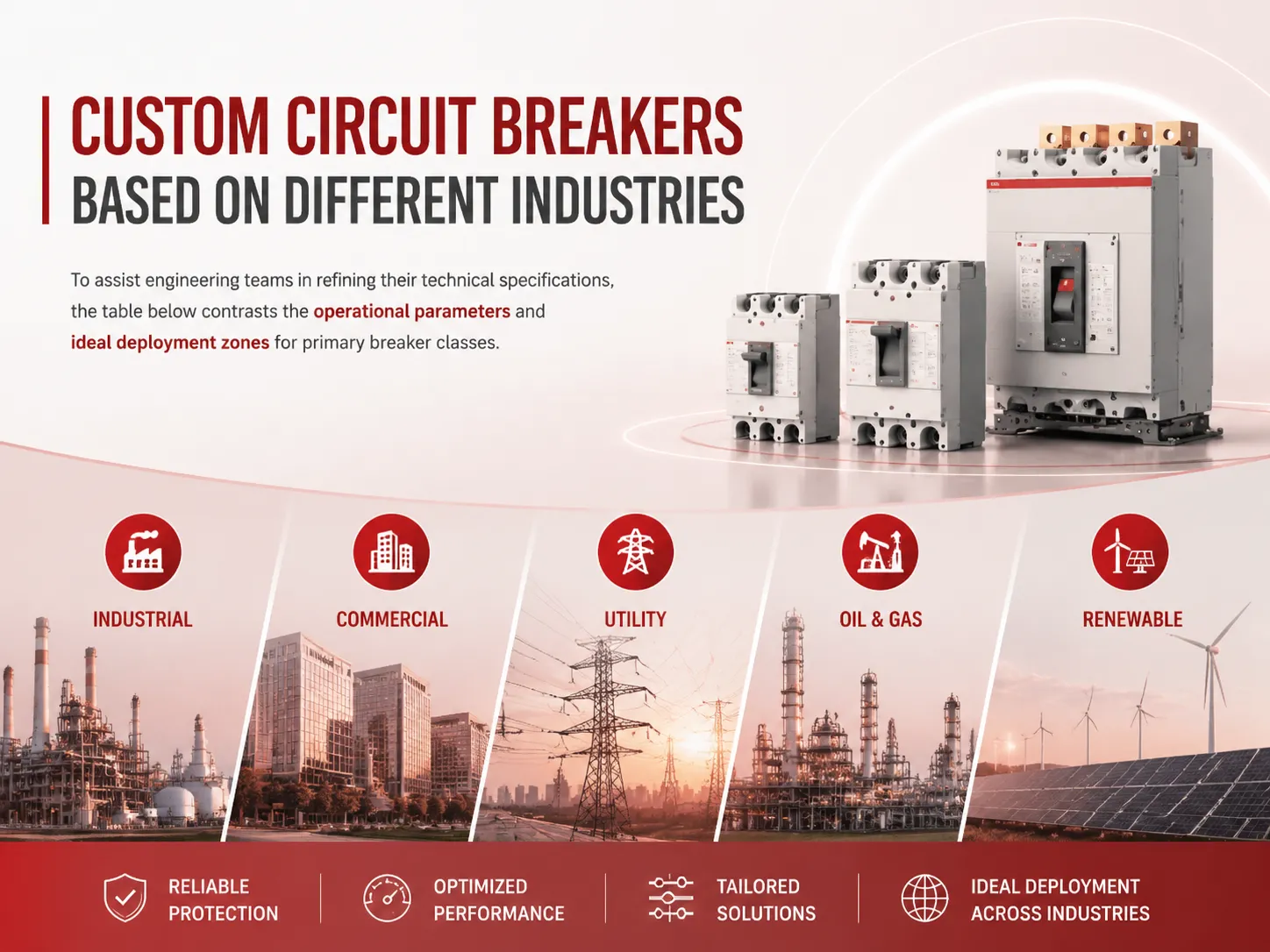
Custom Circuit Breakers Based on Different Industries
To assist engineering teams in refining their technical specifications, the table below contrasts the operational parameters and ideal deployment zones for primary breaker classes.
| Breaker Type | Typical Current Range | Primary Protection Profile | Ideal Installation Environment |
|---|---|---|---|
| MCB | 0.5A – 125A | Overload & Short-Circuit | Commercial lighting banks, residential branch circuits |
| RCBO | 6A – 63A | Overload, Short-Circuit & Earth Leakage | Hospitals, laboratory equipment, damp processing areas |
| MCCB | 16A – 1600A | Adjustable Overcurrent & Fault Isolation | Industrial motor control centers, sub-station feeds |
| DC Breaker | Up to 1250A+ (DC) | High-Velocity DC Arc Interruption | Solar PV combiners, battery storage banks, EV stations |
Implementation Precautions and Manufacturer Evaluation
Executing a successful circuit breaker upgrade requires strict adherence to safety protocols and rigorous vendor screening. Before any hardware is unbolted, an engineering assessment must determine the exact short-circuit fault current rating (kA) at the busbar to ensure the new hardware can safely clear an emergency fault without exploding.
When selecting a manufacturing partner, procurement teams should prioritize vendors who maintain automated production environments. Automated assembly lines ensure precision calibration of internal thermal-magnetic trip curves, eliminating human error from the manufacturing process. Furthermore, verifying international certification marks—such as CE, CB, KEMA, or TUV—is mandatory to ensure compliance with global insurance and safety mandates.
Financial budgeting for infrastructure upgrades substantially varies depending on the physical size of the facility. Converting single commercial aging breakers to modern RCBO’s carry relatively low costs; however they greatly reduce one’s liability. Conversely, upgrading all industrial panels would require planned outages, thereby making it critical to prioritize suppliers who have rapid delivery times and readily available; easy to install modular rail systems help offset labor costs and minimize downtime in the factory.
Frequently Asked Questions
Can I upgrade a circuit breaker?
You may upgrade any individual circuit breaker within an existing panel; however, the new unit must be compatible in terms of mounting style to the old or original unit’s busbar. Additionally, upgraded units must also meet or exceed the original breaker’s (kA) short-circuit rating. Converting from a standard thermal breaker to an advanced electronic trip unit or an RCBO is a typical way to improve safety without requiring a complete enclosure replacement.
What is the 80% electrical circuit rule?
The 80% Rule is an essential safety requirement defined in the National Electrical Code (NEC) that states that no continuous load (a load lasting more than 3 hours) should exceed 80% of the total rated capacity of a protective device. For example; a standard 20 amp breaker should have no more than 16 amps of continuous operational load in order to avoid thermal fatigue of the circuit breaker.
What will it cost to upgrade my electrical panel from 100 amps to 200 amps?
The overall cost to upgrade an electrical service panel from 100 Amps to 200 Amps for most residential and commercial properties typically falls between $2000 to $4,500. This increased cost includes the addition of a heavy-duty new panel and new main service breaking devices along with structural grounding components and professional labor to coordinate disconnecting and reconnecting the utility power grid/s.
Can I upgrade my panel without rewiring my house?
Yes; you can completely update your main electrical panel or service distribution board without having to install completely new conductors throughout the building’s infrastructure. As long as all existing branch circuit conductor insulation is structurally sound, code compliant and not degraded, technicians will be able to run the existing copper or aluminum conductors to the new highly secure modern breaker terminals.
Creating a well-researched upgrade circuit breaker proposal is a proactive operational strategy that connects aging infrastructure with modern electrical load requirements. By matching your facility’s electrical load profiles to their appropriate electrical safety architecture (RCBO’s to provide all livestock personnel safety, heavy-duty adjustable MCCB’s for all manufacturing operations or advanced protection of solar grids); you can create protection against sudden arc-flash hazards, electrical fires, and costly operational interruptions. Working with an expert interdisciplinary manufacturing company like HUYU aids in ensuring your upgraded distribution grid will be compatible with current & future international technical standards, total systems harmonization within the low voltage category, and long term security of your assets.