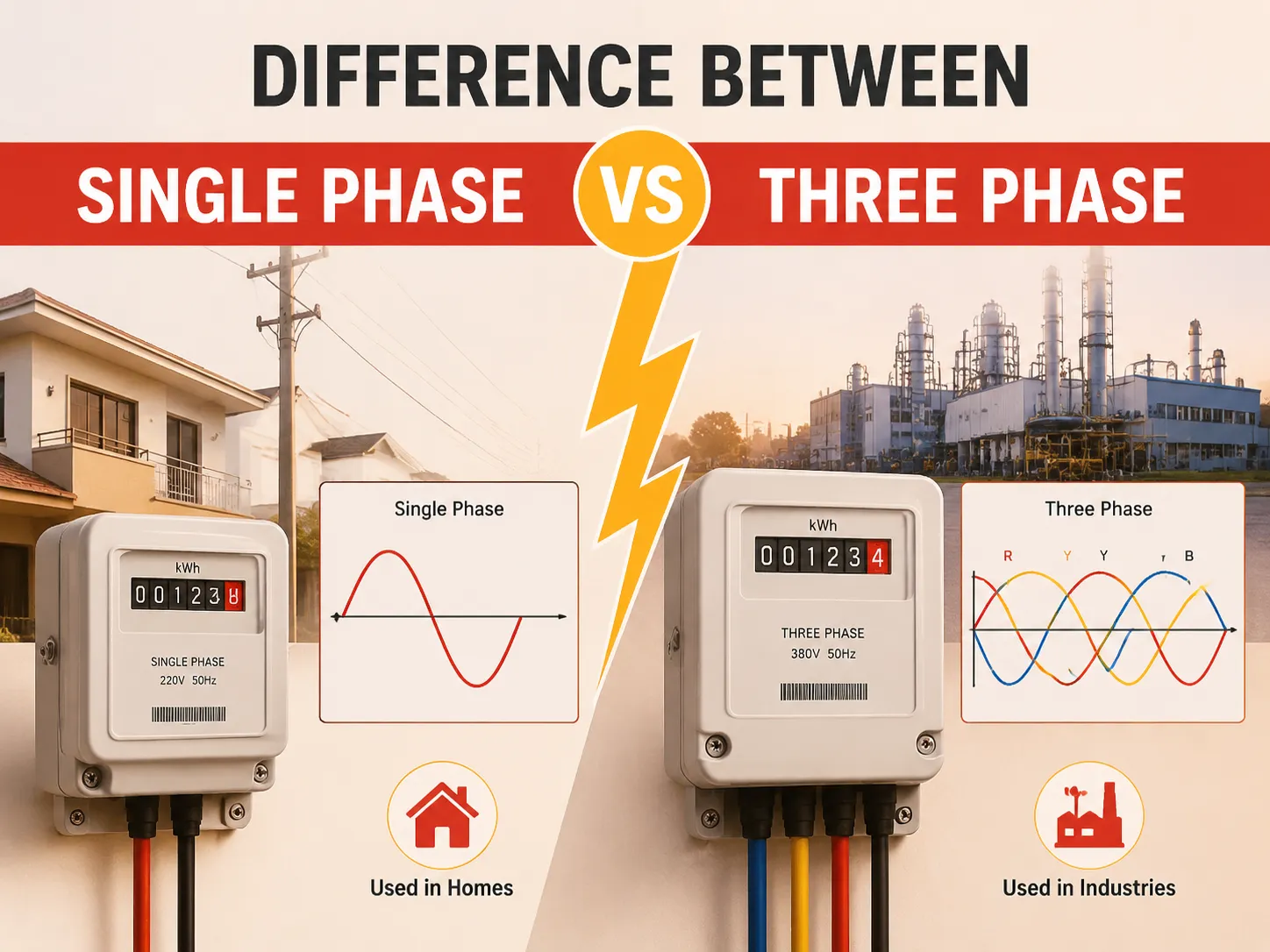
คุณเพิ่งซื้อโรงงานเล็กๆ ในเขตอุตสาหกรรม และเจ้าของบอกว่าคุณสามารถเลือกได้ระหว่างไฟฟ้ากระแสสลับเฟสเดียวหรือไฟฟ้ากระแสสลับสามเฟส การติดตั้งระบบสามเฟสมีค่าใช้จ่ายเกือบสามเท่าของการติดตั้งแบบง่าย อย่างไรก็ตาม คุณไม่แน่ใจว่าคุณต้องการจริงๆ หรือไม่ ในขณะเดียวกัน เครื่อง CNC ที่คุณสั่งซื้อใหม่มีคำว่า “สามเฟสเท่านั้น” เขียนอยู่บนตัวเครื่อง นี่คือคำถามที่ผู้ซื้อเครื่องจักรและเจ้าของบริษัทหลายคนต้องเผชิญเป็นประจำ — และถ้าการเลือกผิด ผู้ใช้จะต้องจ่ายเงินเกินความจำเป็นสำหรับพลังงานที่ไม่จำเป็นหรือพบว่าไม่สามารถใช้เครื่องจักรของตนได้.
คู่มือนี้ให้ความเข้าใจที่ชัดเจนเกี่ยวกับความแตกต่างระหว่างระบบไฟฟ้ากระแสสลับเฟสเดียวและสามเฟส สิ่งที่แต่ละระบบหมายถึง ค่าใช้จ่าย และเวลาที่ใช้ คุณจะพบข้อมูลที่จำเป็นทั้งหมดเพื่อทำการเลือกที่ถูกต้องโดยไม่ต้องมีการศึกษาวิศวกรรมขั้นสูง.
คำตอบด่วน: ไฟฟ้ากระแสสลับเฟสเดียวใช้รูปคลื่น AC หนึ่งรูป (บวกกับสายกลาง) ซึ่งทำให้สามารถจ่ายพลังงานที่เพิ่มขึ้นและลดลง 50 ถึง 60 ครั้งต่อวินาที มันจ่ายพลังงานให้กับบ้านพักอาศัยและอุปกรณ์โหลดขนาดเล็กประมาณ 15-20 กิโลวัตต์ ในทางตรงกันข้าม ระบบสามเฟสใช้แหล่งพลังงานจากรูปคลื่น AC สามรูปที่เลื่อนเฟสกัน 120 องศา สร้างพลังงานที่ต่อเนื่องและเสถียรมากซึ่งไม่ลดลงเป็นศูนย์ มันเป็นประเภทพลังงานที่ใช้กันมากที่สุดในโรงงาน อาคารพาณิชย์ขนาดใหญ่ มอเตอร์ขนาดใหญ่ และเครื่องจักรหนักอื่นๆ.
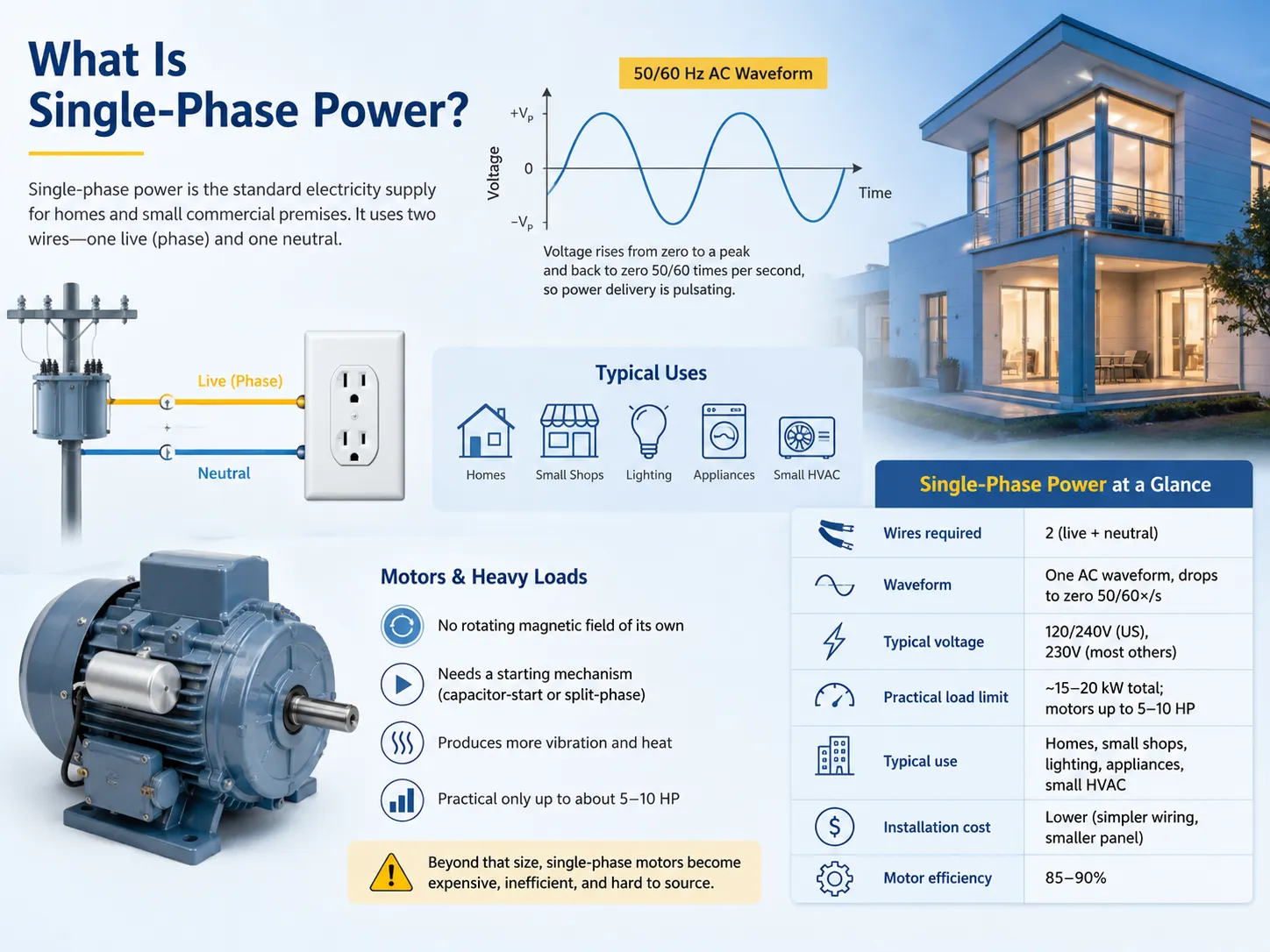
ไฟฟ้ากระแสสลับเฟสเดียวคืออะไร?
อาคารที่อยู่อาศัยและธุรกิจขนาดเล็กพึ่งพาไฟฟ้ากระแสสลับเฟสเดียวเป็นตัวเลือกมาตรฐานสำหรับการจ่ายพลังงาน กลไกนี้อาศัยตัวนำสองประเภท — หนึ่งสายไฟฟ้ากระแสและหนึ่งสายกลาง โดยพลังงานไฟฟ้าจะสลับจากศูนย์ถึงแรงดันสูงสุดด้วยความถี่ 50 หรือ 60 รอบต่อวินาที แตกต่างจากกระแสตรงที่มีแรงดันคงที่ ไฟฟ้ากระแสสลับเฟสเดียวจะเปลี่ยนแปลงตลอดเวลา ซึ่งมีความสำคัญอย่างมากเมื่อเกี่ยวข้องกับมอเตอร์และโหลดหนัก.
เมื่อพูดถึงมอเตอร์ การขาดสนามแม่เหล็กหมุนในมอเตอร์เฟสเดียวหมายความว่ามอเตอร์เหล่านี้ต้องเริ่มต้นด้วยอุปกรณ์เสริม เป็นที่ทราบกันว่ามอเตอร์เฟสเดียวสร้างแรงสั่นสะเทือนมากกว่าและเกิดความร้อนมากกว่ามอเตอร์สามเฟส เครื่องจักรไฟฟ้าเหล่านี้สามารถใช้สำหรับงานเฉพาะที่มีกำลังขับไม่เกิน 5-10 แรงม้า เนื่องจากจะไม่คุ้มค่าทางเศรษฐกิจเมื่อเกินขีดจำกัดนี้.
| ลักษณะเฉพาะ | ไฟฟ้ากระแสสลับเฟสเดียว |
|---|---|
| สายไฟที่ต้องใช้ | 2 (สายไฟฟ้ากระแส + สายกลาง) |
| รูปคลื่น | รูปคลื่น AC หนึ่งรูป ลดลงเป็นศูนย์ 50/60 ครั้งต่อวินาที |
| แรงดันไฟฟ้าทั่วไป | 120/240V (สหรัฐอเมริกา), 230V (ประเทศอื่นๆ ส่วนใหญ่) |
| ขีดจำกัดโหลดใช้งานจริง | ประมาณ 15–20 กิโลวัตต์ทั้งหมด; มอเตอร์สูงสุด 5–10 แรงม้า |
| การใช้งานทั่วไป | บ้านพักอาศัย ร้านค้าขนาดเล็ก ระบบไฟส่องสว่าง เครื่องใช้ไฟฟ้า ระบบปรับอากาศขนาดเล็ก |
| ค่าใช้จ่ายในการติดตั้ง | ต่ำกว่า (การเดินสายง่ายกว่า แผงควบคุมขนาดเล็กกว่า) |
| ประสิทธิภาพของมอเตอร์ | 85–90% |
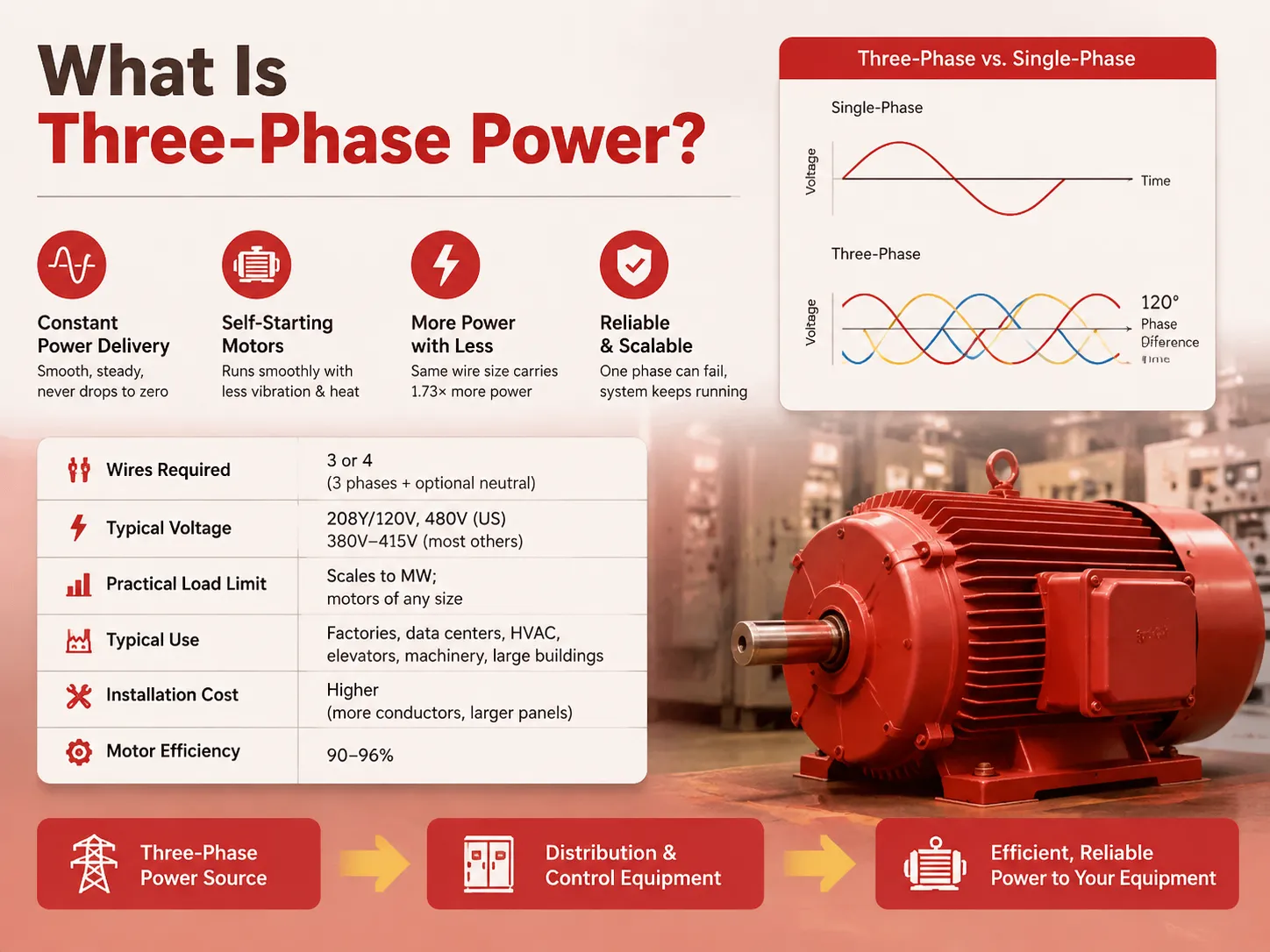
ไฟฟ้ากระแสสลับสามเฟสคืออะไร?
ไฟฟ้าสามเฟสประกอบด้วยสัญญาณกระแสสลับสามสัญญาณที่มีอยู่ในตัวนำสามตัว (บวกกับนิวทรัลถ้าจำเป็น) และปรากฏด้วยการเลื่อนเฟส 120 องศา เนื่องจากแต่ละเฟสถึงค่าสูงสุดในเวลาที่ต่างกัน จึงส่งผลให้มีการจ่ายพลังงานอย่างต่อเนื่อง หมายความว่าพลังงานไม่ลดลงเป็นศูนย์ ด้วยเหตุนี้ มอเตอร์ไฟฟ้าสามเฟสจึงไม่ต้องการวิธีการสตาร์ทเพิ่มเติมใด ๆ เนื่องจากได้รับพลังงานจากสนามแม่เหล็กหมุนอยู่แล้ว.
นอกจากนี้ ความหนาของสายไฟเดียวกันที่ใช้ในระบบสามเฟสจะจ่ายไฟฟ้าได้ประมาณ 1.73 เท่ามากกว่าระบบเฟสเดียว ซึ่งเป็นเหตุผลที่ทำให้มีการใช้งานเกินกว่าความต้องการในครัวเรือนโดยบริษัทต่าง ๆ นอกจากนี้ ระบบสามเฟสยังสามารถทนต่อการปิดเฟสหนึ่งโดยไม่ทำให้วงจรไร้ความหมาย และรองรับโหลดที่หนักกว่ามากตั้งแต่หลายแรงม้าจนถึง 10,000 แรงม้า.
| ลักษณะเฉพาะ | ไฟฟ้าสามเฟส |
|---|---|
| สายไฟที่ต้องใช้ | 3 หรือ 4 (3 เฟส + นิวทรัลเสริม) |
| รูปคลื่น | สัญญาณคลื่นสามรูปแบบเลื่อนเฟส 120° จ่ายไฟอย่างต่อเนื่อง |
| แรงดันไฟฟ้าทั่วไป | 208Y/120V, 480V (สหรัฐฯ); 380V–415V (ส่วนใหญ่ประเทศอื่น ๆ) |
| ขีดจำกัดโหลดใช้งานจริง | ขยายได้ถึงเมกะวัตต์; มอเตอร์ทุกขนาด |
| การใช้งานทั่วไป | โรงงาน ศูนย์ข้อมูล ระบบปรับอากาศ ลิฟต์ เครื่องจักร อาคารขนาดใหญ่ |
| ค่าใช้จ่ายในการติดตั้ง | สูงกว่า (ตัวนำมากขึ้น แผงควบคุมใหญ่ขึ้น อุปกรณ์สวิตช์เกียร์) |
| ประสิทธิภาพของมอเตอร์ | 90–96% |
ความแตกต่างที่สำคัญในภาพรวม
| ลักษณะ | เฟสเดียว | สามเฟส |
|---|---|---|
| จำนวนเฟส | หนึ่ง | สาม (ห่างกัน 120°) |
| การจ่ายพลังงาน | เป็นจังหวะ ลดลงเป็นศูนย์ | คงที่ เรียบเนียน |
| พลังงานที่กระแสเท่ากัน | ค่าอ้างอิง | มากกว่า 1.73 เท่า |
| ขนาดตัวนำสำหรับโหลดเท่ากัน | ใหญ่กว่า | เล็กกว่า (~25% ทองแดงน้อยกว่า) |
| การสตาร์ทมอเตอร์ | ต้องใช้ตัวเก็บประจุ/ขดลวดสตาร์ท | สตาร์ทเองได้ (สนามหมุน) |
| ประสิทธิภาพของมอเตอร์ | 85–90% | 90–96% |
| การสั่นสะเทือนและความร้อน | สูงกว่า | ต่ำกว่า (แรงบิดนุ่มนวลกว่า) |
| ขีดจำกัดทั่วไป | มอเตอร์ ~15–20 กิโลวัตต์ / 5–10 แรงม้า | ไม่มีขีดจำกัดในทางปฏิบัติ |
| ความทนทานต่อความผิดพลาด | ความผิดพลาดหนึ่งครั้ง = วงจรทั้งหมดล้มเหลว | เฟสอื่นยังคงทำงานต่อไป |
| ค่าใช้จ่ายในการติดตั้ง | ต่ำกว่า | 20–40% สูงขึ้นในตอนแรก |
| ต้นทุนการดำเนินงาน (ภาระงานสูง) | สูงขึ้นต่อกิโลวัตต์ | ต่ำลงต่อกิโลวัตต์ |
ระดับแรงดันไฟฟ้าและการกำหนดสายไฟ
การอ่านค่าระดับแรงดันไฟฟ้าจากอุปกรณ์ของคุณเป็นการตัดสินใจหลักในการเลือกแหล่งจ่ายไฟที่ถูกต้อง ด้านล่างนี้คือวิธีที่แรงดันไฟฟ้าเฟสเดียวและสามเฟสมีอยู่ในหลายส่วนของโลก.
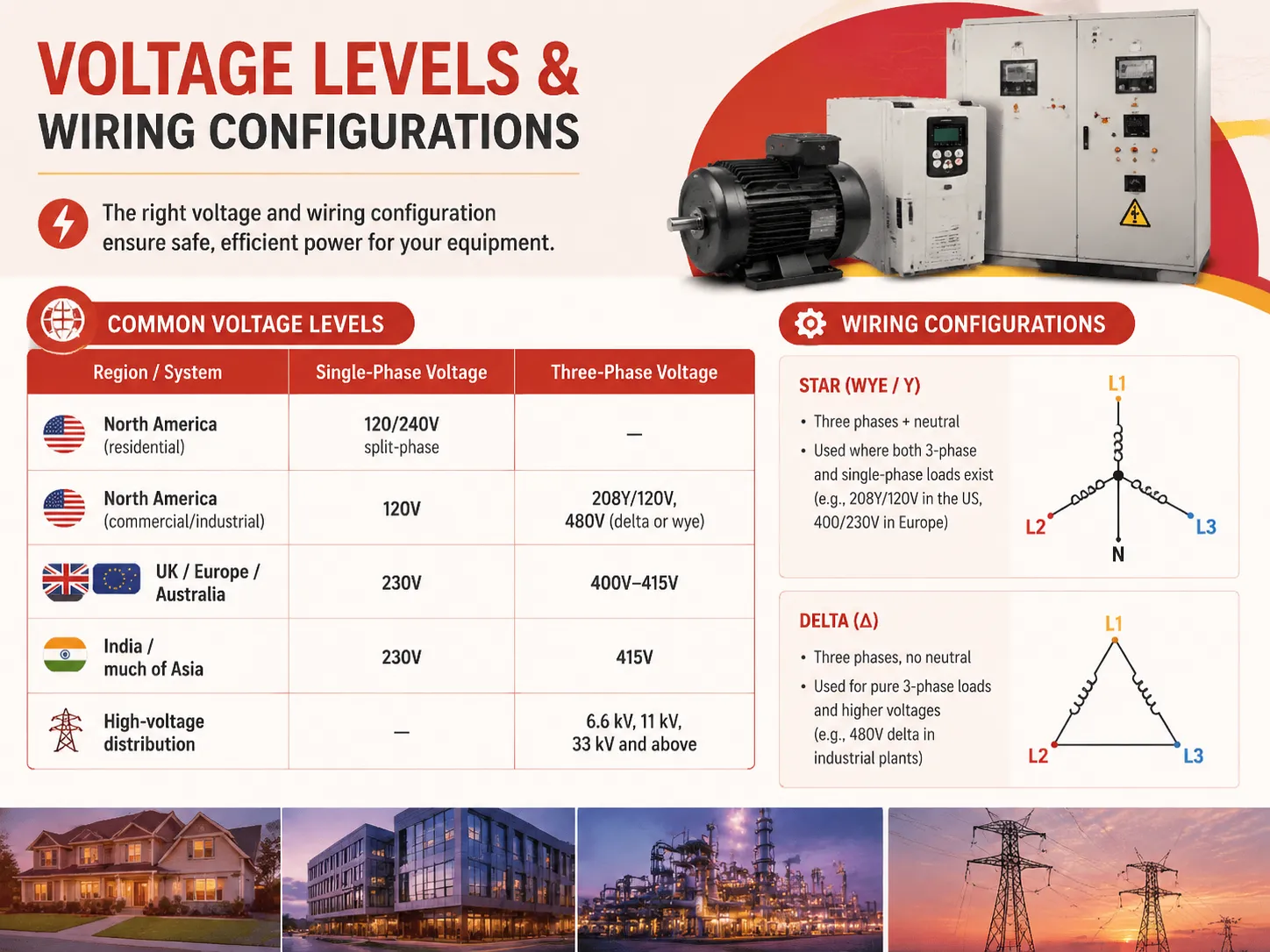
| ภูมิภาค / ระบบ | แรงดันไฟฟ้าเฟสเดียว | แรงดันไฟฟ้าสามเฟส |
|---|---|---|
| อเมริกาเหนือ (ที่อยู่อาศัย) | 120/240V แยกเฟส | — |
| อเมริกาเหนือ (เชิงพาณิชย์/อุตสาหกรรม) | 120V | 208Y/120V, 480V (เดลต้า หรือ วาย) |
| สหราชอาณาจักร / ยุโรป / ออสเตรเลีย | 230V | 400V–415V |
| อินเดีย / ส่วนใหญ่ของเอเชีย | 230V | 415V |
| การกระจายแรงดันไฟฟ้าสูง | — | 6 กิโลโวลต์, 11 กิโลโวลต์, 33 กิโลโวลต์ และสูงกว่า |
มีการจัดระบบสามเฟสที่เป็นที่รู้จักสองแบบ:
- สตาร์ (Y หรือ วาย): สามเฟสรวมกับนิวทรัล เหมาะสำหรับการใช้งานที่มีทั้งภาระงานสามเฟสและภาระงานเฟสเดียว (เช่น 208Y/120V ในสหรัฐอเมริกา และ 400/230V ในยุโรป).
- เดลต้า: สามเฟสโดยไม่มีนิวทรัล ใช้ในกรณีที่มีภาระงานสามเฟสบริสุทธิ์และเมื่อมีแรงดันไฟฟ้าสูง (เช่น 480V เดลต้าในอุตสาหกรรมการผลิต).
หากคุณกำลังพิจารณาว่าตัวตัดวงจรและจำนวนขั้วที่บริการของคุณต้องการ คู่มือของเราที่ ตัวตัดวงจร 1 ขั้ว เทียบกับ 2 ขั้ว อธิบายว่าจำนวนขั้วสัมพันธ์กับแรงดันไฟฟ้าและการกำหนดเฟสอย่างไรในทางปฏิบัติ.
ประสิทธิภาพ: ทำไมสามเฟสจึงเหมาะกับมอเตอร์
ในแง่ของการใช้งานจริง ความแตกต่างหลักระหว่างมอเตอร์ขึ้นอยู่กับแนวคิดของมอเตอร์สามเฟส มอเตอร์สามเฟสมีคุณสมบัติดังนี้:
- สร้างสนามแม่เหล็กหมุนอย่างต่อเนื่อง ทำให้แรงบิดทำงานได้อย่างนุ่มนวลและไม่กระตุก.
- ทำงานได้มีประสิทธิภาพมากขึ้นประมาณ 3%–5% (โดยมีอัตราประสิทธิภาพประมาณ 90%-96% เทียบกับ 85%-90%).
- ทำงานที่อุณหภูมิต่ำกว่าและมีเสียงรบกวนน้อยกว่าอย่างมาก.
- มีความสามารถในการสตาร์ทตัวเอง.
- สามารถออกแบบได้หลายขนาด: ตั้งแต่ขนาดเล็ก (เศษส่วนของแรงม้า) ถึงขนาดใหญ่มาก (มากกว่า 10,000 แรงม้า).
ต้นทุนการติดตั้งประเภทนี้สูง แต่คุ้มค่าในระยะยาวสำหรับโรงงาน.
การใช้งานแต่ละระบบ
เฟสเดียวเหมาะสำหรับ:
- บ้านและอพาร์ตเมนต์
- ร้านขายของชำ ธุรกิจขนาดเล็ก และร้านอาหารที่ไม่มีมอเตอร์ขนาดใหญ่.
- วงจรไฟส่องสว่างและเครื่องใช้ไฟฟ้าพื้นฐานในบ้าน.
- อุปกรณ์ HVAC ขนาดเล็กที่สามารถจัดการได้ถึง 5 ตันหรือน้อยกว่า.
- สถานที่ใด ๆ ที่มีภาระงานรวมต่ำกว่า 15-20 กิโลวัตต์.
สามเฟสเหมาะสำหรับ:
- โรงงานและบริษัทผู้ผลิต.
- ศูนย์ข้อมูลและอาคารพาณิชย์.
- มอเตอร์ที่มีกำลังเกิน 5 HP, ปั๊ม, คอมเพรสเซอร์, สายพานลำเลียง และเครื่อง CNC.
- ลิฟต์, ระบบ HVAC ขนาดใหญ่ และครัวอุตสาหกรรม.
- ฟาร์มโซลาร์เซลล์, ศูนย์ชาร์จรถยนต์ไฟฟ้า และสถานที่เก็บพลังงาน.
- องค์กรใด ๆ ที่อาจต้องการไฟฟ้ามากขึ้นในอนาคต.
การเปรียบเทียบต้นทุน: ต้นทุนการติดตั้งและการดำเนินงาน
ต้นทุนเป็นจุดที่ผู้ซื้อส่วนใหญ่สับสน ดังนั้นเรามาเจาะจงกัน สามเฟสมีต้นทุนเริ่มต้นสูงกว่าแต่สามารถมีต้นทุนต่อหน่วยพลังงานที่ส่งมอบต่ำกว่าเมื่อโหลดสูง.
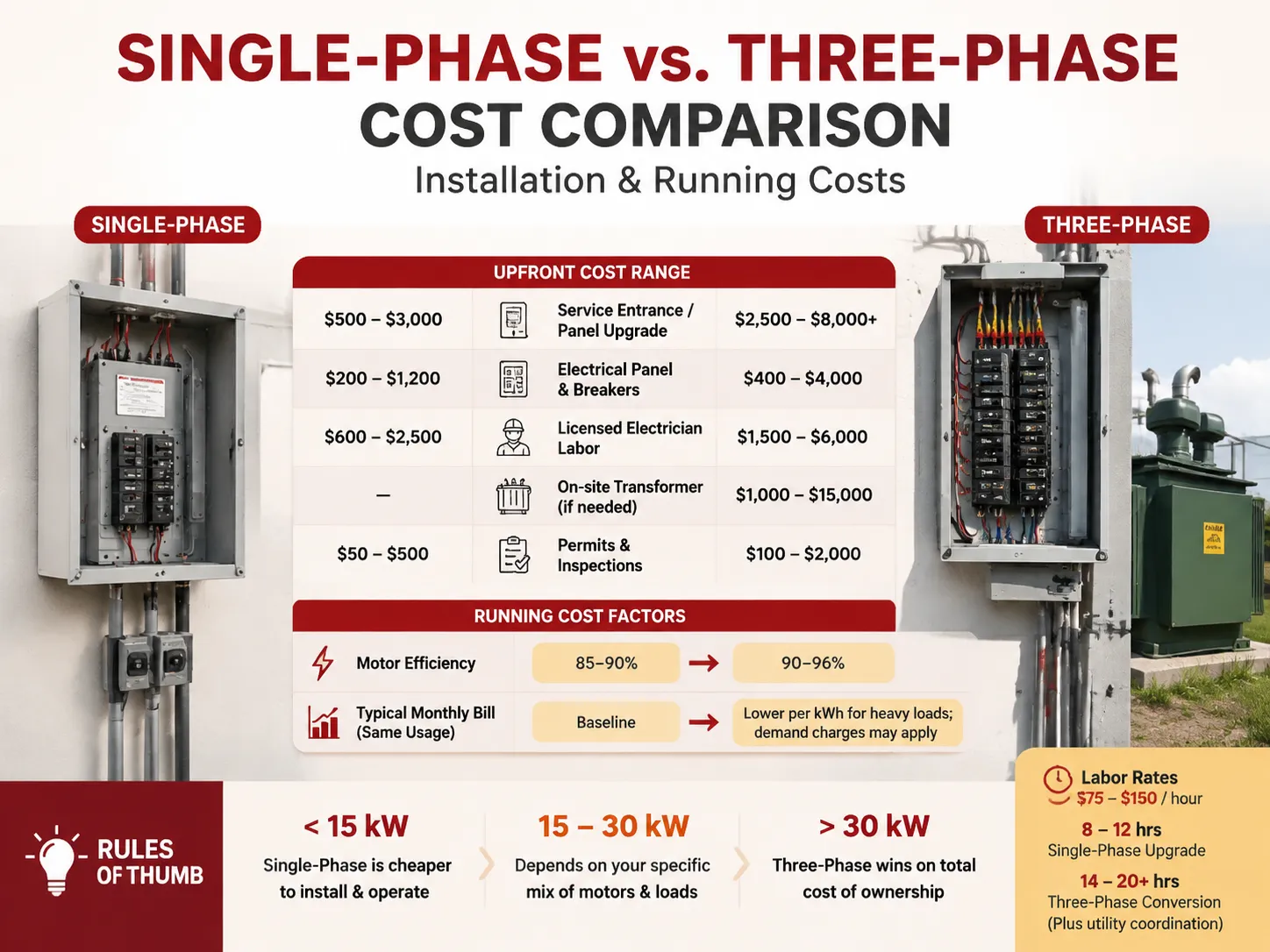
| รายการต้นทุน | เฟสเดียว | สามเฟส |
|---|---|---|
| การอัพเกรดทางเข้าบริการ / แผงไฟฟ้า | $500–$3,000 | $2,500–$8,000+ |
| การแปลงเต็มรูปแบบจากเฟสเดียวเป็นสามเฟส | — | $3,500–$25,000 (รวมหม้อแปลง, แผงไฟฟ้า, ค่าแรง) |
| แผงไฟฟ้าและเบรกเกอร์ | $200–$1,200 | $400–$4,000 |
| ค่าแรงช่างไฟฟ้าที่ได้รับใบอนุญาต | $600–$2,500 | $1,500–$6,000 |
| หม้อแปลงในสถานที่ (ถ้าจำเป็น) | — | $1,000–$15,000 |
| ค่าธรรมเนียมและการตรวจสอบ | $50–$500 | $100–$2,000 |
| ประสิทธิภาพของมอเตอร์ | 85–90% | 90–96% |
| บิลรายเดือนทั่วไป (รูปแบบการใช้งานเดียวกัน) | ค่าอ้างอิง | ต้นทุนต่อกิโลวัตต์ชั่วโมงที่ต่ำกว่าสำหรับโหลดหนัก; อาจมีค่าธรรมเนียมความต้องการไฟฟ้า |
ผลลัพธ์ของการวิเคราะห์ต้นทุนอาจช่วยประมาณการที่เป็นประโยชน์: ระหว่าง 15 kW ถึง 30 kW อาจเหมาะสมที่จะเลือกเทคโนโลยีสามเฟส และสำหรับโหลดต่ำกว่า 15 kW ใช้เฟสเดียว หากต้องการเปรียบเทียบต้นทุนบริการไฟฟ้า พบว่าต้นทุนแตกต่างกันตั้งแต่ $75 ต่อชั่วโมงจนถึง $150 สำหรับอัตราค่าแรงที่แพงที่สุด การเปลี่ยนบริการเฟสเดียวโดยทั่วไปใช้เวลา 8–12 ชั่วโมง ในขณะที่กระบวนการเปลี่ยนบริการสามเฟสต้องใช้เวลา 14–20 ชั่วโมง นอกจากนี้ สิ่งที่มักจำเป็นคือความร่วมมือกับบริษัทสาธารณูปโภคเพื่อเตรียมแบบจำลองที่เหมาะสมสำหรับการจ่ายไฟ.
วิธีตัดสินใจว่าคุณต้องการแบบใด
ขั้นตอนต่อไปนี้สามารถช่วยให้คุณไปถึงข้อสรุปที่ถูกต้อง:
- ตรวจสอบแผ่นชื่อของมอเตอร์หรือเครื่องจักร หากแสดงว่า “3-phase only” คุณต้องมีการจ่ายไฟสามเฟสโดยไม่มีข้อโต้แย้ง หมายความว่าการมีตัวแปลงเฟสเป็นทางเลือกที่ดีแต่ไม่คุ้มค่าในระยะยาว.
- รวมโหลดทั้งหมด หากโหลดต่ำกว่า 15-20 kW และมอเตอร์ไม่เกิน 5 HP เฟสเดียวก็ยอมรับได้ แต่ถ้าโหลดรวมเกิน 30 kW หรือมีมอเตอร์กำลังสูงหลายตัวต้องจ่ายไฟ ควรใช้การจ่ายไฟสามเฟส.
- ถามว่าคุณจะติดตั้งมอเตอร์อะไร เตรียมพร้อมที่จะใช้การจ่ายไฟสามเฟสหากมอเตอร์เกิน 5-10 HP เนื่องจากประสิทธิภาพ ความพร้อมใช้งาน และราคา.
- วิเคราะห์โอกาสในการพัฒนาเพิ่มเติม หากบริษัทคิดจะซื้ออุปกรณ์ใหม่ เช่น เครื่องจักร เครื่องชาร์จ และระบบ HVAC ในอนาคตอันใกล้ การมีการจ่ายไฟสามเฟสอาจช่วยประหยัดเงินมากเมื่อเทียบกับการติดตั้งระบบไฟฟ้าเต็มรูปแบบ.
- ตรวจสอบความเป็นไปได้ของการจ่ายไฟฟ้า จำเป็นต้องตรวจสอบตัวเลือกที่มีให้โดยบริษัทสาธารณูปโภคในพื้นที่ก่อนการจัดทำงบประมาณและตัดสินใจในโครงการ.
คุณสามารถแปลงจากเฟสเดียวเป็นสามเฟสได้หรือไม่?
มีสองวิธี:
- การอัปเกรดบริการสาธารณูปโภคเกี่ยวข้องกับการติดต่อบริษัทสาธารณูปโภคของคุณเพื่อจัดตั้งบริการสามเฟสที่ทรัพย์สินของคุณ ค่าใช้จ่ายอาจแตกต่างกันระหว่าง $3,500 ถึง $25,000 ขึ้นอยู่กับระยะทางของสายสามเฟสที่ใกล้ที่สุด ขนาดบริการของคุณ หม้อแปลงที่ต้องติดตั้ง และกฎระเบียบของพื้นที่ของคุณ วิธีนี้เป็นทางเลือกระยะยาวที่เหมาะสมสำหรับโหลดอุตสาหกรรมหนัก.
- ตัวแปลงเฟสประกอบด้วยตัวแปลงแบบโรตารี่และแบบสแตติก ซึ่งอนุญาตให้ใช้เครื่องจักรสามเฟสจากแหล่งจ่ายไฟเฟสเดียว วิธีนี้ใช้ได้ในบางกรณีและมีประสิทธิภาพน้อยกว่า แม้ว่าเครื่องยนต์ขนาดใหญ่บางตัวอาจต้องลดระดับลงบ้าง.
การเลือกเบรกเกอร์และสวิตช์เกียร์สำหรับแต่ละระบบ
เมื่อคุณกำหนดประเภทของแหล่งจ่ายไฟ อุปกรณ์ป้องกันของคุณต้องสอดคล้องกับมัน อุปกรณ์สำหรับการเชื่อมต่อสามเฟสจะต้องติดตั้งเบรกเกอร์แบบสามขั้วหรือสี่ขั้ว ดังนั้นจึงควรมีสวิตช์อัตโนมัติสามเฟสและแผงควบคุมที่เหมาะสมตามแรงดันไฟฟ้า คุณไม่ควรนำอุปกรณ์ที่ออกแบบมาสำหรับระบบเฟสเดียวมาใช้ซ้ำ ข้อควรจำต่อไปนี้มีความสำคัญ:
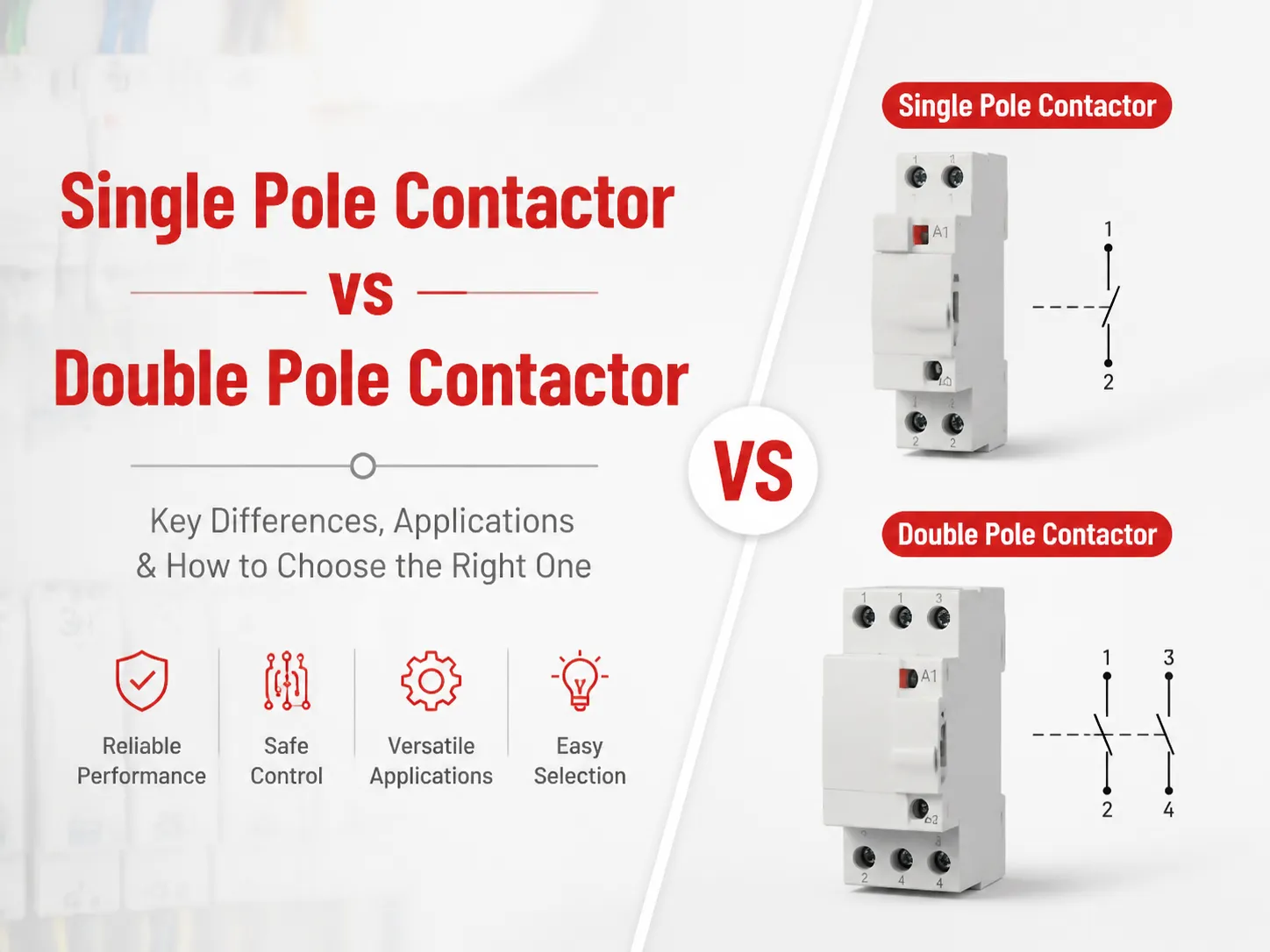
- ในกรณีของอุปกรณ์เฟสเดียว จะใช้เบรกเกอร์แบบ 1 ขั้ว (120 โวลต์) และเบรกเกอร์แบบ 2 ขั้ว (240 โวลต์).
- อุปกรณ์สามเฟสจะต้องใช้เบรกเกอร์แบบ 3 ขั้ว (พร้อมขั้วที่ 4 ในกรณีของระบบนิวตรัล) ที่มีการจัดอันดับตามแรงดันไฟฟ้าของระบบ.
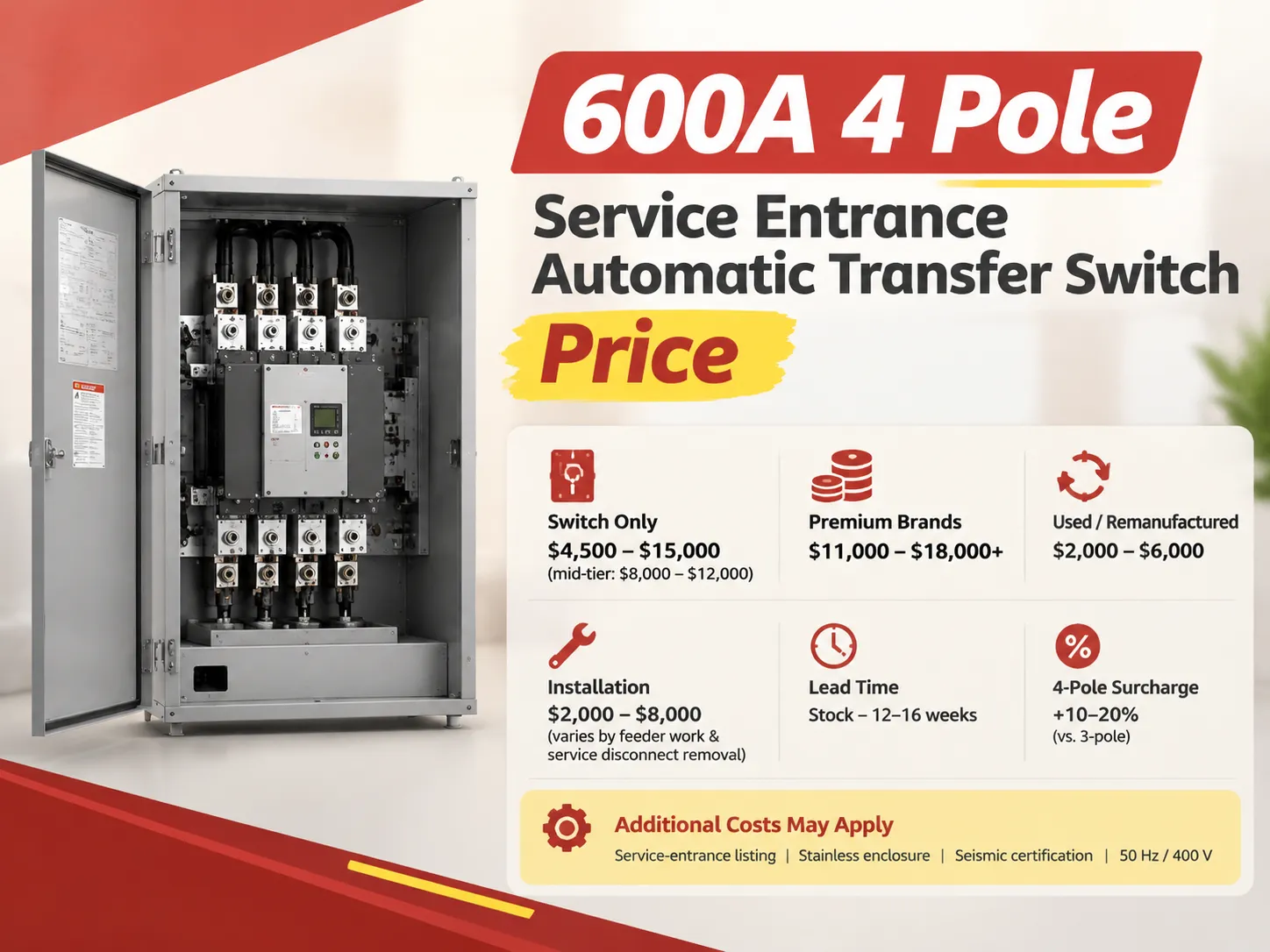
- เครื่องกำเนิดไฟฟ้าและสวิตช์อัตโนมัติจะต้องตรงกัน คุณไม่สามารถใช้ ATS เฟสเดียวเพื่อสลับแหล่งจ่ายไฟสามเฟสและในทางกลับกันได้ มีอุปกรณ์แยกเฟสหลายประเภท.
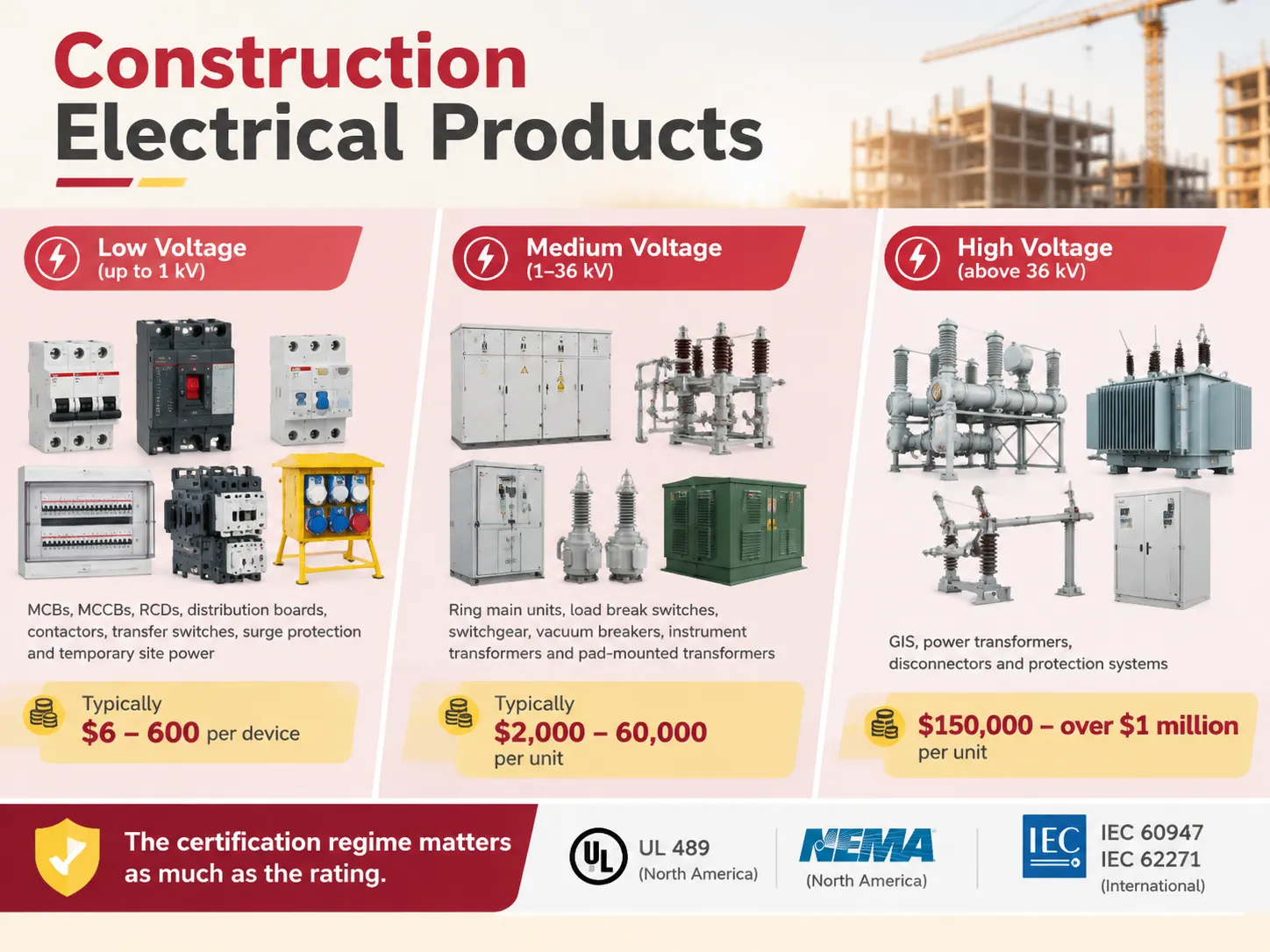
- สวิตช์เกียร์ต้องได้รับการรับรองตามข้อกำหนดของมาตรฐาน IEC และ UL.
เมื่อคุณสร้างระบบจ่ายไฟ การจัดหาอุปกรณ์เบรกและสวิตช์ที่เหมาะสมตั้งแต่เริ่มต้นจะช่วยป้องกันข้อผิดพลาดในกระบวนการ จุดเริ่มต้นที่ดีคือ คู่มือ MCB กับ MCCB, ซึ่งอธิบายว่าเบรกเกอร์แต่ละประเภทปกป้องระดับโหลดที่แตกต่างกันอย่างไรในระบบเฟสเดียวและสามเฟส.
คำถามที่พบบ่อย
220V เป็นเฟสเดียวหรือสามเฟส?
เมื่อเราพูดถึงคำว่า 220V เราอาจหมายถึงแรงดันไฟฟ้าสองแบบอย่างใดอย่างหนึ่ง ก่อนอื่น ในประเทศส่วนใหญ่ที่ไม่ใช่อเมริกาเหนือ แรงดันเฟสมาตรฐานคือ 220-230V ระหว่างสายไฟและสายกลาง อย่างไรก็ตาม เฟส A มักถูกพิจารณาเพียงแค่แรงดันระหว่างเฟสของระบบสามเฟส เช่น ในกรณีแรงดันแบบเดลต้าในงานติดตั้งเก่าที่มีแรงดัน 220V และในกรณีการเชื่อมต่อแบบวายที่มีแรงดันทั่วไป 380/220V ซึ่งกระแสในเฟสเท่ากับแรงดันเฟส-กลาง เพื่อกำหนดประเภทของแรงดันไฟฟ้าให้เพียงแค่นับจำนวนสายไฟ – สายไฟ 2 เส้น (สายไฟและสายกลาง) หมายถึงการกำหนดค่าแบบเฟสเดียว ในขณะที่สายไฟ 3 หรือ 4 เส้น (3 เฟส + สายกลางเสริม) หมายความว่าระบบเป็นแบบสามเฟส.
แบบสามเฟสหรือแบบเฟสเดียวแบบไหนดีกว่ากัน?
จริงๆ แล้วขึ้นอยู่กับการใช้งานของคุณ สำหรับบ้านและร้านค้าขนาดเล็กที่มีกำลังไฟ 15-20kW ระบบเฟสเดียวจะใช้งานง่ายและมีต้นทุนต่ำกว่าและเพียงพออย่างสมบูรณ์ อย่างไรก็ตาม สำหรับโรงงาน โรงซ่อม และอาคารพาณิชย์ รวมถึงศูนย์ข้อมูล และสำหรับงานติดตั้งที่มีมอเตอร์ขนาดใหญ่กว่า 5 HP หรือโหลดรวมสูงกว่า 30kW ระบบสามเฟสจะเหมาะสมกว่าเพราะมีประสิทธิภาพการใช้พลังงานสูงกว่าอย่างมาก (90-96% เทียบกับ 85-90% สำหรับมอเตอร์) และยังรับประกันการจ่ายไฟที่เสถียรและการทำงานที่ราบรื่นขึ้นโดยมีการสั่นสะเทือนน้อยกว่าและต้นทุนต่ำกว่า.
240V เป็นแบบเฟสเดียวหรือสามเฟส?
ในครัวเรือนในอเมริกาเหนือ 240V ส่วนใหญ่เป็นแหล่งจ่ายไฟแบบเฟสเดียว (เช่น แหล่งจ่ายไฟแบบแยกเฟส 120/240V ที่มีหม้อแปลงแบบแตะกลางที่รู้จักกันดี) อย่างไรก็ตาม 240V อาจเป็นแหล่งจ่ายไฟแบบสามเฟสในบางระบบ (เช่น แหล่งจ่ายไฟสามเฟสแบบเดลต้า 240V ที่ใช้กับอุปกรณ์อุตสาหกรรมต่างๆ หรือแรงดันเฟสต่อเฟส 240V ของแหล่งจ่ายไฟแบบวาย 415/240V) เพื่อหาว่าคุณกำลังทำงานกับระบบ 240V แบบใด ให้นับจำนวนสายไฟที่ขั้วต่อของอุปกรณ์และตรวจสอบการตั้งค่าบนแผงควบคุม.
ข้อเสียของไฟฟ้าสามเฟสมีอะไรบ้าง?
ต้นทุนและความยุ่งยากเป็นข้อเสียหลักสองประการ: บริการสามเฟสมีต้นทุนการติดตั้งสูงกว่ามาก (ค่าอัปเกรดบริการอยู่ระหว่าง $3,500 ถึง $25,000 ซึ่งรวมค่าหม้อแปลงและค่าแรงงาน) และต้องใช้สายไฟมากขึ้น แผงควบคุมขนาดใหญ่ขึ้น เบรกเกอร์สามขั้ว และการติดตั้งที่ซับซ้อนกว่า ไม่ใช่ทุกพื้นที่จะมีไฟฟ้าสามเฟส ซึ่งหมายความว่าคุณกำลังจ่ายเงินสำหรับพลังงานที่คุณจะไม่ใช้หากโหลดของคุณมีขนาดเล็ก ผู้ให้บริการพลังงานบางรายอาจเรียกเก็บค่าธรรมเนียมสำหรับการจ่ายไฟฟ้าสามเฟส นอกจากนี้ ระดับกระแสลัดวงจรสูงกว่ามาก ดังนั้นอุปกรณ์ป้องกันของคุณต้องได้รับการจัดอันดับอย่างเหมาะสม โดยเฉพาะตามเรตติ้ง AIC ของพวกมัน.
อ้างอิง
- NFPA 70 — National Electrical Code (NEC), บทความ 220 & 430: การคำนวณวงจรสาขา ฟีดเดอร์ และมอเตอร์
- IEEE Std 141 — IEEE แนวทางปฏิบัติที่แนะนำสำหรับการจ่ายไฟฟ้าในโรงงานอุตสาหกรรม
- NEMA MG 1 — มาตรฐานประสิทธิภาพและการใช้งานของมอเตอร์และเครื่องกำเนิดไฟฟ้า
- IEC 60038 — มาตรฐานแรงดันไฟฟ้าของ IEC
- Universal Technical Institute — แหล่งพลังงานเฟสเดียวกับสามเฟส: ความแตกต่างหลักและการใช้งานที่ดีที่สุด
- Enginist — เฟสเดียวกับสามเฟส: การเปรียบเทียบทางวิศวกรรมและการวิเคราะห์ต้นทุน
- LatestCost — การเปรียบเทียบต้นทุนไฟฟ้าสามเฟสกับเฟสเดียวปี 2026
สรุป
พลังงานเฟสเดียวและพลังงานสามเฟสไม่ใช่เพียงสองวิธีในการใช้ไฟฟ้า; แต่ละแบบมีประโยชน์สำหรับการใช้งานที่แตกต่างกัน พลังงานเฟสเดียวมีราคาถูก ใช้งานง่าย และเพียงพอสำหรับบ้านและกิจกรรมเชิงพาณิชย์ขนาดเล็กที่ใช้ไฟฟ้าสูงสุด 15-20 กิโลวัตต์ พลังงานสามเฟสเป็นแหล่งพลังงานที่ต่อเนื่อง ซึ่งมีกำลังไฟฟ้ามากกว่าพลังงานเฟสเดียว 1.73 เท่าในระดับกระแสไฟฟ้าเดียวกัน ใช้พลังงานน้อยในการขับเคลื่อนมอเตอร์ ทำงานเครื่องยนต์ได้อย่างราบรื่น และไม่มีข้อจำกัดในปริมาณพลังงานที่จ่ายออกไป; ด้วยเหตุนี้จึงถูกใช้อย่างแพร่หลายในธุรกิจที่ใช้พลังงานสูง เช่น โรงงานหรือศูนย์ข้อมูล แม้ว่าจะต้องลงทุนมากขึ้นในช่วงแรก.
เพียงเลือกวิธีการโดยตรวจสอบแผ่นชื่ออุปกรณ์ของคุณและกำหนดความต้องการโหลดจริงและการขยายตัวที่คาดหวัง และเมื่อถึงเวลาที่ต้องเลือกอุปกรณ์ป้องกัน เช่น เบรกเกอร์ แผงควบคุม หรือสวิตช์โอนขึ้นอยู่กับแหล่งจ่ายไฟที่คุณตัดสินใจใช้ HUYU Global มีอุปกรณ์ MCB, MCCB และ RCCB ที่ควบคุมได้ รวมถึงสวิตช์โอนอัตโนมัติแบบเฟสเดียวและสามเฟสตามมาตรฐาน IEC.