
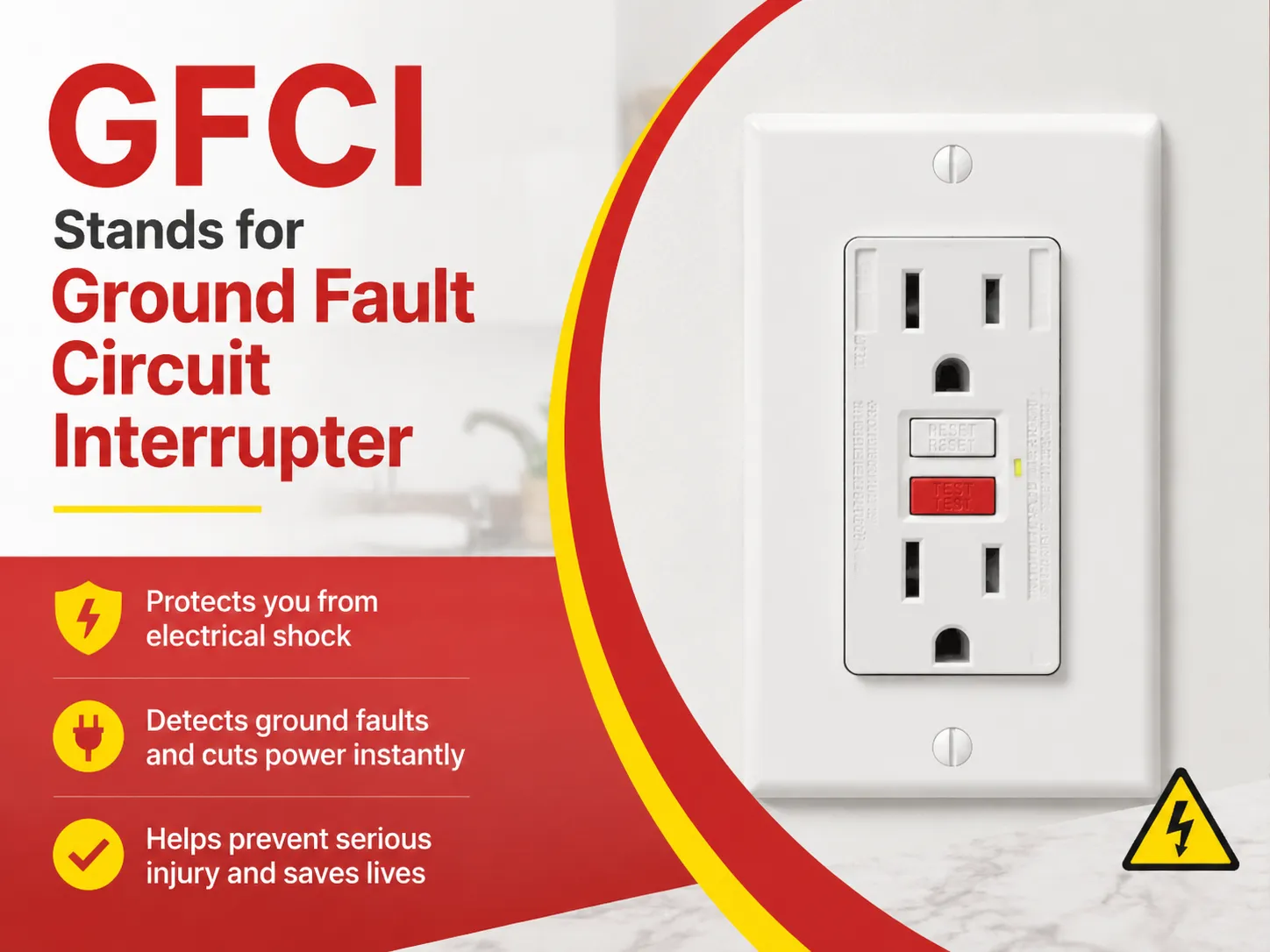
คุณอาจกำลังอ่านแผ่นสเปค กำลังเตรียมตัวสำหรับการทดสอบไฟฟ้า หรือเพียงแค่พยายามทำความเข้าใจว่าปลั๊กไฟในครัวของคุณทำงานอย่างไร เมื่อคุณเจอข้อความที่ว่า “GFCI หมายถึง ground fault circuit interference” ซึ่งอาจฟังดูถูกต้องแต่จริงๆ แล้วผิด ความหมายที่แท้จริงของ GFCI คือ ground fault circuit interrupter คุณอาจคิดว่าความแตกต่างระหว่างคำว่า “interrupter” กับ “interference” เป็นเพียงเรื่องของการสะกดคำเท่านั้น แต่จริงๆ แล้วไม่ใช่แค่เรื่องการสะกดคำเท่านั้น มันคือความแตกต่างในความหมาย ในบทความนี้คุณจะพบคำอธิบายว่า GFCI คืออะไร ทำไม ground fault circuit interference ถึงผิด และ GFCI ทำงานอย่างไร อะไรเป็นสาเหตุที่ทำให้เครื่องตัดวงจรทำงาน และสิ่งที่คุณไม่ควรเสียบเข้ากับ GFCI.
คำตอบด่วน: คำศัพท์ที่ถูกต้องของ GFCI ซึ่งย่อมาจาก Ground Fault Circuit Interrupter มักถูกเข้าใจผิดเป็นชื่ออื่นๆ เช่น ground fault circuit interference และ grand fuse circuitry ในศัพท์ทางไฟฟ้า คำนี้หมายถึงอุปกรณ์ที่ตัดวงจรไฟฟ้าเมื่อมันตรวจพบ ground fault ตามมาตรฐาน National Electrical Code และ UL ความหมายของ GFCI สามารถเข้าใจได้อย่างถูกต้องในลักษณะนี้.
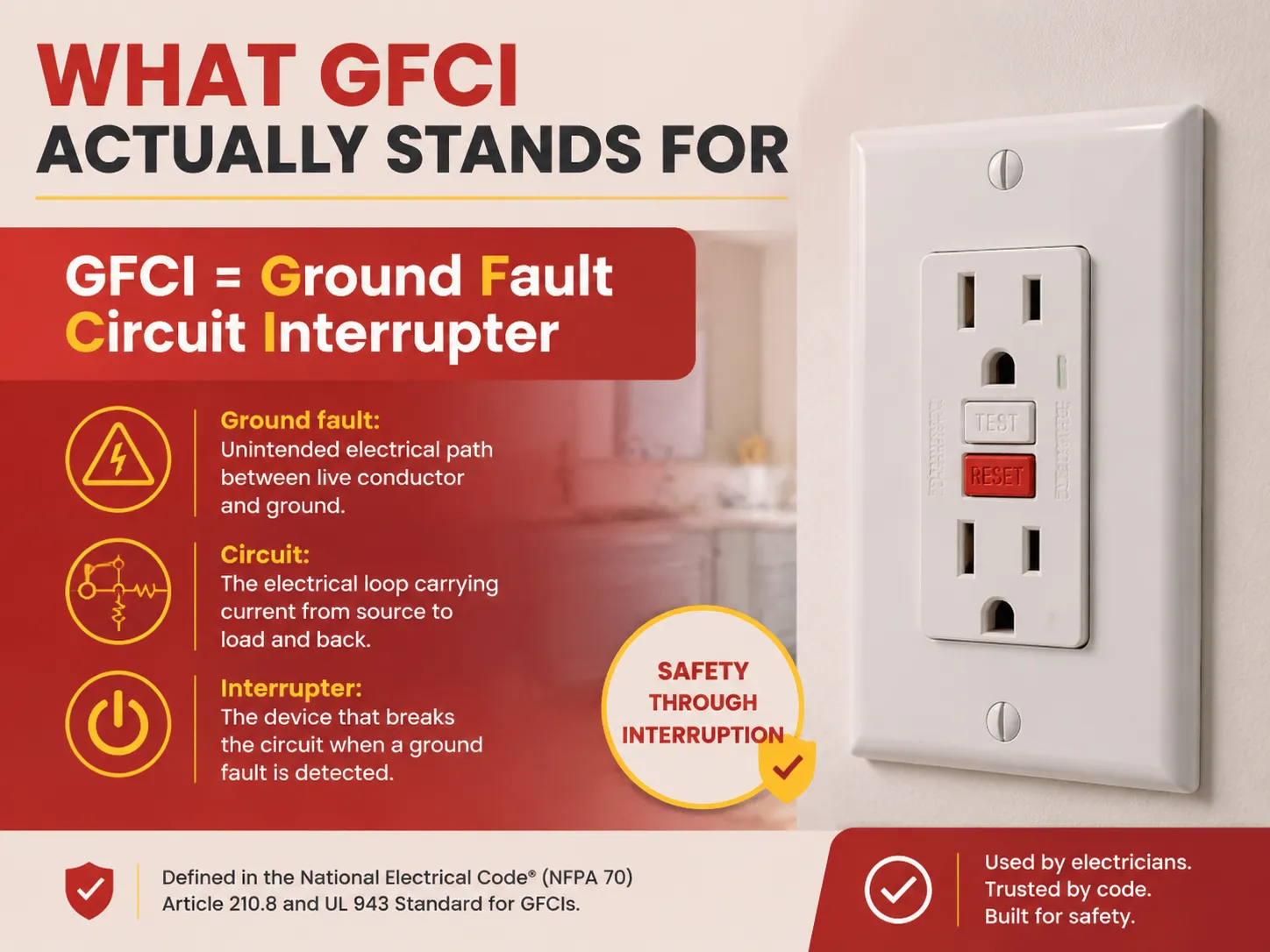
ความหมายที่แท้จริงของ GFCI
ตัวย่อ GFCI หมายถึง: Ground Fault Circuit Interrupter.
มาดูคำจำกัดความของแต่ละคำกัน:
- Ground fault: ความผิดพลาดของกราวด์ เส้นทางไฟฟ้าที่ไม่ตั้งใจระหว่างสายไฟที่มีกระแสไฟฟ้ากับกราวด์ (เช่น ผ่านคน ผ่านน้ำ ผ่านสายไฟที่ขาด หรือผ่านตัวเครื่องใช้ไฟฟ้า).
- Circuit: วงจร เส้นทางไฟฟ้าที่ทำให้กระแสไหลจาก N ไปยัง L ในวงจร.
- Interrupter: ตัวตัดวงจร หน่วยที่ทำหน้าที่ตัดวงจรเมื่อเกิด ground fault.
นี่ไม่ใช่แค่ความคิดเห็นส่วนตัว แต่ถูกกำหนดไว้ใน National Electrical Code (NFPA 70) ซึ่งใช้คำว่า “ground-fault circuit-interrupter” ในบทความ 210.8 และบทความที่เกี่ยวข้องอื่นๆ รวมถึงใช้ใน UL 943 ซึ่งเป็นมาตรฐานความปลอดภัยสำหรับ GFCI นอกจากนี้ โปรแกรมฝึกอบรมไฟฟ้าทั้งหมด เอกสารของผู้ผลิต (เช่น Leviton, Eaton, Legrand) และรายงานการตรวจสอบต่างใช้คำว่า ’interrupter“
ทำไม “Ground Fault Circuit Interference” ถึงผิด
คำว่า “interference” หมายถึงการรบกวน การขัดขวาง หรือการแทรกแซงวงจรโดยอุปกรณ์ เช่น การรบกวนแม่เหล็กไฟฟ้า (EMI) ซึ่งไม่ใช่สิ่งที่ GFCI ทำ GFCI ไม่รบกวนการทำงานปกติของวงจร เพราะมันทำงานเงียบและแทบมองไม่เห็นในวงจรในขณะที่ปล่อยให้กระแสไหลผ่านตามปกติ หน้าที่เดียวของมันคือหยุดการไหลของกระแสทันทีที่ตรวจพบ ground fault ดังนั้นมันจึงไม่ใช่การรบกวนแต่อย่างใด.
แต่ความสับสนนี้มาจากไหน? นี่คือคำอธิบายบางส่วน:
- เสียง: คำว่า “interrupter” และ “interference” เริ่มต้นด้วยตัวอักษรเดียวกันและเสียงคล้ายกัน ซึ่งทำให้เกิดความสับสน.
- การเติมคำอัตโนมัติ: โปรแกรมตรวจคำสะกดและ AI บางครั้งแทนที่คำว่า “interference” ด้วยคำนี้เพราะเป็นคำที่ใช้กันแพร่หลายกว่า.
- ความสับสนกับ EMI: ผู้คนมักสับสนระหว่าง “interference” กับ “electromagnetic interference” (EMI).
คำที่ถูกต้องตาม NEC และ UL คือ interrupter และ GFCI ไม่ได้หมายถึง “ground fault circuit interference” ตัวอย่างของความผิดพลาดนี้คือการเขียน GFCI ให้หมายถึง “ground fault circuit interference”.
GFCI คืออะไรและทำงานอย่างไร?
อุปกรณ์ตัดวงจรไฟฟ้าขัดข้องเป็นอุปกรณ์ป้องกันที่ทำงานรวดเร็ว ใช้เพื่อปกป้องบุคคลจากอันตรายไฟฟ้าช็อต อุปกรณ์นี้เปรียบเทียบกระแสไฟฟ้าในแหล่งจ่ายที่ไหลผ่านสายไฟร้อนกับกระแสไฟฟ้าในสายไฟกลางปกติ กระแสไฟฟ้าเหล่านี้โดยปกติจะเท่ากัน อย่างไรก็ตาม เมื่อมีกระแสไฟฟ้าบางส่วนสูญหายผ่านพื้นดิน เช่น เมื่อมือเปียกสัมผัสเครื่องใช้ไฟฟ้า เครื่องเป่าผมตกลงในน้ำ หรือสายไฟเสียหาย GFCI จะตรวจจับความไม่สมดุลของกระแสไฟฟ้าและหยุดการไหลของไฟฟ้าในเวลาไม่เกิน 1/40 วินาที.
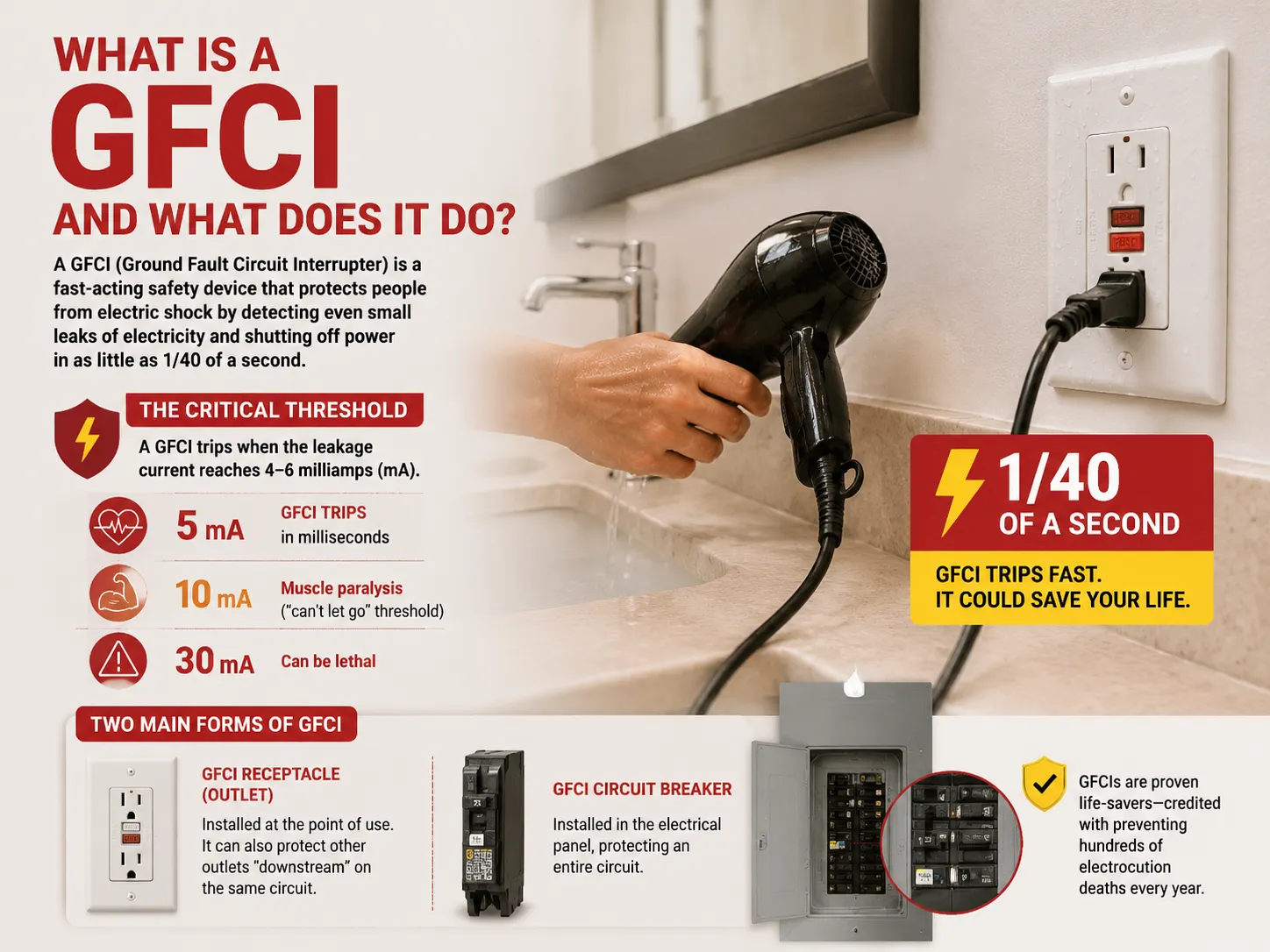
ระดับวิกฤต: GFCI จะทำงานที่ระดับ 4 ถึง 6 mA เพื่อเปรียบเทียบ 10 mA อาจทำให้กล้ามเนื้อเป็นอัมพาต (ระดับ “ปล่อยไม่ออก”) ในขณะที่ระดับที่เป็นอันตรายถึงชีวิตประมาณ 30 mA ในมิลลิวินาที GFCI จะทำงานที่ 5 mA และหยุดการช็อตก่อนที่จะสายเกินไป นั่นคือเหตุผลที่คณะกรรมการความปลอดภัยผลิตภัณฑ์ผู้บริโภคให้เครดิต GFCI ในการช่วยชีวิตผู้คนจากการถูกไฟฟ้าช็อตหลายร้อยราย GFCI มีสองประเภทหลัก:
- เต้ารับ GFCI: เต้ารับที่มีปุ่ม TEST และ RESET ที่เรารู้จัก สามารถพบได้ในสถานที่ใช้งาน และยังสามารถปกป้องเต้ารับอื่น ๆ ในวงจรเดียวกันได้.
- เบรกเกอร์วงจร GFCI: ตั้งอยู่ที่แผงไฟฟ้า ปกป้องวงจรทั้งหมดจากอันตราย.
บทความของเราเกี่ยวกับ เบรกเกอร์วงจรและอุปกรณ์ตัดวงจรไฟฟ้าขัดข้อง อธิบายวิธีการทำงานร่วมกันของทั้งสอง.
วิธีที่ GFCI ตรวจจับความผิดพลาดของพื้นดิน
GFCI มีหม้อแปลงขนาดเล็กที่เรียกว่าหม้อแปลงกระแส (CT) ที่ล้อมรอบสายไฟร้อนและสายไฟกลาง นี่คือวิธีการทำงาน:
- การทำงานปกติ: กระแสไฟฟ้าไหลผ่านสายไฟร้อนและกลับผ่านสายไฟกลางในปริมาณเท่ากัน สนามแม่เหล็กจะหักล้างกัน ดังนั้นหม้อแปลงจึงไม่ตรวจจับกระแสไฟฟ้าใด ๆ.
- Ground fault: ความผิดพลาดของกราวด์ กระแสไฟฟ้าเบี่ยงเบนผ่านบุคคล น้ำ หรือการขาดสายไปยังพื้นดินแทนที่จะไหลตามเส้นทางปกติ ดังนั้นสายไฟร้อนจึงมีกระแสไฟฟ้ามากกว่าสายไฟกลาง.
- ความไม่สมดุล: หม้อแปลงตรวจจับความแตกต่างตั้งแต่ 4–6 มิลลิแอมแปร์.
- สัญญาณ: หม้อแปลงกระแสทำงานกับโซลินอยด์ที่เปิดสวิตช์ทางกลและตัดการจ่ายไฟจากเต้ารับ.
- การรีเซ็ต: ผู้ใช้ต้องกดปุ่มรีเซ็ตเพื่อเปิดใช้งานไฟฟ้าอีกครั้ง เนื่องจาก GFCI จะเก็บข้อมูลเกี่ยวกับความผิดพลาดไว้.
GFCI เป็นการป้องกันที่แตกต่างจากเบรกเกอร์วงจรโดยสิ้นเชิง เพราะมันตรวจจับการรั่วไหลของพื้นดิน ไม่ใช่การโอเวอร์โหลด.
ข้อเท็จจริงและหลักฐาน: มาตรฐานและรหัส
นี่คือหลักฐานเอกสารที่ยืนยันคำถามนี้อย่างชัดเจน:
| แหล่งที่มา | สิ่งที่กล่าวไว้ |
|---|---|
| NFPA 70 (รหัสไฟฟ้าแห่งชาติ) | กำหนดและกำหนดให้มี “ground-fault circuit-interrupters” ในบทความ 210.8 (หน่วยที่อยู่อาศัย), บทความ 210.12 (arc-fault), และบทความ 680 (สระว่ายน้ำ) คำทางการคือ “interrupter” |
| UL 943 | มาตรฐานความปลอดภัยมีชื่อว่า “Standard for Safety for Ground-Fault Circuit-Interrupters” GFCI ที่ได้รับการรับรองจาก UL จะถูกทดสอบให้ตัดวงจรที่ 4–6 mA ภายใน 25 ms. |
| NEC 210.8 | กำหนดให้มีการป้องกัน GFCI สำหรับเต้ารับในห้องน้ำ, เคาน์เตอร์ครัว, โรงรถ, ภายนอกอาคาร, ห้องใต้ดิน, พื้นที่คลาน, พื้นที่ซักล้าง และบาร์เปียก. |
| เอกสารของผู้ผลิต | Leviton, Eaton, Legrand, Hubbell — หน้าผลิตภัณฑ์และคู่มือการติดตั้งของผู้ผลิตรายใหญ่ทุกรายใช้คำว่า “ground fault circuit interrupter” |
| การใช้ในพจนานุกรม/อุตสาหกรรม | พจนานุกรมศัพท์ทางไฟฟ้า (IEEE, ESFI, OSHA) ทั้งหมดกำหนดความหมายของ GFCI ว่าเป็น “ground fault circuit interrupter” |
หน่วยงานที่เชี่ยวชาญด้านไฟฟ้าทั้งหมดหลีกเลี่ยงคำว่า “interference” หากคุณได้รับการทดสอบหรือสอบใบอนุญาตโดยใช้ตัวย่อ คำตอบที่ต้องเลือกเสมอคือคำว่า “interrupter”
พื้นที่ที่ต้องใช้ GFCI
ตาม NEC 210.8 พื้นที่ต่อไปนี้ในที่อยู่อาศัยจำเป็นต้องติดตั้งการป้องกัน Ground Fault Circuit Interrupter (GFCI):
- ห้องน้ำควรมีการป้องกัน GFCI สำหรับเต้ารับทั้งหมด.
- สำหรับเคาน์เตอร์ครัว เต้ารับทั้งหมดที่อยู่ภายใน 6 ฟุตจากอ่างล้างจานควรได้รับการป้องกันด้วย GFCI.
- ควรติดตั้งการป้องกัน GFCI ในโรงรถหรือห้องใต้ดินที่ยังไม่เสร็จทั้งหมด.
- เต้ารับภายนอกทั้งหมด รวมถึงที่ใช้ในพื้นที่คลานและอาคารที่ยังไม่เสร็จ ต้องติดตั้ง GFCI.
- ห้องซักล้างต้องเป็นไปตามข้อกำหนด GFCI.
- บาร์เปียกต้องมีการป้องกัน GFCI.
- การป้องกัน GFCI ยังจำเป็นสำหรับบ้านเรือ, สระว่ายน้ำ และสปา.
อย่างไรก็ตาม ข้อกำหนด GFCI ที่กว้างขวางใช้ได้กับสถานที่เชิงพาณิชย์และอุตสาหกรรมด้วย รหัสปัจจุบันเข้มงวดขึ้น (2020 และ 2023) ในเรื่องเครื่องใช้ไฟฟ้าที่ก่อนหน้านี้ไม่จำเป็นต้องมี GFCI.
สาเหตุที่ทำให้ GFCI ตัดวงจรคืออะไร?
GFCI จะตัดวงจรเมื่อรู้สึกว่ามีกระแสไฟรั่วลงดิน สาเหตุที่พบบ่อยที่สุด:
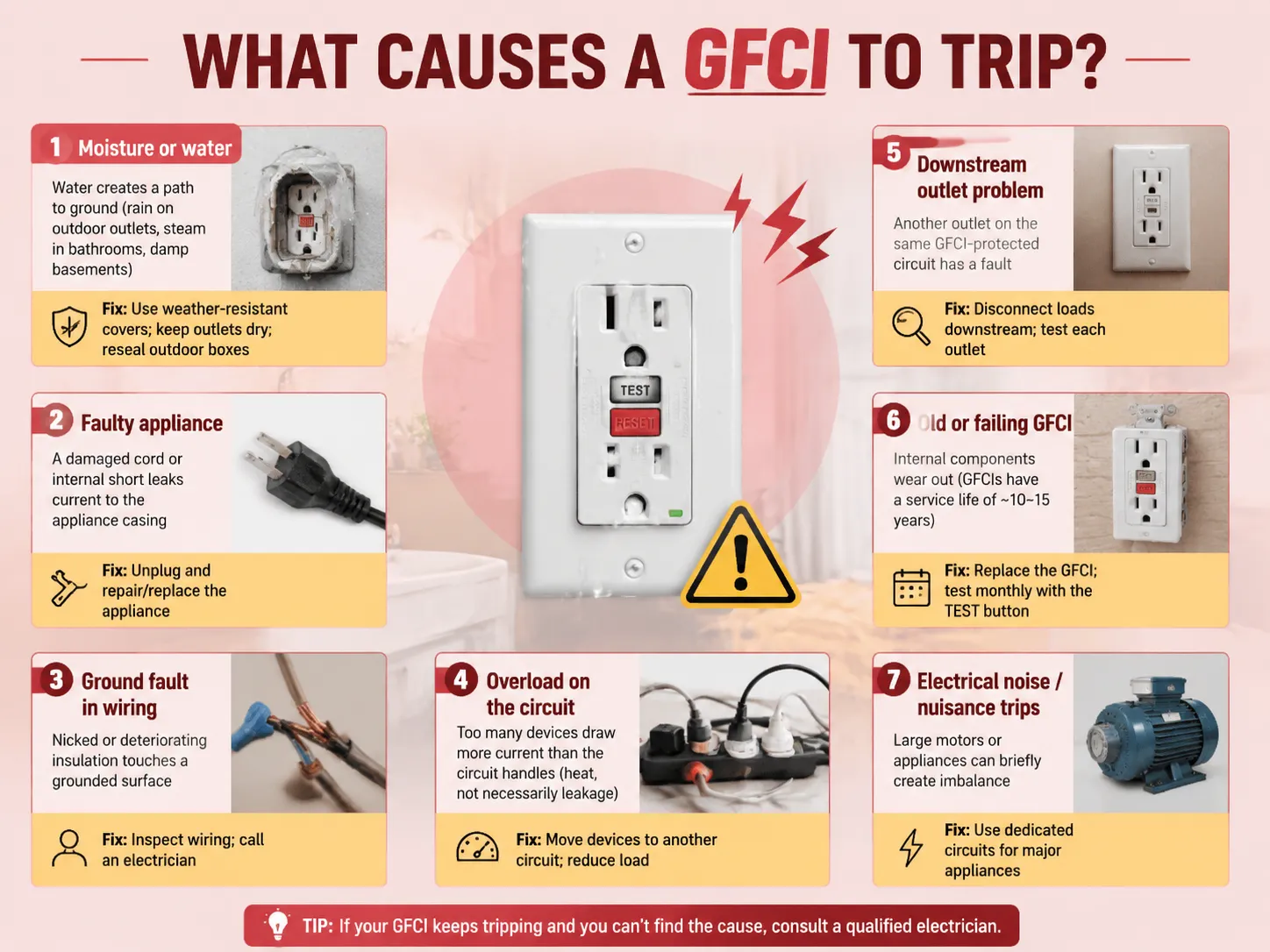
| สาเหตุ | สิ่งที่เกิดขึ้น | การแก้ไข |
|---|---|---|
| ความชื้นหรือน้ำ | น้ำสร้างเส้นทางลงดิน (ฝนตกบนเต้ารับภายนอก, ไอน้ำในห้องน้ำ, ห้องใต้ดินชื้น) | ใช้ฝาครอบกันน้ำ; รักษาเต้ารับให้แห้ง; ปิดผนึกกล่องภายนอกใหม่ |
| เครื่องใช้ไฟฟ้าชำรุด | สายไฟชำรุดหรือวงจรภายในลัดวงจรทำให้มีกระแสรั่วไปยังตัวเครื่องใช้ไฟฟ้า | ถอดปลั๊กและซ่อมแซมหรือเปลี่ยนเครื่องใช้ไฟฟ้า |
| กระแสรั่วในสายไฟ | ฉนวนที่ถูกขีดข่วนหรือเสื่อมสภาพสัมผัสกับพื้นผิวที่ต่อดิน | ตรวจสอบสายไฟ; เรียกช่างไฟฟ้า |
| โหลดเกินวงจร | อุปกรณ์จำนวนมากดึงกระแสเกินกว่าที่วงจรรับได้ (ความร้อน ไม่ใช่การรั่วไหล) | ย้ายอุปกรณ์ไปยังวงจรอื่น; ลดโหลด |
| ปัญหาเต้ารับด้านล่าง | เต้ารับอื่นในวงจรที่มีการป้องกัน GFCI เดียวกันมีข้อผิดพลาด | ถอดโหลดด้านล่าง; ทดสอบเต้ารับแต่ละจุด |
| GFCI เก่าหรือชำรุด | อุปกรณ์ภายในสึกหรอ (GFCI มีอายุการใช้งานประมาณ 10–15 ปี) | เปลี่ยน GFCI; ทดสอบทุกเดือนด้วยปุ่ม TEST |
| สัญญาณรบกวนไฟฟ้า / การตัดวงจรโดยไม่จำเป็น | มอเตอร์หรือเครื่องใช้ไฟฟ้าขนาดใหญ่สามารถสร้างความไม่สมดุลชั่วคราว | ใช้วงจรเฉพาะสำหรับเครื่องใช้ไฟฟ้าหลัก |
สำหรับข้อมูลเพิ่มเติมเกี่ยวกับการวินิจฉัยการตัดวงจรซ้ำที่ระดับเบรกเกอร์ โปรดดูบทความของเราเกี่ยวกับ สาเหตุที่ทำให้เบรกเกอร์ตัดวงจร และ เบรกเกอร์ที่ตัดวงจรซ้ำ ๆ เป็นอันตรายหรือไม่.
สิ่งที่ไม่ควรเสียบเข้ากับ GFCI
นี่คือรายละเอียดสำคัญที่ควรให้ความสนใจ รหัสอาคารระบุความจำเป็นของความปลอดภัย GFCI ในบางกรณี แต่มีอุปกรณ์หลายชนิดที่ไม่ควรใช้งานบนวงจรที่ติดตั้งความปลอดภัย GFCI เนื่องจากการปิดเครื่องโดยไม่คาดคิดอาจทำให้อุปกรณ์เสียหายได้.
- ตู้เย็นและช่องแช่แข็ง: หาก GFCI ตัดวงจรโดยไม่คาดคิด ตู้เย็นจะปิดโดยที่คุณไม่รู้ตัว และสถานการณ์นี้จะทำให้อาหารเสีย ในหลายกรณี ช่างไฟฟ้ามักติดตั้งตู้เย็นบนวงจรเฉพาะและตรวจสอบให้แน่ใจว่ามีการป้องกัน GFCI เฉพาะในพื้นที่ที่กฎหมายกำหนด เช่น กรณีที่ตั้งอยู่ห่างจากอ่างล้างมือไม่เกิน 6 ฟุต.
- ปั๊มสูบน้ำทิ้ง: หาก GFCI ตัดวงจร ปั๊มจะปิดและทำให้ชั้นใต้ดินน้ำท่วม รหัสปัจจุบันระบุว่าวงจรปั๊มสูบน้ำทิ้งต้องมีการป้องกัน GFCI ดังนั้นจึงแนะนำให้ใช้เบรกเกอร์ GFCI ที่มีระบบเตือนภัยหรือปั๊มสูบน้ำทิ้งที่ใช้แบตเตอรี่.
- เครื่องช่วยชีวิตและเครื่องมือแพทย์: เหล่านี้ต้องทำงานได้อย่างต่อเนื่องและต้องการการจ่ายพลังงานที่รับประกันได้.
- ตู้แช่แข็งและตู้แช่แข็งในโรงรถ: ปัญหาเดียวกันกับตู้เย็น.
- คอมพิวเตอร์/เซิร์ฟเวอร์ (ในบางกรณี): การตัดวงจรโดยไม่ตั้งใจอาจทำให้สูญเสียข้อมูลสำคัญ ดังนั้นจึงต้องติดตั้งวงจรที่ไม่ขัดจังหวะ.
สิ่งสำคัญที่นี่คือการปฏิบัติตามแนวทาง NEC เป็นสิ่งจำเป็นหากมีการระบุการป้องกัน GFCI สำหรับกรณีของคุณ เนื่องจากเครื่องใช้บางอย่างมีวงจรเฉพาะแยกจากวงจรอื่นและติดตั้งเบรกเกอร์ GFCI พร้อมสัญญาณเตือนเพื่อแจ้งสถานการณ์การตัดวงจร หากคุณไม่แน่ใจในข้อกำหนดที่ใช้งานอยู่ ควรติดต่อช่างไฟฟ้าที่ได้รับอนุญาต.
GFCI กับ เบรกเกอร์วงจร: เหมือนกันหรือไม่?
ไม่ — พวกมันป้องกันอันตรายที่แตกต่างกัน:
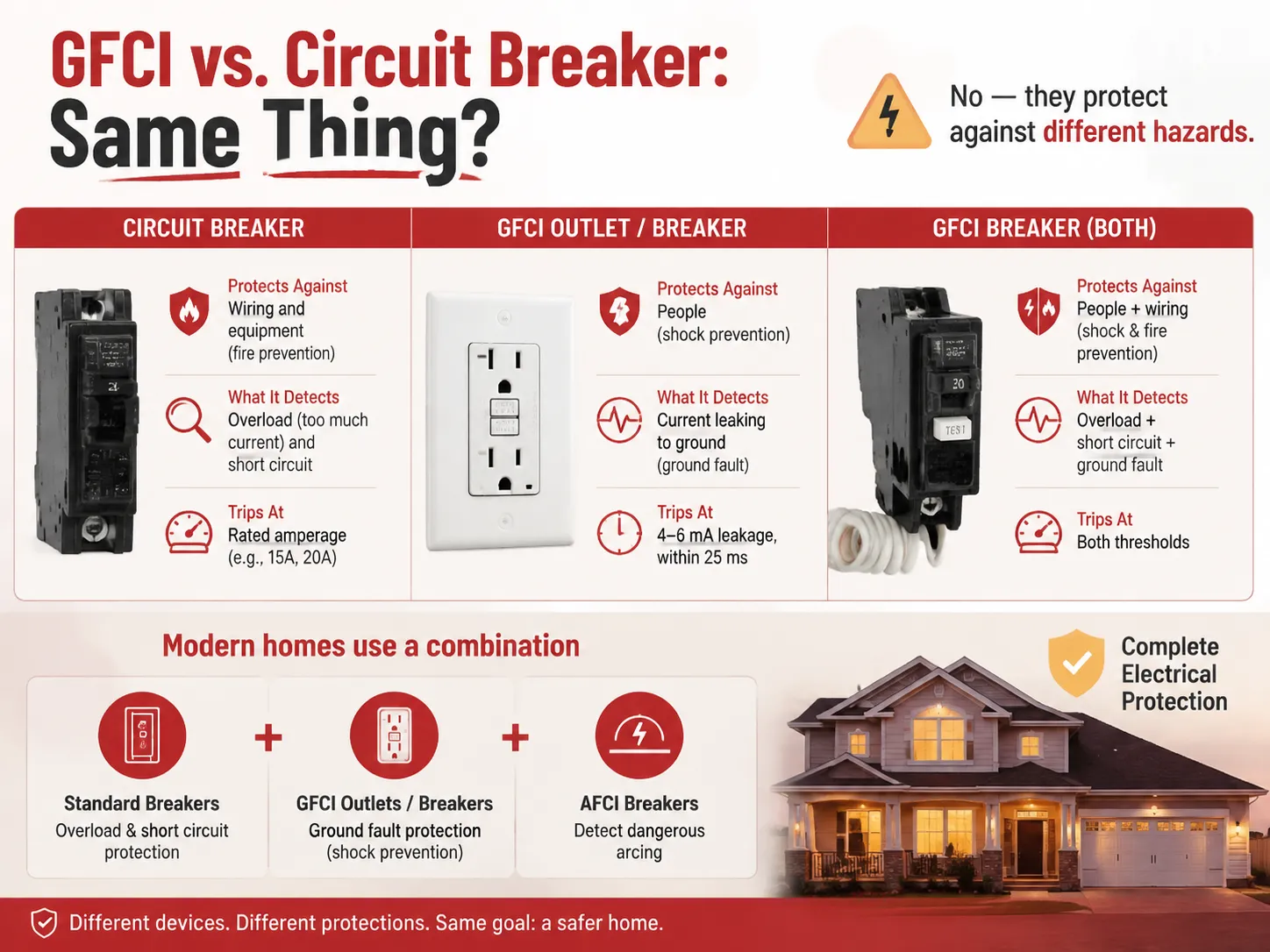
| อุปกรณ์ | ป้องกันจาก | สิ่งที่ตรวจจับได้ | ตัดวงจรที่ |
|---|---|---|---|
| เบรกเกอร์วงจร | สายไฟและอุปกรณ์ (ป้องกันไฟไหม้) | กระแสเกิน (กระแสไฟฟ้ามากเกินไป) และวงจรลัดวงจร | กระแสไฟฟ้าที่กำหนด (เช่น 15A, 20A) |
| GFCI | คน (ป้องกันไฟฟ้าช็อต) | กระแสไฟฟ้ารั่วไหลสู่ดิน (ข้อผิดพลาดของกราวด์) | การรั่วไหล 4–6 mA ภายใน 25 มิลลิวินาที |
| เบรกเกอร์ GFCI (ทั้งสองอย่าง) | คน + สายไฟ | กระแสเกิน + วงจรลัดวงจร + ข้อผิดพลาดของกราวด์ | ทั้งสองเกณฑ์ |
บ้านในปัจจุบันติดตั้งเบรกเกอร์วงจรมาตรฐานสำหรับการป้องกันกระแสเกิน, เต้ารับ GFCI (Ground Fault Circuit Interrupter) หรือเบรกเกอร์ GFCI สำหรับการป้องกันไฟฟ้าช็อต และเบรกเกอร์วงจรอัลต้าเพื่อการตรวจจับระดับกระแสไฟฟ้าอาร์คที่ไม่ปลอดภัย หากคุณต้องการเข้าใจอุปกรณ์กระแสไฟฟ้ารั่วที่เกี่ยวข้องซึ่งใช้ในส่วนอื่นของโลก การเปรียบเทียบของเราระหว่าง RCCB กับ RCBO ครอบคลุมเวอร์ชันสากลของแนวคิดเดียวกัน.
คำถามที่พบบ่อย
GFCI ย่อมาจาก ground fault circuit interrupter หรือไม่?
ใช่ — GFCI หมายถึง ground fault circuit interrupter นี่คือเวอร์ชันที่ถูกต้องตามที่ National Electrical Code (NFPA 70), UL 943 และผู้ผลิตชั้นนำทั้งหมดกำหนด GFCI ตรวจสอบกระแสไฟฟ้าที่ไหลออกผ่านสายร้อนเทียบกับการกลับผ่านสายกลาง โดย GFCI จะตัดวงจรเกือบจะในช่วงเวลา 1/40 วินาทีหากความแตกต่างอยู่ที่ประมาณ 4-6 มิลลิแอมป์ (ข้อผิดพลาดของกราวด์) สถานะอื่น ๆ ของการขยายเช่น ground fault circuit interference นั้นไม่ถูกต้อง.
อะไรที่ไม่ควรเสียบเข้ากับ GFCI?
เครื่องใช้ที่อาจเป็นอันตรายหากไฟฟ้าขัดข้อง ได้แก่ ตู้เย็น (อาหารเน่าเสีย), ปั๊มสูบน้ำ (น้ำท่วม), อุปกรณ์ทางการแพทย์และเครื่องช่วยชีวิต (เสี่ยงต่อชีวิต) และคอมพิวเตอร์/เซิร์ฟเวอร์ที่สำคัญ (เสี่ยงต่อการสูญเสียข้อมูล) อย่างไรก็ตาม รหัสยังคงกำหนดให้มี GFCI ในหลายพื้นที่เหล่านี้ ในหลายกรณีสามารถทำได้โดยใช้วงจรเฉพาะ, เบรกเกอร์ GFCI พร้อมสัญญาณเตือน หรือแบตเตอรี่สำรอง; ไม่ควรมองข้ามการป้องกัน ควรปรึกษาผู้เชี่ยวชาญสำหรับสถานการณ์ของคุณและตรวจสอบรหัสท้องถิ่น.
GFCI มีประโยชน์สำหรับการติดตั้งวงจร ฟิวส์วงจรหลัก วงจรไฟฟ้ากระแสรั่ว ground fault circuit interrupter การติดตั้งวงจรไฟฟ้ากระแสรั่วหรือไม่?
คำตอบที่ถูกต้องคือ ground fault circuit interrupter ตัวเลือกอื่นทั้งหมดไม่ถูกต้อง; “grand fuse circuitry” เข้าใจผิดว่า GFCI คือฟิวส์; “impulse” ไม่มีความเกี่ยวข้องกับการทำงานของ GFCI; และ “ground fault circuitry installation” เป็นคำอธิบายการติดตั้งทั่วไป ไม่ใช่อุปกรณ์ คำที่ตรงกับคำนิยามใน NEC และ UL คือ ground fault circuit interrupter — อุปกรณ์ที่ตัดวงจรทันทีที่ตรวจพบ ground fault.
อะไรเป็นสาเหตุที่ทำให้ ground fault circuit interrupter (GFCI) ตัดวงจร?
เมื่อ GFCI ตรวจพบการรั่วไหลของกระแสไฟฟ้าไปยังกราวด์ (4–6 mA) มันจะตัดวงจร สาเหตุทั่วไปที่ทำให้เกิดเหตุการณ์นี้ ได้แก่ การมีความชื้นหรือน้ำในบริเวณปลั๊กไฟ (เช่น ฝน ไอน้ำ ห้องใต้ดินชื้น); เครื่องใช้ไฟฟ้าที่ชำรุดมีสายไฟเสียหายหรือเกิดช็อตภายใน; การรั่วไหลของกราวด์ในสายไฟ (ฉนวนถูกบาด); การโหลดเกินวงจรเนื่องจากเชื่อมต่ออุปกรณ์จำนวนมากเกินไป; ความผิดปกติที่ปลั๊กไฟด้านล่างที่อยู่ภายใต้การป้องกัน GFCI เดียวกัน; GFCI ที่เก่าหรือชำรุด (อายุการใช้งานประมาณ 10-15 ปี); และเสียงรบกวนจากมอเตอร์ขนาดใหญ่ หาก GFCI ตัดวงจรบ่อยเกินไป จำเป็นต้องถอดปลั๊กอุปกรณ์ทั้งหมดในวงจรออก จากนั้นรีเซ็ตและเสียบปลั๊กทีละตัวเพื่อระบุแหล่งที่มาของความผิดพลาด หรือขอความช่วยเหลือจากช่างไฟฟ้ามืออาชีพ.
อ้างอิง
- NFPA 70 (รหัสไฟฟ้าแห่งชาติ) — รหัสที่มีอำนาจกำหนดคำว่า “ground-fault circuit-interrupter” และระบุว่าต้องใช้การป้องกัน GFCI ที่ใดบ้าง (บทความ 210.8, บทความ 680).
- UL 943 — มาตรฐานความปลอดภัยสำหรับ Ground-Fault Circuit-Interrupters — มาตรฐานความปลอดภัย UL ที่รับรอง GFCI โดยระบุเกณฑ์การตัดวงจรที่ 4–6 mA และเวลาตัดวงจร 25 ms.
- ความปลอดภัยทางไฟฟ้า OSHA — แนวทางความปลอดภัยในสถานที่ทำงานของสหรัฐฯ เกี่ยวกับการใช้ GFCI ในงานก่อสร้างและอุตสาหกรรมทั่วไป เสริมความถูกต้องของคำศัพท์และการใช้งานที่จำเป็น.
- มูลนิธิความปลอดภัยทางไฟฟ้าระหว่างประเทศ (ESFI) — องค์กรไม่แสวงหาผลกำไรที่ให้ความรู้แก่ผู้บริโภคเกี่ยวกับการทดสอบ การติดตั้ง GFCI และบทบาทการป้องกันชีวิตของ ground fault.
- ความปลอดภัยทางไฟฟ้า CPSC — ข้อมูลจากคณะกรรมการความปลอดภัยผลิตภัณฑ์ผู้บริโภคสหรัฐฯ เกี่ยวกับการป้องกันการถูกไฟฟ้าช็อตโดย GFCI และแนวทางความปลอดภัยไฟฟ้าในบ้าน.
- U.S. Department of Energy — การใช้งานปลั๊ก GFCI — แนวทางปฏิบัติในการทำงานของปลั๊ก GFCI วิธีทดสอบรายเดือน และสาเหตุที่ทำให้ตัดวงจร.
สรุป
เป็นที่ชัดเจนว่า GFCI หมายถึง Ground Fault Circuit Interrupter ไม่ใช่ “ground fault circuit interference” คำว่า “interrupter” ใช้เพื่อกำหนดหน้าที่ของอุปกรณ์นี้ — ตัดวงจรชั่วคราวหลังจากตรวจพบ ground fault ขณะที่คำว่า “interference” หมายถึงสิ่งที่ทำให้การทำงานปกติหยุดชะงัก ซึ่งตรงกันข้ามกับสิ่งที่ GFCI ทำ.
นี่คือสิ่งที่ควรจดจำ:
- คำที่ถูกต้องคือ interrupted ซึ่งได้รับการยืนยันอย่างเป็นทางการโดย NEC, UL 943, OSHA และผู้ผลิตทั้งหมด.
- GFCI เปรียบเทียบกระแสขาออกและขาเข้า; มันจะตัดวงจรที่ 4-6 mA ภายในเวลาไม่กี่มิลลิวินาที.
- มันปกป้องบุคคลแต่ไม่ปกป้องสายไฟเพราะในขณะที่การป้องกันวงจรป้องกันการโอเวอร์โหลด GFCI ทำงานเพื่อป้องกันการช็อตไฟฟ้า.
- ตรวจสอบให้แน่ใจว่า GFCI ถูกทดสอบทุกเดือนด้วยปุ่ม TEST และเปลี่ยนทุก 10-15 ปี.
- หลีกเลี่ยงการเชื่อมต่ออุปกรณ์ช่วยชีวิตและเก็บอาหารกับวงจร GFCI ที่การตัดวงจรอาจเป็นอันตราย — ให้เลือกวงจรที่ไม่มี GFCI หรือวงจรที่มีสัญญาณเตือนตามที่กฎหมายอนุญาต.
ครั้งต่อไปที่คุณเห็นข้อความว่า “GFCI ย่อมาจาก ground fault circuit interference” บนเว็บ คุณจะรู้แน่ชัดว่านี่ไม่ถูกต้องและเพราะเหตุใด.