
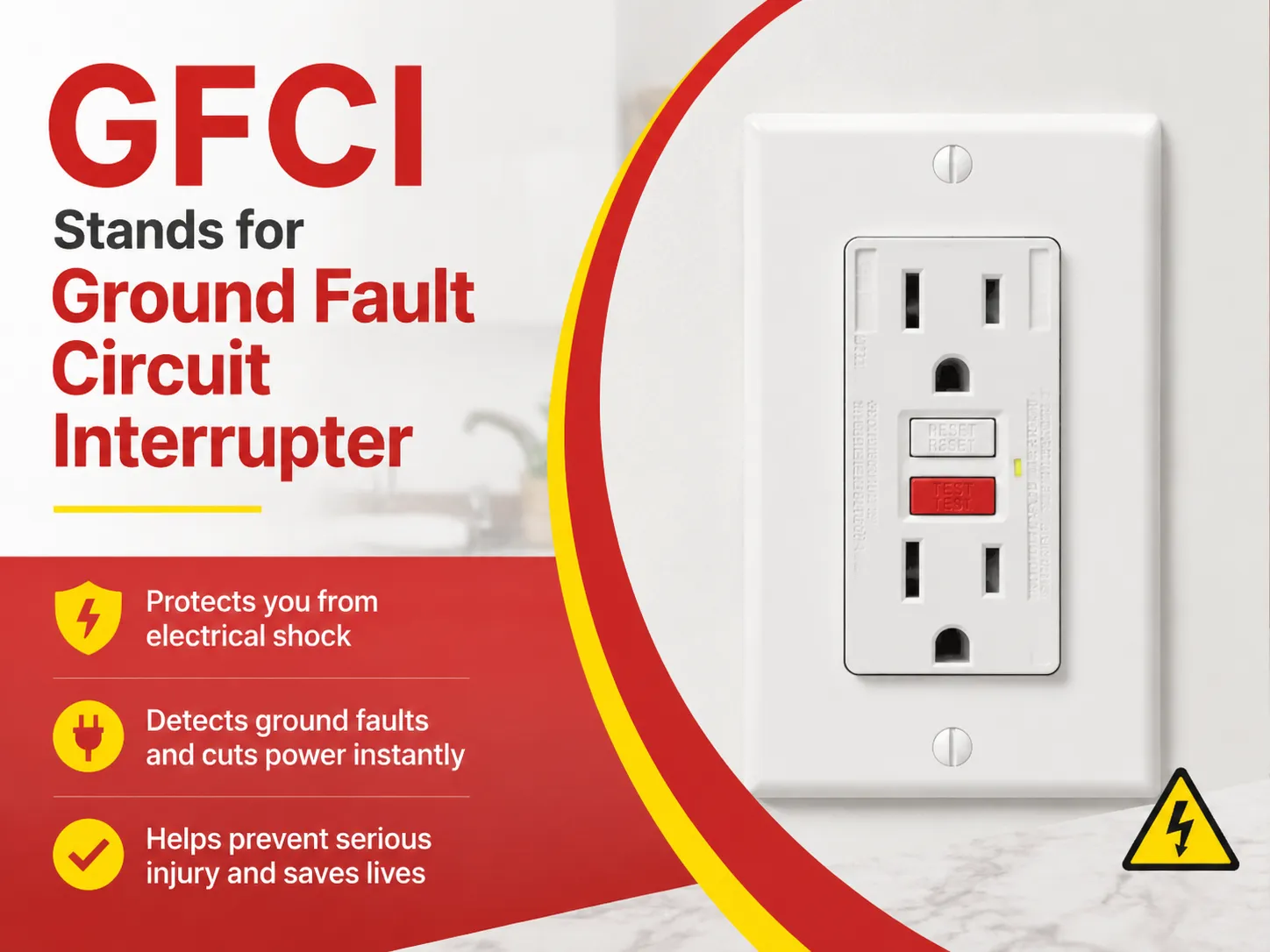
قد تكون تقرأ ورقة مواصفات، أو تستعد لاختبار في الكهرباء، أو تحاول ببساطة معرفة كيفية عمل مآخذ المطبخ لديك عندما تصادف العبارة التي تقول “GFCI تعني تداخل دائرة خطأ الأرض”. قد يبدو ذلك صحيحًا، لكنه خطأ. ما يعنيه GFCI فعليًا هو قاطع دائرة خطأ الأرض. قد تعتقد أن الفرق بين كلمتي “interrupter” و “interference” هو فقط في التهجئة، لكنه ليس فقط مسألة تهجئة؛ بل هو الفرق في المعنى. في هذا المقال ستجد تفسيرات لما هو GFCI، ولماذا "تداخل دائرة خطأ الأرض" خطأ، وكيف يعمل GFCI، وما الذي يمكن أن يسبب تعطل الجهاز، وما الذي يجب ألا تقوم بتوصيله بـ GFCI.
إجابة سريعة: المصطلح الصحيح GFCI، الذي يرمز إلى Ground Fault Circuit Interrupter، غالبًا ما يُساء فهمه بأسماء أخرى مثل تداخل دائرة خطأ الأرض ودوائر الصمامات الكبرى في المصطلحات الكهربائية. يشير هذا المصطلح إلى الجهاز الذي يقطع الدائرة الكهربائية عندما يكتشف خطأ أرضي. وفقًا للكود الوطني للكهرباء (NEC) وقوانين UL، يمكن فهم معنى GFCI بشكل صحيح بهذه الطريقة.
ما الذي يعنيه GFCI فعليًا
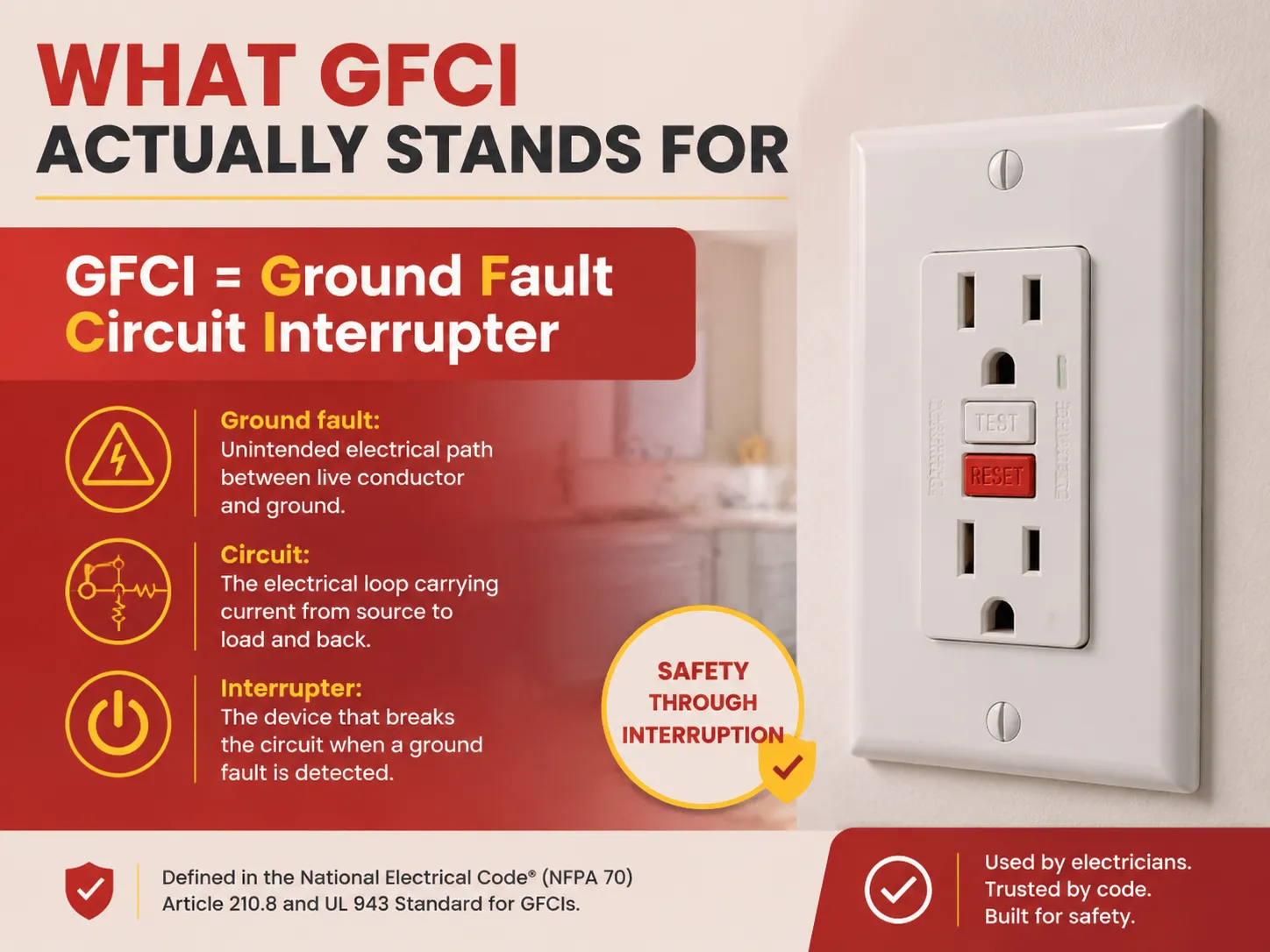
الاختصار GFCI يعني: Ground Fault Circuit Interrupter.
دعونا ننظر إلى تعريفات كل كلمة من الكلمات:
- خطأ الأرض: مسار غير مقصود للكهرباء بين سلك حي والأرض (أي، عبر شخص، عبر الماء، عبر سلك مكسور أو عبر غلاف جهاز).
- الدائرة: المسار الكهربائي الذي يجعل التيار يتدفق من N إلى L في حلقة.
- القاطع: وحدة تقوم بفصل الدائرة إذا حدث أي خطأ أرضي.
هذا ليس مجرد رأي. إنه منصوص عليه في الكود الوطني للكهرباء (NFPA 70)، حيث يُستخدم مصطلح “قاطع دائرة خطأ الأرض” في المادة 210.8 وغيرها من المواد ذات الصلة. كما يُستخدم في UL 943، وهو المعيار السلامي لـ GFCIs. علاوة على ذلك، تستخدم جميع برامج التدريب الكهربائي، ووثائق المصنعين (مثل Leviton، Eaton، Legrand)، وتقارير التفتيش مصطلح ’interrupter“.”
لماذا “تداخل دائرة خطأ الأرض” خطأ
مصطلح “interference” يعني الانقطاع أو الإعاقة أو التداخل في الدائرة بواسطة الجهاز، مثل التداخل الكهرومغناطيسي (EMI). هذا ليس ما يفعله GFCI. لا يتداخل GFCI مع عمل الدائرة الطبيعي لأنه يبقى هادئًا ويثبت أنه غير مرئي في الدائرة بينما يسمح للتيار بالتدفق كما ينبغي. الوظيفة الوحيدة التي يقوم بها هي إيقاف تدفق التيار بمجرد اكتشافه لخطأ أرضي. لذلك، فهو ليس تداخلًا بأي حال.
لكن من أين يأتي الالتباس؟ إليك بعض التفسيرات:
- الصوت: تبدأ كلمتا “interrupter” و “interference” بنفس الحروف وتبدو متشابهة إلى حد ما، مما يؤدي إلى الالتباس.
- الإكمال التلقائي: تقوم أدوات التدقيق الإملائي والذكاء الاصطناعي أحيانًا باستبدال “interference” بهذه الكلمة لأنها أكثر استخدامًا.
- الالتباس مع EMI: يميل الناس إلى الخلط بين “interference” و “التداخل الكهرومغناطيسي” (EMI).
الكلمة الدقيقة، التي تم التحقق منها وفقًا لـ NEC و UL، هي interrupter، ولا يمكن أن تعني GFCIs “تداخل دائرة خطأ الأرض”. مثال على هذا الخطأ هو كتابة GFCI بمعنى “تداخل دائرة خطأ الأرض”.
ما هو GFCI وماذا يفعل؟
جهاز انقطاع دائرة الخطأ الكهربائي هو جهاز احترازي سريع الاستجابة يُستخدم لحماية الأفراد من مخاطر الصدمة الكهربائية. يقارن الجهاز التيار في المصدر الذي يتدفق في سلك الخط الحار مع التيار في السلك المحايد. عادةً ما تكون هذه التيارات متساوية. ومع ذلك، عندما يفقد بعض التيار عبر الأرض مثل عندما تلمس يد مبللة جهازًا كهربائيًا، أو سقوط مجفف شعر في الماء، أو وجود سلك تالف. يستشعر GFCI عدم توازن التيار ويوقف تدفق الكهرباء في مدة أقصاها 1/40 من الثانية.
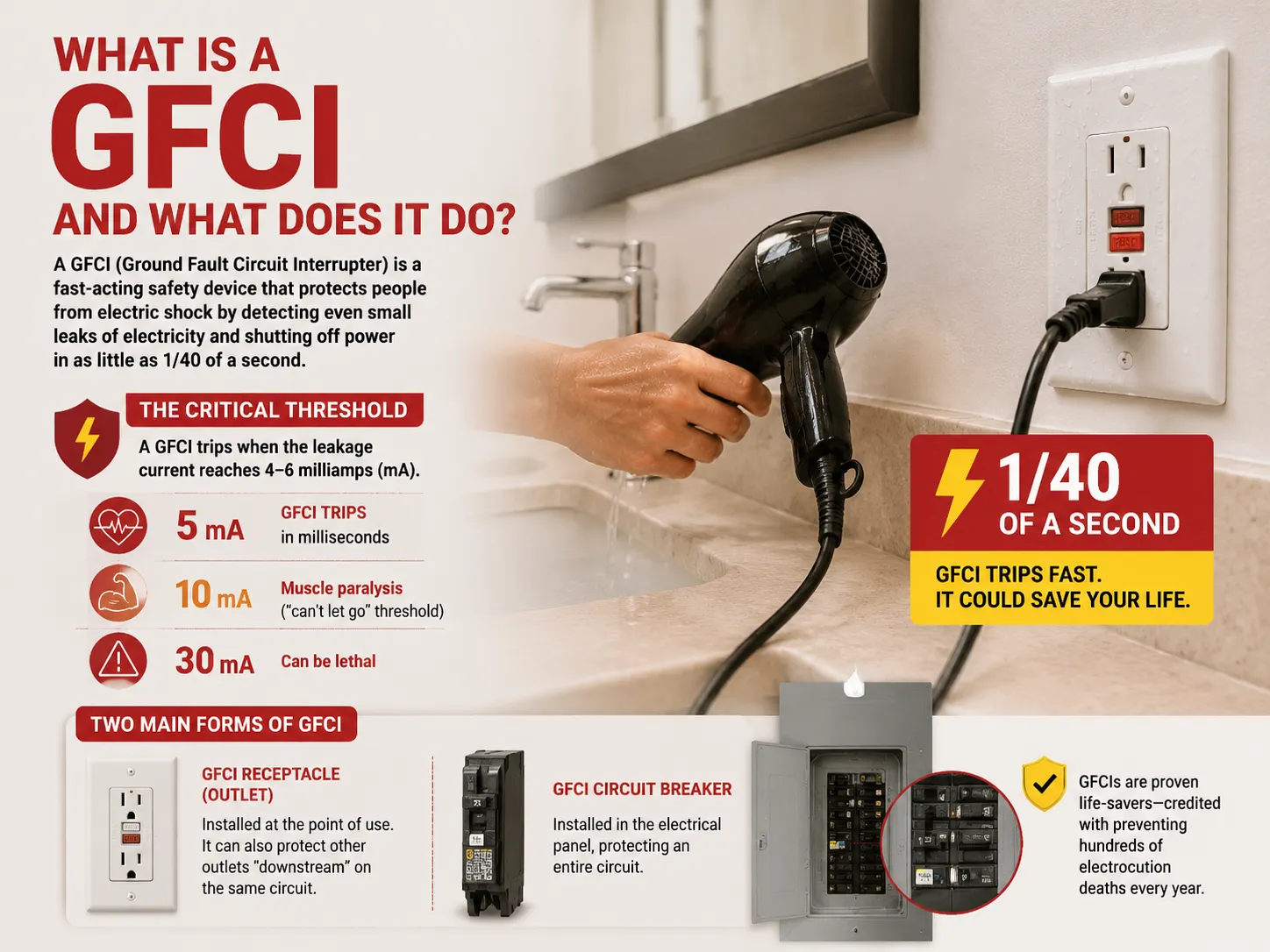
المستوى الحرج: يتم تشغيل GFCI عند علامة 4 إلى 6 مللي أمبير. للمقارنة، قد يسبب 10 مللي أمبير شللًا عضليًا (عتبة “عدم القدرة على الإفلات”)، بينما المستوى القاتل حوالي 30 مللي أمبير. في أجزاء من الثانية، تنشط GFCIs عند 5 مللي أمبير وتوقف الصدمة قبل فوات الأوان. لهذا السبب تعطي لجنة سلامة المنتجات الاستهلاكية غالبًا الفضل لـ GFCIs في إنقاذ المئات من الصعق الكهربائي. لدى GFCIs نوعان رئيسيان:
- مخرج GFCI: المخرج المزود بزرَي TEST و RESET الذي نعرفه ويمكن العثور عليه في مواقع استخدامه. يمكنه أيضًا حماية مخارج أخرى على دائرته.
- قاطع دائرة GFCI: يقع في لوحة الكهرباء، ويحمي الدائرة بأكملها من المخاطر.
مقالنا عن قواطع الدائرة ومقاطعات دائرة خطأ الأرض يشرح كيف يعمل الاثنان معًا.
كيف يكتشف GFCI خطأ الأرض
يحتوي GFCI على محول صغير يُعرف باسم محول التيار (CT) يحيط بكل من الأسلاك الحارة والمحايدة. إليك كيف يعمل:
- التشغيل العادي: يتدفق التيار عبر السلك الحار ويعود عبر السلك المحايد بكميات متساوية من التيار. تلغي المجالات المغناطيسية بعضها البعض، وبالتالي لا يكتشف المحول أي تيار.
- خطأ الأرض: يتم تحويل التيار عبر شخص أو ماء أو كسر إلى الأرض بدلاً من اتباع مساره المعتاد. وبالتالي، يحصل السلك الحار على تيار أكثر من السلك المحايد.
- عدم التوازن: يكتشف المحول الفرق من 4 إلى 6 مللي أمبير.
- الإشارة: يحفز محول التيار ملفًا لولبيًا يفتح جهريًا جهات الاتصال ويفصل الطاقة عن المخرج.
- إعادة التعيين: يحتاج المستخدم إلى الضغط على زر إعادة التعيين لتمكين الطاقة مرة أخرى لأن GFCI يحتفظ بمعلومات الخطأ.
GFCI هو نوع حماية مختلف تمامًا عن قاطع الدائرة لأنه يكتشف تسرب الأرض وليس الأحمال الزائدة.
الحقائق والأدلة: المعايير والرموز
إليك الأدلة الوثائقية التي تحسم السؤال مرة واحدة وإلى الأبد:
| المصدر | ما يقوله |
|---|---|
| NFPA 70 (الكود الكهربائي الوطني) | يعرّف ويطلب “مقاطعات دائرة خطأ الأرض” في المادة 210.8 (وحدات السكن)، المادة 210.12 (قاطع القوس)، والمادة 680 (المسابح). المصطلح الرسمي هو “interrupter”.” |
| UL 943 | معيار السلامة بعنوان “المعيار الخاص بسلامة قواطع الدائرة الكهربائية لتيار الخطأ الأرضي.” يتم اختبار قواطع الدائرة الكهربائية لتيار الخطأ الأرضي المدرجة في UL لتفصل عند 4–6 مللي أمبير خلال 25 مللي ثانية. |
| NEC 210.8 | يتطلب حماية GFCI لمآخذ الحمامات، أسطح مطابخ، الكراجات، الأماكن الخارجية، الأقبية، مساحات الزحف، مناطق الغسيل، والبارات الرطبة. |
| أدبيات الشركة المصنعة | Leviton، Eaton، Legrand، Hubbell — صفحات المنتجات ودلائل التثبيت لكل مصنع رئيسي تستخدم مصطلح “قاطع دائرة التيار الأرضي.” |
| استخدام القاموس/الصناعة | جميع معاجم صناعة الكهرباء (IEEE، ESFI، OSHA) تعرف GFCI على أنه “قاطع دائرة التيار الأرضي.” |
جميع السلطات الحقيقية في مجال الكهرباء تتجنب مصطلح “التداخل.” إذا تم تقديم اختبار أو امتحان ترخيص بناءً على الاختصار، فإن الإجابة التي يجب اختيارها دائمًا هي كلمة “قاطع.”
أماكن الحاجة لأجهزة GFCI
وفقًا لـ NEC 210.8، يجب تركيب حماية قاطع دائرة التيار الأرضي (GFCI) في المناطق التالية في البيئات السكنية:
- يجب أن تحتوي الحمامات على حماية GFCI لجميع المآخذ.
- بالنسبة لأسطح المطابخ، يجب حماية جميع المآخذ ضمن 6 أقدام من الحوض بواسطة GFCI.
- يجب توفير حماية GFCI في جميع الكراجات أو الأقبية غير المكتملة.
- يجب تركيب GFCI في جميع المآخذ الخارجية، بما في ذلك تلك المستخدمة في مساحات الزحف والمباني غير المكتملة.
- يجب أن تلتزم غرف الغسيل بمتطلبات GFCI.
- يجب توفير حماية GFCI للبارات الرطبة.
- كما يتطلب توفير حماية GFCI لأكواخ القوارب، حمامات السباحة، والمنتجعات الصحية.
ومع ذلك، تنطبق متطلبات GFCI الموسعة أيضًا في البيئات التجارية والصناعية. أصبحت الأكواد الحالية أكثر صرامة (2020 و2023) فيما يتعلق بالأجهزة التي لم تكن تتطلب سابقًا عمل GFCI.
ما الذي يسبب فصل GFCI؟
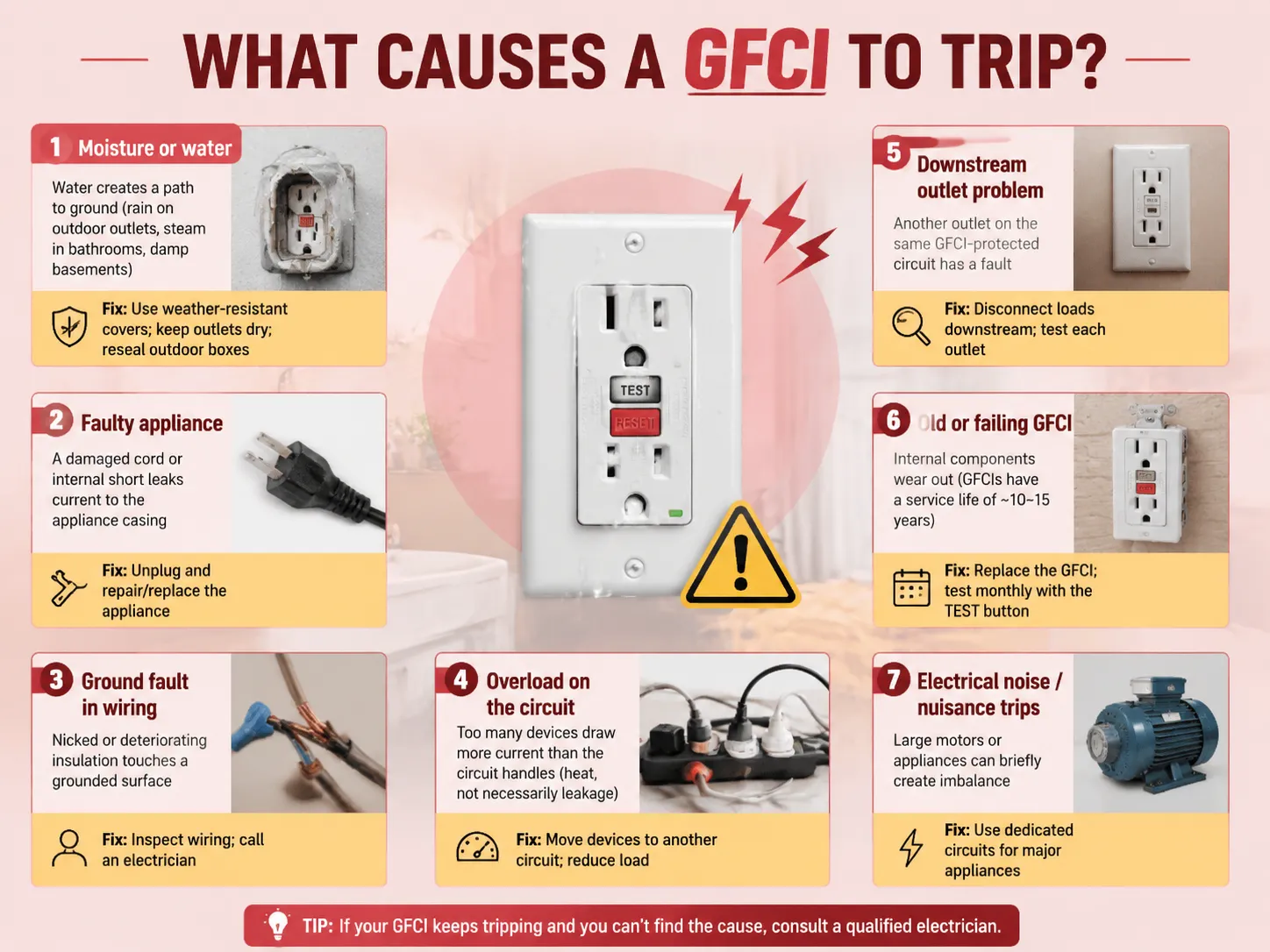
يفصل GFCI كلما شعر بتسرب التيار إلى الأرض. الأسباب الأكثر شيوعًا:
| السبب | ما يحدث | الحل |
|---|---|---|
| الرطوبة أو الماء | الماء يخلق مسارًا إلى الأرض (المطر على المآخذ الخارجية، البخار في الحمامات، الأقبية الرطبة) | استخدم أغطية مقاومة للطقس؛ حافظ على جفاف المآخذ؛ أعد ختم صناديق المآخذ الخارجية |
| جهاز معطل | سلك تالف أو قصر داخلي يتسبب في تسرب التيار إلى غلاف الجهاز | افصل الجهاز وأصلحه/استبدله |
| خطأ أرضي في الأسلاك | عزل مخدوش أو متدهور يلامس سطحًا مؤرضًا | افحص الأسلاك؛ استدعِ كهربائيًا |
| حمل زائد على الدائرة | عدد كبير من الأجهزة يسحب تيارًا أكثر مما تتحمله الدائرة (حرارة، وليس بالضرورة تسرب) | انقل الأجهزة إلى دائرة أخرى؛ قلل الحمل |
| مشكلة في المأخذ السفلي | مأخذ آخر على نفس الدائرة المحمية بـ GFCI به عطل | افصل الأحمال السفلى؛ اختبر كل مأخذ |
| GFCI قديم أو معطل | مكونات داخلية تتلف (عمر خدمة GFCI حوالي 10–15 سنة) | استبدل GFCI؛ اختبر شهريًا باستخدام زر TEST |
| ضوضاء كهربائية / فصل غير مبرر | المحركات أو الأجهزة الكبيرة قد تخلق خللًا مؤقتًا | استخدم دوائر مخصصة للأجهزة الرئيسية |
للمزيد حول تشخيص الفصول المتكررة على مستوى القاطع، راجع مقالاتنا عن ما الذي يسبب فصل قاطع الدائرة و ما إذا كان فصل القاطع المتكرر خطيرًا.
ما الذي لا يجب توصيله بمأخذ GFCI
هذه تفاصيل مهمة تستحق الانتباه. تنص قوانين البناء على ضرورة وجود حماية GFCI في بعض الحالات، ولكن هناك عدة أجهزة لا ينبغي تشغيلها على دوائر مزودة بحماية GFCI لأن إيقافها المفاجئ قد يؤدي إلى تلفها.
- الثلاجات والمجمدات: إذا انقطع التيار بواسطة GFCI بشكل غير متوقع، يتم إيقاف تشغيل الثلاجة دون علمك، وهذا يؤدي إلى تلف الطعام. في العديد من الحالات، يقوم الكهربائيون عادة بوضع الثلاجات على دوائر مخصصة ويتأكدون من وجود حماية GFCI فقط حيثما يتطلب القانون ذلك، على سبيل المثال، في حالة وجودها على بعد أقل من 6 أقدام من الحوض.
- مضخات الصرف: في حال انقطع التيار بواسطة GFCI، يتم إيقاف تشغيل المضخة ويحدث فيضان في القبو. ينص القانون الحالي على أن دوائر مضخات الصرف يجب أن تمتلك حماية GFCI، لذا يُنصح باستخدام قواطع GFCI مزودة بأجهزة إنذار أو مضخات صرف تعمل بالبطارية.
- أجهزة دعم الحياة والأجهزة الطبية: يجب أن تظل هذه الأجهزة تعمل وتتطلب ضمان توفير الطاقة.
- المجمدات ومجمدات الجراج: نفس المشكلة كما في الثلاجات.
- الحواسيب/الخوادم (في بعض الحالات): قد يؤدي الفصل غير المرغوب فيه للدارات إلى فقدان معلومات مهمة، لذا يجب تركيب دوائر غير منقطعة.
الأمر الرئيسي هنا هو أن اتباع إرشادات NEC أمر ضروري إذا تم ذكر حماية GFCI في حالتك، حيث أن بعض الأجهزة لها دوائر مخصصة منفصلة عن الأخرى ومزودة بقواطع GFCI مع إنذارات لإعلامك بحالة الفصل. في حال لم تكن متأكدًا من المتطلبات الفعلية، من الأفضل دائمًا الاتصال بفني كهربائي مرخص.
GFCI مقابل قاطع الدائرة: هل هما نفس الشيء؟
لا — فهما يحميان من مخاطر مختلفة:
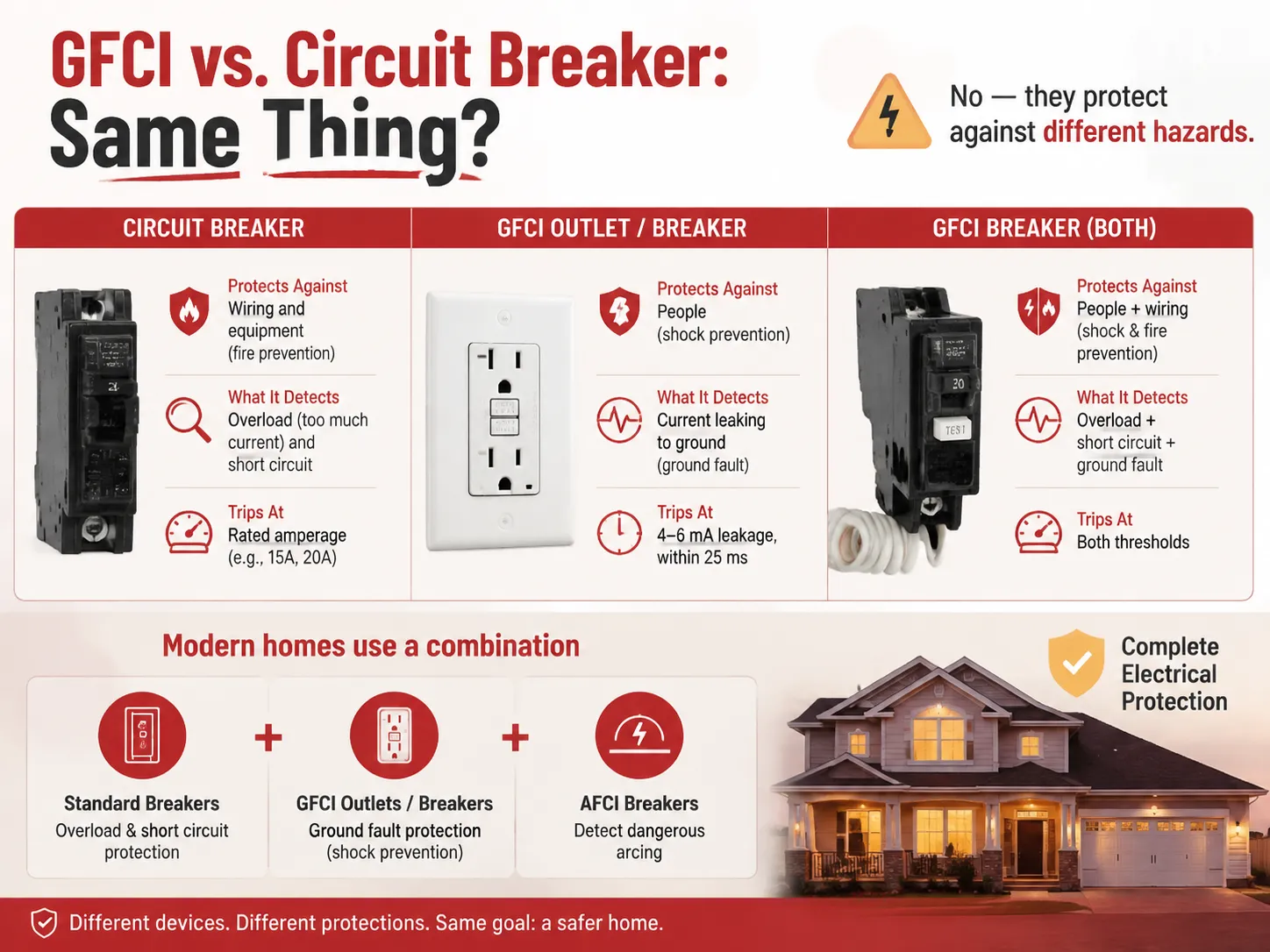
| الجهاز | يحمي من | ما يكتشفه | يفصل عند |
|---|---|---|---|
| قاطع الدائرة | الأسلاك والمعدات (منع الحرائق) | التحميل الزائد (تيار زائد) والدائرة القصيرة | التيار المقنن (مثلاً، 15A، 20A) |
| GFCI | الأشخاص (منع الصدمات الكهربائية) | التيار المتسرب إلى الأرض (خطأ الأرض) | تسرب 4–6 مللي أمبير، خلال 25 مللي ثانية |
| قاطع GFCI (كلاهما) | الأشخاص + الأسلاك | التحميل الزائد + الدائرة القصيرة + خطأ الأرض | كلا العتبتين |
يشتمل السكن الحديث على قواطع دوائر قياسية لحماية الدائرة من التحميل الزائد، ومخارج GFCI (قاطع دائرة خطأ الأرض) أو قواطع GFCI لحماية من صدمات التيار، وقاطع دائرة قوس كهربائي للكشف عن مستويات غير آمنة من تيار القوس. إذا كنت ترغب في فهم الأجهزة ذات التيار المتبقي المستخدمة في أجزاء أخرى من العالم، فإن مقارنتنا بين RCCB مقابل RCBO تغطي النسخ الدولية لنفس المفهوم.
الأسئلة الشائعة
هل تعني GFCI قاطع دائرة خطأ الأرض؟
بالفعل — تعني GFCI قاطع دائرة خطأ الأرض. هذا هو التعريف الصحيح حسب الكود الكهربائي الوطني (NFPA 70)، UL 943 وجميع الشركات المصنعة الرائدة. يراقب GFCI التيار الذي يمر عبر السلك الحار مقابل العائد على السلك المحايد، وبناءً عليه يفصل الدائرة خلال فترة تقارب 1/40 من الثانية إذا وصل الفرق إلى حوالي 4-6 مللي أمبير (خطأ الأرض). جميع الحالات الأخرى مثل تداخل دائرة خطأ الأرض غير صحيحة.
ما الذي لا يجب توصيله بمخرج GFCI؟
الأجهزة التي قد تكون خطيرة في حال فقدان الطاقة هي الثلاجات (فساد الطعام)، مضخات الصرف (الفيضانات)، المعدات الطبية ومعدات دعم الحياة (خطر على الحياة)، والحواسيب/الخوادم المهمة (خطر فقدان البيانات). ومع ذلك، لا يزال الكود يتطلب وجود GFCI في العديد من هذه الأماكن. في معظم الحالات، يمكن تحقيق ذلك باستخدام دائرة مخصصة، قاطع GFCI مع إنذار، أو بطارية احتياطية؛ لا يجب تجاهل الحماية. استشر خبيرًا لحالتك وتحقق من القوانين المحلية.
ماذا تعني GFCI في التركيبات الكهربائية، دائرة الصمامات الكبرى، دائرة نبض قاطع دائرة خطأ الأرض، تركيب دائرة خطأ الأرض؟
الجواب الصحيح هو قاطع دائرة الخطأ الأرضي. جميع البدائل الأخرى غير صحيحة؛ “grand fuse circuitry” يخطئ في تعريف GFCI على أنه فيوزات؛ “impulse” لا علاقة له بوظيفة GFCI؛ و“ground fault circuitry installation” تصف تركيبًا عامًا وليس الجهاز. المصطلح الذي يتوافق مع التعريف الوارد في NEC و UL هو فقط قاطع دائرة الخطأ الأرضي — الجهاز الذي يقطع الدائرة بمجرد اكتشاف خطأ أرضي.
ما الذي يمكن أن يسبب انقطاع قاطع دائرة الخطأ الأرضي (GFCI)؟
عندما يتعرف GFCI على تسرب تيار كهربائي إلى الأرض (4–6 مللي أمبير)، فإنه ينقطع. الأسباب المعتادة لذلك هي: وجود رطوبة أو ماء في منطقة المآخذ (مثل المطر، البخار، الأقبية الرطبة)؛ الأجهزة المعطوبة التي تحتوي على أسلاك تالفة أو دوائر قصيرة بداخلها؛ خطأ أرضي في الأسلاك (عزل مقطوع)؛ تحميل زائد على الدائرة بسبب توصيل عدد كبير من الأجهزة؛ أعطال في المآخذ المتصلة التي تقع تحت نفس حماية GFCI؛ GFCIs قديمة أو تالفة (عمرها الافتراضي حوالي 10-15 سنة)؛ والضوضاء الناتجة عن المحركات الكبيرة. إذا انقطع GFCI كثيرًا، يجب فصل جميع الأجهزة على الدائرة. يجب إعادة ضبطه وتوصيل الأجهزة واحدًا تلو الآخر لتحديد مصدر العطل، أو طلب مساعدة كهربائي محترف.
المراجع
- NFPA 70 (الكود الكهربائي الوطني) — الكود المعتمد الذي يحدد “قاطع دائرة الخطأ الأرضي” ويحدد الأماكن التي يتطلب فيها وجود حماية GFCI (المادة 210.8، المادة 680).
- UL 943 — المعيار الخاص بالسلامة لقواطع دائرة الخطأ الأرضي — معيار السلامة UL الذي يصادق على GFCIs، محددًا عتبة الانقطاع 4–6 مللي أمبير ووقت الانقطاع 25 مللي ثانية.
- OSHA السلامة الكهربائية — إرشادات السلامة في مكان العمل في الولايات المتحدة حول استخدام GFCI في البناء والصناعة العامة، مع تعزيز المصطلحات الصحيحة والتطبيقات المطلوبة.
- مؤسسة السلامة الكهربائية الدولية (ESFI) — منظمة غير ربحية تقدم التوعية للمستهلكين حول اختبار وتركيب GFCI والدور الحيوي لحماية الخطأ الأرضي.
- CPSC السلامة الكهربائية — بيانات لجنة سلامة المنتجات الاستهلاكية الأمريكية حول حالات الصعق الكهربائي التي تم منعها بواسطة GFCIs وإرشادات السلامة الكهربائية المنزلية.
- وزارة الطاقة الأمريكية — تشغيل مآخذ GFCI — إرشادات عملية حول كيفية عمل مآخذ GFCI، كيفية اختبارها شهريًا، وما الذي يسبب انقطاعها.
الخلاصة
من الواضح أن GFCI تعني قاطع دائرة الخطأ الأرضي وليست “تداخل دائرة الخطأ الأرضي”. تُستخدم كلمة “interrupter” لأنها تحدد وظيفة هذا الجهاز المحدد — قطع الدائرة مؤقتًا بعد اكتشاف خطأ أرضي. أما كلمة “interference” فتعني شيئًا يسبب اضطرابًا في الوظيفة الطبيعية، وهو عكس ما تقوم به GFCIs تمامًا.
إليك ما يجب تذكره:
- المصطلح هو "interrupter"، وقد تم تأكيده رسميًا من قبل NEC و UL 943 و OSHA وجميع المصنعين.
- يقارن GFCI التيارات الخارجة والداخلة؛ وينقطع عند 4-6 مللي أمبير خلال أجزاء من الثانية.
- إنه يحمي الشخص ولكن ليس الأسلاك لأنه بينما يمنع حماية الدائرة التحميل الزائد، تعمل GFCIs على منع الصدمات الكهربائية.
- تأكد من اختبار GFCIs شهريًا باستخدام أزرار TEST، ويتم استبدالها كل 10-15 سنة.
- تجنب توصيل المعدات الداعمة للحياة وتخزين الطعام إلى دوائر GFCI حيث قد يكون التعثر ضارًا — بدلاً من ذلك، اختر دوائر بدون GFCIs أو التي تحتوي على إشارات إنذار حيث يسمح بها الكود.
في المرة القادمة التي ترى فيها “GFCI تعني تداخل دائرة خطأ الأرض” على الويب، ستعرف بالتأكيد أن هذا خطأ ولماذا.