
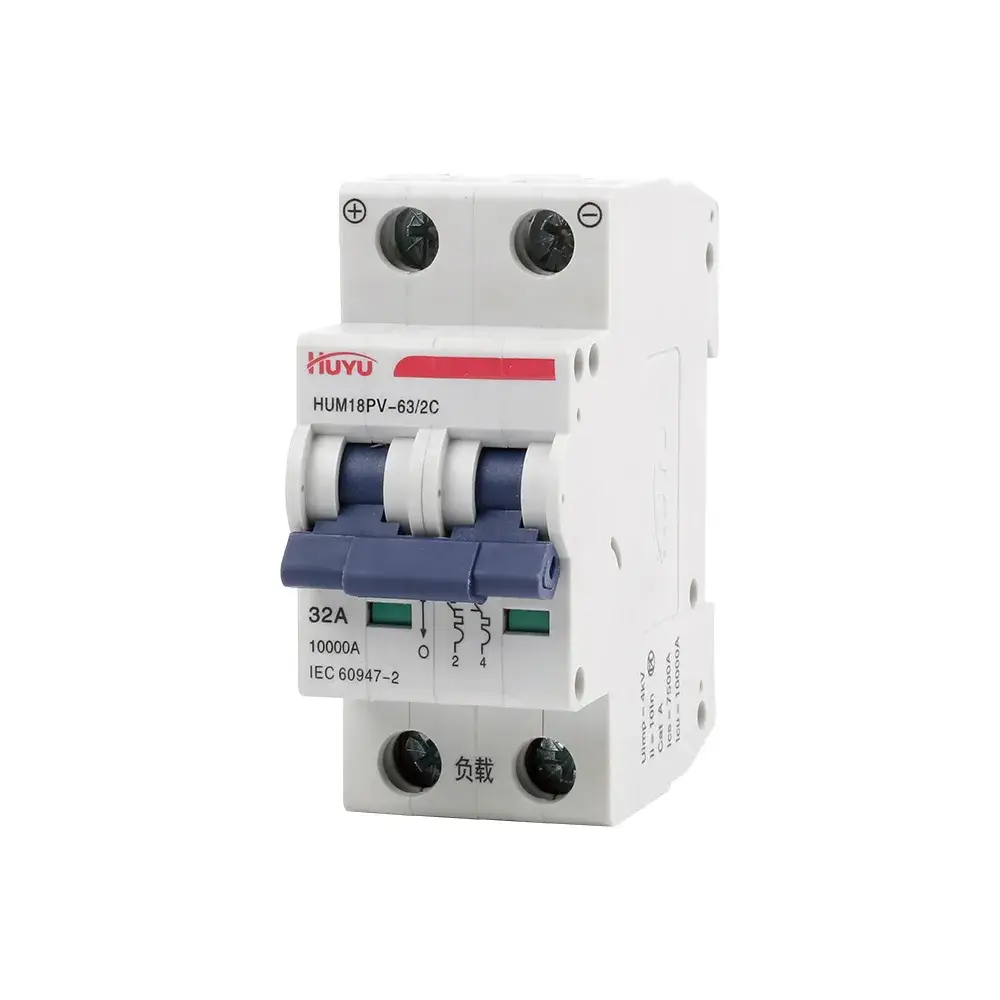
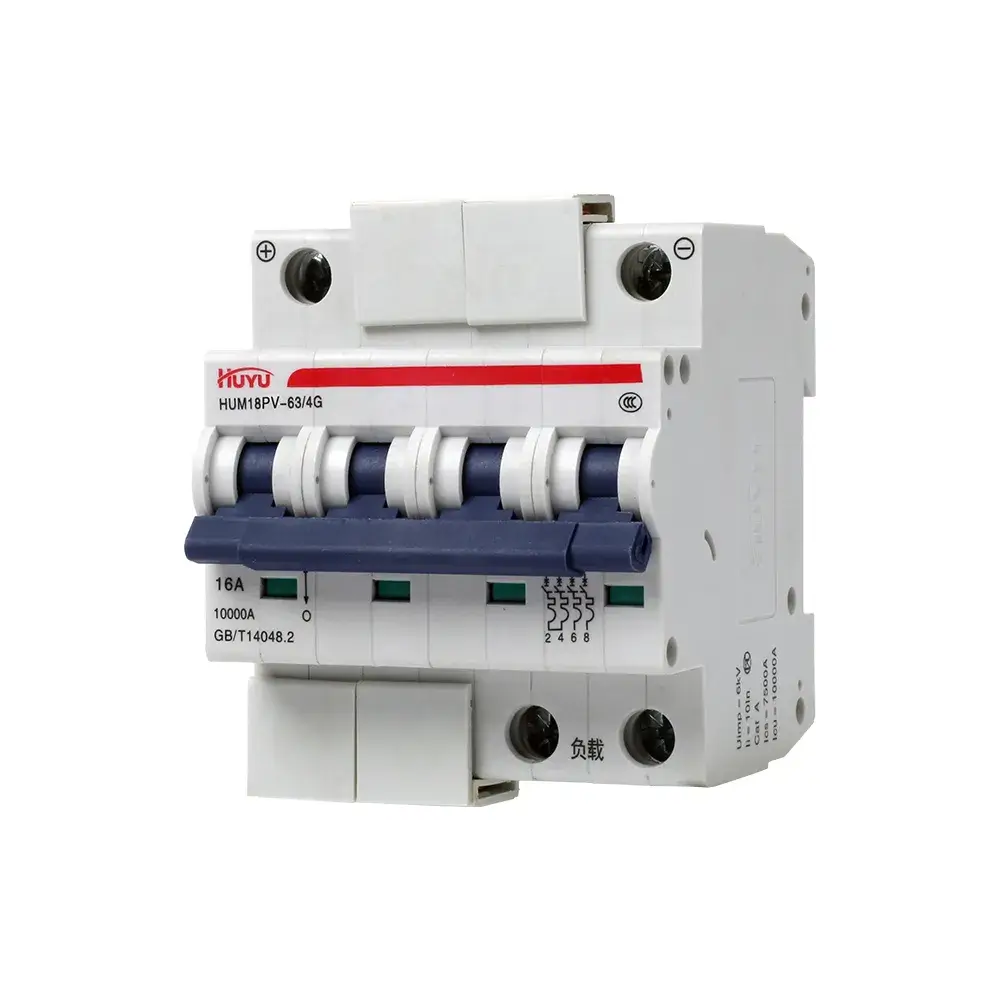
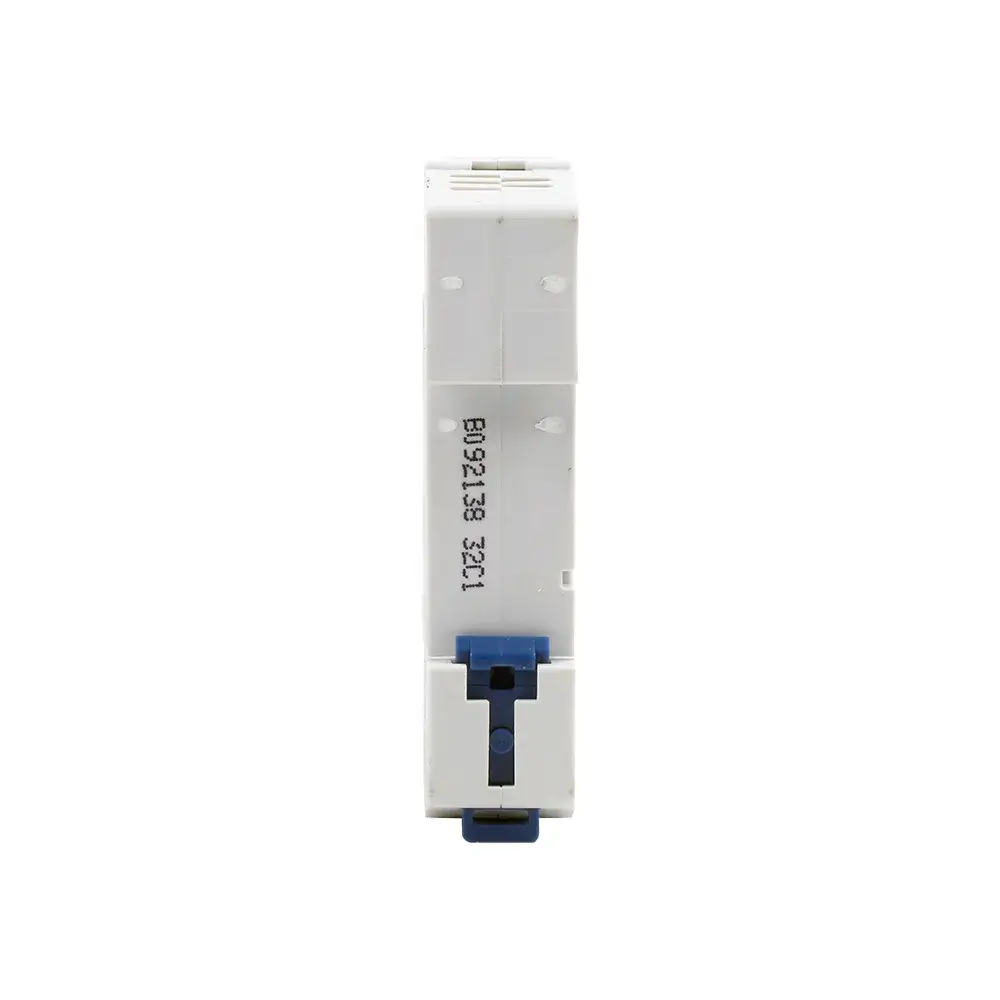
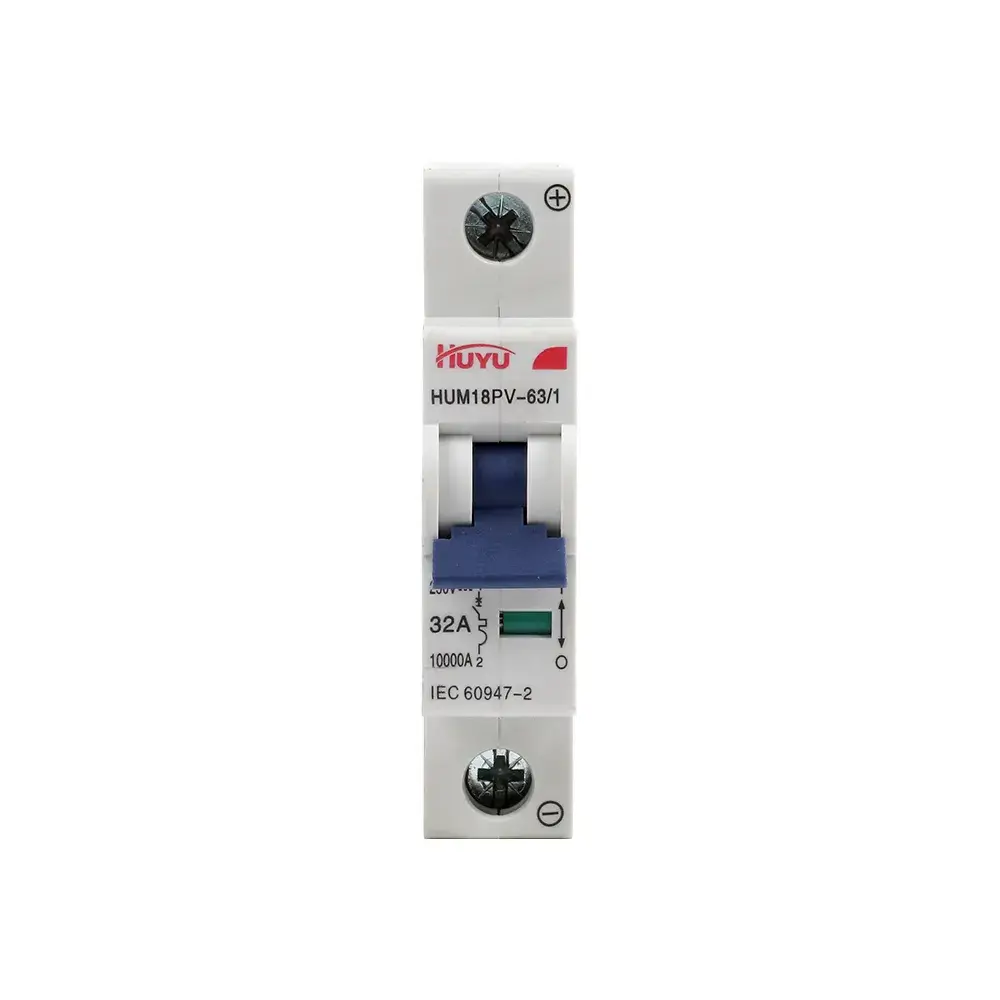
HUM18PV-63 DC MCB 63 Amp
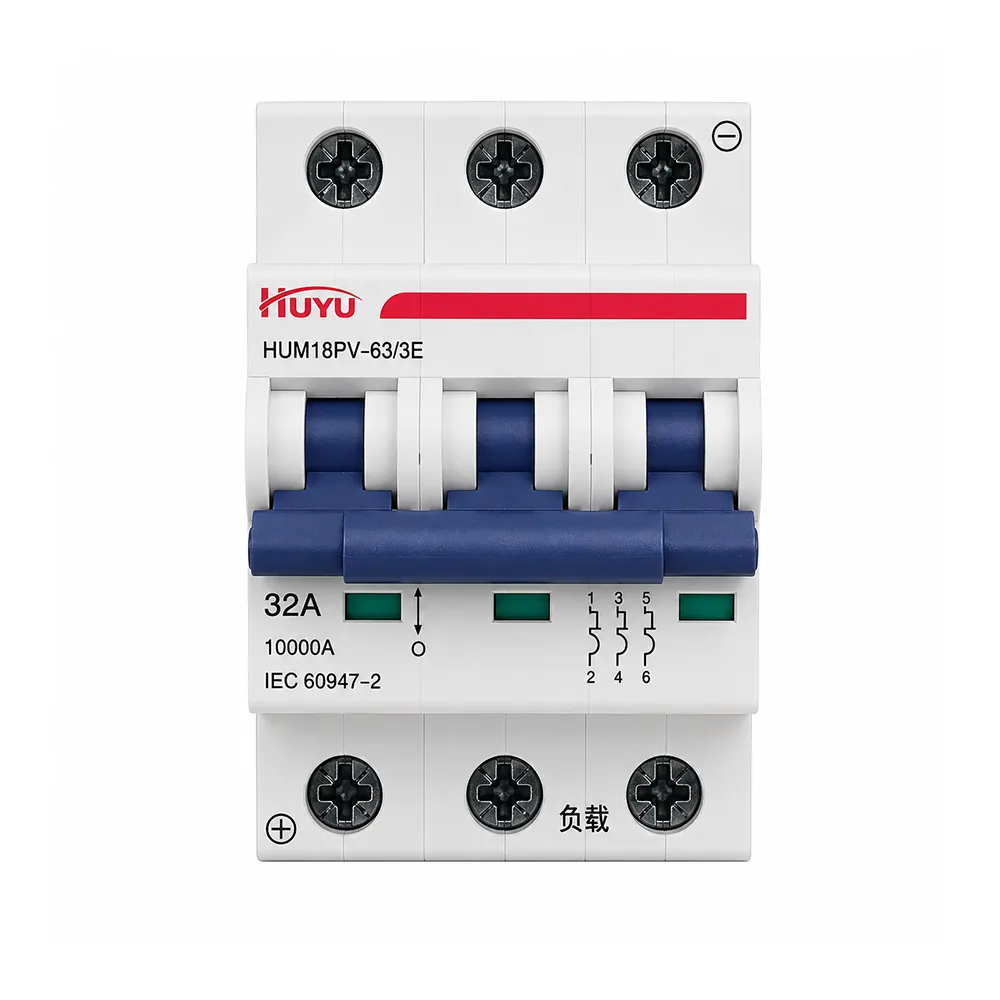
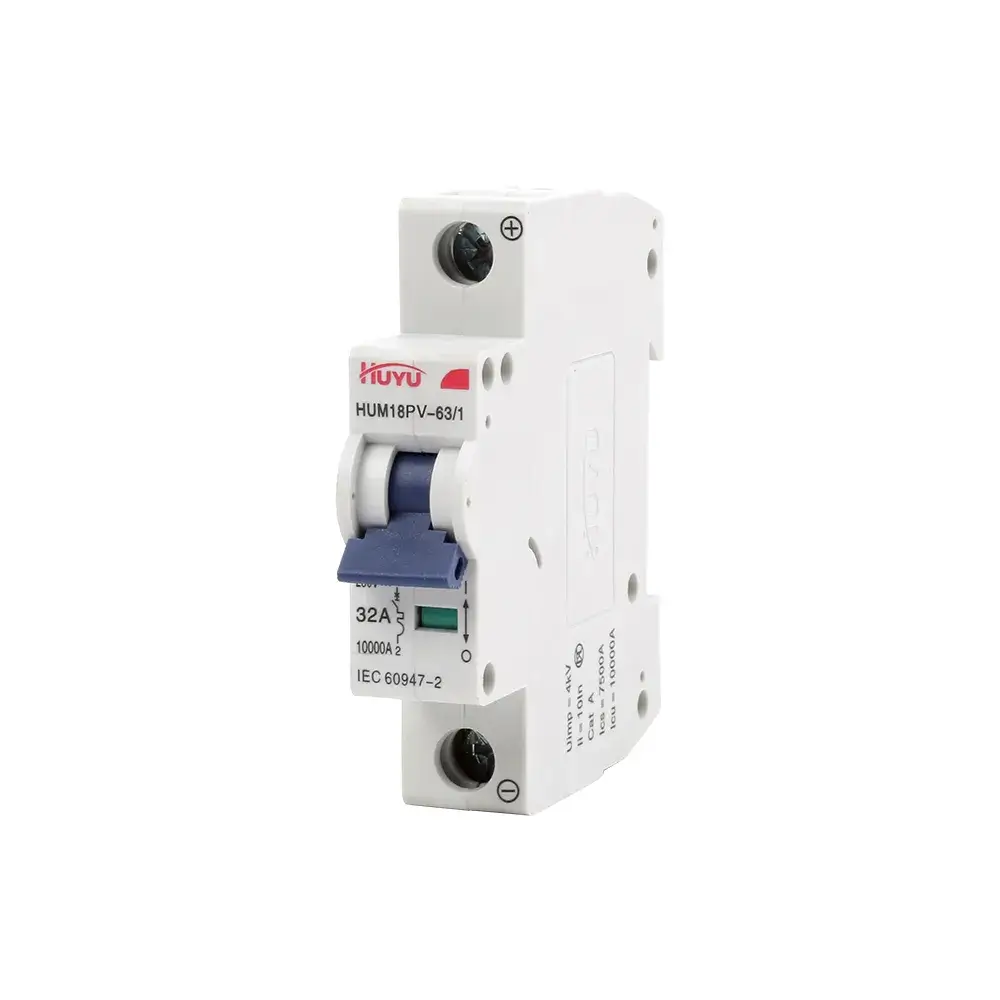
The HUM18PV-63 is a DC MCB 63 amp rated 1A–63A up to DC 1000V. Designed specifically for solar PV string protection and DC distribution. 10kA Icu, 1P/2P/3P/4P. CB, CE, CCC, TUV certified. Compact DIN rail design with high insulation strength. For residential, commercial, and industrial PV systems.
Standard: IEC 60947-2, GB/T 10963.2, CQC1108
Rated Current: 1A – 63A
Rated Voltage: DC 250V(1P) / 500V(2P) / 750V(3P) / 1000V(4P)
Breaking Capacity: 10kA Icu
Poles: 1P, 2P, 3P, 4P
Certifications: CB, CE, CCC, TUV
Applications: PV string protection, combiner boxes, DC distribution
Product Information
Solar DC MCB 63 Amp with Inherent Solar String Protection Features
The HUM18PV-63 is a dedicated solar photovoltaic (PV) circuit breaker designed to provide reliable overload and short circuit protection for solar PV systems in the 1A to 63A current range. This product has been specifically designed to protect up to 1000VDC circuits from negative or positive overloads. It offers a 10kA Icu breaking capacity and may be configured as a 1, 2, 3, or 4 pole circuit breaker to meet the needs of residential, commercial or utility-scale applications.
In contrast to generic DC MCBs, this product has been independently tested and certified by both CB and CE, CCC and TUV; therefore, it complies with manufactured requirements of the global PV markets. With a high insulation level (1000V Ui) and a nominal short circuit withstand voltage (4-6kV), this product will perform reliably in a broad range of harsh environmental conditions. If you are looking for a certified 63 Amp DC MCB or Solar DC MCB (with full certification documentation) for use in your PV project, please feel free to contact HUYU Electric for factory direct OEM/ODM requirements.
Technical Data
| Parameter | Value |
|---|---|
| Product Model | HUM18PV-63 |
| Standard | IEC 60947-2, GB/T 10963.2, CQC1108 |
| Certifications | CB, CE, CCC, TUV |
| Rated Current In | 1A – 63A (1, 2, 3, 4, 5, 6, 10, 16, 20, 25, 32, 40, 50, 63A) |
| Rated Voltage Ue | DC 250V(1P) / 500V(2P) / 750V(3P) / 1000V(4P) |
| Poles | 1P, 2P, 3P, 4P |
| Breaking Capacity Icu | 10kA |
| Service Breaking Capacity Ics | 7.5kA |
| Insulation Voltage Ui | 1000V |
| Impulse Withstand Uimp | 4kV (1P, 2P), 6kV (3P, 4P) |
| Tripping Characteristic | 10In ±20% (instantaneous) |
| Mechanical / Electrical Life | 20,000 / 10,000 operations |
| Operating Temperature | -25°C to +70°C |
| Mounting | TH35-7.5 DIN rail |
| MOQ | Contact for project quotation |
The HUM18PV-63 was designed specifically for the protection of photovoltaic (PV) direct current (DC) circuits. PV systems are unique in that they present many challenges for circuit protection. Circuit breakers need to isolate both positive and negative conductors for safety when using ungrounded conductor arrays. Its 4-pole configuration supports maximum safety and operational efficiency.
HUM18PV-63 DC MCB 63Amp – Factory Direct Quotation Request
HUM18PV-63 rated from 1A to 63A, up to 1000VDC, with 10kA Icu. Available with 1P/2P/3P/4P configurations. Models are certified to all major global certification standards (CB, CE, CCC, TUV). Custom manufacturing available with full certification documentation. Contact us for pricing and lead times.
Project-Based Quotation • IEC 60947-2 • Worldwide Shipping
OEM/ODM Supply – Globally Certified Solar DC Circuit Breakers for PV Markets
HUM18PV-63 DC MCB – Global Certifications for PV Applications
Entering or expanding in the photovoltaic market requires DC circuit breakers that meet global certifications. The HUM18PV-63 DC MCB is certified to CB, CE, CCC, and TUV, covering key PV markets worldwide. With a breaking capacity of 10kA and a rating of up to 1000V DC, the HUM18PV-63 delivers robust performance for PV strings. Its current range from 1A to 63A makes it a versatile solution for residential, commercial, and utility-scale PV systems. HUYU Electric offers private labeling and competitive factory-direct prices, making it a valuable alternative to other established brands.
How to Select a DC MCB for Solar PV String Protection
Key factors to consider when choosing the appropriate HUM18PV-63 DC MCB for your solar PV systems across residential, commercial, and industrial applications.
1. Selecting Voltage: Match String Voltage
Choose the pole configuration based on the maximum open-circuit voltage (Voc) of your PV string. For a single string up to 250V, 1P is sufficient. For two strings in series or floating arrays up to 500V, use 2P. Higher-voltage strings, reaching 750V or 1000V — typical for commercial and utility-scale PV systems — require 3P or 4P configurations. The series connection enhances safe interruption of high-voltage currents.
2. Current Rating and Isc Considerations
Determine the MCB’s current rating by applying the standard practice of using 1.25 × Isc (short-circuit current) of the PV string. For instance, for an 8A Isc string, a 10A or 16A rating in the HUM18PV-63 range works best to deliver adequate protection and a proper safety margin.
3. Breaking Capacity Verification
Ensure that the 10kA Icu breaking capacity exceeds the calculated maximum prospective short-circuit current at the installation point. For most PV systems, the 7.5kA Ics attests that the breaker remains functional after fault clearance at that level.
4. Verifying Certifications
For PV projects in regulated markets like Europe or Australia, it’s crucial to use MCBs with valid certifications. The HUM18PV-63 holds CB, CE, CCC, and TUV certifications that comply with global standards. Confirm the certification required for grid connection in your specific market.

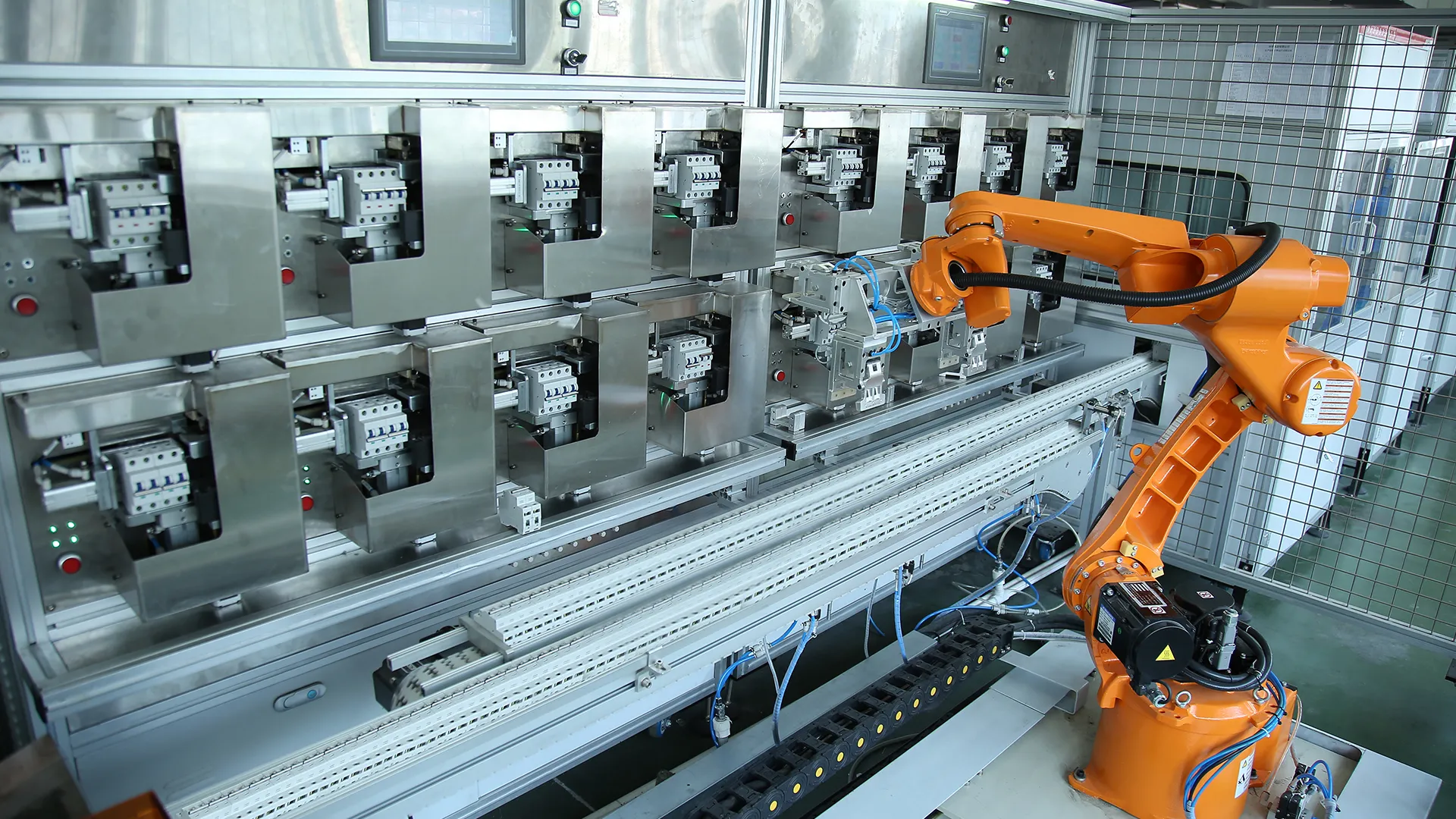


Frequently Asked Questions
What does DC MCB mean?
DC MCB stands for Direct Current Miniature Circuit Breaker. It is a protection device designed specifically for DC circuits — unlike standard AC MCBs, a DC MCB incorporates a magnetic arc extinguishing system that can safely interrupt DC fault currents where there is no natural zero-crossing of the current. The HUM18PV-63 DC MCB 63 amp is a DC MCB purpose-built for photovoltaic applications, with a 10kA breaking capacity and voltage ratings up to 1000V DC.
Can MCB be used for DC?
A standard AC MCB should not be used for DC circuits. AC MCBs rely on the current’s natural zero-crossing to extinguish the arc when the contacts open. DC current has no zero-crossing, so the arc would sustain and potentially damage the breaker or cause a fire. A DC MCB like the HUM18PV-63 is specifically engineered with magnetic blowout coils and arc chutes to stretch and cool the DC arc until it extinguishes. Its TUV, CB, and CE certifications confirm it has been tested and approved for DC interruption at the rated voltage and current.
Is there any difference between DC and AC MCB?
Yes, there are several critical differences. A DC miniature circuit breaker uses a permanent magnet or magnetic blowout coil to force the arc into a segmented arc chute, whereas an AC MCB relies on the current zero-crossing for arc extinction. DC MCBs also have different internal contact spacing and arc chamber geometry to handle the continuous DC arc. Terminal polarity may be marked on DC MCBs to ensure correct connection for optimal arc extinguishing. The HUM18PV-63 solar DC MCB demonstrates these differences with its 10kA DC-rated breaking capacity, 4kV–6kV impulse withstand, and certifications specific to DC PV applications.
What is 63A MCB used for?
A 63A MCB — or more specifically a 63A DC MCB in photovoltaic applications — is used to protect the main DC feeder or combined output of multiple PV strings. In a solar combiner box, individual strings may be protected by 16A or 20A DC MCBs, with the combined output feeding through a 63A breaker before the inverter. The HUM18PV-63 DC MCB 63 amp is available in ratings from 1A to 63A, so the 63A rating is the largest in this family and is typically used for: DC main switch protection in residential PV installations, combined string output protection in commercial combiner boxes, battery circuit protection in DC-coupled storage systems, and DC distribution feeders in industrial solar applications.
No documents available for download at this moment.