
Every time the compressor on the freezer starts, the lights in your store begin to blink. The landlord in your office building tells you that the breaker box has “no more space” left; however, a new server needs to be installed and therefore needs another circuit. The restaurant got a good rating from inspectors last year, but they noted that some circuit breakers at the facility are obsolete. But still, three electricians gave you three very different estimates, and the scope of work is still unclear. The fact is that commercial electrical services are not like residential ones — there are higher voltages involved, three-phase electricity and laws applied, as well as a number of other peculiarities and losses if a business has to wait too long and thus loses money while being non-operational.
This guide is meant for such people as businessmen, facility or property managers who are in need of commercial electrical services. Rather than just providing a general overview of the issue, present it to your audience in different sections depending on the problem they face, what services exist, what services pluses and minuses are, what prices are offered for a certain job, and how to find a reliable contractor.
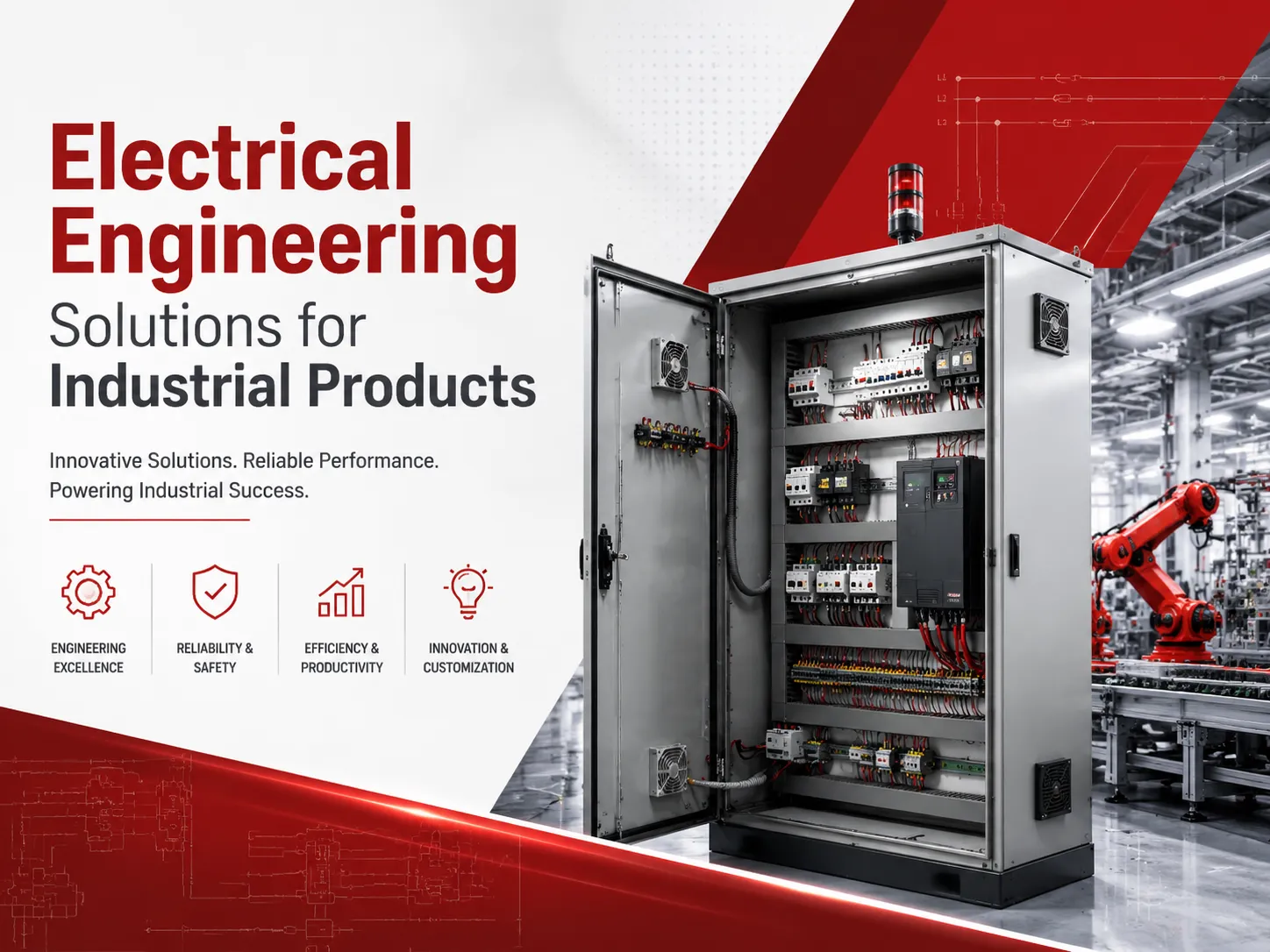
Commercial electrical services include every requirement of a business or commercial building except minor true residential work: installations, new constructions, panel updates and changes, three-phase electric power and motor controls, lighting design and LED retrofits, emergency and backup sources of power, fire alarm and security systems, charging stations for electric vehicles, energy audits, and urgent repairs. In case of any of these needs, the scheme will be the same, i.e. to check whether the contractor has appropriate licenses and permissions, obtain price quotations from at least three contractors, ensure that they handle permits as well, and check their record of similar work.
What Are Commercial Electrical Services?
Commercial electrical services refer to the tasks that involve electrical planning, installation, maintenance, and repair that are performed in business, commercial, or public institutions like hospitals, schools, hotels, etc., instead of residential work. Commercial electrical services differ from residential electrical services in the following aspects:
- Voltage: The voltage levels differ from the residential voltage levels. In commercial facilities three-phase power system is used compared to residential facilities. In commercial facilities, 208/480V power is used whereas in residential houses only 120/240V is used.
- Complexity: The electrical systems are more complicated; they include motor control systems, HVAC control systems, automatic systems like fire alarms, emergency systems etc.
- Stricter codes: Commercial facilities need to follow more strict code requirements. In addition to the NEC requirements that apply in California, commercial facilities need to comply with local and industry codes.
- Business impact: The scheduling of tasks is chosen to minimize the downtime, which means the activities are planned after business hours or not to interfere with the business activities.
To carry out such complicated tasks a licensed commercial contractor is normally required, who provides all the necessary permits and ensures that the work complies with local regulations and legislation.
Find Your Need: Which Service Do You Require?
Here’s the map. Find your situation, then jump to that section:
| Your Situation | Service Type | Jump To |
|---|---|---|
| Breakers trip, panel is old or at capacity | Panel upgrade / service change | Section 3 |
| New store, office fit-out, new equipment, new circuits | New construction / TI / new circuits | Section 4 |
| Lights flicker, want LED upgrade, poor lighting | Lighting install / LED retrofit | Section 5 |
| Power outage, burning smell, sparking, urgent fault | Emergency repair | Section 6 |
| Business must keep running in an outage | Generator / backup / ATS | Section 7 |
| Installing EV chargers for fleet or customers | EV charger installation | Section 8 |
| No problems yet — want to prevent them | Preventive maintenance / inspection | Section 9 |
Need #1: Panel Upgrade or Service Change
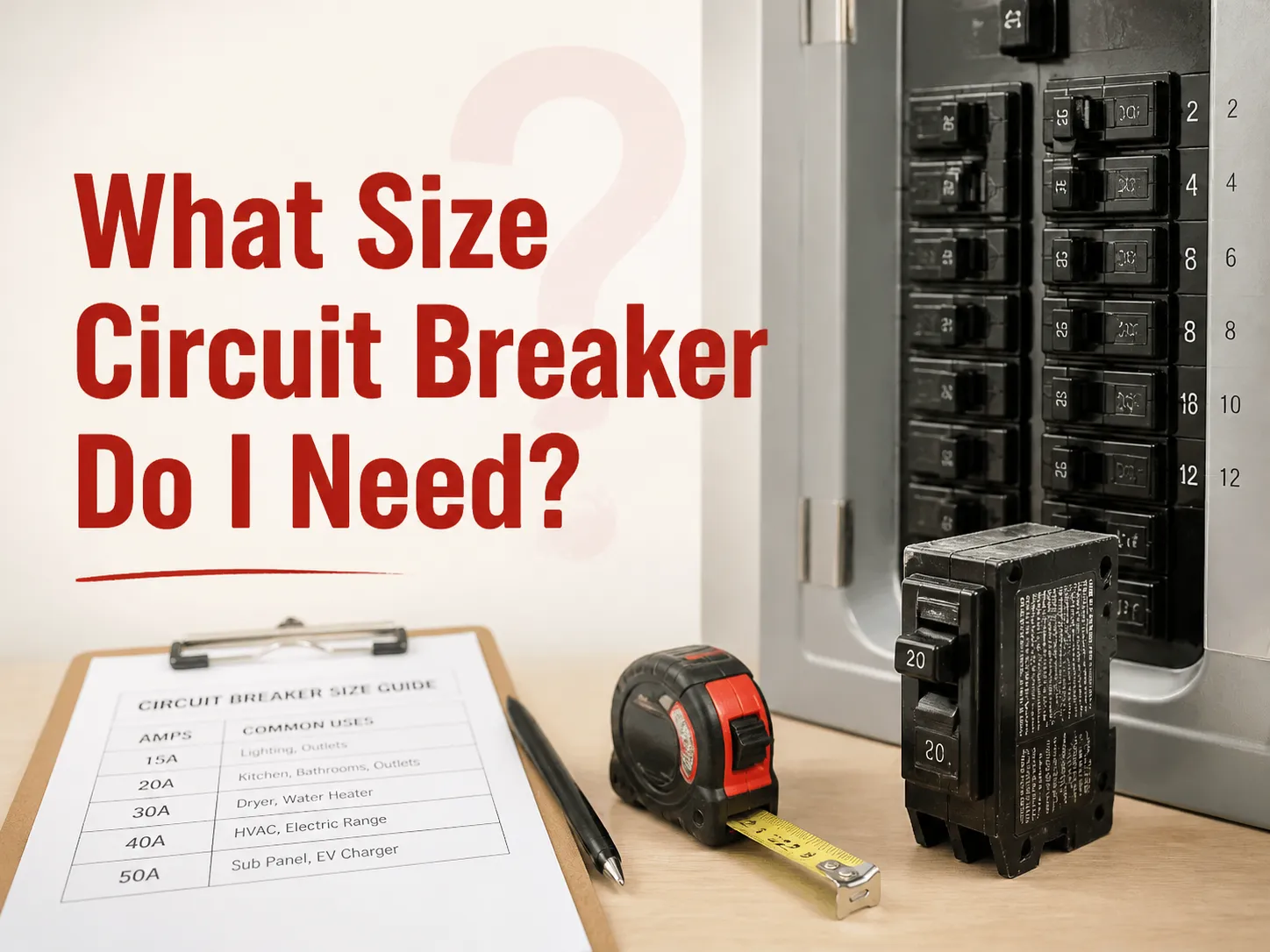
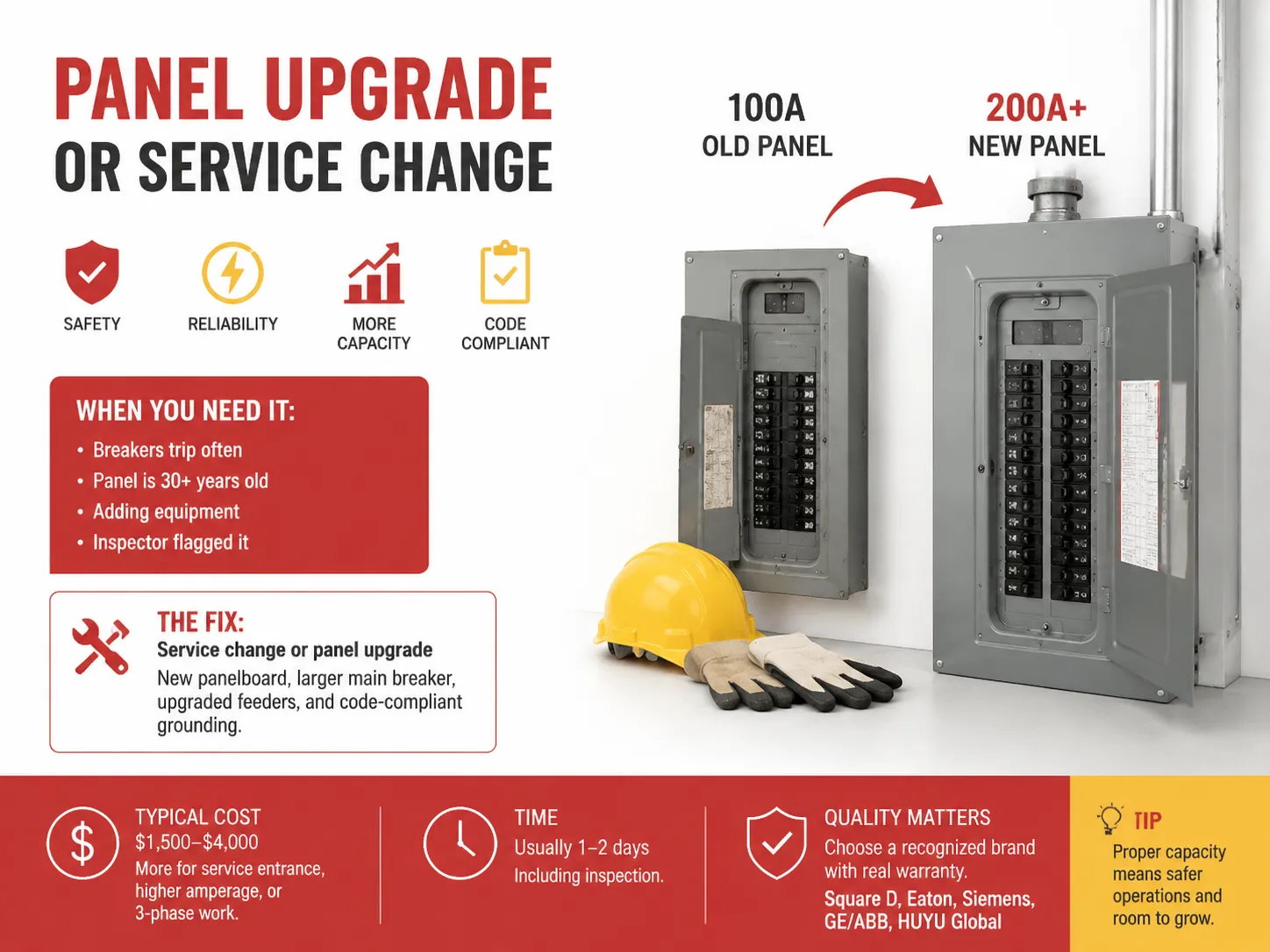
Signs you need it: tripped circuit breakers, aging panel (30+ years), adding appliances, or an inspection pointing to that.
- How to solve the problem: you will need either to change the service or upgrade the panel.
- What does that involve: replacement of the panelboard and circuit breaker (for example, move from 100 Amps to 200 Amps or 400 Amps for commercial installations), upgrading the feeders, ensuring proper bonding/grounding, and passing inspection.
- Average cost: average cost of a standard commercial panel replacement is between $1,500 and $4,000; higher for service entrance work, increased amperage, or utility coordination. Services involving multiple circuits are more expensive. If you’re weighing a replacement against reconditioning existing gear, our comparison of reconditioned vs new circuit breakers covers the trade-offs.
- Duration: generally one or two days including inspection; check for working hours.
Need #2: New Construction, Tenant Improvements & New Circuits
Symptoms: moving to a new site, remodelling, purchasing equipment that requires specific circuits (kitchen machines, servers, equipment). The solution: design + rough-in + trimming electrical setups with permits.
- What it consists of: load estimation, new circuits, wiring, breakers, switches, outlets. It is necessary to make sure the contractors work on the project together.
- Typical cost: is very different; in general, it is necessary to plan around $3-8 for every square foot for the final work or $150-500 for every new circuit that includes both materials and labour.
- What to tell: it is necessary to talk about the panel brand and breaker type in advance. Ask the contractor to provide all panel calculations and plans so that you can be sure that the panel will be correct.
- Tip: get an organized payment request as it will help you understand how much each contractor will receive.
Need #3: Lighting Installation, Design & LED Retrofits
Symptoms: escalating utility costs, obsolete fluorescents, poor and inconsistent illumination, or a site requiring lightning concept. The solution: light planning, mounting devices, and LED upgrades with controls.
- What it comprises: LED upgrade (removing fluorescent troffers for LED panels, updating HID to LED) new fixtures, occupancy detectors and daylight settings, emergency lights and exit symbols.
- Typical price range: LED retrofitting usually has quick ROI within 1-3 years on energy savings (LED consumes 50-70%) Traditional fluorescent tube replacement costs $100-$300 per unit with complete redesign priced per the project.
- What to take into consideration: LED fittings approved by UL/ETL with lumen/watt indices, LED units, and systems from well-known manufacturers. Utility companies still provide rebates for commercial LED upgrades. The installation contractor should include paperwork on rebates in the proposal.
- Advantages: apart from savings, it is clear that appropriate lighting increases retail sales, improves conditions at the working place, and meets safety standards (one of which is illuminating emergency exits in commercial buildings).
Need #4: Emergency Repairs & Troubleshooting
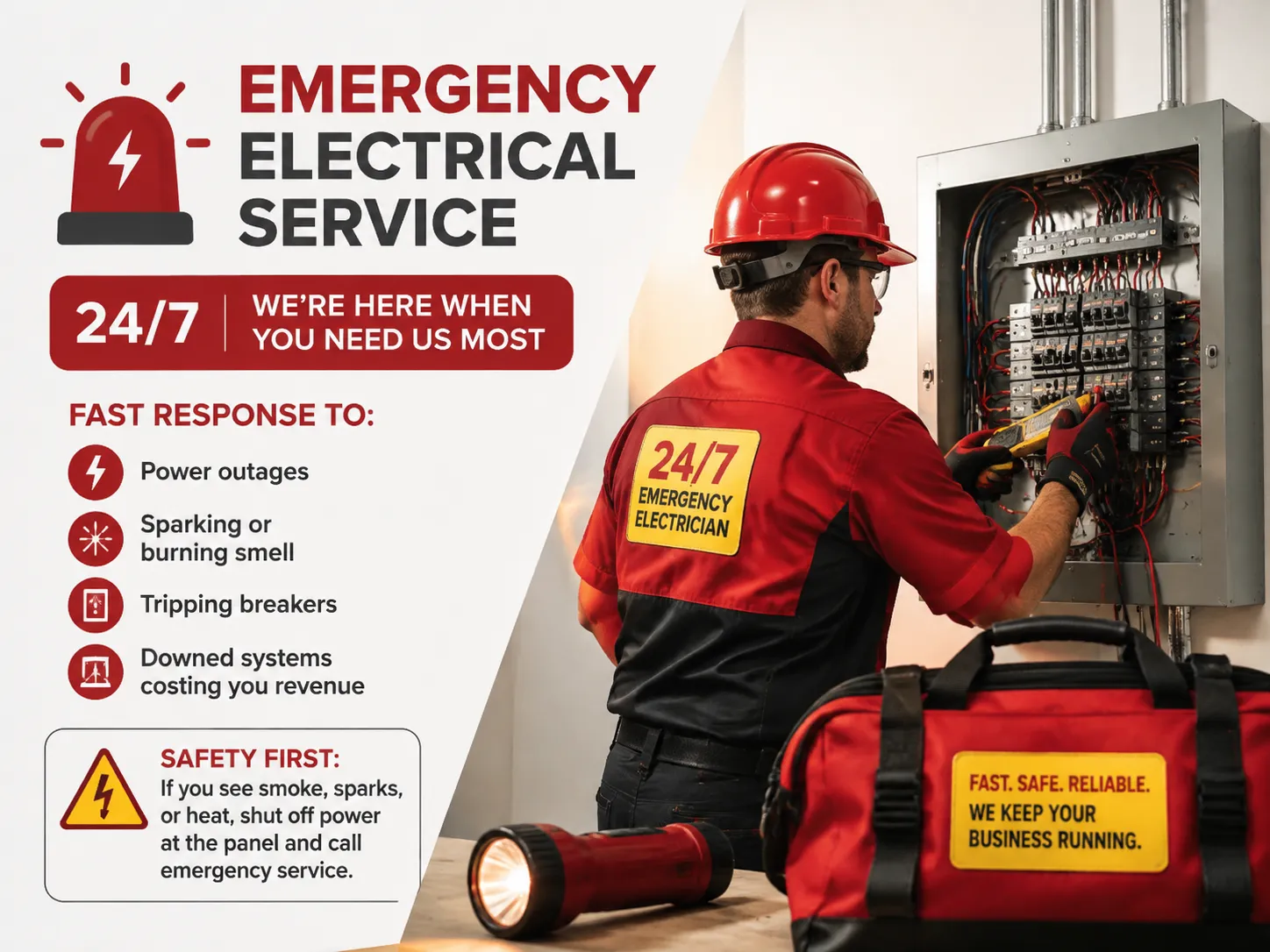
Signs: power loss, electrical sparks, foul smell, circuit breakers tripped, or a downed power system affecting your business. Solution: hire a commercial Emergency Electrician available 24/7.
- What does it include: dispatch services, troubleshooting, fixing emergencies, and temporary power supply when needed so that your business won’t stop.
- Typical cost: the price for an emergency call can be exorbitant and range from $150-$500/hour, not including parts and service. For non-emergency repairs you will be needed to pay $150-$200.
- What should one do: in case of anything involving smoke, sparks or heat, make sure the power is turned off and the Emergency service is called immediately. In case of frequent tripping of circuit breakers, book diagnostics before an outage occurs.
- Tip: it is better to have a contractor regularly/customers can expect a faster response and more reasonable rates.
Need #5: Backup Power, Generators & ATS
Indications: your establishment cannot endure blackouts (examples: restaurants, pharmacies, data centers, clinical facilities). The remedy: standby generator plus ATS system installer.
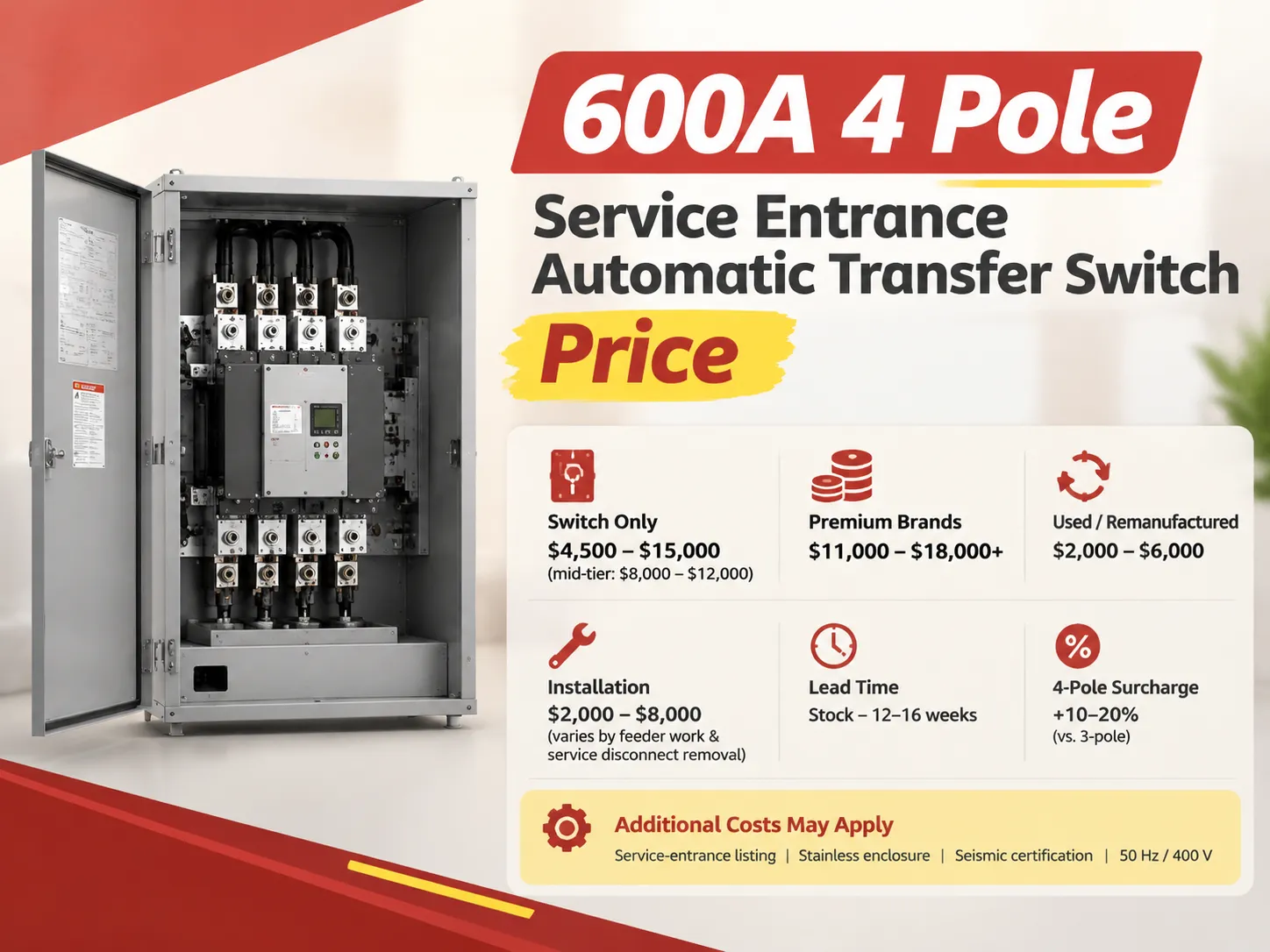
- What it consists of: determining the generator requirements, installing ATS unit (that detects absence of energy and turns on the generator automatically), connecting the fuel line, and meeting installation standards.
- Average price: stand-by systems range from $5,000 and $30,000 installed depending on the size (kW), kind of fuel, and complexity of the job. ATS units can cost from $500 to several thousand dollars.
- What to look for: there need to be as many phases in the ATS as in the business — three-phase business means three-phase ATS. The most recognized brands are Generac, Kohler, and Cummins in North America; while in IEC countries, automatic transfer switches with various phase capacities for business backup systems are supplied by the HUYU Global company.
- Advice: sign a service agreement (load bank testing and battery inspection) as untested backup equipment will fail when it is needed.
Need #6: EV Charger Installation
Symptoms: if you want to charge the employee fleet, customer cars, or to set up a multi-unit building, the solution is to install EV chargers in dedicated circuits and, more often than not, apply for utility rebates.
- What it requires: installing dedicated circuits (usually around 40-60A per Level 2 charger), checking/upgrading your panel capacity, actually mounting the charger, and getting the necessary permits.
- Cost: the cost of electrical work is $500-2,000 per Level 2 charger (the charger unit itself will be extra, costing around $400-$1500 or more). Upgrading the panel will be even more costly.
- What to make sure of: UL-listed Level 2 chargers, such as ChargePoint, Enel X, etc., with power sharing/load management.
- Tip: reach out to the utility about commercial EV rebates and demand charge mitigation programs before designing your system.
Need #7: Preventive Maintenance & Inspections
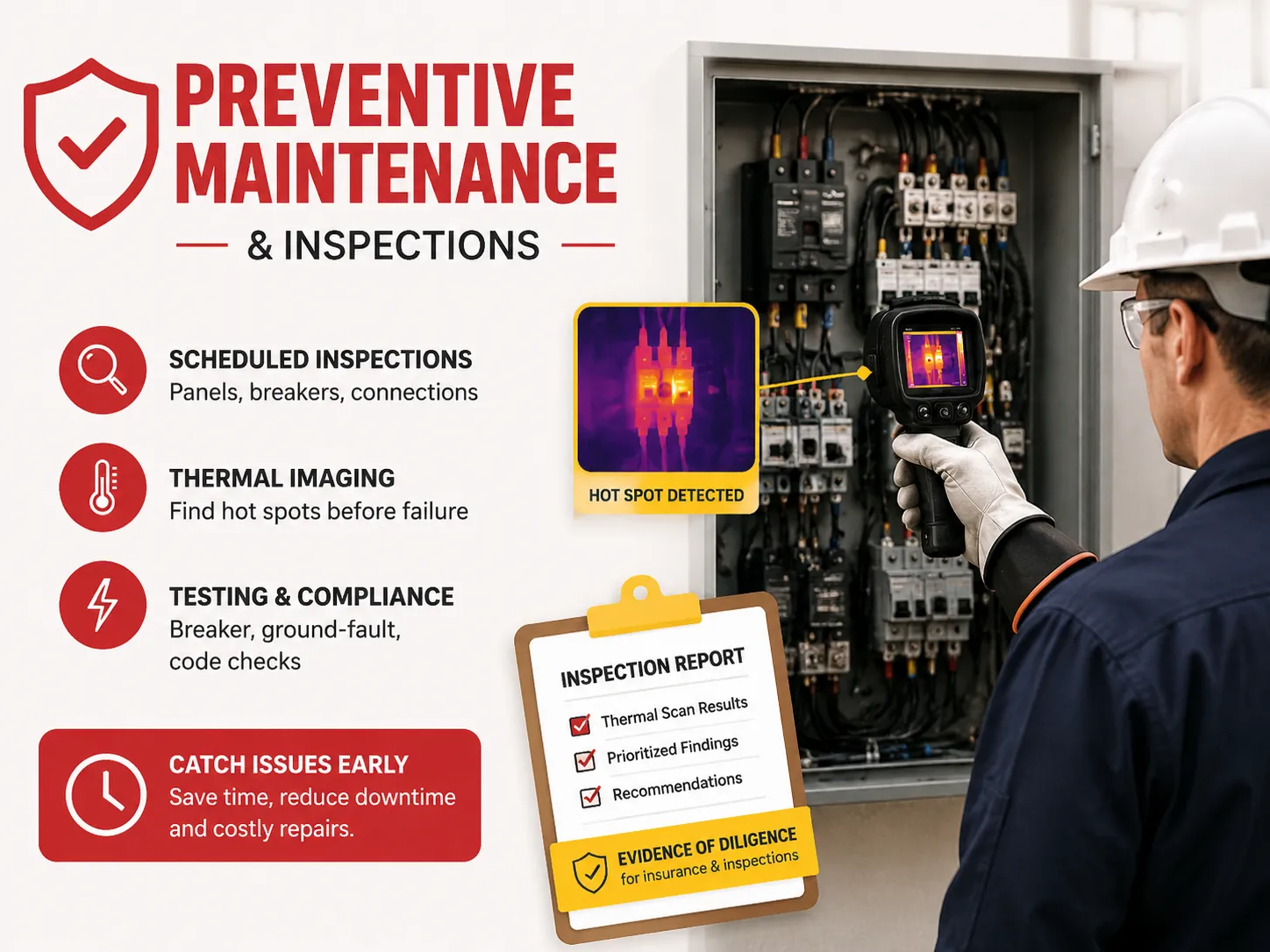
Signs: No trouble occurred thus far – or recurring minor troubles. Applied solution: Prearranged preventive maintenance (PM) and thermal inspections.
- What this includes: regular panel inspections, thermography of connections (detecting hot spots before failure), breaker testing, ground fault testing, and code checks.
- Going rates: PM contracts can go for $300-$1,500 per visit depending on the type of facility and annual thermography is a popular additional service.
- What to ask for: infrared scanning of the panel and significant connections, and a written report outlining the list of changes.
- Advantage: preventive maintenance identifies trouble at 8 A.M. on a Tuesday, not 8 P.M. on a Friday when the prices and the pressure are at their peak.
Which Equipment Brands Should You Specify?
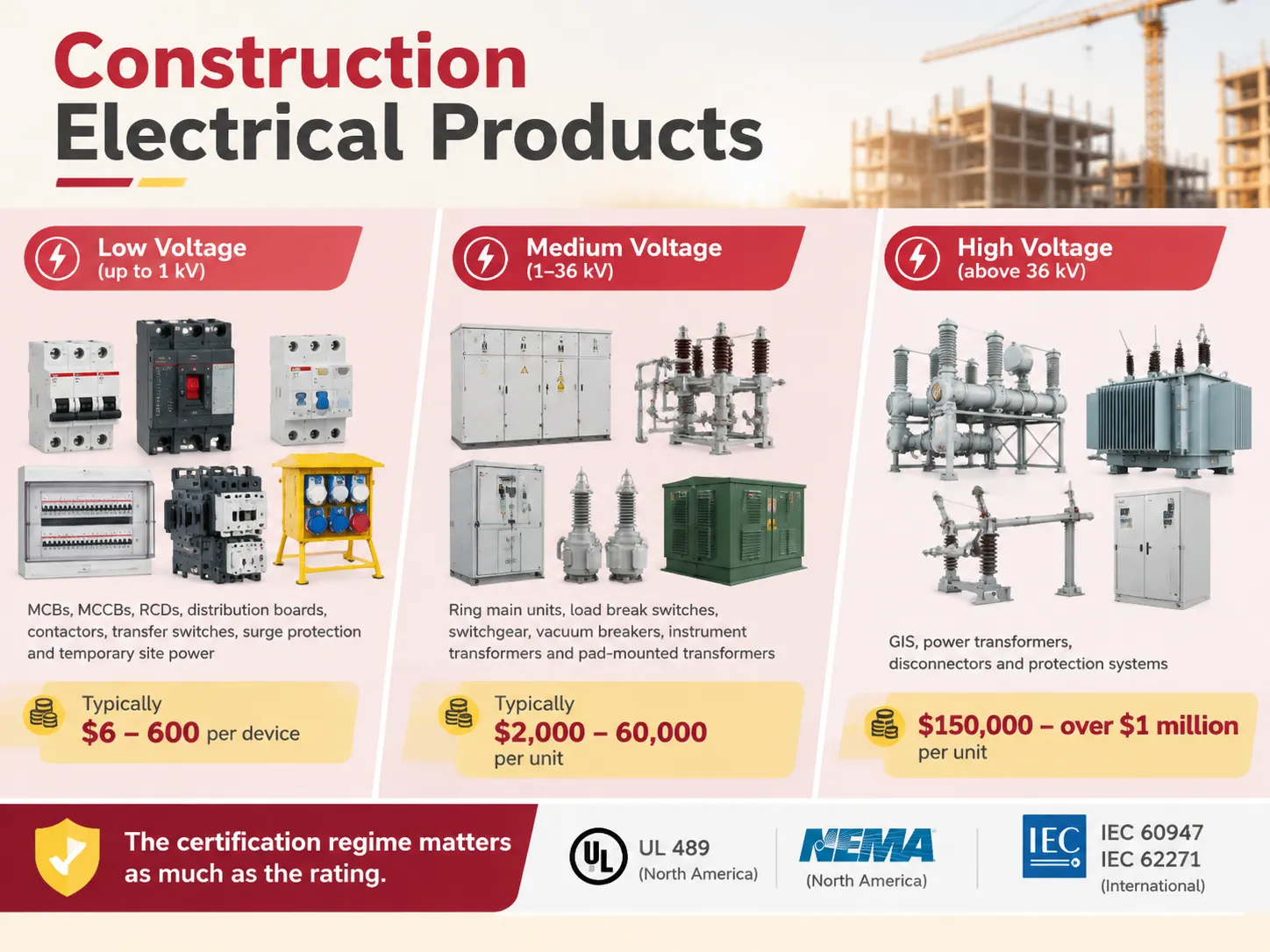
The question of brands matters because the circuit breakers need to come from a brand that is from the same family as the panel. In addition, the quality of the equipment determines its durability and warranty length. What to ask about different categories of equipment:
| Equipment | Recognized Brands (North America) | Notes |
|---|---|---|
| Panels & breakers | Square D (Schneider), Eaton, Siemens, GE/ABB | Match breaker family to panel family exactly |
| Lighting | Philips, Cree, Cooper/Eaton, Acuity | UL-listed, published specs, utility rebate eligible |
| Generators / ATS | Generac, Kohler, Cummins; HUYU (IEC markets) | ATS must match phase count and voltage |
| EV chargers | ChargePoint, Enel X, Wallbox, Tesla (compat.) | UL-listed, load management for multi-unit |
| Fire alarm & security | Honeywell, Siemens, Edwards, Bosch | Installed and certified by licensed technicians |
| IEC-market commercial gear | HUYU Global and equivalent IEC-certified manufacturers | MCBs, MCCBs, RCCBs, ATS, distribution boards |
Should you be using equipment that is made based on IEC-standard requirements (mostly applicable to all but North America), seek breakers and distribution equipment which conforms to IEC 60898 / IEC 60947 standards and approach a manufacturer like HUYU Global which deals with certified MCBs, MCCBs, RCCBs, and transfer switches.
How Much Do Commercial Electricians Charge?
Commercial rates are generally higher than residential because of licensing, insurance, and complexity. Typical 2025–2026 ranges:
| Item | Typical Range | Notes |
|---|---|---|
| Hourly rate (licensed) | $50–$150/hr | National average ~$75–$100; metros like San Jose $100–$150 |
| Service call minimum | $150–$250 | First hour + trip; higher after hours |
| Emergency call-out | $150–$500+ | Premium for after-hours/weekend dispatch |
| New circuit | $150–$500 | Materials + labor + permit |
| Panel replacement | $1,500–$4,000 | Commercial panel; more for service entrance |
| LED retrofit | $100–$300/fixture | Varies by fixture type |
| EV charger circuit | $500–$2,000 | Excluding charger unit |
| Full build-out electrical | $3–$8/sq ft | Rough-in to finish, varies by scope |
Get at least three contractors’ quotes in writing and itemized, confirm whether permits are included, and ask about the brands of materials that will be used — a low bid may mean that low-cost brands will be used that do not pass inspection or won’t match your panel.
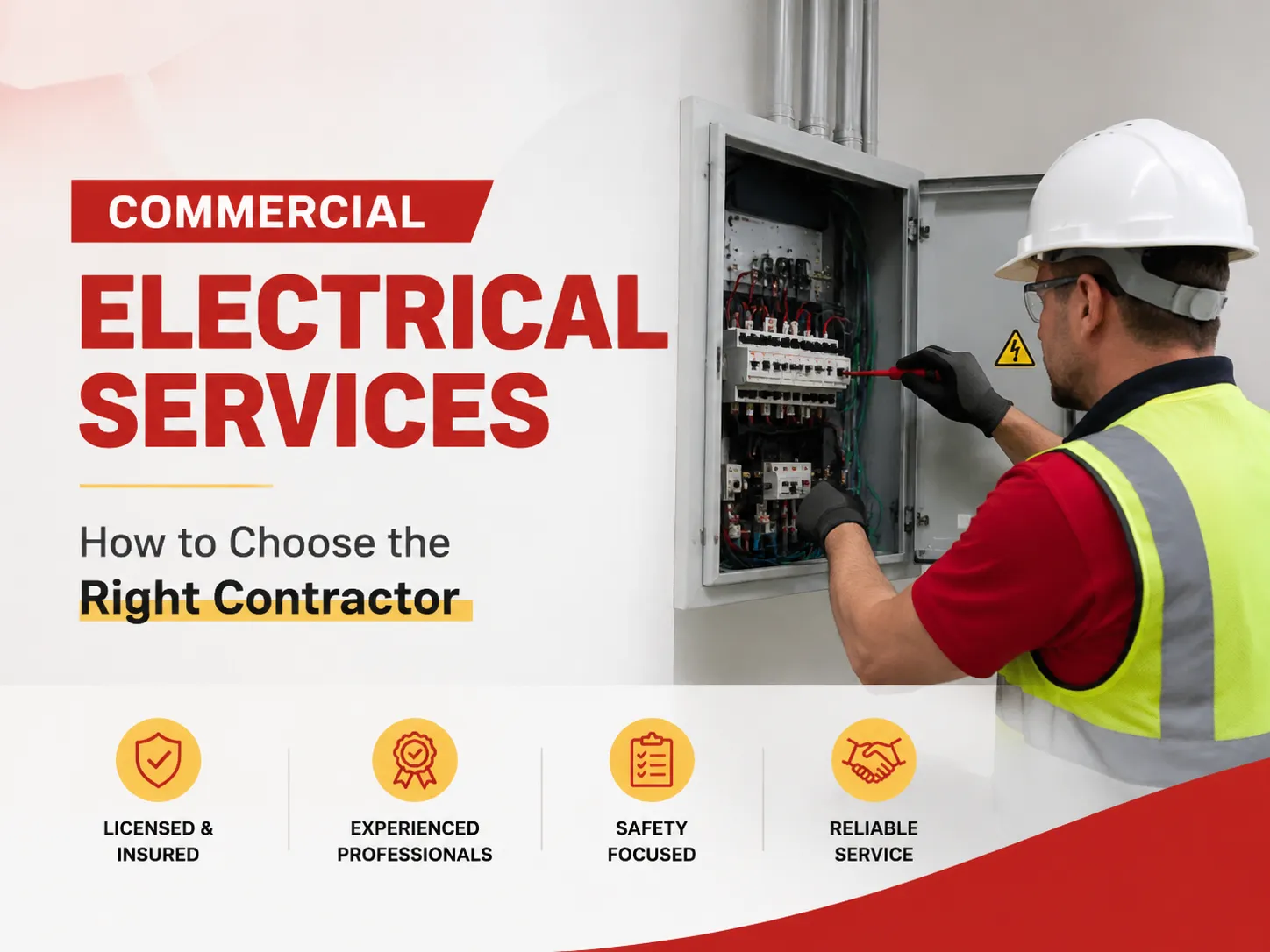
How to Choose the Right Commercial Contractor
- Make sure to check for licensing and insurance; specifically, verify that your contractor has a state contractor license (in California, it’s called a C-10), a general-liability insurance policy, and a workers’ compensation insurance policy.
- Be sure to check the commercial experience of the contractor — ask the contractor to supply 2–3 references for their previous work in projects similar to yours (such as commercial, office, restaurant, industrial).
- Ask for itemized quotations from 3 contractors, including price of materials and labor, price of permits, and expected duration in writing.
- Make sure the contractor assures you he will take care of all the permits and inspections — if the contractor can pull permits and set up inspections, you will know the job is completed in accordance with the building code.
- Ask whether the contractor can work off-hours — will he be able to perform the work without disrupting your business?
- Ask about the contractor’s warranties — reputable contractors provide minimum one-year warranty covering their craftsmanship.
Frequently Asked Questions
How much do electricians charge for commercial work?
Licensed commercial electricians charge about $50 to $150 an hour, with the average rate in the U.S. at $75–$100 an hour in 2025–2026 (more in metro areas such as San Jose/San Francisco where skilled labor rates are around $100–$150). Along with the hourly labor, a service-call minimum ($150–$250), materials with markup, and permit fees are also considered. The cost of the project includes a new circuit ($150–$500), a commercial panel replacement ($1,500–$4,000), and the cost of emergency interventions that start anywhere between $150 and $500 to initiate the call-out. Always seek for written estimates from at least three contractors before you decide to choose one.
What does a commercial service electrician do?
A commercial service electrician sets up, offers maintenance services, and fixes electric lines in business places. Among the responsibilities they are responsible for are: service changes and panel upgrades, new wiring and circuits, three-phase power and motor control systems, installation of lights and LED retrofitting, installing emergency and alarm systems as well as backup generators and automatic transfer devices, installation of charging devices for electric cars, etc. Commercial electrician is different from residential one in that it works with higher voltage rates (480V and 208V), commercial codes, and interacts with businesses in order to avoid downtime.
What are some commercial electrical companies in San Jose, California?
Numerous commercial electrical contractors are operating in San Jose, such as Rosendin Electric, Cupertino Electric, Helix Electric, and Qmerit. They are some of the mentionable contractors that cater to commercial projects. Also, there are various mid-sized licensed C-10 contractors servicing the retail, office, and light-industrial sectors. Unfortunately not all of them keep up with trends and changes of the industry, which is why a safer option is to check who has an active license in California using the official California Contractors State License Board. There you will find all licensed C-10 contractors; also, make sure to ask them for testimonials and reviews in order to learn about their services.
What do most electricians charge per hour?
Most licensed electricians charge between $50 and $150 per hour in 2025–2026, with an average of around $75 to $100 per hour. Rates depend on several factors: the region, level of experience (for example, apprentice vs. journeyman vs. master), and type of job (the charge for commercial and industrial jobs is usually more than for residential jobs). According to the statistics, the hourly wages of electricians in San Jose are about $32–$42, but rates of contractors may be higher due to the inclusion of insurance costs, overhead, and profit margin.
References
- NFPA 70 — National Electrical Code: commercial installation requirements
- California Contractors State License Board — C-10 electrical contractor licensing and verification
- Payscale — Electrician hourly pay in San Jose, CA
- Indeed — Electrician salary data for San Jose, CA
- Shyft — Commercial electricians in San Jose: services and qualifications
- U.S. DOE — commercial lighting rebates and energy efficiency programs
Conclusion
Commercial electrical services include everything a business may require, including panel upgrades, new construction, emergency repairs, emergency power supply, EV charging stations, and preventive maintenance. Because they utilize not only certificates and licenses but also insurance and are complicated, they are generally pricier than residential work. The fees per hour vary between $50 to $150, while budget estimates will come from itemized quotations for every single project related to your business.
To get the outcome you need, you should follow the same steps for every case: read this guide so that you are aware of your position, learn what equipment you should order, check certificates and licenses, get 3 detailed quotations for your project, and double-check that all necessary permits and inspections are taken care of.