
An electrical disconnect (disconnect switch or safety switch) is a very important safety device that allows a person to manually shut off power to either an entire electrical system or to specific pieces of electrical equipment. Disconnects are made for intentional, total shutdown of power in the case of maintenance, repairs, or emergencies, in contrast to circuit breakers which automatically trip when there is too much electrical load on them. This guide will explain everything you should know about electrical disconnects, including their types, uses, and how they differ from circuit breakers.
What Is An Electrical Disconnect? Function and Design
An electrical disconnect is a mechanical switch that provides an easy way to break the electrical connection between a source of electricity (the generator or transformer) and a load (the using device). The disconnect creates a visible break in the electrical circuit so that electricians or other persons working on an electrical system can perform safe work on that system without the possibility of accidentally re-energizing the circuit they are working on. The primary design attributes include:
- Manual Operation: Operated by means of a handle or lever, with a physical indication (such as ON/OFF marking) of the power source status.
- Heavy-Duty Construction: Designed to handle both high current and high voltage due to application (to handle currents from 30A to 4000A+ and voltages from 120V to 15kV+).
- Latchable Mechanism: Most models can be made safe and secure in the OFF position with a padlock, to prevent any unauthorized reactivation.
The National Electrical Code (NEC) requires the installation of electrical disconnects for all commercial, large commercial, and industrial appliances in order to protect workers from electrical hazards.
Categories of Electrical Disconnects: Low Voltage, Medium Voltage, & High Voltage
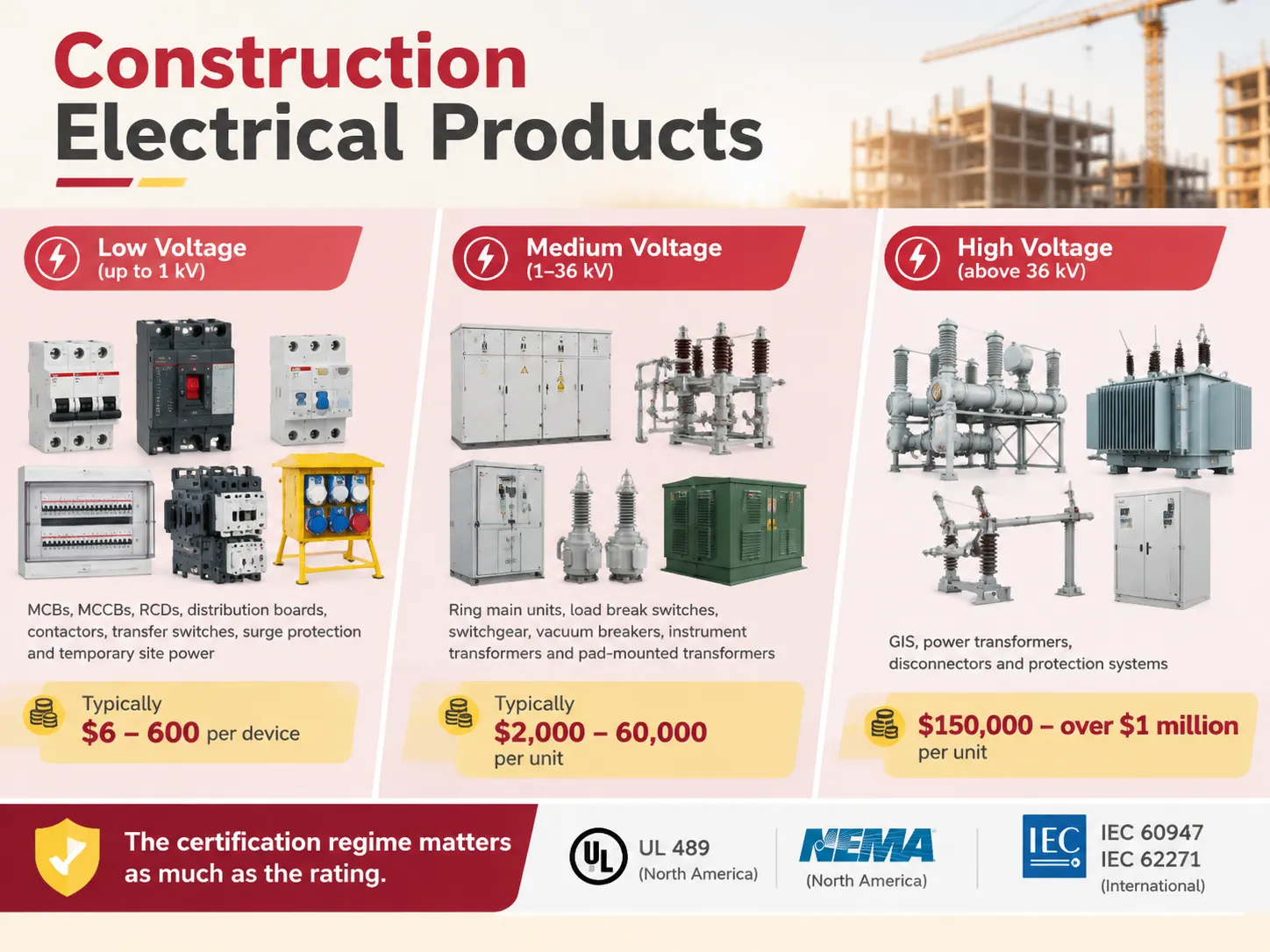
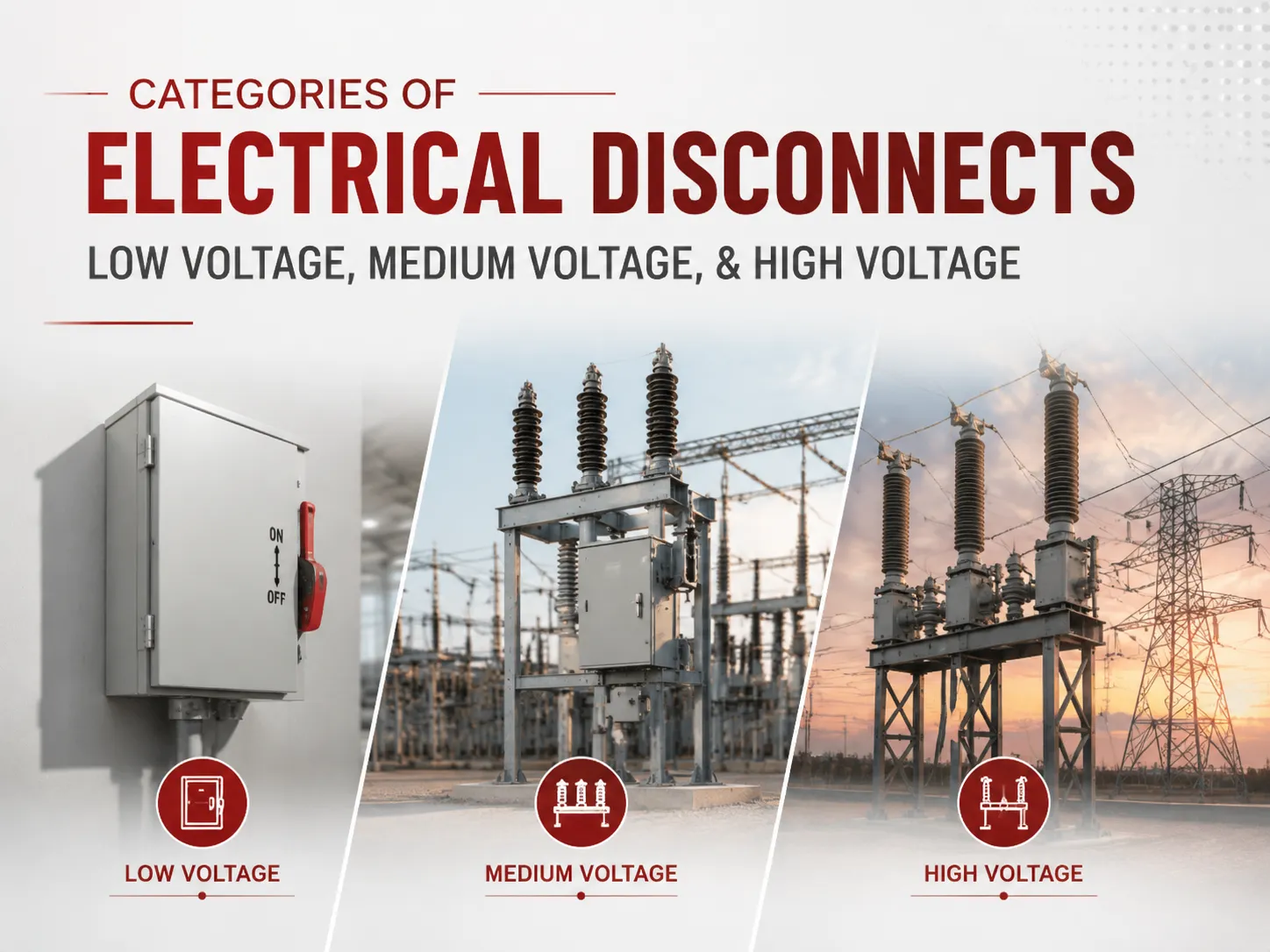
Electrical disconnectors, depending on the application and rated voltage, are separated into three categories:
Low Voltage Disconnectors (120V–600V)
These types of electrical disconnectors are commonly used in both residential and commercial applications to control the operation of appliances and light machinery:
Plug Fuses and Cartridge Fuses: These early types of electrical disconnectors were more commonly used in older homes. However, most have now been replaced by circuit breakers.
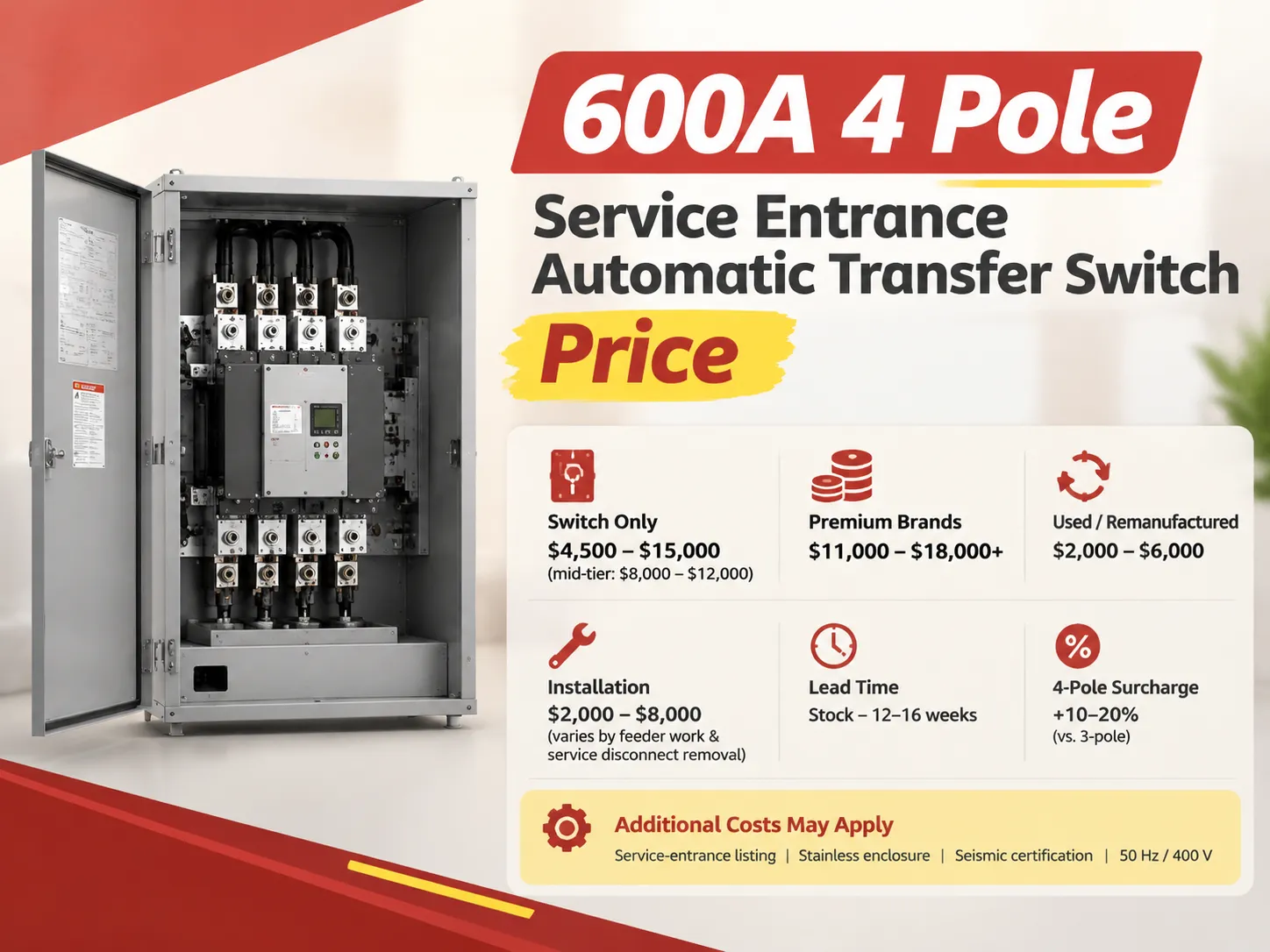
Non-Fused Disconnect Switches: These types of electrical disconnectors are primarily used to disconnect the electrical service to air conditioners, water heaters, and pool pumps. Brands like Siemens and Eaton offer such units, generally priced between $50 and $200.
Fused Disconnect Switches: These include an added layer of overcurrent protection and are used to disconnect the electrical service to industrial motors and heavy machinery. HUYU Electric provides budget-fused disconnects, starting at $30.
Medium Voltage Disconnectors (600V–15,000V)
Medium voltage disconnectors are typically used to disconnect electrical service for commercial buildings, data centers, and industrial installations. These disconnects are primarily utilized for large equipment:
Air Break Disconnectors: Utilize air as an insulating medium to interrupt the electrical circuit. Brands like Schneider Electric and ABB sell popular models ranging from $1,000 to $10,000.
Vacuum Disconnectors: Designed for high-current applications, these use a vacuum chamber to extinguish arcs. ABB offers robust and dependable vacuum disconnects.
High Voltage Disconnectors (15kV+)
High voltage disconnectors are typically used in power grids, substations, and renewable energy projects:
Oil-Insulated Disconnectors: Use oil to insulate and cool the circuit. General Electric (GE) is a notable manufacturer, with models costing between $10,000 and $100,000 or more.
SF6 Disconnectors: These use sulfur hexafluoride (SF6) gas for insulation, offering a compact design and low maintenance. Siemens is a leading brand in this category.
Electrical Disconnect vs. Circuit Breaker: Key Differences
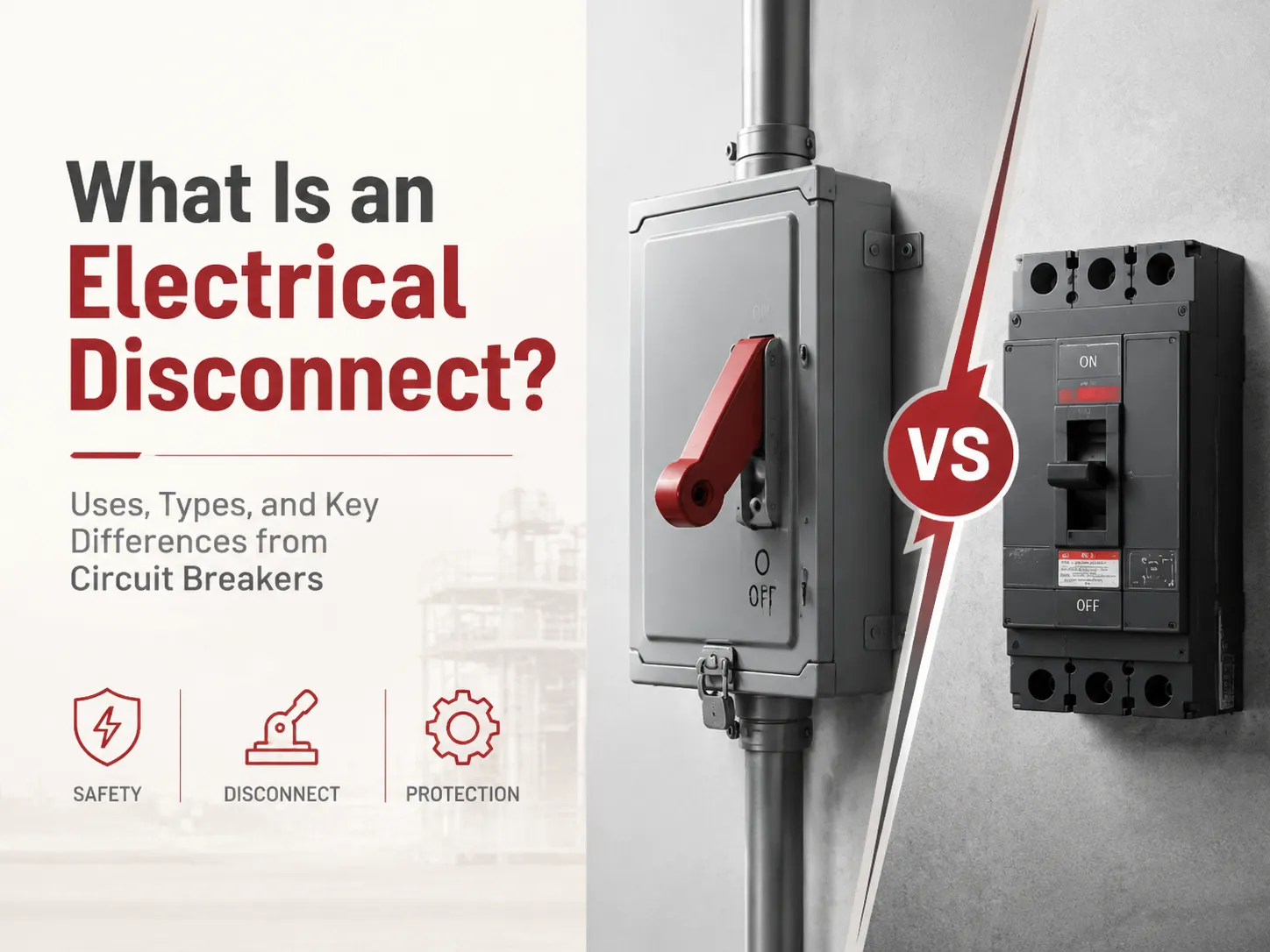
Electrical disconnects and circuit breakers provide electrical system protection, but they fulfill different functions. Below is a comparison:
| Feature | Electrical Disconnect | Circuit Breaker |
|---|---|---|
| Primary Function | Manual shutdown of power for maintenance/emergencies | Automatic overcurrent protection (trips during overloads/short circuits) |
| Operation | Manual handle/lever; lockable in the OFF position | Automatically trips; can be manually reset |
| Visible Break | Required by NEC for large equipment; clearly shows whether power is ON | No visible break; uses indicator lights or test buttons |
| Applications | Large appliances, industrial machinery, commercial systems | Residential outlets, lighting circuits, small appliances |
Top Brands for Electrical Disconnects
Reputable brands produce quality products that meet durability and safety requirements. Here are some leading brands:
Siemens: Offers a full range of low, medium, and high-voltage disconnects with innovative designs and global certifications. Visit Siemens
Eaton: Specializes in fused and non-fused disconnect switches for residential and commercial use, offering competitive pricing. Visit Eaton
Schneider Electric: Focuses on medium-voltage disconnects for smart buildings and data centers, offering energy-efficient features. Visit Schneider Electric
HUYU Electric: A budget-friendly option for low-voltage disconnects. Their products are reliable and delivered quickly. Visit HUYU Electric
Electrical Disconnect FAQs
Why Use Electrical Disconnects?
The main purpose of an electrical disconnect is to provide a safe way for electricians to manually shut off all power supplied to specific equipment or entire electrical systems. This ensures safe maintenance or repairs by completely eliminating the flow of electricity through the system.
How Are Disconnects Different From Circuit Breakers?
Circuit breakers automatically trip during overloads or short-circuits, while disconnects are manually operated to deliberately cut power for maintenance or emergencies. Disconnects also provide a visible break in the circuit and can be locked in the OFF position, which is not typically possible with circuit breakers.
What Are Common Nicknames for Electrical Disconnects?
Electricians often refer to electrical disconnects as safety switches, disconnect switches, or simply disconnects. In industrial settings, they may also be called lockout/tagout (LOTO) switches due to their locking capability for safety purposes.
What Are Other Names for Electrical Disconnects?
Electrical disconnects may also be known as safety switches, load-break switches, or isolation switches. For specific residential uses, they might be referred to as AC disconnects or water heater disconnects.
An electrical disconnect is an essential safety device that offers a manual, lockable means of cutting power to electrical systems or equipment. Available in low, medium, and high-voltage configurations, they are required by the NEC for safety and provide a visible method of disconnection. Leading brands include Siemens, Eaton, Schneider Electric, and budget-friendly providers like HUYU Electric, catering to diverse needs and budgets. Whether you’re a homeowner or managing industrial facilities, understanding electrical disconnects ensures the safety and compliance of your electrical systems.