
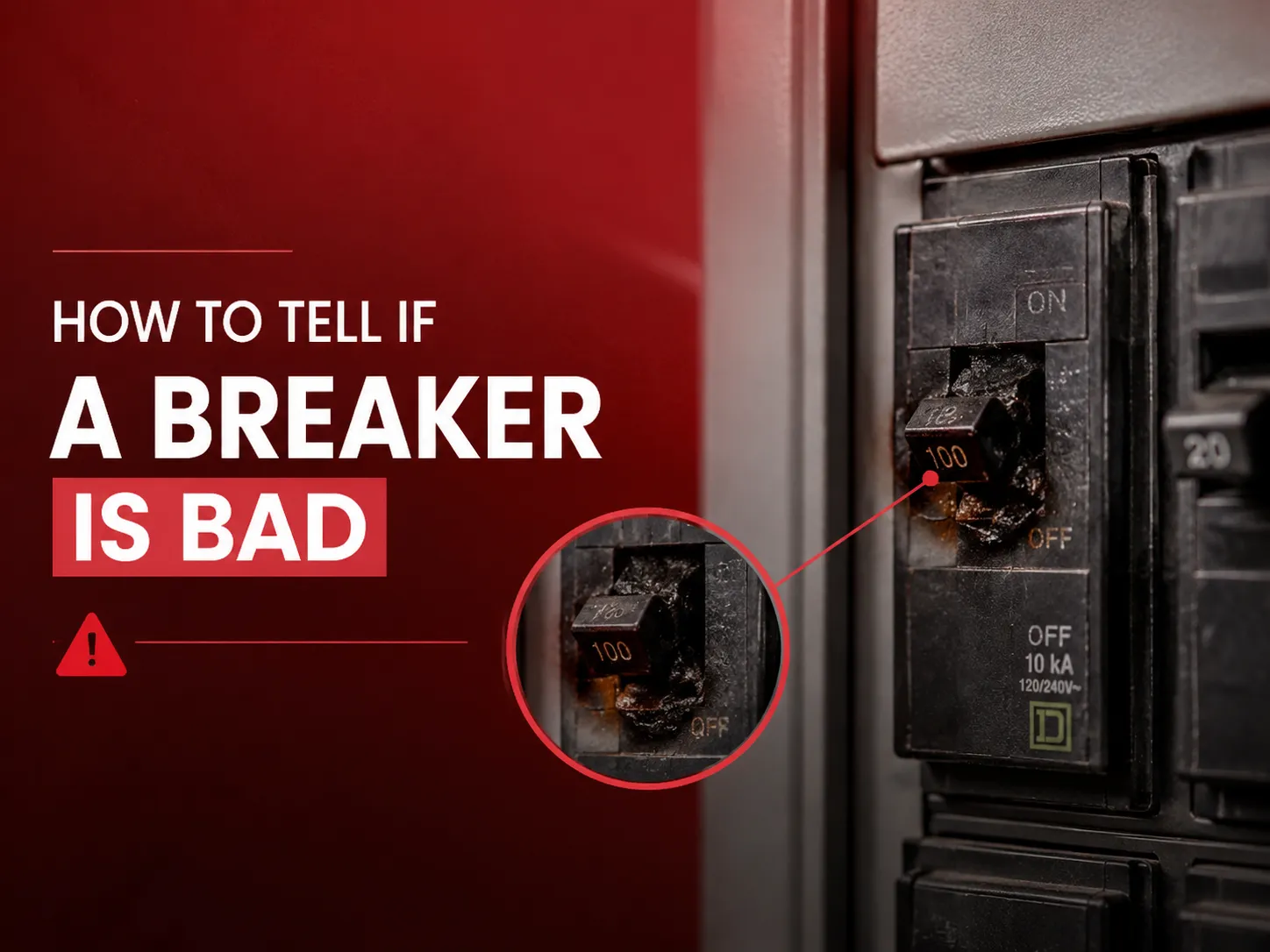
Last summer, a homeowner noticed that the lights began flickering in his kitchen when the microwave was being used at the same time as other appliances. Soon after this happened, the microwave would trip its breaker frequently. The homeowner was able to reset the breaker with no problem; however, after another week of resetting it, he could smell something unpleasant (acrid) around the breaker panel. The homeowner was surprised to discover that the breaker had been failing for several days due to internal arcing and pitting of its contacts. Therefore, the cause of the tripping breaker was not an overload, but the breaker itself was burnt out. Therefore, knowing how to identify a malfunctioning breaker before reaching this point is one way to prevent damage and/or fires related to your electrical panel and avoid having to call an electrician at midnight!
The Most Common Signs of a Failing Circuit Breaker
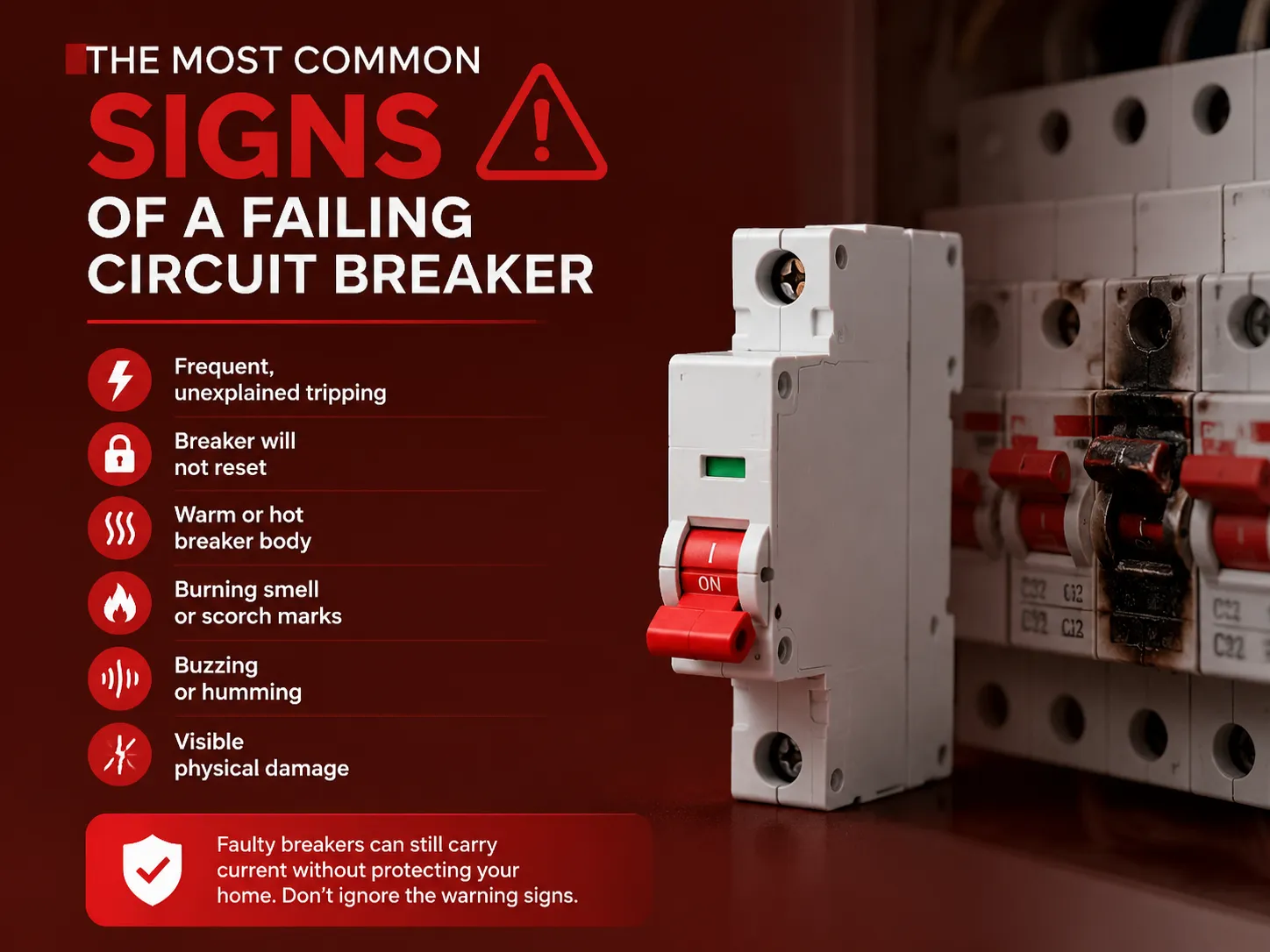
A circuit breaker is a physical device & like all physical devices, it can eventually break down. By knowing what to look for you can usually identify when your circuit breaker is breaking down. The most common symptoms of a failing circuit breaker:
- Frequent, unexplained tripping. If a breaker keeps tripping due to a load that it has had no problems supporting in the past, it may either have an underlying thermal element that is no longer able to carry the same load or might be experiencing a deterioration of its contact surface. The trip curve has shifted, and therefore the breaker is not effectively protecting the circuit as it should.
- Breaker will not reset. When the circuit breaker trips and is unable to reset, that is when you have tried to reset but it will not stay in the ON position; the most likely cause of it is a faulty latch mechanism (the handle springs back to the middle position) and/or the contacts of the breaker are welded together; resulting in the circuit breaker being inoperable and must be replaced with a new one.
- Warm or hot breaker body. If a circuit breaker feels warm due to the amount of current flowing through it and therefore generates high internal resistance, the heat is being produced at the contacts or at the bus bar connections. If a circuit breaker is warm, it is considered to be a bad circuit breaker.
- Burning smell or scorch marks. Any signs of burning or discoloured plastic, either on the breaker, the panel cover, or the busbar, indicate an emergency. Turn off the main breaker and contact an electrical contractor.
- Buzzing or humming. It is normal for a circuit breaker under heavy load to produce a low hum. If the humming becomes louder or there is an additional sound that was never heard before, then there is likely an internal arc within the circuit breaker or a loose connection that will require replacement.
- Visible physical damage. If your device has any of the following problems it needs an immediate replacement : cracked case, melted terminal and/or handle missing or loose.
Even though a circuit breaker may seem to function correctly, it can still be faulty. For example, a circuit breaker with pitted contacts (contacts that are burned or melted), as well as one with a defective mechanism to trip, can continue to carry current but will not provide the protection needed by the circuit. This is where the hidden risk lies; an electrical breaker that does not trip when it should. According to the Electric Safety Foundation International (ESFI), faulty circuit breakers contribute to many residential electrical fires, and the ESFI recommends that attention be given to any of the issues noted above immediately.
How to Test a Breaker to Confirm It Is Bad
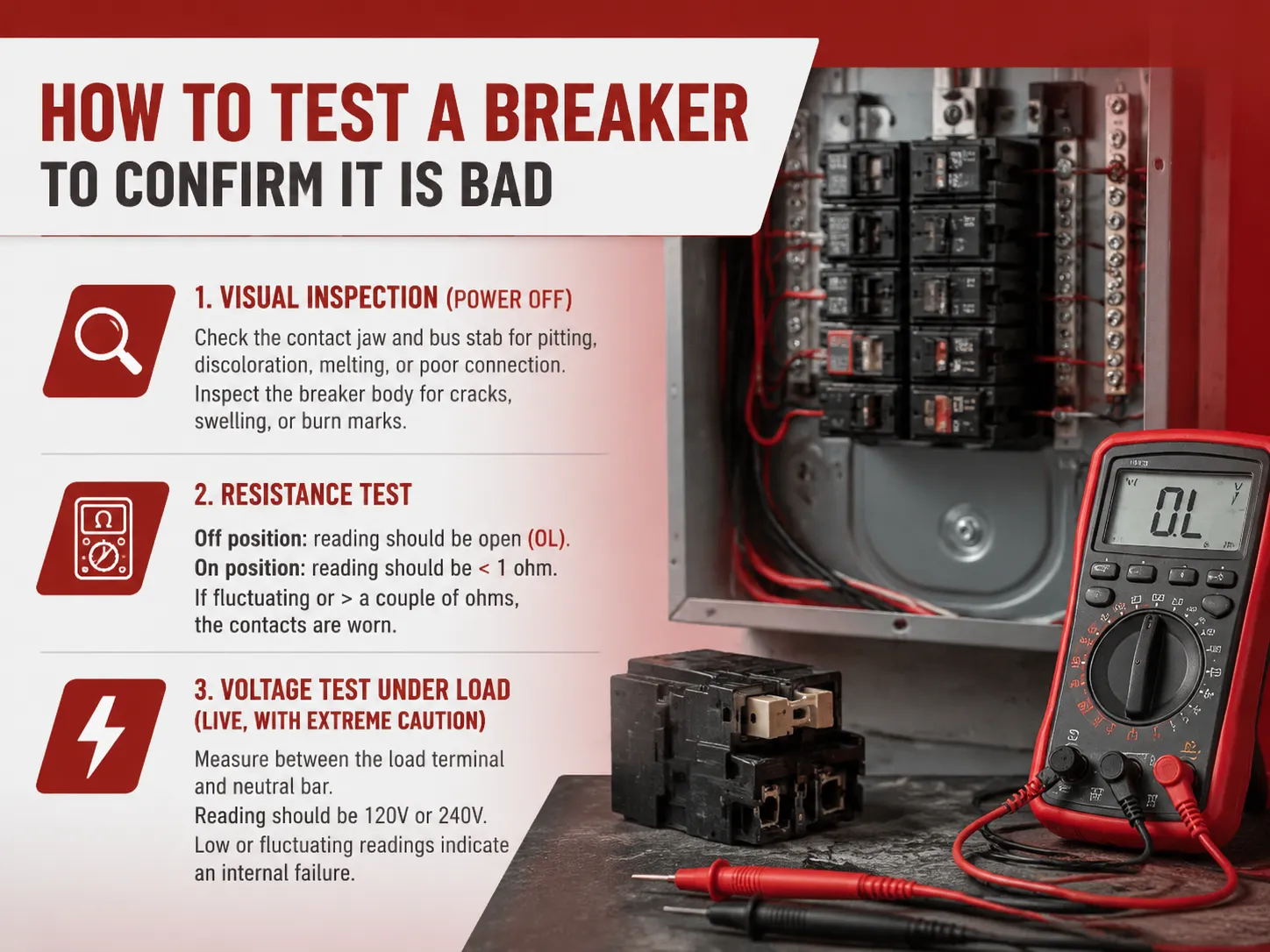
A few easy tests can provide post-Circuit Breaker diagnosis confirmation without needing to remove or replace your circuit breaker(s).
- Visual inspection (power off). To power down the panel, turn OFF the main breaker. Once the main breaker has been turned off, remove the noted bad breaker being tested. Look at the contact jaw (the metal clip that connects to the bus bar). Pitting, discolouration, melting of the contact jaw and/or bus stab indicates that there is a poor connection. Inspect the breaker body for cracks, swelling and/or scorch marks.
- Resistance test with a multimeter. Measure the resistance between load terminal and bus arm after removing breaker and putting in off position. The reading on the meter should be open (OL). When the breaker is on, the reading should be < 1 ohm. If the reading fluctuates or is > a couple of ohms, the contacts are worn.
- Voltage test under load (live, with extreme caution). After installing and powering up the breaker, take a voltage measurement between the load terminal and the neutral bar. The reading should be equivalent to the proper line voltage supplied (either 120 volts or 240 volts). Should the measurement yield an unusually low result, or if tapping the breaker body lightly results in a fluctuating or varying reading, then it can be determined that there is a failure internal to the breaker.
A DIYer with extensive electrical knowledge can do these tests if they have taken the proper precautions (which include but are not limited to; wearing all of their PPE and shutting the main power off) and feel confident doing so. However, if you do not have the required knowledge or experience to do this safe and correctly, you should not hesitate to contact an electrician to do the same testing and/or change the breaker for you. For help selecting the correct replacement amperage, our guide on what size circuit breaker you need explains the NEC‑based sizing process.
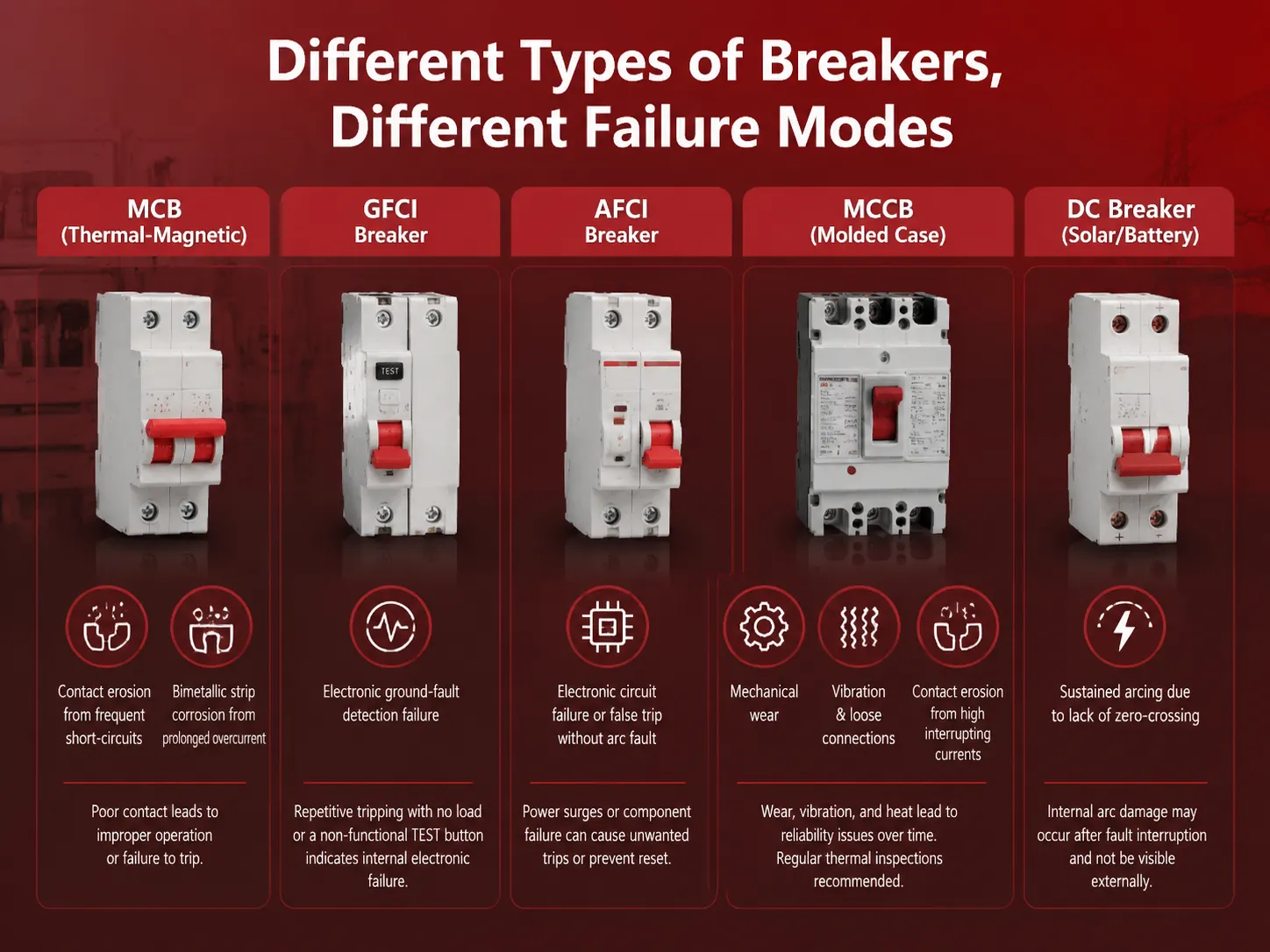
Different Types of Breakers, Different Failure Modes
Not all circuit breakers fail in the same way. The type of breaker influences the failure pattern:
- Standard thermal‑magnetic MCB. The primary cause of failure in circuit breakers is either erosion of the contact surfaces due to many short-circuits or corrosion of the bimetallic strip because of excess current draw for long periods, close to the trip threshold. If the contact surfaces become too eroded, they will not make good contact, and the circuit breaker won’t operate properly.
- GFCI breaker. While the mechanical breaker part of the GFCI breaker continues to operate normally, the internal devices used to detect ground-fault current may suffer from a failure in operation. In the event that a GFCI breaker trips repeatedly and no load is connected; or if the TEST button does not operate the unit it indicates an electronic failure, and will need to be replaced. The HUYU range of RCCB and RCBO products (for example, the VRL11B Type B RCCB) feature residual current protection to the same reliability testing criteria as specified in international standards.
- AFCI breaker. AFCI devices have precision electronic components, just as GFCI breakers do, and their electronic circuitry is subject to failure due to power surges. A failure may also occur if an AFCI detects no arc fault but trips and will not reset.
- MCCB (molded case circuit breaker). MCCB can suffer from mechanical wear as a result of the functioning mechanism wearing out over time and through vibration, loose internal connections due to vibration, and eroded contacts from frequently interrupting high currents. To observe where the heat is present by doing an inspection with thermal imaging, many industrial safety programs recommend performing this type of inspection at least once a year for the MCA before any damage occurs to the electrical distribution or an electrical power circuit.
- DC breaker (solar/battery applications). When it comes to DC breakers, they have another challenge when it comes to sustaining arcing because there is no ‘zero-crossing’ point in which to put out an arc. Once a DC breaker has interrupted a fault, they could have a damaged internal arc that will not show externally. HUYU’s DC MCB range, including the HUB9NEZ‑80 DC circuit breaker, is designed and tested for the sustained DC arc, but any DC breaker that has cleared a known fault should be inspected and considered for replacement.
When to Replace a Breaker and When to Call an Electrician
If a breaker exhibits any of the following warning signs/warning conditions, it must be replaced immediately: warmth of the breaker box, buzzes, has visible damage, trips repeatedly or fails to reset. A circuit breaker is a safety device; a defective circuit breaker can cause serious harm to your home. Disconnecting the power source is done by turning off the main breaker (the largest breaker in the panel). After turning off the main breaker and removing the old circuit breaker from its cabinet, you will want to find a new circuit breaker that matches the type of breaker required by the panel label and replace it in the same manner: seat the new circuit breaker firmly onto the bus bar, and torque the load terminal according to specifications. There are a number of websites, such as Family Handyman.com, where you can find step-by-step instructions on how to install a new circuit breaker.
If there is a malfunction with the bus bar (e.g., pitting, discoloration, melting), the entire panel may need replacing; if the brand of the panel is obsolete and has a history of failings (e.g., Federal Pacific Electric Stab-Lok, or Zinsco), then replacing the panel in full is your only reliable option; if the circuit breaker keeps tripping due to no apparent source from a single appliance, a qualified electrician will need to find the source of the wiring problem; and if there is any smell of smoke, or burning, the main breaker must be turned off immediately and an electrician should be called to assess the situation. The cost for replacing a circuit breaker could be in the range of $50-$200 (including service call). The cost for a replacing an entire electrical panel could be in the range of $1,500-$3,500. Neither is a good place to save money by using an unqualified handyman.
Frequently Asked Questions
How do you test if a breaker is bad?
Testing a breaker can be done through a visual examination for any signs of burning, pitting, or melting of the case; a measurement of resistance through the contacts (it should show almost zero ohms when on, and open when off); and a measurement of voltage under load conditions (it should read the full line voltage). If the breaker fails any one of these tests it is defective and must be replaced.
How can you tell if a circuit breaker needs replacing?
If a circuit breaker trips multiple times without experiencing an obvious overload, feels hot, makes a buzzing noise, has clear burn or melting marks, will not reset, or has a TEST button that does not operate the breaker, then it is time to replace the circuit breaker as these are all indications of a defective safety device and are not providing adequate protection.
Can a breaker go bad but still work?
A breaker could go ‘bad’ and may not Trip at it’s Rated Overcurrent. When this happens the Circuits are looked as being Protected; however, they are Not. A breaker may also need to be Inspected and Replaced if it has been Through a Major Short Circuit even if it is still Operational.
Do I need an electrician to replace a circuit breaker?
A standard circuit breaker can be replaced by an aware DIYer who follows proper safety precautions which include shutting off the main breaker, checking that voltage is zero with a meter, and using a correct replacement breaker and the manufacturer’s proper terminal torque specifications. However, if the panel bus bar is damaged, you have aluminum wiring, or if you are not comfortable for any reason working inside of a hot electrical panel; call a licensed electrical contractor to perform this work for you.
References
- Electrical Safety Foundation International (ESFI) — Home Electrical Safety — Guidance on recognising and responding to failing circuit breakers.
- Family Handyman — How to Replace a Circuit Breaker — Step‑by‑step guide for safe breaker replacement.
- This Old House — Electrical Panel Maintenance — Homeowner guidance on panel inspection, breaker testing, and when to call a professional.
- Eaton — Circuit Breaker Diagnostics — Manufacturer information on failure modes and testing of residential and commercial circuit breakers.
Knowing how to tell if a breaker is bad is a skill that protects your home or facility from the inside out. A breaker that trips, buzzes, feels warm, or shows physical damage is a breaker that has already begun to fail. Testing it — visually, with a multimeter, or with a voltage check — confirms the diagnosis. Replacement is a modest cost compared with the consequence of a breaker that no longer protects the circuit. HUYU supplies circuit breakers — AC, DC, GFCI, and MCCB — built to the standards that ensure a replacement breaker protects exactly as its label promises.