
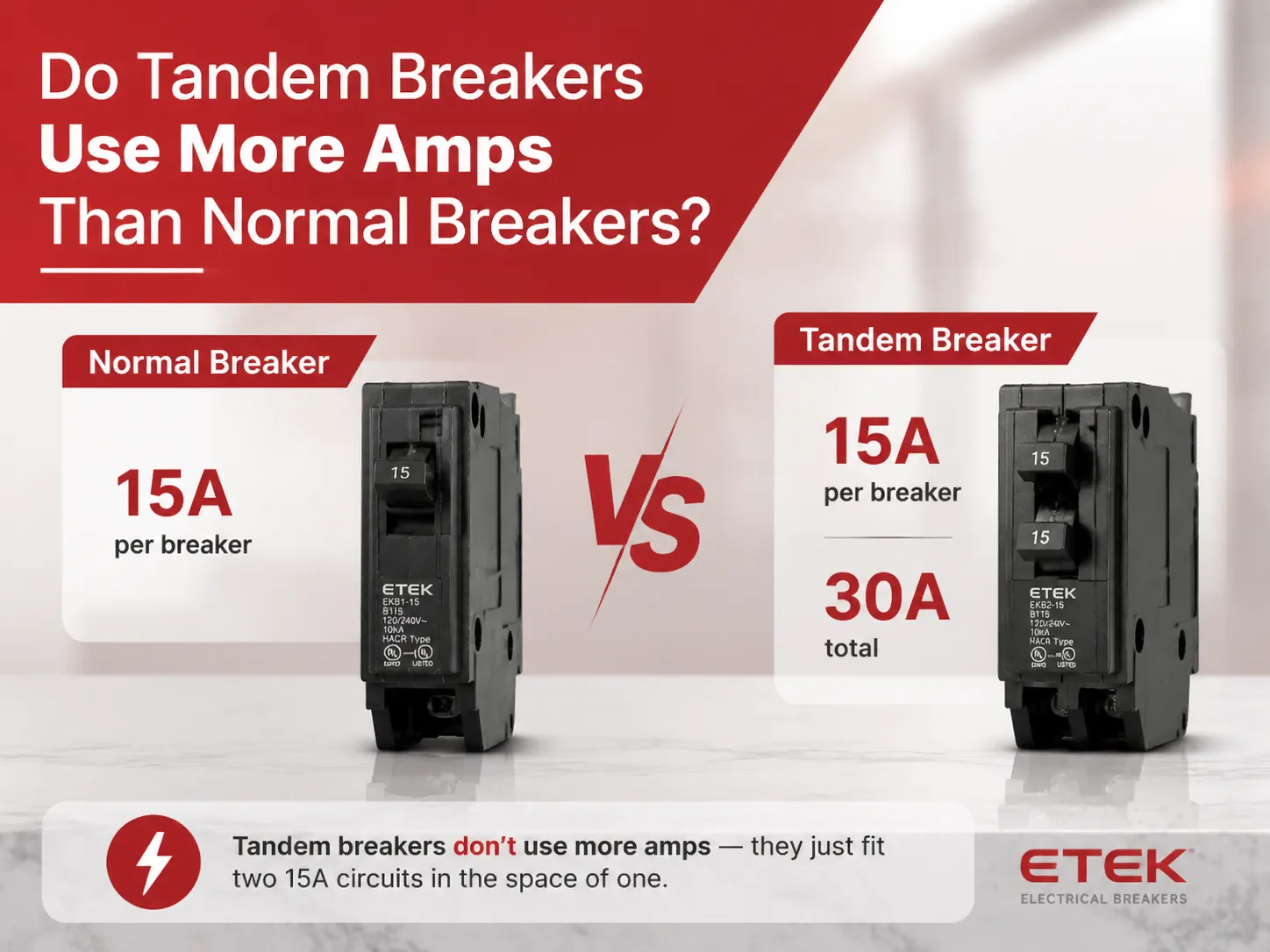
An electrician was called to Seattle by a customer needing to add a new circuit for his office. Upon opening the electrical panel, the electrician noted that there were no open slots in the electrical panel. The electrician offered two options for adding a new circuit: an expensive subpanel or a tandem breaker, which is a compact device that will take up one panel slot and allow for two independent circuits to be placed in that panel slot. At that time, the homeowner wanted to know if the tandem breaker would draw more amps than a standard breaker, to which the answer was “no,” but it requires further explanation in order to understand how a tandem breaker differs from a standard breaker and why a tandem breaker is not where the amp rating will be the concern when using the circuit.
There is no difference to the amount of overload protection from either type of 15‑amp breaker (i.e., both are rated equally and therefore are set up to trip at their respective ratings of 15 amps). Each of the circuits within the tandem breaker is rated at 15 amps, and if both are loaded at capacity — meaning a total of 30 amps would flow through the tandem breaker (15+15) — the circuit for each load will be limited by the breaker to tripping at 15 amps. Regardless of whether an electrical circuit uses a single‑pole (standard) breaker or a tandem (two circuit) breaker variation, the breaker carries the same amount of current and provides the same type of trip mechanism. The “key” difference between the two is that the tandem breaker contains 2 mechanical circuits within one housing; therefore, only one location or slot will be taken up in a panel for installation compared to two for a standard single circuit installed with a single pole breaker.
What Is a Tandem Breaker?
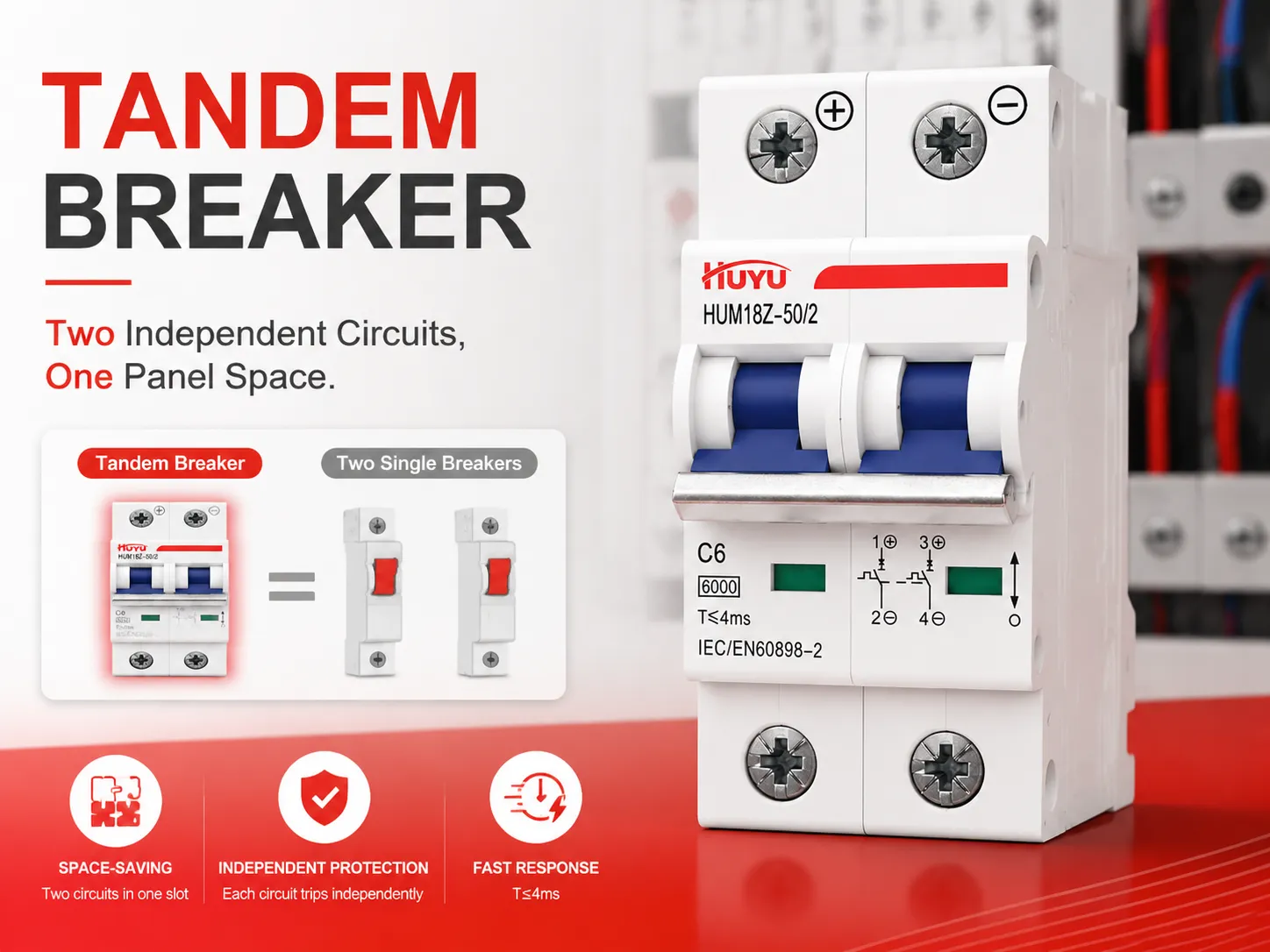
A tandem breaker (often referred to as a double, duplex, or piggyback breaker) is a dual independent single pole device existing within one device housing. The tandem breaker will take up one slot on the panel bus bar while supplying two separate circuits. Each circuit will have its own thermal trip mechanism and magnetic trip mechanism, individual load terminal and will operate off of two separate handles. One tandem circuit may trip without also tripping the other circuit (that is, the two handles are independent). Tandem breakers are specifically designed for use in panels when there are not enough physical slots available in the panel to support each of the required individual circuits, however these panels will be properly listed and labelled to support the use of tandem breakers.
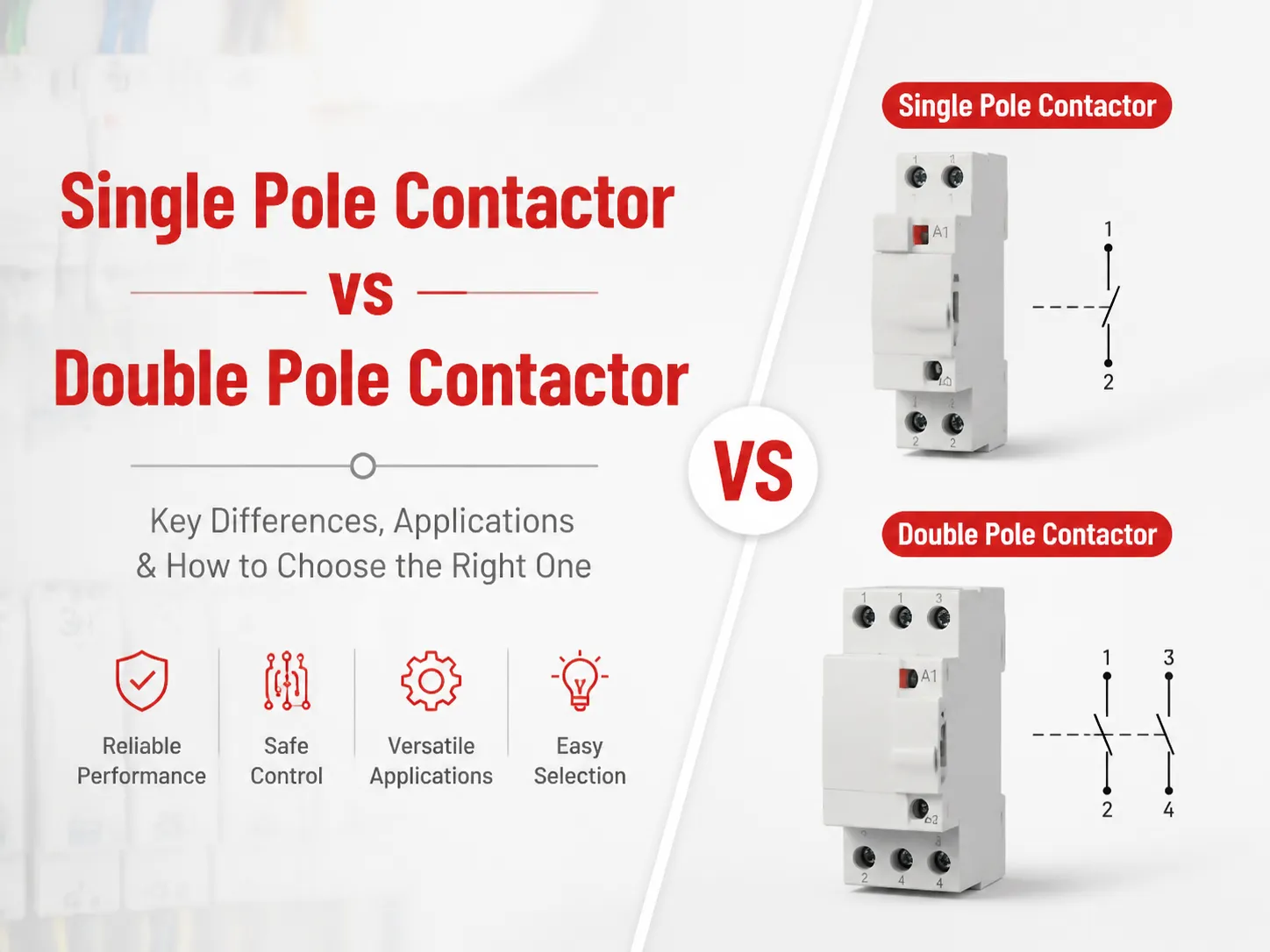
A typical single pole circuit breaker is a two position power switch that can take up an entire panelboard slot and control only a single electrical circuit. Characteristics of a typical single pole circuit breaker include one handle, one load terminal and one trip mechanism. A single pole circuit breaker is the default circuit breaker to be used with all lighting and receptacle circuits in homes. Single pole circuit breakers provide the same electrical protection to their circuit as a double pole circuit breaker provides; their only difference is the manner in which they are packaged physically.
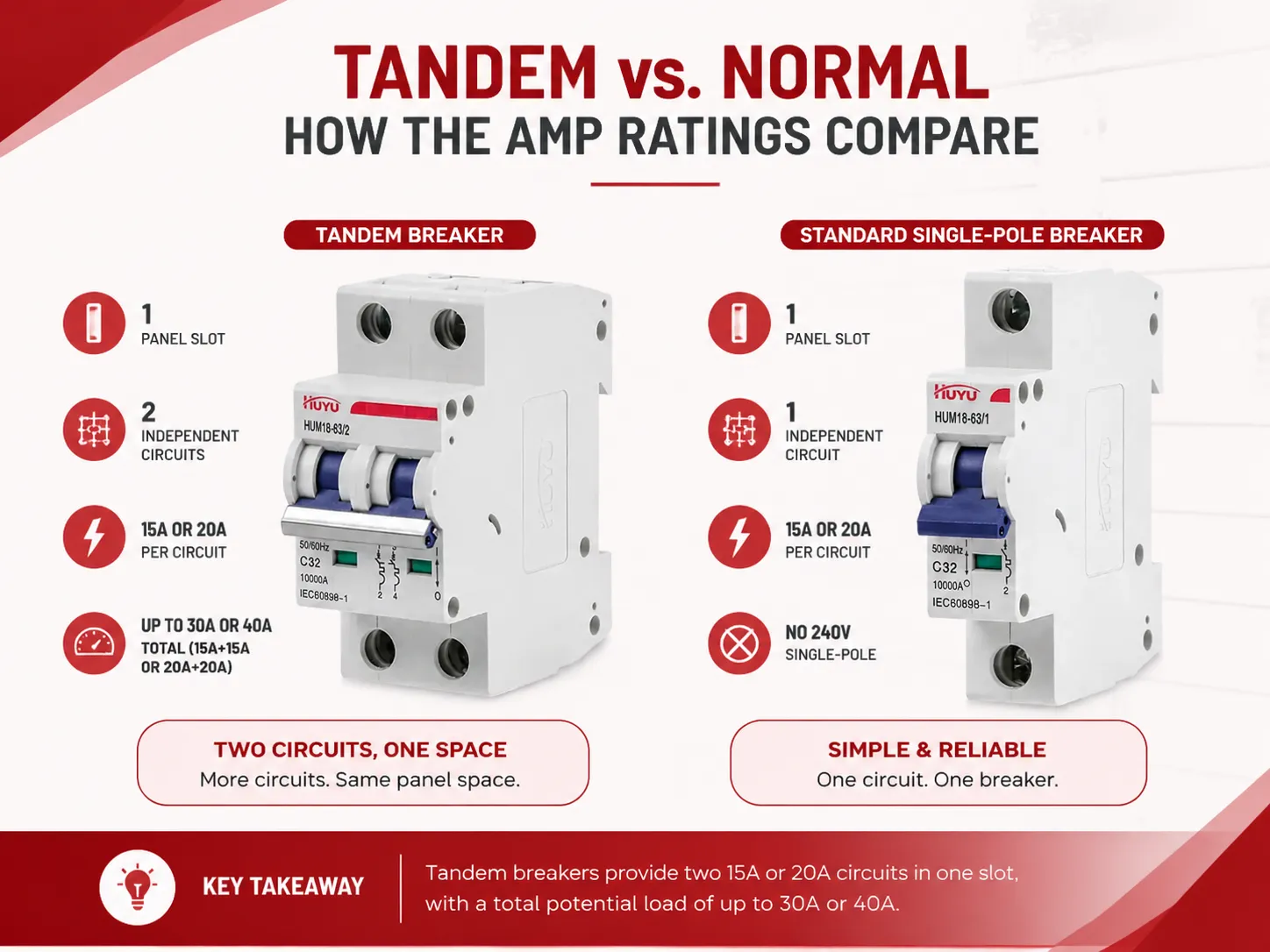
Tandem vs. Normal: How the Amp Ratings Compare
| Characteristic | Standard Single‑Pole Breaker | Tandem Breaker |
|---|---|---|
| Panel slots occupied | 1 | 1 |
| Independent circuits provided | 1 | 2 |
| Amperage rating per circuit | 15A or 20A typical | 15A or 20A typical per circuit |
| Total current possible (both circuits fully loaded) | N/A — single circuit | Up to 30A or 40A total (15A + 15A or 20A + 20A) |
| Provides 240V? | No (single‑pole) | No — both poles connect to the same bus stab; no 240V across them |
| Cost per circuit | $5–$10 | $10–$20 (but provides two circuits) |
The Real Concern with Tandem Breakers: Panel Loading, Not Amps
A tandem breaker does not inherently use more amps than a standard breaker, but it can concentrate more total current on a single panel bus stab. The bus bar is the metal conductor that distributes power to the breakers. Each stab is rated for a certain current. When a tandem breaker is installed, two fully loaded circuits can draw from the same stab that would otherwise serve only one. This is why panel manufacturers designate specific slots as tandem‑compatible and limit how many tandems can be installed. Overloading a bus stab is a fire risk, and it is one reason why a homeowner should never simply fill every slot with tandem breakers. For help with the load calculation that determines how many circuits a panel can safely accommodate, our guide on what size circuit breaker you need covers the NEC‑based process.
Where Tandem Breakers Belong — and Where They Don’t
Using tandem breakers can be a way to add more circuits to a full panel, however they are not an “end all be all” for doing so. Each breaker type along with which slots accept tandems is labelled on the panel label (the sticker inside the panel door), a tandem breakers in a slot that is not labelled as such can damage the bus bar or pose a risk for overheating. Tandem breakers can only be used on 120 volt circuits i.e. lighting, general-purpose receptacles and small appliances, Tandem breakers cannot provide power for a 240 volt circuit because both of the poles of the tandem connect to the same phase (neither pole connects to the other phase). To supply power on 240 volts, a double pole breaker is required (connects to both bus bars), a Tandem cannot do this.
The HUYU company produces standard single pole, double pole and tandem compatible breakers for residential and commercial service panel applications. A correctly selected and installed tandem breaker can add extra circuit capacity for a growing home, however, it may not necessarily be as safe as a listed or labelled panel.
Frequently Asked Questions
What is the downside of tandem breakers?
A tandem breaker has one major disadvantage; it places a greater combined amount of electrical load from many more different circuits at one time, therefore increasing the amount of electrical load on a single bus stab and total circuits inside the electrical panel. This could potentially cause excess heat build-up on the bus bars and cause the panel to fail if it was not originally engineered to handle the extra load. Additionally, tandem breakers can not provide 240 volts, nor should they be used long term to replace a panel upgrade if the total loads exceed the amount of rated electrical load for the panel itself.
Do tandem breakers share amperage?
No, a tandem circuit breaker distributes its amperage between both circuits, meaning that it will provide 2 circuits with equal current rating of 15 or 20 Amps, however they each have their own trip mechanism (15 Amp Tandem provides 2 separate 15 Amp circuits which are capable of carrying the same amount of current – individually).
Are tandem breakers just as good as single breakers?
Tandem breakers can provide overcurrent protection to 120-volt circuits in panels listed for tandem breakers like standard single-pole breakers. The function, breaker listing (UL), and circuit protection provided to these circuits are the same whether a tandem or standard single pole breaker is used. The only limitation of a tandem breaker is the amount of total current that your panel can handle, as well as the fact that they are only intended for use on 120 volt circuits.
Can you get 240 from a tandem breaker?
No. Tandem breakers supply a pair of 120-volt circuits on the same phase. Since both poles are wired to the same bus stab, the voltage between them is zero volts. A 240-volt circuit needs a double-pole breaker which spans through an adjacent pair of slots, providing access to two bus bars.
References
- Eaton — Residential Circuit Breakers — Technical data on tandem and standard breaker specifications and panel compatibility.
- Schneider Electric — Square D Load Centres — Panel labelling requirements and tandem breaker application guidance.
- Leviton — Load Centre and Breaker Technical Information — Manufacturer documentation on breaker types, bus bar ratings, and panel compatibility.
- Family Handyman — Tandem Breakers Explained — Practical homeowner guidance on when and how to use tandem circuit breakers.
A tandem breaker does not use more amps than a normal breaker. It provides two independent circuits in one body, each with its own amp rating, each protected independently. The caution with tandems is not about the breaker’s amp draw — it is about whether the panel bus and the total load calculation can safely accommodate the additional circuits. When the panel is listed for tandems, and the total load is within the panel’s rating, a tandem breaker is a safe, economical way to add circuits without the cost and disruption of a panel replacement. HUYU supplies tandem and standard breakers built to meet the certification requirements of the panels they fit, because the right breaker in the right slot is the simplest and most fundamental protection decision in any electrical installation.