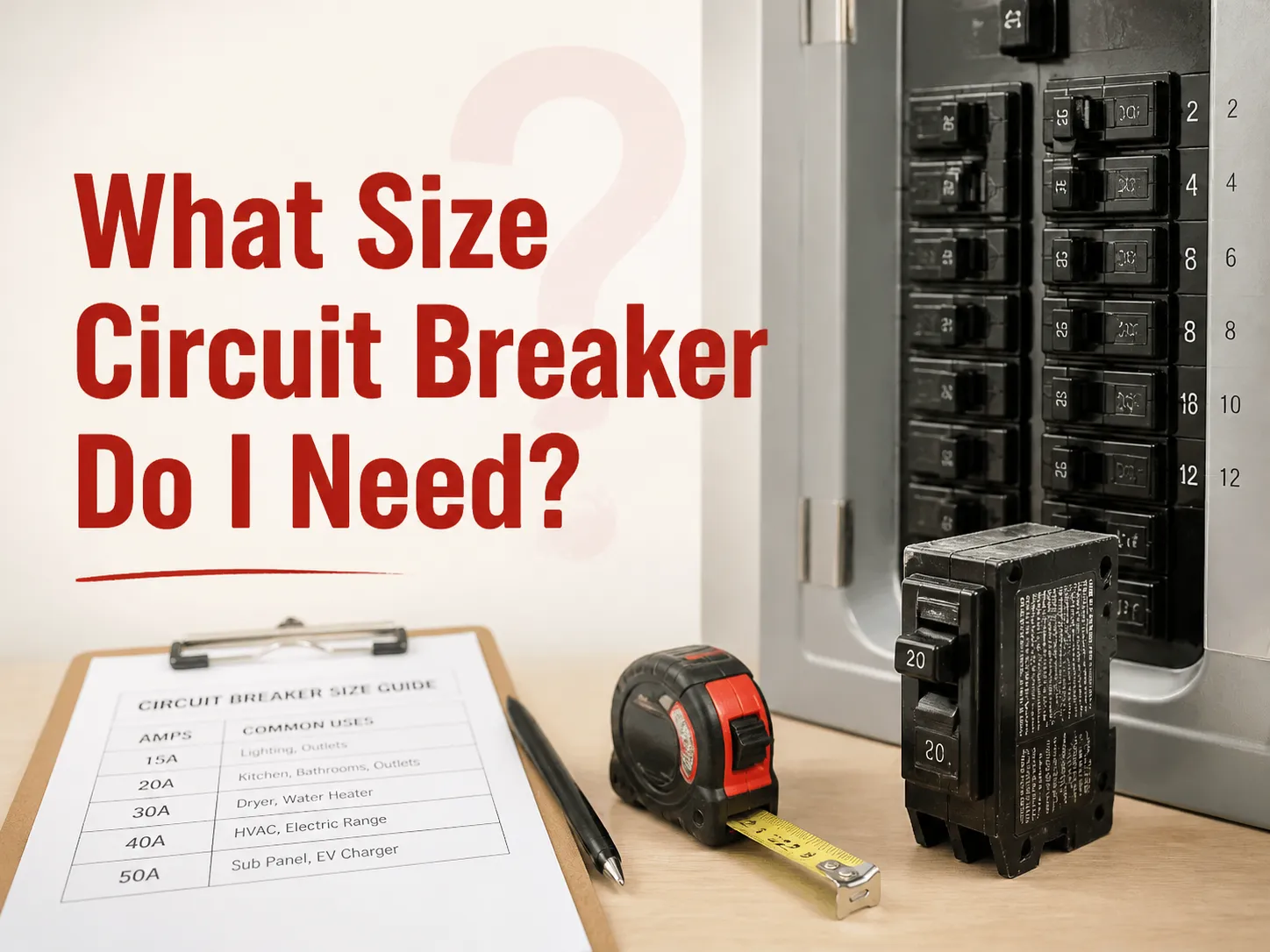

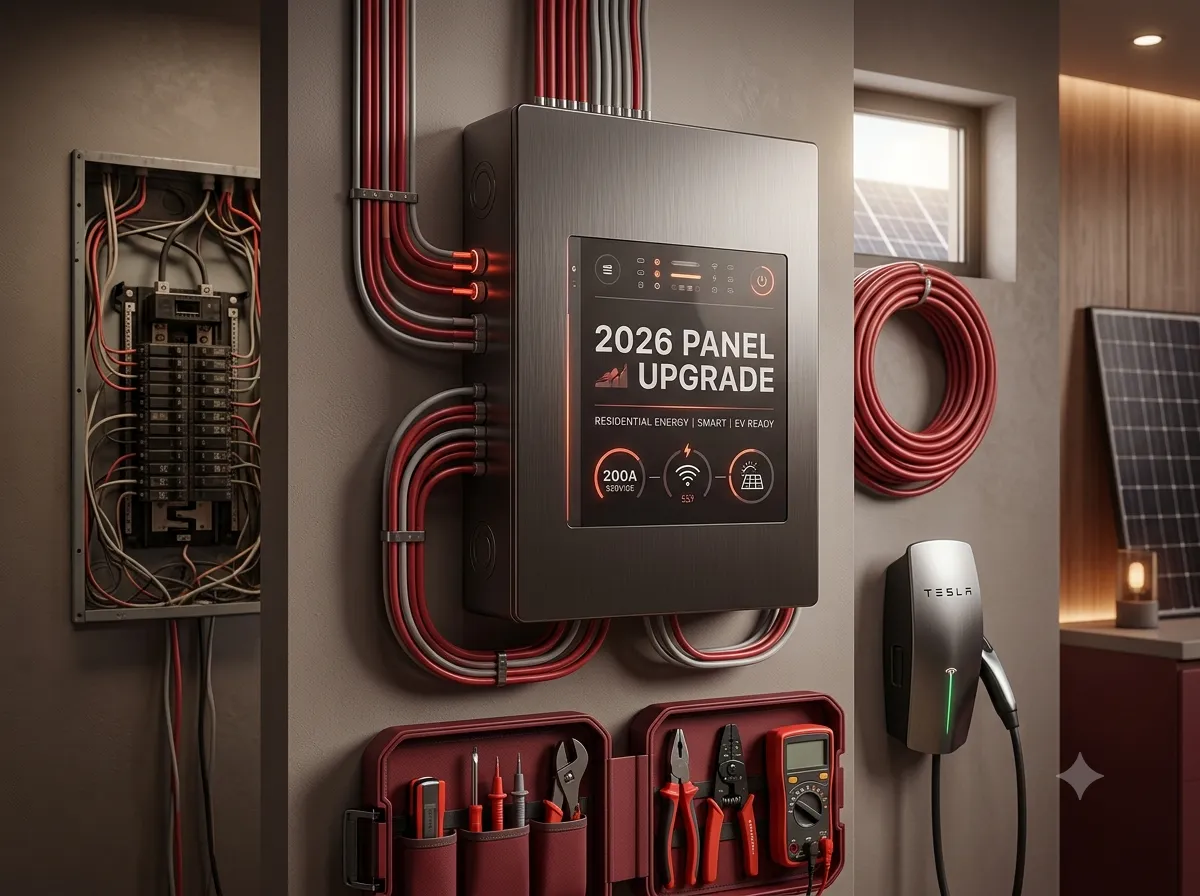
When a homeowner in California upgraded her 100‑amp panel to 200 amps last year, the electrician told her she was ahead of the curve — but only just. By 2026, he said, the 200‑amp service would be the floor, not the ceiling, and the breakers inside her panel would increasingly protect circuits that flow both ways: grid‑to‑home and solar‑roof‑to‑grid. His prediction is reflected in the data. The residential electrical panel is undergoing its most significant transformation in a generation, driven by electrification, renewable energy, and a fundamental shift in how homes consume and generate power. Understanding the trends that will shape electrical panel upgrades in 2026 helps every homeowner, contractor, and electrical supplier make decisions that will still make sense a decade from now.
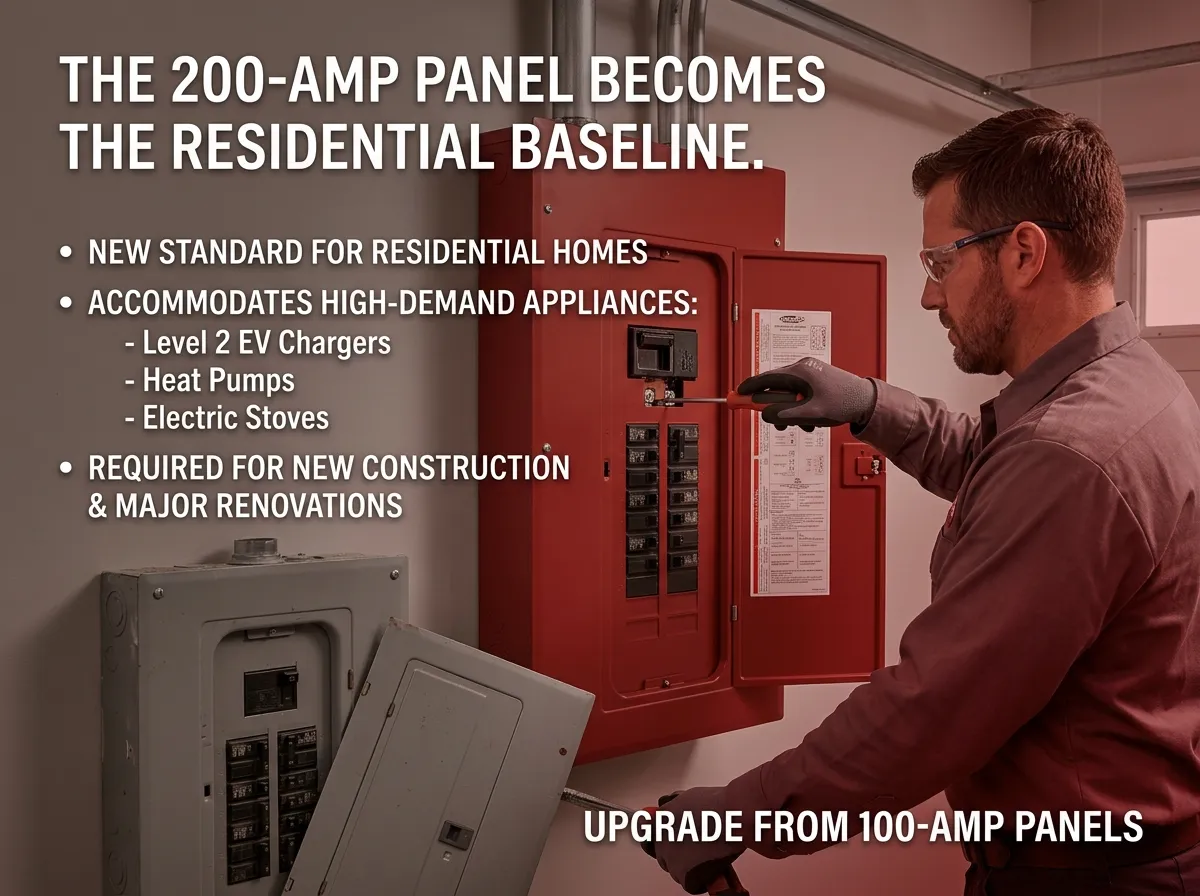
Trend One: The 200‑Amp Panel Becomes the Residential Baseline
The National Electrical Code states that the minimum service size for a single‑family residence should be 100 amps. In practice, however, this minimum service size has shifted dramatically to 200 amps. New homes powered by central air conditioning, electric stoves, level 2 electric vehicle (EV) chargers and heat pump water heaters have a demand load significantly exceeding 100 amps. The U.S. Energy Information Administration (EIA) estimates that the use of electric vehicles and heat pumps will continue to accelerate the growth of residential electric consumption. A 100 amp panel that was adequate in 1995 will be a choke point in 2026.
According to the result, any new homes that were built should now be installed with a 200-amp main breaker; this would include all single-family dwellings (with the exception of small all-gas single-family homes and accessory dwelling units). Furthermore, all existing homes that undergo significant renovations or major remodeling/expanding (such as kitchens or installation of EV chargers), must upgrade from whatever existing amperage they currently have to 200 amps; either required by code or because being a good citizen. The electrical contracting industry, tracked by organisations such as the Independent Electrical Contractors (IEC), reports that panel upgrades are among the most common residential electrical projects, and the share of those projects targeting 200 amps has grown steadily year over year.
Trend Two: Smart Panels and Load Management Move into the Mainstream
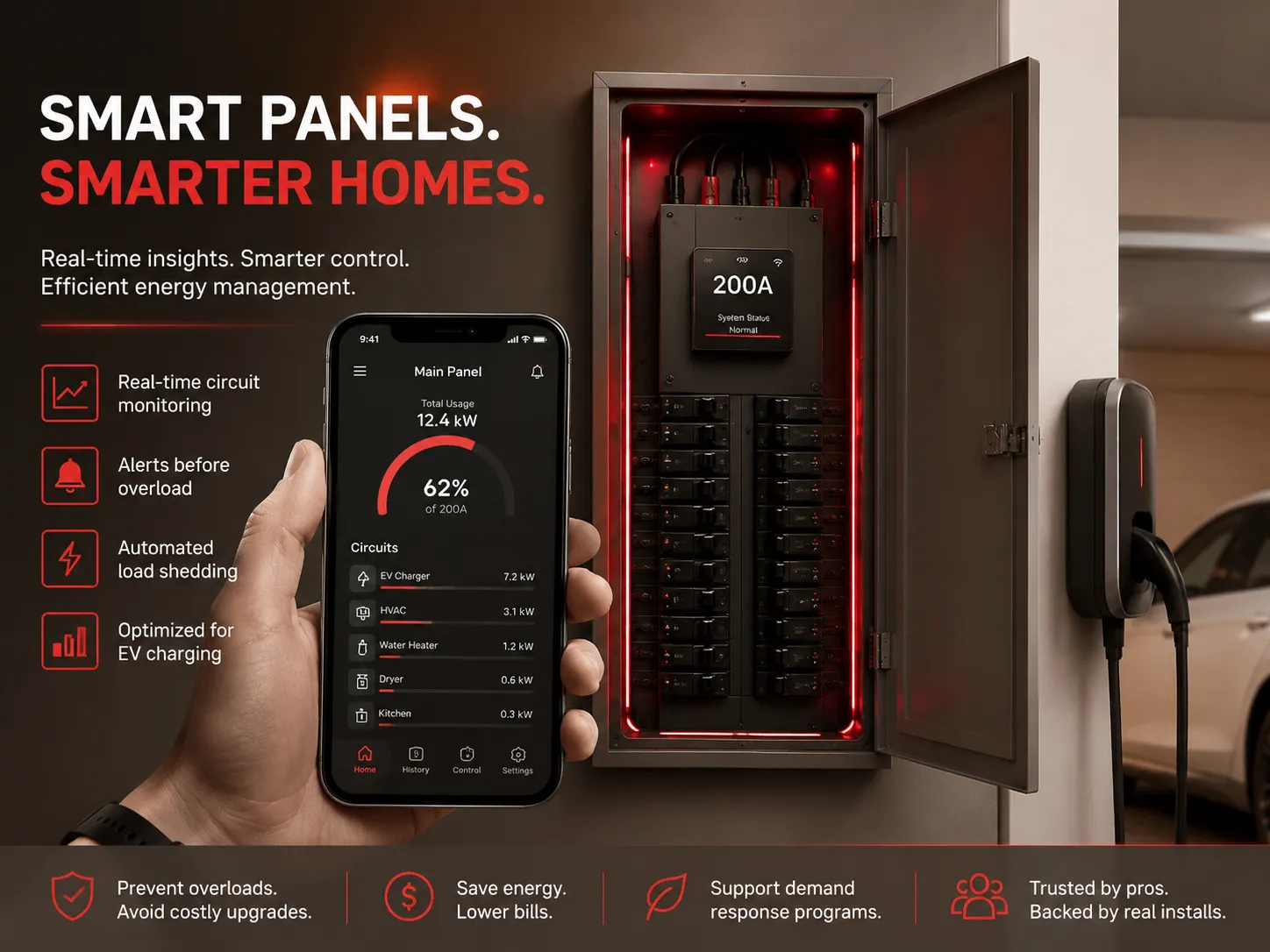
Residential Electrical Panels are no longer static metal boxes by 2026. Smart Panels, designed as load centers with integrated current monitoring and circuit-level energy tracking along with software to control the load-shedding, are shifting from early-adopters to mainstream use. Homeowners now have the ability to view in real-time from their smartphones how much energy is being consumed by each circuit, get notified when a breaker nears its thermal limit, and automatically shed non-critical loads from the main to prevent the breaker from tripping.
This data will be essential when trying to establish electrical circuits for new electric vehicle (EV) charging infrastructure. In existing homes with 200-amp service, where the main panel already has a high load and the utility company re-established that 50-amp level 2 charging will require a load management system that reduces the charging rate as long as the car is moving and/or when both the heater and air conditioning systems are using high loads, having an intelligent panel will usually solve the installation problem while still avoiding the need for an expensive upgrade to a 400-amp service. All of the major manufacturers of electrical products in North America have begun offering smart panels and are starting to see increased adoption due to utility companies launching demand-response programs that work in conjunction with behind-the-meter/load management systems. Homeowners and electricians also have a growing community on the r/electrical subreddit who are sharing their experiences from actual installations, providing additional visibility to the viability and acceptance of smart panels.
For a deeper look at the protective devices that live inside these panels, our article on what UL 489 breakers are explains the certification framework that governs every breaker in a smart or traditional panel.
Trend Three: Solar, Storage, and Bi‑directional Breakers
The residential solar and battery storage market continues to expand. The Solar Energy Industries Association (SEIA) reports record‑setting residential solar installations, and with them comes a specific requirement for the electrical panel. A solar inverter feeding power back into the panel must comply with the NEC’s 120% rule: the sum of the main breaker and the solar backfeed breaker cannot exceed 120% of the busbar rating. On a 200‑amp panel with a 200‑amp main breaker, that leaves room for only a 40‑amp solar breaker. A 225‑amp busbar panel, or a panel with a derated main breaker, provides more headroom.
The trend for 2026 is panels that are designed from the outset for bi‑directional power flow, with busbar ratings that accommodate solar, battery, and generator inputs without electrical re‑engineering. For off‑grid and hybrid systems, the DC side of the installation requires breakers specifically rated for direct current. HUYU’s DC breaker range, including the HUM18PV‑63 DC MCB and the HUB9NEZ‑80 DC circuit breaker, provides the certified DC overcurrent protection that these systems demand.
Trend Four: Arc Fault and Ground Fault Protection Expand
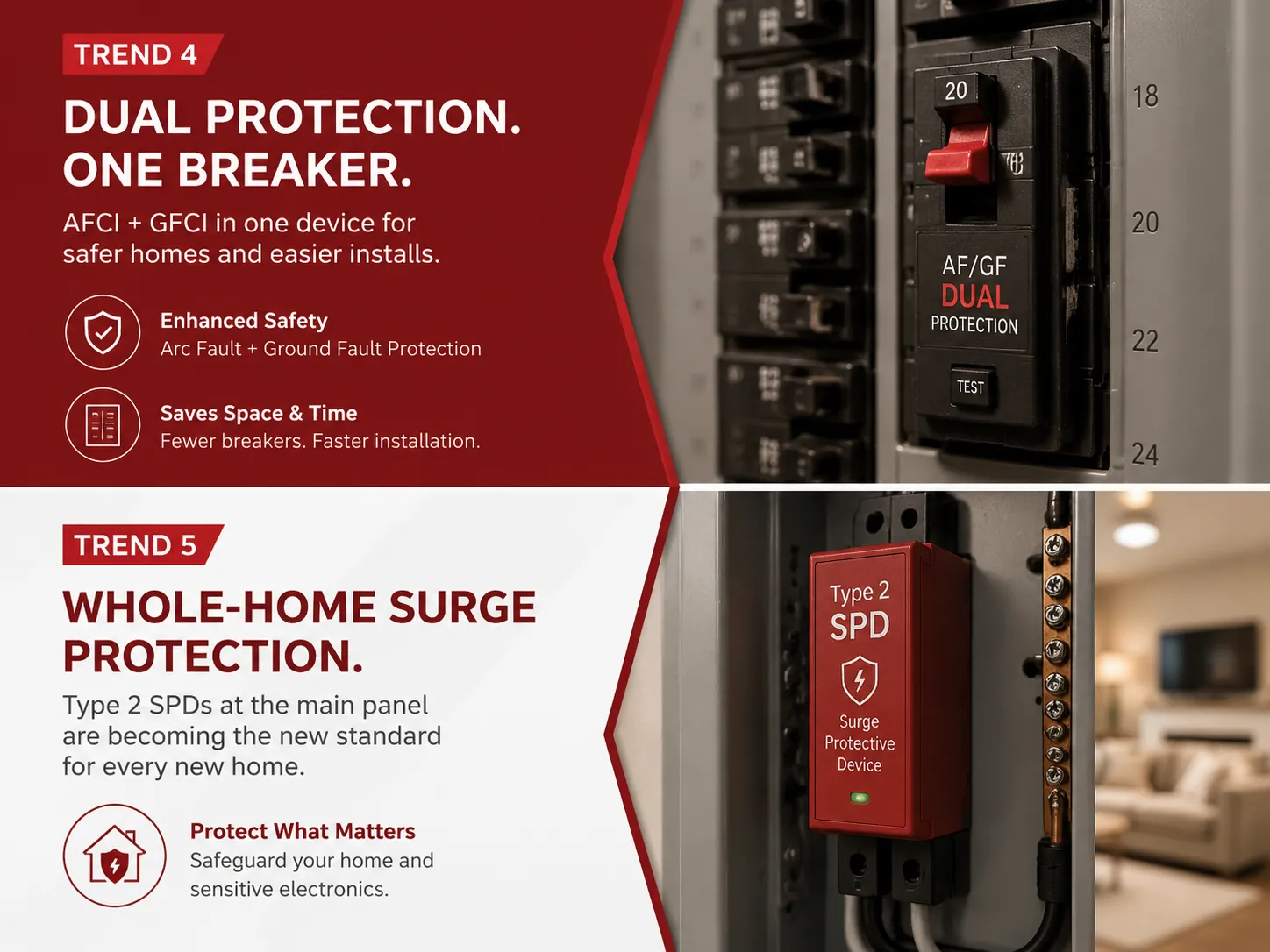
As the NEC’s requirements become ever-more stringent regarding the need for arc fault circuit interrupters (AFCIs) and ground fault circuit interrupters (GFCIs), we see more circuits—and additional places with AFCI and GFCI devices being added to the code—on an escalating basis. The current trend for 2026 is to have a dual-function breaker that delivers both types of protection in a single device; thereby, eliminating some of the installation time for electricians, and reducing the amount of space being consumed in the panel. Homeowners who upgrade their services today should verify that all circuits receive both types of protection as currently required by NEC code, even if the previous installations were grandfathered.
Trend Five: Whole‑Home Surge Protection as Standard Equipment
Having a Type 2 Surge Protective Device, or SPD, located at the main panel of the house will no longer be simply an option for new home construction. The 20/20 National Electric Code will mandate whole household protection from surges for all newly built homes; additionally, the trend for retrofitting houses prepared in the next few years to include a Type 2 SPD as a best practice is expected to continue to grow. With the number of sensitive electronics today (with items such as smart appliances, variable speed motors, and home automation controllers), the cost of installing an SPD will be far less than the cost of replacing the various items it protects from surges. Home improvement authorities including This Old House regularly cover surge protection as a recommended electrical upgrade for existing homes.
How Much Does a Full Electrical Panel Upgrade Cost in 2026?
The cost of a residential electrical panel upgrade depends on the amperage, the condition of the service entrance, and the complexity of the installation. The ranges below reflect current pricing and are expected to remain broadly stable into 2026, with labour being the largest variable.
| Upgrade Scope | Typical Installed Cost (USD) |
|---|---|
| Panel‑only replacement (same amperage, new panel and breakers) | $1,500 – $3,000 |
| Full 200A service upgrade from 100A (new meter, mast, panel, grounding) | $3,500 – $6,500 |
| 200A to 400A upgrade (heavy‑up for large homes, multiple EV chargers) | $6,000 – $12,000+ |
| Smart panel upgrade (includes monitoring hardware and software) | Add $500 – $2,000 to the base panel cost |
These costs assume a licensed electrical contractor, permit, and inspection. The cost of individual breakers — AFCI, GFCI, dual‑function, and DC — is additional and varies with the manufacturer and the number of circuits.
Frequently Asked Questions
What is the electrical panel?
A breaker box, aka an electrical panel, is a metal box containing both the main circuit breakers and the many branch circuit breakers that distribute power throughout the residence. The electrical panel serves as the utility power entry into the home and is the point where it is separated into several respective circuits.
How much does a full electrical panel cost?
The overall cost of changing from a 100amp to a 200amp service, including: new panel, main breaker, branch circuit breakers, meter socket, mast and labour for installation, typically will cost between $3500 and $6500, but a replacement of just the panel at the same amp rating will typically cost between $1500 and $3000.
Is a breaker box the same as an electrical panel?
Electrical panels and breaker boxes are interchangeable terms in residential locations since they mean the same thing. While the NEC calls these items load centers or panelboards, generally speaking, they act as the main circuit breaker where power enters your home.
What are signs of a bad electrical panel?
Indicators that your electrical panel is on its way out include repeated tripped breakers, a warm or hot panel cover, humming or buzzing noise, visible burn marks or rust, burning smell, and loss of power intermittently. Any of these signs indicate you need to contact a licensed electrician immediately for an inspection.
References
- U.S. Energy Information Administration (EIA) — Residential electricity consumption data and projections.
- Solar Energy Industries Association (SEIA) — Residential solar installation data and market forecasts.
- Independent Electrical Contractors (IEC) — Industry data and training resources for electrical contractors.
- This Old House — Electrical Upgrades — Homeowner‑focused articles on panel upgrades, surge protection, and home electrification.
- Schneider Electric — Home Energy Management — Smart panel and load management product information.
- r/electrical on Reddit — Community discussion and practical experience with residential electrical panel upgrades and smart technology.
The residential electrical panel upgrade trends for 2026 point in a clear direction: more capacity, more intelligence, more bidirectional capability, and more layers of protection. A panel installed today without these attributes is not wrong — it is simply already behind the curve. For the homeowner, the contractor, and the electrical supplier, the smartest time to plan for 2026’s requirements is now, when the panel is being specified, not later, when the EV charger is in the garage and the inspector is asking where the surge protector is. HUYU supplies the circuit breakers — AC, DC, AFCI, and dual‑function — that fill the panels of today and the smarter panels of tomorrow, because the device that protects the circuit is the one that never stops being relevant.