
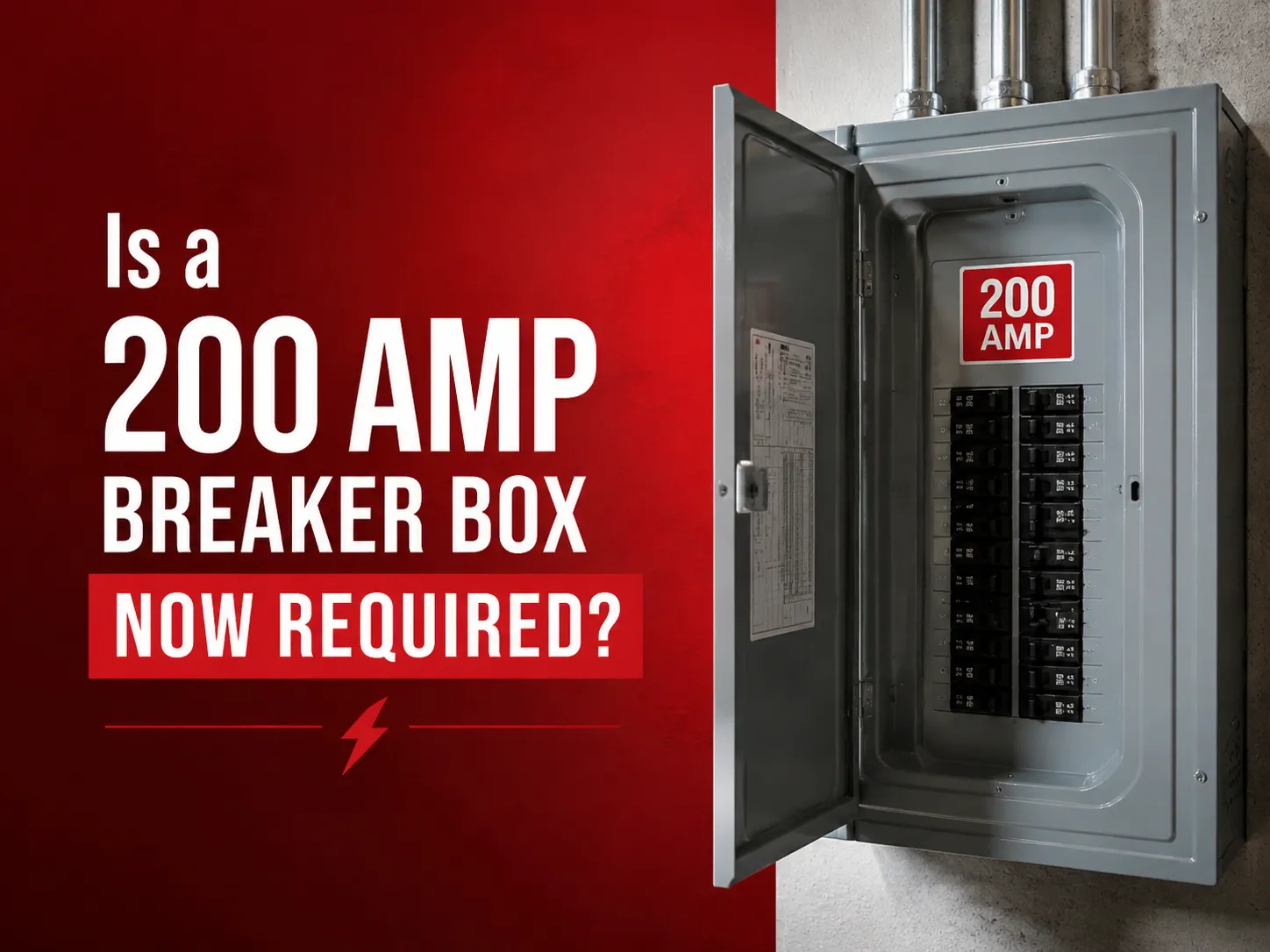
When a homeowner in Ohio replaced a failing 100‑amp service last spring, the electrician told him the new panel had to be 200 amps — no question. He was surprised. His house was modest, his appliances were gas, and he had never tripped the main breaker. But the electrician was right: the National Electrical Code had shifted, and the minimum service size for a new single‑family dwelling was now 100 amps, with 200 amps being the practical floor for any home with a reasonable collection of modern loads. The question Is a 200 amp breaker box now required? does not have a universal yes‑or‑no answer, but for the vast majority of new homes, the answer leans heavily toward yes. This guide explains the code, the real‑world load drivers, and the factors that determine whether your next panel should carry a 200‑amp rating.
What the NEC Actually Requires
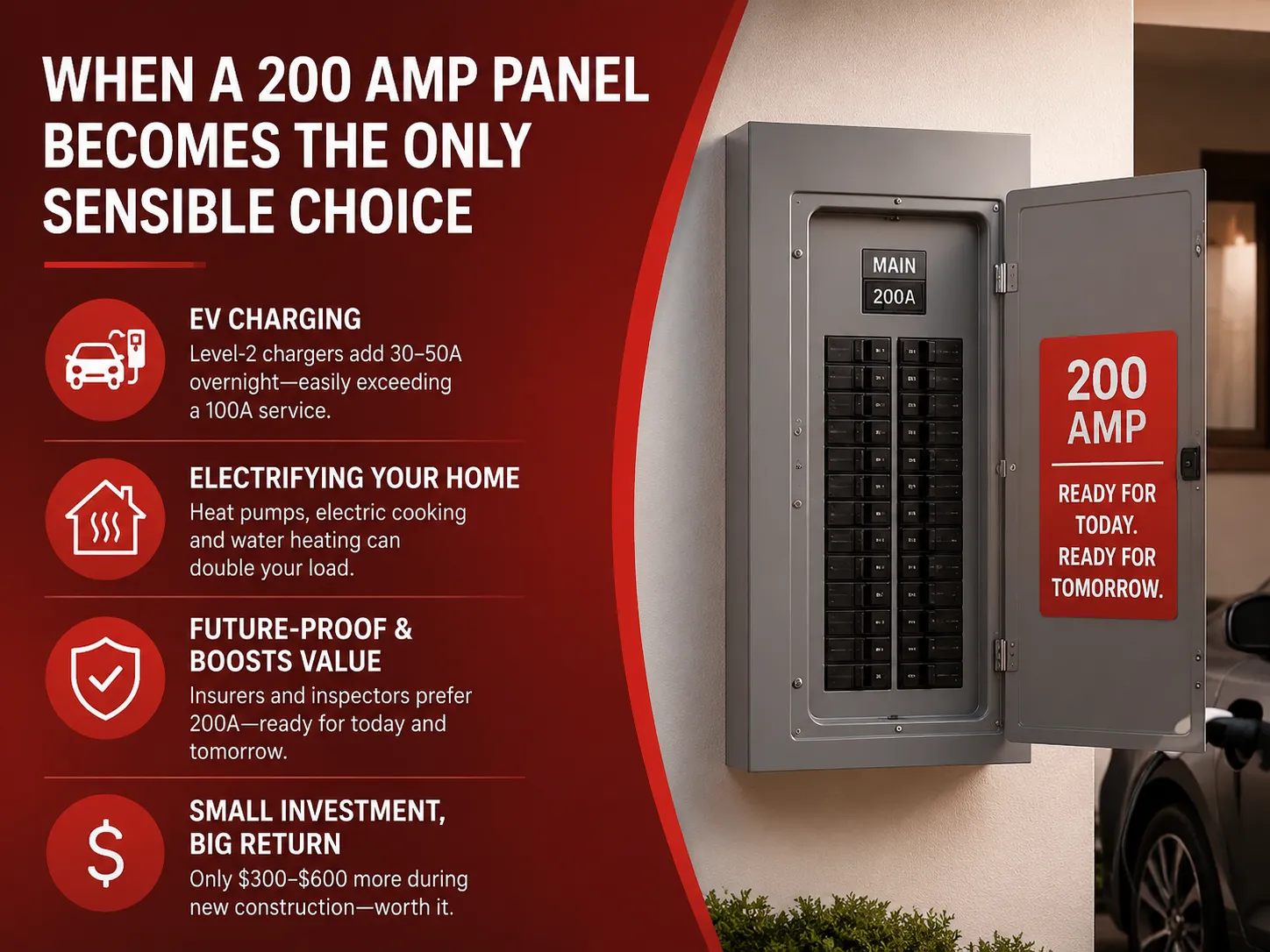
Under the National Electrical Code (NFPA 70), 100 Amps (Amps) of service must be supplied to a new single-family dwelling (NEC 230.85(C)). Since 2020, this is the minimum requirement under code. A new home can be built using a 100-Amp panel legally under code as there is no law at the federal level that mandates upgrading all homes to 200 Amps.
But also, the national electrical code states that the electrical panel needs to be sized based on the calculated load of the house (per NEC Article 220). This is the point where the 100-amp minimum meets reality. A 2,500 square foot house with central a/c, electric range, microwave, dishwasher, washer, dryer and a home office will typically calculate out to a demand load of 120 to 160 amps; therefore, you cannot legally serve that load from a 100-amp panel. The next step up from 100 amps is 200 amp service and that has become the standard for new home construction in all but the smallest of modest homes.
Major electrical manufacturers such as Eaton and Schneider Electric produce 200‑amp load centres and meter‑main combos as their standard product for new residential construction, reflecting the reality that 200 amps is the practical minimum for a modern single‑family home.
When a 200 Amp Panel Becomes the Only Sensible Choice
Although you might determine through a calculation that a 100 amp panel is adequate for your required load, there are numerous considerations that could justify choosing to use a 200 amp panel instead. Most often, these include:
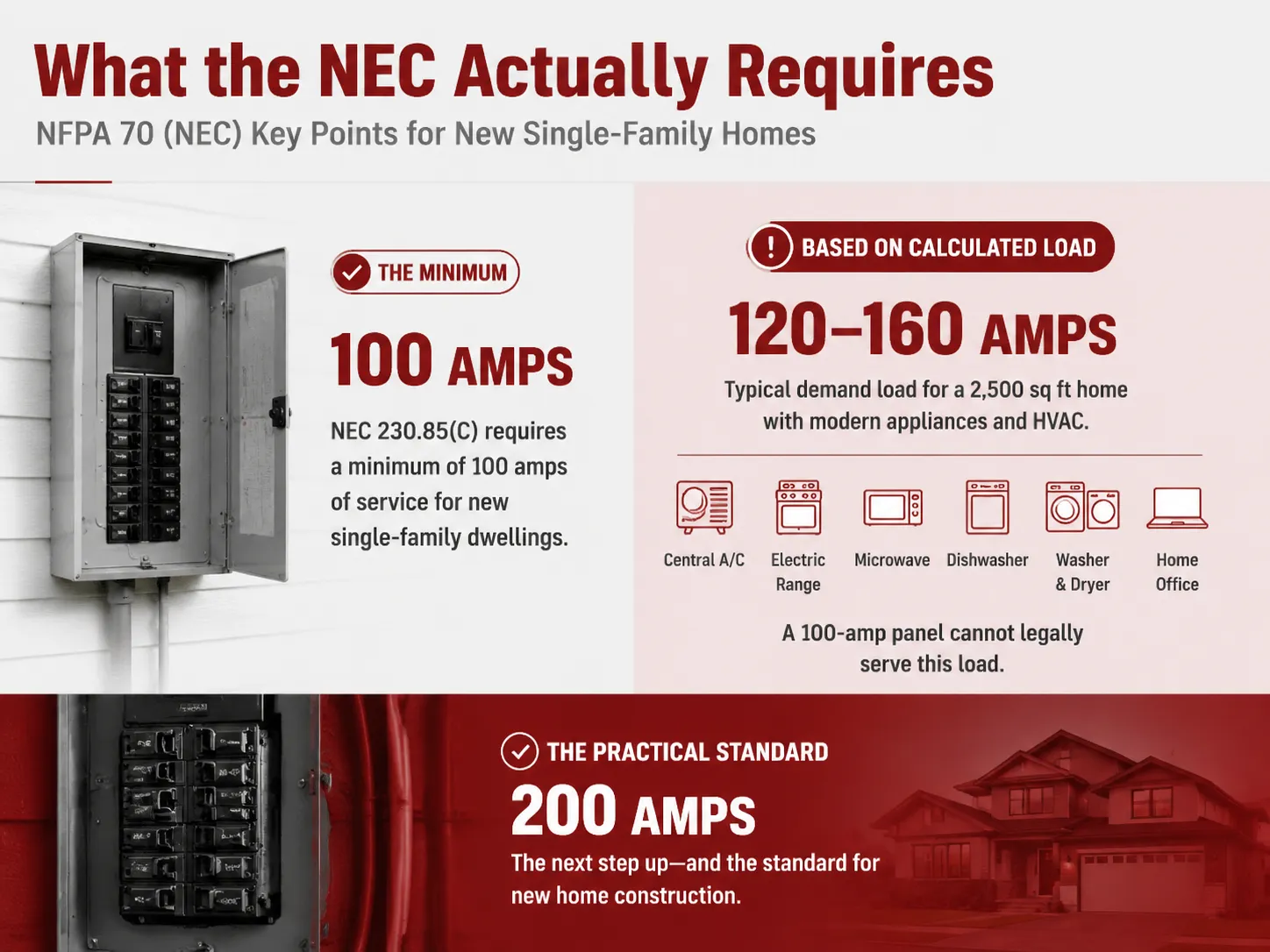
- Electric vehicle charging. Charging station for Level-2 Electric Vehicles draws from 30-50 amps typically overnight or other longer durations. Installing this form of charger in an existing electrical service with a 100-amp service can sometimes put total loading over the panels amp rating. Therefore, the growth in the Electric Vehicle category will be responsible for the most significant kWh upgrade opportunities at existing homes requiring 200-amp electric service.
- Electric heat pump and appliance conversion. In the process of converting residential buildings from gas to electric heat, cooking, and hot water heating, load changes are huge, often doubling the previous load. All electric homes with a heat pump, electric range, and electric water heater, will typically require service of at least two hundred (200) Amps.
- Future‑proofing and resale value. Both insurers and home inspectors see a 100 amp panel as a potential problem. On the contrary, a home with a 200 amp panel generally means the whole house is ready for the demands of today’s society. Generally, the incremental cost to change the panel from 100 amps to 200 amps at the time of new construction is relatively low ($300 – $600). There are very large potential returns in both marketability and added future potential for homes with 200 amp panels.
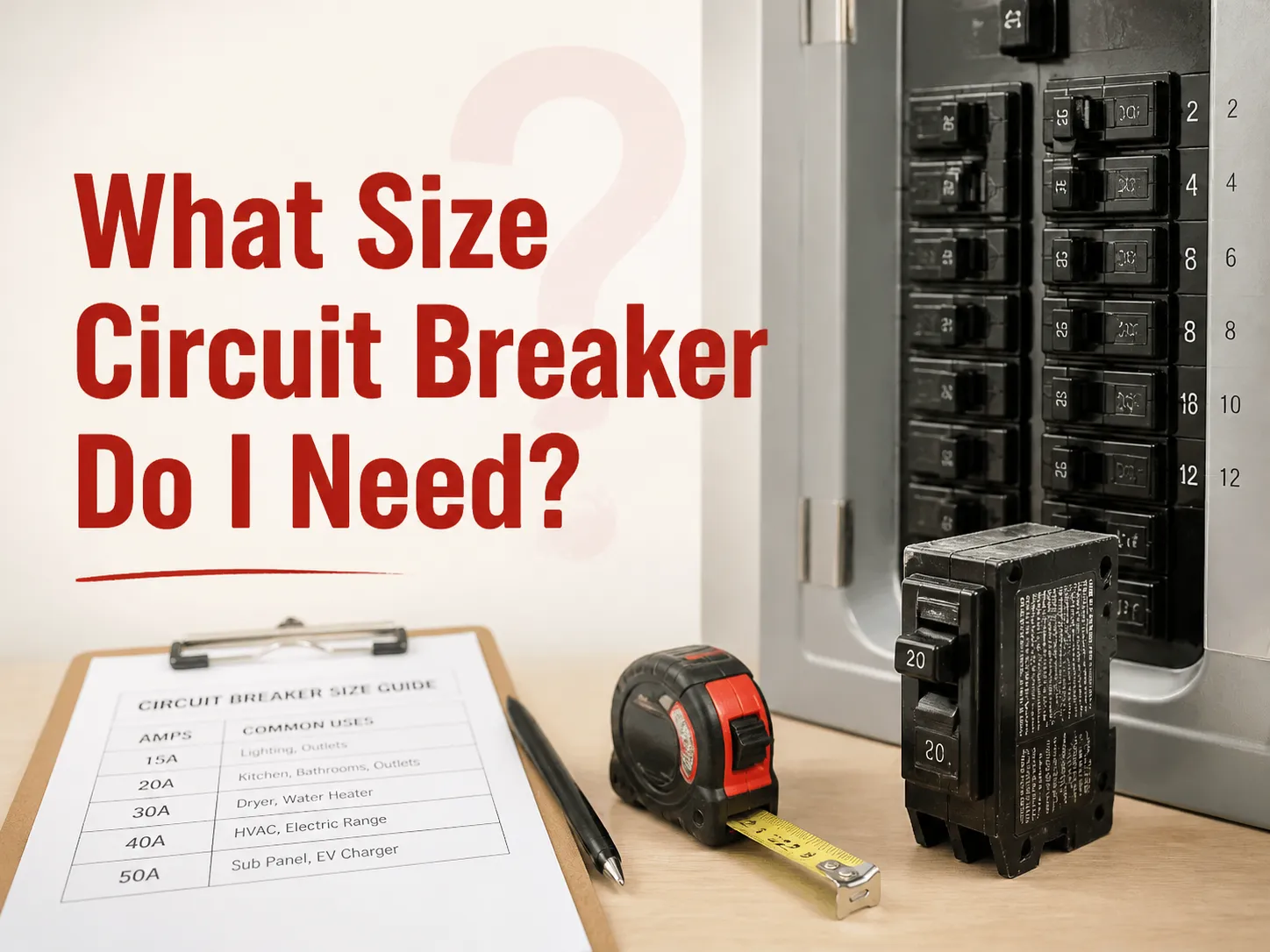
For help with the specific load calculation that determines which service size applies to your installation, our guide on what size circuit breaker you need explains the NEC‑based process in detail.
How Much Does a 200 Amp Electrical Panel Cost?
The cost of upgrading to or installing a 200 amp breaker box depends on the scope of the job: a simple panel replacement with the existing service entrance cable intact is a different project from a complete service upgrade with a new meter socket, mast, and grounding electrode system. Typical installed costs, including labour, materials, and permits, fall into the ranges below.
| Scope of Work | Typical Installed Cost (USD) |
|---|---|
| Panel‑only replacement (existing 200A service, new panel and breakers) | $1,500 – $3,000 |
| Full 200A service upgrade from 100A (new meter, mast, panel, grounding) | $3,500 – $6,500 |
| New 200A service in new construction | $2,500 – $5,000 (part of the overall electrical rough‑in) |
These costs vary by region, the accessibility of the panel location, and whether the utility company charges for a service upgrade. A permit is always required, and the work must pass an electrical inspection. Homeowners should budget for both the permit fee and the electrician’s time for the inspection appointment. Resources from This Old House and Family Handyman provide additional context on the scope and budgeting of service upgrades.
Can a Homeowner Install Their Own 200 Amp Service?
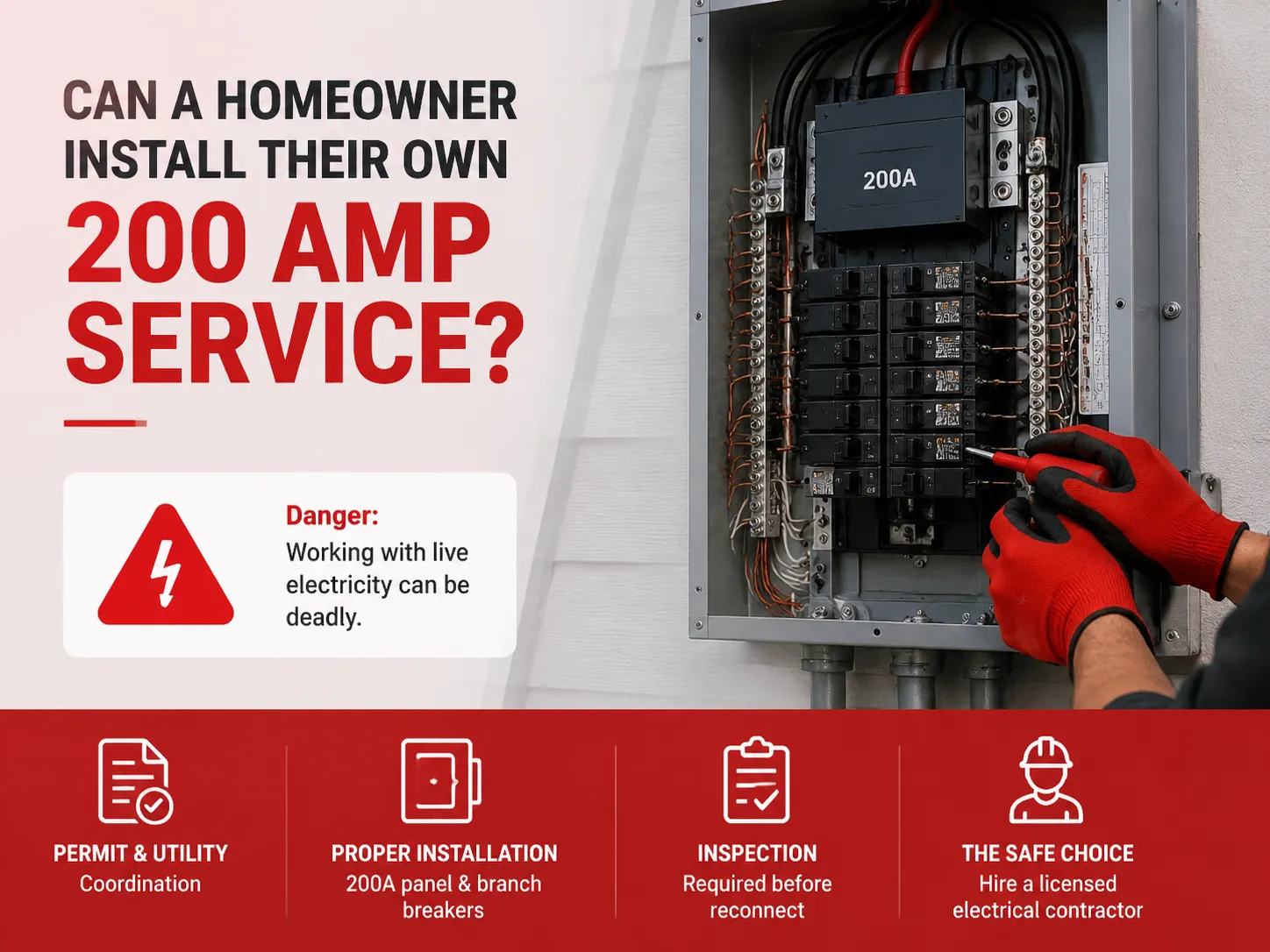
A person may install an electrical service physically or legally in certain regions. A homeowner may install a 200 amp service themselves to their own owner-occupied single-family home, however, this type of work is contrary to that and typically, it’s not a do-it-yourself (DIY) project. The process of de-energizing the conductors that carry unfused current to the service entrance (from the utility company to the house) must be completed. Any error made during the de-energizing process could lead to death. The utility company will not reconnect service until the new installation has been given an electrical inspection by an inspector. An inspector will require closer scrutiny of a ‘homeowner installed’ panel than an ‘electrical contractor installed’ panel.
In most cases, the right thing to do is to hire a licensed electrical contractor. The contractor does the following: pulls the permit, coordinates with the utility, installs the main panel and branch breakers, and is responsible for any inspections needed. If a homeowner is a qualified electrician or has enough electrical experience, they could theoretically install their own panel, but they should not attempt this as a casual project over the course of a weekend. The panel in question is a 200-amp main breaker with a complete set of individual branch breaker circuits that must all be sized, installed and loaded properly. HUYU provides circuit breakers for both the main breaker and the branch MCBs and RCBOs (miniature circuit breakers and residual current devices) serving each of the individual branch circuits.
How Many Breakers Can a 200 Amp Panel Hold?
The panel’s amperage rating is not determined by how many breakers will be placed in the panel to satisfy the 200 amps rating; however, the NEC will allow the sum of the branch breaker ratings to exceed the main breaker rating, since most of the time the circuits will not be at full load installation at the same time. Most 200 amp panels that will hold up to 40 full sized single pole breakers (also called full size breakers) or can hold up to 80 circuits by using tandem breakers (if the label on the 200 amp panel allows them). The limits on the number of branch breakers to be installed in these panels is not based on breaker count but on the load connected to the panel, as the load is figured out using the NEC article 220 circuit rules. You may have a 200 amp panel that has 40 breakers that have very small loads connected and will operate fine under the 200 amps; on the other hand, you could have a 200 amp panel with 20 breakers that are connected to large loads continuously and possibly be over maxed out on the 200 amp breaker. Therefore, the load calculation is the most important part of determining if your panel’s rating is being exceeded rather than the number of breakers in the panel.
Signs That a 200 Amp Main Breaker Is Failing
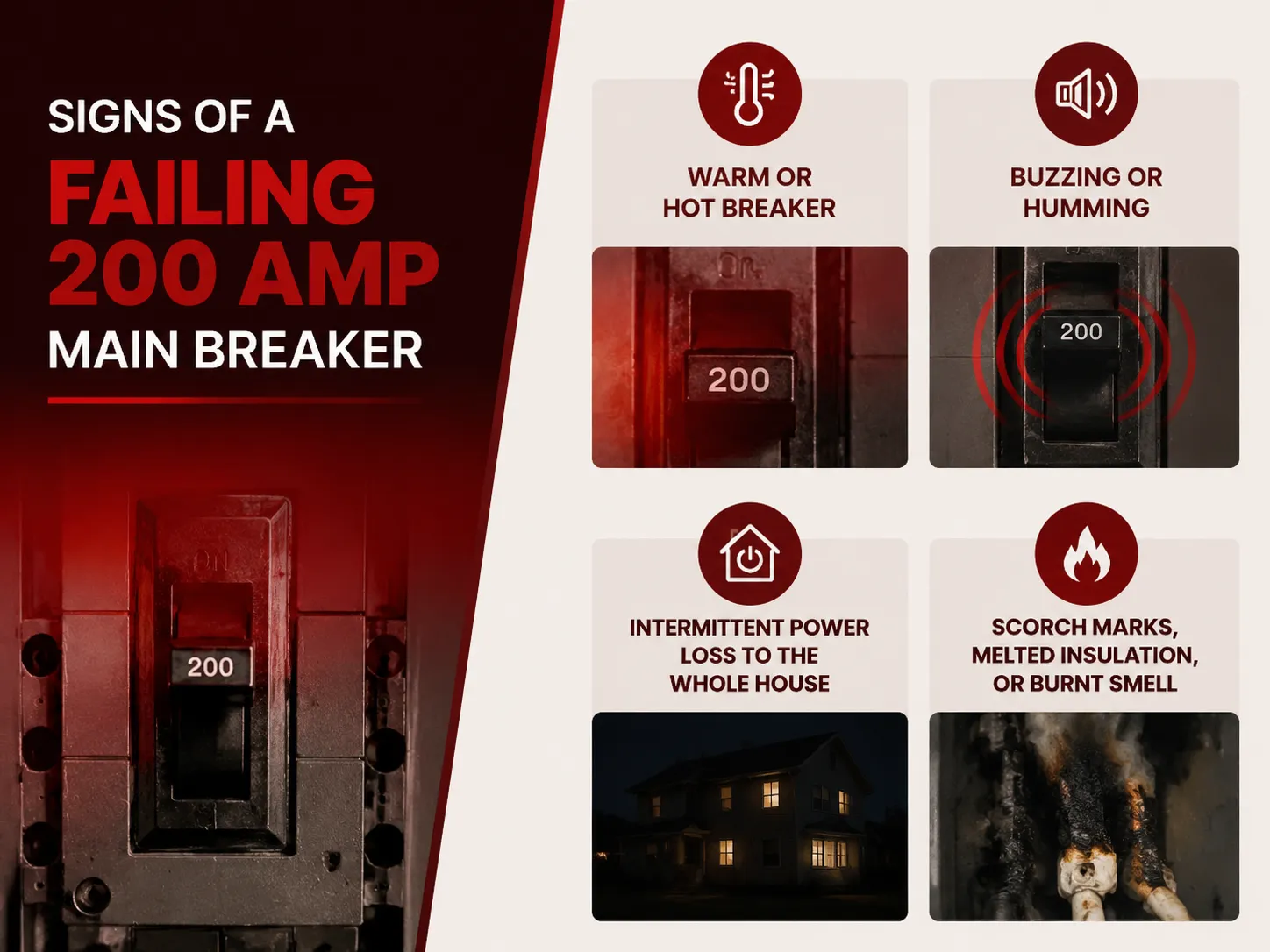
A 200 amp main disconnect breaker functions mechanically, as all mechanical devices do. Every mechanical device has a predetermined service life, and after reaching that point it will stop functioning properly. Symptoms of a broken or failing main disconnect breaker can include:
- Warm or hot breaker body. If a main circuit breaker feels warm to the touch when under load, this may indicate that there is internal contact resistance inside the circuit breaker which is creating heat.
- Buzzing or humming. A standard low-frequency 60 Hz hum is normal. However, if there is a louder humming sound (or if a new sound has developed) it may indicate loose/loose hardware/internal hardware or that the spring is in the process of failing.
- Intermittent power loss to the whole house. The failure of internal contacts may occur if all circuits have lost power but the main breaker has not tripped. An electrician should investigate a main breaker that keeps tripping repeatedly with no sign of overload.
- Scorch marks, melted insulation, or a burnt smell. The main breaker or bus bar should be considered an emergency if there is any sign of thermal damage. Disconnect any load and if it is safe to cut the power supply at the meter, do so immediately and contact your electrician.
Frequently Asked Questions
Can I install my own 200 amp service?
In regard to the legality of installing a 200 amp service in the owner-occupied single family home, homeowners are permitted to do this only in limited cases (depending on jurisdictions). However, it is not safe for inexperienced homeowners to perform this work because it will include live utility conductors. Therefore, most homeowners will hire a licensed electrical contractor to perform the installation. The utility company cannot reconnect service until the electrical work has been approved through an inspection process.
How much does a 200 amp electric box cost?
Replacing an old panel with a new panel of a 200 AMP breaker box has a range of costs between 1,500 dollars and 3,000 dollars when there is no new service entrance and no new meter sockets needing to be purchased. Complete service upgrades include a new meter socket, new mast for the overhead service, new grounding, and a 100 AMP breaker upgrade to 200 AMPS, and range from 3,500 dollars to 6,500 dollars.
How many breakers can go on a 200 amp panel?
The average 200 amp, 40 space panel can accommodate 40 full size breakers (or more if aligned with tandem unit allowances). The restriction is not breaking point quantity, rather it is determined by the connected load according to NEC code. The overall sum of breakers regularly exceeds the main breaker due to only a portion of the total load of all circuits will be able to carry an electrical current at the same time.
How can I tell if my 200 amp breaker is bad?
If you experience any of the following signs with your 200-amp breaker, you should contact an electrician immediately — warmth, buzzing or humming noises, lossy power intermittently, visible signs of charring or discolouration. A licensed electrician can inspect the breaker and determine whether or not it needs to be replaced.
References
- NFPA 70 (National Electrical Code) — Article 230 (Services) and Article 220 (Load Calculations). National Fire Protection Association.
- Eaton — Residential Load Centres and Circuit Breakers — Product specifications and installation guidance for 200‑amp panels.
- Schneider Electric — Home Distribution Panels — Residential panel solutions and technical documentation.
- This Old House — Electrical Service Upgrades — Practical guidance on the scope, cost, and process of upgrading a home’s electrical service.
- Family Handyman — Electrical Panel Upgrades — Homeowner‑focused articles on panel replacement and service upgrades.
A 200 amp breaker box is not mandated by the letter of the National Electrical Code, but it is required by the practical realities of modern electrical loads. A 100‑amp panel cannot serve a home with central air, an EV charger, and an electric range. The 200‑amp service is the current standard because it is the right size for the way we live now, and it provides the capacity buffer that turns a panel replacement from a recurring expense into a once‑in‑a‑generation investment. HUYU supplies the circuit breakers that fill these panels — from the main breaker to the branch MCBs and RCBOs — because the box on the wall is only as good as the protection devices inside it.