
عندما تسأل أي ثلاثة كهربائيين عن قدرة التيار لسلك بقياس 14، ستسمع ثلاث إجابات فنية صحيحة: 15، 20 أو 25 أمبير. فيما يتعلق بجدول الكود، يعتمد كلا المجموعتين على نفس مجموعة البيانات. الفرق الأساسي هو أي تنظيم ينطبق على الدائرة التي تتعامل معها. في حالة سلك 14 AWG، يجعل هذا الحجم ربما أهم حجم سلك على الإطلاق، حيث يوجد قسم معين من الكود يتجاوز جداول القدرة الحالية تمامًا.
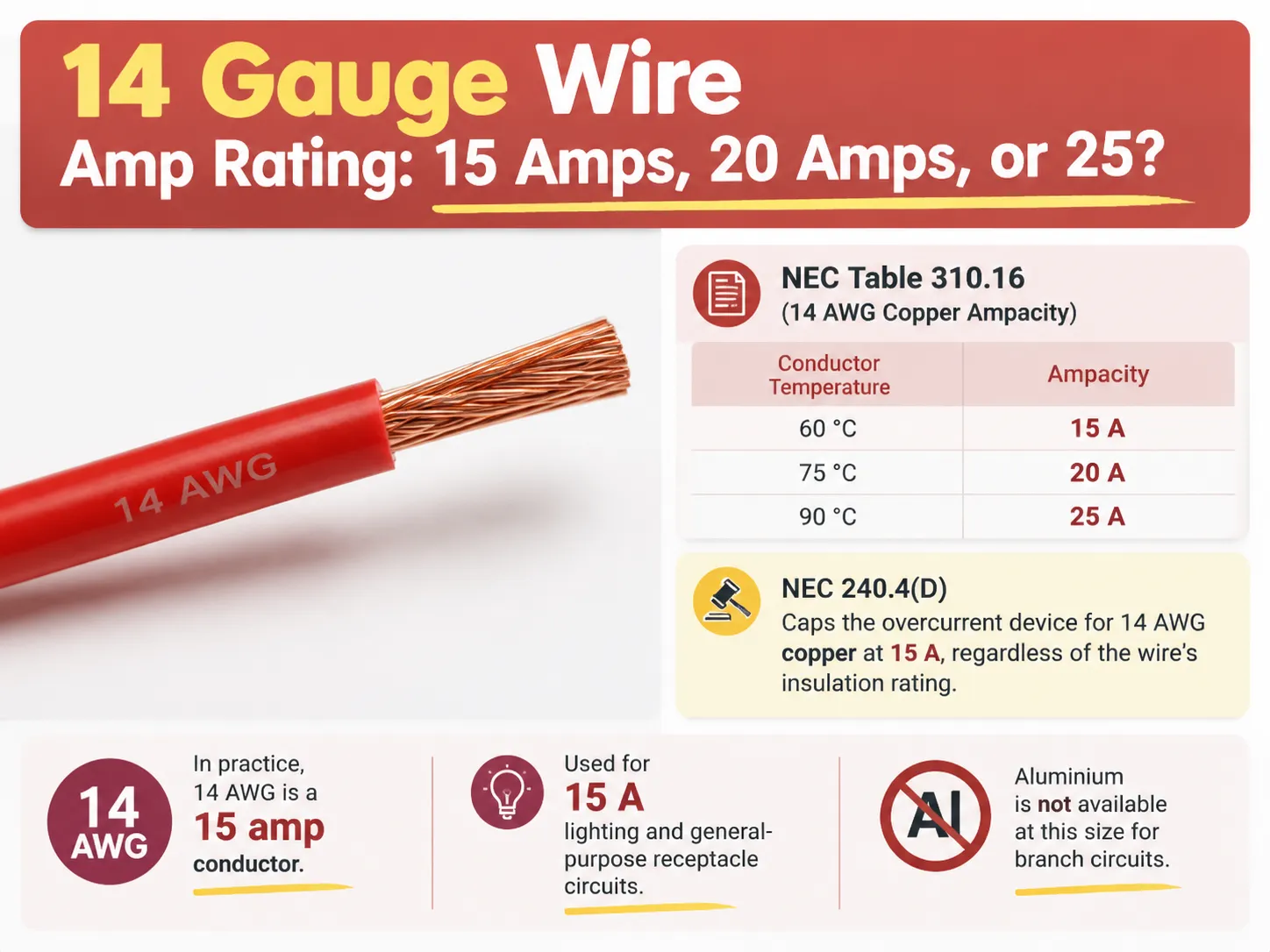
باختصار، وفقًا لجدول NEC 310.16، سلك النحاس 14 AWG المصنف عند 60 درجة مئوية له قدرة تيار تبلغ 15 أمبير وعند 75 درجة مئوية تزداد قدرته إلى 20 أمبير وعند 90 درجة مئوية تزداد إلى حد أقصى 25 أمبير. ومع ذلك، باستخدام NEC 240.4D، يمكن ملاحظة أن سلك النحاس 14 AWG محدد بحد أقصى 15 أمبير بغض النظر عن تصنيفات العزل. بسبب هذا القيد، يمكن استخدام سلك النحاس 14 AWG فقط لدارات الإضاءة والمقابس. بالإضافة إلى ذلك، يجب الإشارة إلى أنه لا توجد أسلاك ألومنيوم متاحة بهذا القياس للأسلاك الفرعية.
ما هو 14 AWG فعليًا
مقياس الأسلاك الأمريكي معكوس — في هذا النظام، يشير الرقم الأصغر إلى سلك أكبر. أصغر حجم يُستخدم عادةً للأسلاك الدائمة في أمريكا الشمالية هو 14 AWG، وهو حجم واحد أقل من 12 AWG وحجمان أقل من 10 AWG.
| الخاصية | القيمة |
|---|---|
| المساحة المقطعية | 4,110 ميل دائري (حوالي 2.08 مم²) |
| مقاومة التيار المستمر، النحاس | 07 أوم لكل 1,000 قدم |
| مقاومة التيار المستمر، الألومنيوم | 06 أوم لكل 1,000 قدم (حيثما يتوفر) |
| العزل النموذجي | غلاف NM-B، موصل مفرد THHN/THWN-2، سلك تجهيزات |
| القاطع النموذجي | 15 أمبير |
| الاستخدام النموذجي | دوائر الإضاءة، المقابس العامة، أذرع المفاتيح |
سلك المقاومة هو الذي يؤدي المهمة الفعلية في الوقت المناسب. 14 AWG له مقاومة 3.07 أوم/ألف قدم، وهي أعلى بحوالي 381% من مقاومة 12 AWG. تظهر الانخفاضات في الجهد في المسافات الطويلة لسلك 14 AWG بشكل أسرع مما هو متوقع – حتى عندما يكون التيار ضمن القدرة الحالية بسهولة.
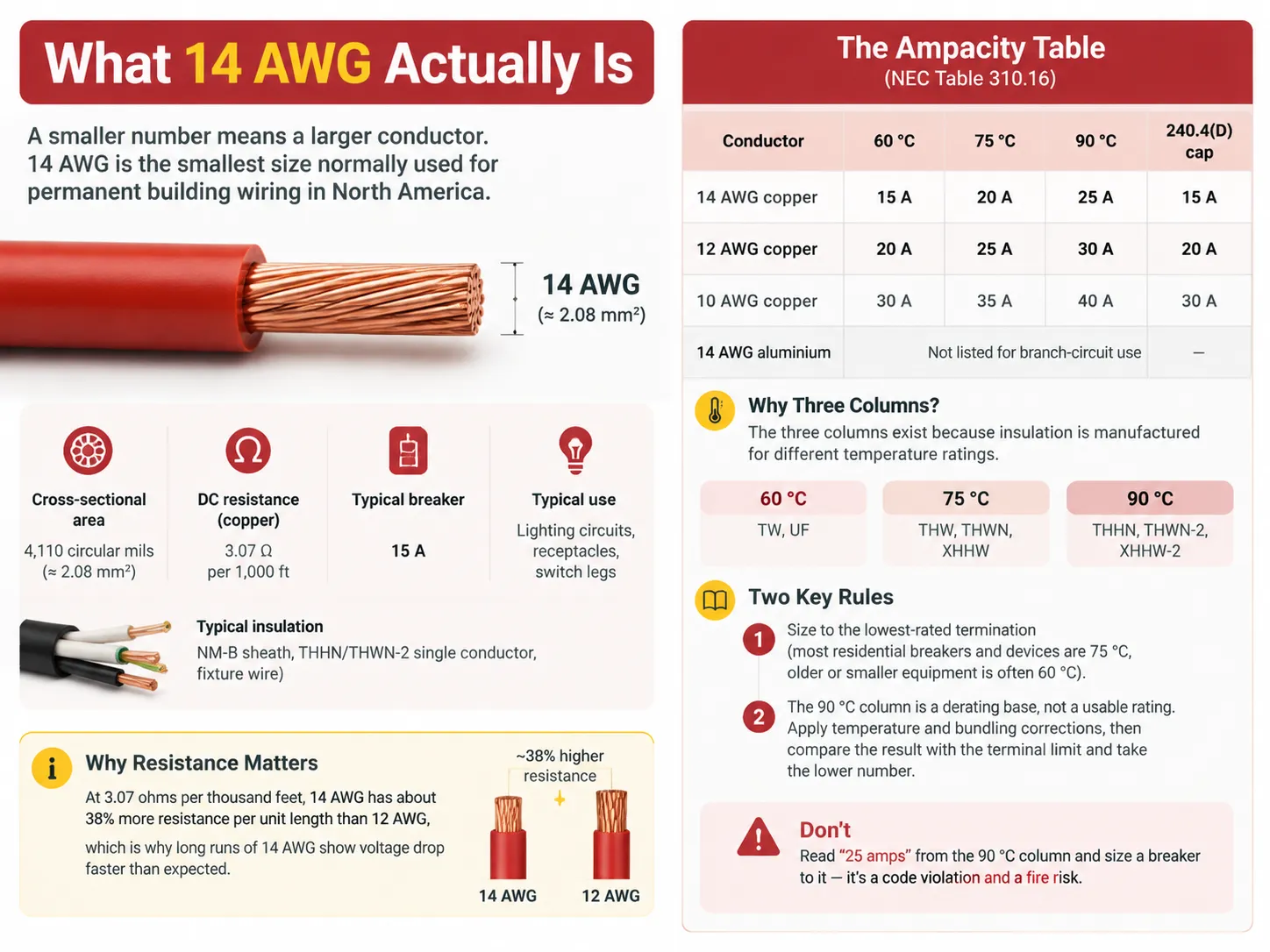
جدول القدرة الحالية، ولماذا هناك ثلاثة أعمدة
تستند البيانات إلى جدول NEC 310.16، الذي يعرض قيم القدرة الحالية المسموح بها عند درجة حرارة بيئة 30 درجة مئوية ويستخدم حتى ثلاثة موصلات حاملة للتيار في قناة أو كابل واحد.
| الموصل | 60 درجة مئوية | 75 درجة مئوية | 90 درجة مئوية | حد 240.4(D) |
|---|---|---|---|---|
| نحاس 14 AWG | 15 أمبير | 20 أ | 25 أ | 15 أمبير |
| نحاس 12 AWG | 20 أ | 25 أ | 30 أ | 20 أ |
| 10 AWG نحاس | 30 أ | 35 أ | 40 أ | 30 أ |
| ألومنيوم 14 AWG | غير مدرج للاستخدام في دوائر التفرع | — | ||
تم إنشاء ثلاثة أعمدة بسبب توفر عزل بدرجات حرارة تصنيف مختلفة. على سبيل المثال، أنواع TW وUF مصنفة عند 60 درجة مئوية؛ وأنواع THW وTHWN وXHHW مصنفة عند 75 درجة مئوية؛ وأنواع THHN وTHWN-2 وXHHW-2 مصنفة عند 90 درجة مئوية.
تقرر لوائحان متى يتم استخدام عمود. الأول، NEC 110.14(C)، يتطلب أن يكون تحديد حجم نهاية الدائرة بناءً على أدنى تصنيف درجة حرارة مستخدم في الدائرة. معظم قواطع الدائرة الطرفية وأطراف الأجهزة السكنية مصنفة عند 75 درجة مئوية والأجهزة الأقدم/الأصغر مصنفة في الغالب عند 60 درجة مئوية. اللائحة الثانية تنص على أن 90 درجة مئوية تُستخدم لأغراض تخفيض التصنيف فقط وليس للتصنيف الفعلي، أي أنها تُستخدم لحسابات درجة الحرارة والتجميع وبعد ذلك فقط تُقارن مع تصنيف الطرف. وبالتالي إذا تم الحصول على 25 أمبير من عمود 90 درجة مئوية وتم تحديد حجم قاطع الدائرة وفقًا لذلك، فإنه ينتهك كلا اللوائح ومتطلبات السلامة من الحرائق على التوالي.
4(D): لماذا 14 AWG دائمًا 15 أمبير
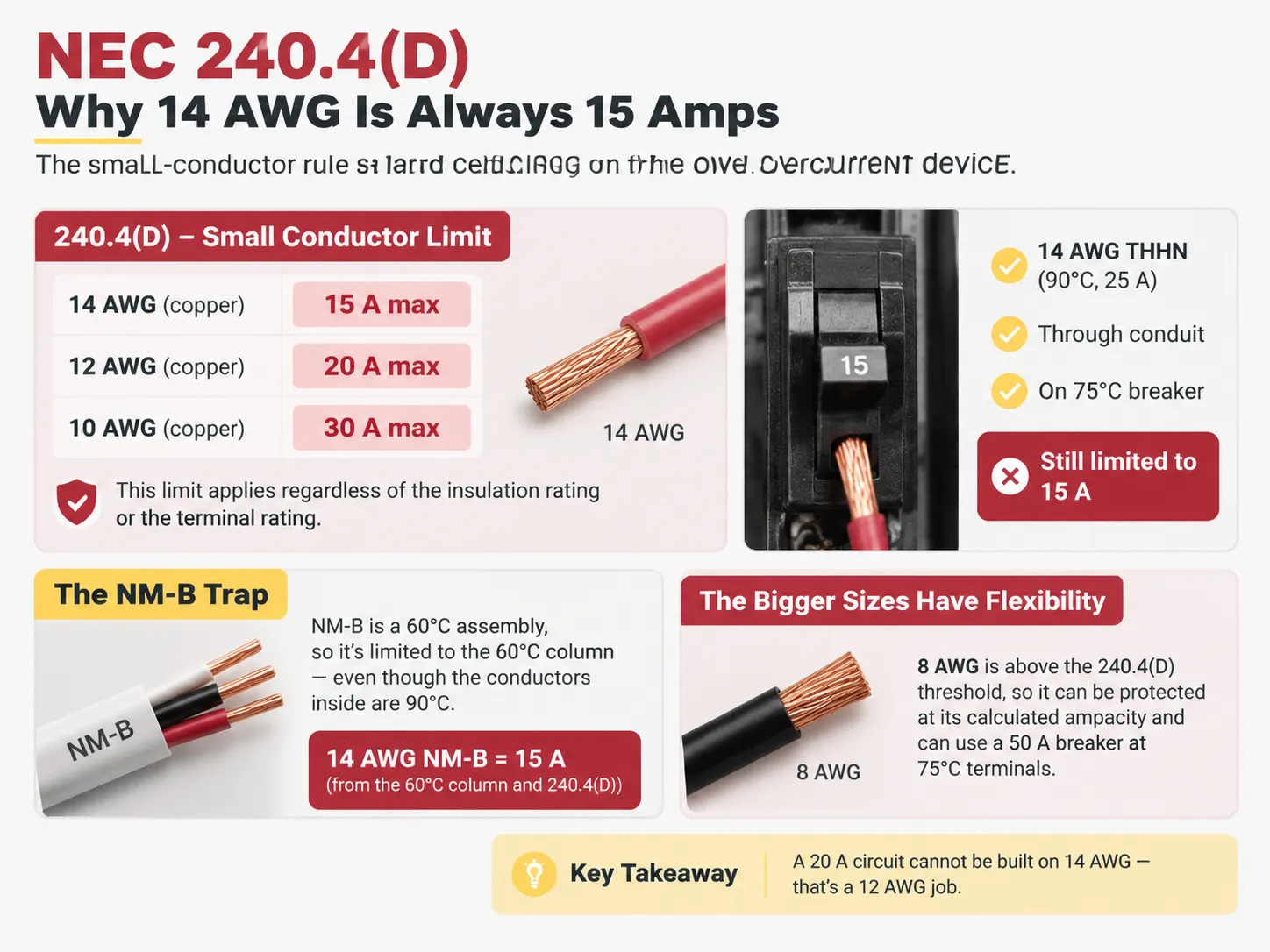
توضح NEC 240.4(D) القضية المطروحة. معيار الموصل الصغير هو حد يفرض حدًا على أجهزة تحديد التيار لأصغر أحجام الأسلاك:
- 14 AWG نحاس → 15 أمبير كحد أقصى
- 12 AWG نحاس → 20 أمبير كحد أقصى
- 10 AWG نحاس → 30 أمبير كحد أقصى
ينطبق هذا الحد بغض النظر عن نوع العزل المستخدم، أو إذا كانت وصلات الأطراف مصنفة فوق الحد الأقصى للأمبيرات للأسلاك الأصغر. على سبيل المثال، يمكنك استخدام سلك 14 AWG THHN بتصنيف 25 أمبير وتوصيله بقاطع دائرة 75 درجة مئوية، لكن القاطع سيظل محدودًا بـ 15 أمبير. المبدأ وراء هذه القاعدة هو أن أحجام الأسلاك الصغيرة عادةً ما تنتهي عند أطراف قواطع الدائرة بدون سعة حرارية كافية.
تشير هذه النقطة إلى الفرق الرئيسي بين نوعي الموصلات هنا – 14 AWG لا يتمتع بنفس مستوى المرونة كما هو الحال مع أحجام الأسلاك الأكبر من حيث التيار المسموح به واستخدام قواطع الدائرة.
لذلك، لا يمكن استخدام 14 AWG في دائرة 20 أمبير حتى لو كان مسار السلك قصيرًا والأطراف جيدة. في الواقع، يمكن استخدام 12 AWG. إذا كنت تعمل على منطق تحديد الحجم لأول مرة، فإن الطريقة الأساسية — حساب الحمل، ثم الموصل، ثم الحماية — موضحة في هذا الشرح لـ كيفية تحديد الحد الأدنى لسعة الدائرة.
فخ NM-B
في تركيب كهربائي منزلي، تأتي معظم أسلاك 14 AWG من كابل NM-B، المعروف أيضًا باسم Romex. سلك NM-B مصنف عند 60 درجة مئوية، وبسبب ذلك، وفقًا لـ NEC 334.80، يمكن قياس التيار المسموح به فقط في عمود 60 درجة مئوية على الرغم من أن سلك THHN نفسه يمكن أن يعمل عند 90 درجة مئوية.
هذا يعني أن هناك حدين متعارضين قيد التنفيذ. في صف 60 درجة مئوية، يتم تصنيف التيار المسموح به عند 15 أمبير، ووفقًا لـ 240.4(D)، هو 15 أمبير أيضًا. لذلك، عند استخدام أسلاك 14 AWG مع قاطع دائرة 15 أمبير، فإن التعرف على مثل هذا الاقتران لن يسبب لك أي مشاكل فيما يتعلق بالأسلاك المنزلية. علاوة على ذلك، في حال وجدت نفس الأسلاك (14 AWG THHN) في نوع آخر من مشاريع التركيب (مثل نظام المواسير)، سيظل التيار المسموح به عند مستوى 15 أمبير، حيث ستنطبق نفس اللائحة 240.4(D).
تفشل معظم التركيبات الكهربائية عندما يتعلق الأمر بقواعد تخفيض التيار. نظرًا لأن سلك NM-B لا يمكن وضعه في عمود درجة حرارة أعلى، فإن ذلك يجعل من المستحيل تقريبًا أخذ تأثيرات تصحيح درجة حرارة البيئة وتعديل التجميع في الاعتبار. بمجرد وضع سلك NM-B في علية ساخنة، ينخفض التيار المسموح به، ولا يمكن لقاطع الدائرة تعويض هذا الانخفاض في التيار. تغطي هذه النظرة كيفية تفاعل درجة حرارة البيئة وعدد الموصلات مع الجدول الأساسي في.
متطلبات NEC لأنواع الأسلاك والجهد الذي تحملها
النحاس مقابل الألمنيوم بهذا الحجم.
غياب أي سوق فعالة لسلك الألمنيوم 14 AWG هو حقيقة معروفة. في الواقع، في تصميم موصلات الدوائر الفرعية والموصلات الرئيسية، لا يدخل الألمنيوم في القائمة القصيرة لأسلاك المقاييس الصغيرة. السبب في ذلك هو أن الألمنيوم يعاني من مشكلة كبيرة في الوصلات ظهرت في أواخر الستينيات والسبعينيات نتيجة لمشاكل الوصلات مع الأسلاك ذات المقياس الصغير.
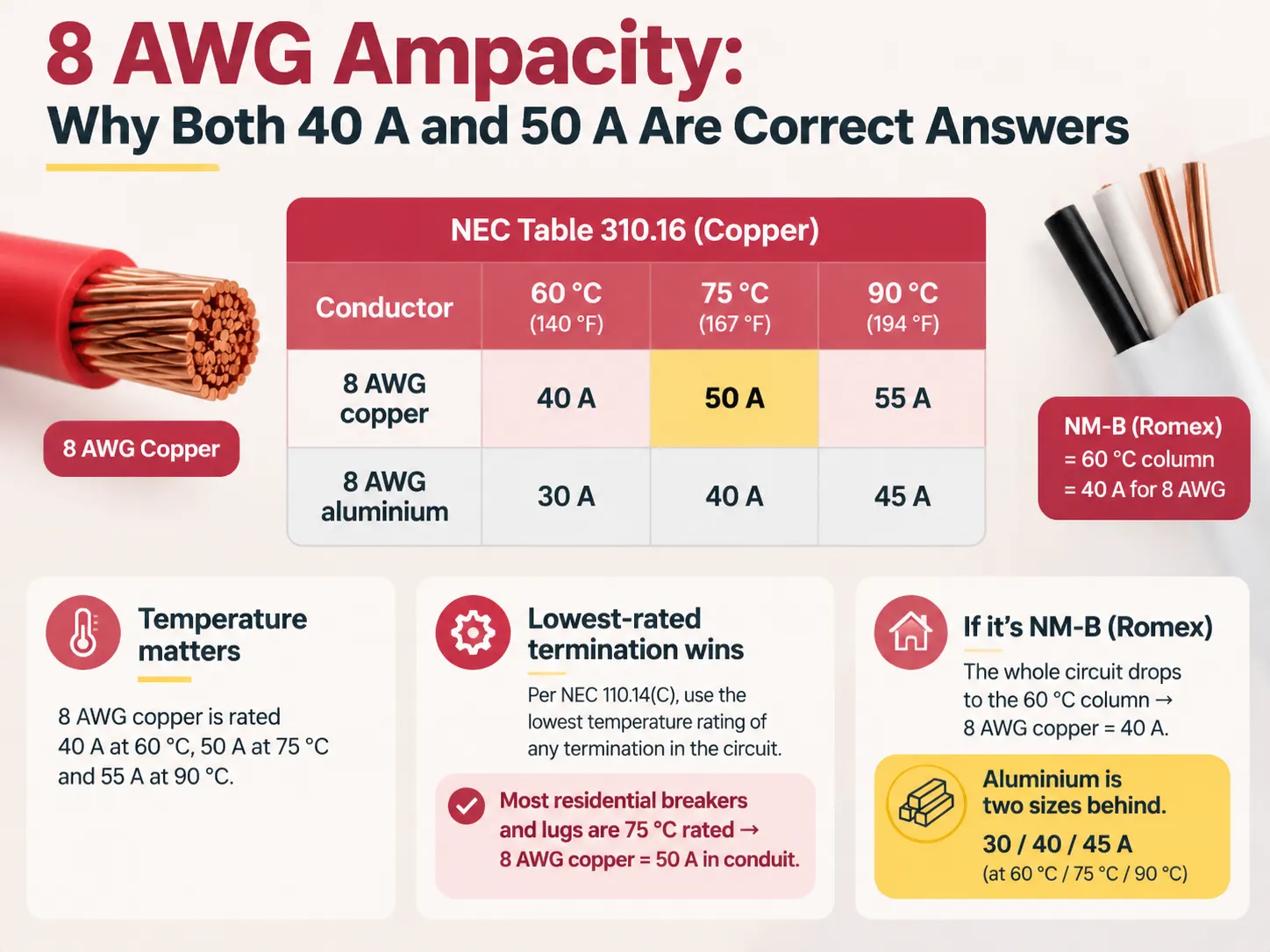
يصبح الألمنيوم ممكنًا بدءًا من حجم 8 AWG عندما تبرر التوفير في الوزن والمواد إدخال سلك أكبر. لاحظ أن أسلاك الألمنيوم تحمل تيارًا أقل بنسبة تصل إلى 20٪ مقارنة بأسلاك النحاس بسبب المقاومة الأعلى، والتي تزيد بحوالي 65٪ عن مقاومة النحاس. وبالتالي، تظل أسلاك النحاس بالتأكيد الخيار الوحيد لفئة 14 AWG. يتم توضيح المقارنة الأوسع بين المادتين، بما في ذلك الأماكن التي يكون فيها كل منهما الخيار الأفضل فعليًا، في هذا الشرح لـ.
لماذا يُستخدم كل من النحاس والألمنيوم لموصلات الطاقة
تخفيض التيار: عندما يتوقف 14 AWG عن كفاية.
| الحالة | العامل | Applying to the 90 °C base (25 A) |
|---|---|---|
| 4–6 current-carrying conductors | 80% | 20 أ |
| 7–9 current-carrying conductors | 70% | 5 أ |
| 10–20 current-carrying conductors | 50% | 12.5 A |
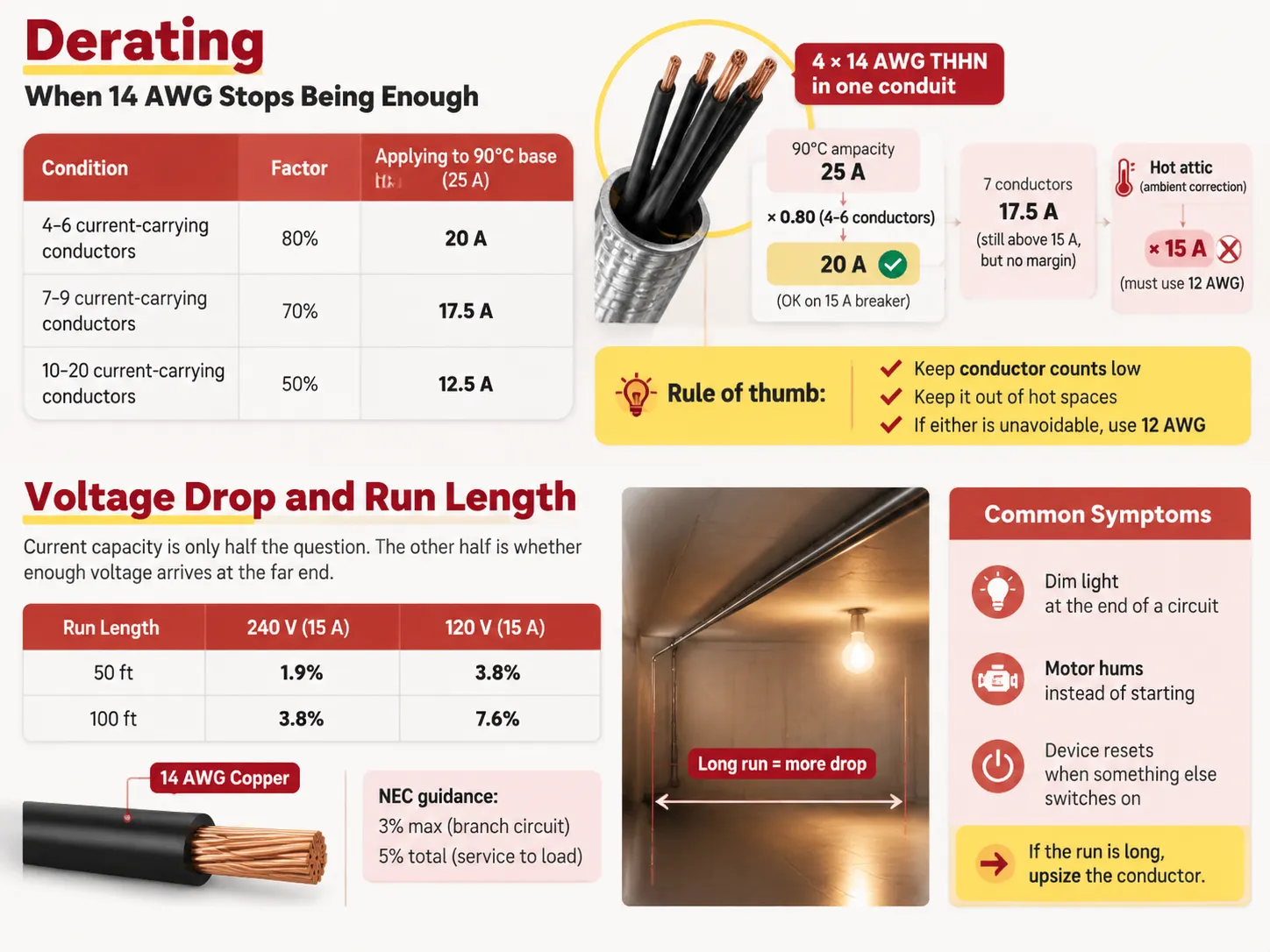
Let’s examine a clear-cut example: four wires consisting of 14 AWG in the shared environment of one conduit. The amp rating of 25A multiplied with 0.80 gives 20A. That is still more than enough since the minimum needed is 15A which should be enough for a 15A breaker.When the number of wires forms up to seven, the amp rating drops down to 17.5A which is still more than 15A but the tolerance level is out of reach. If the space is too hot, which means more ampacity drops below the minimum required. In such a case, one has to switch to the thicker wire such as 12 AWG.
The simplicity of the case of 14 AWG wire is that, as soon as one exceeds wires count or temperature, it is better to switch to the better grade wire of 12 AWG.
هبوط الجهد وطول السلك
The current capacity forms only one side of the question; at the far end, one has to ask the other side-question: Do I have sufficient voltage?
In the case of a 15-A 240-V circuit, copper-sized 14 AWG shows a drop of about 1.9% up to 50 feet and 3.8% over 100 feet. Using a 120-V circuit means that the same drop would proportionally raise percentages by twofold.
Hence, 14 AWG is anyfavor large-maybe too large-for any wiring on long runs. Following the NEC’s guidance, a 3% drop on the branch circuit and a 5% drop from service to load are allowable. At 50 feet long, you hit 3% drop on branch circuits with 14 AWG wired for a 120V, which isn’t too shabby until you’re measuring cable length rather than the direct distance.
Long runs also account for a lot of mysterious defeat symptoms-the light dims at the end of the circuit, the motor hums instead of trying to start up, a device resets itself when something else clicks on. All three are voltage drop symptoms in borrowed clothes. If the run is long, use a larger conductor instead of tolerating the drop.
What 14 AWG Is Used For, and What It Is Not
| Suitable | Not suitable |
|---|---|
| 15 A lighting circuits | 20 A receptacle circuits (needs 12 AWG) |
| General-purpose receptacle circuits on a 15 A breaker | Kitchen small-appliance circuits, which must be 20 A |
| Switch legs and traveler wiring | Bathroom receptacle circuits, which must be 20 A |
| Smoke and CO alarm circuits | Laundry receptacle circuits |
| Short runs to fixed lighting | Water heaters, dryers, ranges, EV chargers, air conditioners |
| Low-draw device circuits | Any circuit where 240.4(D) would be exceeded |
In this way, it is the case that while 14 AWG is allocated to general lighting and general receptacles, any application that requires a fairly high fixed load is supported by its own circuit that is larger than that. Indeed, this allocation is intentional, for circuits that have general purposes cannot really be predicted so they remain small and numerous.
The formula for calculating load in a 15 A circuit is worth knowing by heart. 15 A units at 120 V equal 1800 W; since almost all interpretations of code limit continuous loads at 80%, 12 A or 1440 W of useful and continuous capacity is possible. That being said, 1500 W space heater is right at the edge and cannot allow anything else to be connected.The wattage side of the calculation is worked through in this guide to how many watts a 15 amp circuit can supply.
14 Versus 12: How to Choose
This is because the two sizes are so similar in terms of both their prices and performance that the choice is usually influenced by the “type of circuit,” rather than “doing the math.”
- Use the 14AWG wire size in wiring your 15 A lighting circuits and general-purpose receptacle circuits, as both the code and ampacity correspond, but the runs are medium.
- Use 12 AWG when wiring any of the 20 A type circuits: kitchens, bathrooms, laundry rooms, garages, outdoor receptacles, or when there are long runs and voltage drop is an important factor.
- Use 12 AWG whenever the installation situation requires the derating of the wire: hot attics, a lot of wires inside conduits, or cables bundled together.
- Use 12 AWG if there is a slight chance of needing a 20 A circuit in the future, as the price difference is very small, while the cost of retrofitting it later will be significant.
Final note about handling: The 12 AWG wire is stiffer and harder to place in a box, and therefore the number of what can be placed in the box is higher in its case. If you increase the size, check the volume of the box and breaker as well. The direct comparison of the two sizes, including where 12 AWG becomes mandatory, is set out in this guide to 12 gauge wire and what it is rated for.
الأسئلة الشائعة
Can I put 20 amps on 14 gauge wire?
According to NEC 240.4(D), even if the columns show 20 A and 25 A for 14 AWG copper at 75°C and 90°C respectively, it does not mean that 14 AWG copper can carry more than 15 A. This limitation applies without regard to the thermal rating or terminal rating. To be able to utilize the 20 A circuit, one must use 12 AWG copper, which is also restricted to 20 A in accordance with the NEC limitations.
Can 14 gauge wire handle 1500 watts?
At 120 volts, 1500 watts uses 12.5 amps – under the 15-amp rating and over the 80% continuous load rule of about 12 amps. Therefore, although it will run under these circumstances, it runs the whole circuit at 1500 watts continuously and will run warm as the conductor runs without any margin. On the other hand, at 240 volts, this same load draws only 6.25 amps comfortably within limits.
Can a 14 gauge handle 30 amps?
Not at all. The maximum rating of 14 AWG copper in Table 310.16 is 25 A at an ambient temperature of 90 °C, so it cannot be used as a termination. Regarding the limitation imposed by 240.4(D), the maximum rating is 15 A. A 30 A circuit must use 10 AWG copper, which is limited to 30 A under the same regulation.
Should you run 12 or 14 gauge to 20 amp breakers in residential code?
Use 12 AWG. A 20A breaker on 14 AWG violates 240.4(D) and would leave the wire unprotected at its own limit. However, in reality, most residential 20A circuits — kitchen small-appliance, bathroom, laundry — are required to be 20A anyway. Thus, 12 AWG is standard for these rooms irrespective of breaker selection. 14 AWG should only be used for 15A circuits.
المراجع
- NFPA — NFPA 70 National Electrical Code, Table 310.16, Sections 240.4(D), 110.14(C) and 334.80
- Southwire — conductor resistance, ampacity and NM-B cable construction data
- NEMA — building wire standards and insulation temperature class definitions
- Grainger — current pricing and specification data for 14 AWG and 12 AWG building wire
- International Association of Electrical Inspectors — small-conductor overcurrent protection interpretation
- EC&M Magazine — ampacity adjustment factors and terminal temperature guidance
- Eaton — circuit breaker terminal ratings and residential load centre specifications
- US Department of Energy — residential wiring and electrical load guidance
الخلاصة
14 AWG copper is rated 15 A at 60 °C; 20 A at 75 °C; and 25 A at 90 °C. However, under the code, you can use exactly one of those ratings for overcurrent protection: 15 A. That is how section 240.4(D) works, which is what makes this wire gauge the most predictable and least flexible when implementing wiring in residential buildings. You should use it for 15 A circuits in lighting and general-purpose receptacles, limit the number of conductors and ambient temperatures, be mindful of run lengths, and switch to 12 AWG the moment you need to implement a circuit rated for 20 A or if your run is long.