
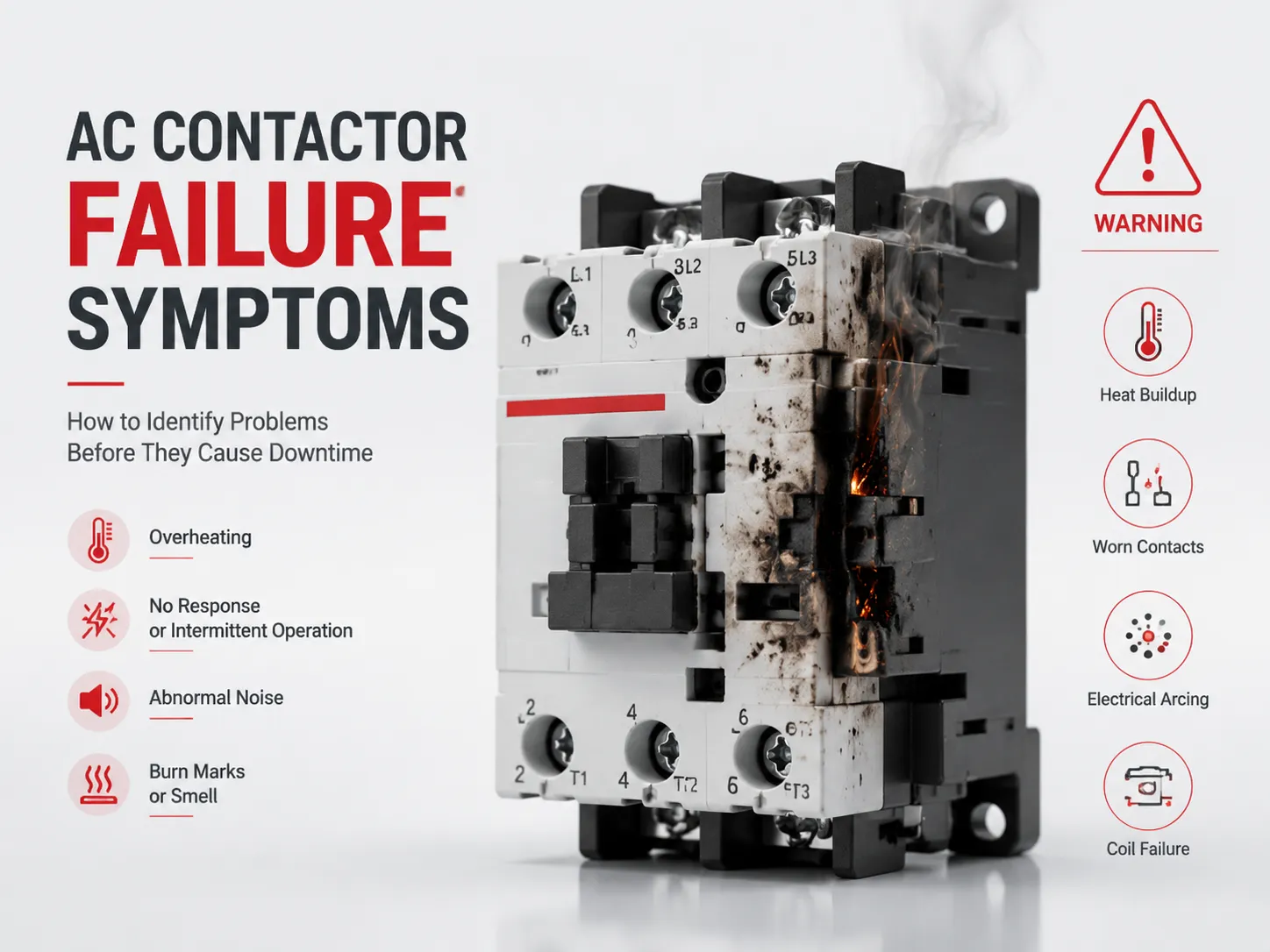
If your air conditioning unit won’t kick on when it is extremely hot outside, the AC contactor is likely to be at fault. The AC contactor is a device located inside an outdoor condensing unit, and it’s the device that allows the thermostat to tell the compressor and the condenser fan when to turn on. Identifying the signs of AC contactor failure at an early stage can save you from having to wait days for a technician because your home is unbearably hot, and from a quick repair for $30. Whether you are a homeowner troubleshooting your unit before making the call or a service technician trying to improve your diagnostic skills, learning how the contactor communicates to you through its symptoms will save both you and your homeowner time and money.
What Is an AC Contactor and What Does It Do?
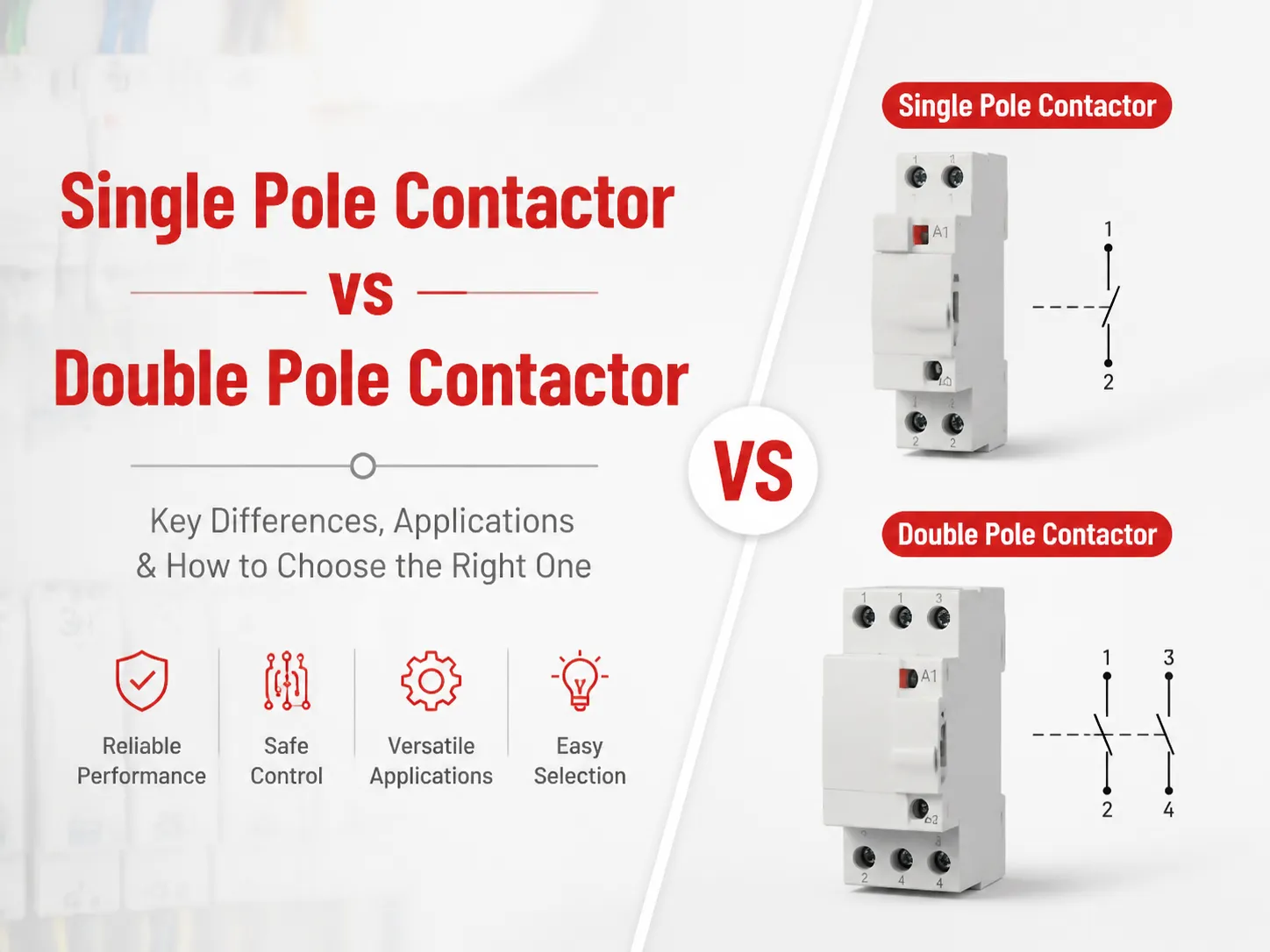
A heavy-duty relay is called an AC contractor and is typically used to facilitate the high amount of inrush current present at compressor motors. When you turn your thermostat to “cool,” you send a low voltage 24 volts signal to the contractor’s coil, energizing the coil and creating a magnetic force large enough to draw down a plunger that bridges two sets of contacts that carry high voltage (at a typical input of either 120 volts or 240 volts) to provide the compressor and condenser fan power at the same time. When the thermostat is satisfied, the coil is de-energized; a spring opens the contacts; the unit turns off. This “dance” of the communicators occurs numerous times during every cooling season, and similar to all other moving parts, they will eventually wear out. To understand the difference between this and a simpler switch, our comparison of single pole contactor vs double pole explains the contact configurations you’ll encounter when ordering a replacement.
The Most Common AC Contactor Failure Symptoms
There is usually some type of visual, audible or performance signs that you can use to help determine if your AC contactor is failing. Here are some of the signs that may indicate that your AC contactor is failing and do not require specialized tools:
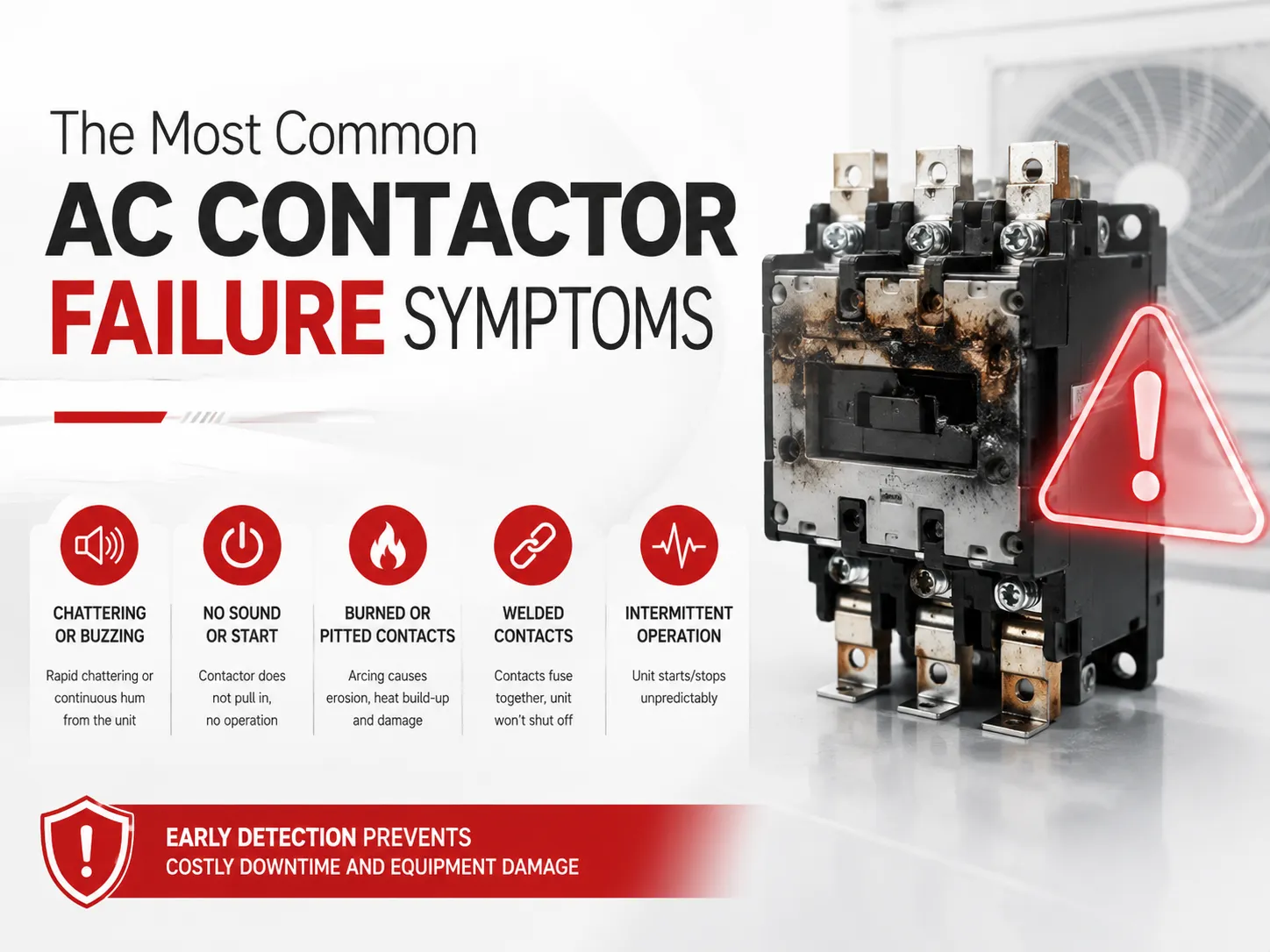
Chattering Noise or Buzzing Noise: When there is a rapid chattering noise from your outdoor unit (air conditioning or heat pump), it could be due to the contactor not getting enough voltage to the coil. Inadequate voltage may be the result of a bad thermostat (not able to signal), loose wiring connections or a coil that is partially shorted out. A loud continuous hum will cause the coil to pull the contacts in but WILL NOT allow the unit to start due to; either your coil being weak and unable to pull the contacts in and/or debris blocking the plunger.
No Sound or Start: A no sound and no start condition is indicative of a failed coil (which is now disconnected) or a problem with the 24 volts of control wiring. If you know how to use a multimeter, measure for 24 volts at the coil terminals. If you measure 24 volts, look upstream (at the thermostat, transformer, or safety switch) to figure out what is wrong. If you do measure 24 volts and the contactor does not pull in, you will have a dead coil and will need a new contactor.
Contact surfaces may appear burned or pitted when enough arcing takes place over time to cause significant erosion of the silver alloy on the pads. Blackened, pitted or melted contact surface areas will be prominent after seeing this type of damage; increased electrical resistance results in heat build-up in and around the contactor’s plastic body, which ultimately warps the body of the contactor and causes the contacts to either be welded together or fail to make an electrical connection.
Welded Contacts (Unit Won’t Shut Off): One of the most dangerous AC contactor failure symptoms is when the contacts fuse together. The compressor and fan run continuously, regardless of the thermostat setting. You’ll notice the house getting unusually cold or the outdoor unit running non-stop. This can quickly destroy a compressor by running it without proper cycling or by flooding it with liquid refrigerant.
Intermittent Operation: The unit starts and stops unpredictably. This can be caused by a weak coil, loose terminal screws causing an intermittent connection, or an ant colony inside the contactor (a surprisingly common problem — ants are attracted to the magnetic field and get crushed between the contacts, preventing closure).
Visual Inspection: What a Bad Contactor Looks Like
A visual inspection before using a meter can often verify what you think has occurred. Prior to opening the access panel, turn off the power to the unit at the breaker and at the exterior disconnect. Some things to check for are:
- Melted or discolored plastic around the contact points
- Heavy pitting or black carbon on the silver contacts
- A swollen or cracked coil winding visible through the contactor’s side
- Debris, dead insects, or rust preventing the plunger from moving freely
- Burnt wire insulation at the terminal lugs — a sign of overheating from a loose connection
What Happens If a Contactor Fails?
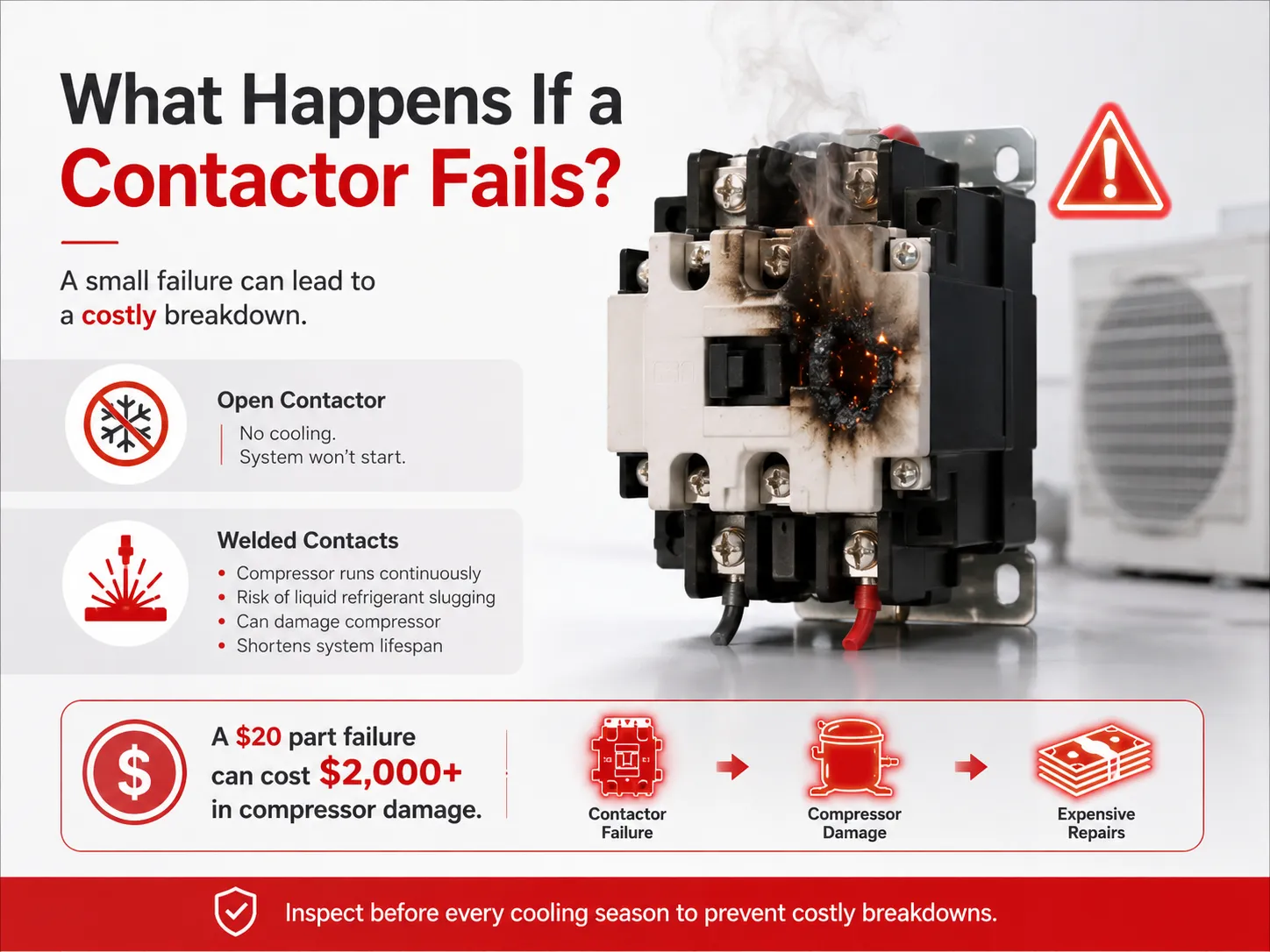
If an AC contactor fails, its symptoms will impact what type failure occurs. An open contactor will leave you with no cooling, which is just inconvenient; however, a contactor with welded contacts will result in a serious condition. A contactor that has welded contacts will allow the compressor to run continuously and will result in liquid refrigerant being pumped into the compressor (slugging); because it has no way of cycling off, the valves or pistons in the compressor can be damaged when this condition occurs. Additionally, the compressor’s motor can cause excessive heat to build up, due to no internal thermal overload trip, resulting in a much shorter operational lifespan for the compressor. A contactor that has pitted contacts will create resistance and produce heat, which can damage the wires connecting to the contactor and potentially the compressor terminals. Something that initially costs $20 can eventually cost upwards of $2,000 if a compressor needs to be replaced due to damage caused by the failure of a contactor. For this reason, it is important to check for all of these symptoms before the start of each cooling season.
How to Test an AC Contactor
Use a multimeter to test the thermostat with the power back on but w/thermostat off to check the 24 volt coil and then when the t-stat calls for cooling it should create a connection to the coil and when the plunger is fully seated at this time there should be a zero volt reading on the closed high voltage contact and if there is any significant drop in voltage (greater than a fraction of a volt) the high voltage contact is pitted and therefore should be replaced. Keep in mind that the high voltage side of the contactor contains lethal current therefore only perform live testing if you have been trained to do so & have insulated test leads rated for the voltages.
Frequently Asked Questions
How do I know if my AC contactor is bad?
There are a number of ways to tell if an air conditioning (AC) compressor [or air conditioner’s] contactor is bad: listen for chattering or humming noise but the unit doesn’t start; look for signs of burning or pitting on the contact points; test to see that there is a complete (loss) of 24 volts across the coil when the thermostat is calling for cooling. The other way to determine if a contactor is bad is by manually moving the plunger with your hand and then applying power to it. If it doesn’t pull in then the coil is open and needs to be replaced. Having an intermittent operation; i.e., the air conditioning unit turning on and off randomly, is another classic symptom of a bad contactor.
What happens if a contactor fails?
In the event of an open failure of an ac contactor, the outdoor condensing unit will not operate at all. If it has a welded contact failure (i.e. the contactor is stuck on), the compressor and fan will run continuously no matter what the thermostat says, essentially destroying the compressor. A contactor that has pitted contacts creates resistance and therefore generates an excessive amount of heat at the contactor connection which causes damage to both the wiring and compressor terminals. Regardless of the type of failure, if the issue is not repaired in a timely manner, the cost to repair this equipment will continue to increase.
Will an AC fan run if the contactor is bad?
The majority of split-system AC units for home use will use one contactor to control both the compressor and the fan running. If the contactor completely opens up or the coil fails to energize, there will be no power available to either the fan or the compressor; therefore, neither will be able to turn on. However, if the contactor has partially failed (one set of contacts pitted, and one set of contacts intact) then it is possible for one of the components (fan or compressor) to operate while the other does not. This condition is a clear indication that the contactor needs to be replaced immediately.
Can AC work without contactor?
Yes! An AC contactor is crucial in order for air conditioning units to work as intended. AC contactors allow low voltage signals to be transmitted from a thermostat to control the circuit which powers the compressor or fan (high voltage/high current). Without using a contactor, you cannot control an AC unit; this is very dangerous because if you directly connect the compressor, it will continue to run indefinitely. Therefore, an AC contactor must be functioning correctly in order for the operation of an air conditioning unit to be safe.
AC contactor failure symptoms are among the most straightforward electrical diagnoses a homeowner or technician can make. A buzzing that never turns into a start, a unit that won’t shut off, or a visual inspection that reveals blackened contacts — each tells you the contactor has reached the end of its service life. The good news is that contactors are inexpensive, widely available, and a skilled DIYer with proper safety precautions can replace one in under an hour. If you’re not comfortable working inside the electrical panel of your outdoor unit, a qualified HVAC technician will have the job done quickly. Either way, acting on these symptoms at the first sign keeps your compressor healthy and your summer uninterrupted.