
When homeowners think about upgrades that boost resale value, kitchen remodels and bathroom renovations usually come to mind first. But an increasing number of real estate professionals, home inspectors, and insurance underwriters are pointing to a less visible improvement that punches above its weight: the whole home surge protector. Installing a surge protector at the main electrical panel — also called a SPD (Surge Protective Device) — is one of the most cost-effective ways to protect every appliance and electronic device in the house. And yes, it can contribute to a higher perceived property value by signaling a modern, well-maintained, and safety-conscious electrical system.
What a Whole Home Surge Protector Actually Does
A surge protector for the complete house is placed in between the utility supply line and the wire inside the house. It is commonly placed either on the breaker panel or immediately adjacent to it. Its function is to divert excess voltage caused by lightning strikes, grid power outages, or large motors turning on and off to earth ground before the voltage spike makes its way to your electronic equipment. Unlike the power strip surge protector we are most familiar with, an SPD Type 2 installed on the panel protects all things that are hardwired into your house, including the HVAC compressor, water heater, stove, washing machine, garage door opener, and all of the smart objects that are found in today’s homes. For a deeper look at how overcurrent and overvoltage devices complement each other, our comparison of circuit breaker vs surge protector explains why both are necessary layers of defense.
How a Surge Protector Adds to a Home’s Market Appeal
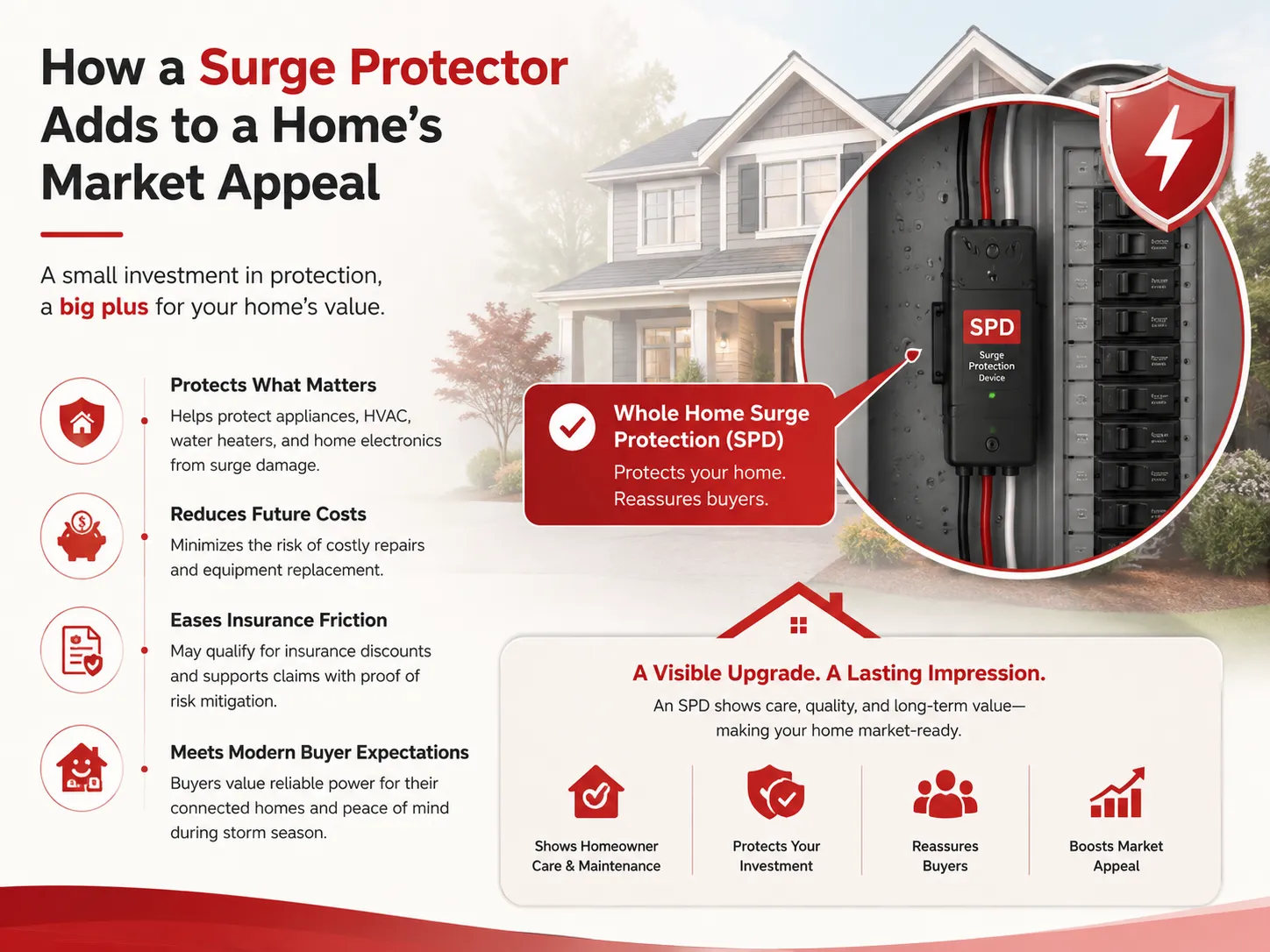
When a buyer considers a property, it is the actual square footage that determines the property’s actual worth or real estate value. Additionally, there are other factors that influence an individual’s decision-making process regarding their purchase of a home, including the perceived risk of purchasing a home, the expected future maintenance costs associated with owning that home, and whether or not the buyer believes the seller has demonstrated reasonable care for the property.
One way in which a buyer’s perception of a home can be changed is by providing the home with a whole home surge protector on the electrical panel of the house itself.
- A presence of an SPD in the Panel demonstrates that a home has a protected electrical system. Buyers who see an SPD recognize that the homeowner made an investment to protect the home’s electrical system. The presence of an SPD suggests that likely other parts of the home, such as routine maintenance, were thoughtfully taken care of as well.
- This cover ensures that some of your appliances also will benefit. Any refrigerator (or built-in microwave), any heating or air conditioning (HVAC) system and any tank-less hot water heater all have potential for surge damage. If you provide surge protection with an SPD (Surge Protection Device), you are providing an implied warranty for the protection of these items, and that they are not degrading from micro-surge activity.
- Insurance friction can be reduced by some types of insurance companies that provide discounts to insured homes that have listed surge protectors installed. Even without a specific discount given to insured, having a surge protection device also provides evidence of good mitigation for insurance companies when filing a claim for damages caused by a lightning event.
- Your buyers today care about the quality of power supplied to their homes more than any previous generation of buyers. Today’s buyers can see a distinct increase in their expectations regarding the quality of power supplied to them. By having a visible surge protection device (SPD) as well as a labeled panel, buyers will be reassured that their home network and electronics will not be risked due to an impending thunderstorm.
The Link Between Electrical Upgrades and Property Value
According to research by real estate assessors and home improvement authorities, upgrading an electrical system consistently ranks as one of the most valuable improvements for increasing the value of a home. A common example of this is when an obsolete fuse box is replaced with a new circuit breaker panel, which is a well understood value-added improvement. A more comprehensive electrical upgrade would include adding whole-house surge protection at the same time.
If you are planning to upgrade your electrical panel at the same time you will be upgrading to a circuit breaker panel from a fuse-based system, be sure to also add a surge protector for your entire house. The labour overlap will be minimal and the overall appearance of both installations will be coordinated and professional looking. Our guide on upgrade circuit breaker proposals outlines the scope and benefits of a panel overhaul, to which adding a surge protector is a natural final step.
Investment vs. Return: The Numbers That Matter
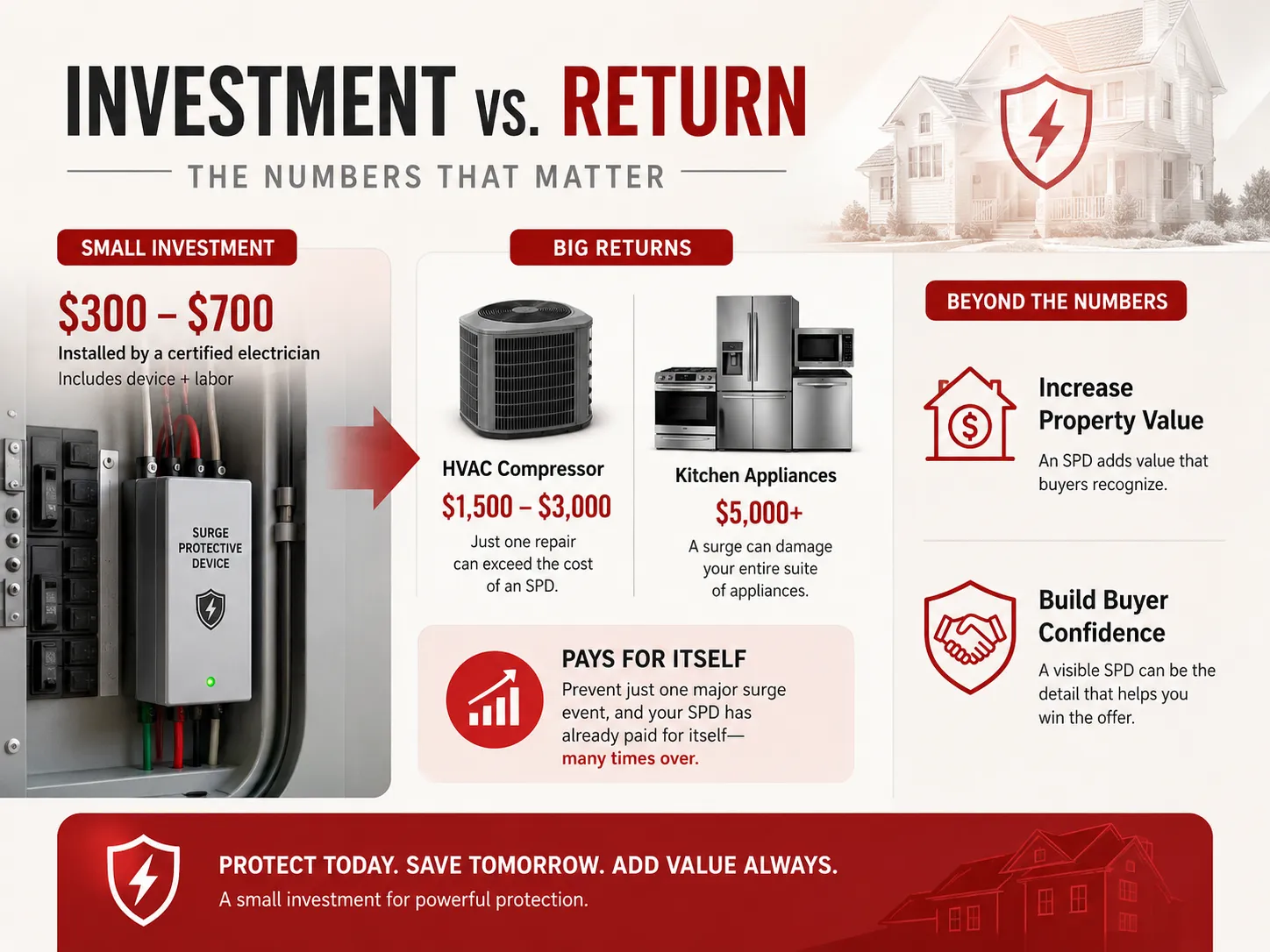
The cost of installing a complete house surge protector generally falls between $300-$700 when performed by a certified electrician which includes the actual surge protection device itself (hardware) and labor required to connect it to the breaker box. When you compare the costs of replacing one single compressor in a modern variable-speed heating and cooling system ($1,500 – $3,000) or an entire suite of Kitchen Appliances ($5,000+) these numbers demonstrate that the economics of installing a complete house surge protector are abundantly clear. Even if you only get to prevent one major surge event in the life of the SPD, it will pay for itself many times over. The potential increase in property value through the installation of an SPD may not be easily measured as a precise dollar amount; however, installing an SPD significantly increases the marketability of the home. If you’re in a situation where there are multiple offers on a given property; having a clearly marked SPD will serve as a potential detail that lends itself to building the trust and resulting confidence of a buyer in their decision on which offer to accept.
Does a Surge Protector Increase the Electricity Bill?
No, your electric bills are not impacted at all in a measurable way because of a whole house surge protector. A surge protector (SPD) uses very little power during regular operation (only a tiny amount of continuous “monitoring” current) to keep its internal circuits ready. It is not an electrical load on the home. The SPD only “activates” for microsecond events when there is a voltage surge on the supply line, and therefore does not consume any power during its regular operation; it shunts the electrical energy to ground. If you see an increase in your electric bill after installation, that increase can be attributed to some other reason, such as a change in the amount of electricity consumed, a new major appliance, a billing adjustment, or due to increased heating/cooling required based on the change in temperature.
What Is the Lifespan of a Whole House Surge Protector?
The lifespan of a quality whole house surge protector is many years and can handle a lot of multiple surge events but it is not an indefinite device. The MOVs (metal oxide varistors) inside of surge protectors become degraded with each surge they experience, and at some point in time, the surge protector will no longer work. This degradation occurs over a number of events and/or a single catastrophic lightning strike. Manufacturers generally recommend a 5-10 year useful life for surge protectors under normal conditions; however, many current surge protectors have indicator lights or audible alarms that will alert the user that the surge protector has been compromised. The best practice is to have the surge protector inspected once per year during an electrical inspection, then proactively replace the surge protector within a decade after the purchase date, or sooner if a significant storm damaged the system. When the surge protector is part of a panel upgrade or new install, the life expectancy of that surge protector aligns nicely with the home improvement cycle.
Frequently Asked Questions
Is a whole house surge protector a good investment?
Absolutely! A surge protector will provide you with additional protection from an electrical event if it occurs. A surge protector can help prevent damage to expensive appliances and sensitive electronics from power surges. In addition, it may reduce the chance of having to file a claim with your insurance company; this could save you money on premiums and deductibles. Overall, purchasing a surge protector puts you one step closer to achieving a safe environment for your home, and if broken or damaged, you won’t have to worry about replacing a lot of your HVAC systems or kitchen appliances. surge protectors are fairly inexpensive when considering the cost of replacing many of these items due to an electrical damage and provide a significant level of risk reduction.
Does updating electrical increase home value?
Definitely, upgrading the electrical system can be a great investment when improving your home. Examples of this include replacing your fuse box with a newer breaker panel, updating from 100 to 200 amps and installing devices that protect the entire building such as whole house surge protection. When buyers and appraisers see these things, it gives them confidence that the wiring meets today’s standards and can safely support current electrical loads. You should also know that these types of improvements can save you money in the long run by reducing potential repairs or hazards that could occur to future owners.
What is the lifespan of a whole house surge protector?
Generally, a complete house surge protection system will last 5-10 years; this can vary depending on the frequency & severity of surge occurrences at your residence. If your system has experienced a significant power surge or many low-level surges, it may have been damaged. Most surge protection units have an indicator LED and/or alarm to let you know when to replace the unit. Replacing it before end-of-life will ensure that your electrical system is protected throughout its rated lifespan.
Do surge protectors increase the electricity bill?
A home surge protector doesn’t raise the electric bill. It typically uses minimal energy in normal use and only a tiny amount of energy while monitoring. You will not see this on your monthly bill because a surge protector is designed to protect your home and only comes on when needed for milliseconds at a time.
A whole home surge protector is a relatively small upgrade that punches far above its weight in terms of safety, equipment protection, and buyer perception. It fits naturally into any electrical modernization project, and its presence at the panel tells a clear story: this home has been looked after, and its expensive systems haven’t been silently beaten up by the everyday voltage spikes that most homeowners ignore. Whether you’re selling next month or staying for the long haul, an SPD gives you protection today and a selling point tomorrow. At HUYU, we supply the electrical protection components — from circuit breakers to surge protective devices — that make a modern, safe, and value-adding electrical system possible.