
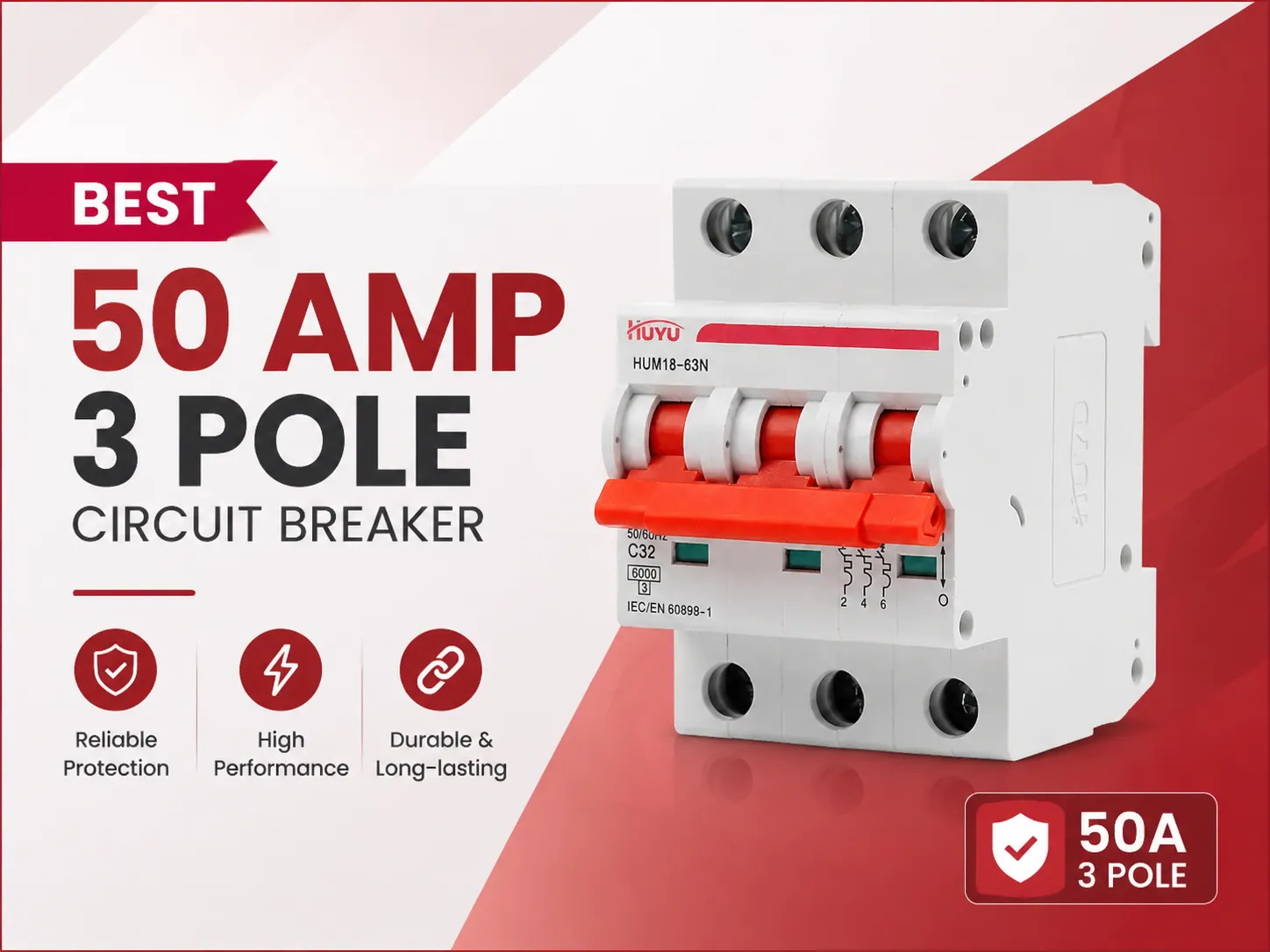
If you want to power something with lots of amperage—like an outbuilding subpanel or commercial kitchen oven; three-phase motors; or large industrial lighting—single pole breakers aren’t enough. Select a 50 Amp 3 Pole Circuit Breaker to perform this job. This circuit breaker protects three hot wires at once and will be the heart of a 3–phase system or high-capacity split-phase circuit. When choosing a new breaker you must ensure the interrupting capacity matches your panel and the load it serves; you should also identify the form factor and terminal style of the new breaker against those of the current breaker. This guide provides helpful tips on what to consider when choosing a breaker, what common issues exist with improper breaker sizing and installation and how to avoid making these mistakes.
What Exactly Is a 50 Amp 3 Pole Circuit Breaker?
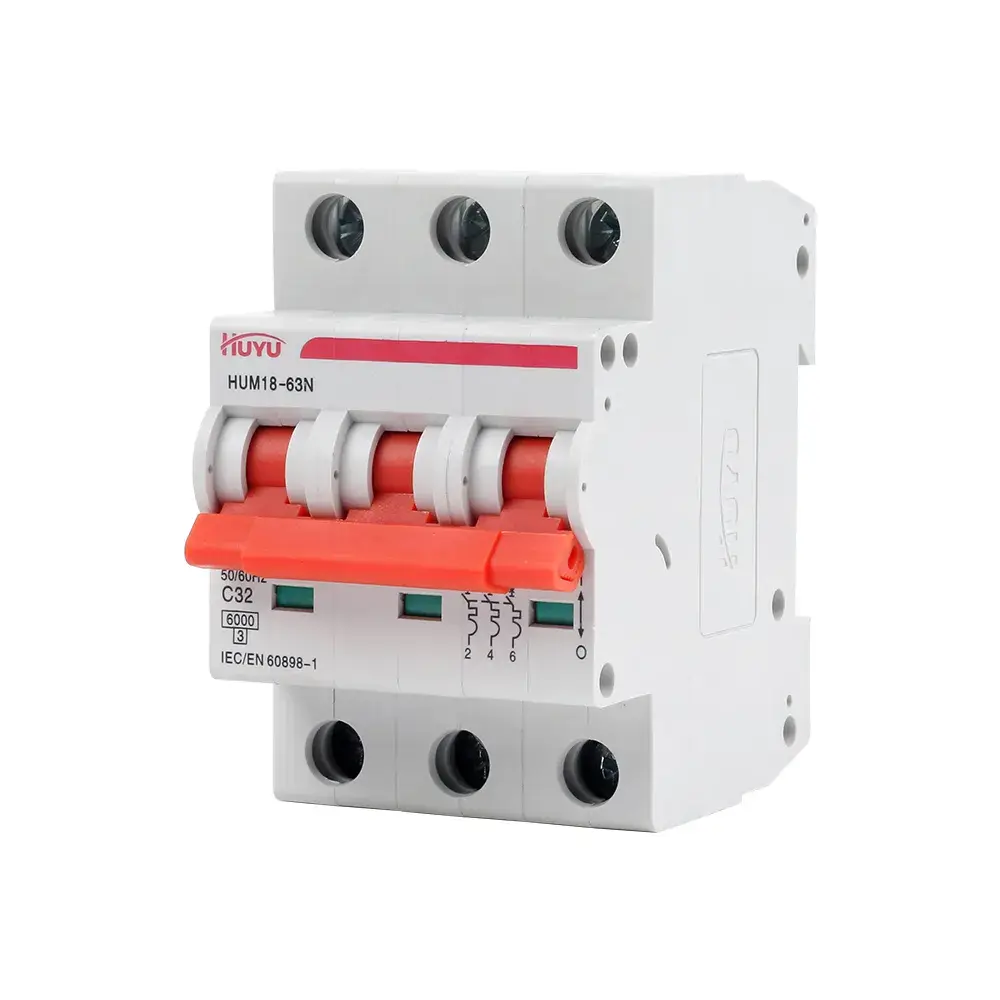
Three-pole 50-amp circuit breakers occupy three adjacent space in a load center/panelboard as a single unit; they also have a common trip mechanism, meaning that if any overload/short-cycle occurs to one of the poles, all three circuit breaker poles will trip at the same time. This is important for preventing single phasing of three-phase equipment, which is when one phase drops out while the other two phases are still functional, leading to rapid overheating and an eventual failure of the motor winding. The 50-amp rating is the continuous operating current of each pole under normal conditions. The circuit breaker is typically rated at 240 or 480 volts, depending on what type of electrical system it is connected to.
Where You’ll Use a 3‑Pole 50A Breaker
The large three-phase electrical loads where the disconnect and/or protect said loads, use a 50 AMP three pole breaker, such as in the following places.
- Three‑phase motors (pumps, compressors, air handlers, conveyors)
- Subpanels in commercial or industrial settings fed by a three‑phase service
- Large electric vehicle charging stations with three‑phase input
- Industrial heating and welding equipment
- Data center rack PDUs requiring 208V or 415V three‑phase power
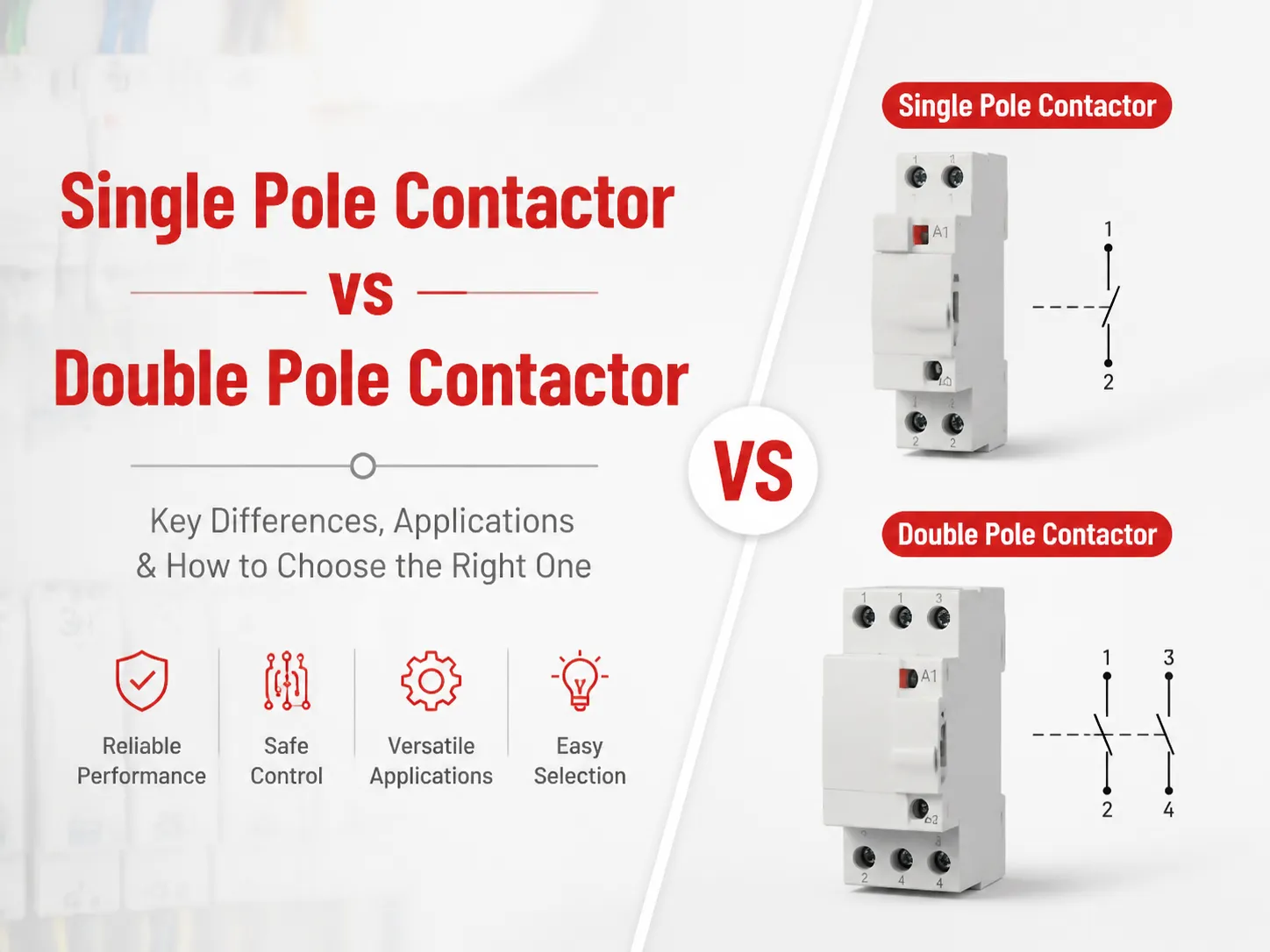
If you’re feeding a residential subpanel from a 240V split‑phase service, you might instead need a double‑pole breaker. For a closer look at that distinction, our comparison of 50 amp single pole breaker vs double pole explains when two poles are enough and when three poles become necessary.
Key Features to Evaluate When Selecting a 50A 3‑Pole Breaker
Not all 50 amp 3 pole circuit breakers are interchangeable. Several technical specifications determine whether the breaker will fit your panel, protect your equipment, and comply with code.
| Feature | What to Look For |
|---|---|
| Interrupting Capacity (kAIC) | For most residential and light commercial panels, 10 kAIC is standard. Industrial services with high available fault current may require 22 kAIC, 25 kAIC, or even 65 kAIC. Always match the interrupting rating to the available fault current at the panel. |
| Voltage Rating | Common ratings are 240V and 480Y/277V. Verify your system’s nominal voltage. Using a 240V‑only breaker on a 480V system will result in catastrophic failure during a fault. |
| Mounting Style | Plug‑on breakers fit residential and light commercial load centers. Bolt‑on breakers are used in commercial and industrial panelboards where vibration resistance and a more secure connection are required. They are not interchangeable. |
| Wire Terminal Type | Check the acceptable wire gauge range. A 50A breaker must accept at least #6 AWG copper or #4 AWG aluminum. Some models include box lugs rated for a wide conductor range, simplifying installation. |
| Approvals and Certifications | UL 489 listing is mandatory for molded‑case circuit breakers in North America. For export markets, IEC 60947‑2 or equivalent local certifications apply. |
MCB vs. MCCB: Which One Houses a 50A 3‑Pole?
At 50 amps, you’re in the overlap zone between two breaker families. A Miniature Circuit Breaker (MCB) can handle 50A in a compact, DIN‑rail‑mounted form factor, ideal for light industrial panels and sub‑distribution boards. A Molded Case Circuit Breaker (MCCB) offers a more robust construction, often with adjustable thermal and magnetic trip settings, and higher interrupting ratings. For a motor load with high inrush current, an MCCB with an adjustable instantaneous trip setting can prevent nuisance tripping while still protecting against short circuits. If cost is a factor and you’re comparing options, our 2 pole MCB price guide gives a realistic baseline for what a quality breaker costs, with similar pricing structures extending to 3‑pole units.
GFCI and Specialty 50A 3‑Pole Breakers
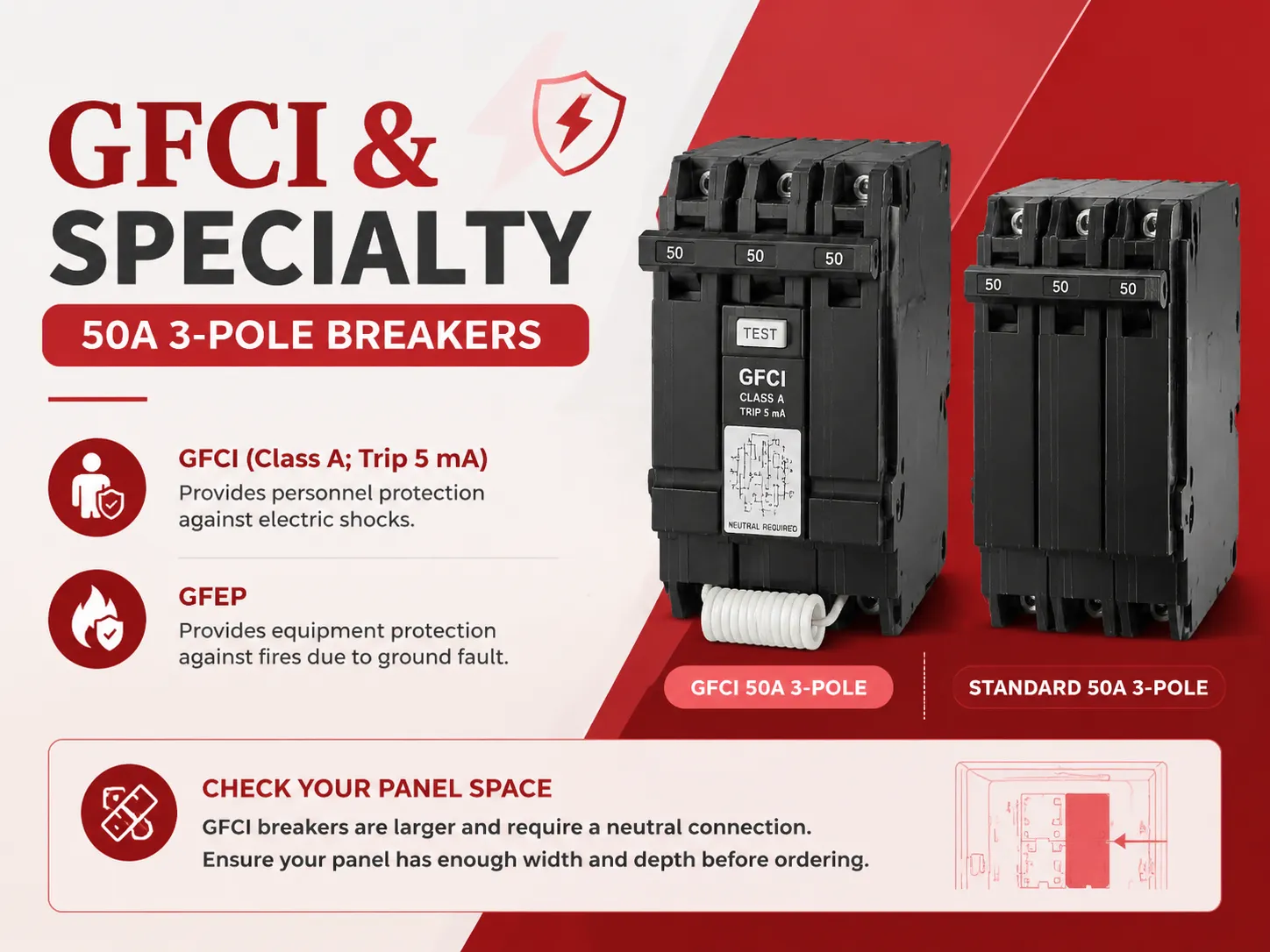
Outdoor or wet locations may require ground fault protection when using a standard 50 amp three-pole circuit breaker. Three-pole Ground Fault Circuit Interrupters (GFCI) (Class A; Trip 5 mA) provide personnel protection against electric shocks, while Ground Fault Equipment Protectors (GFEPs) provide equipment protection against fires due to ground fault.
GFCI breakers are larger than standard three-pole circuit breakers and cost more than standard GFCI breakers. They also need a neutral connection for the internal electronics of the GFCI breaker to function.
Before ordering a GFCI breaker, you should check to ensure your panel will have enough physical room (width and depth) to accommodate a GFCI breaker.
Wiring Considerations: Wire Size, Distance, and the 80% Rule
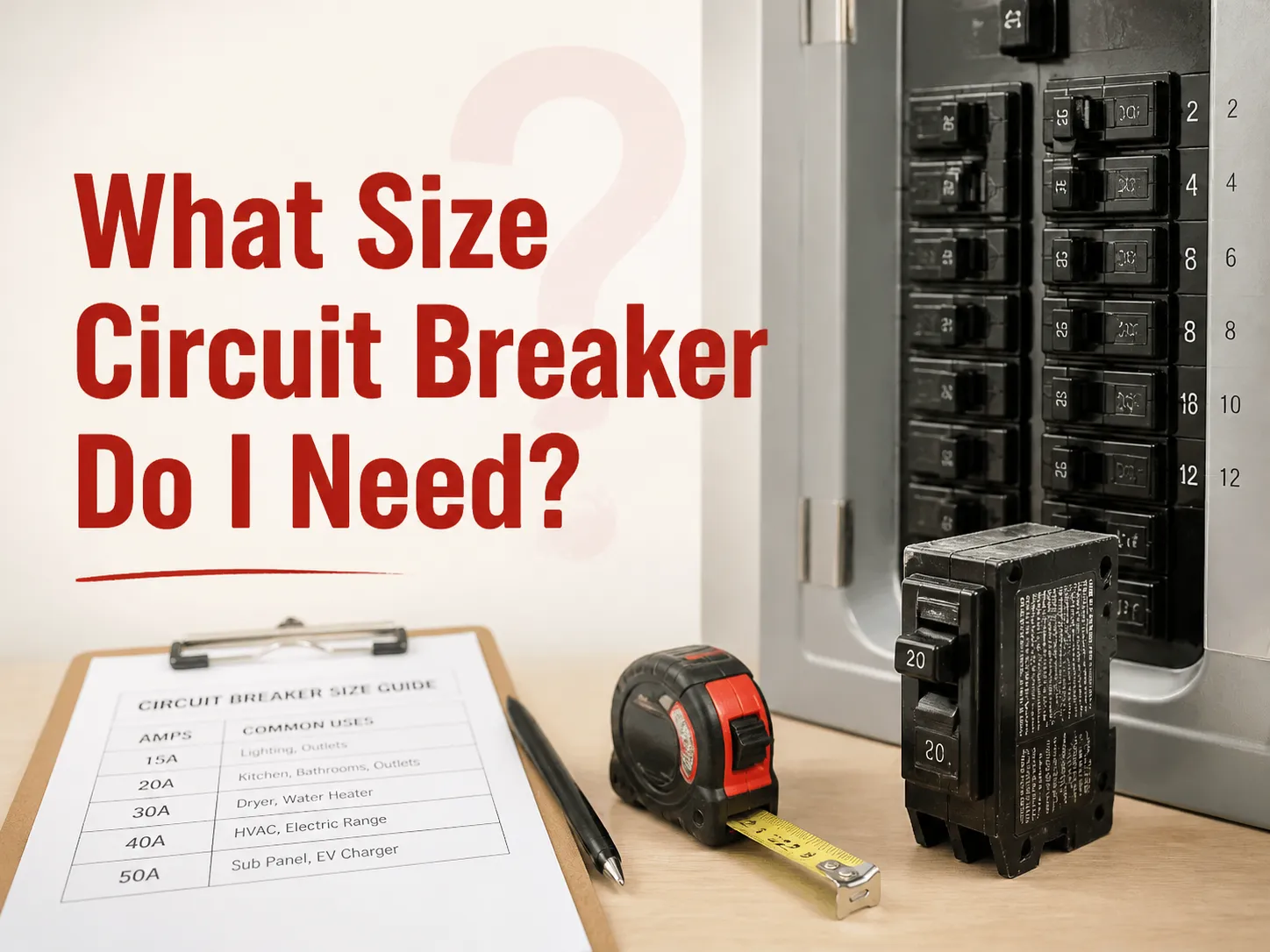
A 3-pole circuit breaker rated at 50A requires a wire size to supply both sufficient current to operate at 50A and not exceed a certain percentage of voltage drop due to distance. The National Electrical Code (NEC) wire size for a typical 50A circuit is #6 AWG copper wire, but the distance can exceed 75 to 100 feet, you would be concerned about voltage drop with the loads you use on the circuit, especially when starting a load. Using #4 AWG copper wire will keep your voltage drop under 3% for a 100-foot distance and provides adequate starting voltage to your motor load. The 80% rule also applies to this circuit; therefore, do not exceed 40 amps of continuous loading with a 50A breaker. For a complete walkthrough of matching wire to breaker size, our guide on what size circuit breaker you need explains the calculation and code requirements.
Why Your Panel Matters as Much as the Breaker
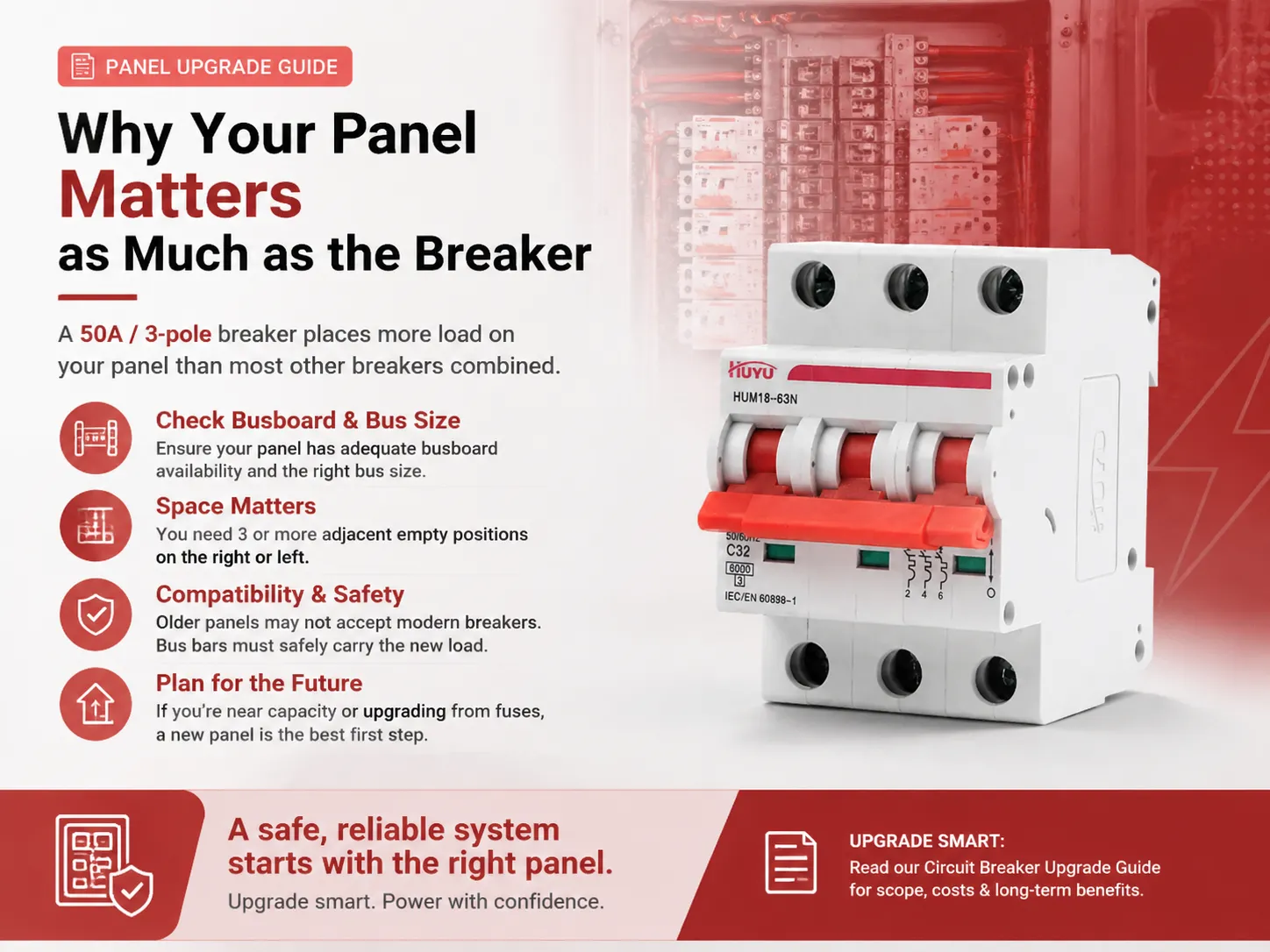
A breaker rated at 50 amps / 3 poles will place a greater amount of load on a panel than do most other breakers combined. Before purchasing this type of breaker, you should check to see if your panel has adequate busboard availability, has the right bus size, and has three or more empty positions adjacent to its right or left. There may be an issue with your panel not accepting any modern type of breaker due to their design, as well as having issues with the bus bars being unable to safely carry the current supplied by this new breaker. Also, if you are nearing your total capacity with your current panel, or are upgrading from an old fuse type system to this type system, a new panel would be the first step in that direction. Our upgrade circuit breaker proposal guide covers the scope of work, cost factors, and the long‑term benefits of a modern, high‑capacity panel.
Frequently Asked Questions
Why would you use a 3-pole breaker?
You use a 3-pole breaker to protect a three‑phase circuit. It simultaneously disconnects all three energized conductors when a fault occurs, preventing the dangerous “single‑phasing” condition that can destroy three‑phase motors. It’s also used to feed three‑phase subpanels and to provide a single disconnect for large 240V appliances that require two hots plus a neutral in some configurations.
How to wire a 50 amp breaker with 3 wires?
For a pure 240V or three‑phase 240V delta load (no neutral), you connect the three hot wires to the three terminals on the 50 amp 3 pole breaker. The equipment grounding conductor (ground wire) goes to the ground bar in the panel, not to the breaker. If the circuit requires a neutral (e.g., 120/208V wye), the neutral wire connects to the panel’s neutral bar, and only the three hots go to the breaker. Always torque the terminal screws to the manufacturer’s specification.
What size wire do I need to carry 50 amps 100 ft?
For a 50‑amp circuit with a run of 100 feet, #6 AWG copper wire is the minimum for ampacity, but voltage drop at full load can exceed 3%. To keep voltage drop within recommended limits, especially for motor loads, upgrading to #4 AWG copper is a safer choice. If using aluminum wire, #4 AWG aluminum is the minimum for 50A, and #2 AWG aluminum should be considered for long runs.
Is there such a thing as a 50 amp breaker?
Yes, 50 amp breakers are a standard size in residential, commercial, and industrial panels. They are available in single‑pole, double‑pole, and three‑pole configurations for 120V, 240V, and three‑phase circuits. They are commonly used for ranges, subpanels, EV chargers, and light industrial machinery.
Choosing the best 50 amp 3 pole circuit breaker is about matching the breaker’s physical fit, electrical ratings, and protective features to the exact demands of your installation. A UL‑listed breaker with the correct interrupting capacity, mounted in a compatible panel, and wired with the right conductor gauge is a component you can rely on for decades. Whether you’re powering a three‑phase motor, feeding a subpanel, or protecting a commercial appliance, investing in a quality breaker from a reputable supplier keeps your system safe and your downtime non‑existent. At HUYU, we supply a full range of circuit protection solutions — from standard MCBs to high‑interrupting MCCBs and specialty GFCI breakers — so you can build your electrical infrastructure with components that meet both the code and the real‑world demands of your operation.