

Cada incendio eléctrico que comienza detrás de la pared, cada corte que sigue inmediatamente al conectar los elementos cableados a dispositivos eléctricos, cada chisporroteo y estallido en un panel eléctrico tienen la misma causa. El cortocircuito eléctrico es la falla más común pero al mismo tiempo la más peligrosa en todo el sistema eléctrico; ninguna habilidad puede decirte cuándo va a comenzar el problema, lo que significa la diferencia entre un disparo normal y un desastre enorme. En una casa o planta bien diseñada, el cortocircuito eléctrico será detectado en milisegundos, de lo contrario tus cables se derretirán, habrá un incendio y tu equipo se quemará totalmente en segundos.
Esta guía ofrece respuestas sobre cómo aparece el cortocircuito eléctrico y cuáles son los resultados de su aparición: cuál es la física del proceso, qué tipos de cortocircuitos existen en el mundo junto con sus causas y peligros, y si se pueden usar medios de protección contra los cortocircuitos y qué hacer en caso de que el problema ocurra en tu casa.
En resumen: un cortocircuito ocurre cuando la corriente circula por un camino que tiene baja resistencia y es desconocido — por ejemplo, un cable vivo en contacto con el cable neutro, un cable vivo con otro cable vivo, o una superficie conectada a tierra. Las consecuencias de un cortocircuito incluyen la producción de calor muy alto que quema el aislamiento y provoca incendios; arco eléctrico que ocurre a una temperatura mayor que la del sol; explosión debido al arco en maquinaria industrial; contacto con extremos de las máquinas.
¿Qué es un cortocircuito?
Un cortocircuito denota un tipo de conexión eléctrica defectuosa que causa que la corriente eléctrica fluya por un camino no intencionado de baja resistencia, ignorando así la carga (que es un dispositivo diseñado para consumir energía). Cuando el circuito funciona normalmente, la corriente fluye a través del circuito desde la fuente hacia la carga (algún tipo de aparato o motor), porque la resistencia en el circuito limita la corriente eléctrica a un valor seguro. Por lo tanto, la carga hace que el circuito sea funcional, lo que significa que convierte la energía eléctrica en luz, calor o movimiento.
Cuando se trata de un cortocircuito, la carga es ignorada completamente. La corriente encuentra una ruta alternativa, ya sea un cable caliente tocando uno neutro o otro cable caliente mientras la resistencia de ese camino del circuito es prácticamente nula y por lo tanto la corriente aumenta inmensamente.

¿Cómo se forma un cortocircuito? La física
La aparición de un cortocircuito es el resultado de una reacción en cadena que se describe con una sola fórmula: la Ley de Ohm; I = V/R. El proceso se desarrolla de la siguiente manera:
- Ocurre el contacto: dos conductores entran en contacto, es decir, un cable vivo ha tocado uno neutro, otro cable vivo o un objeto conectado a tierra. La ocurrencia del contacto se debe a aislamiento defectuoso, cable suelto, humedad, etc.
- La resistencia colapsa: aparece que la resistencia de este circuito accidental es solo fracciones de ohm (0.01 a 0.5 ohm) en comparación con la resistencia de los dispositivos eléctricos que es de cientos de ohmios.
- La corriente aumenta: esto significa que debido a que la resistencia es prácticamente igual a cero, la intensidad de corriente sube a valores inmensos. Por ejemplo, en un circuito con una tensión nominal de 120 voltios y una resistencia de falla de 0.1 ohmios, la intensidad es 120/0.1 o 1200 amperios, mientras que una lámpara de 60W utiliza apenas 0.5 amperios. El aumento de corriente es 2400 veces, limitado solo por la resistencia de la fuente y los cables.
- El calor se produce instantáneamente: el proceso de calentamiento en conductores eléctricos se explica por la ley de Joule: P=I^2 * R. Como se puede observar, la corriente está al cuadrado en la fórmula, por lo que incluso mil amperios pasando por una resistencia insignificante generan una cantidad increíble de electricidad y provocan la combustión del aislamiento y la vaporización del metal en segundos.
- Se produce el arco: si los puntos de contacto se separan, se produce un arco.
- La protección actúa o no: el cortocircuito puede cesar si algún dispositivo de protección opera. Todo el proceso desde el momento del contacto hasta la desconexión del circuito dura menos de una décima de segundo si la protección funciona correctamente. De lo contrario, el calor y el arco eléctrico continuarán propagándose hasta que el cortocircuito cause un incendio.
Lo importante es que, aunque el cortocircuito ocurre instantáneamente, las consecuencias dependen de la rapidez con que reaccione la protección.
Tipos de cortocircuitos
También se distinguen tipos de cortocircuitos basados en las características del conductor.
| Tipo | Qué Ocurre | Ejemplo típico | Protección |
|---|---|---|---|
| Línea a neutro | El conductor activo contacta el neutro, evitando la carga | Cable de lámpara deshilachado, cable pellizcado detrás de muebles | Interruptor automático (disparo magnético) |
| Línea a línea (fase a fase) | Dos conductores energizados en diferentes potenciales se tocan | Bobinados de motor dañados, cable multiconductor aplastado | Interruptor automático (corriente de falla alta) |
| Falla a tierra (línea a tierra) | Conductor energizado contacta una superficie conectada a tierra | Cable tocando una caja metálica, conducto o chasis | GFCI/RCD (detecta desequilibrio de 4-6 mA) |
| Falla trifásica en cortocircuito sólido | Las tres fases cortocircuitadas solidamente — corriente máxima de falla | Fallo en equipo de conmutación industrial | Interruptores dimensionados para la capacidad de interrupción; estudios de arco eléctrico |
| Falla de arco | Arco intermitente de alta impedancia a través de una brecha | Terminal suelto, aislamiento agrietado | AFCI (interruptor de circuito por falla de arco) |
Es importante entender que, aunque una falla a tierra puede considerarse un tipo de cortocircuito, se trata por separado ya que cualquier corriente de falla a tierra puede ser letal al pasar por el cuerpo humano — incluso si no es suficiente para disparar un interruptor automático. En cuanto a la falla por arco, no genera suficiente corriente para disparar el interruptor automático pero ciertamente produce condiciones para la ignición donde hay materiales circundantes, razón por la cual ahora se requieren interruptores automáticos AFCI en las áreas habitables de las viviendas.

Las 8 causas comunes
Tanto en hogares como en sitios industriales, solo hay unas pocas causas principales detrás de los cortocircuitos.
- Aislamiento dañado o fallido: El aislamiento del cable se deteriora como resultado de la edad, expuesto tanto al calor como a la luz UV junto con ciertos productos químicos y vibraciones. Los materiales de aislamiento se deterioran, lo que conduce a fallos en los sistemas cableados. Los cables con aislamiento de goma antiguo (los producidos antes de 1950) tienden a volverse quebradizos y agrietarse.
- Conexiones sueltas: si los terminales se aflojan, un conductor puede tocar otro conductor o la carcasa. Esto aplica tanto para terminales que no están adecuadamente apretados como para los que están demasiado apretados.
- Daños por animales e insectos: ratas y ratones roen el aislamiento y muy a menudo causan cortocircuitos en sistemas instalados en varios lugares, incluyendo paneles eléctricos, vehículos y granjas.
- Penetración de agua y humedad: el agua conecta dos conductores y al mismo tiempo corroe el aislamiento. Las cajas de conexiones inundadas y la humedad en los recintos exteriores provocan miles de fallos.
- Aparatos defectuosos: pueden producirse cortocircuitos internos en motores o fuentes de alimentación, creando un riesgo de seguridad en los circuitos que los alimentan.
- Daño mecánico: clavos y tornillos pueden atravesar la pared hacia los cables, mientras que los cables pueden dañarse por objetos pesados que puedan aparecer en su camino (por ejemplo, en casos de aplastamiento del cable).
- Instalación deficiente: las deficiencias en trabajos de bricolaje (cambio de conductores, dejar cables sin conectar, etc.) están entre las causas más comunes de cortocircuitos en instalaciones eléctricas domésticas.
- Sobrecalentamiento: un conductor sobrecargado se calienta, el aislamiento se endurece y agrieta. Un cable sobrecargado puede provocar un cortocircuito.
¿Cuáles son los efectos de un cortocircuito?
Los efectos de un cortocircuito no controlado pueden acumularse desde milisegundos hasta minutos:
- Incendio. Las fallas eléctricas están entre las principales causas de incendios estructurales. Según la Administración de Incendios de EE. UU., las fallas eléctricas causan más de 44,000 incendios domésticos cada año. El calor en el punto de falla enciende el aislamiento, el polvo y otros combustibles en las cercanías.
- Destello y explosión de arco (industrial). Los cortocircuitos generan arcos explosivos, proporcionando efectos terriblemente calientes y brillantes, además de una onda de presión. Las lesiones causadas por destellos de arco son algunas de las más graves que reciben los trabajadores en el ámbito eléctrico; por eso, el EPP y los procedimientos de seguridad al trabajar cerca de equipos energizados están incluidos en las normas NFPA 70E.
- Choque eléctrico. Las fallas a tierra hacen que los electrodomésticos modernos energicen cualquier superficie metálica; cualquier dispositivo conectado a tierra puede volverse activo, causando un choque mortal.
- Destrucción del equipo. Las corrientes de falla pueden dañar los devanados del motor, las pistas en las PCB, los transformadores y los transistores en cuestión de milisegundos, arruinando otros dispositivos antes y después de la falla.
- Costos y tiempo de inactividad. En un lugar, un cable se cortocircuita y detiene toda la línea. Se necesitan horas para localizar la falla, y repararla y perder producción puede generar altos gastos.
Cortocircuito vs Sobrecarga: ¿Cuál es la diferencia?
Ambos tipos de falla suelen ser malinterpretados, pero en realidad son distintos; el interruptor los detecta de manera diferente:
| Característica | Cortocircuito | Sobrecarga |
|---|---|---|
| Causa | Camino no intencionado de baja resistencia que evita la carga | Demasiadas cargas (o una carga sobredimensionada) en el circuito |
| Nivel de corriente | Cientos a miles de amperios | Ligeramente a moderadamente por encima del valor nominal (por ejemplo, 25A en un circuito de 20A) |
| Velocidad del daño | Instantáneo | Calentamiento gradual durante minutos u horas |
| Respuesta del interruptor | Disparo magnético/instantáneo (milisegundos) | Disparo térmico (retrasado, segundos a minutos) |
| Señal típica | El interruptor se dispara en el instante en que se restablece | El interruptor se dispara después de que el equipo funciona un tiempo |
Un consejo práctico en campo: si el interruptor se dispara cada vez que lo restablece inmediatamente, es muy probable que haya un cortocircuito. El interruptor solo se disparará después de un tiempo en presencia de carga si el problema se debe a una sobrecarga.

Cómo se protegen los circuitos
Dado que los cortocircuitos son una parte inevitable de cualquier sistema eléctrico durante su vida útil, se han desarrollado varios métodos de protección contra cortocircuitos.
- Los fusibles son una de las opciones más antiguas y sencillas disponibles. Consisten en un elemento metálico con un punto de fusión específico. Cuando se sobrecarga con corriente eléctrica, el elemento se funde y crea una interrupción en el camino de la corriente. Los fusibles son métodos de protección baratos, rápidos y confiables; sin embargo, una vez usados, deben ser reemplazados.
- Los interruptores automáticos constan de dos dispositivos: un solenoide magnético que abre el circuito con la ayuda de una corriente eléctrica de hasta diez veces su valor nominal, y una lámina bimetálica que reacciona a la sobrecarga durante más de un segundo.
- Los dispositivos de corriente residual o GFCI son tipos de dispositivos que detectan un desequilibrio de corriente de aproximadamente cuatro a seis miliamperios entre los conductores activo y neutro en menos de una cuarentaava de segundo y detienen la corriente.
- Los interruptores de circuito por falla de arco se basan en tecnología digital que les permite detectar el fenómeno de arcos eléctricos y prevenirlo.
- Para que toda la cadena de protección funcione correctamente, todas las partes deben estar coordinadas y dimensionadas adecuadamente, por lo que la protección debe proporcionarse mediante el método correcto de dimensionamiento de los cables, dispositivos y capacidades.
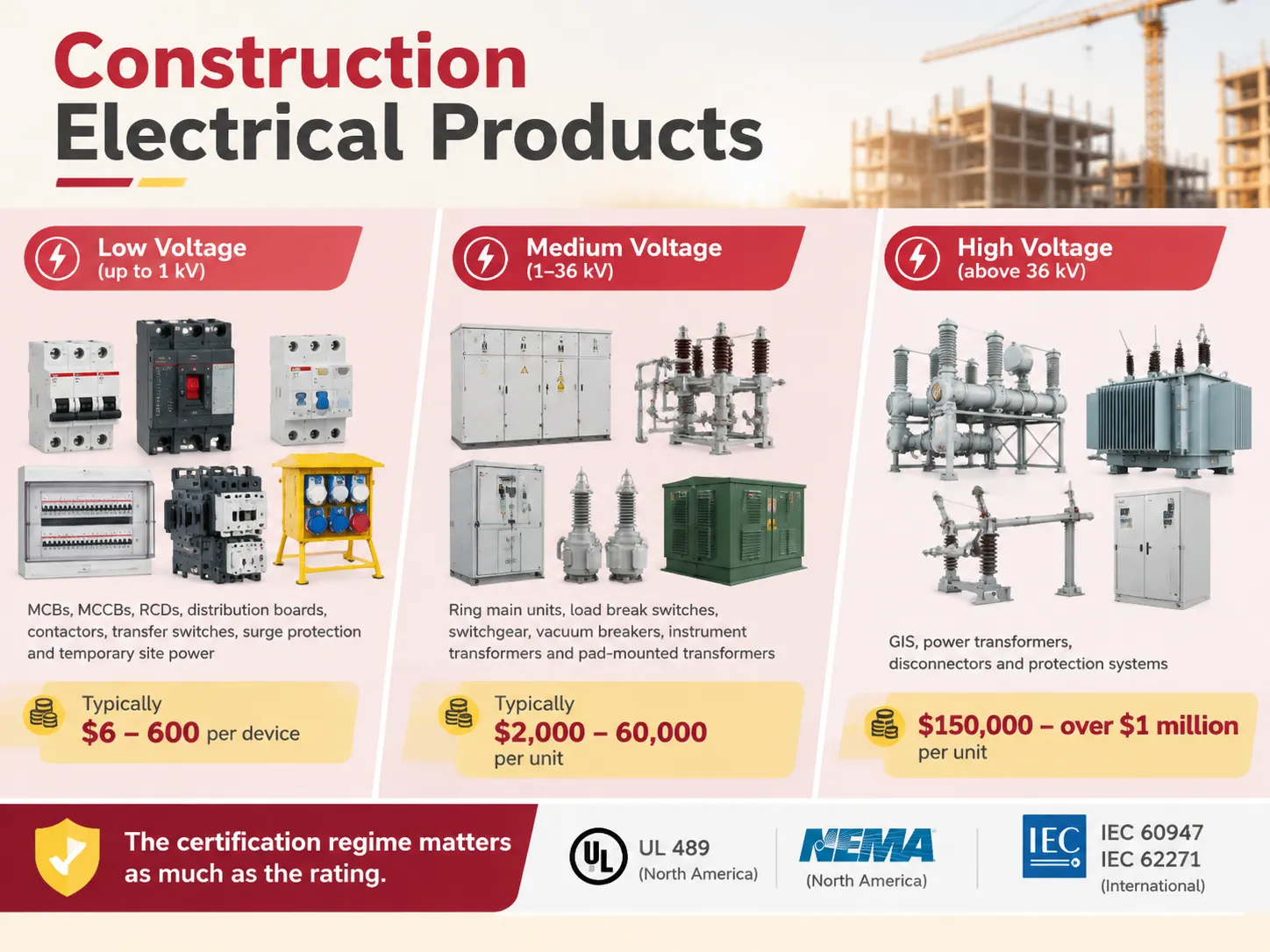
Entender cómo se especifican estos dispositivos de protección — y cómo difieren — es exactamente lo que nuestra guía estándar UL 489 para interruptores y Comparación MCB vs MCCB cubre en profundidad.
¿Qué sucede si una casa tiene un cortocircuito?
La experiencia se reduce a si el sistema de protección funciona o no.
- Caso con un interruptor adecuado en buen estado: el interruptor se dispara inmediatamente, desconectando la energía del circuito. Si hay un cortocircuito, se puede notar por las luces y dispositivos apagados, así como por el interruptor en la posición intermedia en el panel, mientras que volver a encenderlo restaura la energía tan pronto como se elimina la falla.
- En caso de un cortocircuito permanente, después de restablecer el interruptor, se debe enfrentar el hecho de que el interruptor vuelve a reaccionar rápidamente, pero si no funciona correctamente, cualquier intento adicional de restablecerlo es peligroso debido a la necesidad de reparar el problema antes de que el interruptor pueda volver a funcionar.
- En caso de un sistema de protección deficiente, la falla puede provocar un incendio cuando un elemento del circuito.
La conclusión es que cuando ocurre un cortocircuito en una casa correctamente cableada, conduce a la activación del interruptor y a la reparación, mientras que en casas con cableado deficiente conduce a un riesgo de incendio y descarga eléctrica.
Cómo encontrar y reparar un cortocircuito
En caso de una activación inmediata del interruptor que permanece en posición cerrada, esto es lo que debe hacer (el interruptor debe estar en posición apagada y se deben observar prácticas seguras):
- Primero, desconecte todo en ese circuito. Restablezca el interruptor después de que todas las cargas hayan sido desconectadas — si el interruptor permanece en posición cerrada después de eso, uno de los aparatos que estaban conectados al circuito anteriormente es el culpable, lo que se puede determinar conectándolos nuevamente uno a uno.
- Si el interruptor se dispara nuevamente, sin nada conectado al circuito: la causa del problema está en el cableado y los dispositivos usados en ese circuito, ya que podría haber un problema con el cable, un problema con el receptáculo o una conexión de cable defectuosa.
- Inspeccione primero si hay algún daño: revise si hay cables cortados o dañados, cables pellizcados, secciones de cable quemadas o cualquier otra evidencia de daño en los dispositivos eléctricos.
- Verifique dispositivos y cables: asegúrese de que los cables estén firmes y que no haya humedad en la caja de conexiones.
En caso de que el problema esté ubicado en las paredes, debe llamarse a un electricista autorizado ya que tomará mucho tiempo detectar dónde se encuentra el cortocircuito eléctrico y puede resultar en incendio y pérdida de vidas.
Cómo prevenir cortocircuitos
- Nunca use cables y aparatos dañados; los cables deshilachados y los enchufes agrietados se consideran cables y aparatos dañados y deben ser reemplazados.
- Evite sobrecargar los circuitos y conectar en cadena las regletas de alimentación, ya que esto puede provocar una reducción en el aislamiento y un cortocircuito al final. La guía de capacidad de circuito de 15 amperios indica cuál es la carga permitida para el circuito.
- Evite la presencia de agua en las proximidades de la electricidad: se requiere protección GFCI en cocinas, baños, exteriores y garajes; los cables deben mantenerse secos.
- Utilice la tecnología AFCI en las partes habitables de su propiedad para detectar cortocircuitos por arco que los interruptores automáticos no detectan.
- Haga inspeccionar el cableado en viviendas antiguas, especialmente en el caso de tipos de cableado como aislamiento de tela/caucho, cableado de aluminio (que requiere dispositivos con clasificación CO/ALR), sistemas de perilla y tubo.
- Es importante controlar de manera efectiva las plagas que pueden causar cortocircuitos; los áticos y espacios de acceso deben estar sellados.
- Utilice materiales y dispositivos certificados desde los interruptores hasta los enchufes para que la protección nunca sea eludida por el interruptor automático de mayor tamaño “ya que siempre se dispara”.”
- Revisiones anuales de paneles industriales: la termografía y las verificaciones de torque detectan conexiones flojas antes de que se conviertan en fallas — la misma disciplina de mantenimiento que describimos en nuestro guía de detección de fallas de interruptores.
Preguntas Frecuentes
¿Cómo se forma el cortocircuito y cuál es su efecto?
Un cortocircuito ocurre cuando la electricidad circula por una ruta de baja resistencia no intencionada — si un conductor activo se conecta a un conductor neutro, a un conductor vivo adyacente o al potencial de tierra del sistema eléctrico. Debido a la muy baja resistencia, la Ley de Ohm (I = V/R) resulta en una transición de valores normales de corriente a varios miles de amperios en milisegundos. Esto genera calor (I²R), que puede quemar el aislamiento, provocar descargas eléctricas que encienden materiales combustibles, formar arcos eléctricos en equipos industriales, electrificar objetos que pueden dañar a las personas y causar fallas en los aparatos — todos estos fenómenos pueden ser detenidos por dispositivos de protección de acción rápida (interruptores automáticos, fusibles e interruptores diferenciales).
¿Qué sucede exactamente en un cortocircuito?
En un cortocircuito, la corriente eléctrica circula por el circuito no a través de la carga eléctrica sino por un camino no intencionado de resistencia casi nula. El aumento de corriente está limitado solo por la impedancia de la fuente y los conductores, usualmente en el rango de cientos o miles de amperios en milisegundos. Esto conduce a un calentamiento extremo (calentamiento I²R) que provoca que los recubrimientos se fundan y el metal se licúe, pudiendo resultar en la aparición de un arco eléctrico. Cuando se utiliza protección, el interruptor automático o fusible interrumpe la falla en una fracción de segundo; sin protección, los materiales sobrecalentados pueden incendiarse, lo que podría provocar un incendio.
¿Puede un cortocircuito resolverse por sí mismo?
Casi nunca y nunca de manera segura. Debido a que un cortocircuito ocurre cuando dos materiales conductores desnudos están en contacto físico, no se soluciona por sí solo. Aunque puede haber momentos de arco temporal durante el movimiento vibratorio de los conductores, lo que daña el material aislante y genera rastros de carbono que agravan el daño causado por la falla. La única resolución segura posible es cuando el fusible se funde y el interruptor se dispara. Es el único caso en que existe algún límite a lo que la corriente dañina puede causar y solo se requerirá reparar la falla después de que haya sido detectada.
¿Qué pasaría si una casa tuviera un cortocircuito?
Cuando un hogar cuenta con la protección adecuada, ocurre un cortocircuito que hace que el interruptor automático actúe rápidamente, lo que lo hace seguro. El circuito deja de funcionar y, después de reparar cualquier problema, el reinicio hace que el circuito vuelva a funcionar. Lo peor que puede suceder en este caso es que el interruptor se dispare. Sin embargo, si el interruptor automático está defectuoso, sobredimensionado o se ha bypassado, el calentamiento causado por el cortocircuito derrite el aislamiento de los cables, lo que puede provocar incendios causados por aparatos eléctricos en las paredes. Si el cortocircuito ocurre en el chasis de uno de los dispositivos electrónicos, se activará el dispositivo GFCI, si está presente; de lo contrario, el circuito seguirá alimentando el marco del aparato, causando una situación peligrosa.
Referencias
- Circuitería de Control — Qué es un cortocircuito: causas, tipos y protección
- Engineer Fix — Qué es un cortocircuito y qué lo causa
- Electrical Repair Authority — Diagnóstico y reparación de cortocircuitos eléctricos
- US Fire Administration — Estadísticas de incendios eléctricos en edificios residenciales
- NFPA 70 — Código Eléctrico Nacional (NEC), edición 2023
- NFPA 70E — Seguridad eléctrica en el lugar de trabajo (arco eléctrico)
Conclusión
La ocurrencia de situaciones de cortocircuito puede atribuirse a un principio fundamental de la física que establece que si se permite que una corriente fluya a través de un camino con una resistencia cercana a cero y que evita el trabajo, entonces, según la Ley de Ohm, la corriente cambia de la curva regular a valores increíbles: cientos y miles de amperios en un tiempo muy corto, lo que conduce a la liberación de calor y arcos eléctricos que pueden fundir el objeto, quemarlo y causar descargas eléctricas. Las razones que conducen a los cortocircuitos son bien conocidas: diversos defectos en los materiales aislantes, malos contactos, la presencia de animales, alta humedad, daños mecánicos en las partes del circuito o errores cometidos por personas que reparan equipos eléctricos y todo lo que se puede hacer para eliminar este problema: fusibles e interruptores automáticos para sobretensiones; GFCI para fallas a tierra; AFCI para arcos eléctricos.
La conclusión reciente del análisis realizado sobre el tema se informa en el mensaje que es igual para los propietarios tanto de casas como de fábricas: respetar el funcionamiento del interruptor automático para detener el flujo de corriente; nunca bypassar la protección o el circuito hasta que se resuelva el problema; y asegurar el mantenimiento permanente del sistema de circuitos: pruebas de aislamiento, mediciones de torque, inspecciones térmicas y pruebas de GFCI/AFCI.