
Dalam mesin pendingin udara modern, kompresor tidak diperlakukan hanya sebagai unit tetapi sebagai bagian dari sistem elektronik. Biaya untuk rangkaian inverter menggantikan kompresor kecepatan variabel yang berkisar antara $500 dan $1,100 sementara penggantian kipas ECM berkisar antara $400 dan $1,000. Dan saat melakukannya, pembaca harus mengingat bahwa dalam kasus lonjakan daya, biaya di atas tidak akan ditanggung oleh garansi pabrikan.
Seseorang dapat melihat hubungan kecerdasan di atas dengan konsep ekonomi yang sepenuhnya dibenarkan. Namun produk yang dibeli untuk mengatasi masalah tersebut tidak dapat dianggap begitu saja.
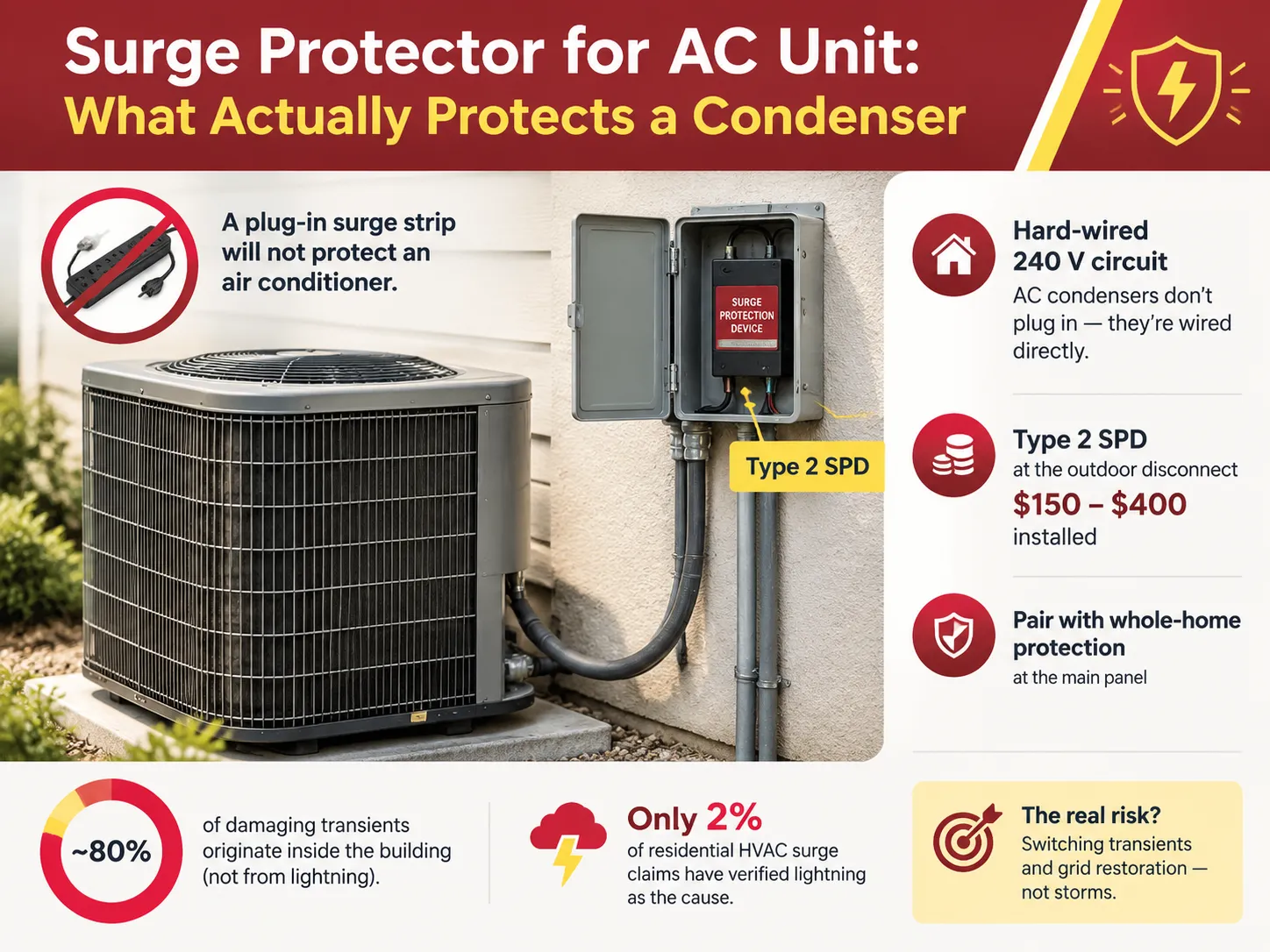
Mengenai apakah pelindung lonjakan plug-in dapat melindungi unit pendingin udara, jawabannya negatif. Alasan kesimpulan ini adalah bahwa unit AC memiliki kompresor yang diberi daya melalui rangkaian 240 V, yang tidak dapat dijangkau oleh pelindung lonjakan plug-in. Oleh karena itu, perangkat pelindung lonjakan Tipe 2 harus dipasang di pemutus sambungan luar ruangan, yang akan menelan biaya antara $150 dan $400 dan akan bekerja bersama dengan perlindungan seluruh rumah yang dipasang di panel utama. Selain itu, penting untuk memahami bahwa dalam hampir 20% dari semua kasus, sumber eksternal adalah penyebab terjadinya transient berbahaya, sementara hanya sekitar 2% dari semua klaim HVAC menunjukkan bahwa lonjakan tersebut tampaknya disebabkan oleh petir, sehingga menunjukkan bahwa itu adalah hasil dari fungsi transient switching dan bukan badai.
Jawaban Singkat untuk AC Modern
Jika memiliki sistem yang digerakkan inverter atau kecepatan variabel, yang usianya tidak lebih dari 15 tahun, disarankan menggunakan SPD tipe II pada pemutus sambungan luar ruangan. Alasannya adalah tempat ini menawarkan perlindungan optimal untuk unit karena kompresor terletak di ujung rangkaian panjang dan rangkaian ini berfungsi sebagai antena.
Untuk sistem satu tahap, yang terdiri dari kontaktor sederhana dan kapasitor, ekonominya lebih buruk, sehingga disarankan untuk menghabiskan uang pada perlindungan penuh rumah untuk panel listrik sebagai gantinya.
Jika sistem mendekati akhir masa pakai, maka disarankan untuk melewatkan perangkat tersebut dan berinvestasi pada penggantiannya, daripada melindungi kompresor yang akan tidak digunakan dalam dua tahun.
Mengapa Unit AC Terpapar Secara Tidak Biasa
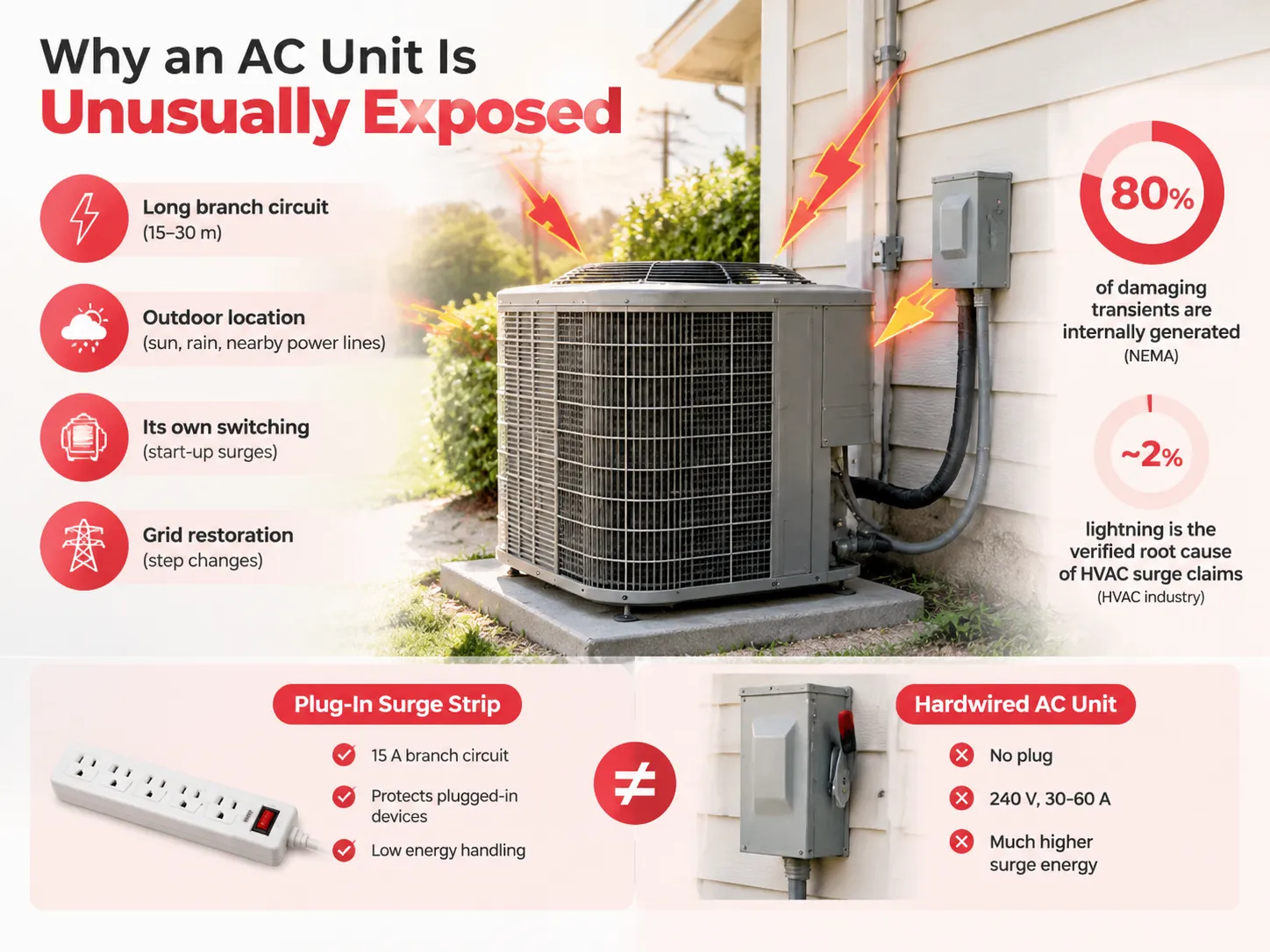
Ada empat faktor yang perlu dipertimbangkan, dan hanya satu yang bergantung pada cuaca.
- Rangkaian cabang panjang. Jarak dari panel ke kondensor biasanya sekitar 15-30 meter. Transient kemungkinan terjadi, dan oleh karena itu, perangkat yang ditempatkan di panel daya tidak dapat mengurangi lonjakan.
- Luar ruangan. Lingkungan luar ruangan, Marbella, dapat membawa panas atau hujan ke lokasi di mana peralatan diposisikan dan di mana juga terdapat tiang listrik potensial dan instalasi lainnya.
- Aksi saklar sendiri. Proses menghidupkan perangkat melibatkan arus yang sekitar 6-8 kali lebih tinggi daripada yang digunakan selama proses operasi reguler dan menghasilkan transient pada rangkaian yang sama.
- Perbaikan jaringan listrik. Setelah utilitas melanjutkan operasinya setelah gangguan pasokan listrik, area tersebut menerima seluruh perubahan sekaligus. Hal ini terjadi lebih sering daripada dampak petir dan menyebabkan kerusakan serupa.
Statistik mengonfirmasi pernyataan terakhir yang dibuat. Analisis NEMA menunjukkan bahwa sumber masalah listrik berasal dari dalam hingga 80% dari kasus.
Apa yang Tidak Bisa Dilakukan oleh Plug-In Strip
Plug strip cocok untuk sirkuit yang memasok peralatan listrik, biasanya dengan rating 15A dan memberikan perlindungan untuk perangkat apa pun yang dicolokkan ke dalamnya. Unit pendingin udara tidak memiliki colokan; unit ini terhubung ke disconnect dan beroperasi pada sirkuit 240V dengan rating antara 30A dan 60A, dan tidak ada plug strip yang dapat digunakan pada sirkuit ini.
Bahkan jika memungkinkan sistem perlindungan jenis ini digunakan, skala lonjakan energi yang terlibat berbeda. Plug strip melindungi sirkuit dengan lonjakan kecil pada sirkuit yang memasok perangkat listrik apa pun. Arus lonjakan yang dialami pada jaringan listrik utama dan pada sirkuit feeder untuk unit pendingin udara jauh lebih tinggi, oleh karena itu, saat lonjakan terjadi, varistor dalam perangkat akan gagal bekerja dengan benar dan peralatan yang terhubung ke dalamnya akan tetap tidak terlindungi, meskipun indikatornya masih menyala.
Sumber kebingungan adalah nama yang diterima kedua item tersebut. Keduanya dijual sebagai perangkat pelindung. Juga, keduanya memiliki rating joule, dan rating ini tidak memungkinkan perbandingan yang mudah. Hal yang sama dapat dikatakan tentang perangkat pelindung lonjakan yang memiliki rating spesifik dibandingkan dengan plug strip yang dinilai menurut metode pemasaran.
Apa yang sebenarnya disumbangkan oleh setiap perangkat dalam rantai, dari pemutus cabang hingga titik penggunaan, adalah subjek perbandingan ini antara pemutus sirkuit dan pelindung lonjakan, yang merupakan perbedaan yang sebagian besar pemilik rumah belum pernah dijelaskan.
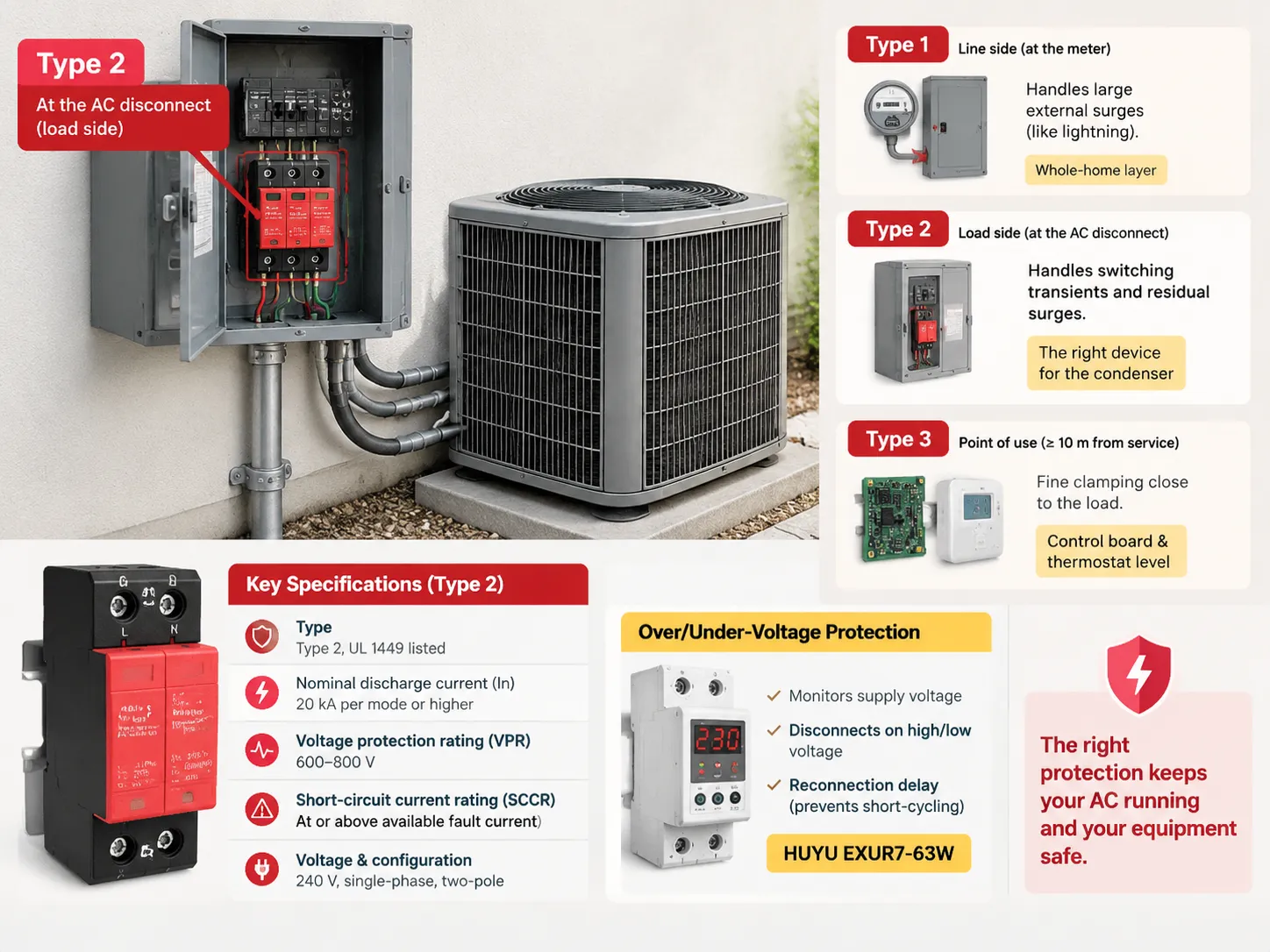
Tipe 1, Tipe 2, dan Tipe 3 pada Disconnect AC
| Tipe | Tempatnya | Apa yang ditangani | Cocok untuk unit AC |
|---|---|---|---|
| Tipe 1 | Sisi jalur dari disconnect layanan, di meteran | Lonjakan eksternal besar termasuk arus petir | Lapisan seluruh rumah, tidak khusus AC |
| Tipe 2 | Sisi beban dari pemutus, di disconnect peralatan | Transien switching, lonjakan residual, kejadian yang dihasilkan secara internal | Perangkat yang tepat di kondensor |
| Tipe 3 | Titik penggunaan, setidaknya 10 m dari konduktor dari layanan | Penjepitan halus dekat beban | Tingkat papan kontrol dan termostat |
Unit Tipe 2 pada disconnect berfungsi sebagai fungsi utama. Unit tetap paralel dengan beban dan tidak menarik energi dalam penggunaan sehari-hari. Namun, ketika tegangan melewati ambang yang disebutkan, unit ini diaktifkan. Ini adalah unit yang dirujuk oleh sebagian besar produsen HVAC ketika mereka ingin menekankan bahwa perlindungan lonjakan adalah bagian dari kondisi garansi instalasi mereka.
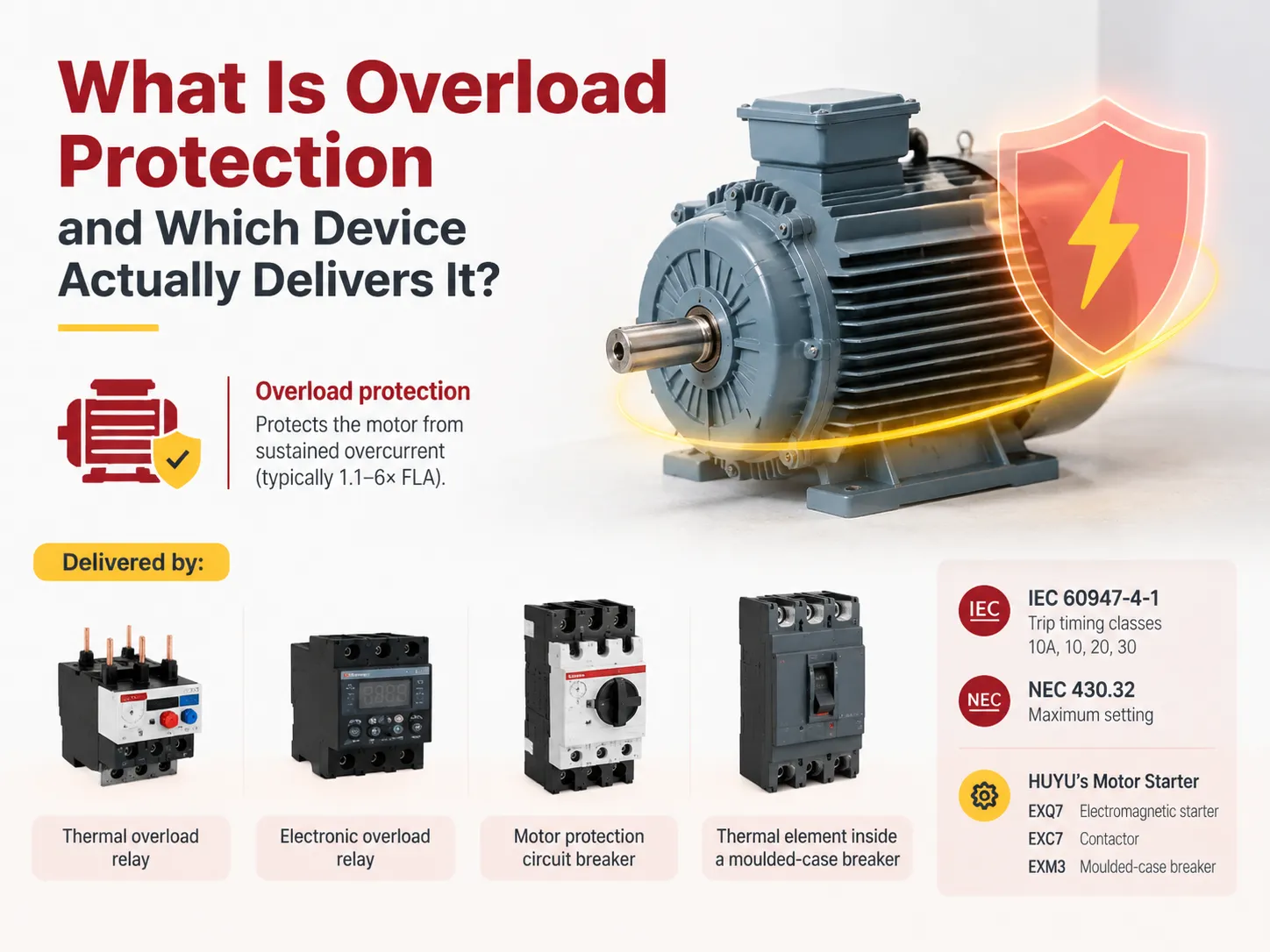
Penggunaan jenis perangkat proteksi lain diperlukan karena menangani masalah yang berbeda. Relay over-voltage dan under-voltage dapat memantau tegangan dan dengan demikian memutuskan kompresor jika terjadi penyimpangan dari jendela tegangan. Selain itu, mereka menyediakan penundaan waktu agar kompresor tidak mengalami siklus pendek. HUYU’s Pelindung multi-fungsi EXUR7-63W dirancang untuk tugas tersebut, menggabungkan jendela tegangan dengan penundaan penyambungan kembali yang dibutuhkan kompresor.
Ukuran: Empat Angka yang Penting
Abaikan angka kA pada judul dan rating joule. Empat spesifikasi menentukan apakah perangkat melakukan tugasnya.
| Spesifikasi | Apa yang harus diperhatikan pada pemutus AC | Mengapa |
|---|---|---|
| Tipe | Tipe 2, terdaftar UL 1449 | Matches the location in the circuit |
| Nominal discharge current (In) | 20 kA per mode or higher | The repetitive-event rating, which is what actually wears the device |
| Voltage protection rating (VPR) | 600–800 V | Lower is better; this is the number the board actually sees |
| Short-circuit current rating (SCCR) | At or above the available fault current at the disconnect | An under-rated device is a fire risk, not a protector |
| Voltage and configuration | 240 V, single-phase, two-pole for a residential condenser | Wrong configuration means no protection or a fault |
The clamping number is a weak spot for inexpensive products. A product that has a clamping voltage of 1,200 volts has theoretically safeguarded the circuit while allowing it to pass three times more power than the circuit would ideally receive. A voltage in the 600-800 volt range is ideal for use in residential wall-mounted units or disconnects and any clamping below that cannot be achieved affordably by most homeowners.
The second configuration on the voltage protection relay is the voltage window, which must be configured based on the application rather than simply using the default settings. For example, a compressor that disconnects at 200 volts for three minutes works completely differently than a compressor that disconnects at that same voltage for just 30 seconds, especially during the summer months when the supply is lower than usual in the mornings.The relay in this EXUR7N over and under-voltage protector is adjustable across that range for exactly this reason.
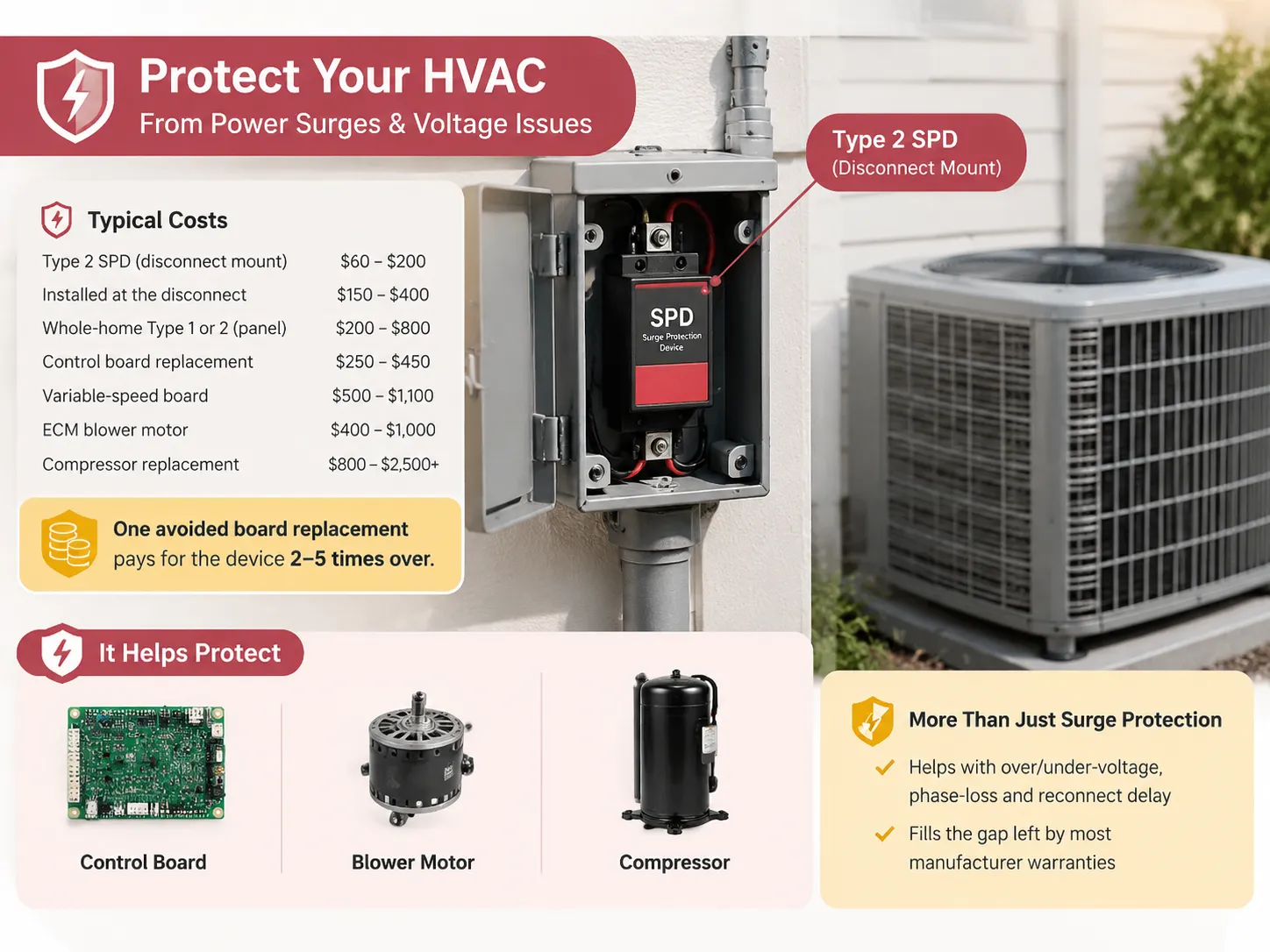
What It Costs, and What the Alternative Costs
| Item | Biaya tipikal | Catatan |
|---|---|---|
| Type 2 SPD, disconnect mount | $60–$200 | Device only |
| Installed at the disconnect | $150–$400 | 30–60 minutes of an electrician’s time |
| Whole-home Type 1 or 2 at the panel | $200–$800 | Layered protection, not a substitute |
| Single-stage control board replacement | $250–$450 | Installed |
| Variable-speed or communicating board | $500–$1,100 | Installed |
| ECM blower motor | $400–$1,000 | Installed |
| Compressor replacement | $800–$2,500+ | Parts alone in many cases |
Replacing a variable-speed board only once is enough in many cases, meaning that the investment pays for itself 2-5 times.
Most homeowners learn too late about the warranty issue. The majority of manufacturer warranties explicitly don’t cover any damage whatsoever due to surge or brownout; therefore, it doesn’t matter whether the system is one year old or ten. The device does not protect the warranty but simply bridges the gap that the warranty has events.
Whether the device also increases the value of the property is a separate and less certain issue, which is why it is advisable to keep these claims apart rather than leaving it up to the salesman. The evidence on value is examined in this look at whether a whole-home surge protector increases property value.
Brands, and Where HUYU Fits
In North America, the market for SPD both for residential and light commercial operations is limited which includes Square D and Schneider, Eaton, Siemens, Leviton, and some specialist manufacturers. In case of Type 2 device mounted directly on the disconnect, the only devices an electrical contractor offers for quotation are as they are crucially impacted by design.
The position of HUYU is both upstream and alongside in different respects. The firm manufactures low-voltage protection and switching devices and it has developed a various models of AC protection that mostly deal with voltage problems, including both surges and falls, loss of phases and reconnect delay for the device used for compressors. This is a whole different type of device rather than the surge clamping one.
Let’s make it clear: HUYU does not manufacture Type 2 module with UL 1449 certification suitable for installation in North America, therefore any homeowner from these geographies should buy one of those available there. HUYU manufactures the protection relay layer, the devices for surge protection for solar panels and the necessary switches and contactors both for an OEM and export equipment rather than being used for IEC standard equipment.
As a result, for OEM manufacturers of HVAC system, these devices are relevant, whereas if it comes to homeowners from the US who work on the installation of the system with a condenser, it is necessary to make a purchase of a designated module Type 2 and the voltage protection relay.
Installation and the Three Points
The complete system involves three locations according to their importance.
- The disconnecting device. A Type 2 surge protection device connected to the disconnect with the utmost shortness of leads and robustly bonded to the disconnect box. This is the most valuable individual item in HVAC systems.
- The main electrical panel. A Type 1 or Type 2 surge protection device suitable for the entire house. This device will filter the big surges before further flow through the house circuits and provide protection to all appliances in the house.
- The weatherproof heat pump and the control system. A Type 3 or a small Type 2 device at the heat pump plus the insulation of low-voltage control wires between the heat and condenser devices which is a long naked wire acting as a radio receiver.
The length of conductor is the key point of performance measurement in all points. Each inch of wire from the protected device to the protected point adds onto the voltage at the output of the device, so a device placed on the opposite side of the disconnect has much poorer performance than a device mounted to the right of the disconnect.
Installation of such equipment cannot be performed by a homeowner. The disconnect has a 240V casing and has live wires while its service terminals keep receiving energy even with the switch turned off.
Maintenance and Replacement
These devices are consumables. Every surge absorbed causes degradation of the metal oxide varistors leading to a service life of approximately five to ten years in normal circumstances, which may be shorter in a rural overhead feeder where there is a lot of switching going on.
Three habits need to be cultivated to make the protection work.
- Checking the indicator. A green light or any light showing means that the device is working. If it is dark or red that means that it has done its job. It’s impossible to know about the failed device in open unless the indicator has been checked.
- Replace after the event. Even if indicator looks normal a nearby lightning strike or an event on the grid may lead to the failure. The cost of changing a $100 device is lower than the cost of replacing a burned $900 circuit.
- Isolate before replacing. Although the SPD is connected in parallel with the load and the SPS is upstream the correct procedure involves breaking the circuit and checking it is not live before carrying out any actions.HUYU’s EXM3 moulded-case breaker is the sort of upstream device that makes that isolation possible on a larger packaged system, rather than relying on pulling a fuse block.
Mark installation date inside the switch box. This is the only option to know whether the device in front of you is two years old or twelve.
FAQ
Should you put a surge protector on an AC unit?
Of course, for an inverter or variable-speed system, since the control circuit and the inverter unit are quite costly, susceptible to damage from surges, as well as not being included in the warranty of the manufacturer. With regard to an older single-stage unit with simple controls, the aspect of protecting the whole house is better spent in this case. In view of the age of the system, neither alternative is considered to be sound financially at that point.
Is it safe to plug an air conditioner into a surge protector?
An air conditioning unit cannot be plugged in. A condenser installed centrally is directly wired into a 240 V circuit via a disconnect device, while a window type air conditioner requires constant power exceeding that which is generally permissible for most domestic extension cords. Further, the strip connected to a window air conditioning device may also be dangerous since its contacts are not rated for the inrush of power.
What is the best surge protector for HVAC?
A UL 1449-compliant Type 2 device, mounted at the outdoor disconnect, designed for nominal discharge current of 20 kA or higher and with a voltage protection rating between 600-800 V, and has a short circuit current rating equal to or exceeding the available fault current. Use it in conjunction with a device placed at the whole home panel and an over/under voltage relay having reconnect delay for compressor protection.
Will a power surge damage my AC unit?
It is possible for it to occur, and it usually happens gradually rather than suddenly. Varistors on an electrical circuit board deteriorate with each occurrence until the circuit board is unable to perform its functions, which is often attributed to aging. Direct damage from lightning strikes is exceptional; switching transient damage and grid recovery events occur much more often and are responsible for most of the damage.
Referensi
- NFPA 70 — National Electrical Code, Article 242 and 285
- UL Solutions — UL 1449 Surge Protective Devices
- ABB — Surge Protective Devices for Buildings
- Leviton — Whole-Home and Point-of-Use SPD Range
- U.S. Department of Energy — Surge Protection Guidance
Kesimpulan
The Type 2 surge canceling devices are mounted on the outside part of the air conditioning units. The price of the installation is between $150 and $400. Air conditioning surge protective device is installed differently from the devices that can be connected directly. Once a control panel has been repaired, multiple times higher amount can be earned then spent on the device.
To protect the compressor voltage relay and reconnecting delay switch are needed. There are different cases of electricity surges and brownouts, which mechanism will be different in each case and the varistors will solve only one of the problems.