
Bir saç kurutma makinesi bağlarsınız ve banyo prizinde bir tıklama sesi duyulur, güç kesilir ve “TEST” düğmesi dışarı çıkar. Ya da buzdolabı, mutfaktaki bir GFCI prizinden dolayı durur. Hatta çamaşır makinenize dokunduğunuzda hafif bir elektrik çarpması bile alabilirsiniz. Bu olaylar, ev ve çalışma ortamlarında en sık karşılaşılan ve tehlikeli elektrik sorunlarından biri olan toprak hatasının göstergesidir. Toprak hatasının ne olduğunu, nasıl oluştuğunu ve nasıl korunabileceğinizi bilmek hayatınızı kurtarabilir.
Bu rehberde, yazar toprak hatalarını basit terimlerle açıklayacaktır: ne oldukları; nasıl oluştuğu; neden tehlikeli oldukları; GFCI’lerin nasıl çalıştığı; nasıl tespit edileceği; ve nasıl onarılacağı.
Basit terimlerle: Toprak hatası, elektriğin canlı bir iletkenden toprağa istem dışı bir yol bulması olarak tanımlanabilir — bu, bir cihazın topraklanmış metal yüzeyi, borular veya toprak olabilir. Bu, izolasyonun arızalanması; akım taşıyan telin metal bir gövdeye temas etmesi; veya canlı elektriği toprakla bağlayan su olması durumunda gerçekleşebilir. İnsan vücudu da toprağa giden bir yol olarak hizmet edebileceği için, bu tür elektrik hatası tehlikelidir — çünkü toprak hatası durumunda elektrik akımı bir kişinin içinden geçebilir.
Toprak Hatası Basit Terimlerle
Tipik bir elektrik devresinde, akım tel boyunca akar, işini yapar ve nötr tel üzerinden geri döner, karışıklık olmaz. Toprak hatası, akımın gitmesi gereken yerden sapıp bir cihazın metal çerçevesi, su veya tesisat ya da bir insan üzerinden yol bulmasıdır.
Başka bir deyişle, suyun genellikle musluktan sulama sistemine aktığı bir bahçe hortumunu düşünün. Ancak hortum yırtıldığında, su hortumdan dışarı akar ve eğer bu su püskürtmesine yakalanırsanız, ıslanırsınız. Elektrik devresinde de, akım sızıntısı olduğunda, bahçe hortumu örneğinde olduğu gibi, bu akım bir insan üzerinden geçerse elektrik çarpması yaşarsınız.
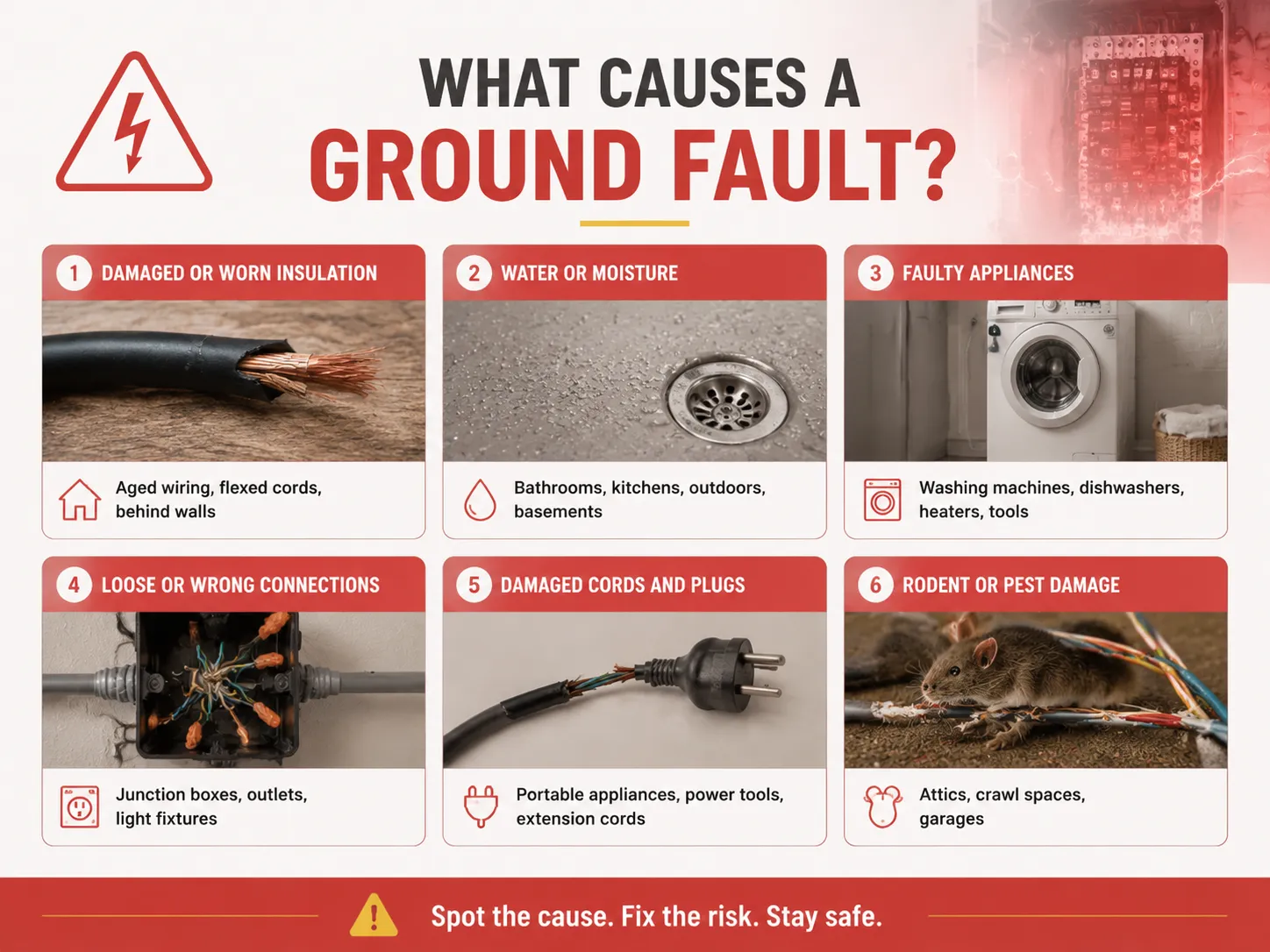
Toprak Hatasına Neden Olan Nedir?
Toprak hataları genellikle şu durumlardan kaynaklanır:
| Sebep | Nasıl Oluşur | Tipik Konum |
|---|---|---|
| Hasar görmüş veya aşınmış izolasyon | Kablo izolasyonu çatlar, aşınır veya kemirgenler tarafından yenir, canlı tel metal ile temas eder | Yaşlanmış kablolama, esnek kablolar, duvar arkası |
| Su veya nem | Canlı parçalar ile toprak arasında su köprüsü oluşur; küçük miktarlar bile yeterli akım sızıntısı yapar | Banyolar, mutfaklar, dış mekanlar, bodrumlar |
| Arızalı cihazlar | İç kablolama arızalanır ve cihazın metal şasisine temas eder | Çamaşır makineleri, bulaşık makineleri, ısıtıcılar, aletler |
| Gevşek veya yanlış bağlantılar | Sıcak tel toprak teli, boru veya metal kutu ile temas eder | Bağlantı kutuları, prizler, aydınlatma armatürleri |
| Hasar görmüş kablolar ve fişler | Kesilmiş, sıkışmış veya erimiş kablolar canlı iletkenleri açığa çıkarır | Taşınabilir cihazlar, elektrikli aletler, uzatma kabloları |
| Kemirgen veya haşere hasarı | Fareler tavan aralarında ve duvarlarda kablo izolasyonunu kemirir | Tavan araları, sürünme boşlukları, garajlar |
Toprak Hatası Neden Tehlikelidir?
Toprak hataları iki nedenle tehdit oluşturur – elektrik çarpması ve yangın.
- Elektrik Çarpması Tehlikesi: İnsan vücudu mükemmel bir iletkendir. Eğer toprak hatası yaşayan herhangi bir cihazla temas halindeyseniz ve ıslak koşullar aracılığıyla toprakla temas halindeyseniz, elektrik akımı vücudunuzdan geçer. Akım 10-20 mA kadar küçük olabilir ve bu kas kasılmalarına neden olarak tutuşunuzu bırakamamanıza yol açar. Akım 100 mA olabilir ve bu ölümcül olur. GFCI'ler 4-6 mA kadar düşük toprak hatalarını tespit etmek için tasarlanmıştır.
- Yangın Tehlikesi: Akım yüksek dirençli malzemeden sızarsa, ısı oluşur. Sürekli toprak hatası malzemeyi ısıtmaya devam eder ve uygun topraklama bağlantısı olmayan bir noktada yangına neden olabilir.
Üzücü olan, bir toprak hatasının devre kesiciyi tetiklemeyebilmesidir. Standart bir devre kesici sadece aşırı yük veya kısa devre durumunda devreye girer.
Toprak Hatası vs Kısa Devre vs Ark Hatası
Bu üç terim karıştırılır, ancak farklı anlamlara gelir:
| Terim | Ne Oluyor | Örnek | Koruma |
|---|---|---|---|
| Toprak hatası | Akım sıcak iletkenten toprağa (toprak, metal, su) sızar | Sıcak tel cihaz çerçevesine temas eder | GFCI (priz veya devre kesici) |
| Kısa devre | Akım yük olmadan doğrudan sıcak iletkenten nötr iletkene gider | Sıcak ve nötr teller temas eder | Devre kesici / sigorta (yüksek akım) |
| Ark hatası | Hasarlı kabloda kıvılcım/ark oluşumu (genellikle aralıklı) | Duvar içindeki çizilmiş kablonun boşlukta ark yapması | AFCI (ark hatası devre kesici) |
Toprak hatası, akımın toprakla temas ettiği ve aktığı durumu ifade eder. Kısa devre, sıcak iletkenin nötr iletkenle temas etmesi durumudur. Elektrik arkı oluşuyorsa, ark hatası meydana gelir. Günümüzde GFCI'ler, AFCI'ler ve devre kesiciler koruma cihazları olarak kullanılmaktadır.
GFCI'lerin Koruması: Toprak Hatası Devre Kesici
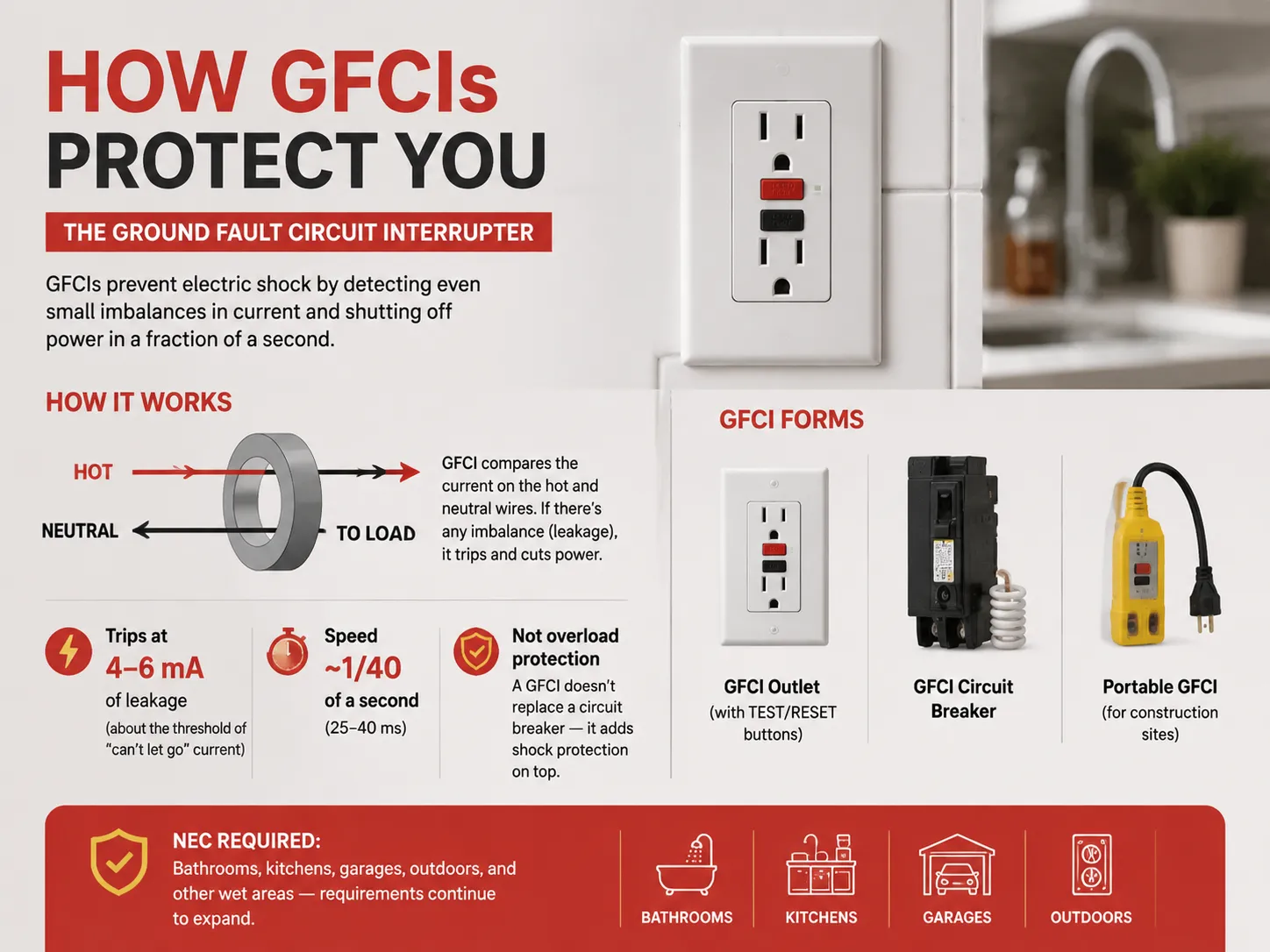
Toprak Hatası Devre Kesici (GFCI), toprak hatası tehlikelerinden kaynaklanan ölümcül elektrik çarpmalarını önleyen bir cihazdır. Çalışma prensibi oldukça basittir: sıcak telden akan akım, nötr telden geri dönen akıma eşittir. GFCI, dahili akım trafosunu kullanarak her iki akımı karşılaştırır ve bir dengesizlik varsa, devrede bir yerde kaçak olduğunu tespit eder.
- Atma eşiği: 4–6 mA kaçak (insanların elektrik çarpmasına maruz kaldığı kritik eşik)
- Hız: ~1/40 saniye (25 ila 40 milisaniye)
- Formlar: GFCI priz, devre kesici ve saha için taşınabilir GFCI'ler
- Aşırı yük koruması değildir: GFCI, bir devre kesicinin işlevini üstlenmez
Bu nedenle, toprak hatası koruma standartlarına uymak çok önemlidir çünkü Ulusal Elektrik Kodu (NEC) yıllardır toprak hatası korumasını zorunlu kılmaktadır. Standartları anlamak ve GFCI'lerin nasıl tasarlandığını öğrenmek için, derinlemesine incelememiz GFCI'nin tam açılımı ve çalışma prensibi cihazı detaylı olarak ele alır, devre kesiciler ile GFCI'lerin karşılaştırması sisteminizde her birinin nerede yer aldığını gösterir ve koruma donanımı temin ediyorsanız, VR-11 RCCB serisi modern kesici form faktörlerine nasıl artık akım koruması entegre edildiğine tipik bir örnektir. Toprak hatası koruması, şok riski olduğunda gereklidir; bu risk özellikle suya yakın, dış mekanlarda veya insanların toprak yüzeylerle temas halinde olduğu durumlarda ortaya çıkar. Modern elektrik kodu tarafından zorunlu kılınan yaygın alanlar şunlardır:.
GFCI Gerektiren Yerler
Banyolar (tüm prizler)
- Mutfak tezgahı prizleri (lavaboya 6 ft içinde)
- Garaj ve tamamlanmamış bodrum
- Dış mekan prizleri
- Sürünme alanı ve tamamlanmamış bölgeler
- Çamaşır odası / yardımcı lavabo
- Havuz, spa ve jakuzi alanı
- Belirli cihazlar (bulaşık makinesi ve çöp öğütücü devresi)
- Toprak Hatası Devre Kesicisi (GFCI) olmayan eski evlere GFCI kurulması mümkündür ve bu sadece mevcut devredeki ilk priz GFCI priz ile değiştirilerek yapılır — böylece o devreye bağlı tüm cihazlar olası bir şoktan korunur.
Toprak Hatası Olduğunu Nasıl Anlarsınız.
Toprak hataları çeşitli şekillerde ortaya çıkabilir, bu nedenle bu işaretlerin farkında olmak önemlidir. Toprak hatalarını değerlendirirken aşağıdakilere dikkat edin:
GFCI sürekli atıyorsa: Bir GFCI sıfırlanmıyor veya sürekli atıyorsa, bu genellikle devrede bir toprak hatası olduğunu gösterir.
- Elektrik çarpması alırsanız: Makinalardan veya metal çerçevelerden herhangi bir şok alınması tehlike işaretidir.
- Devre kesici atıyorsa: Devre kesici belirgin bir neden olmadan atıyorsa, bu özellikle GFCI ile ilgili bir endişedir.
- Priz yakınlarında uğultu sesi varsa: Huzur ve sessizlikle ilişkili ekipmanlarda sorun olabilir.
- Priz, anahtar veya makine yakınlarında yanmış kablo kokusu varsa: Bu, kaçak akımdan kaynaklanan akım ısınmasının göstergesidir.
- Makinenin dış yüzeyi sıcak hissediliyorsa: Ekipman üzerinde çalışırken titreşim veya şok hissedebilirsiniz.
- Eğer makinenin dış kısmı sıcak hissediliyorsa: Ekipman üzerinde çalışırken titreşimler veya sarsıntılar hissedeceksiniz.
Yukarıdakilerden herhangi biri olursa, bu cihazın kullanımını hemen durdurun ve derhal inceleyin.
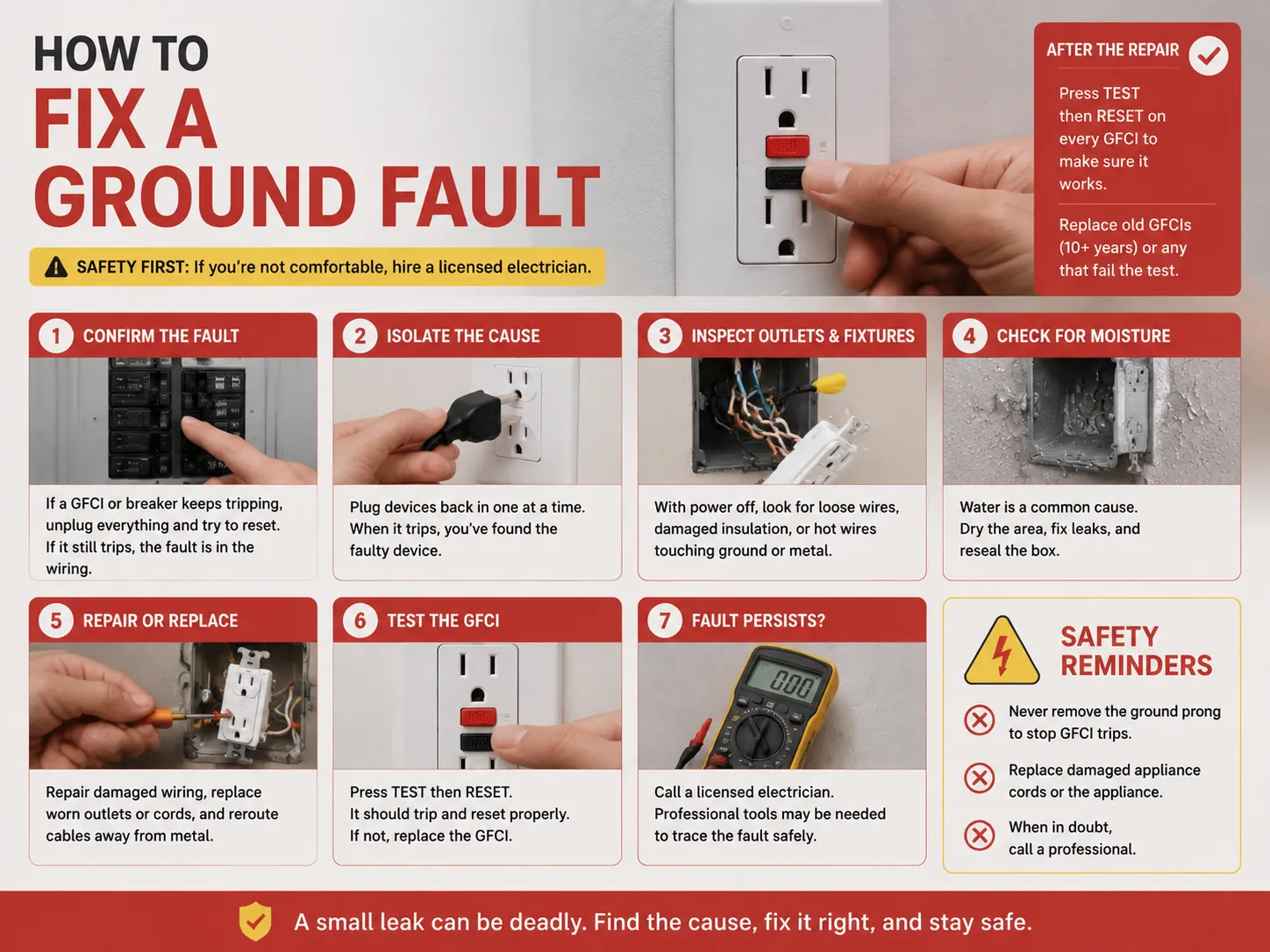
Toprak Hatası Nasıl Onarılır
Toprak hatasının düzeltilmesi metodik bir süreçtir ve elektrik işleri tehlikeli olabilir—kendinizden emin değilseniz, kalifiye bir elektrikçiyi arayın. Genel adımlar şunlardır:
- Hatanın belirlenmesi: GFCI veya kesici sürekli atıyorsa, sorun o devrededir. Devreden tüm cihazları çıkarın ve tekrar sıfırlayın, hala atıyor mu kontrol edin. Atmıyorsa sorun devrenin içinde; atıyorsa sorun sabit tesisattadır.
- Dedüktif akıl yürütme ile hatayı bulun: Cihazları tek tek takarak hangi cihazın GFCI’nin atmasına neden olduğunu belirleyin.
- Prizleri ve armatürleri inceleyin: Panelin gücünü kapatın, priz kutusunu açın ve gevşek kablo, hasarlı izolasyon, sıcak kablolar, topraklama kabloları veya nem hasarı olup olmadığını kontrol edin.
- Neme bakın: Su, banyolar, mutfaklar, bodrumlar ve dış mekanlarda toprak hatalarının başlıca nedenidir. Kutuyu kurutun, sızıntıyı onarın ve yeniden mühürleyin.
- Onarımı yapın: Sorunu kendisiyle ilgilenin; bant tamiri, priz değişimi veya yıpranmış kabloların değiştirilmesi olabilir.
- GFCI’yi test edin: GFCI artık çalışıyor olmalıdır. Her GFCI ünitesinde TEST ve RESET düğmelerine basarak düzgün çalıştıklarından emin olun. 10 yıldan eski veya düzgün test edilmeyen GFCI varsa, yenisini takma zamanı gelmiştir.
- Sorun devam ederse kalifiye bir elektrikçiye başvurun. Sabit tesisatta sürekli bir toprak hatası varsa, sorunu izlemek için multimetre veya megger kullanılması gerekebilir—bu yüksek teknik araçların doğru kullanımı profesyonel gerektirir.
Sorun arızalı bir cihazdan kaynaklanıyorsa, sadece kabloyu tamir etmeye çalışmayın—cihazı değiştirin. GFCI sorununu çözmek için cihazın topraklama ucunu asla kesmeyin; bu güvenlik marjınızı ortadan kaldırır.
Toprak Hatalarını Önleme Yöntemleri
Her ıslak veya dış mekanda GFCI kurun — bu basit adım alabileceğiniz en iyi korumadır.
- Suyu elektrikten uzak tutun: Lavabo veya küvet yanlarında makineleri kullanmayın; kabloların ıslak zeminlerde yatmasına izin vermeyin; dış mekanlarda sadece uygun dış mekan prizleri ve kapakları kullanın.
- Kabloları düzenli kontrol edin: Çatlak veya hayvanlar tarafından ısırılmış kabloları hemen değiştirin.
- Devreleri aşırı yüklemeyin: Aşırı ısınma izolasyonun zarar görmesine ve diğer hatalara neden olur.
- Dış mekan kullanımı için uygun cihazları kullanın: hava koşullarına dayanıklı ekipman, GFCI korumalı dış mekan prizleri, aletler için taşınabilir GFCI.
- Kabloları haşerelerden ve fiziksel hasardan koruyun: Kemiricilerin girebileceği tüm delikleri kapatın ve kabloları halıların veya kapı açıklıklarının altından geçirmeyin.
- GFCI’leri her ay test edin: TEST düğmesine basın – atmalı; RESET düğmesine basın – geri gelmeli.
Sıkça Sorulan Sorular
Toprak hatası nasıl düzeltilir?
The first thing to do is confirm that everything on the circuit is unplugged, and then try resetting the ground fault circuit interrupter (GFCI) or circuit breaker. If the circuit is still live, plug in the appliances one at a time — when it trips, you will know which appliance is causing the problem. If even with everything unplugged the circuit trips, the problem lies in the fixed wiring: turn off power supply to the circuit, open the switches and/or outlet boxes, and check for faulty connections or any wires that are allowing electricity to touch any other wire or metal box. Fix the issue and test the circuit. If problems persist, call an electrician.
What is a ground fault in simple terms?
To put it simply, a ground fault is when electricity goes off course and ends up in the ground. Normally, the flow of electricity goes from the power line to the neutral line. A ground fault occurs when the electricity finds another way to the ground through a broken wire touching a metal device, through water, or through a person. This is dangerous because a person can conduct the electricity. A GFCI device detects such leak at a very low level of 4 to 6 milliamperes and cuts off the current immediately before a serious shock happens.
How do you know if you have a ground fault?
The indications of a ground fault are as follows: a GFCI socket does trip time and again or cannot be reset; a circuit breaker is activated without visible cause; an appliance causes you to feel a tingling or minor shock; humming or crackling can be heard from an outlet; an offensive odor is detected; or the surface of an appliance makes you feel uncomfortable. If your appliance has GFIC protection, it will be the first indicator.
What causes a ground fault?
The reasons that this occurs most often are: wire insulation that has broken or been damaged (for example, cracked, worn, or eaten by rodents), water touching live wires and grounding them (for instance, in bathrooms, kitchens, open air), wrong wiring in appliances and metal bodies touching their wires, loose or incorrect connections, or damaged wiring or plugs. In other words: any situation in which live wires may come into contact with the ground.
Referanslar
- NFPA 70 — National Electrical Code (NEC), Article 210.8: GFCI requirements
- UL 943 — Standard for Ground-Fault Circuit-Interrupters
- OSHA — electrical safety and ground fault protection requirements (29 CFR 1926.404)
- U.S. Consumer Product Safety Commission — electrical safety guidance
- Electrical Safety Foundation International — GFCI and ground fault safety resources
- Siemens — ground fault protection technical documentation
Sonuç
Ground fault is an undesirable current flow from a live wire to the ground and is one of the most serious electrical problems. This situation occurs when there is faulty insulation, water, a malfunctioning appliance, or loose connection. This situation is dangerous because even a small leak of 30 mA can kill a person and is not detected by a regular circuit breaker.
GFCIs are used to solve the issue here since these devices can detect leaks in a range of 4 to 6 mA and interrupt the flow of electricity in just 1/40 of a second. Thus GFCIs are required by the building codes everywhere where people and water interact.
It is important to learn the symptoms of the ground fault and test the GFCIs every month. Make sure the cables and wires are inspected regularly as well.And when you’re building or upgrading a system, choose protection devices from manufacturers that meet the relevant standards. HUYU Global manufactures certified RCCBs, RCBOs, and MCBs built to IEC standards — the kind of residual-current and overcurrent protection that works alongside GFCIs to keep circuits safe. For the difference between residual current devices and breakers, our RCCB ve RCBO rehberi is a good next read.