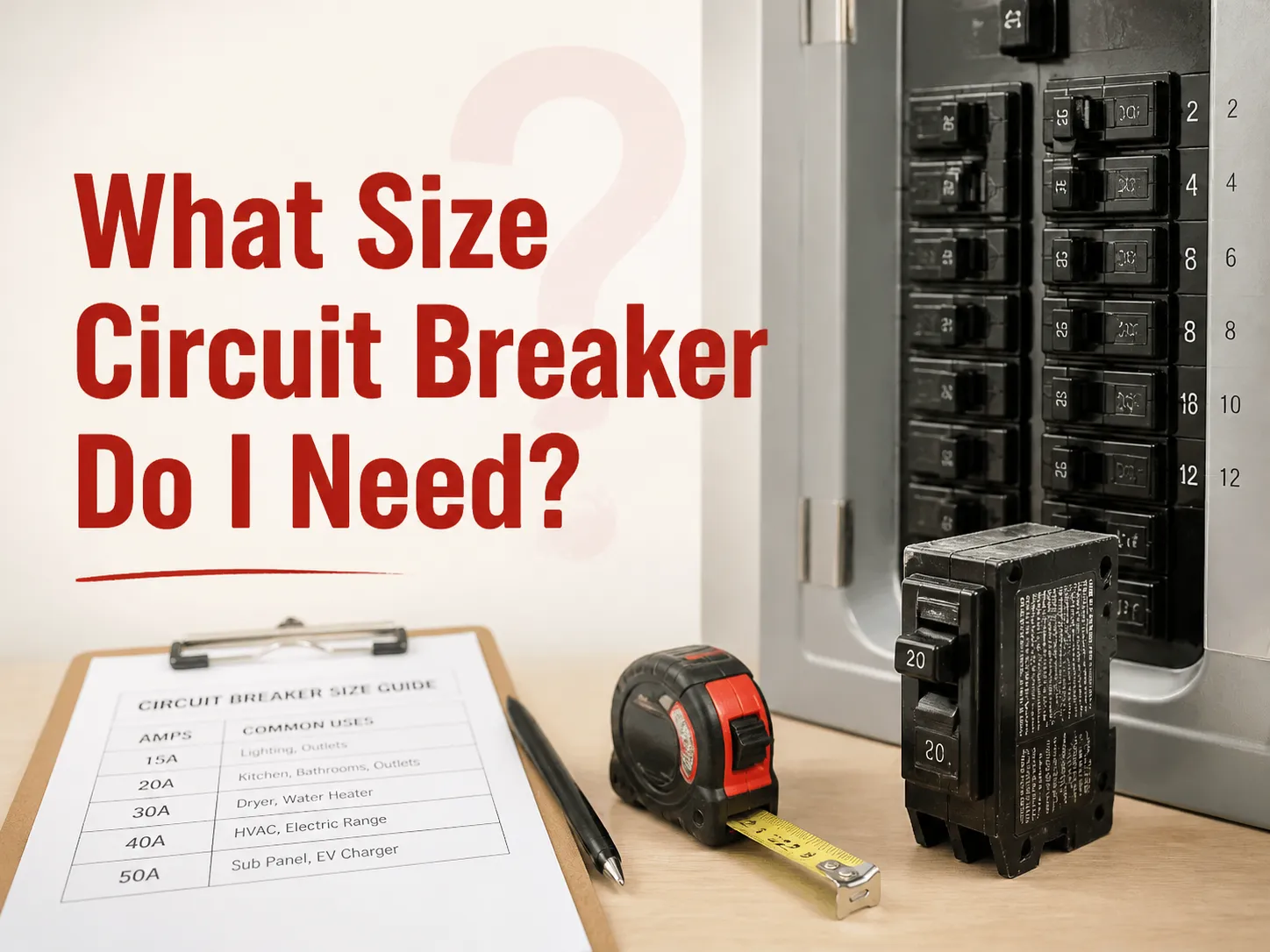

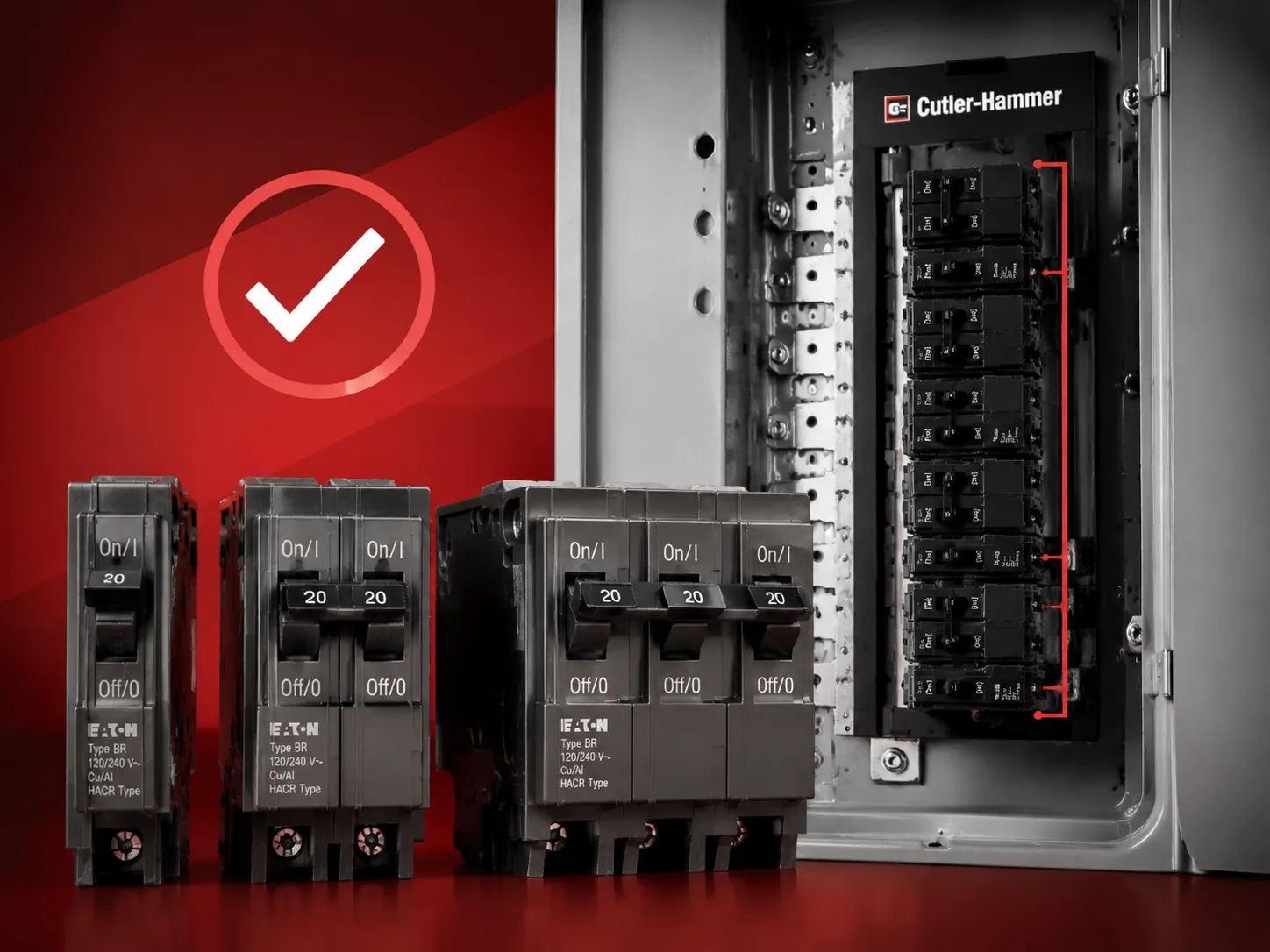
An Ohio homeowner needed a new tripping 20 amp circuit breaker for his 1990s era panel. The homeowner was at the electrical supply store looking at all of the different types of breakers available (Eaton, Square D, Siemens, and other store brands).All of the breakers had different verification codes and labels (e.g., Cutler Hammer, Etc.), and one of those breakers was an Eaton brand breaker—was that breaker able to be used in a Cutler Hammer panel? What would he have to find to replace it with a legacy Cutler Hammer breaker? The homeowner’s question is probably the most frequently asked question about residential electrical installation—what type of breakers can I use in a Cutler Hammer panel? While the answer is simple, there is an additional complication to that answer: the history of each brand of breaker and the specific series (e.g., 2000 series, etc.) of Cutler Hammer circuit breaker panel in use.
The Short Answer: Eaton Owns Cutler‑Hammer
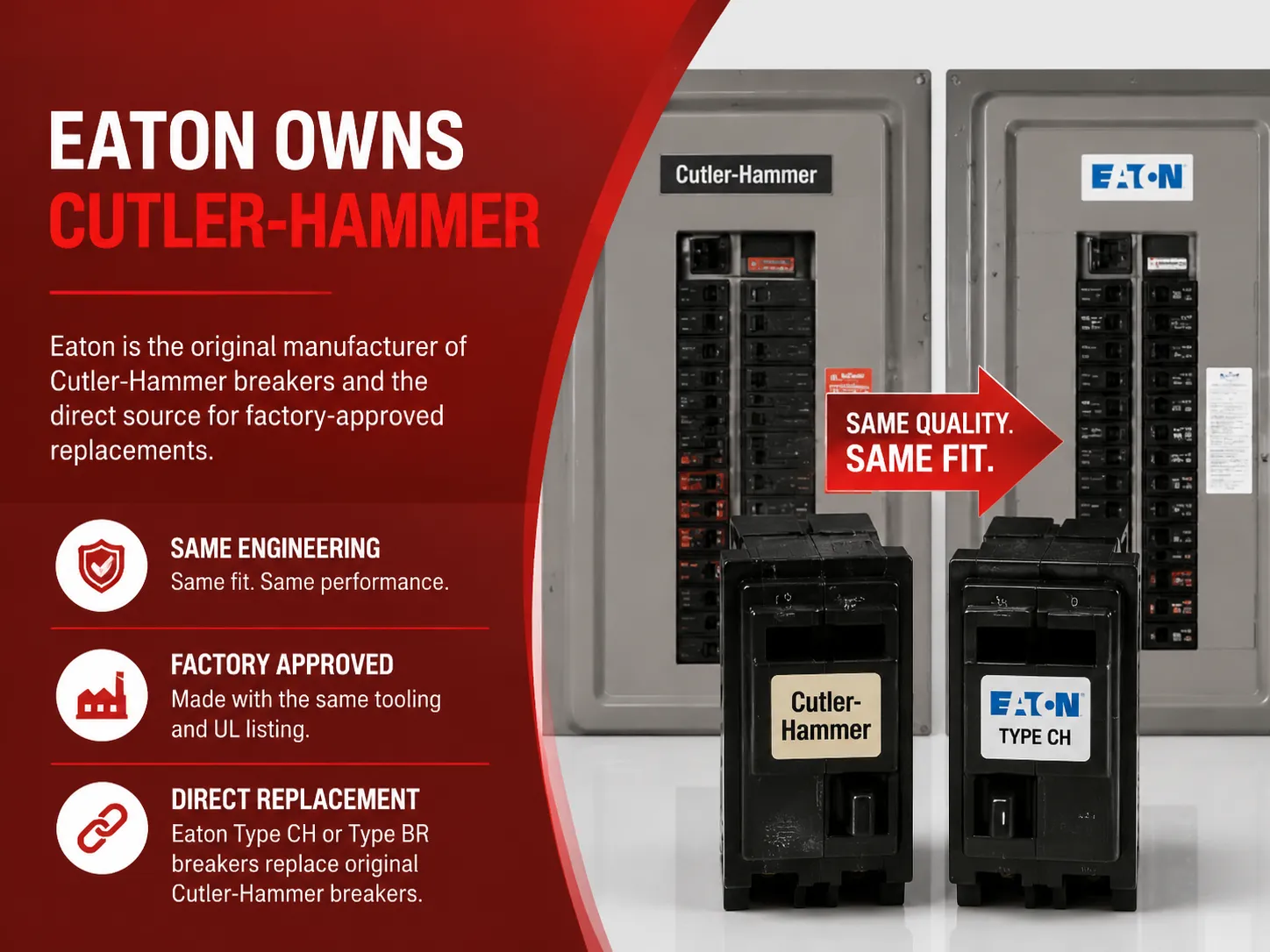
Cutler-Hammer is not an independent manufacturer any longer. Eaton purchased the brand, and Eaton provides the direct, factory-approved replacement breakers for Cutler-Hammer panels. So, if your panel has the Cutler-Hammer name on it, the breaker you buy today will be marked with the Eaton name. The compatibility between these two breaker lines is not an approximation – it is from the same engineering lineage, same factory tooling, and same UL listing. An Eaton Type CH or Type BR breaker from the correct panel series will perform as the original Cutler-Hammer breaker. Eaton’s information has been verified; their residential breaker products constitute the required replacement for the legacy Cutler-Hammer and Challenger panel products.
A full response would require yet another distinction to be made. As Cutler-Hammer has two primary series of residential panels, the breakers are not interchangeable between the two. To obtain the correct breaker the first time you need to know which series your panel is in.
Identifying Your Cutler‑Hammer Panel: CH vs. BR
Cutler‑Hammer residential panels fall into two families: the CH series (chocolate‑brown handle) and the BR series (black handle, originally a Bryant/Westinghouse design). The breakers are physically different and cannot be swapped.
| Characteristic | Cutler‑Hammer CH Series | Cutler‑Hammer BR Series |
|---|---|---|
| Breaker handle colour | Chocolate brown (signature colour) | Black |
| Bus bar connection | Metal clip that hooks onto the bus bar (distinctive hook engagement) | Standard plug‑on jaw that presses onto a vertical stab |
| Panel label | Will say “Type CH” or list CH breakers | Will say “Type BR” or list BR breakers, sometimes also Bryant or Westinghouse |
| Compatible Eaton replacement | Eaton Type CH (chocolate‑brown handle) | Eaton Type BR (black handle) |
| Historical notes | Proprietary Cutler‑Hammer design | Originated with Bryant and Westinghouse; also compatible with some Challenger panels |
The panel label — the sticker on the inside of the door or on the side wall — is the definitive reference. It will list the breaker types that are approved for that panel. If the label says “Use only Type CH breakers,” do not install a BR breaker, even if it physically fits. A BR breaker may clip onto a CH bus bar, but the connection will not be secure, and the UL listing is void. For help matching breaker ratings to the specific circuit, our guide on what size circuit breaker you need explains the ampacity and trip curve selection.
What About Other Brands? Square D, Siemens, and “Classified” Breakers
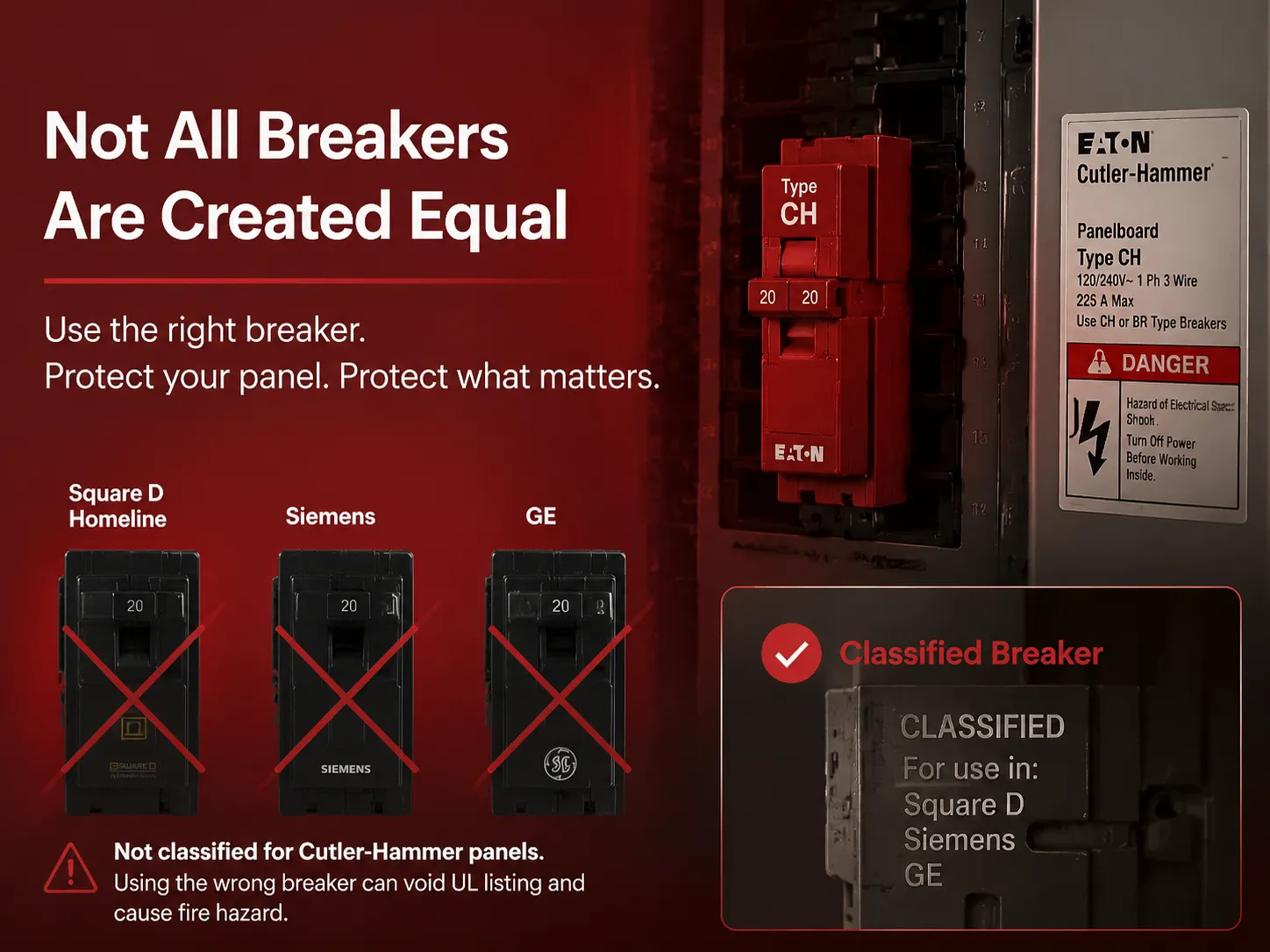
The question is often asked whether you can substitute a Square D breaker in a Cutler-Hammer panel. The answer is no unless there is a specific UL classification that allows it. Most breakers are only classified for the panel brand that they were manufactured to be installed within. An example would be that a Square D Homeline (current) breaker would only be classified for the Square D Homeline (current) panel type and a Siemens breaker only for a Siemens panel. By installing a competitor’s breaker in a Cutler-Hammer panel, you will void the UL listing of the panel and in doing so expose yourself and others to a fire hazard from the possibility of the breaker seating improperly on the busbar of the panel thus causing a high resistance connection resulting in overheating.
A small number of manufacturers create breakers that are UL classified to work with certain competing panels. A classified breaker will have the word “Classified” stamped on the breaker body, as well as a listing of the panels that it is approved to use with. Eaton produces a classified breaker for some Square D, Siemens, and GE panels, but not many companies produce classified breakers for Cutler-Hammer panels. The safest and most dependable route is to install the proper Eaton Type CH or BR breaker as specified on the panel label.
For a deeper look at the regulatory framework that governs this compatibility, our article on what UL 489 breakers are explains the certification that every breaker — Cutler‑Hammer, Eaton, or otherwise — must carry to be installed in a residential panel.
How to Choose the Right Breaker for Your Cutler‑Hammer Panel
Once the correct series is identified, choosing the right breaker involves a few simple checks:
- Match the amp rating. Change a 15-amp circuit breaker for 15-amp breaker; do not upgrade circuit breakers without checking that wire size is capable of carrying the higher current – at least 14 AWG copper for 15A and 12 AWG for 20A.
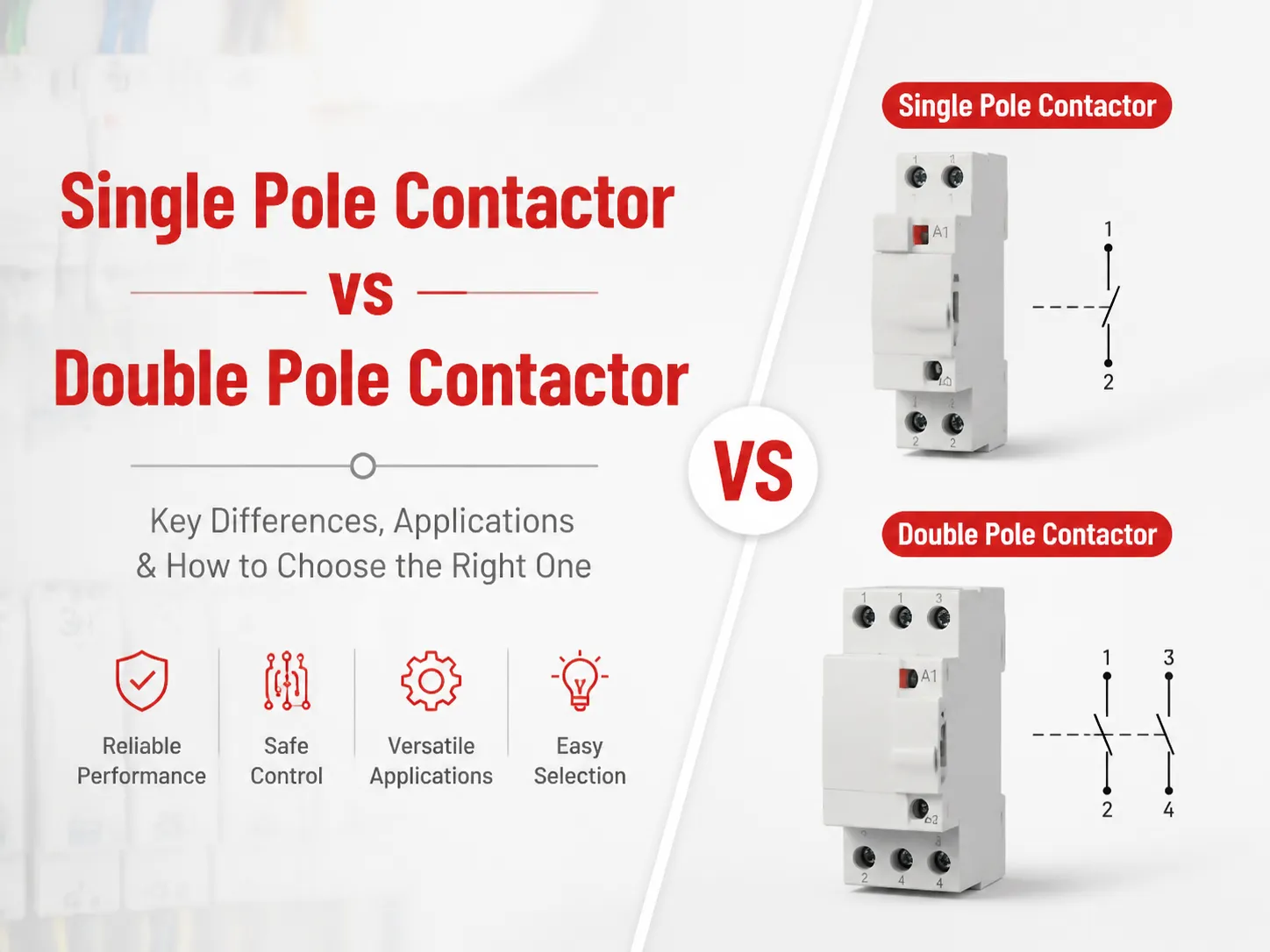
- Match the pole count and voltage. A 120V single-pole circuit breaker is used to supply power to lights and outlets, while a double-pole circuit breaker supplies a 240V power supply to larger appliances, such as electric dryers and ranges. If the panel is rated for tandem circuits, a tandem circuit breaker allows for the use of two 120V circuits in one panel slot.
- Include AFCI or GFCI protection if required. AFCI protection is required on most circuits feeding living spaces and GFCI protection is generally required in bathrooms, kitchens, and Outdoor areas. The Eaton Type CH and Type BR circuit breakers are available as AFCI Breakers, GFCI Circuit Breakers or a Combination of Both (Dual Function) that fit in the same panel book/solder point as the Regular Breakers.
- Verify the interrupting capacity. Most residential electrical panels need a breaker with a minimum rating of 10 kAIC. The electrical panel label indicates what the proper interrupting rating is. Installing a breaker rated lower than what is required by the panel is both a violation of code and a potential safety issue.
For homeowners who need a specific replacement quickly, home improvement retailers such as Home Depot stock Eaton breakers that are clearly labelled as compatible with Cutler‑Hammer panels, and their product listings typically include a compatibility checker.

Installation and Maintenance Tips
Replacing a breaker in a Cutler‑Hammer panel is methodical work that rewards care:
- Turn off the main breaker before installing or removing any branch breaker. Even though the branch breaker is off, the bus bar stabs are live. The main breaker removes power from the entire bus bar. The incoming lugs remain energised — never touch them.
- Seat the breaker firmly. A Type CH breaker engages with a distinct hook action onto the bus bar. A Type BR breaker presses straight onto the stab. Both should click into place and sit flush with the adjacent breakers.
- Torque the load terminal to the specification printed on the breaker body. Loose connections are the most common cause of breaker failure.
- Test the breaker after installation. Many AFCI and GFCI breakers have a test button. Press it; the breaker should trip. Reset and confirm the circuit operates.
For buyers sourcing breakers for multiple panels or for replacement stock, HUYU manufactures a range of miniature circuit breakers and molded‑case breakers that are compatible with the IEC and North American standards that govern panel installations. While HUYU breakers are not UL‑classified replacements for Cutler‑Hammer or Eaton panels and should not be installed in a listed Cutler‑Hammer load centre as a substitute for Eaton‑branded breakers, they serve as the primary overcurrent protection devices in panels and distribution boards that are built to the IEC standard or that are specified to accept them. The key is always the panel label: a breaker that matches the panel’s listing is a breaker that will protect the circuit as designed.
Frequently Asked Questions
What breakers are equivalent to Cutler-Hammer?
Eaton Type CH and Type BR breakers Eaton produces the legacy Cutler-Hammer breakers with factory-approved spacing, and they remain the original, UL-listed, designs. Eaton acquired the Cutler-Hammer brand and has maintained its integrity by creating these breakers.
Can you use Eaton breakers in a Cutler-Hammer box?
A Cutler-Hammer CH panel can use an Eaton Type CH breaker, and the same goes for an Eaton Type BR breaker and a Cutler-Hammer BR panel. It will be noted on the panel’s label as to which breakers are qualified, based on the type of panel that you’re using.
What type of breaker for Cutler-Hammer panel?
Depending on the panel series, the proper type of circuit breaker is determined by panel designation. An Eaton Type CH circuit breaker (brown handle) is required for a Cutler-Hammer CH Circuit Panel. An Eaton Type BR circuit breaker (black handle) is required to use with a Cutler-Hammer BR Circuit Panel. The default source of information on what circuit breakers to use is located on the panel label.
Can you use a Square D breaker in a Cutler-Hammer box?
Standard Square D circuit breakers should not be used in Cutler-Hammer panels, unless the breaker has been UL classified specifically for that panel; although such breakers are not common. If a listed breaker is installed into a Cutler-Hammer panel, the safety listing of the panel becomes void.
References
- Eaton — Residential Circuit Breakers — Official manufacturer information on Type CH and BR breakers and their compatibility with Cutler‑Hammer panels.
- Home Depot — Eaton Breakers — Retailer listings with compatibility checker and customer guidance on breaker selection.
- Family Handyman — How to Replace a Circuit Breaker — Practical homeowner guidance on safe breaker replacement.
- This Old House — Electrical Panel and Breaker Compatibility — Articles on panel identification and the importance of using listed, compatible breakers.
What breakers are compatible with Cutler‑Hammer is a question with a clear answer: Eaton breakers are the direct successors, in both the CH and BR series, and they are the only breakers that should be installed in a Cutler‑Hammer panel unless a specific UL‑classified alternative is confirmed. The panel label is the final authority. Respecting that label — matching the series, the amp rating, and the type — keeps the panel operating safely, the listing intact, and the house protected.