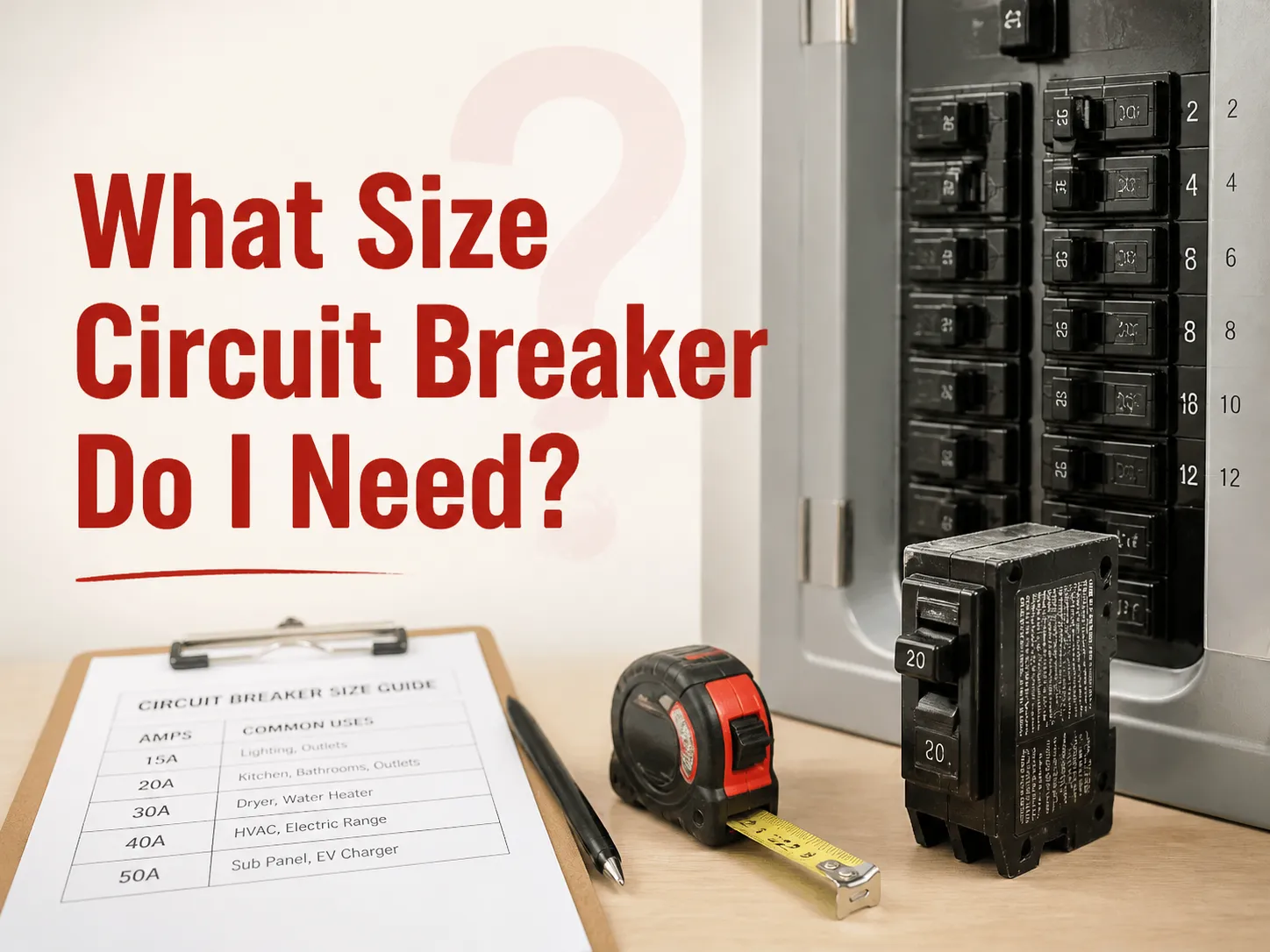

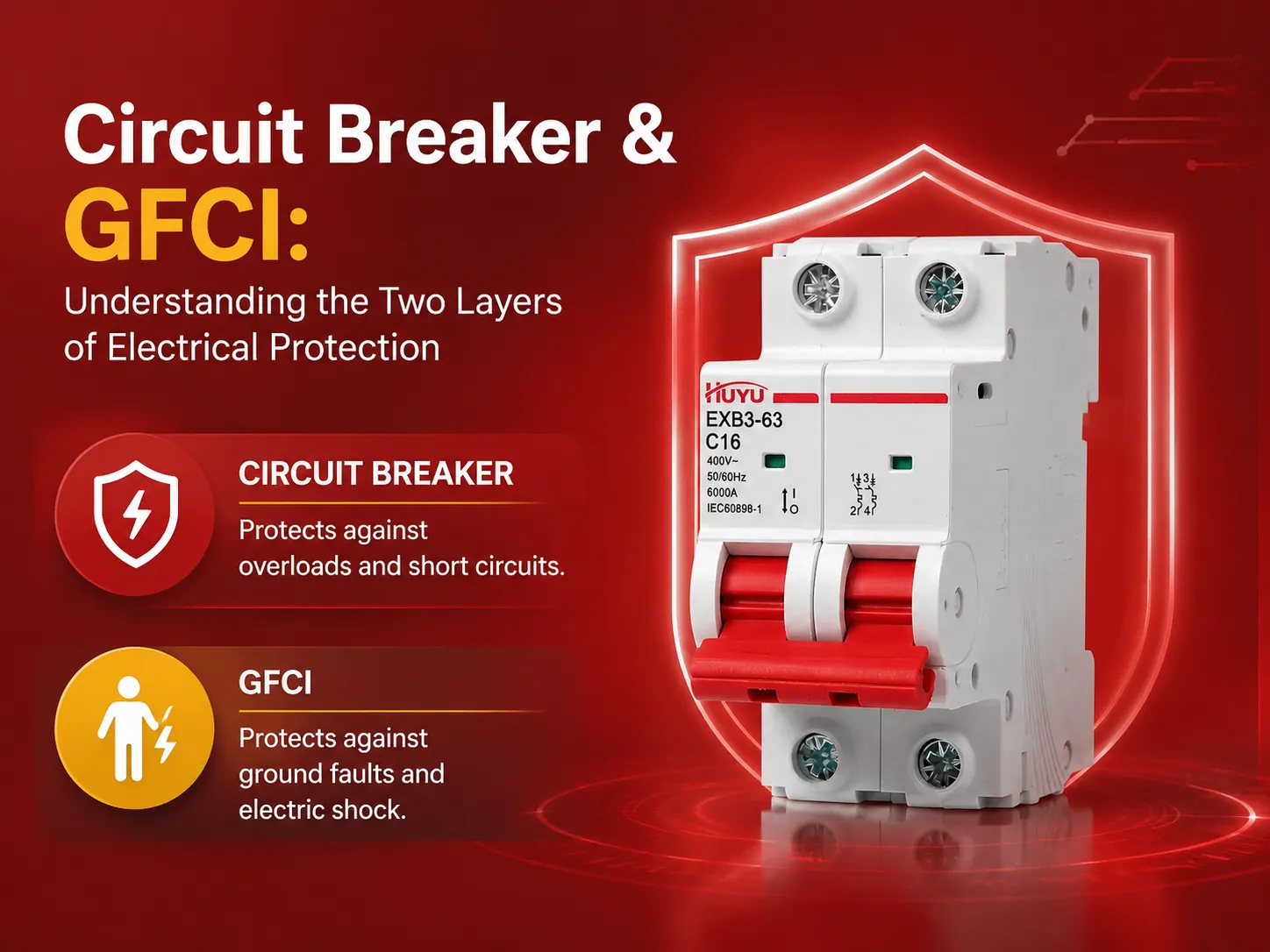
Upon pressing the TEST button on a GFCI outlet in her Seattle bathroom, a homeowner found that there was no response. The outlet looked the same as every other tamper-resistant receptacle in the house, but the internal sensing circuit had apparently gone bad quite some time ago. Thus, despite the fact that the GFCI was outfitting with an active power supply for weeks or months, it was supplying power without any protection against grounding faults. In the electrical panel itself, a 20-amp thermomagnetic circuit breaker was working perfectly. However, it couldn’t help detecting the type of fault that the GFCI was supposed to protect against. Therefore, the following relationship may be established in terms of their functioning: the circuit breaker protects wires and structures from overload and short circuit, while the GFCI protects people from electrocution, which means the above devices are not interchangeable and cannot replace one another.
What Each Device Does: Overcurrent Protection vs. Ground‑Fault Protection
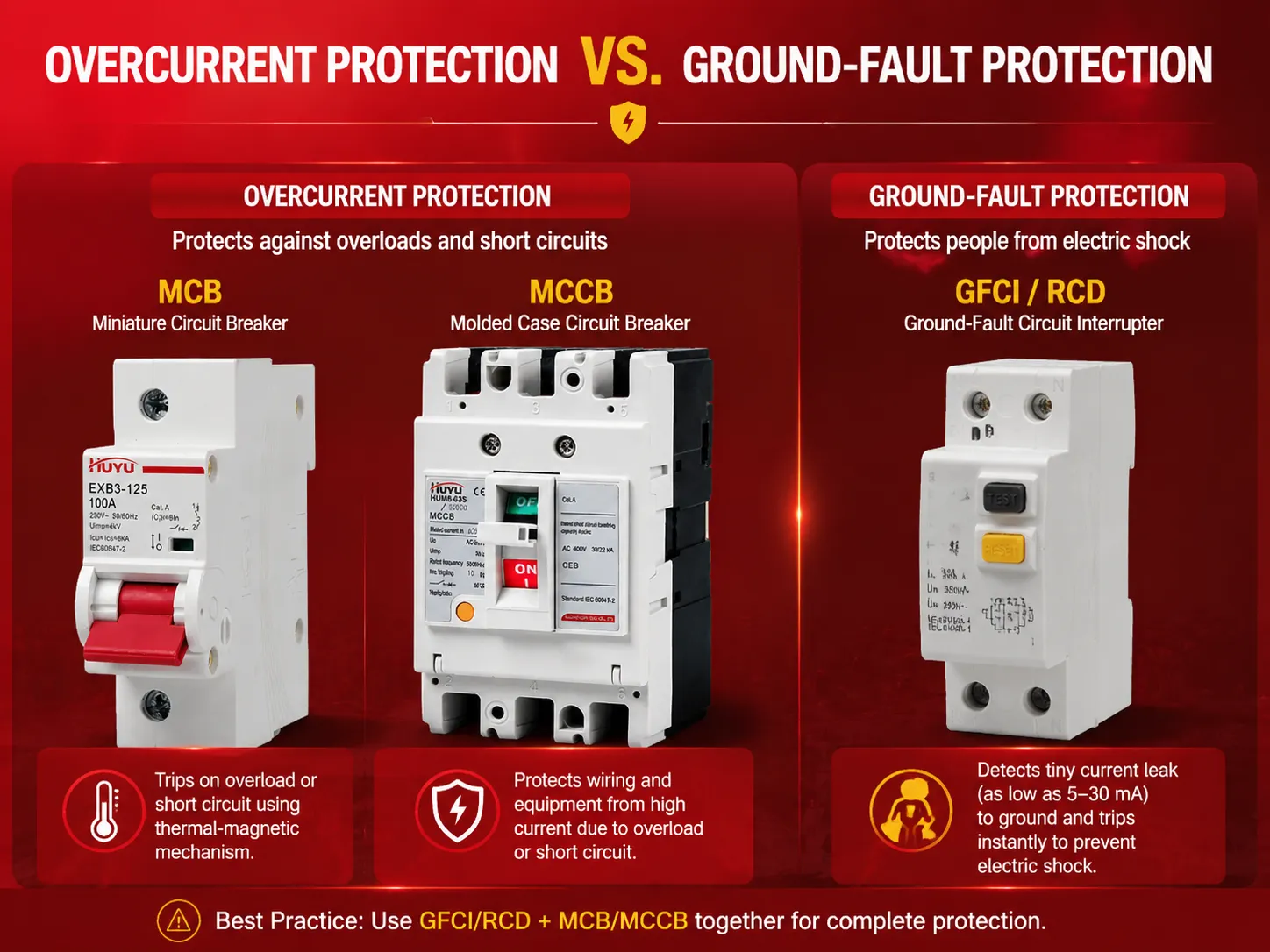
The term for a circuit breaker is basically a miniature circuit breaker (MCB) or molded-case circuit breaker (MCCB). It is known for being an overcurrent protection mechanism. It works automatically by switching the circuit off when there is an overload, whereby several electrical products can draw more current than the wiring can deliver. When there is a short circuit, that is when wires of electricity are touching, during which there is a circuit opening. A circuit breaker creates an effect that protects an electrical line, devices, and property from catching fire.
It does so by using two mechanisms; one of them is the bimetal strip, whereby when there is an overload, the bimetal strip bends under the heat and triggers the circuit breaker to go off. With a simple circuit breaker, the circuit breaker cannot be able to detect any current that is leaking through the ground. It may not be able to pick up on the electric current that may be passing through a human being or even through water. It has also been proven that if a person touches an electrically live wire, the electric current traveling through the person is around 10 to 30 milliamps. This is a significant figure that can cause ventricular fibrillation and eventual death but is definitely not enough current to trigger off the circuit breaker. Resources from the Electrical Safety Foundation International (ESFI) explain that the threshold for lethal shock is approximately 50 milliamps, well below the trip threshold of any standard breaker, which is why additional protection is essential in wet and outdoor locations.
The ground-fault circuit interrupter (GFCI) also known as residual current devices (RCD) in the United Kingdom and IEC markets, is a circuit safety gadget that notices alteration in the current flow through the hot wire and neutral wire. In other words, both of the currents work equally in a functional circuit. Ideally, when someone touches an electrical wire, some of the current enters the ground through a body rather than returning through the neutral wire. The GFCI recognizes this variation — generally at a value of 5 mA (0.005 amp) in the US, or 30 mA (0.030 amp) in some IEC RCDs — and turns the circuit off at once. However, it does not supply protection against overloading or short-circuits and must be connected to a circuit breaker and fuse responsible for wiring protection in the case of overcurrent. For a deeper understanding of the certification framework that governs the breakers that sit alongside GFCIs in a panel, our article on what UL 489 breakers are explains the testing and listing requirements for both standard and specialty breakers.
How the Two Devices Compare: A Side‑by‑Side Reference
| Characteristic | Standard Circuit Breaker (MCB) | GFCI (RCD) |
|---|---|---|
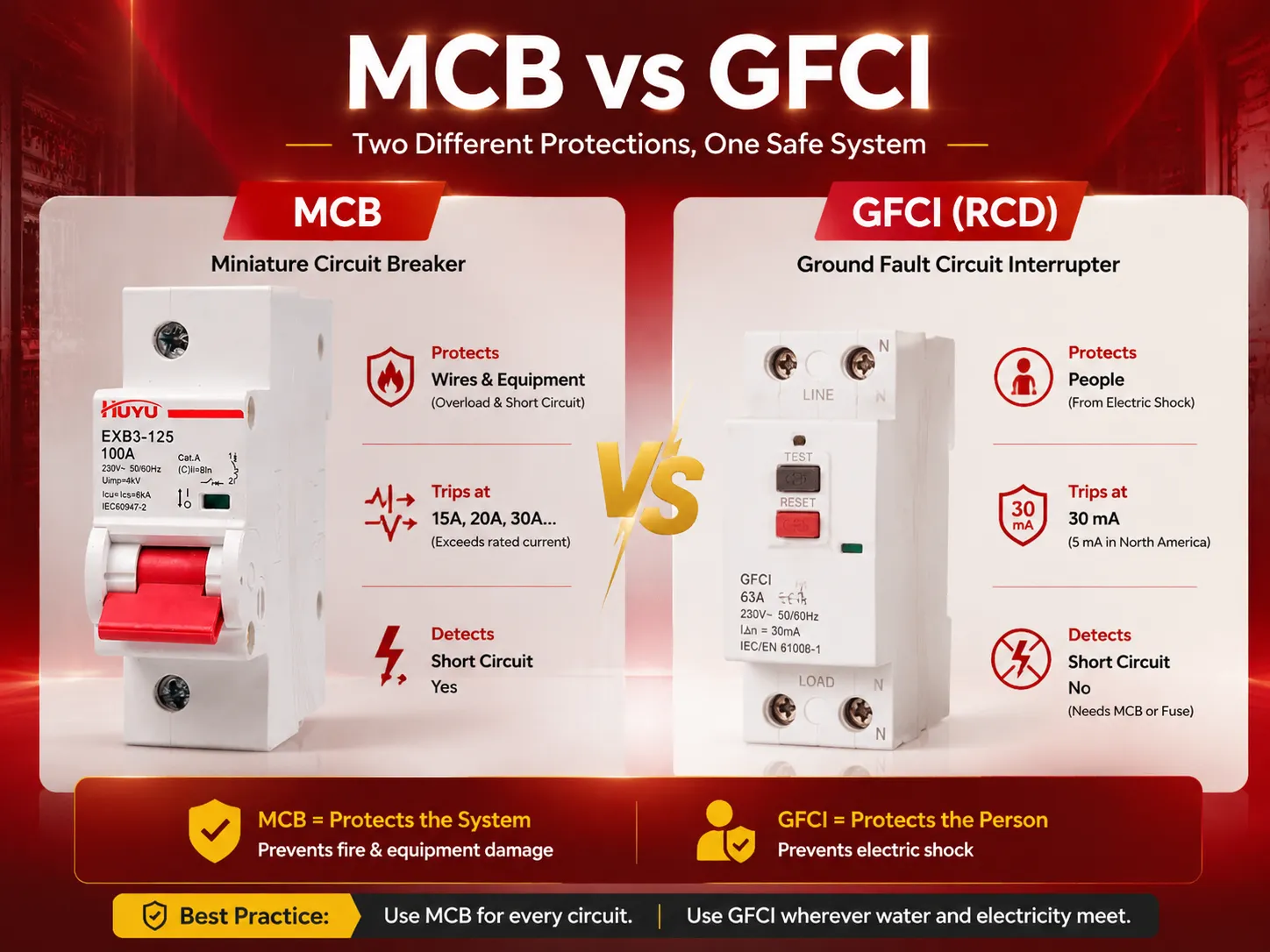
| Primary protection | Overload and short circuit — protects the wire, the equipment, and the building from fire | Ground fault (earth leakage) — protects people from electrocution |
| Trip threshold | 15A, 20A, 30A, etc. — trips when the current exceeds the rated value | 5 mA (North America, personal protection) or 30 mA (IEC markets, personal protection); higher ratings for equipment protection |
| Detects a person receiving a shock? | No. The current flowing through a person (typically 10–30 mA) is far below the breaker’s trip threshold | Yes. Trips within milliseconds when the leakage current reaches the rated sensitivity |
| Detects a short circuit? | Yes — the magnetic trip mechanism responds instantly to high fault currents | No. A GFCI without an integral overcurrent function must be paired with a circuit breaker or a fuse |
| Typical installation locations | Every circuit in the panel — lighting, receptacles, appliances | Bathrooms, kitchens, garages, outdoors, crawl spaces, laundry areas — any location where water and electricity are in proximity |
| Physical form | DIN‑rail‑mounted (MCB) or plug‑on for a panel bus bar; also available as a GFCI breaker that combines both functions | Receptacle‑type (wall outlet with TEST and RESET buttons), portable (plug‑in), or DIN‑rail‑mounted (RCD/RCBO for distribution panels) |
| Cost (approximate, per unit) | $5–$50 depending on poles, rating, and interrupting capacity | $10–$25 (receptacle type); $30–$80 (GFCI breaker); $20–$60 (DIN‑rail RCD/RCBO) |
Where Each Device Is Required — and Where They Must Work Together
Every electrical installation has its standard circuit breaker. Every circuit contains this essential element of overcurrent protection, without which, any circuit is illegal. The National Electrical Code (NEC) establishes that GFCI should be used in specific areas that have a risk of ground faults, like bathrooms, kitchens, garages, outside outlets, crawlspaces, laundry rooms, and anywhere that is within six feet of a sink. RCD protection of 30 mA is mandatory across all of the final circuits in residential buildings in the UK and in many IEC countries, giving the residents more thorough protection than the more limited approach of North America, which only protects high-risk areas.
Both devices have to be used in tandem for any circuits that need GFCI protection. The traditional arrangement involves having a GFCI receptacle at the first outlet on the circuit wired to defend all the following outlets using its LOAD terminals, while the entire circuit itself is protected with a regular circuit breaker in the panel. Alternatively, one can use a GFCI circuit breaker that combines the functions of circuit breaker and ground fault detector during the installation of GFCI apparatus. This option is more elegant and is frequently preferred for new construction. HUYU’s product range includes both standard MCBs for overcurrent protection and RCBOs (Residual Current Breakers with Overcurrent), such as the HUM18LE‑63 RCBO, which combine the functions of an MCB and an RCD in a single DIN‑rail device. This is the most complete protection for a single final circuit: overload, short circuit, and earth leakage, all in one device that occupies the same space as a standard MCB.
What Happens When a GFCI Goes Bad
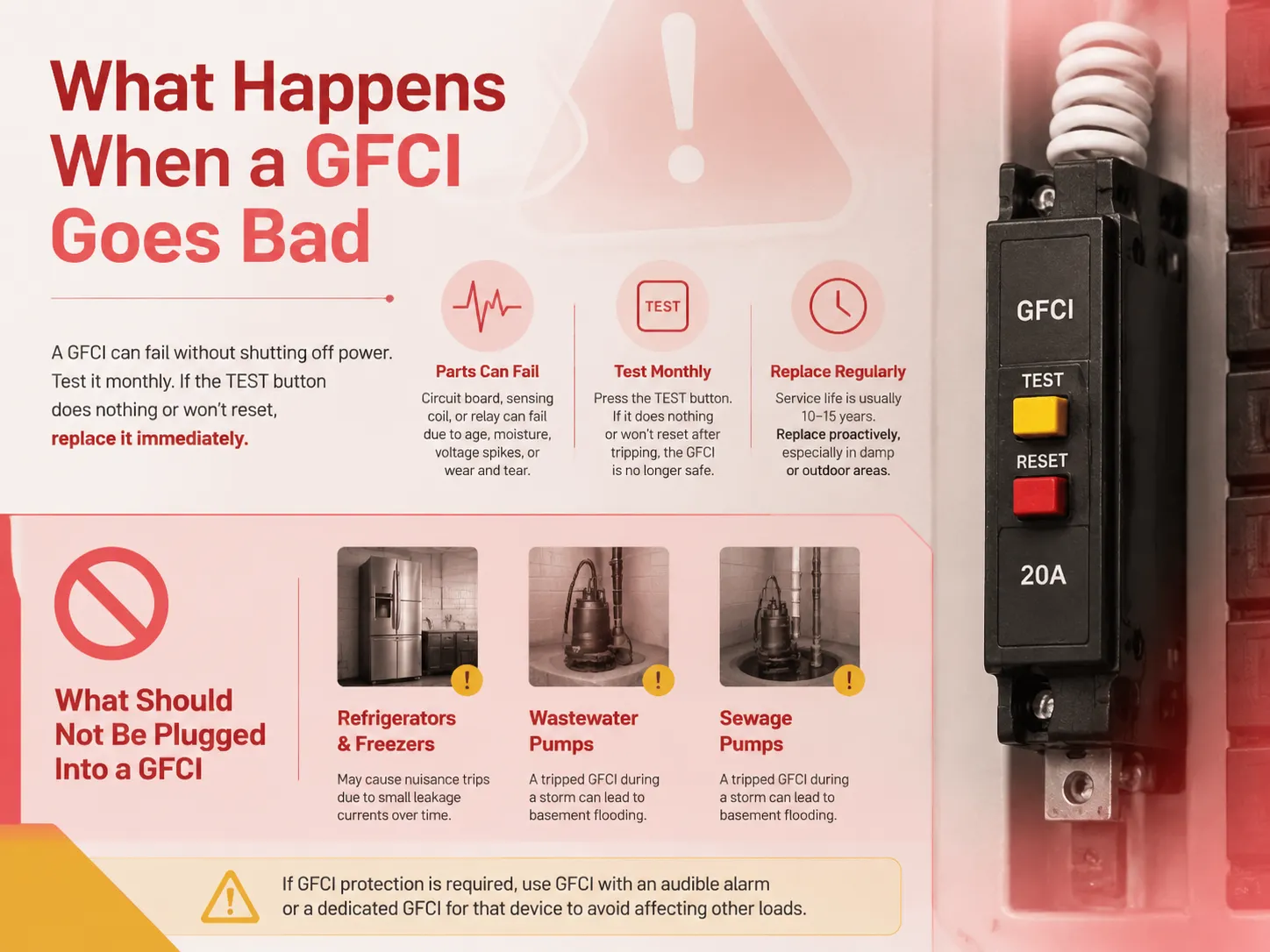
The GFCI is made up of many things: an electrical circuit board, a sensing coil, and a relay. Any one of these parts can fail due to age, moisture, voltage spikes, or simply wear and tear from usage over the years. Failure can occur in the GFCI without necessarily shutting off the power: the GFCI can keep working while its ground-fault detection stops functioning. By pressing the TEST button, one can learn that this button can either do nothing or trip the appliance but not reset it. A GFCI that trips without load or whose TEST button does not trip at all is no longer operational and should be replaced. The NEC and manufacturers say that GFCIs should be tested once a month using the TEST button. A device that is not tripping must be replaced immediately. A GFCI that has reached the end of its service life — usually after 10-15 years of service, although it can fail sooner in damp conditions or outside where the humidity is very high — needs to be replaced proactively instead reactively since there is no way of knowing that the GFCI has stopped working.
What Should Not Be Plugged Into a GFCI
The use of GFCI protection is important while dealing with wet places, but few appliances actually prove to be poor choices and may lead to nuisance trip. In this respect, refrigerators and freezers (especially older devices) may create small leakage currents over time while the compressor stands the test of time. It should be mentioned that a GFCI that trips on a working freezer at the garage and does not get noticed for several days will lead to food spoilage. It is necessary to mention such appliances as wastewater pumps and sewage pump: a GFCI that has tripped in a storm will cause flooding in the basement. Regarding these devices, the NEC allows for a single wet outlet with no GFCI protection under certain conditions if the location of installation does not require protection otherwise. If, on the contrary, the need for GFCI is obvious (garage or not finished basement), the alternative is to use GFCI with an audible alarm that will notify the homeowner or to install a single dedicated GFCI that works solely for that device so if it trips, it won’t affect any other loads on that circuit. This is a reason not to avoid GFCI protection whenever it’s needed, but instead to apply it wisely.
The Combined Solution: AFCI/GFCI Dual‑Function Breakers and RCBOs
Growing NEC requirements for AFCI protection and GFCI protection have resulted in the widespread use of dual-function breakers, which are devices that provide AFCI, GFCI, and overcurrent protection in a single package. In the IEC world, RCBOs are devices that accomplish the same type of cumulative protection using a single DIN-rail device, which combines overcurrent protection (MCB) and residual current protection (RCD) functions. Circuits supplying kitchen countertop outlets in a new home in North America would usually require both AFCI and GFCI protection, and the panel would be equipped with a dual-function breaker combining AFCI, GFCI, and normal overcurrent protection in a single unit. In the UK/similar product regions, each final circuit would be fitted with an RCBO achieving the same level of protection. HUYU manufactures and supplies dual‑function and RCBO devices for both AC and DC applications, including the VRL22B Type B RCBO, which provides residual current protection for circuits where DC leakage may be present — such as those serving EV chargers, solar inverters, or variable‑speed drives.
Frequently Asked Questions
What is the difference between a ground fault circuit interrupter and a breaker?
A circuit breaker safeguards the circuit from both overload and short circuit by preventing the overheating of wires and potential fires. However, a GFCI provides protection against ground faults, which can save people from electrocution caused by leakage of the current into the ground. They provide protection against different hazards but are both required in circuits located in wet or outdoor locations.
What should you not plug into a GFCI?
Freezers, refrigerators, sewage ejector pumps, and sump pumps can lead to nuisance tripping of GFCI causing food spoilage and flooding if not caught in time. If GFCI protection is needed, one must install a power supply manufactured for GFCIs possessing audible alarms or a GFCI mounted on a single outlet powering only that appliance.
What does a GFCI do when it goes bad?
If a GFCI is not functioning as it should, it will either trip unnecessarily or fail to trip when TEST is pressed. The TEST button must be pressed every month, and if the GFCI does not trip, it must be replaced immediately.
Is there a breaker that is both AFCI and GFCI?
Indeed, dual-function breakers are devices that harmoniously integrate arc-fault (AFCI), ground-fault (GFCI), and conventional overcurrent protective methods. The different makers of panel boards in North America manufacture these devices and they offer the optimum protection against a single electrical circuit.
References
- Electrical Safety Foundation International (ESFI) — GFCI and Circuit Breaker Safety. Consumer and professional guidance on the roles of GFCIs and circuit breakers in residential electrical safety.
- National Fire Protection Association (NFPA) — NEC Articles 210 and 422. Requirements for GFCI and AFCI protection in residential and commercial occupancies.
- Eaton — GFCI Breakers, Dual‑Function Breakers, and RCBOs. Manufacturer of residential and commercial protective devices combining overcurrent, ground‑fault, and arc‑fault protection.
- Schneider Electric — RCD and RCBO Selection and Application. Manufacturer guidance on residual current protection for IEC‑market installations.
A circuit breaker safeguards against heat-related havoc that could be brought about using an overloaded electrical wire; whereas, a GFCI is there to shield against electric shocks that faulty wires or wet appliances might cause. However, no device is capable of tackling threats all by itself, and where there is a combination of water and electricity, either of the two devices would not serve the purpose. Whether it is a circuit breaker found in the panel, a GFCI socket extension, or RCBO, both devices must be invoked in maintaining the safety of electrical appliances in use in our homes, kitchens, and bathrooms. Thus, HUYU sells appliances that make up for the above said layers in the protection system against the hazards seen and unseen.