
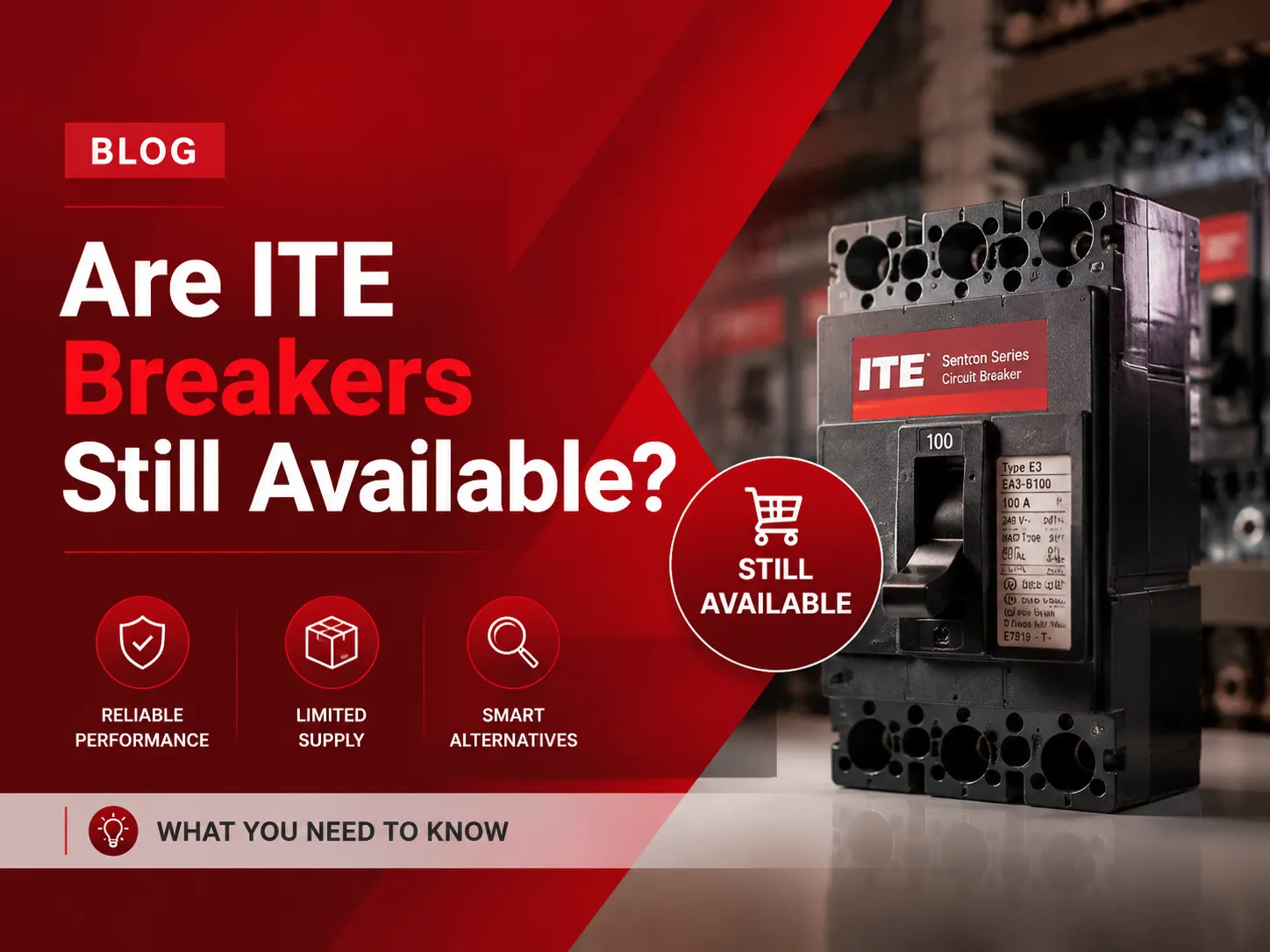
If your house was constructed between 1950s and 1990s, it is highly likely that the electrical panel in your house belongs to ITE brand. For long periods of time, ITE (Inverse Time Element) was one of the most popular circuit breakers in North America, being utilized in a large number of home and business systems. Nowadays when a circuit breaker trips and must be replaced, both the homeowners and the electricians wonder if ITE will continue to manufacture their products. It is important to understand that now when the original product of the brand is no longer being made, the circuits for which it was created are still in use as they can be found in stores all over the United States.
The ITE Legacy: Where the Brand Came From and Where It Went
ITE Circuit Breaker Company first appeared in the early 1900s and became an important player in the electrical industry by creating first resettable circuit breaker. After going through many mergers and acquisitions, ITE became a part of Siemens — a global leader in electrical engineering. When Siemens got part of the production lines of ITE, it continued to manufacture this model — first keeping the dual ITE/Siemens logo, and then using the Siemens brand only. The design of the circuit breaker remained virtually untouched, and thus a present day Siemens circuit breaker is the same device the company produced.
Which Modern Breakers Replace ITE?
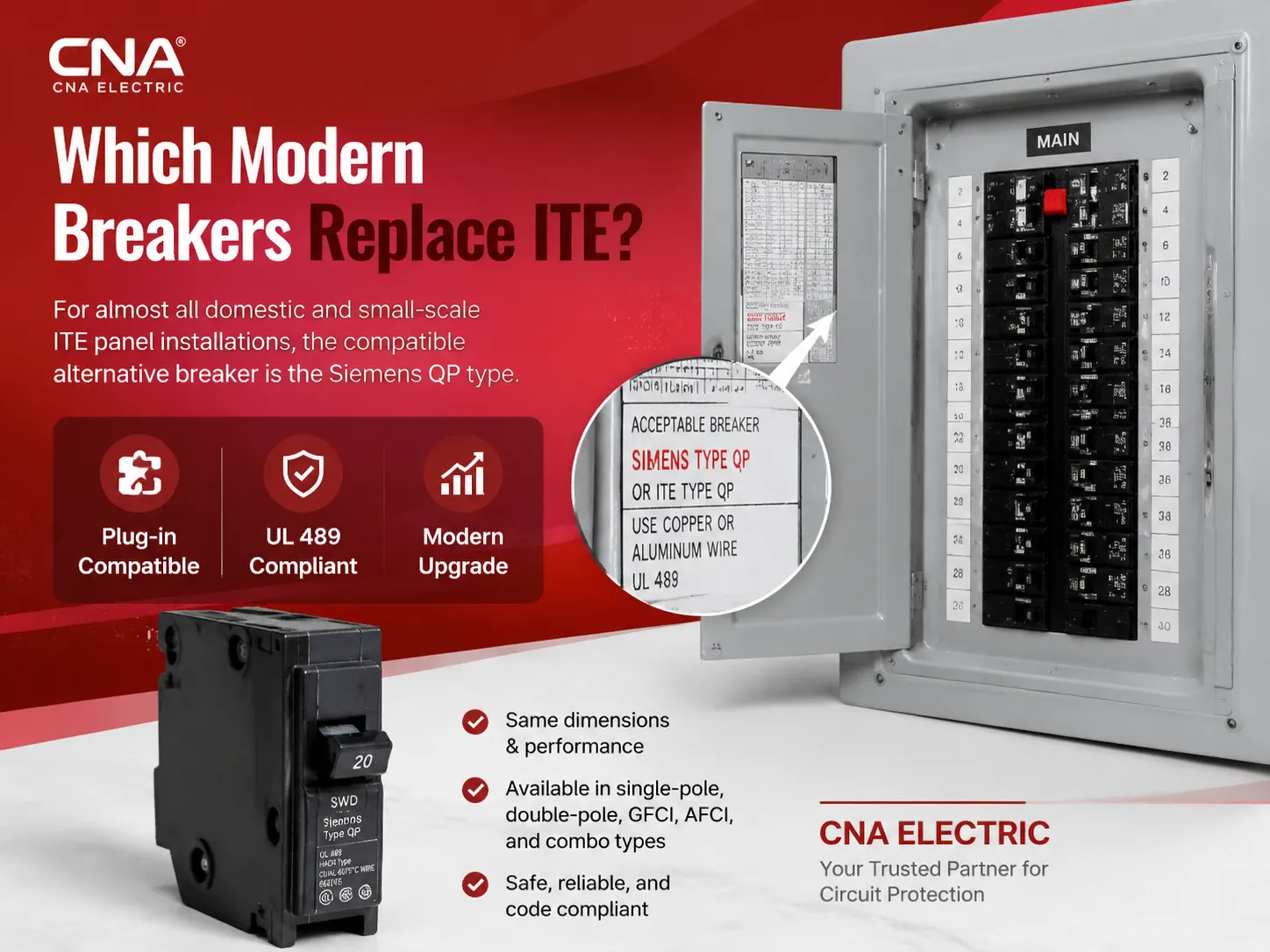
For almost all domestic and small-scale ITE panel installations, the compatible alternative breaker is the Siemens QP type (or high- interrupt type). These breakers have the same plug-in capability, dimensions and compliance with the UL 489 standard as the original ITE breakers. They can also be provided in different varieties such as single-phase, double-phase, GFCI, AFCI and dual-purpose types thus allowing the older ITE panels to be upgraded with modern technologies.
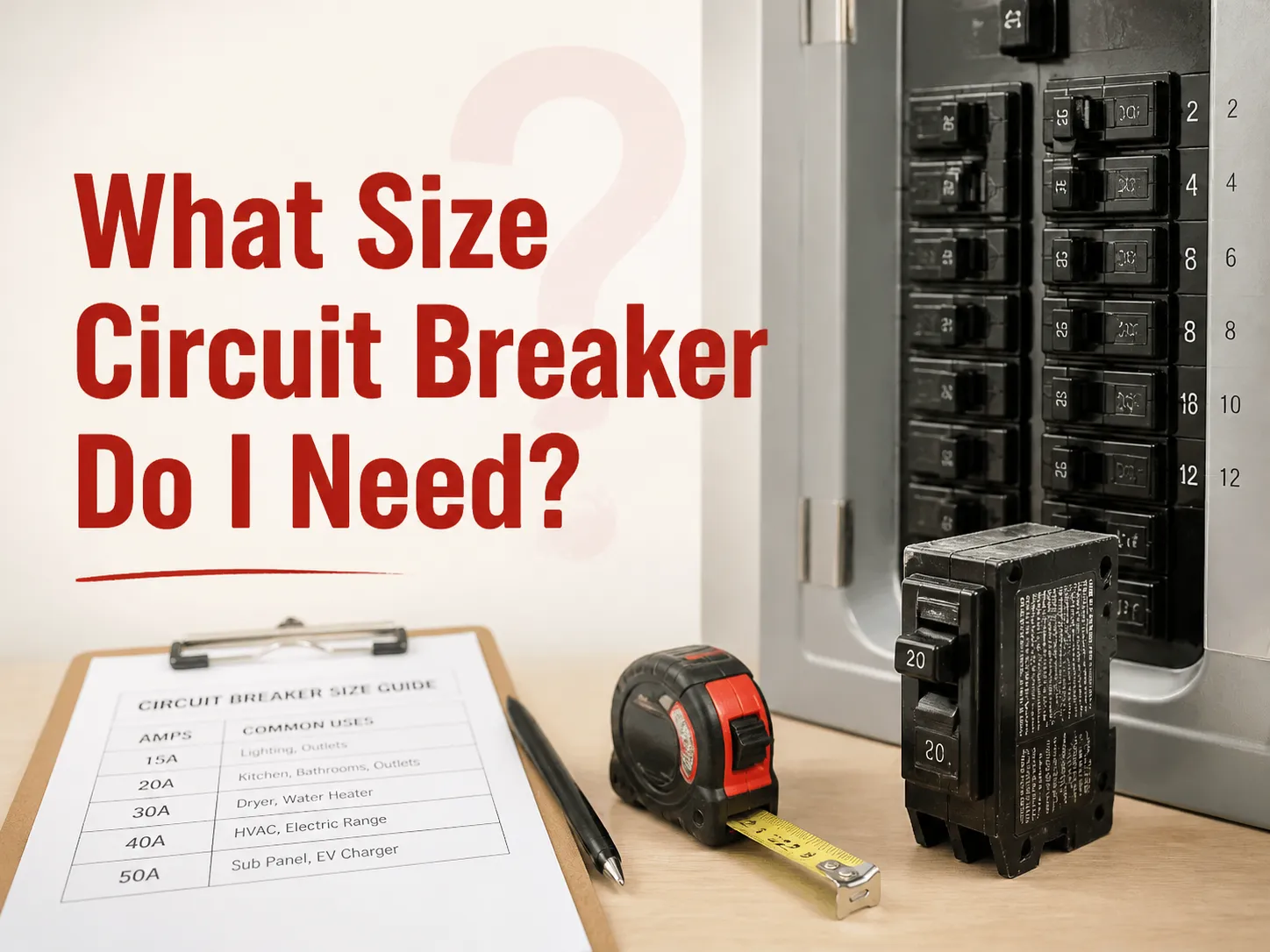
To ensure a successful replacement, you need to check the panel label. The sticker inside the door contains information about which types of breakers are accepted. In an ITE panel, the label might read like “ITE Type QP”, “Siemens Type QP”, or simply mention the original type of breaker from the ITE range that matches Type QP. Thus, if the label reads “Type QP”, this means that you need the Siemens Type QP. In case the label is missing or hard to read, it is possible to determine the type of breaker based on either the panel model number or the shape of the bus bar connection. Just like with any type of panel, using a breaker that is not included in the list of acceptable breakers may lead to fire. For help matching the breaker’s amp rating to the circuit, our guide on what size circuit breaker you need explains the NEC‑based sizing process.
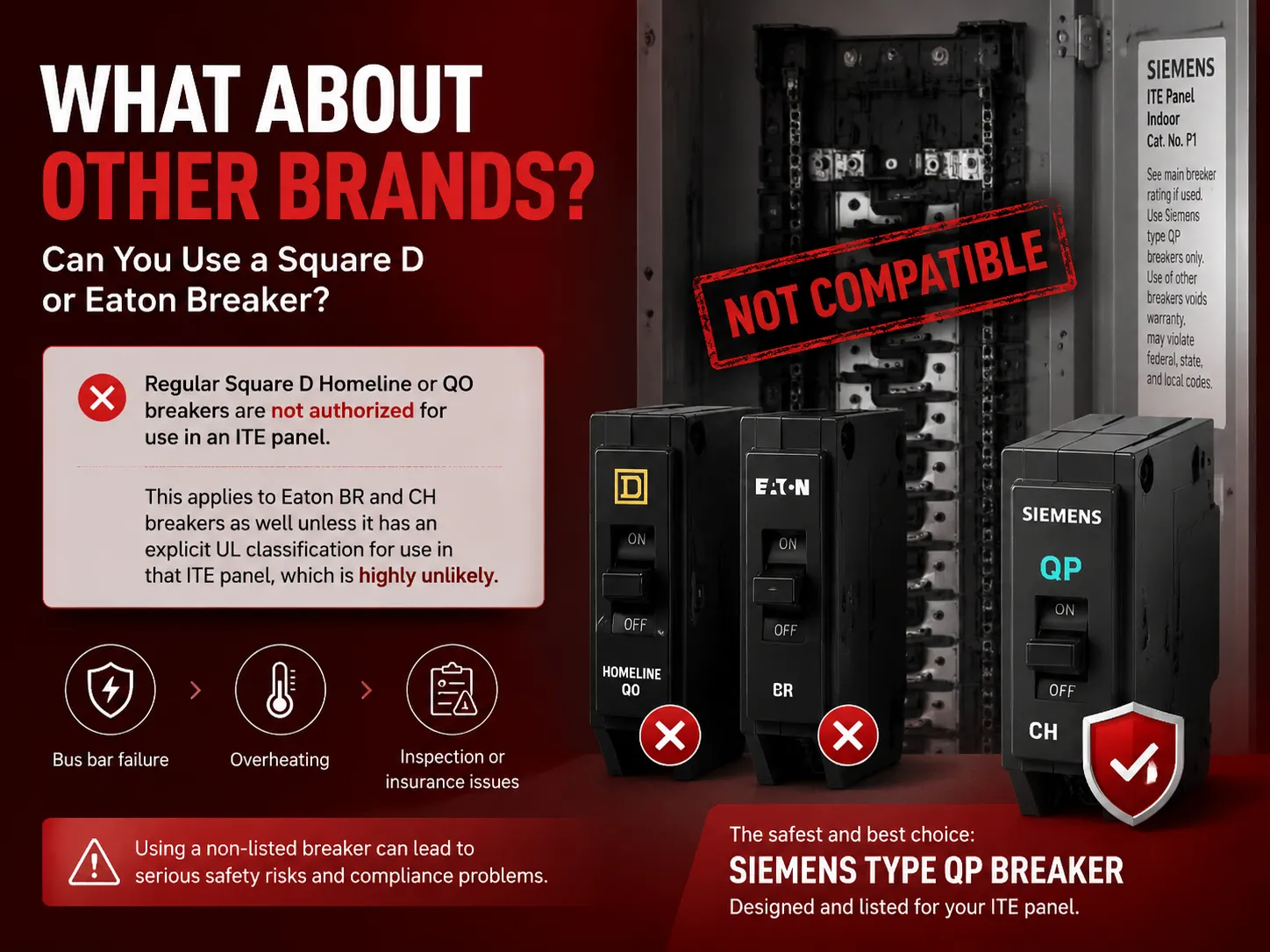
What About Other Brands? Can You Use a Square D or Eaton Breaker?
You may find yourself asking, “Is a Square D breaker compatible with an ITE panel?” The answer is no. Regular Square D Homeline or QO breakers are not authorized for use in an ITE panel. This applies to Eaton BR and CH breakers as well unless it has an explicit UL classification for use in that ITE panel, which is highly unlikely. If you use a non-listed breaker, it may cause the bus bar to fail and lead to overheating, which could also cause trouble with your inspector or insurance. The safest and best way to resolve this issue is to use Siemens Type QP breaker designed for that panel.
For those who need a broader understanding of the certification framework behind breaker listings, our article on what UL 489 breakers are explains the testing and listing standards that every breaker must meet — and that a mismatched breaker can violate.
What Does a Replacement ITE Breaker Cost?
The price of a Siemens QP breaker for an ITE panel is very competitive with prices of other major residential breaker brands. A typical single-pole 15-amp or 20-amp QP breaker will cost between $5 and $10 in stores. A GFCI or AFCI QP breaker is priced at $30-$60. A double-pole 50-amp QP breaker for an oven or air conditioning is priced at $15-$25. These breakers are easily available in electrical supply stores, home improvement stores, and online. The prices shown are a reflection of the basic principle of mass manufacturing applied to any major line of residential breakers.
Is It Time to Replace the ITE Panel Instead?
Even though ITE breakers can still be found in the form of Siemens QP replacements, it might be worthwhile to look more closely at the panel itself. ITE panels are typically regarded well and do not have the well-documented failure-to-trip records that affect Federal Pacific Electric (FPE) or Zinsco panels. However, any panel that’s a few decades old may have bus bar corrosion, loose connections, or having a level of capacity that isn’t adequate enough for today’s demands. If someone is installing a charger for an electric vehicle, a heat pump, or even a home office, it might make sense to upgrade to a modern 200-amp Siemens or equal load centre. An electrician can check how good a condition the bus bars are in, how well the connections are working, and whether the service size is big enough.
Frequently Asked Questions
What breakers can replace ITE breakers?
Siemens Type QP breakers These are the direct substitutes for the outdated type of ITE breakers. These breakers are compatible with the same bus bar base and come with standard amperage ratings in addition to GFCI, AFCI, and combination versions of the breakers.
Who makes ITE breakers now?
Currently, no one produces breakers with the brand name ITE. Siemens purchased the ITE product line and presently makes similar breakers with the Siemens Type QP label. The design of the breakers is unchanged; only the name has been changed.
What brand fits an ITE electrical panel?
Siemens Type QP breakers The panels must be precisely for ITE panels. The panel label must include “Type QP” or a historical ITE type that matches QP. Usage of any other brand is prohibited unless that brand is specifically UL classified for ITE panels.
Will a Siemens breaker fit in an ITE panel?
Certainly. A Siemens Type QP circuit breaker can be used with an ITE panel that is compatible with Type QP type breakers. The connection to the bus bar is the same as with the original ITE unit; thus, Siemens breakers are deemed acceptable replacements.
References
- Siemens — Residential Circuit Breakers and Load Centres. Official manufacturer information on Type QP breakers and their compatibility with ITE legacy panels.
- Home Depot — Siemens QP Circuit Breakers. Retailer product listings with compatibility information for ITE panels.
- Family Handyman — How to Replace a Circuit Breaker. Practical homeowner guidance on safe breaker replacement and panel identification.
- Eaton — Residential Circuit Breaker Compatibility Guide. Manufacturer guide that clarifies the importance of using listed breakers and the risks of interchanging brands.
Are ITE breakers still available? The original ITE label is a piece of electrical history, but the breaker that fits your ITE panel is alive and well on supply‑house shelves, wearing a Siemens badge. A Siemens Type QP breaker is the correct, safe, and code‑compliant replacement for the vast majority of ITE residential and light commercial panels. Before you buy, confirm the breaker type on the panel label, match the amp rating, and, if you are adding protection to a living‑area or wet‑location circuit, consider a GFCI or AFCI version. The panel that has protected your home for decades can continue to do so — with the right breaker, installed correctly, every time.