
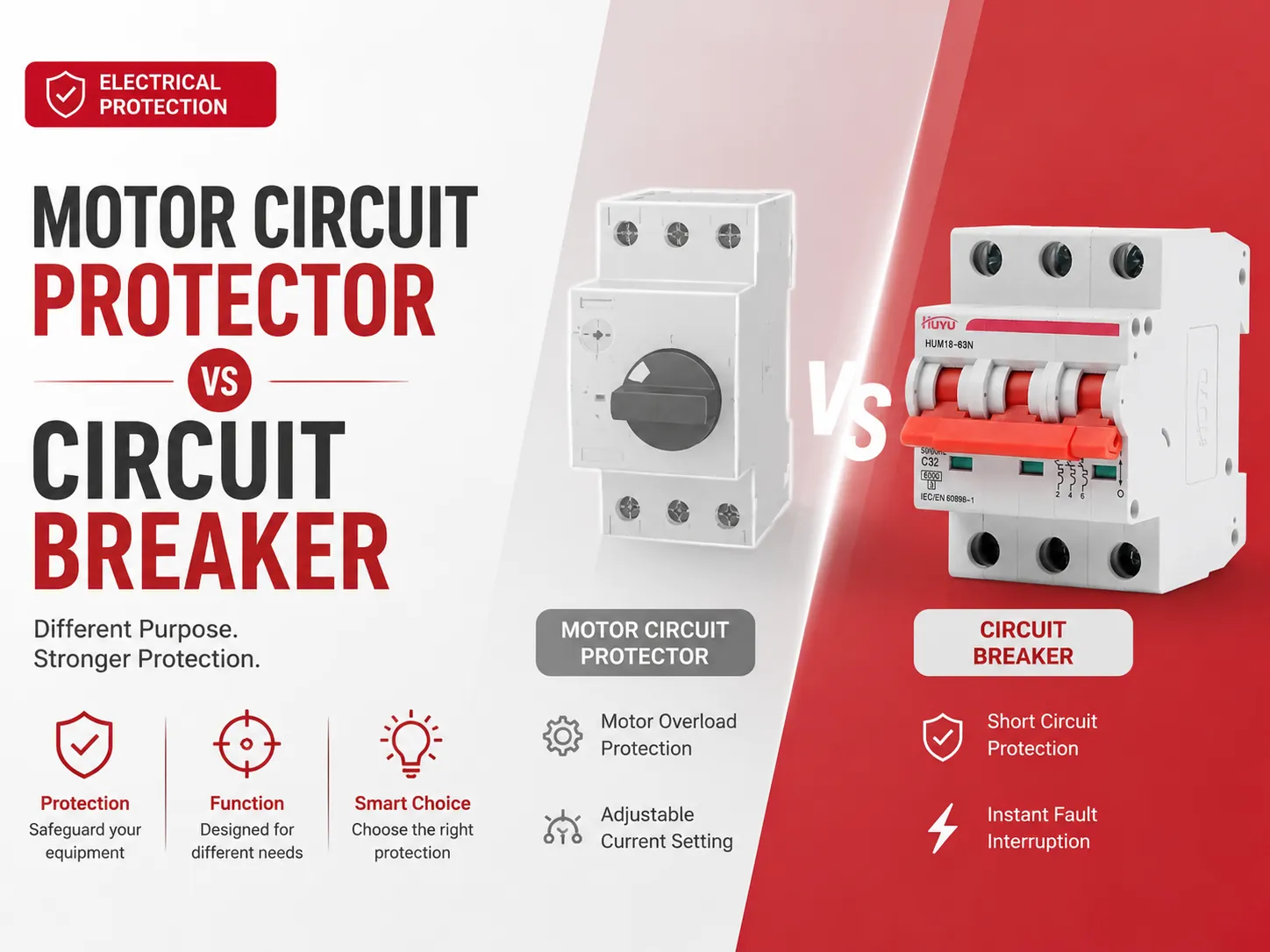
The protective device utilized when a motor is in the load is critical, as the choice of device will distinguish between a nuisance trip (haltered production) and an unnoticed device that allows a motor to burn out. A motor circuit protector may be confused with a circuit breaker because they are sometimes used interchangeably. However, these devices are very different, as a motor circuit protector (MCP) provides short-circuit protection only and must be used in conjunction with an overload relay circuit; however, a typical circuit breaker such as an MCB or MCCB often combines both overcurrent and short circuit protection in one device, but not always is this the appropriate device for a motor load unless specifically designed as such. This information explains the differences, the applications for each, and how to avoid the most common mistakes regarding motor protection devices.
What Is a Motor Circuit Protector?
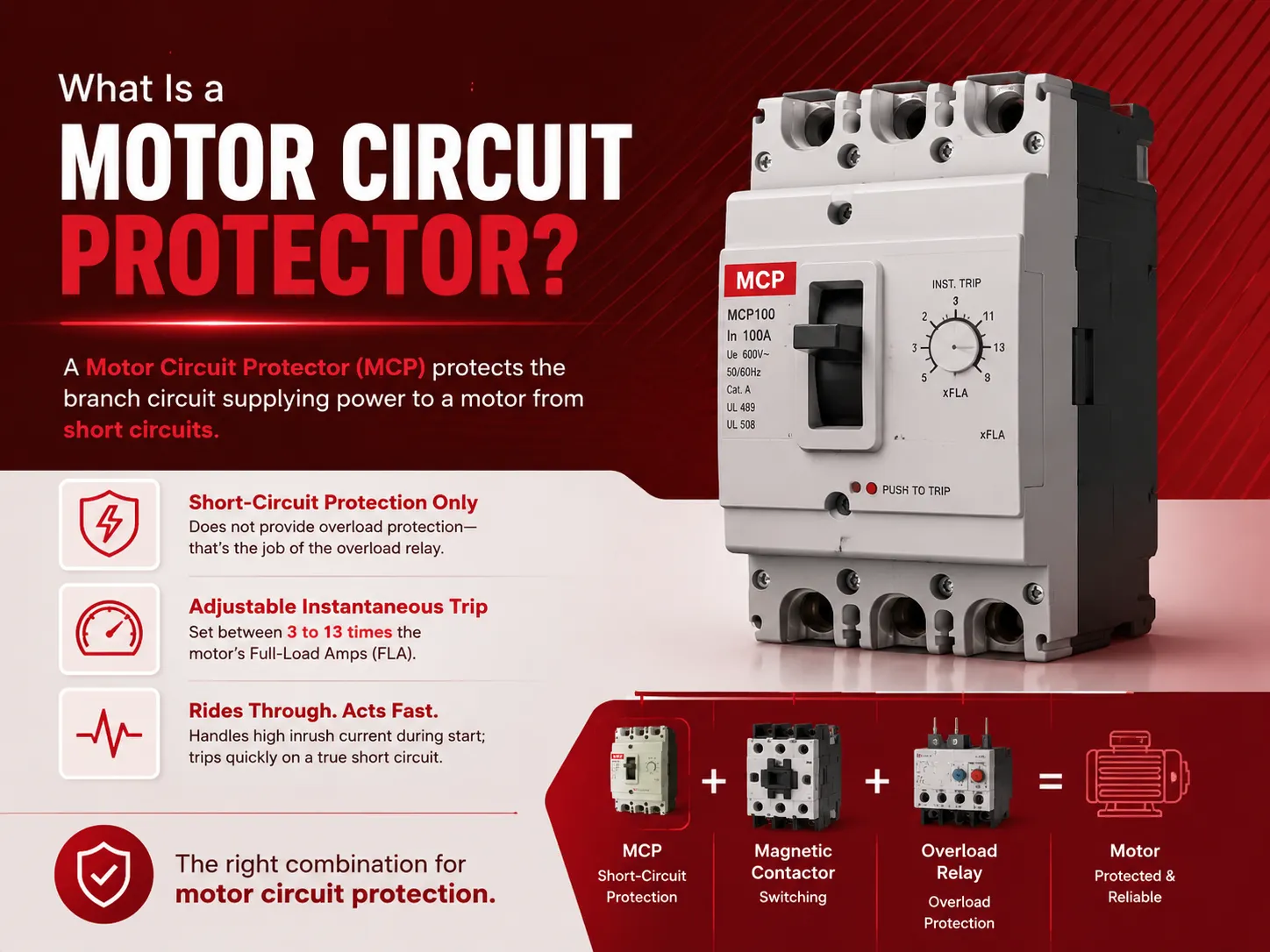
A motor circuit protector (MCP), or motor short-circuit protector, is a specialized device that protects a branch circuit supplying power to a motor from a short circuit. The MCP does not provide overload protection for the motor; that is provided by the overload relay that completes the combination motor controller along with the magnetic contactor and the MCP.
MCPs, typically found under UL 508 for Industrial Control Equipment, and many manufacturers have their MCPs dual listed with UL 489 as molded case circuit breakers for use as branch-circuit protection, have adjustable instantaneous (or magnetic) trip settings that are ideally set between three and thirteen times the full-load (FLA) current for the motor. These trip points allow the MCP to ride through large inrush currents during a motor start without nuisance tripping the MCP while allowing the MCP to quickly clear a genuine short circuit. The combination of the relatively high trip setting on the MCP and the function performed by the overload relay allows the MCP to not protect the motor from a sustained overload.
What Is a Circuit Breaker?
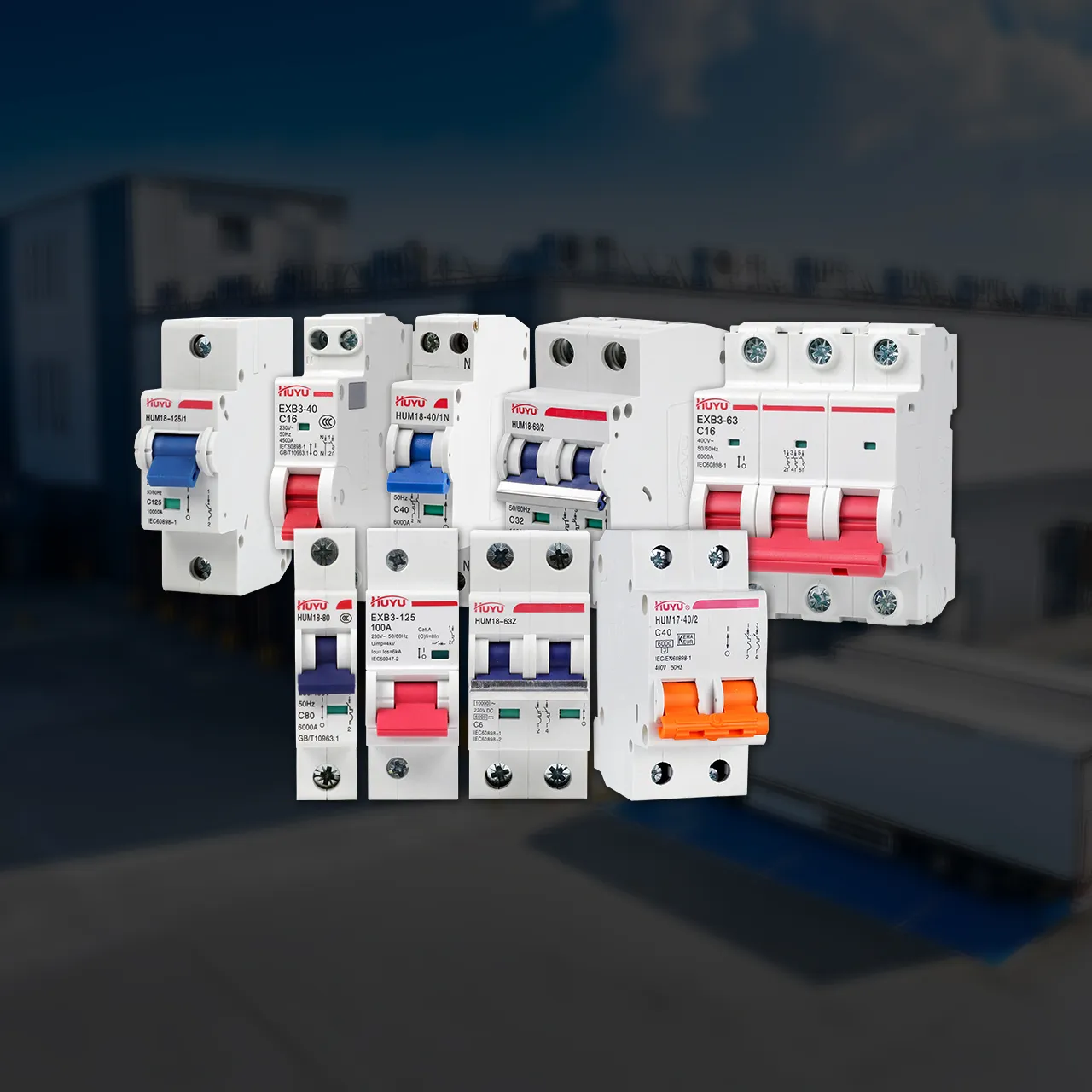
An automatic cutout device for protection against electrical overload or short circuiting is collective referred to as circuit breakers. Miniature circuit breakers (MCB) and moulded-case circuit breakers (MCCB) are the two primary low-voltage types of circuit breakers. Standard thermal-magnetic MCBs have a bimetallic strip which provides protection against overloads; they also contain an electromagnetic coil that provides protection against short circuits. The primary purpose of MCBs in residential and most light commercial electrical systems is to provide protection against overcurrent in the wire(s) and final circuit wiring. In general, standard MCBs have an established thermal setting to provide protection against overcurrent due to lighting, receptacle, and water heater loads, and not against the significant but for very short periods when starting a motor. For a comprehensive overview of how breakers function as the first line of defense in any electrical system, our comparison of circuit breaker vs surge protector explains where overcurrent protection ends and surge protection begins.
Key Differences at a Glance
| Feature | Motor Circuit Protector (MCP) | Standard Circuit Breaker (MCB/MCCB) |
|---|---|---|
| Overload protection | None (requires separate overload relay) | Yes (thermal trip in MCB; thermal or electronic in MCCB) |
| Short‑circuit protection | Yes, adjustable magnetic only | Yes, typically fixed or adjustable magnetic |
| Trip setting | High magnetic only (3–13× FLA) | Combined thermal (1.05–1.3× In) and magnetic (5–10× In typical) |
| Intended use | Motor branch circuit short‑circuit protection, in combination with overload relay | General branch‑circuit protection of wires, appliances, and lights |
| Applicable standards | UL 508 (industrial control), or UL 489 if dual‑listed | UL 489 (MCCB), UL 1077 (supplementary), IEC 60898 (MCB) |
| Can it protect a motor alone? | No — must be part of a combination starter | Only if specifically a motor‑protection circuit breaker (MPCB) or appropriately rated MCCB |
Why a Standard Circuit Breaker Often Fails to Protect a Motor
Let’s consider a 10-horsepower motor that has a full-load current rating of 28 amps. If the motor is rated 30 amps, you would think it might be a good idea to use a standard 30-amp circuit breaker, but the fact is that this motor can pull 6 to 8 times its full-load current (over 200 amps) during starting for a split second and the magnetic trip of a standard 30-amp circuit breaker is normally set at 5 to 10 times the rated current (150 to 300 amps), so the inrush could easily be in the trip range of the circuit breaker, causing the breaker to trip every time the motor starts. If after multiple nuisance tripping events the electrician sizes up the circuit breaker to try to prevent the nuisance trip from occurring again, then the conductors may now be unprotected from an overload and create a fire hazard. Even if the breaker doesn’t trip during starting, the thermal part of the circuit breaker is not calibrated to the motor’s specific damage curve which means overly slow overloading may not trip the breaker until the motor has been damaged. Therefore, a motor circuit protector with adjustable magnetic trip (set high enough to ignore the inrush but low enough to trip in case of a fault) and a properly sized overload relay is the proper solution for motor circuits.
The Motor Protection Circuit Breaker: A Third Option
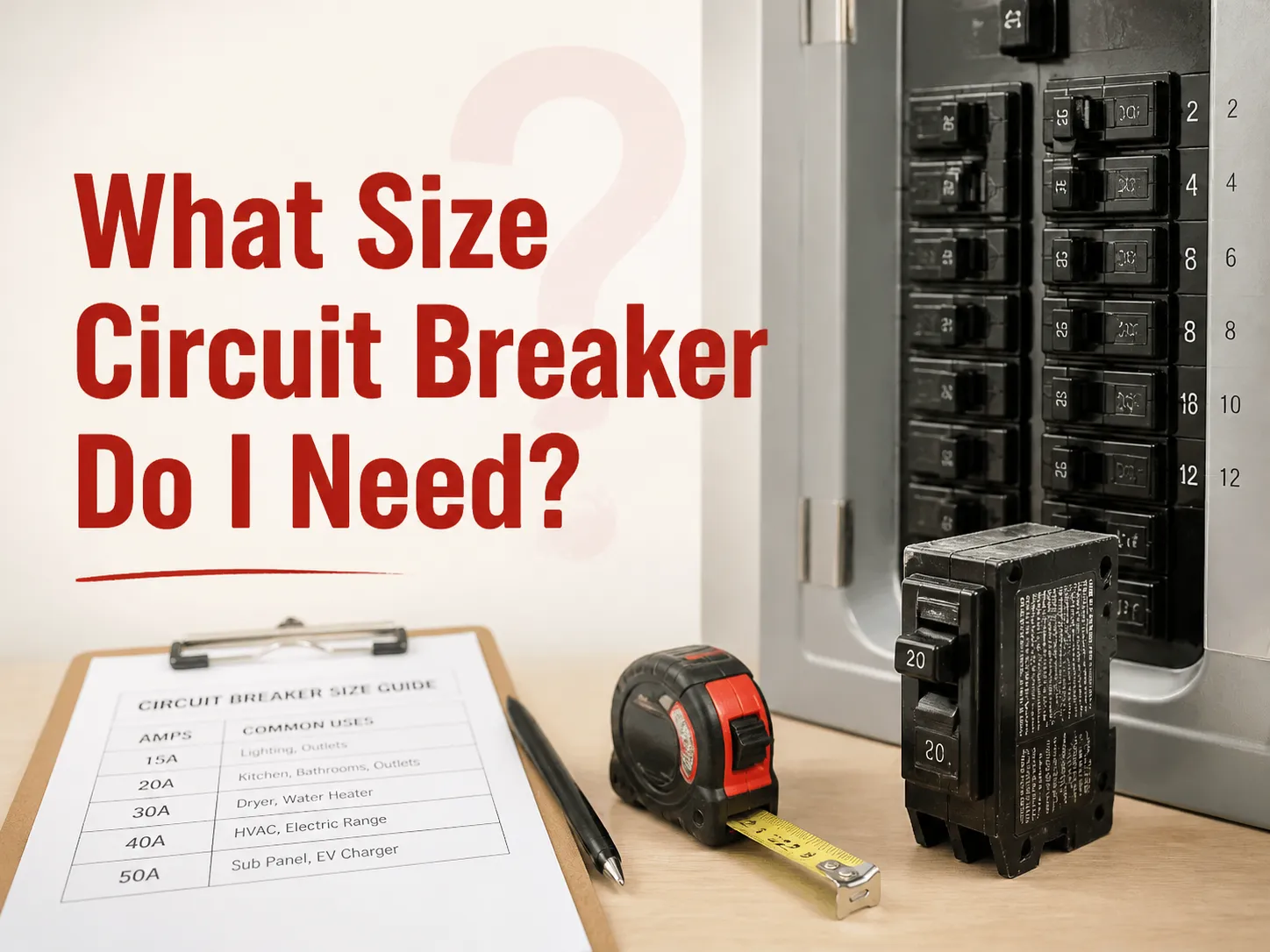
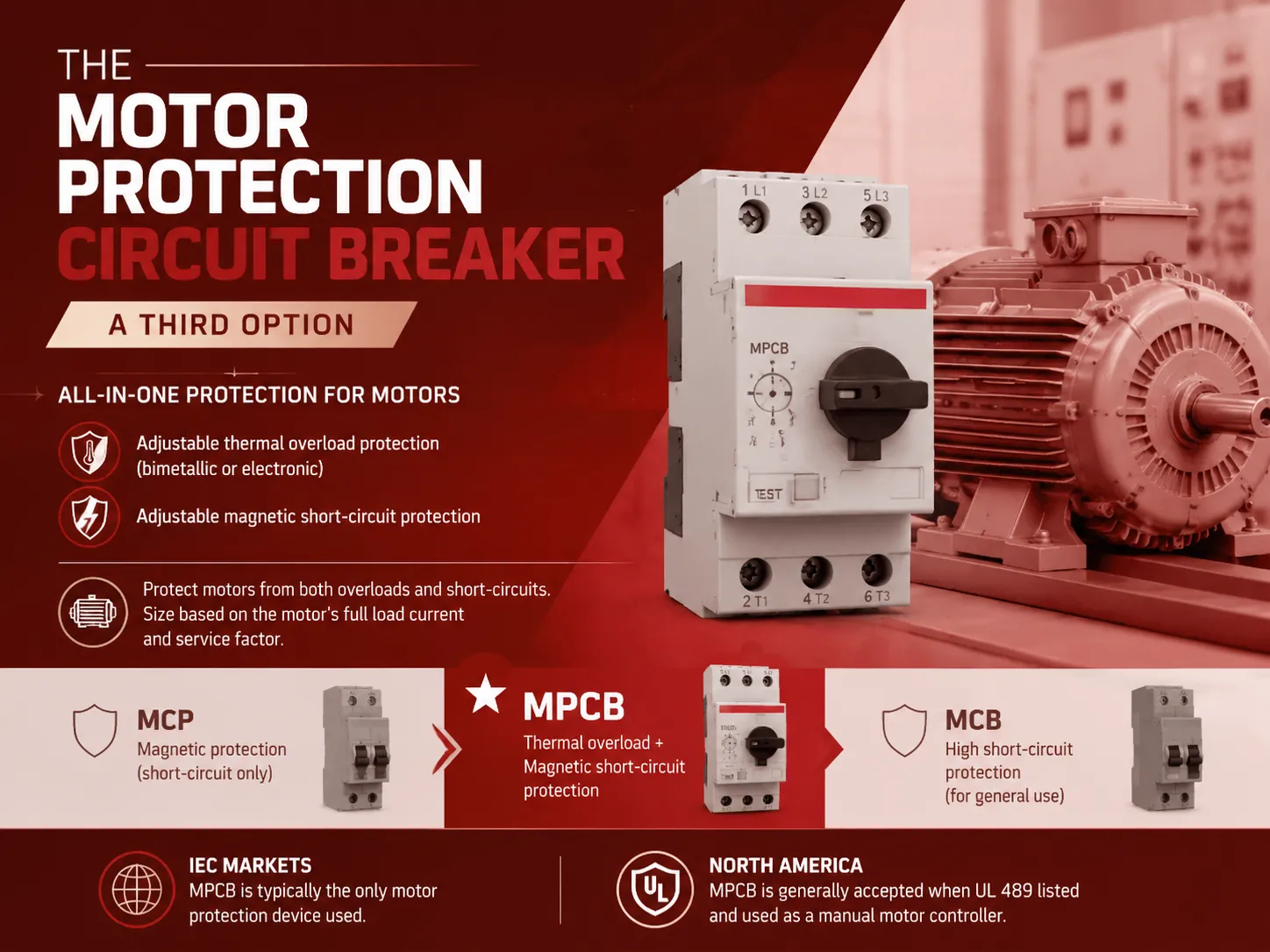
The Motor Protection Circuit Breaker (MPCB) is a device that sits between the Motor Circuit Protector (MCP) and the Molded Case Circuit Breaker (MCB). The MPCB combines both adjustable thermal overload protection (either bimetallic or electronic) and adjustable magnetic short-circuit protection in one device. The purpose of the MPCB is to protect a motor from both overloads and short-circuits, while sizing the MPCB based upon the full load current of the motor and the service factor of the motor. In IEC markets, the MPCB is typically the only motor protection device used. In North America, the MPCB is generally accepted when UL 489 listed and used as a manual motor controller; however, the more typical practice remains as MCCP, etc. If you are evaluating different protection options for a motor branch circuit, our guide on what size circuit breaker you need explains the NEC rules for sizing overcurrent devices for various load types, including motors.
Is a Motor Circuit Protector a Circuit Breaker?
People frequently make mistakes when trying to understand the difference between a circuit breaker and a motor circuit protector because they do look similar. While some motor circuit protectors (MCPs) are indeed types of circuit breakers, not all circuit breakers will be MCPs. An MCP typically looks like a molded case circuit breaker – it fits into a panelboard or motor control center and it has the same kind of toggle switch. However, the internal construction of an MCP is far different than that of a circuit breaker; usually an MCP does not have a thermal element – it only has an adjustable magnetic trip, however it can be known to have dual ratings by both UL 508 and UL 489. Because of this dual rating, an MCP meets the requirements to be the means of disconnection and short-circuit protection from a motor circuit when it is used in conjunction with an overload relay. For a deeper look at the UL standards that govern these devices, our article on what UL 489 breakers are explains the testing and certification that separates a listed breaker from an unlisted component.
Frequently Asked Questions
Is a motor circuit protector a circuit breaker?
A Motor Circuit Protector (MCP) acts similar to a standard molded-case circuit breaker, but it is specifically designed to provide magnetic protection against a short circuit when used with an overload relay for the thermal protection. The only purpose of an MCP is to trip on magnetic short-circuit interruption only, and it is an essential component in the protection of any motor branch circuit by creating a three-part series: (1) Magnetic short-circuit; (2) Thermal overload; and (3) Wood timer.
Is circuit protector the same as circuit breaker?
Not quite. A “circuit protector” is a more broad term than just referring to fuses, supplementary protectors or motor circuit protectors. A “circuit breaker” is a type of circuit protector which employs an automatically resettable device to interrupt the flow of current to the equipment in case of damage caused by an overload or short-circuit. When you use the term “motor circuit protector” you are actually referring to a specific device that has adjustable magnetic trip capability with no overload protection.
Why is MCB not used for motor protection?
An ordinary MCB (miniature circuit breaker) does not provide adequate protection for motors due to two reasons. First, the fixed trip rating of the MCB (magnetic trip) is typically too low for the high inrush current (magnetic trip) of an already started motor, which will likely cause nuisance tripping when starting. Secondly, the thermal trip rating (of an MCB) is not calibrated for a specific motor’s thermal damage curve, and will, therefore, not be capable of protecting the motor from a prolonged mild overload condition. Using a device that is motor specific, such as an MPCB or MCP with a separate overload relay, will provide you with the motor protection you need.
What is the difference between a miniature circuit breaker and a motor protection circuit breaker?
MCB & MPCB Differences – An MCB, or Miniature Circuit Breaker, is a device used for the protection of wiring and standard loads and has a fixed thermal trip setting as well as a fixed magnetic trip setting. An MPCB, or Motor Protection Circuit Breaker, is designed exclusively for protection of motors and has an adjustable thermal overload protection that is set to the full-load current of the motor as well as an adjustable magnetic short-circuit trip setting that can be set high enough to prevent tripping during the motor starting. Therefore, an MPCB can be used as the only protective device for a motor while an MCB cannot.
Choosing between a motor circuit protector and a standard circuit breaker comes down to understanding the motor branch circuit: the combination of short‑circuit protection, overload protection, and a control device. An MCP handles the short‑circuit role in a coordinated system that includes a contactor and an overload relay. A standard circuit breaker tries to do everything in one package and often falls short when faced with the unique current profile of a starting motor. At HUYU, we supply the full range of circuit protection — from general‑purpose MCBs and MCCBs to specialized breakers that meet UL 489 and beyond — so that whether you’re protecting a lighting panel or a critical motor load, you have the right device for the right job.