

Le Canada fait partie des pays qui ont développé un écosystème solide de fabrication d’équipements, motivé non pas par les bas coûts, mais par quelque chose de très rare – une production avec de nombreuses variantes et un volume modéré, qui se distingue par un soutien technique approfondi, des exigences rigoureuses en matière de certification et la proximité géographique du marché américain. Pour les entreprises OEM planifiant de diversifier leurs chaînes d’approvisionnement, les fournisseurs canadiens de services de fabrication électronique (EMS) deviennent des solutions de nearshoring de plus en plus attrayantes. Les informations présentées dans ce guide couvrent les principales organisations EMS basées au Canada, leurs compétences clés et leurs certifications. Il aidera également à identifier le meilleur partenaire EMS pour vos produits.
Il existe de nombreux fournisseurs leaders de services de fabrication électronique (EMS) au Canada, notamment Celestica, Jabil, Sanmina, Creation Technologies, SMTC, Asteelflash, SigmaPoint, Bittele Electronics, MPL Innovations et SMT Microsystems. La majorité des entreprises EMS canadiennes possèdent les certifications ISO 9001, ISO 13485 (médical), AS9100 (aérospatial) et respectent les spécifications IPC-A-610/J-STD-001. Elles sont principalement compétentes dans le développement de prototypes et le support à la production, l’ingénierie DFM et l’intégration box build plutôt que dans la production de masse.
Pourquoi choisir le Canada pour la fabrication électronique
La proposition concernant la fabrication électronique au Canada est distincte de celle en Asie. Contrairement aux fournisseurs asiatiques de services de fabrication électronique (EMS) qui s’appuient sur des prix bas, les fournisseurs EMS canadiens sont compétitifs en fonction de quatre facteurs pertinents pour les industries spécifiques qui fabriquent des produits en volume moyen :
- Qualité et profondeur de la certification. Au Canada, le critère minimum est ISO 9001 avec l’ajout de ISO 13485 pour les produits fabriqués dans l’industrie médicale et AS9100 pour l’industrie aérospatiale. Phillips et la NASA utilisent les normes d’assemblage IPC-A-610/J-STD-001 pour les produits critiques.
- Assistance technique. Les EMS canadiens offrent des services depuis les étapes de révision de la conception des PCB, ainsi que la conception pour la fabricabilité, jusqu’au prototypage et à la gestion du cycle de vie du produit. Le fabricant prend en charge l’ensemble du processus, de la conception du produit à la production.
- Haute diversité avec des volumes faibles et moyens. Le Canada fabrique sans utiliser l’électronique grand public avec plus de centaines et possiblement des dizaines de milliers d’unités de production.
- Proximité du marché américain et protection de la propriété intellectuelle. Certains avantages incluent le même fuseau horaire, une logistique rapide et d’excellentes lois de protection, faisant ainsi du Canada l’État le plus proche pour les OEM américains qui se détournent des chaînes de production internationales.
En raison de ces avantages, le Canada est un choix avantageux pour les entreprises recherchant des options de fabrication électronique à haute diversité et à faible et moyen volume. La réalité sous-jacente à ce choix est la même partout — des pièces certifiées avec des données de test documentées, des dispositifs de protection comme le gamme HUYU HUM18-63N MCB au catalogue électrique plus large, sont ce qui rend la production d’un EMS prête pour un audit.

Profil des 10 principales entreprises EMS
Celestica (Toronto, ON)
Il s'agit du fleuron canadien des EMS qui est également l'un des plus grands au monde. Initialement créé comme une division de fabrication d'IBM (qui a accompagné l'entreprise pendant plus de 75 ans de coopération) puis séparé en 1996. Aujourd'hui, l'entreprise emploie plus de 20 000 personnes à travers l'Amérique du Nord, l'Europe et l'Asie. Celestica offre un service complet – conception, assemblage de PCB, intégration système, chaîne d'approvisionnement et support après-vente pour plus de 200 OEM.
Jabil (opérations en Ontario)
Non seulement c'est l'un des plus grands fabricants d'électronique, mais il est également en activité depuis plus de 50 ans avec 140 000 employés dans le monde. Si vous avez besoin d'un volume important de produits au Canada, Jabil est votre solution.
Sanmina (Ottawa, ON)
L'installation de Sanmina à Ottawa offre une variété de services en télécommunications et réseaux avec une production incluant la fabrication de PCB et l'assemblage de produits sur site.
Creation Technologies (Vancouver, BC)
C'est le créateur d'électronique à haute fiabilité. L'entreprise se concentre sur les équipements médicaux, les dispositifs IoT, les armes militaires et les dispositifs liés aux énergies renouvelables, faisant preuve de sérieux et de rigueur dans leurs projets.
SMTC Corporation
Si vous avez besoin d'une entreprise offrant un service client réactif et capable de fournir des solutions de fabrication, SMTC doit être choisi.
Asteelflash Canada (Toronto, ON)
Asteelflash dispose de toutes ses capacités EMS — SMT, THT, faisceaux de câbles et assemblage complet — dans les secteurs de l'électronique grand public, industrielle, de sécurité et automobile, apportant une présence mondiale et une expérience locale.
SigmaPoint Technologies (Cornwall, ON)
Une entreprise de fabrication allégée dans les domaines militaire, aérospatial, automatisation et énergie propre avec de l'électronique à haute fiabilité, des services clés en main et une gestion avancée de la chaîne d'approvisionnement.
Bittele Electronics (Toronto, ON)
Le partenaire fiable pour l'assemblage de PCB en faible à moyen volume — fabrication de PCB, approvisionnement en composants, SMT, THT et tests finaux principalement pour les start-ups, entreprises d'ingénierie, fabricants de dispositifs médicaux et industriels nécessitant des productions rapides et flexibles.
MPL Innovations (Winnipeg, MB)
Spécialiste des assemblages électromécaniques et faisceaux pour l'agriculture, les machines de construction, la robotique et le transport ainsi que des assemblages électromécaniques personnalisés, faisceaux et systèmes de contrôle industriel.
SMT Microsystems (St-Laurent, QC)
L'un des principaux fabricants SMT d'assemblage de dispositifs médicaux et biotechnologiques — brasage par refusion, retouche BGA, revêtement conforme, tests approfondis avec des délais courts.
Tableau comparatif
| Entreprise | Emplacement | Force | Certifications | Meilleur pour |
|---|---|---|---|---|
| Celestica | Toronto, ON | Échelle, aérospatial, centres de données | ISO 9001, AS9100, ISO 13485 | Programmes complexes, globaux |
| Jabil | Opérations en Ontario | Échelle mondiale, volume élevé | ISO 9001/13485 | Grands programmes, logistique mondiale |
| Sanmina | Ottawa, ON | Intégration verticale, télécom | AS9100, ISO 13485 | Défense, télécom, industriel |
| Creation Technologies | Vancouver, BC | Haute fiabilité, médical | ISO 13485, AS9100 | Medical devices, defense |
| SMTC | Canada/US | Nearshore transfers | ISO 9001 | Mid-market OEMs reshoring |
| Asteelflash | Toronto, ON | Full EMS scope | ISO 9001, IATF 16949 | Consumer, industrial, automotive |
| SigmaPoint | Cornwall, ON | Lean, military/aerospace | ISO 9001, AS9100 | Defense, clean energy |
| Bittele | Toronto, ON | Small-mid volume, fast | ISO 9001, IPC | Startups, low-volume products |
| MPL Innovations | Winnipeg, MB | Electromechanical, harnesses | ISO 9001 | Agriculture, robotics, transport |
| SMT Microsystems | Montreal, QC | Precision SMT, medical | ISO 13485 | Medical, biotech assembly |

What EMS Services Actually Include
An EMS partner is not simply someone who assembles circuit boards. The average service flow can be defined through the following steps:
- The design and engineering process, including DFM analysis, PCB design support, prototype creation, and technical verification.
- The process of sourcing parts from the suppliers and managing logistics — something that is becoming more and more important during the times of scarcity of electronic components.
- PCB assembly, including SMT, through-hole, fine pitch and BGA assembly, as well as PCB quality checks.
- Testing process, including electrical testing, functionality testing, and burn-in process aimed at ensuring that the assembled PCB performs as expected.
- Box build and system integration — assembling the final product, including casing and wiring.
- Post use services, including repairs, restoration, and product disposal.
Canadian EMS companies charge a premium for their engineering expertise and after-use services, while these are the areas where mid-size OEMs do not benefit much from the low-cost assembly companies. It is useful to find out what processes are in-house when evaluating a partner, as a company that outsources DFM or testing will have a higher risk of non-coordination.
The Component Supply Chain (and Where HUYU Fits)
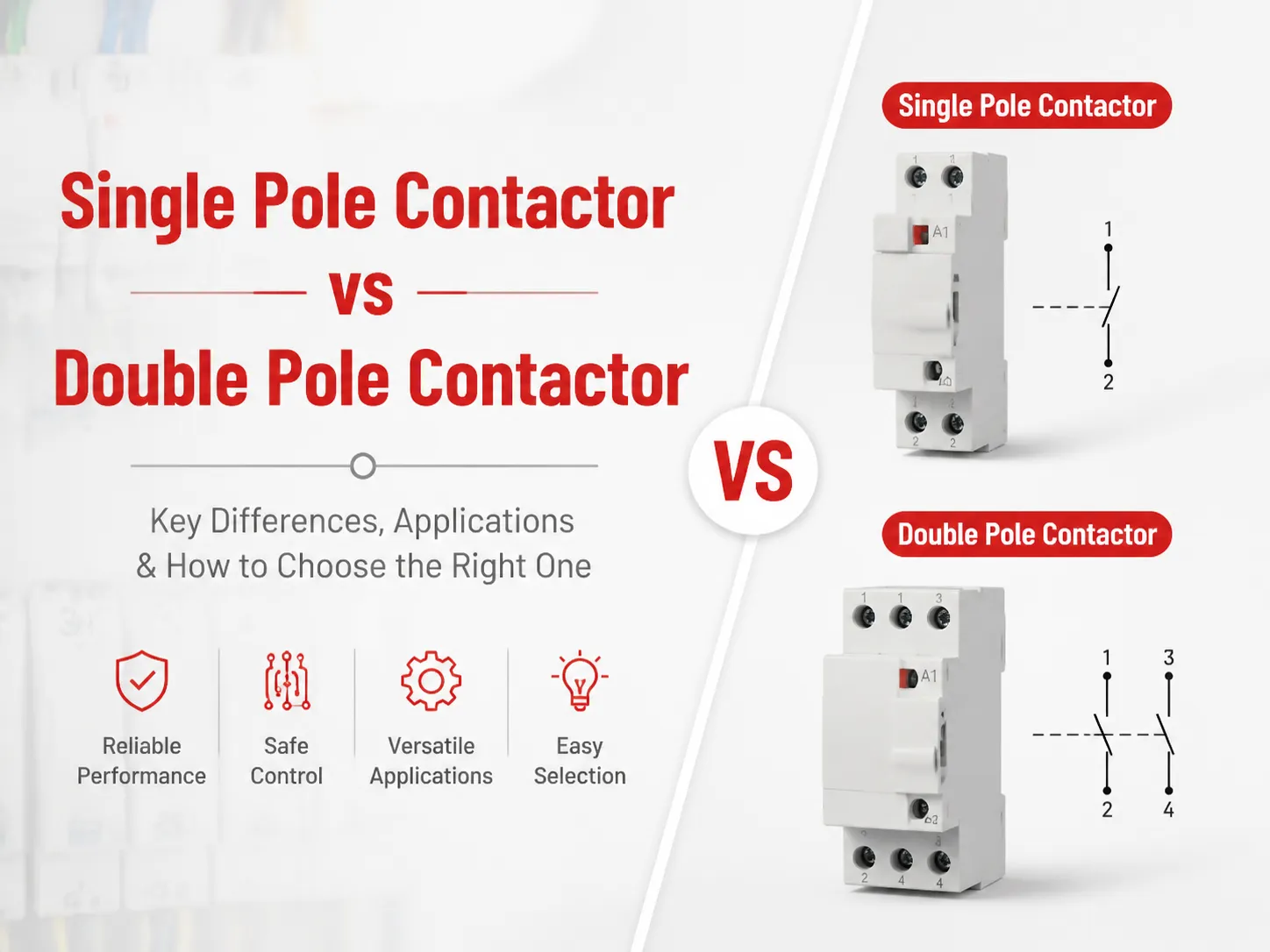
An honest guide to Canadian EMS should entail a correct remark regarding the level that appears beneath each assembly: components. An EMS provides assembled products based on the outputs of the component supply chain — the breakers, relays, connectors, and power-distributing elements that are found in many devices are made by specialized manufacturers.This is where HUYU Électrique sits in the electronics-manufacturing picture: HUYU (Huanyu High-Tech, founded 1989, with technical support from an Eaton joint venture) is a low-voltage electrical manufacturer — miniature circuit breakers from 6A to 125A in 1P to 4P configurations (the single-pole vs double-pole decision every protection design starts with), plus contactors, relays, instrument transformers, surge protectors, and PV combiner boxes — certified to UL, KEMA, TUV, CE, CB, and IEC standards, shipping to over 100 countries.
HUYU is not an EMS and does not want to appear as one; it is a supplier of components that is bought by EMS firms and OEMs for the electrical-protection level of their products — from the internal protection of medical equipment to a distribution board of a data center rack. The practical question for Canadian clients is the same question they always ask of offshore components suppliers, namely whether the manufacturer offers documented and certified quality with traceable testing.The guide des disjoncteurs UL 489 explains the certification standard behind industrial breakers, and a supplier’s datasheets and test reports tell the rest of the story.
How to Choose an EMS Partner
The framework of selection that distinguishes a good EMS practice from an expensive one is as follows:
- Match the production volume with the nature of business. Small scale (few hundreds a year) -> Bittele or prototyping houses; medium scale-> SMTC, Creation, SigmaPoint; large scale-> Celestica, Jabil, Sanmina. The choice of a Tier-1 producer for 500 unit product makes the company overpay and selection of a small producer for 100,000 units means loss of potential.
- Check certification of the plant, and not of the corporation itself. ISO 13485 for medical purposes or AS9100 for aerospace – make sure to clarify that a specific plant is certified.
- Inquire about DFM and NPI capability. The value of Canadian EMS is in engineering review accomplished before production; ask the supplier about DFM initiative saving the implementation of a program.
- Find out about component supply risks. Inquire about how a partner prevent shortages, obsolescence and counterfeit. In current market conditions it is the difference between timely and delayed deliveries.
- Be honest while comparing lead times. Prototype lead time is usually about 2-6 weeks, manufacturing – 6-12 weeks; however, component lead time should always be taken into account.
- Conduct audit of the quality system. Take notice of IPC-A-610 standards, inspection level (AOI/X-ray), and testing strategy prior to signing the contract.
Two process questions round out the due diligence. First, ask how change orders and engineering updates flow — the ECM (engineering change management) process determines whether your next revision costs weeks or days. Second, ask about the electrical components in your product: for anything with power distribution or protection, specify certified breakers and components with documented test data — the kind of due-diligence covered in the electrical distribution cost guide and the certification guides linked above.
FAQ
What are the top 10 manufacturing companies in Canada?
As far as manufacturing goes, the leaders in Canada comprise Bombardier (aviation), Magna International (automotive industry), and CAE (aviation simulation). In the electronics manufacturing also, the leading EMS firms comprise Celestica, Jabil (Canadian operations), Sanmina (Ottawa unit), Creation Technologies, SMTC, Asteelflash, SigmaPoint, Bittele, MPL Innovations and SMT Microsystems; of these, Celestica is the largest manufacturer of electronics based in Canada.
What is the largest manufacturing industry in Canada?
In number of outputs and employees, transportation equipment, led by automakers from Ontario ranks first among the manufacturing industries in Canada, whereas food processing ranks second, followed by aerospace and chemicals. This sector has lower volume but is significant strategically because of its engineering nature and providing services to the sectors like aerospace, medicine, and telecommunication.
What is an electronic manufacturing service?
Electronic manufacturing service (EMS) deals with manufacturing of electronic products by companies for original equipment manufacturers (OEMs). Thus, EMS provides services that include PCB assembly, finding components, testing of product, box-build and system integration and after market services; this service allows OEM to focus on designs, branding and sales while the EMS takes care of manufacturing and supply chain.
What are the top 5 electronic companies?
Making huge profits throughout the world today, the electronics companies are Samsung Electronics, Apple and Hon Hai (Foxconn), in addition to TSMC. As far as EMS sector is concerned, biggest companies here are Foxconn, Flex, Jabil, Celestica and Sanmina, with Celestica being the leader in Canada having HQ in Toronto.
Références
- Celestica — Corporate Site and SEC Filings
- Leadsintec — Top Electronics Manufacturing Companies in Canada (2026)
- Wintech — Top 8 Electronic Contract Manufacturers in Canada
- Queen EMS — Top 15 EMS Companies for Canada (2026)
- IPC — IPC-A-610 and J-STD-001 Assembly Standards
Conclusion
Canadian electronic manufacturing services occupy a unique and important niche in the market, that is , manufacturing under high variety and low volume conditions with in-depth engineering, strict quality control and proximity to the US, but not providing low-cost mass manufacturing. The market is mainly represented by Celestica, a Toronto-based leader which separated from IBM and now provides services to aerospace, healthcare and data center equipment OEMs, including support from other well-known companies (Jabil, Sanmina), high-reliability companies (Creation, SigmaPoint), nearshore companies (SMTC) and low-volume companies (Bittele, MPL, SMT Microsystems). The full range of services is provided according to the business model whereby the partner selected for doing business should be chosen based on the production volume and the level of certifications, rather than the well-known brand name.
In addition, there is a key component of the manufacturing process – certified components. In other words, the EMS provider guarantees the quality of the components used in the production process, where the following are included: power distribution devices listed in our electric distribution systems guide and other suppliers mentioned in the guide. It is worth mentioning that in this way, EMS provides the customers with the source of documented quality meeting auditors’ requirements.