
Ketika sepasang suami istri di Portland membeli sebuah bungalow tahun 1940-an, mereka menyadari kebutuhan akan kabinet baru di dapur dan ubin baru di kamar mandi. Namun, mereka tidak menyadari bahwa proyek kelistrikan mereka akan menjadi proyek terpenting di rumah tersebut. Sistem kelistrikan terdiri dari kotak sekering 60 amp asli, dan alih-alih colokan tiga cabang, stop kontak kamar tidur hanya memiliki colokan dua cabang, yang tidak menyediakan grounding. Dapur hanya memiliki satu sirkuit untuk kulkas, microwave, dan pemanggang roti. Juga ditemukan bahwa pemilik sebelumnya telah “memperbaiki” instalasi listrik di garasi dengan menghubungkan serangkaian kabel ekstensi ke rangka dinding.
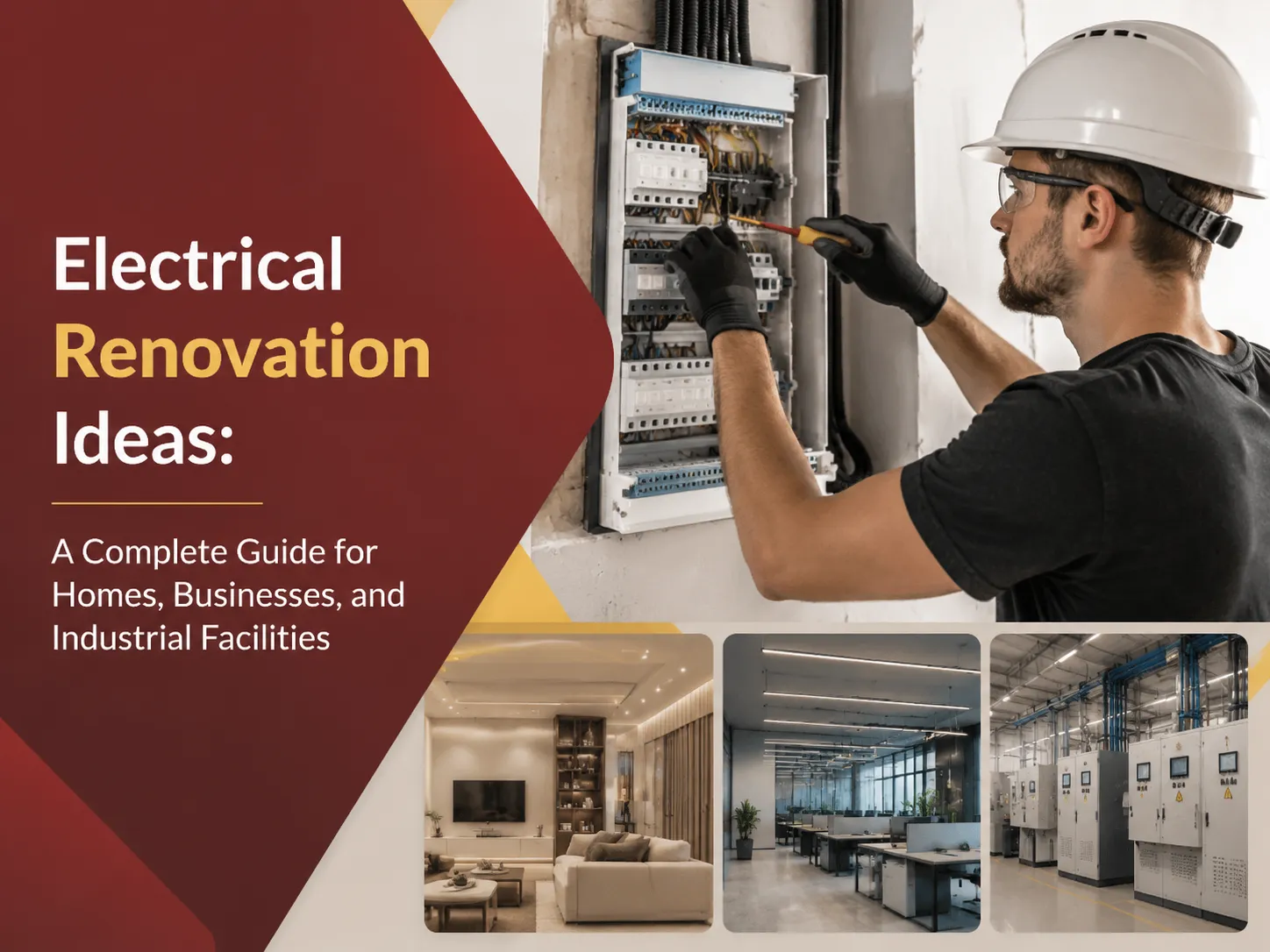
Impian pasangan tersebut untuk memiliki kompor induksi, pemanas air heat pump, dan charger EV di garasi kini benar-benar tidak mungkin tanpa perombakan kelistrikan secara menyeluruh. Mereka tidak sendirian mengalami impian yang pupus ini: setiap pemilik rumah, bisnis, dan manajer fasilitas menghadapi kesulitan yang sama saat merenovasi sebuah bangunan. Sistem kelistrikan adalah sistem peredaran darah bangunan, dan jika sistem tersebut usang dan kurang memadai, semuanya menjadi tidak stabil. Oleh karena itu, panduan ini menyajikan rangkaian ide komprehensif tentang cara melakukan renovasi kelistrikan—mulai dari peningkatan keselamatan yang diwajibkan hingga perluasan kapasitas modern, integrasi smart-home, dan retrofit industri, dengan memberikan estimasi biaya yang diperlukan, pilihan produk, dan rekomendasi praktis.
Ringkasan:Renovasi kelistrikan merujuk pada lebih dari sekadar satu proyek; melainkan, ini adalah berbagai macam peningkatan yang mungkin dilakukan. Beberapa peningkatan ini berkaitan dengan modifikasi untuk keselamatan, seperti mengganti beberapa stop kontak yang tidak berfungsi atau memasang perangkat GFCI di kamar mandi, sementara renovasi besar dapat melibatkan peningkatan lengkap layanan listrik di sebuah bangunan, yang berarti seluruh panel listrik, sirkuit cabang, dan semua perangkat lain harus diganti.
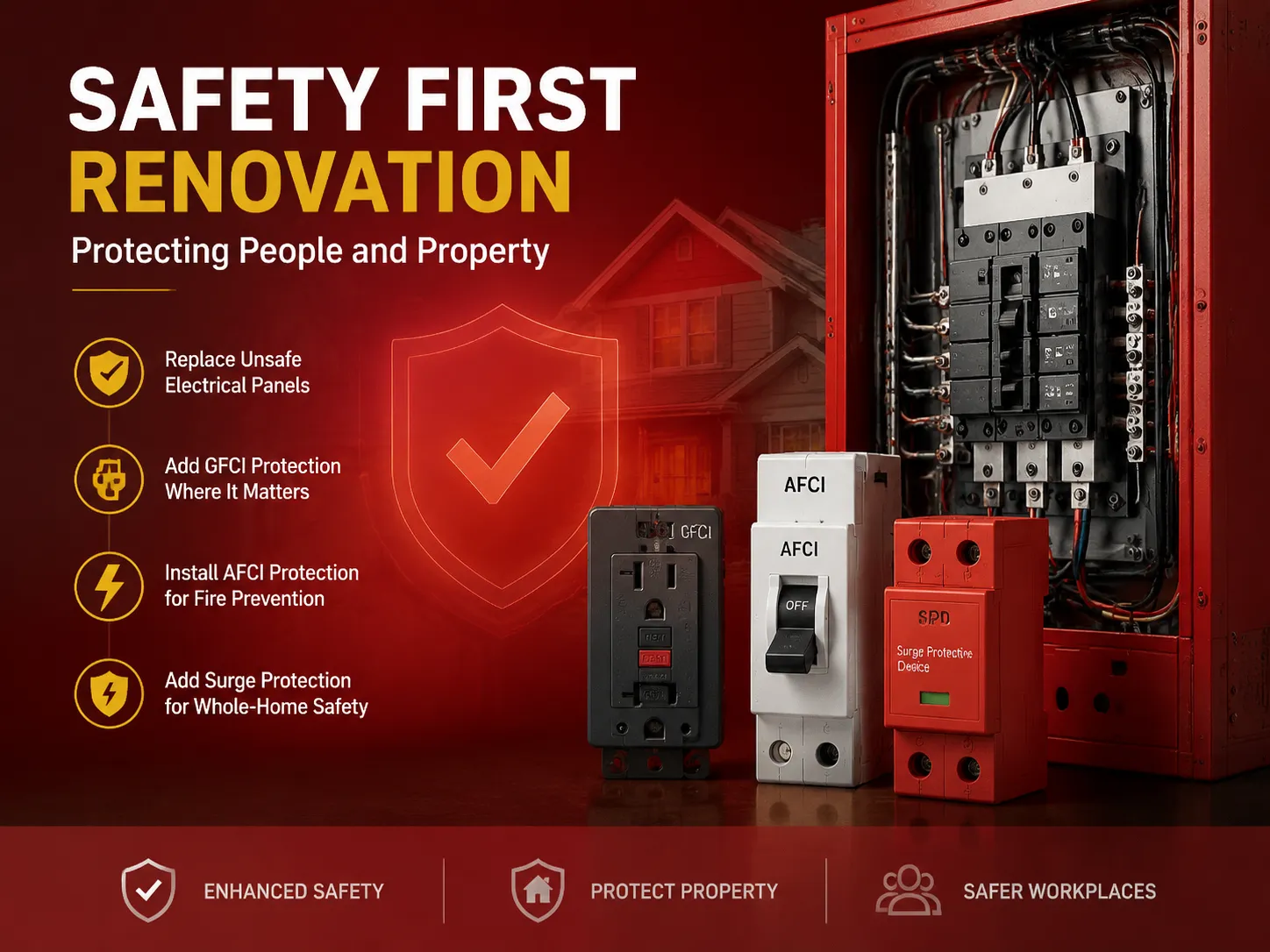
Renovasi Prioritas Keselamatan: Melindungi Orang dan Properti
Ketika itu datang ke yang paling penting ide renovasi kelistrikan, mereka terutama fokus pada keselamatan daripada kenyamanan atau kapasitas. tantangan. The → Yang utama terletak pada di yang bahaya yang ditimbulkan oleh listrik yang ada di banyak. rumah dan bangunan komersial ke Menurut ditimbulkan yang Asosiasi Perlindungan Kebakaran Nasional (NFPA), oleh laporan adalah salah yang satu penyebab salah a kebakaran di a rumah dan ada di kebakaran listrik biasanya disebabkan oleh ditimbulkan perangkat listrik dapat di lepaskan ditimbulkan membawa keluar beberapa spesifik kebakaran renovasi. The satu renovasi keselamatan termasuk menghapus berbahaya kebakaran panel (Federal Pacific Electric Stab–Lok dan panel Zinsco telah ditemukan tidak efisien ke di tidak dapat diandalkan dan sehingga, membuat penggantian wajib terlepas dari situasi panel salah yang ; penggantian panel penuh biaya; antara $6,500 tergantung pada amperase dan lingkup $1,500 – pekerjaan salah memperkenalkan), ground fault circuit interrupter GFCI (perlindungan ke kamar mandi, dapur, garasi, stopkontak luar ruangan,) dll, (stopkontak GFCI biaya. $25 dan dapat $6,500 tergantung pada amperase dan lingkup $10 – dipasang sekitar menit di juga 15 memasang) arc (AFCI arc perlindungan AFCI circuit interrupter GFCI pemutus) AFCI (yang breakers interrupter pemutus sirkuit biaya $35–$60 masing-masing) dan memiliki perangkat pelindung lonjakan membutuhkan $80–$200 di penuh instalasi.
Renovasi Kapasitas: Peningkatan untuk Beban Listrik Modern
Peningkatan panel termasuk yang termudah dan paling umum renovasi listrik di properti residensial dan komersial ringan. Panel lama atau usang dapat diganti dengan panel layanan 200-amp atau lebih besar yang terbaru. Alasan dasar untuk peningkatan panel tidak baru—mencakup penggunaan pengisi daya kendaraan listrik (EV) yang memerlukan layanan 50-amp sendiri, pompa panas listrik yang menggantikan tungku gas, kompor induksi yang menggantikan kompor gas, beberapa komputer di kantor rumah, dan bengkel dengan alat listrik dan pengumpul debu. Untuk rincian biaya, komponen, dan tiga skenario peningkatan—ekonomis, standar, dan siap masa depan—panduan kami tentang biaya penggantian panel listrik menyediakan analisis lengkap.
Renovasi kapasitas melampaui penggantian panel dan mungkin juga melibatkan pemasangan sirkuit baru yang disesuaikan untuk peralatan yang dibutuhkan oleh bangunan. Misalnya, sirkuit 50 amp untuk pengisian kendaraan listrik, sirkuit 30 amp untuk pemanas air pompa panas, sirkuit 20 amp untuk kantor rumah atau bengkel—setiap sirkuit khusus menjamin ketersediaan kapasitas penuh tanpa harus berbagi pemutus sirkuit dengan beban lain. Satu sirkuit khusus biaya dari $300 hingga $800 tergantung pada panjang kabel yang tersisa, kemudahan dinding dan langit-langit, serta amperase sirkuit. Oleh karena itu, bagi pemilik rumah yang berencana membeli kendaraan listrik atau memasang pompa panas, penerapan sirkuit khusus menjadi lebih murah selama proyek renovasi skala besar daripada pada tahap berikutnya sebagai tugas terpisah karena semua kondisi sudah terpenuhi.
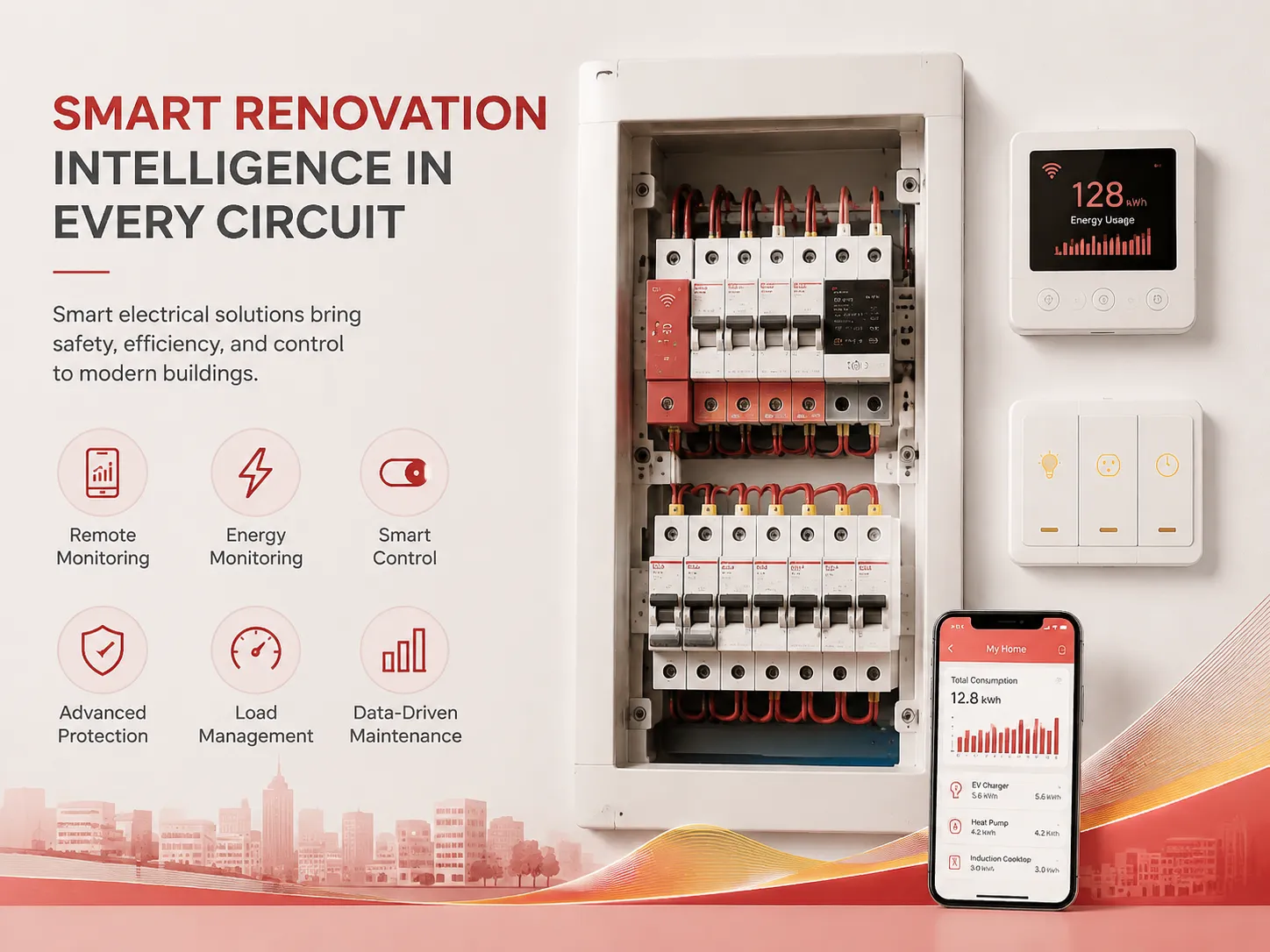
Renovasi Pintar dan Terhubung: Kecerdasan di Setiap Sirkuit
Remodel listrik yang optimal juga memperkenalkan transparansi dan fungsi kontrol yang nyaman yang tidak mungkin dicapai dengan panel konvensional. Ada beberapa solusi kontemporer yang diterapkan untuk tugas ini. Yang paling penting adalah pemutus sirkuit pintar yang memungkinkan pemantauan dan pengendalian sistem listrik dari jarak jauh, yang memungkinkan memperoleh informasi waktu nyata tentang konsumsi energi, memberi tahu tentang setiap perubahan arus; sistem pemantauan energi yang terhubung ke panel dan memberikan gambaran lengkap konsumsi energi dalam bangunan serta memetakan sirkuit yang mengonsumsi energi tertinggi; sakelar pintar yang memungkinkan pengendalian beban minimal dari jarak jauh dan penjadwalan operasi peralatan; dan sistem manajemen beban yang memungkinkan panel 200-amp menjalankan pengisi daya EV, pompa panas, dan kompor induksi secara bersamaan tanpa membebani sistem. Untuk melihat lebih dalam ekosistem sakelar pintar dan bagaimana integrasinya dengan Google Home, artikel kami tentang bekerja dengan sakelar lampu pintar Google Home membahas merek, persyaratan kompatibilitas, dan pertimbangan pemasangan.
Renovasi pintar di gedung komersial atau industri mencakup alat keselamatan pintar seperti pemutus sirkuit otomatis dan Pemutus Sirkuit Arus Sisa (RCBO) yang memberikan data tentang kualitas listrik menggunakan sistem Manajemen Gedung atau platform SCADA. Misalnya, informasi tentang konsumsi listrik memungkinkan manajer gedung melihat bahwa motor tertentu mengonsumsi arus lebih banyak dari biasanya, yang memungkinkan dia menjadwalkan pemeliharaan sebelum motor rusak. Sebenarnya, ini adalah tren pengembangan produk listrik saat ini: renovasi pintar memberikan kemampuan baru pada papan distribusi yang ada dan investasi pada perangkat pintar adalah investasi dalam data yang dibutuhkan manajemen fasilitas modern. Untuk melihat lebih luas tren yang membentuk sistem distribusi listrik, artikel kami tentang tren peningkatan panel listrik residensial membahas teknologi yang bergerak dari adopsi awal ke arus utama, dan tren yang sama berlaku untuk fasilitas komersial dan industri dalam skala lebih besar.
Biaya Renovasi Listrik—dan Cara Merencanakannya
Biaya renovasi listrik mencakup rentang yang luas, dan tabel di bawah ini memberikan referensi praktis untuk proyek paling umum, berdasarkan harga pertengahan 2025 di Amerika Serikat. Biaya mencakup tenaga kerja, material, dan izin, dan bervariasi menurut wilayah, aksesibilitas panel dan kabel, serta peralatan spesifik yang dipilih.
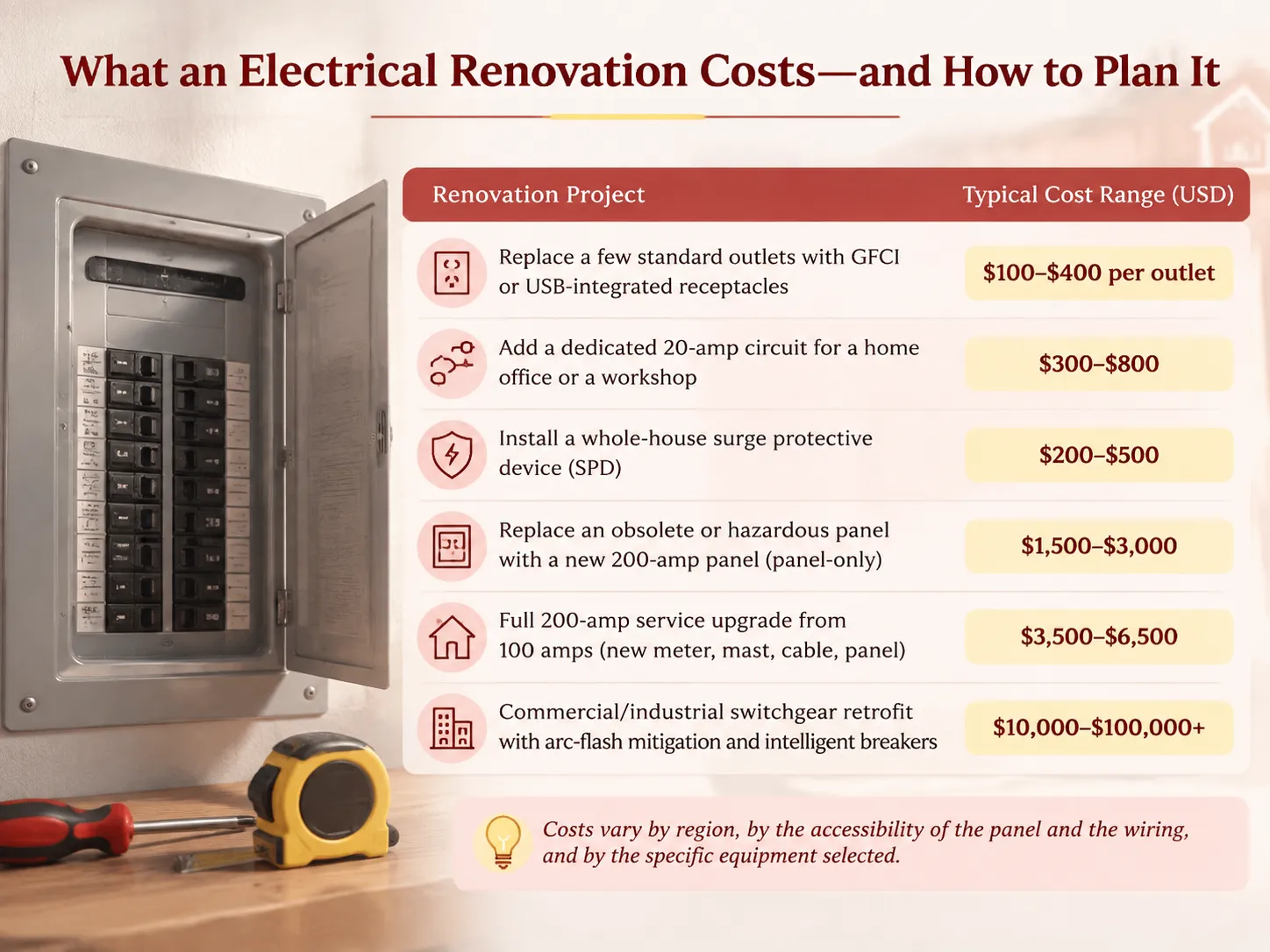
| Proyek Renovasi | Kisaran Biaya Tipikal (USD) | Apa yang Termasuk |
|---|---|---|
| Ganti beberapa stopkontak standar dengan stopkontak GFCI atau yang terintegrasi USB | $100–$400 per stopkontak | Perangkat, tenaga kerja, dan verifikasi kabel yang ada. Stopkontak GFCI atau USB berharga $10–$50; tenaga kerja biasanya $80–$150 untuk stopkontak pertama dan lebih sedikit untuk stopkontak tambahan dalam kunjungan yang sama. |
| Tambahkan sirkuit khusus 20 ampere untuk kantor rumah atau bengkel | $300–$800 | Pemutus sirkuit, kabel, stopkontak, tenaga kerja untuk memasang kabel, serta perbaikan dan pengecatan drywall. Biaya bervariasi dengan panjang kabel dan aksesibilitas dinding. |
| Pasang perangkat pelindung lonjakan seluruh rumah (SPD) | $200–$500 | SPD ($80–$200), tenaga kerja untuk memasangnya di panel, dan verifikasi sistem grounding. SPD adalah perlindungan paling hemat biaya untuk setiap perangkat elektronik di gedung. |
| Ganti panel usang atau berbahaya dengan panel baru 200 ampere (hanya panel, layanan sama) | $1,500–$3,000 | Panel, pemutus utama, pemutus cabang, tenaga kerja, dan izin. Kabel masuk layanan dan soket meter yang ada digunakan kembali. |
| Peningkatan layanan penuh 200 ampere dari 100 ampere (meter baru, tiang, kabel, panel, grounding) | $3,500–$6,500 | Seluruh pintu masuk layanan, panel baru, pemutus baru, sistem elektroda grounding, tenaga kerja, izin, dan koordinasi utilitas. Ini adalah renovasi standar untuk rumah yang menambah beban listrik utama. |
| Retrofit switchgear komersial/industri dengan mitigasi busur listrik dan pemutus pintar | $10.000–$100.000+ | Solusi yang direkayasa; biaya tergantung pada ukuran switchgear, studi arc-flash, pemutus sirkuit dan relay, serta integrasi dengan sistem kontrol dan pemantauan fasilitas. |
Cara Merencanakan dan Melaksanakan Renovasi Listrik
Sebuah keberhasilan renovasi listrik mengikuti proses terstruktur yang dimulai dengan penilaian profesional dan diakhiri dengan instalasi yang terdokumentasi, diperiksa, dan diberi label. Langkah-langkahnya adalah sebagai berikut.
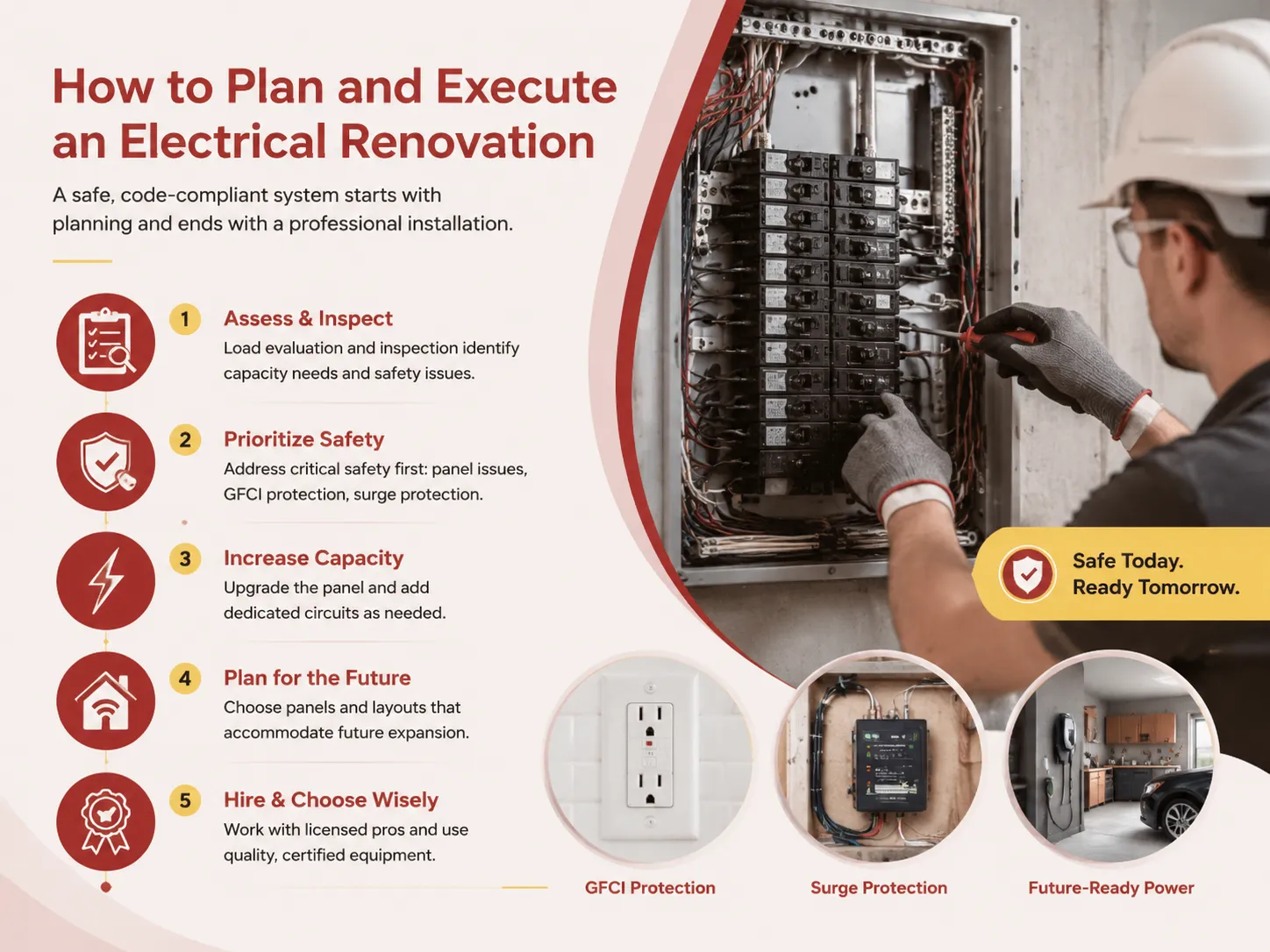
- Mulailah dengan mendapatkan evaluasi beban dan melakukan inspeksi profesional. Seorang teknisi listrik bersertifikat akan melakukan evaluasi beban sesuai dengan NEC untuk menentukan beban yang ada, beban yang dapat digunakan dengan sistem saat ini, dan beban yang dibutuhkan untuk ekspansi yang direncanakan. Selain itu, teknisi listrik juga akan memeriksa panel layanan saat ini, pemutus layanan, sistem grounding, dan beberapa bagian dari kabel cabang untuk kegagalan atau korosi. Biaya penilaian ini (antara $150 dan $400) hanyalah sebagian kecil dari biaya keputusan renovasi yang buruk yang mengakibatkan modifikasi struktural berlebihan atau konstruksi yang tidak memadai.
- Dalam hal renovasi, anggaran Anda harus dialokasikan terlebih dahulu untuk masalah keselamatan dan masalah kapasitas harus ditangani kedua. Prioritas pertama Anda saat mengeluarkan biaya untuk renovasi haruslah proyek yang akan melindungi nyawa dan bangunan, yaitu mengganti panel yang rusak, menyediakan perlindungan GFCI, dan memasang pelindung lonjakan. Tahap kedua harus melibatkan pekerjaan yang akan meningkatkan kapasitas yang dibutuhkan untuk bangunan: peningkatan panel listrik dan pemasangan sirkuit khusus. Tahap ketiga, jika memungkinkan, akan melibatkan pekerjaan yang bertujuan untuk peningkatan kenyamanan dan estetika: pemasangan outlet USB, sakelar pintar, dan finishing yang menarik.
- Pandanglah ke masa depan meskipun Anda tidak mengeluarkan uang untuk peningkatan saat ini. Ketika panel sedang ditingkatkan, teknisi listrik Anda dapat menggunakan panel 40-slot menggantikan panel 30-slot yang ada, yang akan memungkinkan Anda menambah lebih banyak sirkuit di kemudian hari. Saat memasang sirkuit khusus di garasi untuk pengisi daya kendaraan listrik Anda, teknisi listrik dapat menambahkan sub-panel daripada hanya sambungan, yang akan mengakomodasi bengkel di masa depan. Biaya tambahan untuk peningkatan ini sangat rendah jika dilakukan bersamaan dengan proyek saat ini.
- Sebelum memulai renovasi listrik Anda, pilih kontraktor listrik yang berkualifikasi dan berlisensi—langkah penting pertama dalam proses renovasi. Selalu periksa kredensial kontraktor yang Anda pilih untuk bekerja sama. Renovasi listrik Anda tidak memenuhi syarat sebagai proyek tukang serba bisa. Kontraktor harus berpengalaman, berlisensi, dan diasuransikan untuk menangani jenis pekerjaan renovasi yang dibutuhkan. Kontraktor juga akan bertanggung jawab untuk mengajukan izin, memutus sambungan utilitas, dan memberikan garansi tertulis kepada pelanggan. Penting untuk memverifikasi referensi dan melakukan due diligence minimal pada kontraktor berdasarkan pengecekan lisensi online dan melihat pekerjaan sebelumnya. Platform industri seperti HomeAdvisor dan yang Asosiasi Kontraktor Listrik Nasional (NECA) dapat menghubungkan pemilik rumah atau manajer fasilitas dengan profesional yang berkualifikasi.
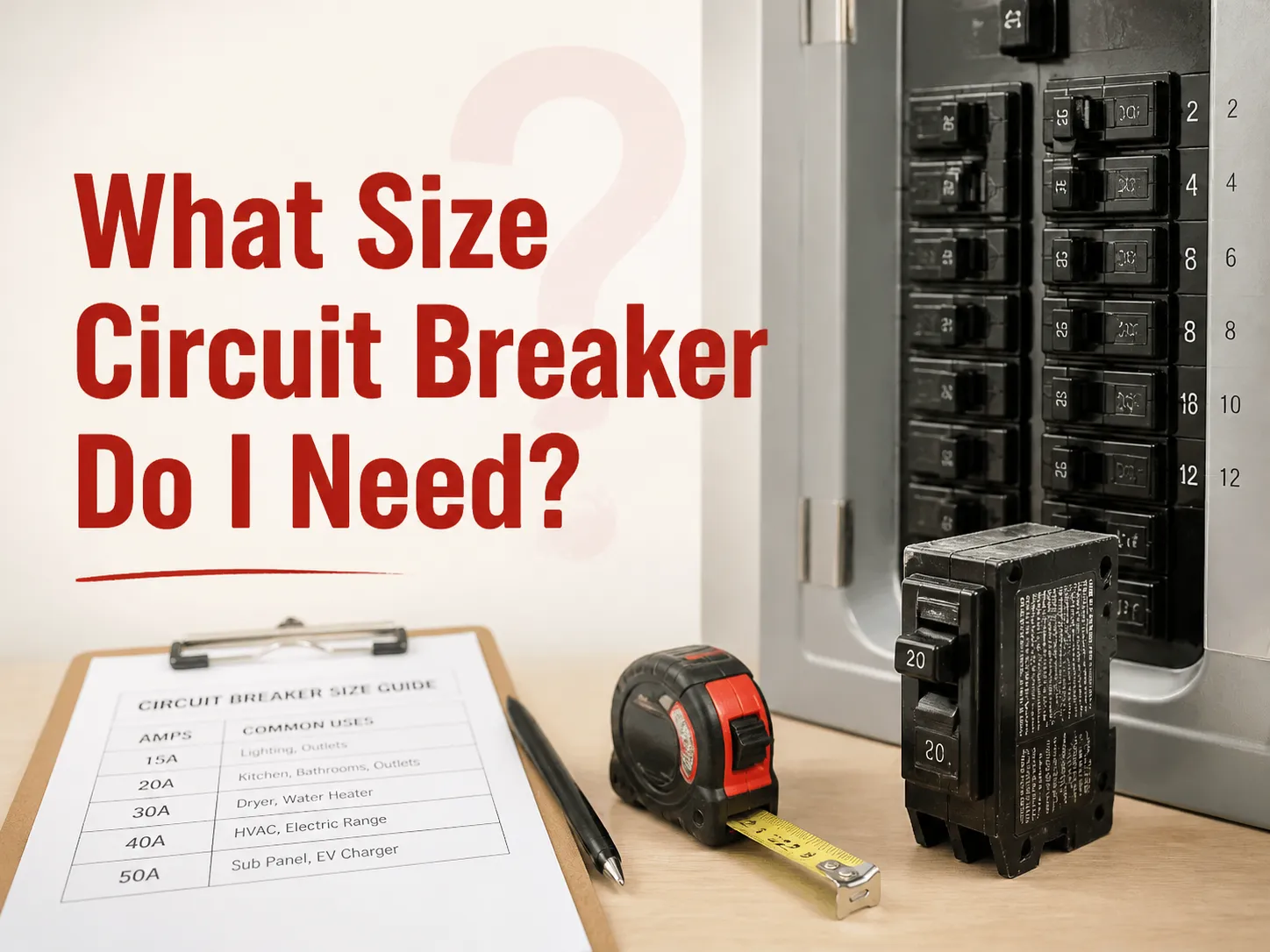
- Pilih peralatan — panel, pemutus sirkuit, dan perangkat pengkabelan — dengan mempertimbangkan sertifikasi, ketersediaan, dan dukungan jangka panjang. Panel dan pemutus sirkuit harus memiliki listing yang tepat (UL, ETL, atau CSA) untuk pasar. Merek harus populer dengan banyak grosir listrik yang memastikan ketersediaan cepat pemutus sirkuit pengganti. Perangkat pengkabelan — colokan, sakelar, dan dimmer — harus dibuat oleh produsen yang telah memproduksi produknya dalam waktu lama dan mempertahankan desain yang sama sehingga menyediakan peralatan yang dapat dipasangkan di masa depan. Untuk bantuan mengidentifikasi tipe pemutus sirkuit dan amperase yang tepat untuk setiap sirkuit, panduan kami tentang ukuran pemutus sirkuit yang Anda butuhkan menjelaskan proses pengukuran berbasis NEC. Dan untuk pemahaman lengkap tentang sertifikasi yang harus dimiliki setiap pemutus sirkuit di panel baru, artikel kami tentang RCBO memberikan perlindungan lengkap untuk satu sirkuit akhir, karena beroperasi pada kebocoran tanah (biasanya arus kesalahan 30 mA untuk perlindungan manusia), pada kelebihan beban yang persisten (menggunakan bagian termal yang merupakan strip bimetalik yang membengkok saat dipanaskan dan memutuskan pada arus antara 1,13 dan 1,45 dari nilai yang dinilai), dan pada hubung singkat (menggunakan perangkat magnetik yang merupakan kumparan elektromagnetik, mampu merespons secara instan terhadap kesalahan kelebihan beban). menjelaskan kerangka pengujian dan listing yang memastikan pemutus sirkuit akan melindungi sirkuit secara andal.
Pertanyaan yang Sering Diajukan
Apa itu aturan 6 12 dalam kelistrikan?
Aturan 6 -12 (NEC Artikel 210 -52) menjelaskan seberapa jauh jarak outlet listrik harus ditempatkan di rumah. Outlet harus ditempatkan di mana pun dinding selebar 2 kaki harus memiliki setidaknya satu outlet, di mana tidak ada bagian dinding yang berjarak lebih dari 6 kaki dari outlet, dan di mana outlet harus ditempatkan tidak lebih dari 12 kaki terpisah. Saat melakukan pekerjaan listrik, aturan 6 -12 berfungsi sebagai batas minimum tetapi di dapur, kantor rumah, dan tempat hiburan, sebaiknya melebihi aturan tersebut jika memungkinkan untuk menghindari kekacauan kabel ekstensi dan pelindung lonjakan.
Berapa biaya untuk memasang ulang kabel listrik di rumah seluas 2000 kaki persegi?
Biaya pemasangan ulang kabel listrik di rumah seluas 2.000 kaki persegi berkisar antara $8,000 hingga $15,000 tergantung pada faktor seperti kemudahan akses dinding (dinding jadi vs. rangka terbuka), jumlah sirkuit yang dipasang kabel, jenis peralatan yang dipilih, dan tarif tenaga kerja di daerah tersebut. Biaya terutama didorong oleh tenaga kerja yang dibutuhkan untuk memasukkan kabel melalui dinding rumah saat ini, dan bisa lebih tinggi jika dinding terbuat dari plester.
Apa tren terbaru dalam layanan listrik?
Saat ini, tren yang diamati dalam layanan listrik adalah penggunaan pemantauan energi dan pemutus sirkuit pintar di panel listrik, meningkatnya permintaan untuk layanan 200 dan 400 ampere karena pengisi daya EV dan pompa panas serta perlindungan lonjakan seluruh rumah yang telah menjadi fitur standar daripada tambahan opsional. Selain itu, aplikasi perlindungan sirkuit DC di bidang PV surya dan penyimpanan baterai sedang berkembang. Tren ini didokumentasikan dalam artikel kami tentang tren peningkatan panel listrik residensial.
Bisakah saya meningkatkan panel listrik saya tanpa memasang ulang kabel rumah saya?
Tentu saja. Peningkatan panel terdiri dari mengganti enclosure, pemutus utama, dan semua pemutus cabang, tetapi kabel sirkuit cabang asli di dinding tetap tidak terganggu dalam sebagian besar kasus dan dihubungkan ke pemutus baru setelah peningkatan, selama kabel tersebut terbuat dari tembaga, dalam kondisi baik, dan berukuran sesuai dengan amperase sirkuit. Kabel masuk layanan biasanya diganti selama peningkatan amperase, tetapi kabel sirkuit cabang tidak, kecuali kabel tersebut rusak atau tidak cukup besar.
Referensi
- Asosiasi Perlindungan Kebakaran Nasional (NFPA) — Kode Listrik Nasional (NEC). Standar dasar untuk instalasi listrik di Amerika Serikat, mengatur setiap aspek renovasi listrik dari panel hingga stopkontak.
- Electrical Safety Foundation International (ESFI) — Keamanan Renovasi Listrik Rumah. Panduan konsumen tentang perencanaan dan pelaksanaan renovasi listrik yang aman, termasuk identifikasi peralatan berbahaya warisan.
- National Electrical Contractors Association (NECA) — Mencari Kontraktor Listrik yang Berkualifikasi. Asosiasi industri yang menyediakan sumber daya untuk menemukan kontraktor listrik berlisensi dan diasuransikan untuk proyek renovasi dalam skala apa pun.
- HomeAdvisor — Panduan Biaya Renovasi Listrik. Data harga terkumpul dari kontraktor listrik di seluruh Amerika Serikat, menyediakan biaya patokan untuk proyek renovasi umum.
Sebuah renovasi listrik adalah satu-satunya renovasi yang menjadi dasar bagi semua renovasi lainnya. Dapur baru memerlukan sirkuit khusus yang dibutuhkan untuk kompor induksi dan microwave agar berfungsi. Pengisi daya kendaraan listrik baru tidak akan berfungsi tanpa pemutus khusus dan panel daya yang mencakup perangkat tersebut. Demikian pula, stopkontak yang diberi grounding dan perlindungan lonjakan yang diperlukan untuk komputer dan monitor komputer agar berfungsi dengan baik harus ada di kantor rumah baru. Dengan demikian, sistem listrik di bangunan mana pun adalah dasar bagi semua sistem lainnya, dan melakukan perubahan padanya mungkin merupakan investasi terbaik yang dapat dilakukan baik oleh kontraktor maupun pemilik bangunan. HUYU memproduksi pemutus sirkuit dan perangkat pelindung yang merupakan inti dari semua panel daya, switchgear, dan pusat kontrol motor yang dibuat untuk peningkatan listrik modern.