
คุณเชื่อมต่อเครื่องเป่าผม และปลั๊กในห้องน้ำก็มีเสียงคลิก ปิดไฟขณะที่ปุ่ม “TEST” ดีดออก หรือเครื่องเย็นหยุดทำงาน เนื่องจากปลั๊ก GFCI ในห้องครัว หรือแม้แต่คุณได้รับไฟฟ้าช็อตเล็กน้อยเมื่อสัมผัสเครื่องซักผ้า เหตุการณ์เหล่านี้บ่งชี้ถึงความผิดปกติของกราวด์ฟอลต์ ซึ่งเป็นหนึ่งในปัญหาไฟฟ้าที่พบบ่อยและอันตรายที่สุดในบ้านและสภาพแวดล้อมการทำงาน การรู้ว่ากราวด์ฟอลต์คืออะไร เกิดขึ้นอย่างไร และวิธีป้องกัน อาจช่วยชีวิตคุณได้.
ในคู่มือนี้ ผู้เขียนจะอธิบายกราวด์ฟอลต์ด้วยคำศัพท์ง่าย ๆ ว่าคืออะไร เกิดขึ้นอย่างไร อะไรทำให้มันอันตราย วิธีการทำงานของ GFCI วิธีการระบุ และวิธีซ่อมแซม.
ในคำง่าย ๆ: กราวด์ฟอลต์สามารถนิยามได้ว่าเป็นเส้นทางที่ไม่ตั้งใจให้ไฟฟ้าไหลจากตัวนำไฟฟ้าที่มีไฟฟ้าไปยังกราวด์ — ซึ่งอาจเป็นพื้นผิวโลหะกราวด์ของเครื่องใช้ ท่อ หรือดิน ซึ่งอาจเกิดขึ้นได้หากฉนวนไฟฟ้าชำรุด สายไฟที่มีกระแสไฟฟ้าสัมผัสกับตัวโลหะ หรือมีน้ำที่เชื่อมต่อไฟฟ้ากับกราวด์ เนื่องจากร่างกายมนุษย์ก็สามารถทำหน้าที่เป็นทางไปยังกราวด์ได้ นี่คือเหตุผลที่กราวด์ฟอลต์ประเภทนี้อันตราย — เพราะในกรณีเกิดกราวด์ฟอลต์ กระแสไฟฟ้าอาจไหลผ่านร่างกายมนุษย์.
กราวด์ฟอลต์ในคำง่าย ๆ
ในวงจรไฟฟ้าทั่วไป กระแสไฟฟ้าไหลผ่านสายไฟ ทำงานของมัน และกลับผ่านสายกลางโดยไม่ถูกรบกวน กราวด์ฟอลต์คือสถานการณ์ที่กระแสไฟฟ้าไหลออกจากเส้นทางที่ควรจะเป็นและหาทางผ่านโครงโลหะของเครื่องใช้ น้ำ หรือท่อประปา หรือผ่านร่างกายมนุษย์.
กล่าวอีกนัยหนึ่ง ให้คิดถึงสายยางรดน้ำที่น้ำไหลจากก๊อกไปยังสปริงเกลอร์ แต่เมื่อสายยางขาด น้ำจะไหลออกจากสาย และถ้าคุณอยู่ในละอองน้ำนี้ คุณจะเปียก ดังนั้นในวงจรไฟฟ้า เมื่อกระแสไฟฟ้ารั่วไหล เช่นเดียวกับสายยาง หากกระแสไฟฟ้านั้นไหลผ่านร่างกายมนุษย์ คุณจะได้รับไฟฟ้าช็อต.
อะไรเป็นสาเหตุของกราวด์ฟอลต์?
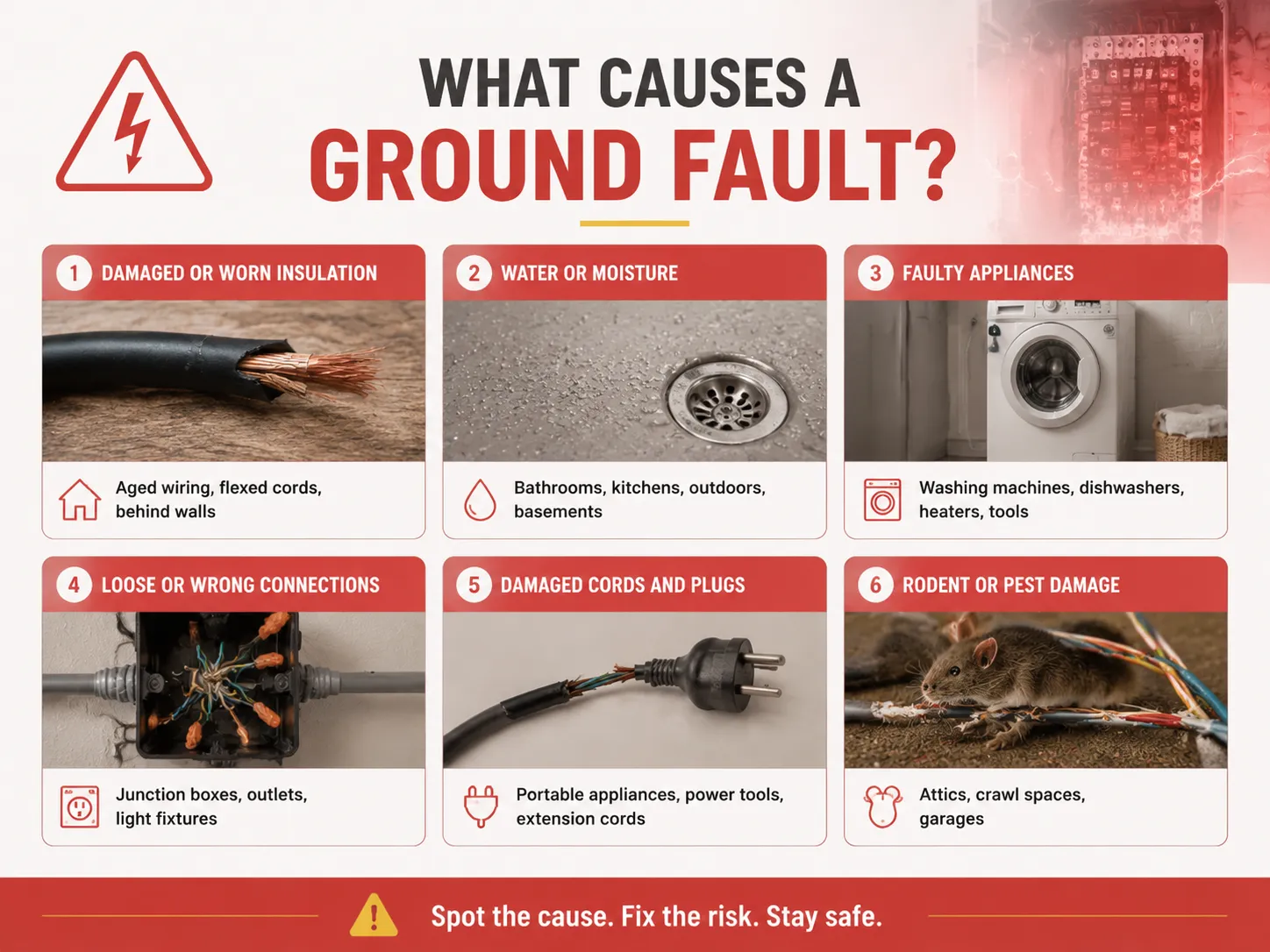
กราวด์ฟอลต์มักเกิดจากสถานการณ์เหล่านี้:
| สาเหตุ | วิธีการเกิด | ตำแหน่งทั่วไป |
|---|---|---|
| ฉนวนไฟฟ้าชำรุดหรือสึกหรอ | ฉนวนสายไฟแตก ขูดขีด หรือถูกหนูแทะ ทำให้สายไฟที่มีกระแสไฟฟ้าเปิดเผยกับโลหะ | สายไฟเก่า สายไฟที่ถูกงอ ซ่อนอยู่หลังผนัง |
| น้ำหรือความชื้น | น้ำเชื่อมต่อระหว่างส่วนที่มีกระแสไฟฟ้ากับกราวด์ แม้ปริมาณน้ำน้อยก็สามารถนำกระแสไฟฟ้ารั่วไหลได้ | ห้องน้ำ ห้องครัว กลางแจ้ง ห้องใต้ดิน |
| เครื่องใช้ไฟฟ้าชำรุด | สายไฟภายในล้มเหลวและสัมผัสกับโครงโลหะของเครื่องใช้ | เครื่องซักผ้า เครื่องล้างจาน เครื่องทำความร้อน เครื่องมือ |
| การเชื่อมต่อหลวมหรือผิดพลาด | สายไฟร้อนสัมผัสกับสายกราวด์ ท่อ หรือกล่องโลหะ | กล่องต่อสาย ปลั๊กไฟ โคมไฟ |
| สายไฟและปลั๊กเสียหาย | สายไฟถูกตัด หนีบ หรือหลอมละลาย ทำให้ตัวนำไฟฟ้าเปิดเผย | เครื่องใช้ไฟฟ้าพกพา เครื่องมือไฟฟ้า สายต่อ |
| ความเสียหายจากหนูหรือแมลง | หนูแทะฉนวนสายไฟในห้องใต้หลังคาและผนัง | ห้องใต้หลังคา พื้นที่ซ่อนตัว โรงรถ |
ทำไมกราวด์ฟอลต์จึงอันตราย?
ความผิดปกติของกราวด์เป็นภัยคุกคามด้วยสองเหตุผล – การช็อตและไฟไหม้.
- อันตรายจากการช็อต: ร่างกายมนุษย์เป็นตัวนำไฟฟ้าที่ดี หากคุณสัมผัสกับอุปกรณ์ใด ๆ ที่เกิดความผิดปกติของกราวด์และคุณสัมผัสกับพื้นผ่านสภาพเปียก กระแสไฟฟ้าจะไหลผ่านตัวคุณ กระแสไฟฟ้าอาจมีขนาดเล็กเพียง 10-20 mA ซึ่งจะทำให้กล้ามเนื้อหดเกร็งจนคุณไม่สามารถปล่อยการจับได้ กระแสไฟฟ้าอาจสูงถึง 100 mA ซึ่งจะเป็นอันตรายถึงชีวิต GFCIs ถูกออกแบบมาเพื่อตรวจจับความผิดปกติของกราวด์ที่ต่ำถึง 4-6 mA.
- อันตรายจากไฟไหม้: หากกระแสไฟฟ้ารั่วผ่านวัสดุที่มีความต้านทานสูง จะเกิดความร้อนขึ้น ความผิดปกติของกราวด์ที่ต่อเนื่องจะทำให้วัสดุนั้นร้อนขึ้นและอาจทำให้เกิดไฟไหม้ในจุดที่ไม่มีการเชื่อมต่อกราวด์ที่เหมาะสม.
ส่วนที่น่าเศร้าคือความผิดปกติของกราวด์อาจไม่ทำให้เบรกเกอร์วงจรทำงาน เบรกเกอร์วงจรมาตรฐานจะทำงานเฉพาะเมื่อเกิดการโอเวอร์โหลดหรือไฟฟ้าลัดวงจรเท่านั้น.
ความผิดปกติของกราวด์ เทียบกับ ไฟฟ้าลัดวงจร เทียบกับ ความผิดปกติของอาร์ค
คำสามคำนี้มักสับสนกัน แต่มีความหมายที่แตกต่างกัน:
| คำศัพท์ | เกิดอะไรขึ้น | ตัวอย่าง | การป้องกัน |
|---|---|---|---|
| ความผิดปกติของกราวด์ | กระแสไฟฟ้ารั่วจากสายร้อนไปยังกราวด์ (ดิน, โลหะ, น้ำ) | สายร้อนสัมผัสกับโครงเครื่องใช้ไฟฟ้า | GFCI (เต้ารับหรือเบรกเกอร์) |
| ไฟฟ้าลัดวงจร | กระแสไฟฟ้าไหลจากสายร้อนตรงไปยังสายกลางโดยไม่มีโหลด | สายร้อนและสายกลางสัมผัสกัน | เบรกเกอร์วงจร / ฟิวส์ (กระแสไฟฟ้าสูง) |
| ความผิดปกติของอาร์ค | ประกายไฟ/อาร์คตามสายไฟที่เสียหาย (มักเป็นช่วงสั้น ๆ) | สายไฟที่ถูกบาดในผนังเกิดอาร์คข้ามช่องว่าง | AFCI (อุปกรณ์ตัดวงจรความผิดปกติของอาร์ค) |
ความผิดปกติของกราวด์หมายถึงสถานการณ์ที่กระแสไฟฟ้าสัมผัสและไหลไปยังกราวด์ ไฟฟ้าลัดวงจรเกิดขึ้นเมื่อสายร้อนสัมผัสกับสายกลาง หากมีการเกิดอาร์คไฟฟ้า จะเรียกว่าความผิดปกติของอาร์ค ปัจจุบัน GFCIs, AFCIs และเบรกเกอร์วงจรถูกใช้เป็นอุปกรณ์ป้องกันทั้งหมด.
วิธีที่ GFCIs ปกป้องคุณ: อุปกรณ์ตัดวงจรความผิดปกติของกราวด์
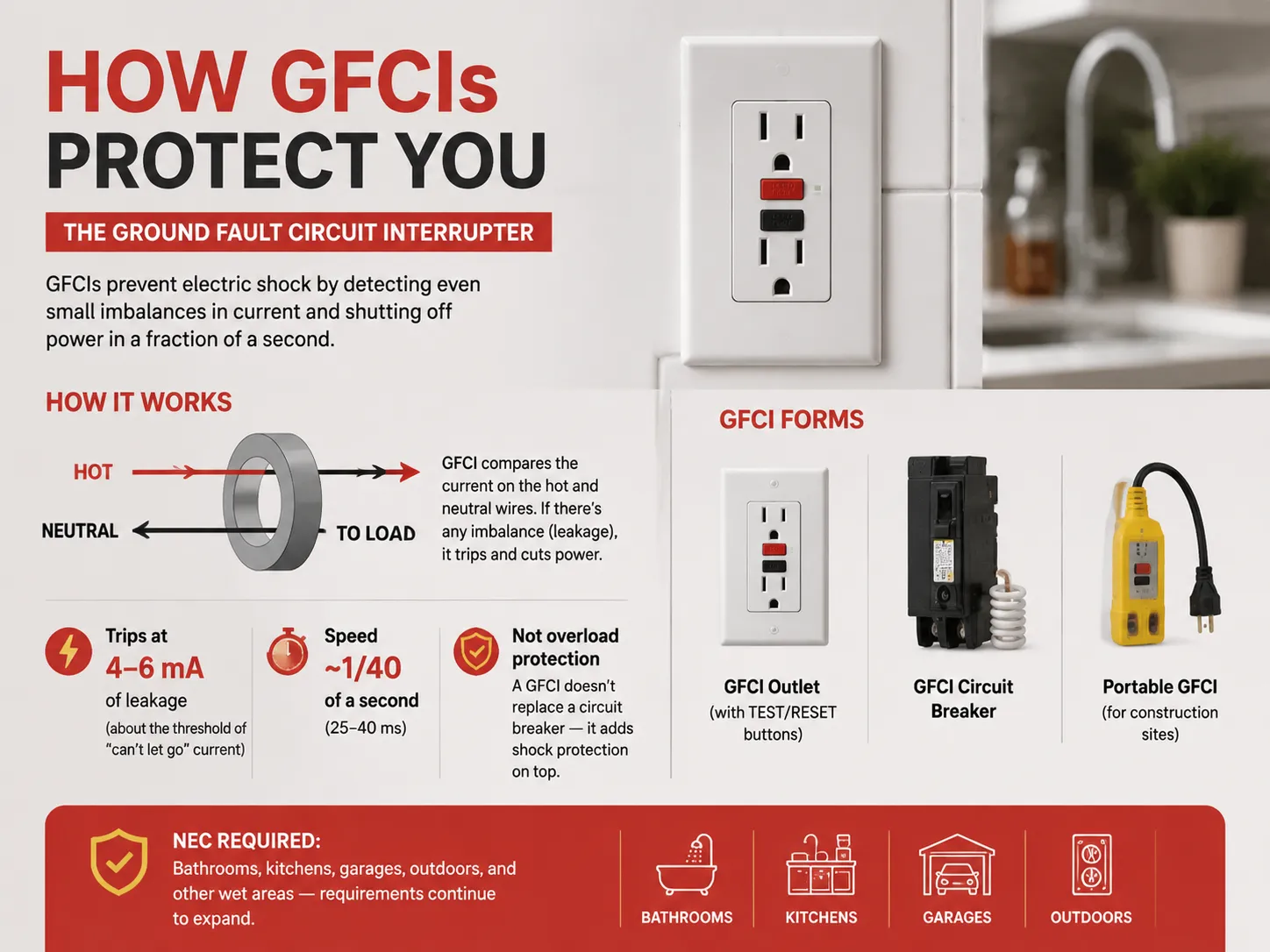
Ground Fault Circuit Interrupter (GFCI) คืออุปกรณ์ที่ป้องกันการช็อตไฟฟ้าที่อาจเป็นอันตรายถึงชีวิตซึ่งเกิดจากความผิดพลาดของกราวด์ หลักการทำงานค่อนข้างง่าย: กระแสไฟฟ้าที่ไหลเข้าสายร้อนจะเท่ากับกระแสที่ไหลกลับผ่านสายกลาง GFCI ใช้หม้อแปลงกระแสภายในเพื่อเปรียบเทียบกระแสทั้งสอง และหากมีความไม่สมดุล จะตรวจจับได้ว่ามีการรั่วไหลในวงจรที่ใดที่หนึ่ง.
- ตัดวงจรที่: 4–6 mA ของการรั่วไหล (เกณฑ์วิกฤตที่ทำให้คนถูกช็อต)
- ความเร็ว: ~1/40 วินาที (25 ถึง 40 มิลลิวินาที)
- รูปแบบ: ปลั๊ก GFCI, เบรกเกอร์วงจร และ GFCI แบบพกพาสำหรับไซต์งาน
- ไม่ใช่การป้องกันโอเวอร์โหลด: GFCI ไม่ได้ทำหน้าที่แทนเบรกเกอร์วงจร
ดังนั้น การปฏิบัติตามมาตรฐานการป้องกันความผิดพลาดของกราวด์จึงมีความสำคัญมาก เนื่องจาก National Electrical Code (NEC) ได้กำหนดให้มีการป้องกันความผิดพลาดของกราวด์มาหลายปี เพื่อทำความเข้าใจมาตรฐานและวิธีการออกแบบ GFCI เราได้เจาะลึกใน ความหมายเต็มของ GFCI และวิธีการทำงาน ครอบคลุมอุปกรณ์อย่างละเอียด การเปรียบเทียบของเราเกี่ยวกับ เบรกเกอร์วงจรกับ GFCI แสดงตำแหน่งที่เหมาะสมของแต่ละอุปกรณ์ในระบบของคุณ และหากคุณกำลังจัดหาฮาร์ดแวร์ป้องกัน ซีรีส์ VR-11 RCCB เป็นตัวอย่างทั่วไปของการป้องกันกระแสไฟตกค้างที่ถูกออกแบบมาในรูปแบบเบรกเกอร์สมัยใหม่.
พื้นที่ที่ต้องใช้ GFCI
การป้องกันความผิดพลาดของกราวด์จำเป็นเมื่อใดก็ตามที่มีความเสี่ยงต่อการถูกช็อต ซึ่งมักเกิดขึ้นเมื่ออยู่ใกล้น้ำ กลางแจ้ง หรือเมื่อผู้คนสัมผัสกับพื้นผิวกราวด์ พื้นที่ทั่วไปที่มาตรฐานไฟฟ้าสมัยใหม่กำหนดให้มีการติดตั้ง ได้แก่:
- ห้องน้ำ (ปลั๊กทั้งหมด)
- ปลั๊กบนเคาน์เตอร์ครัว (ภายใน 6 ฟุตจากอ่างล้างจาน)
- โรงรถและชั้นใต้ดินที่ยังไม่เสร็จ
- ปลั๊กภายนอก
- พื้นที่ใต้บ้านและพื้นที่ที่ยังไม่เสร็จ
- ห้องซักผ้า / อ่างล้างจานอเนกประสงค์
- บริเวณสระว่ายน้ำ สปา และอ่างน้ำร้อน
- เครื่องใช้ไฟฟ้าบางชนิด (วงจรสำหรับเครื่องล้างจานและเครื่องบดขยะ)
สามารถติดตั้ง GFCI ในบ้านเก่าที่ไม่มี Ground Fault Circuit Interrupters (GFCI) ได้โดยการเปลี่ยนปลั๊กตัวแรกในวงจรปัจจุบันเป็นปลั๊ก GFCI — ซึ่งจะป้องกันอุปกรณ์ทั้งหมดที่เชื่อมต่อกับวงจรนั้นจากการถูกช็อตได้.
วิธีตรวจสอบว่าคุณมีความผิดพลาดของกราวด์หรือไม่
ความผิดพลาดของกราวด์สามารถแสดงออกได้หลายรูปแบบ ดังนั้นจึงสำคัญที่จะต้องสังเกตสัญญาณเหล่านี้ เมื่อประเมินความผิดพลาดของกราวด์ ให้ใส่ใจสิ่งต่อไปนี้:
- หาก GFCI ตัดวงจรบ่อย: หาก GFCI ไม่สามารถรีเซ็ตหรือยังคงตัดวงจรอยู่ นั่นมักบ่งชี้ว่ามีความผิดพลาดของกราวด์ในสายไฟ.
- หากคุณได้รับการช็อต: หากมีการช็อตจากเครื่องจักรหรือโครงเหล็ก นั่นเป็นสัญญาณอันตราย.
- หากเบรกเกอร์วงจรตัด: หากเบรกเกอร์วงจรตัดโดยไม่มีสาเหตุชัดเจน นี่เป็นเรื่องที่ควรกังวล (โดยเฉพาะกับ GFCI).
- หากมีเสียงฮัมใกล้ปลั๊ก: ความสงบและอุปกรณ์ที่เกี่ยวข้องกับความเงียบสงบ.
- หากมีกลิ่นสายไฟไหม้ใกล้ปลั๊ก สวิตช์ หรือเครื่องจักร: นี่เป็นสัญญาณของการร้อนขึ้นของกระแสไฟเนื่องจากการรั่วไหลของกระแส.
- หากคุณพบว่าภายนอกเครื่องจักรร้อน: คุณจะรู้สึกถึงการสั่นสะเทือนหรือการช็อตขณะทำงานกับอุปกรณ์.
หากเกิดเหตุการณ์ใด ๆ ข้างต้น ให้หยุดใช้เครื่องมือนี้ทันทีและตรวจสอบโดยด่วน.
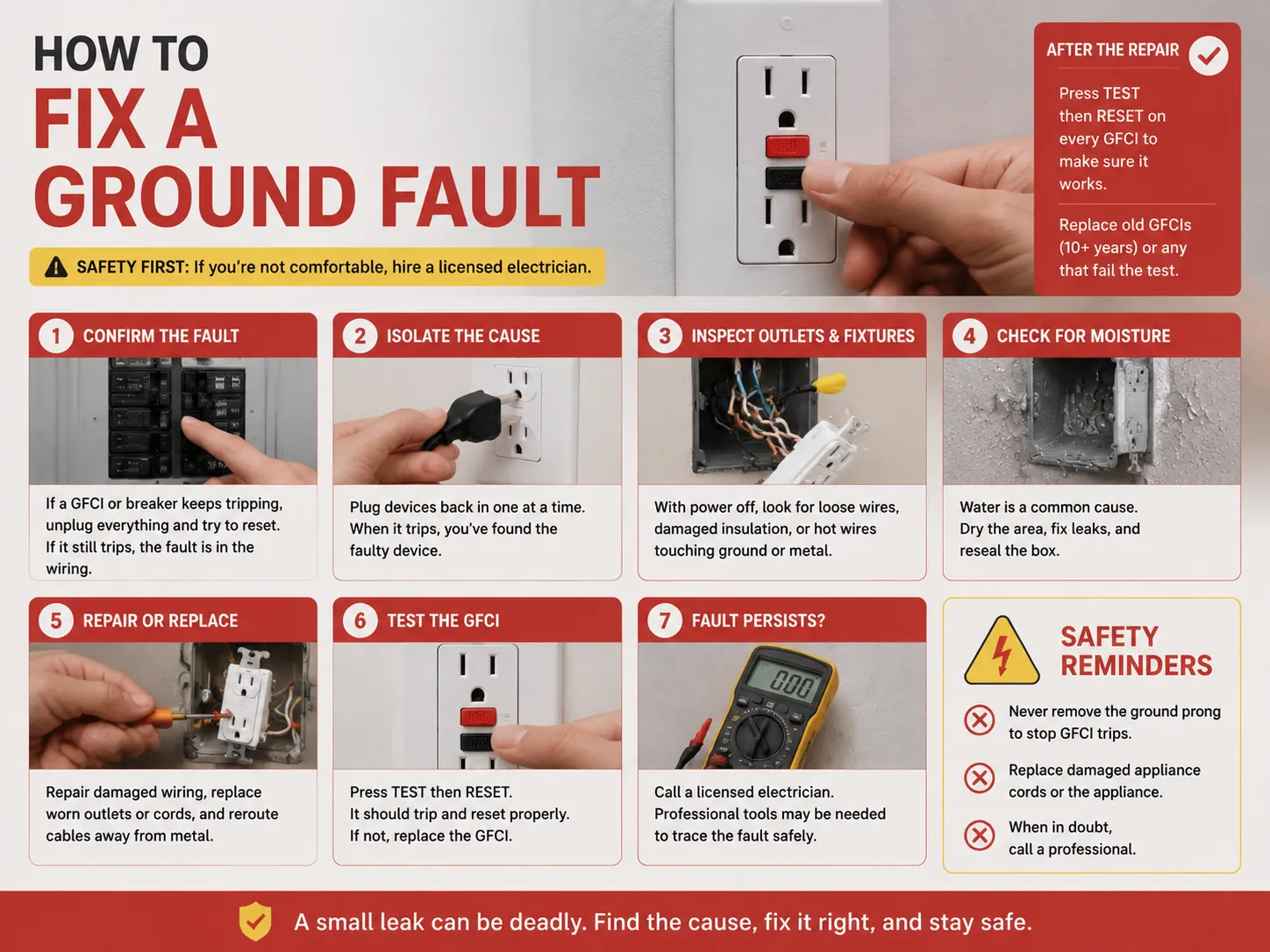
วิธีแก้ไขข้อผิดพลาดกราวด์
การแก้ไขข้อผิดพลาดกราวด์เป็นกระบวนการที่เป็นระบบ และงานไฟฟ้าอาจเป็นอันตราย—หากคุณไม่มั่นใจ ให้เรียกช่างไฟฟ้าที่มีคุณสมบัติเหมาะสม ขั้นตอนทั่วไปมีดังนี้:
- ระบุข้อผิดพลาด: หาก GFCI หรือเบรกเกอร์ตัดบ่อย ปัญหาอยู่ที่วงจรนั้น ถอดปลั๊กทุกอย่างออกจากวงจรและรีเซ็ตเพื่อดูว่ายังตัดอยู่หรือไม่ หากไม่ตัด แสดงว่าปัญหาอยู่ในวงจรเอง หากตัด แสดงว่าข้อผิดพลาดอยู่ในสายไฟถาวร.
- หาข้อผิดพลาดโดยใช้เหตุผลเชิงอนุมาน: เสียบอุปกรณ์ทีละชิ้นเพื่อตรวจสอบว่าอุปกรณ์ใดทำให้ GFCI ตัด.
- ตรวจสอบเต้ารับและอุปกรณ์ติดตั้ง: ปิดไฟที่แผงควบคุม เปิดกล่องเต้ารับและตรวจสอบสายไฟที่หลวม ฉนวนเสียหาย สายไฟร้อน สายกราวด์ หรือความเสียหายจากความชื้น.
- ตรวจหาความชื้น: น้ำเป็นสาเหตุหลักของข้อผิดพลาดกราวด์ในห้องน้ำ ห้องครัว ห้องใต้ดิน และพื้นที่กลางแจ้ง ทำให้กล่องแห้ง ซ่อมแซมรอยรั่ว และปิดผนึกใหม่.
- ทำการซ่อมแซม: แก้ไขปัญหาโดยตรง ไม่ว่าจะเป็นการซ่อมเทป เปลี่ยนเต้ารับ หรือเปลี่ยนสายไฟที่ชำรุด.
- ทดสอบ GFCI: ตอนนี้ GFCI ควรทำงาน กดปุ่ม TEST และ RESET บนแต่ละหน่วย GFCI เพื่อให้แน่ใจว่าทำงานถูกต้อง หากคุณมี GFCI รุ่นเก่ากว่า 10 ปี หรือไม่สามารถทดสอบได้อย่างถูกต้อง ควรติดตั้งใหม่.
- ติดต่อช่างไฟฟ้าที่มีคุณสมบัติหากปัญหายังคงอยู่ ข้อผิดพลาดกราวด์ที่เกิดขึ้นอย่างต่อเนื่องในสายไฟถาวรอาจต้องใช้มัลติมิเตอร์หรือเมกเกอร์เพื่อติดตามปัญหา—เครื่องมือทางเทคนิคขั้นสูงที่ต้องใช้ผู้เชี่ยวชาญในการใช้งานอย่างถูกต้อง.
หากปัญหาเกิดจากเครื่องใช้ไฟฟ้าที่ชำรุด อย่าพยายามซ่อมสายไฟเพียงอย่างเดียว—ให้เปลี่ยนเครื่องใช้ไฟฟ้า อย่าตัดขั้วกราวด์ของเครื่องใช้ไฟฟ้าเพื่อแก้ปัญหา GFCI เพราะจะทำให้ความปลอดภัยลดลง.
วิธีป้องกันข้อผิดพลาดกราวด์
ติดตั้ง GFCI ในทุกพื้นที่เปียกหรือกลางแจ้ง — ขั้นตอนง่าย ๆ นี้เป็นการป้องกันที่ดีที่สุดที่คุณจะได้รับ.
- รักษาน้ำให้ห่างจากไฟฟ้า: อย่าใช้เครื่องจักรใกล้อ่างล้างมือหรืออ่างอาบน้ำ อย่าวางสายไฟบนพื้นเปียก และใช้เฉพาะเต้ารับและฝาครอบที่เหมาะสมสำหรับกลางแจ้ง.
- ตรวจสอบสายไฟอย่างสม่ำเสมอ: เปลี่ยนสายไฟทันทีที่พบรอยแตกหรือถูกสัตว์กัด.
- หลีกเลี่ยงการใช้งานวงจรเกินกำลัง: ความร้อนเกินทำให้ฉนวนเสียหายและเกิดข้อผิดพลาดอื่น ๆ.
- ใช้อุปกรณ์ที่เหมาะสมสำหรับใช้งานกลางแจ้ง: อุปกรณ์กันน้ำ เต้ารับกลางแจ้งที่มี GFCI ป้องกัน เครื่องมือพกพาที่มี GFCI.
- ป้องกันสายไฟจากสัตว์และความเสียหายทางกายภาพ: ปิดรูที่สัตว์อาจเข้ามา และอย่าวางสายไฟผ่านพรมหรือทางเข้าออกประตู.
- ทดสอบ GFCI ทุกเดือน: กด TEST – ควรตัด; กด RESET – ควรคืนค่า.
คำถามที่พบบ่อย
คุณจะแก้ไขข้อผิดพลาดกราวด์อย่างไร?
The first thing to do is confirm that everything on the circuit is unplugged, and then try resetting the ground fault circuit interrupter (GFCI) or circuit breaker. If the circuit is still live, plug in the appliances one at a time — when it trips, you will know which appliance is causing the problem. If even with everything unplugged the circuit trips, the problem lies in the fixed wiring: turn off power supply to the circuit, open the switches and/or outlet boxes, and check for faulty connections or any wires that are allowing electricity to touch any other wire or metal box. Fix the issue and test the circuit. If problems persist, call an electrician.
What is a ground fault in simple terms?
To put it simply, a ground fault is when electricity goes off course and ends up in the ground. Normally, the flow of electricity goes from the power line to the neutral line. A ground fault occurs when the electricity finds another way to the ground through a broken wire touching a metal device, through water, or through a person. This is dangerous because a person can conduct the electricity. A GFCI device detects such leak at a very low level of 4 to 6 milliamperes and cuts off the current immediately before a serious shock happens.
How do you know if you have a ground fault?
The indications of a ground fault are as follows: a GFCI socket does trip time and again or cannot be reset; a circuit breaker is activated without visible cause; an appliance causes you to feel a tingling or minor shock; humming or crackling can be heard from an outlet; an offensive odor is detected; or the surface of an appliance makes you feel uncomfortable. If your appliance has GFIC protection, it will be the first indicator.
What causes a ground fault?
The reasons that this occurs most often are: wire insulation that has broken or been damaged (for example, cracked, worn, or eaten by rodents), water touching live wires and grounding them (for instance, in bathrooms, kitchens, open air), wrong wiring in appliances and metal bodies touching their wires, loose or incorrect connections, or damaged wiring or plugs. In other words: any situation in which live wires may come into contact with the ground.
อ้างอิง
- NFPA 70 — National Electrical Code (NEC), Article 210.8: GFCI requirements
- UL 943 — Standard for Ground-Fault Circuit-Interrupters
- OSHA — electrical safety and ground fault protection requirements (29 CFR 1926.404)
- U.S. Consumer Product Safety Commission — electrical safety guidance
- Electrical Safety Foundation International — GFCI and ground fault safety resources
- Siemens — ground fault protection technical documentation
สรุป
Ground fault is an undesirable current flow from a live wire to the ground and is one of the most serious electrical problems. This situation occurs when there is faulty insulation, water, a malfunctioning appliance, or loose connection. This situation is dangerous because even a small leak of 30 mA can kill a person and is not detected by a regular circuit breaker.
GFCIs are used to solve the issue here since these devices can detect leaks in a range of 4 to 6 mA and interrupt the flow of electricity in just 1/40 of a second. Thus GFCIs are required by the building codes everywhere where people and water interact.
It is important to learn the symptoms of the ground fault and test the GFCIs every month. Make sure the cables and wires are inspected regularly as well.And when you’re building or upgrading a system, choose protection devices from manufacturers that meet the relevant standards. HUYU Global manufactures certified RCCBs, RCBOs, and MCBs built to IEC standards — the kind of residual-current and overcurrent protection that works alongside GFCIs to keep circuits safe. For the difference between residual current devices and breakers, our คู่มือ RCCB vs RCBO is a good next read.