
The price of circuit breakers in Bangladesh in 2026 is primarily determined by three factors that do not pertain to the circuit breaker itself: the import duty, the local distribution margin of the brand, and whether the circuit breaker was imported through an authorized or gray market channel. Hence, for example, a 32 A miniature circuit breaker may be sold for 250 Taka in Dhaka and 900 Taka in Dhaka, and both sellers can earn profits.
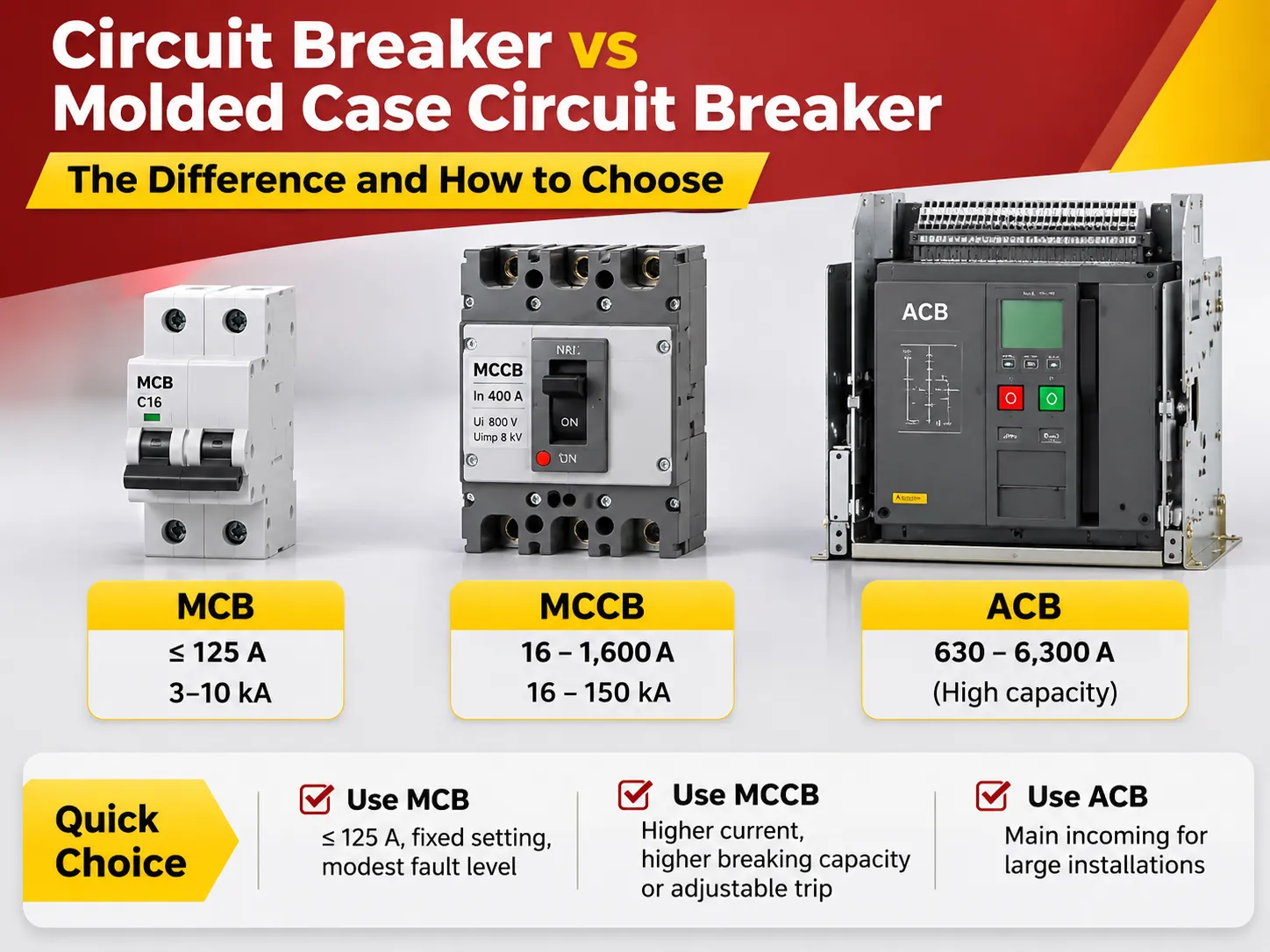
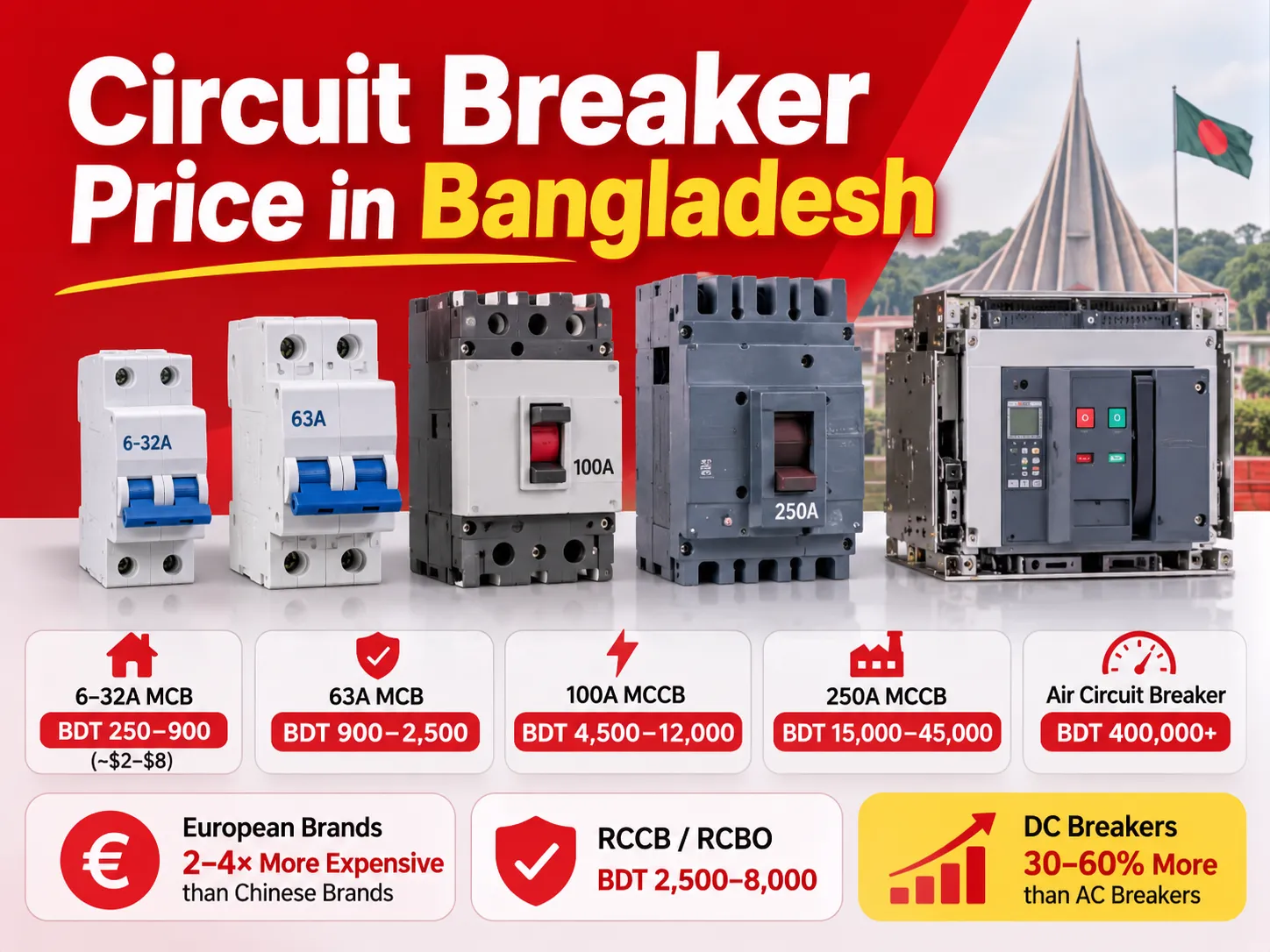
In brief, a 6 to 32 A Miniature Circuit Breaker is about Taka 250-900 in Dhaka; a 63 A MCB sells for approximately Taka 900-2,500; a 100 A Moulded Case Circuit Breaker can be found for Taka 4,500-12,000; Taka 15,000-45,000 for a 250 A MCCB; and Taka 400,000 and above for an Air Circuit Breaker. RCCBs and RCBOs fall between Taka 2,500-8,000. The cost of branded European products is typically two to four times that of comparable Chinese products, as the premium is for a local service desk and a verifiable certificate rather than for a better mechanism. DC circuit breakers typically cost 30-60% more than AC circuit breakers of the same current rating.
The following sections provide costs for circuit breakers by type, current rating, brand type, current type, and the overall cost, including compliance and duty fees. The final section discusses the points of failure for cheap circuit breakers and how to estimate project budgets.
The Cost of Circuit Breakers in Bangladesh in 2026
Most circuit breakers in Bangladesh are imported. Their cost includes the manufacturer’s price plus freight, duty, VAT, the margin for the importer and the retailer. Therefore, a circuit breaker in Dhaka typically costs 40% – 60% more than its FOB price and so comparing local quotes against Alibaba offers can be misleading.
The exchange rate of BDT to USD plays an equal role as the tariffs. In 2026, the exchange rate is expected to be approximately BDT 120 to BDT 125 per USD and, therefore, a circuit breaker quoted at USD 6 FOB will cost around BDT 730 before any duty and the price it ends up selling for at retail (between BDT 1,100 to BDT 1,300) is reasonable, not inflated.
There are three types of buying segments in the electrical market. Residential and commercial sectors purchase miniature circuit breakers from electrical supply shops in Dhaka, Chittagong and Sylhet. Industrial projects purchase moulded case circuit breakers and air circuit breakers from authorised distributors based on a specification. The utility sector and the government sector purchase electrical equipment through competitive tenders against a specification that has standards, brand categories and certification of testing.
Each row in the table below compares pricing of individual products by the lowest price of a product to the highest price of the same type. In every case the ratio between the lowest priced product and the highest priced product ranges from two to four times. The differences primarily stem from brand name and certification rather than from the inherent capabilities of the products. For example, the lowest priced 32 A Miniature Circuit Breaker (MCB) manufactured by a reputable manufacturer might be able to interrupt 6 kA at a maximum.
Therefore, every 32 A MCB manufactured by a quality manufacturer is capable of 6 kA interruption, however the consistency of calibration, the quality of the plating, and whether you can validate the certification varies greatly among manufacturers. Therefore MCB ranges that publish both their calibration tolerance and their breaking capacity classes are easier to provide comparisons than MCB ranges that only publish their current ratings.
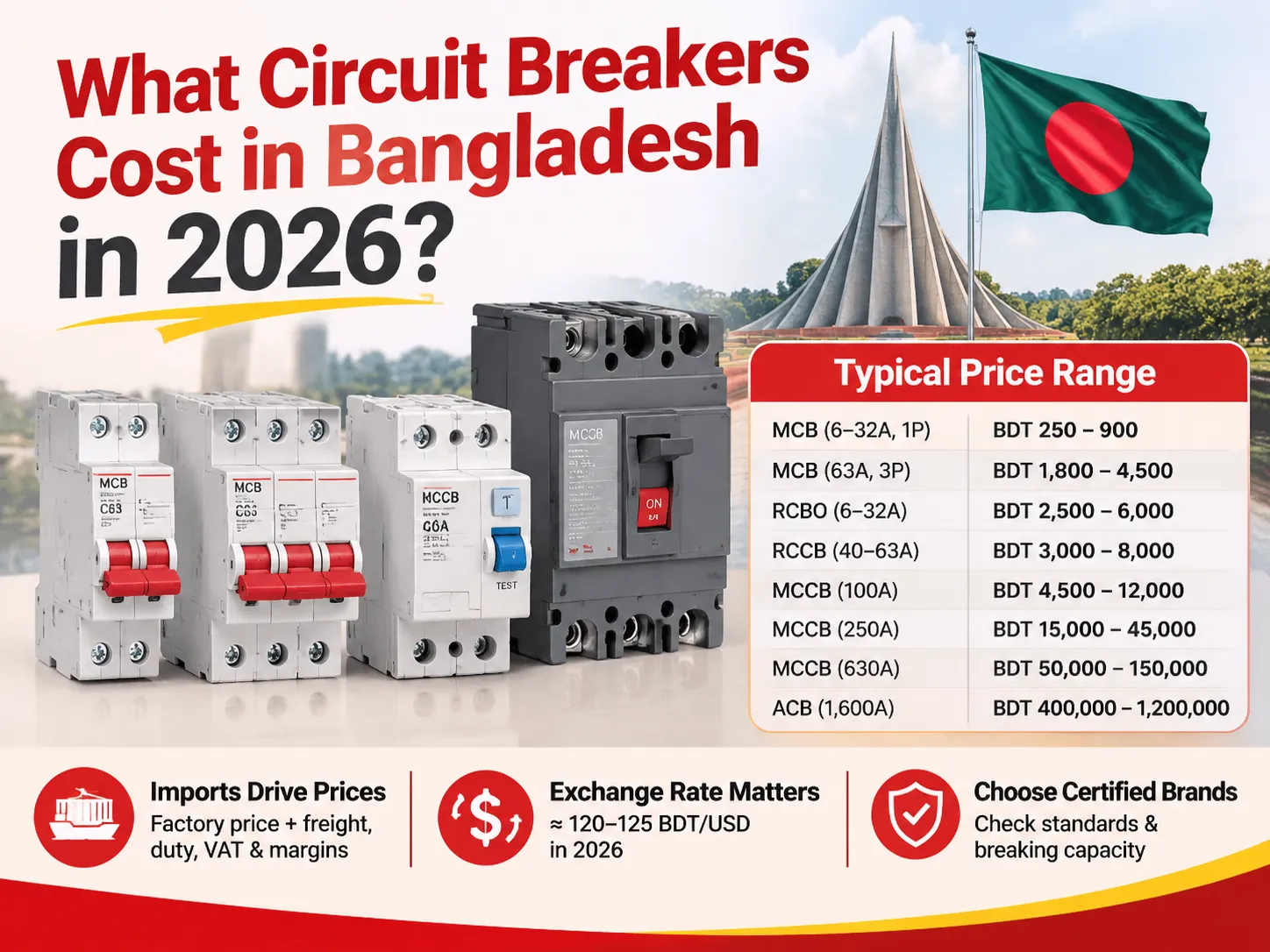
Pricing by Rating; Within a Type
For an individual product family, increasing current does not provide proportional price increases for the same product. By knowing the incremental price steps within each type of product, you can more accurately budget for your purchase.
| Rating step | Effect of Price | เหตุผล |
|---|---|---|
| MCB 6 A to 32 A | Almost flat, 10-25% | Identical housing, identical mechanism, differing calibration |
| MCB 32 A to 63 A | Doubles | Larger housing, heavier contacts, 10 kA class |
| MCB 63 A to 125 A | Triples again | Different frame, primarily three pole only |
| MCCB 100 A to 250 A | Three times | Frame size, breaking capacity, trip unit |
| MCCB 250 A to 630 A | Three/four times | Electronic trip option, busbar connections |
| Price Benefit of 6 kA Breaker vs. 10 kA Breaker | +30-50% | Heavier arc chute, larger contacts |
| The Price Benefit of Thermomagnetic vs. Electronic Trip | Two to three times | Current transformers, processor, setting adjustments |
The practical implications are such that a board containing many small circuits is less expensive than a board containing a few large circuits. An example of this is the lower cost of a 12-way domestic board containing mini circuit breakers compared to the cost of one 250 A moulded case breaker. This is an important consideration when preparing and dividing the project budget. Another example is the moulded case breaker at the upper end of the scale, which has the ability to cover the range of 16-250 A on a single frame with an adjustable thermal magnetic trip, allowing for the creation of a sub-main with an affordable schedule vs. a list of numerous individual devices.
Why are AC and DC Breakers So Different in Price
The cost of a DC breaker compared to an AC breaker is 30-60% higher due to the arc.
In an AC circuit, there are two half cycles or zero-crossings for every complete cycle, at which time the arc extinguishes naturally; therefore, the arc only need to be prevented from being reignited by the circuit breaker. In contrast, a DC circuit does not have any zero-crossings, so an arc must be extinguished with external means of lengthening the arc, cooling the arc, and splitting the arc across multiple electrodes; therefore, the arc chute for a DC circuit must be larger, there must be more electrodes, and more powerful magnetic forces must be used to pull apart the arcs, all within the same space as an AC circuit.
In Bangladesh, solar applications for DC power have grown rapidly, and the increase in price for solar applications can be seen in the price of DC circuit breakers. For example, the price for a DC circuit breaker with a current rating of 32 amps used in a string combiner ranges from 1200 to 3000 BDT, whereas the equivalent, AC-rated circuit breaker is priced at 400 to 900 BDT; thus, again, the price difference is due to the design of DC-rated circuit breakers.
With regard to safety, DC-rated circuit breakers should not be used or replaced with AC-rated circuit breakers because they are incapable of extinguishing arcs and can be unintentionally closed when the AC circuit breaker fails. Unfortunately, replacing AC circuit breakers with DC circuit breakers is common practice in small solar power installations; hence the reason for the distinctly different markings found on DC-rated devices.
Brand Tiers and What the Premium Buys
Premium European brands offer Bangladeshi consumers three specific advantages: local technical support, verifiable certifications through a manufacturer’s database, and readily available stock inventory. Local technical support is important when dealing with protection schemes; whereas, the certificate is required by consultants for compliance with local regulations; and stock is maintained to mitigate issues caused by failure of breakers, especially in hospitals, where the expected lead time for replacement breaker delivery could be up to three weeks.
Although the pricing for Chinese tier one and local assembly brands may be more attractive for residents and small factories, the most important factor when selecting a device is knowing for certain that there is a valid and traceable certification. The device must also have a verifiable calibration certificate because these devices have the highest potential for failure, which creates the need for fast replacement of breakers if the load ultimately exceeds 100 amps. At this point, the decision-making process regarding molded case breaker supply becomes increasingly complicated, due primarily to the number of devices purchased individually versus packaged together.
Between the factory and the retail shelf, there are three costs that account for most of the difference between an FOB price and the retail price in Dhaka.
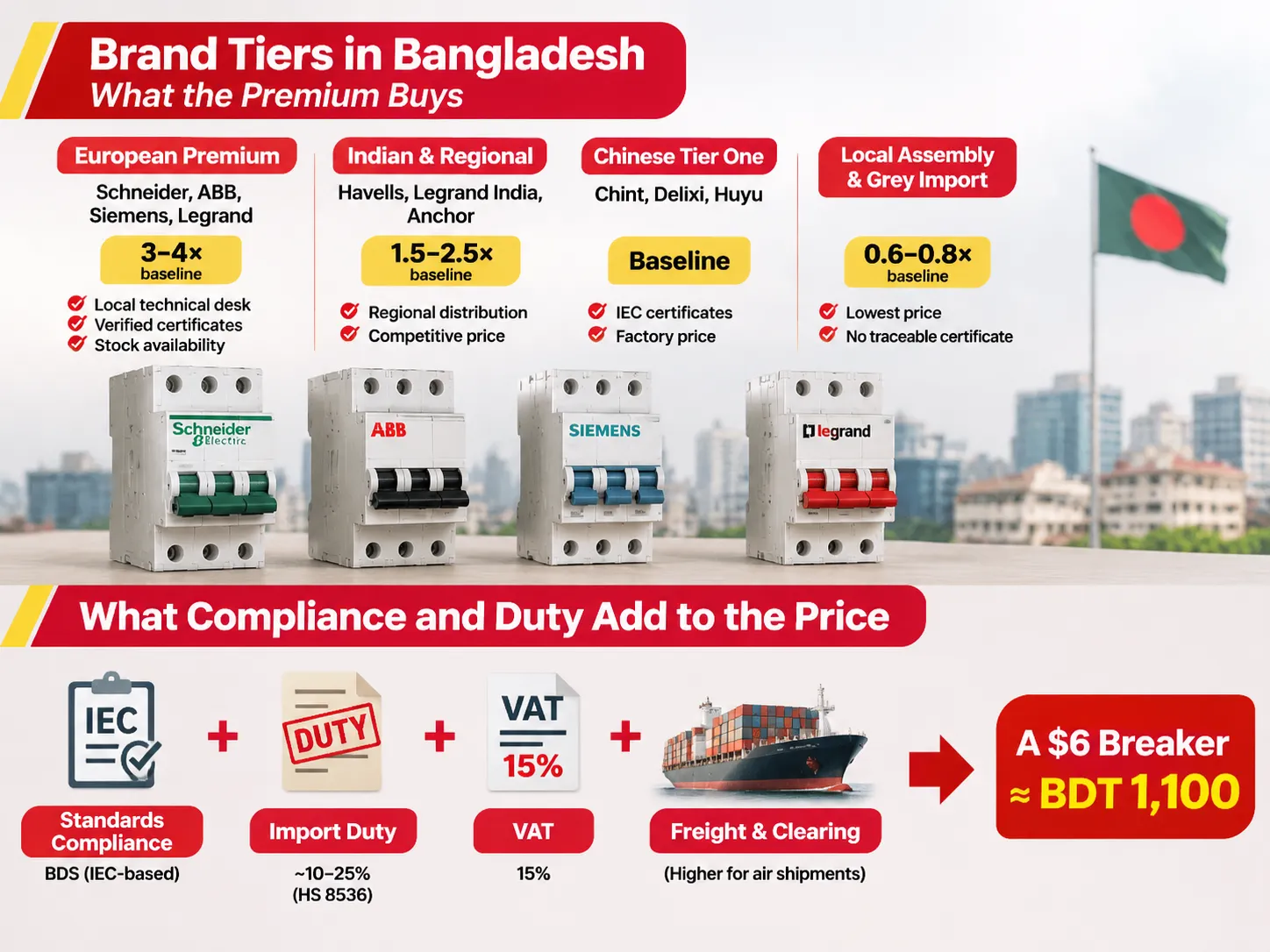
What Compliance and Duty Add to the Price
The compliance with International Electrotechnical Commission (IEC) standards has been adopted for Bangladesh using Bangladesh Standards and Testing Institution (BSTI) equivalent(s). The BSTI certifies circuit breakers to allow them to be sold in Bangladesh; therefore, a circuit breaker needs to have been tested for compliance against the appropriate IEC standard in order to be deemed compliant, regardless of the label the manufacturer uses, and a test certificate serves as proof of compliance.
Import Duties on Circuit breakers fall under the Harmonized System (HS) classification of HS 8536. The import duty percentage rate applied to circuit breakers depends on their specific HS classification/subheading as well as whether or not the importer has an import concession and will range from approximately 10-25% of the Custom Invoice Value (CIF) amount; therefore, it is important to confirm the classification/subheading prior to shipping, rather than after shipping.
VAT is applied to an assessed value of 15% on the cost of the product at the time of Importation and again at the time of Sale; this figure explains the difference in the retail price for a circuit breaker that costs $6; therefore, a circuit breaker that costs $6 would sell at a retail shelf price of BDT 1,100 (rupees)/BDT 900 (rupees, respectively); VAT applies equally to all brands.
Freight & clearance represent the remaining part of the price difference between the FOB price and the Price on Shelf in Dhaka. While the cost per unit shipped in a full container of Miniature Circuit Breakers (MCB) is significantly less than that of a single Molded Case Circuit Breaker (MCCB) shipped via Air freight, the urgent Replacement of an MCCB from Bangladesh has a significantly higher shipping price than the same item included in a project shipment.
Where Inexpensive Products are Not as Effective
The main causes for the discrepancy between an electrical component that is effective for 20 years versus one that is only effective for three years come from four different areas that are typically not observable on the parts.
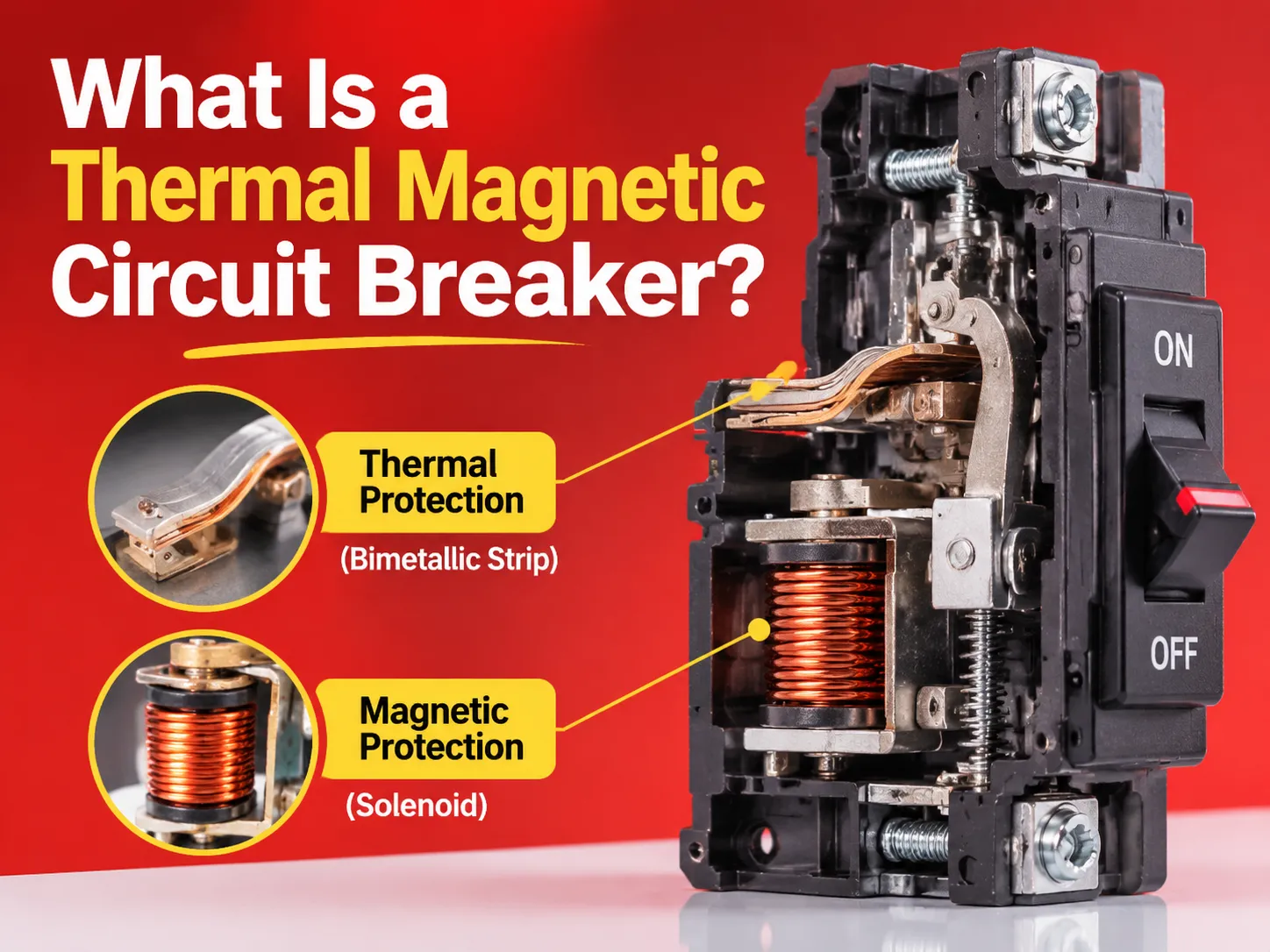
Calibration Drift. When a circuit breaker is new, it is calibrated to trip at approximately 1.6 times its rated capacity. However, after just a few years of being thermally cycled, a CB that originally was rated to trip at 1.6 has now calibrated itself to trip at 2.2 times its original rating, leaving the cable it protects without adequate protection. The calibration of each circuit breaker is determined by the bimetal strip and the adjusting screw. The calibration process is eliminated with inexpensive units so that manufacturers can take advantage of low-quality materials and manufacturing processes.
Contact Plating. Contact surfaces of circuit breakers can wear through due to heat generated at contact points due to inadequate contact surface area and, in many cases, inadequate shunt (to dissipate heat). Maintenance personnel typically discover overheating contact surfaces using infrared scans after the breaker has been running at an elevated temperature for one year.
Arc Chute Design. Arc chutes that are too short and contain too few plates will stop the current flow once during a fault condition; however, an inadequate design will not trip during the first short on the fault current, and the arc chute will fail again during the second iteration of the fault.
Terminal Torque. Circuit breakers that cannot be tightened properly due to striping the terminal threads at their rated torque will not operate safely when installed in a distribution board. Loose terminals are the most frequent cause of fires in the distribution board. The behaviour of multiple circuit breakers (MCBs) and moulded case circuit breakers (MCCBs) and why they are treated differently with respect to the ability of moulded case circuit breakers to withstand higher terminal loads are discussed.
At the point of assessment at the counter, only three of the four devices listed can actually be evaluated for acceptance of return and the certification of origin and possible batch marking of the unit should it fail. Therefore, when assessing a brand tier, it is not a quality decision but rather an evaluation of recourse available to buyers.
Building a Budget by Application
Using an application to create a project budget, we have provided an indicative estimate for devices needed based on typical applications:
| การใช้งาน | การจัดอันดับ | Devices | Indicative budget |
|---|---|---|---|
| Two bedroom flat | 8 Circuits | 8-MCB 1-RCCB 1-Main switch | BDT 12,000-30,000 |
| Small Retail/Office | 12 Circuits | 12-MCB 2-RCBO 1-MCCB 100 A | BDT 25,000-60,000 |
| Small Factory | 200 A Service | 1-MCCB 250 A 6-MCB 100 A 12-MCB | BDT 120,000-280,000 |
| Rooftop Solar | 10 kW | DC isolators, DC breakers, AC breaker, SPD | BDT 35,000-80,000 |
| Industrial Main Incomer | 1600 A | 1-ACB metering & controls | BDT 500,000-1,300,000 |
The above costs are the costs for the device alone. To estimate a project budget for devices, we need to add between 60%-150% to the above costs for expenses related to boards, busbars, enclosures, wiring and labor depending upon whether the completed board was manufactured locally or imported as a complete assembly. As a result, it is common for project budgets that include only devices to be inaccurate by the time the board is energized.
Where HUYU products fit in the market
We manufacture miniature circuit breakers (MCB), moulded case circuit breakers (MCCB) from 1 A-1600 A as per the requirements of IEC 60898-1, IEC 60947-2 & UL 489 for regions that require UL rated MCBs and MCCBs. Our pricing is positioned in the Chinese tier-one group within Bangladesh, or approximately one third that of European brands and slightly less than one-fifth above the pricing of unbranded devices.
The succession of circuit breakers may vary widely based on local / national priorities and what the average cost of living or working costs are like. In some parts of Bangladesh you may be able to find MCB’s at a starting price of BDT 250. This is by no means a fair comparison as in most regions the prices can be found to have a maximum of five different price points between different brands or suppliers.
The minimum price point of an MCB would typically be around BDT 250 for miniaturised designs (with both 6 & 32 A ratings available) which could go as high as BDT 900 for larger 63 A models (type A). Most MCBs would be sold at around 40% to 50% less than the equivalent-value AC Breaker’s price.
Additional notes include:
Because of the size of Bangladesh and how long it has developed in relation to other Asian countries, you will not find all retail shops in every region providing the full range of products. As an example, in larger metropolitan areas, such as Dhaka you would expect to see more variety on offer as opposed to rural markets where most MCB brands may therefore only be supplied at specific times.
Three reasons for these price variations are as follows:
- Local product sourcing
- Volume of stock ordered
- Differences in business operations
It should also be remembered that circuit breakers in Bangladesh are more cost-effective compared to many European brands. The primary reason behind this is due to the developmental stage that Europe is at, regarding the price model of MCB breakers in comparison with Bangladesh. For instance, you can find AC circuit breakers from an average of BDT 400,000 or so (.which is equivalent to £100) while you will pay well over £1000-£2500 in Europe (depending on size, type, manufacturer).
A grey import device may not come with an authorised distributor’s warranty or technical support, however it will still function when purchased. Grey import devices may also be sold without the endorsement of a recognised brand, as many of them will come with a photocopy of the original certificate for authentication purposes – these devices often miss the step of proper calibration. Genuine versions may also exist, but usually deal with the initial product sourced from a batch older than what current production methods yield. Only the first two options above can yield significant savings for consumers, while both options leave consumers with all the risk associated with these types of products.
คำถามที่พบบ่อย
Do I need to use a DC breaker on my solar array(s) in Bangladesh?
According to the National Electrical Code of Bangladesh (NEC), you must install a DC breaker on the DC side of your solar array. A DC breaker is designed for extinguishing DC arcs and therefore uses a longer arc chute than its AC equivalent to successfully extinguish an arc that does not have a zero-crossing, in addition to using additional plates and parts within the breaker. Therefore, an AC breaker rated to handle the same amount of current will not clear a DC fault reliably and may potentially fail in the closed position.
What kind of certification should a circuit breaker have in Bangladesh?
All circuit breakers on the market in Bangladesh should be tested and certified to the appropriate IEC standards. For miniature circuit breakers, the applicable standard is IEC 60898-1; while for moulded case circuit-breakers, the appropriate standard is IEC 60947-2. Your certificate for a circuit breaker should name the model and manufacturer exactly as it appears on the breaker itself. The Bureau of Standards and Technical Information has a number of local entities that certify products for local sale. When bidding on commercial projects, you should expect to have been asked to provide test report(s) and batch markings together with your circuit breaker certificates.
อ้างอิง
- UL Solutions – Circuit Breaker Standards and Certification
- Schneider Electric – Circuit Design & Distribution Equipment
- Legrand – Circuit Breakers & Earth Leakage Devices
- Hitachi Energy – Low Voltage Circuit Protection and Switch Gear
- NEMA – Moulded Case Circuit Breaker Application Data
สรุป
The cost of circuit breakers in Bangladesh is driven by type, rating, the supplier’s brand tier, along with any Applicable/Tariff duty and VAT stacks. For example, miniature breakers tend to cost comparatively low due to the small size of the device and the availability of common mechanisms associated with them; whereas a moulded case circuit breaker rated at 250A will cost nearly THIRTY times more due to the differences in the added complexity and expensively fabricated components associated to the product. The price is always going to be important, however, the more important question to answer is which supplier will give you a traceable certificate and accept this device back if it fails for any reason whatsoever.
In a market where grey imports and counterfeit devices are widespread and common, the only two things you have on your devices that cannot easily be copied or faked are the certificate P/N and Batch Mark, therefore, paying for those two items is certainly a good investment in your equipment and reputation.