
On the hottest day of last summer, a residential HVAC technician in Phoenix got a call that an air conditioner had stopped cooling a few hours after the morning start‑up. The homeowner had checked the thermostat and the breakers — everything seemed fine. When the tech opened the condensing unit, he found the culprit in thirty seconds: the HVAC contactor was chattering, its contacts burned black, and the compressor was not receiving steady power. A $25 component, designed to switch heavy motor current thousands of times, had failed exactly when it was needed most. That small electromagnetic switch is the reason your outdoor unit obeys a 24‑volt signal from a thermostat but controls 240 volts and 30 amps of compressor and fan current. Understanding what a contactor does in HVAC is fundamental for anyone who diagnoses or repairs air conditioning and heat pump systems.
The Contactor’s Core Job: Bridging the Control and Power Circuits
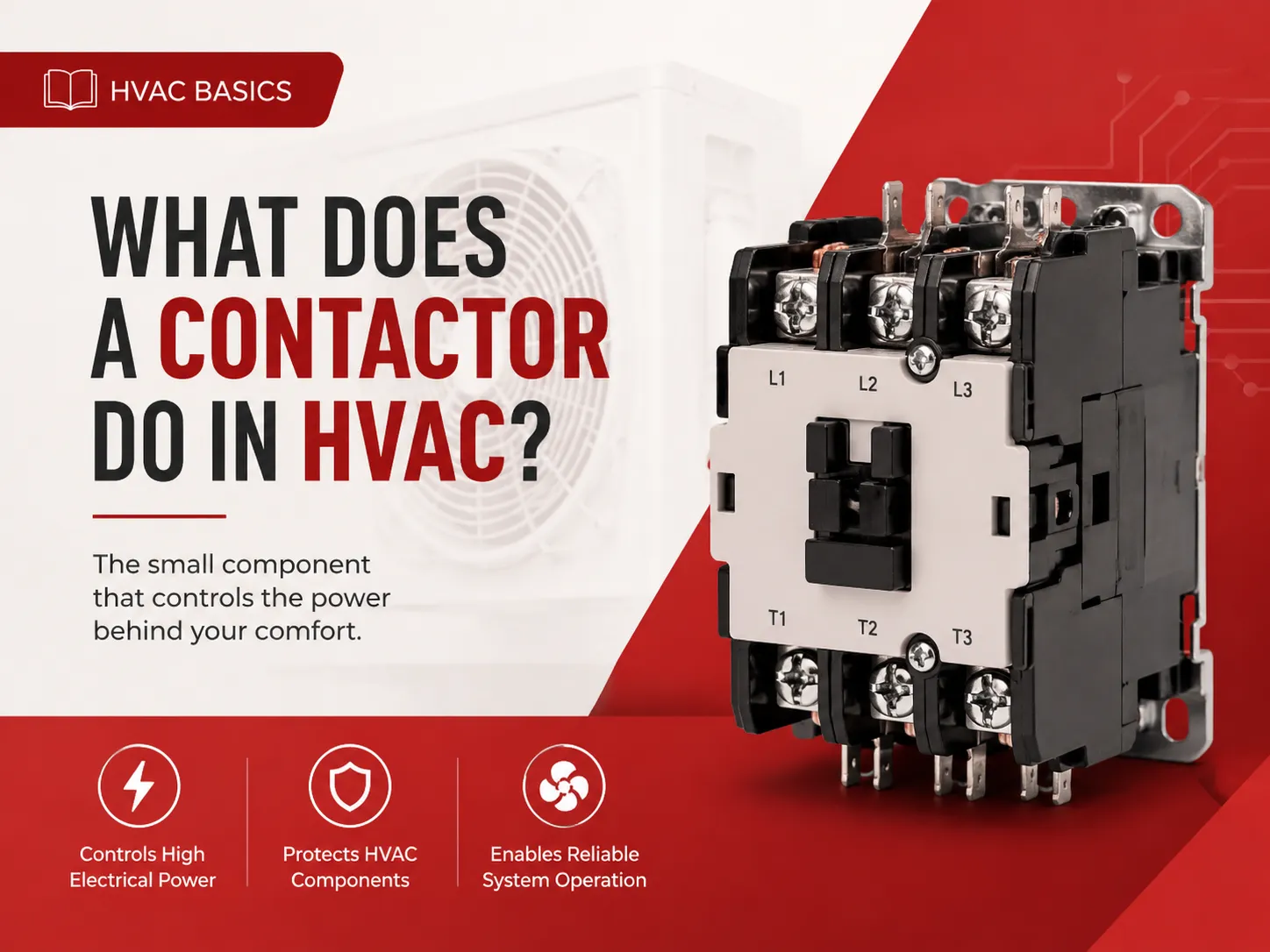
An HVAC contactor is a heavy‑duty relay located in the outdoor condensing unit (and sometimes in heat strips or blower controls). Its purpose is to safely make and break the high‑voltage, high‑current circuit that powers the compressor and condenser fan motor, using a low‑voltage control signal from the thermostat. The thermostat’s cooling call sends 24 volts AC to the contactor coil. The energized coil creates a magnetic field that pulls down a plunger, closing sets of contacts. These contacts then connect the 240‑volt supply to the compressor and fan. When the thermostat is satisfied, the 24‑volt signal stops, the magnetic field collapses, a spring pushes the contacts open, and the unit shuts off. This two‑step isolation is essential for safety and for protecting low‑voltage control wiring from the heavy currents of motor loads.
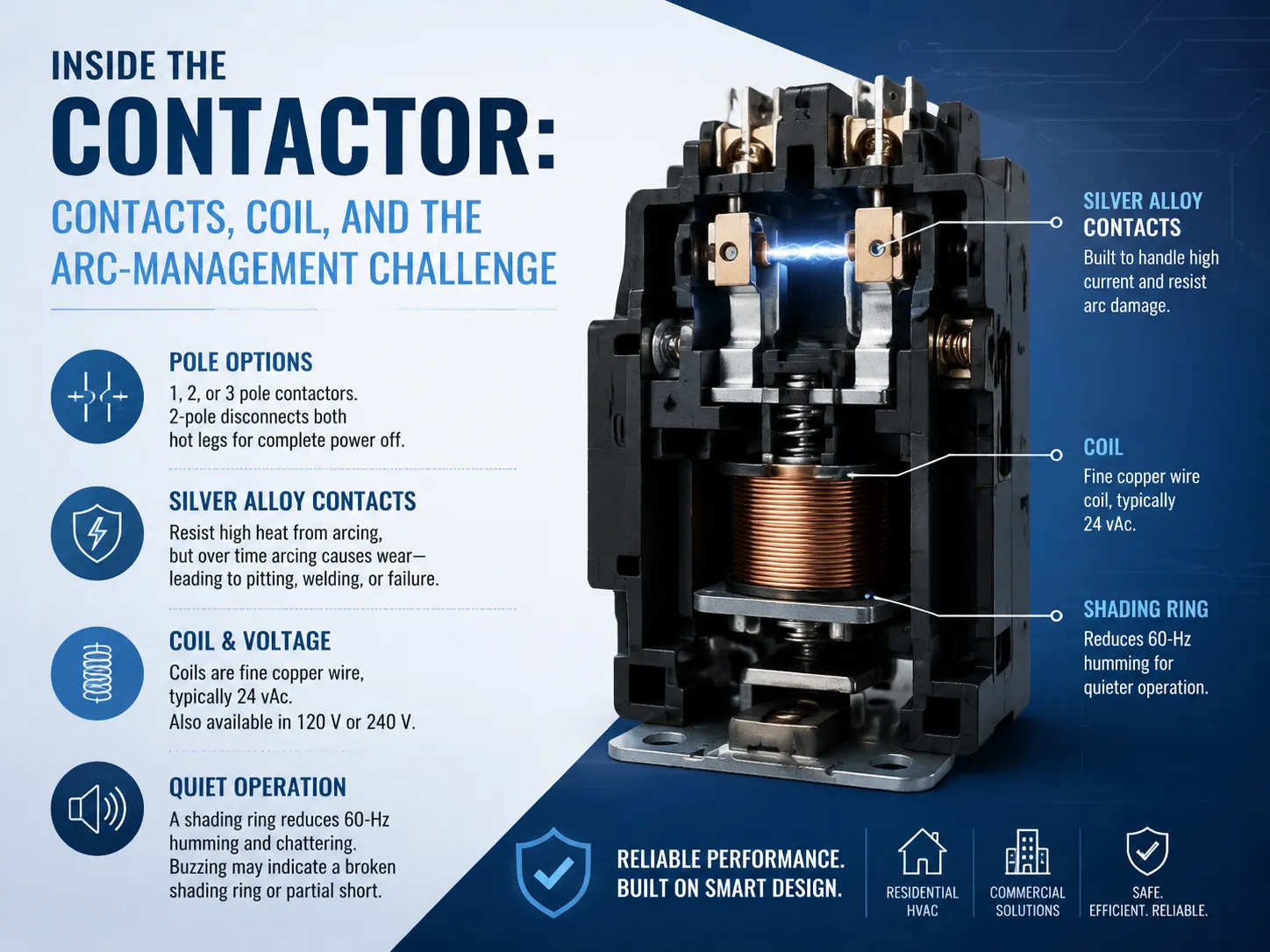
Inside the Contactor: Contacts, Coil, and the Arc‑Management Challenge
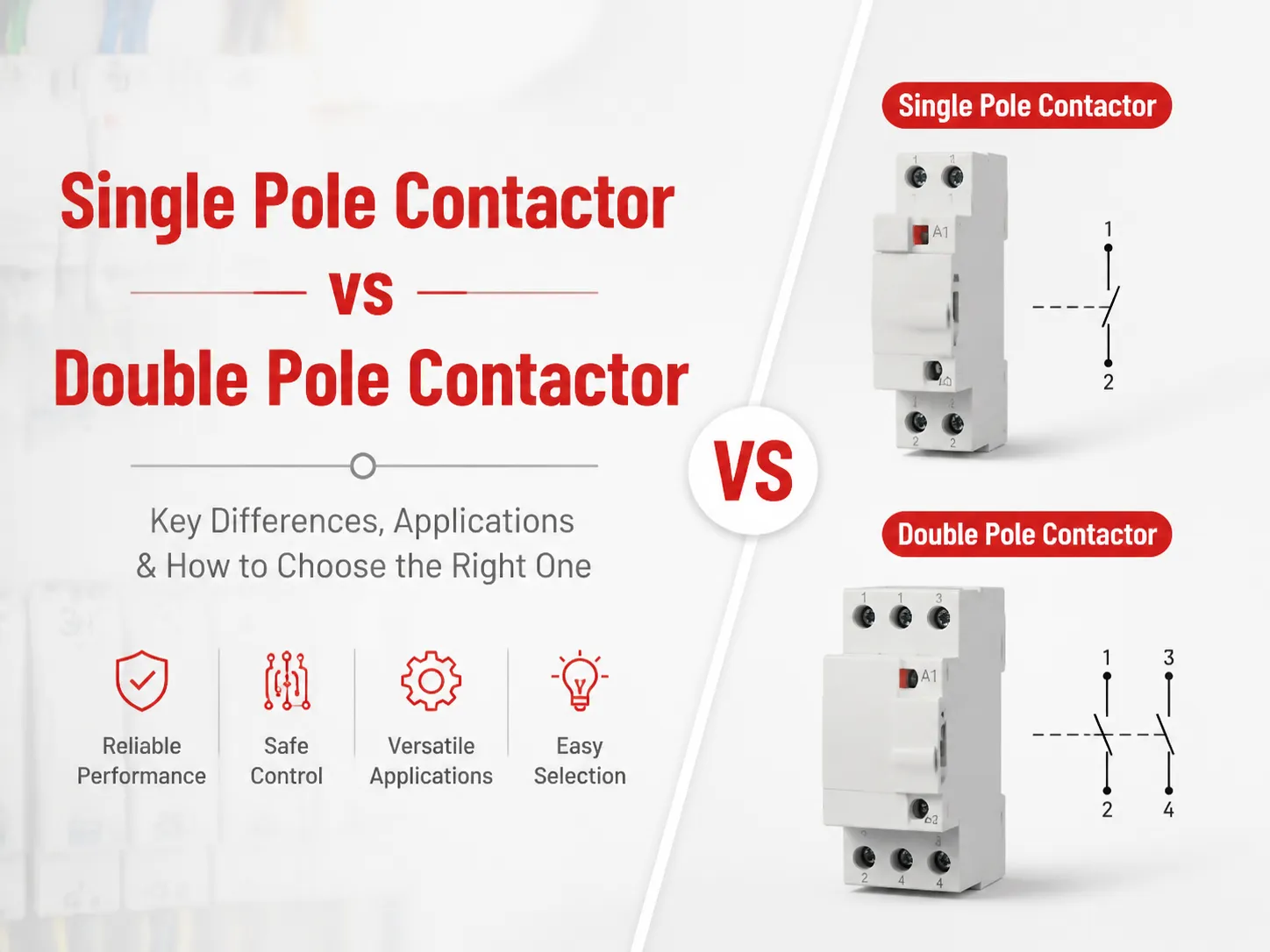
Most typical residential HVAC contactors have either one (1) pole only or two (2) poles only or possibly three (3) poles only; A contactor with one (1) pole will switch only one hot leg of power and keep the other hot leg energized. A contactor with two (2) poles will disconnect both legs of power completely. The contacts of contactors are typically made of a silver alloy, which helps to resist the high temperatures created by the arcing of electricity during the time when the contactors open and close while still under electrical load, over time the arcing from electricity will cause damage to the surface of the contactors’ contacts, which will increase resistance and develop heat that will eventually cause the contactor’s contacts to pit, weld together, or eventually completely fail. The coils of the contactor will usually be wound from very fine gauge copper wire, and designed to operate using 24 vAc power supply, however there are also commercial contactors that use either 120 V or 240 V coil supply. There may be a shading ring (a copper ring located on the core of the contactor magnet) which will suppress the 60-Hertz humming and/or chattering that would otherwise make the contactors vibrate when they are energized. So if your contactor has an audible buzzing sound it is most likely because of either a broken shading ring or because of some type of partial electrical short occurring on the coil.
Where the Contactor Sits in the System and Why It Matters
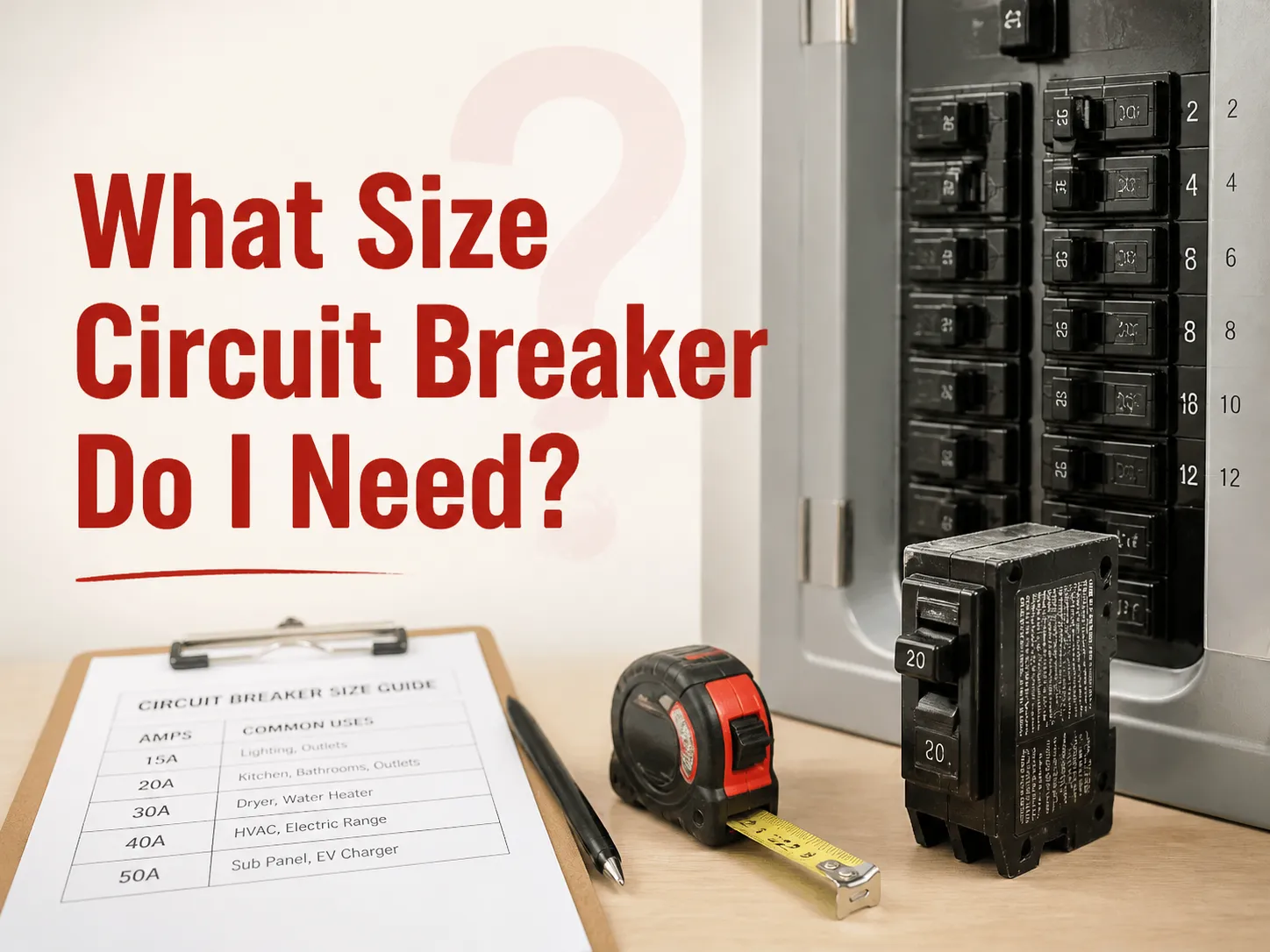
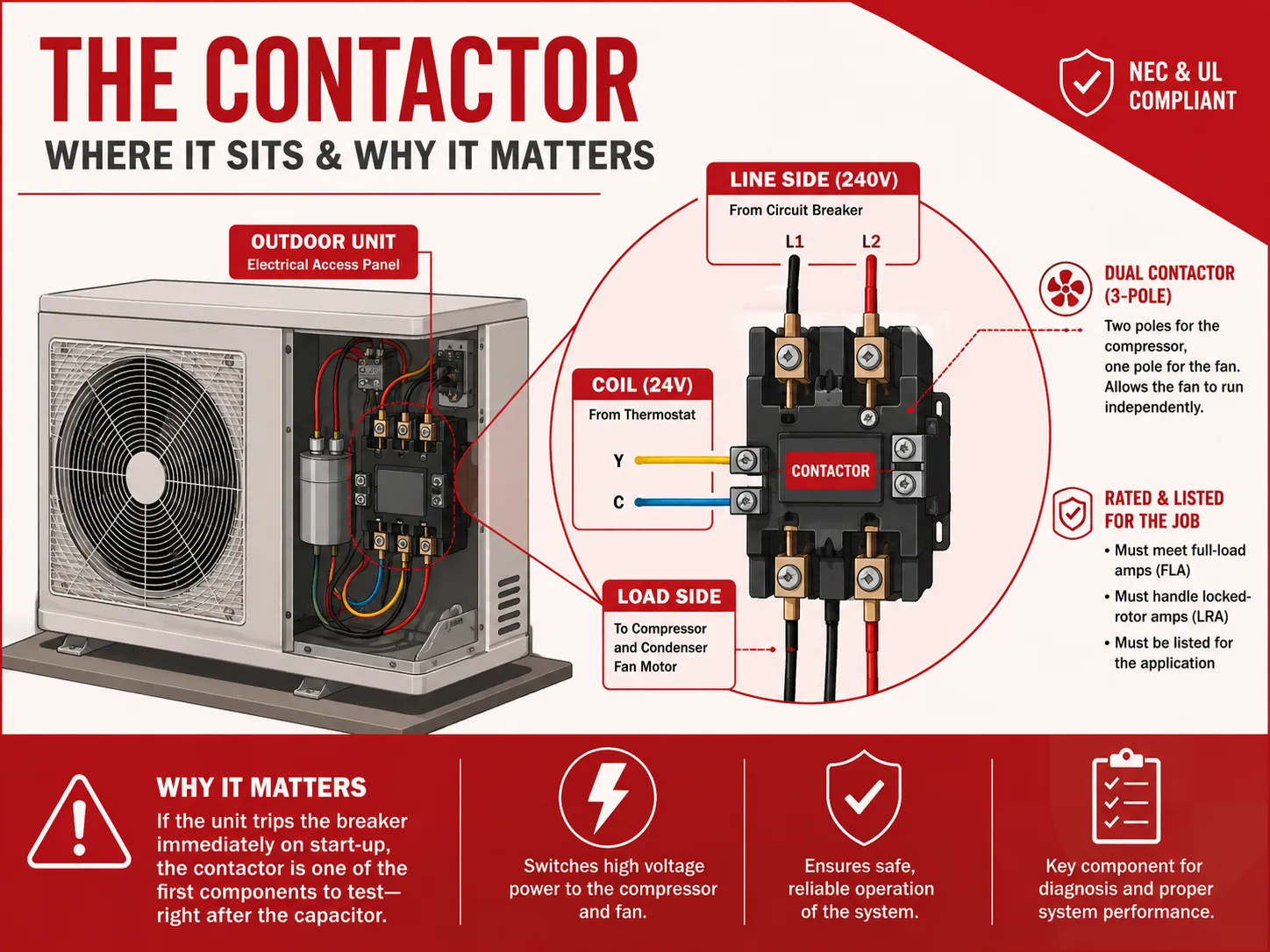
In a typical split‑system residential air conditioner or heat pump, the contactor is mounted inside the outdoor unit, protected by the electrical access panel. The 24‑volt control wires from the thermostat connect to the coil terminals, while the 240‑volt line from the circuit breaker connects to the line side of the contacts. The load side of the contacts runs to the compressor and the condenser fan motor. Some dual‑contactor designs use a three‑pole device, with two poles for the compressor and one dedicated pole for the fan, which allows the fan to run independently if the compressor is cycled off. This physical arrangement is tightly regulated by the NEC and UL standards: the contactor must be rated for the full‑load amps and locked‑rotor amps of the compressor, and it must be listed for the specific application. If you are troubleshooting a unit that trips its breaker immediately on start‑up, the contactor is one of the first components to test, right after the capacitor. For a broader look at the overcurrent protection that feeds the contactor, our article on what size circuit breaker you need explains how the breaker and the contactor work together in a motor branch circuit.
Common Failure Modes and Their Symptoms
When a contactor fails, it rarely does so silently. The most common failure modes are:
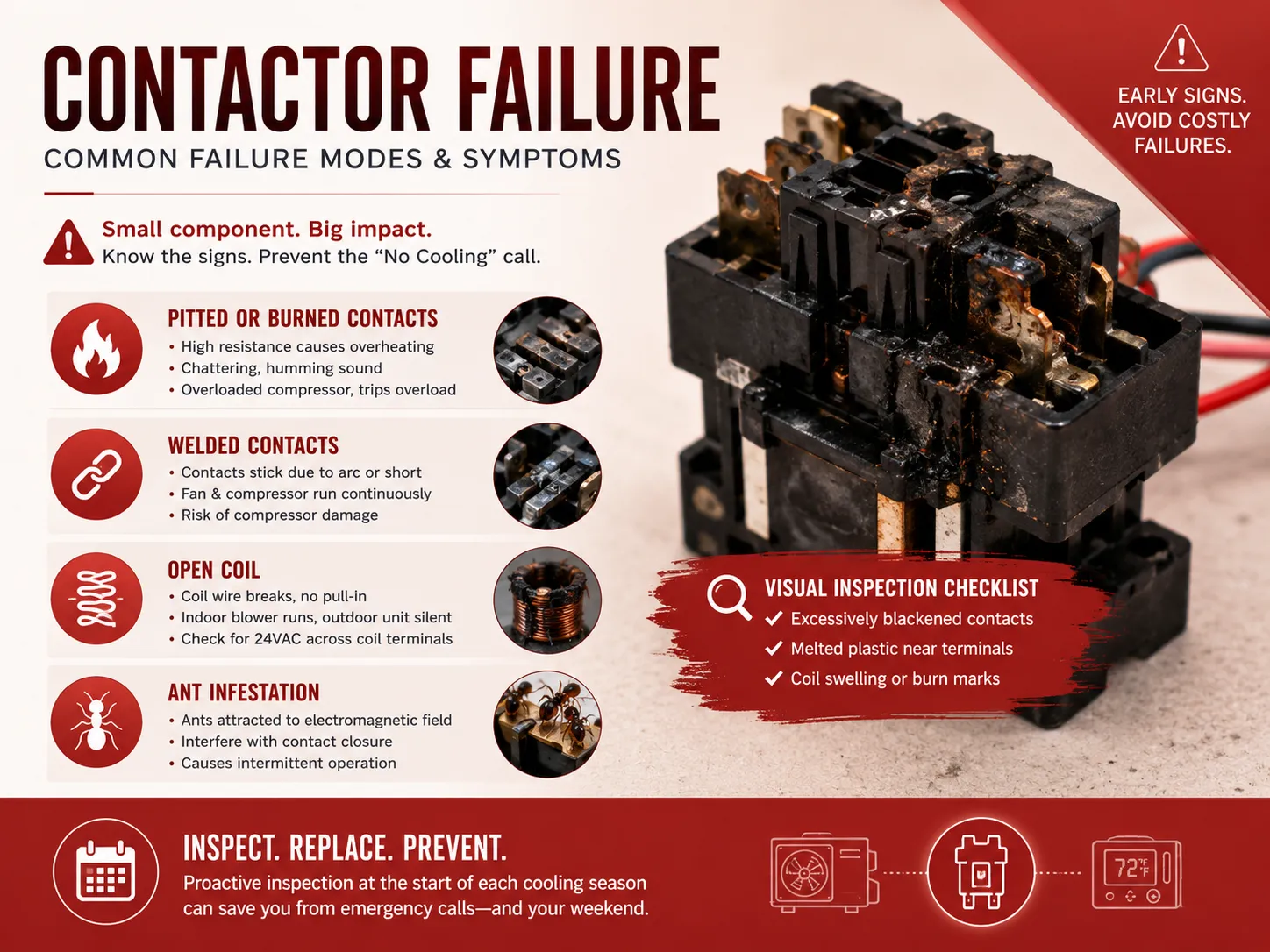
- Pitted or burned contacts: High resistance can result in overheating of the contacts. When there is high resistance in a contactor’s circuit, it can produce symptoms such as: Chattering – as the contactor attempts to pull in but cannot due to the coil voltage dropping from high resistance; A humming sound – when the contactor coil is energized; An overloaded compressor motor – if the compressor starts, the compressor draws excessive current and trips the thermal overload.
- Welded contacts: When there is an arc or short circuit, the contacts may weld together. The fan and compressor will both run continuously even if they would normally not run because of the thermostat. This can result in damage to the compressor because of excess refrigerant liquid and lack of lubricating oil circulation.
- Open coil: The coil wire for the 24-volt contactor breaks which means there is no signal for the contactor to pull-in. As such, when cooling is requested from an outdoor unit, an indoor blower will run but the outdoor unit will remain silent. Diagnosing this failure is usually simple. It can be confirmed in the following way: place the thermostat in cooling mode and apply a meter across the two coil terminals; if 24 volts (AC) exists across the terminals and the coil does not receive the signal from the 24V system, then the coil has opened circuit.
- Ant infestation: Ants are attracted to the electromagnetic field and are pinched between the contacts when they close, which results in the contacts being unable to connect and is one reason for an intermittent operation of a contactor in a hot climate.
You can usually spot a contractor that is in the early stages of failure by any one of the following visual indicators: excessively blackened contacts, any melted plastic in the vicinity of its terminals, or a coil that has excessive swelling and/or burn marks. By performing a proactive visual inspection of the contactor at the beginning of each cooling season and replacing it if necessary, you can avoid the inevitable panic of receiving a “no cooling” call at 4 p.m. on a Friday when everyone else is about to leave work for the weekend.
Replacement Cost and When to Call a Professional
A standard residential HVAC contactor can cost anywhere from $15 to $50 for the part alone. If a professional HVAC contractor replaces one, expect to pay from $150 to $400, depending on your geographic area, accessibility to the outdoor AC unit and emergency service needs. Costs include time spent on diagnosis, secure and isolate power to the AC unit at both the disconnect and the breaker, replacing the contactor, then testing for proper operation.
Although an experienced homeowner is capable of safely replacing the contactor if he or she follows strict electrical safety procedures, the risk associated with working on 240 volts is high. For example, there could be a short in the system that cannot be found on the initial diagnosis (such as a burn-out compressor), which would cause the new contactor to weld immediately. This is why experienced technicians will test the winding resistance before power is applied.
The “rule of thumb” or “$5,000 rule” sometimes discussed in the HVAC industry, simply means that if you multiply the cost of the repair times the age of the HVAC system, and it exceeds $5,000, it may be more prudent to replace the entire system than perform the repair. For example, if the repair is performed on a five-year-old system costing $300, then the total would be $1,500; therefore, it is still below the consideration of replacement. However, a twenty-year-old system with a failing compressor would provide a different answer.
How HUYU Components Fit into the HVAC Protection Ecosystem
The contactor serves as the switch, but the entire electrical supply chain (i.e., each of the components that feeds or supplies power to the contactor) must be coordinated to ensure safety and reliability of operation — a circuit breaker must be selected for the specific application; a disconnect switch must meet local electrical codes; and a surge protective device needs to absorb surges and transients during the operation of the contactor and circuit breaker’s contactorrosion). The HUYU Corporation manufactures and supplies circuit breakers, including molded case circuit breakers meeting the UL489 Standard which provide branch-circuit short-circuit and overcurrent protection for HVAC applications. In addition, for those HVAC systems powered by a direct current (DC) source (e.g., off-grid or solar-assisted), HUYU manufactures and supplies a line of DC Circuit Breakers to provide the necessary overcurrent and short-circuit protection at the continuous high current levels and high voltage ranges that DC powered HVAC equipment use (e.g., the HUB9NEZ-80 DC Circuit Breaker). In addition to the use of a Circuit Breaker and a Contact or Contactor being “partners” in the operation : the Circuit Breaker protects the conductors and the structure from being damaged (destroyed by overcurrents): and a Contactor cycles (turns ..on & off) the load thousands of times each of the “life” of the load under controlled conditions. The proper selection of the Interrupt Rating (per the manufacturer) and the Trip Curve (time/current relationship) for the Circuit Breaker (upstream). feeding or providing power to, an HVAC Contact(r) will assist in reducing any potential of a Contractor failing, resulting in a leading cause of catastrophic structural fire(s).
Frequently Asked Questions
What is the purpose of a contactor in a HVAC system?
The contactor is an electromagnet switch; which controls the high voltage high amperage circuit (compressor) with a low voltage signal sent (thermostat). It is used to keep the control circuit separate from the power circuit. The contactor allows reliable switching of very high loads in addition to protecting the thermostat & wiring against dangerous levels of current.
What happens when HVAC contactor goes bad?
If the contractor is faulty the outdoor unit may not operate correctly; it will either not turn on at all, only run sometimes, either click really loud or buzz when it tries to start and will run continuously if the contacts are welded together. All of those symptoms will stop the system from providing cool air to the building and they can result in the compressor being destroyed if this condition continues for an extended period of time.
What is the $5000 rule for HVAC?
The $5000 Rule is a general guideline to help you decide whether a piece of equipment should be repaired or replaced. It can be calculated by multiplying the cost of repair by the age (in years) of the equipment. If the result is greater than $5000, then it is likely that replacing the equipment would be less expensive than repairing it. For example, if you are considering replacing a $400 contactor for a 15‑year-old cooling system, the calculation would be: $400 x 15 = $6000. Therefore, you should consider a new system. However, if you apply the same calculation on a 5 year old cooling system ($400 x 5 = $2000) it would make sense to repair it.
How much does it cost to replace a contactor in a HVAC system?
Replacing the HVAC contactor typically costs between $150 and $400 in total, including the cost of the part ($15-$50) and labor. Costs can be higher if you require emergency service, if your contractor is located in a place that’s hard to reach, or if you need to replace a large commercial contractor. Always ask for a written estimate that includes a diagnosis of the HVAC system and the replacement part, as well as a system test performed after the replacement was completed.
With the HVAC unit, a contactor is an unnoticeable part of the overall HVAC system until it fails, at which time, it is the only component that matters. It has a very small signal coming from the thermostat (the signal from the thermostat) that powers the unit. A contactor takes that small signal from the thermostat and converts it to large amounts of energy that are required to operate the compressor and fan and does so, at the request of the thermostat, thousands of times during a single summer cooling season. Recognizing when a contactor is going bad, understanding where the contactor is located in the overall electrical protection scheme, and understanding how much voltage the contactor will handle are all ways of ensuring that your air conditioning system will continue to work properly. HUYU supplies the circuit breakers and other protective components that are located upstream from the contactor in order to ensure that when the contactor operates, that circuit is safe and the lights are on.