
لقد اشتريت للتو مصنعًا صغيرًا في منطقة صناعية، وأخبرك المالك أنه يمكنك الاختيار بين الطاقة أحادية الطور أو الطاقة ثلاثية الطور. تركيب ثلاثي الطور يكلف تقريبًا ثلاثة أضعاف تركيب بسيط؛ ومع ذلك، ليس لديك فكرة عما إذا كنت بحاجة إليه حقًا. في الوقت نفسه، تحتوي ماكينة CNC التي طلبتها حديثًا على عبارة “ثلاثي الطور فقط” مكتوبة عليها. هذا سؤال يواجهه العديد من مشتري الآلات وأصحاب الشركات بانتظام — وإذا كان الاختيار خاطئًا، فسيدفع المستخدم إما مبلغًا زائدًا مقابل طاقة غير ضرورية أو يكتشف أنه لا يمكنه استخدام معداته.
يوفر هذا الدليل فهمًا واضحًا للاختلافات بين أنظمة الطاقة أحادية الطور وثلاثية الطور، وما تعنيه، وكم تكلف، ومتى تُستخدم. ستجد كل المعلومات اللازمة لاتخاذ القرار الصحيح دون الحاجة إلى تعليم هندسي عالي.
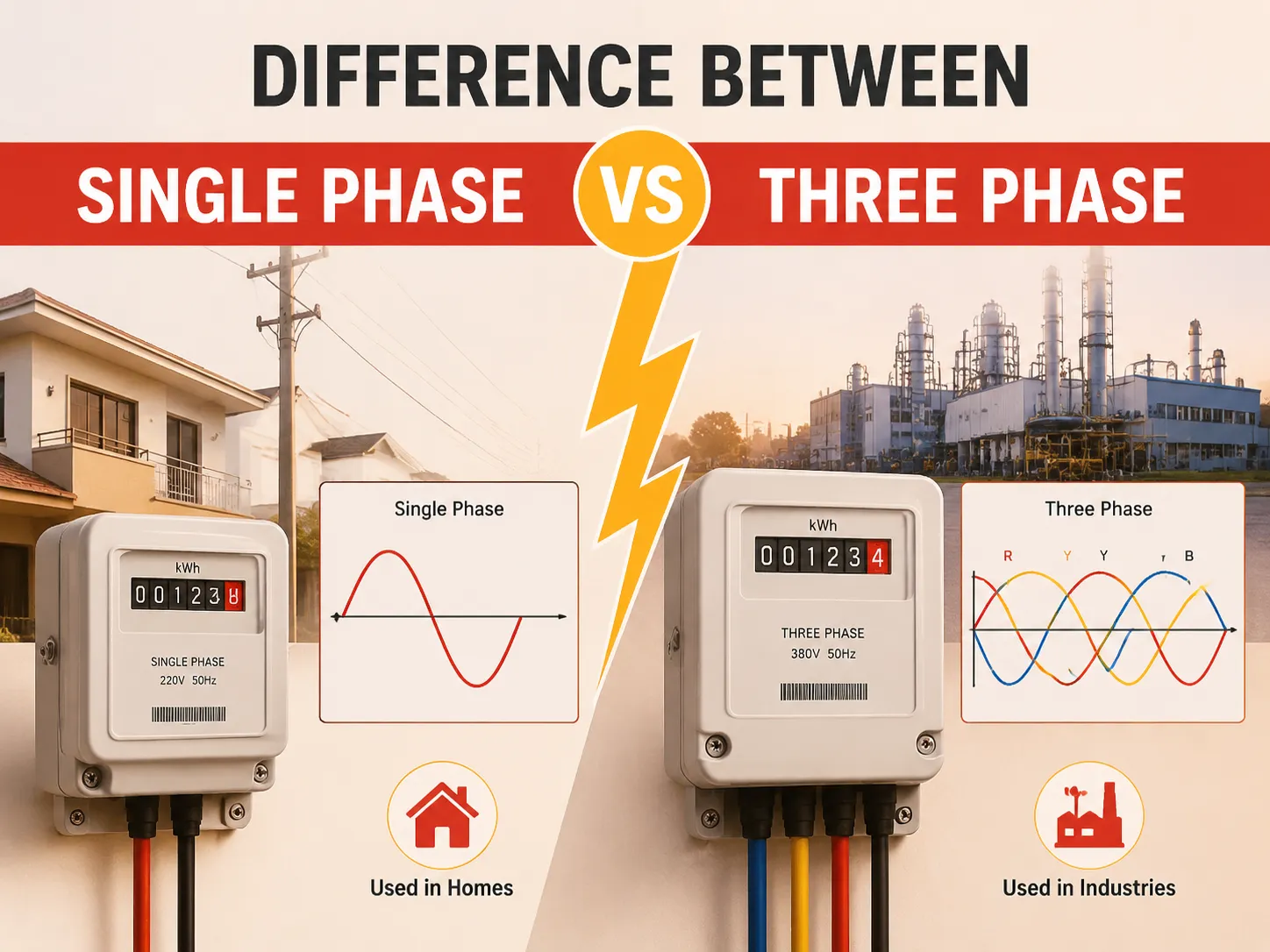
إجابة سريعة: تستخدم الطاقة أحادية الطور موجة تيار متردد واحدة (بالإضافة إلى النيوترال)، مما يمنحها القدرة على توفير طاقة ترتفع وتنخفض 50 إلى 60 مرة في الثانية. تزود الطاقة للمنازل السكنية والأجهزة ذات الأحمال الصغيرة التي تبلغ حوالي 15-20 كيلوواط. بالمقابل، تستخدم الطاقة ثلاثية الطور كمصدر للطاقة ثلاث موجات تيار متردد متزاحة بمقدار 120 درجة عن بعضها البعض، مما يولد طاقة مستمرة وثابتة جدًا لا تنخفض إلى الصفر. وهي النوع الأكثر شيوعًا من الطاقة المستخدمة في المصانع، والممتلكات التجارية الكبيرة، والمحركات الكبيرة، والآلات الثقيلة الأخرى.
ما هي الطاقة أحادية الطور؟
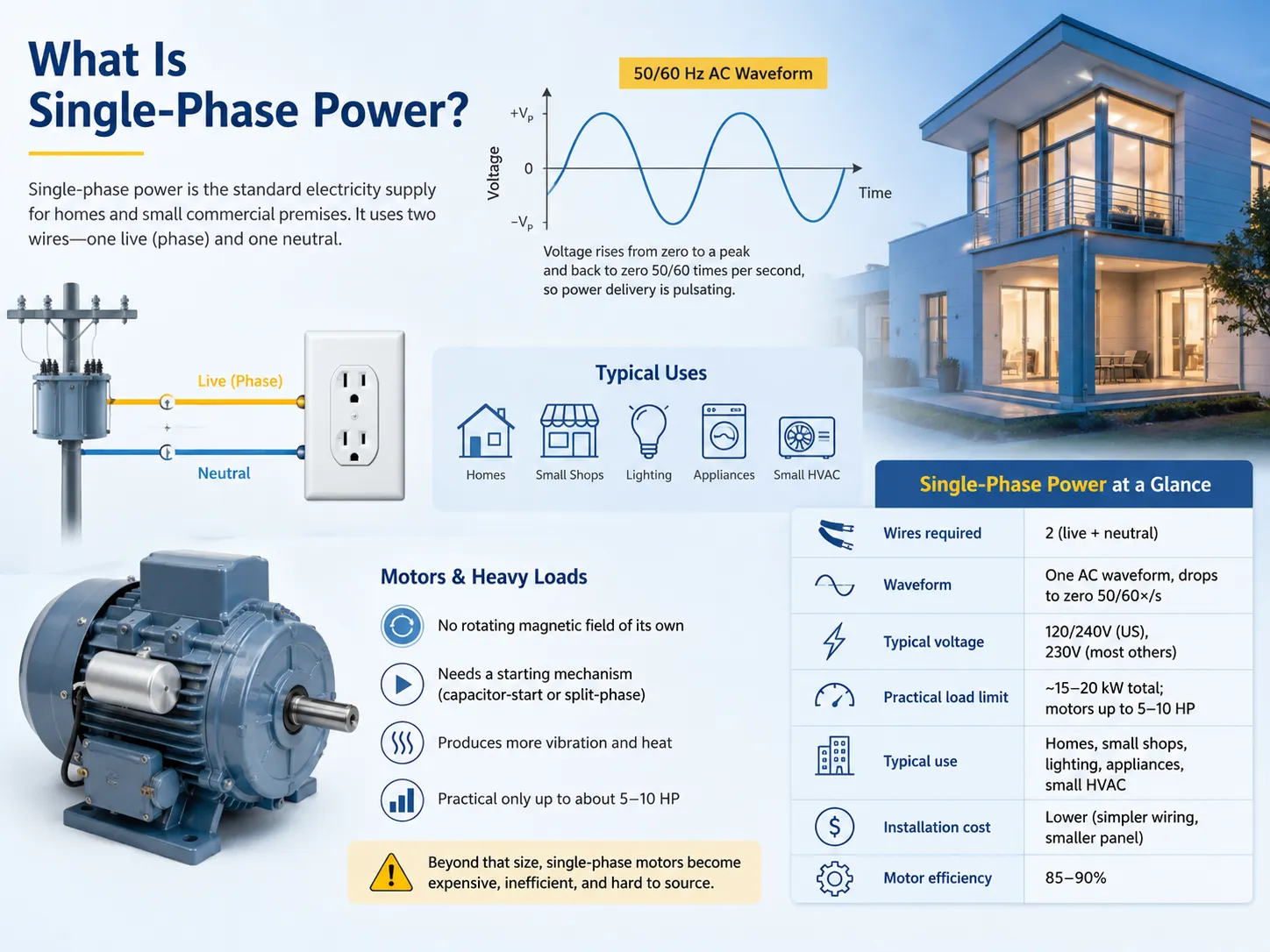
تعتمد المنشآت السكنية والصغيرة على الكهرباء أحادية الطور كخيار تقليدي لتزويد الطاقة. تعتمد الآلية على نوعين من الموصلات – واحد حي وواحد نيوترال، مع تناوب الطاقة الكهربائية من الصفر إلى أقصى جهد مع 50 أو 60 دورة في الثانية. على عكس التيار المستمر ذو الجهد الثابت، تتقلب الكهرباء أحادية الطور مع مرور الوقت، وهو أمر ذو أهمية كبيرة عندما يتعلق الأمر بالمحركات والأحمال الثقيلة.
عندما يتعلق الأمر بالمحركات، فإن غياب المجال الكهرومغناطيسي الدوار في المحرك أحادي الطور يعني أن هذه المحركات يجب أن تبدأ بمعدات مساعدة. من المعروف أن المحركات أحادية الطور تنتج اهتزازات أكثر وتولد حرارة أكبر مقارنة بالمحركات ثلاثية الطور. يمكن استخدام هذه الآلات الكهربائية لتطبيقات محددة بقدرة لا تتجاوز 5-10 حصان لأن استخدامها يصبح غير اقتصادي فوق هذا الحد.
| الخصائص | الطاقة أحادية الطور |
|---|---|
| الأسلاك المطلوبة | 2 (حي + نيوترال) |
| شكل الموجة | موجة تيار متردد واحدة، تنخفض إلى الصفر 50/60 مرة في الثانية |
| الجهد النموذجي | 120/240 فولت (الولايات المتحدة)، 230 فولت (معظم الدول الأخرى) |
| الحد العملي للحمل | ~15–20 كيلوواط إجمالي؛ المحركات حتى 5–10 حصان |
| الاستخدام النموذجي | المنازل، المتاجر الصغيرة، الإضاءة، الأجهزة، أنظمة التكييف الصغيرة |
| تكلفة التركيب | أقل (توصيلات أبسط، لوحة أصغر) |
| كفاءة المحرك | 85–90% |
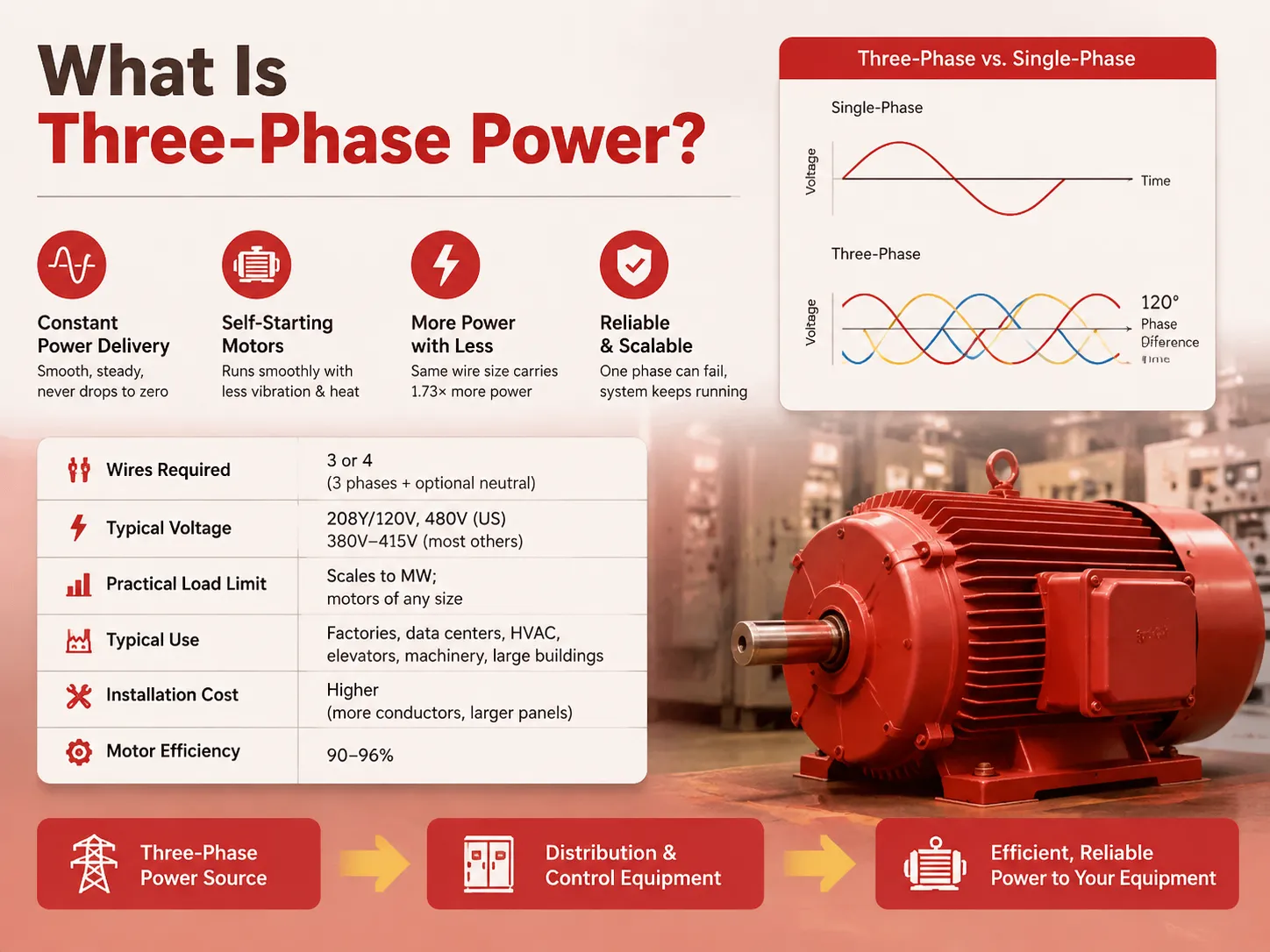
ما هي الطاقة ثلاثية الطور؟
الكهرباء ثلاثية الطور تتضمن ثلاث إشارات تيار متردد موجودة في ثلاثة موصلات (بالإضافة إلى النيوترال، إذا لزم الأمر)، وتظهر مع إزاحة قدرها 120 درجة. نظرًا لأن كل طور يصل إلى القيمة القصوى في وقت مختلف، فإن ذلك يؤدي إلى توفير طاقة مستمر، مما يعني أن الطاقة لا تنخفض إلى الصفر. وبفضل ذلك، لا تتطلب المحركات الكهربائية ثلاثية الطور أي وسائل بدء إضافية لأنها تعمل بالفعل بواسطة المجال المغناطيسي الدوار.
أيضًا، نفس سمك السلك المستخدم في أنظمة ثلاثية الطور يزود بحوالي 1.73 ضعف كمية الكهرباء في النظام ثلاثي الطور مقارنة بالنظام أحادي الطور، مما يبرر استخدامه خارج متطلبات المنازل من قبل شركات مختلفة. بالإضافة إلى ذلك، أنظمة ثلاثية الطور قادرة على مقاومة انقطاع طور واحد دون أن يجعل الدائرة بلا معنى وتمكن من حمل أثقل بكثير من عدة أحصنة إلى 10,000 حصان.
| الخصائص | الطاقة ثلاثية الطور |
|---|---|
| الأسلاك المطلوبة | 3 أو 4 (3 أطوار + نيوترال اختياري) |
| شكل الموجة | ثلاث موجات متزاحة 120°، توصيل مستمر |
| الجهد النموذجي | 208Y/120V، 480V (الولايات المتحدة)؛ 380V–415V (معظم الدول الأخرى) |
| الحد العملي للحمل | قابلة للتوسع إلى ميغاوات؛ محركات بأي حجم |
| الاستخدام النموذجي | المصانع، مراكز البيانات، التكييف والتهوية، المصاعد، الآلات، المباني الكبيرة |
| تكلفة التركيب | أعلى (عدد موصلات أكبر، لوحات أكبر، معدات تبديل) |
| كفاءة المحرك | 90–96% |
الاختلافات الرئيسية في لمحة
| الجانب | أحادي الطور | ثلاثي الطور |
|---|---|---|
| عدد الأطوار | واحد | ثلاثة (بفارق 120°) |
| توصيل الطاقة | نابض، ينخفض إلى الصفر | مستمر، سلس |
| الطاقة عند نفس التيار | الأساس | 73× أكثر |
| حجم الموصل لنفس الحمل | أكبر | أصغر (~25% أقل نحاس) |
| بدء المحرك | يحتاج إلى مكثف/لف بدء | بدء ذاتي (المجال الدوار) |
| كفاءة المحرك | 85–90% | 90–96% |
| الاهتزاز والحرارة | أعلى | أقل (عزم دوران أكثر سلاسة) |
| الحد النموذجي | محركات ~15–20 كيلوواط / 5–10 حصان | لا يوجد حد عملي |
| تحمل الأعطال | عطل واحد = فشل الدائرة بالكامل | المراحل الأخرى تستمر في العمل |
| تكلفة التركيب | أقل | 20–40% أعلى تكلفة أولية |
| تكلفة التشغيل (الأحمال العالية) | أعلى لكل كيلوواط | أقل لكل كيلوواط |
مستويات الجهد وتكوينات الأسلاك
قراءة تصنيفات الجهد من جهازك هو القرار الأساسي في اختيار مصدر الطاقة الصحيح. أدناه كيفية وجود جهد الطور الواحد والطور الثلاثي في العديد من مناطق العالم.
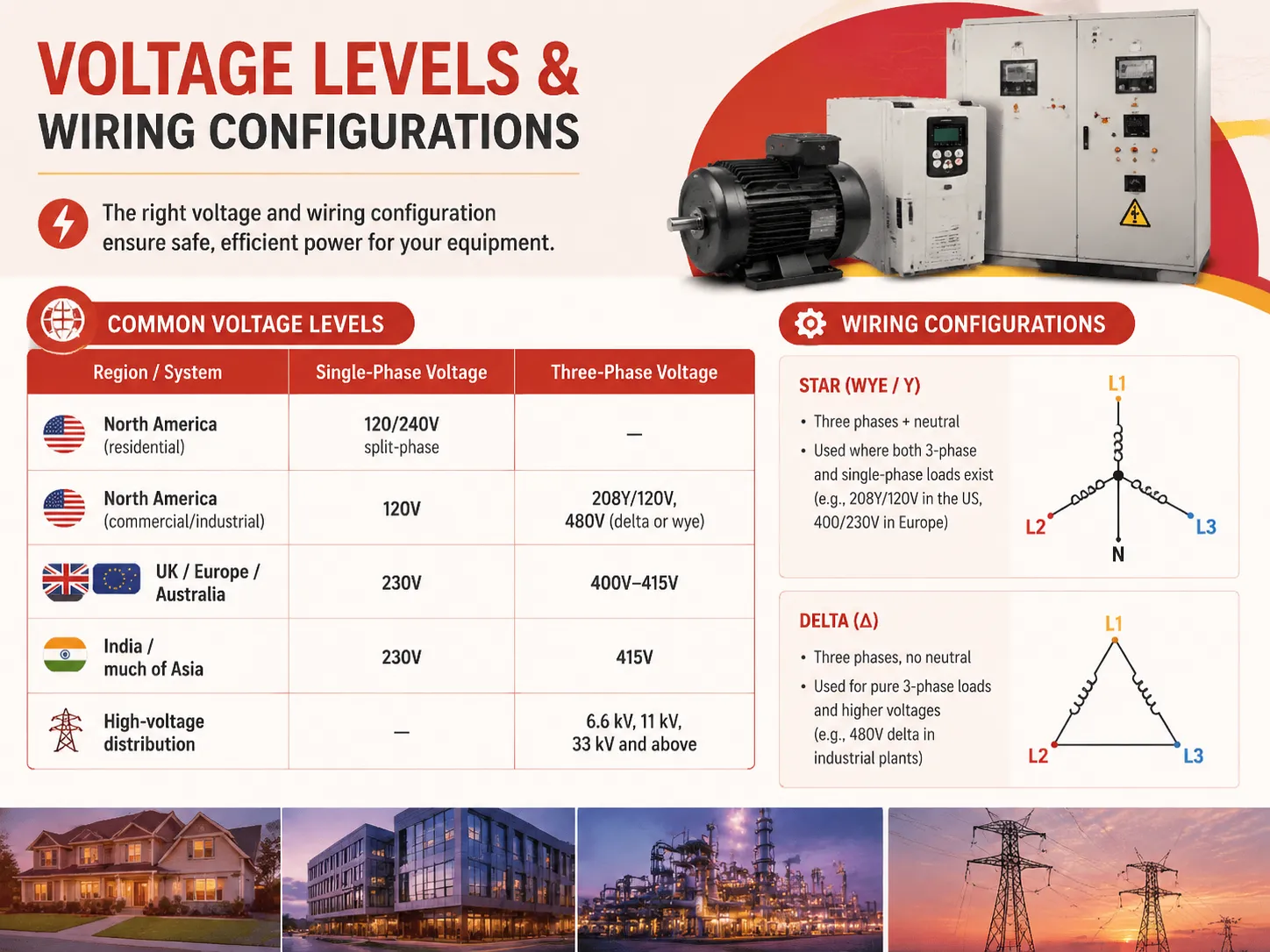
| المنطقة / النظام | جهد الطور الواحد | جهد الطور الثلاثي |
|---|---|---|
| أمريكا الشمالية (سكني) | 120/240 فولت طور مقسم | — |
| أمريكا الشمالية (تجاري/صناعي) | 120 فولت | 208Y/120 فولت، 480 فولت (دلتا أو واي) |
| المملكة المتحدة / أوروبا / أستراليا | 230 فولت | 400-415 فولت |
| الهند / معظم آسيا | 230 فولت | 415 فولت |
| التوزيع عالي الجهد | — | 6 كيلو فولت، 11 كيلو فولت، 33 كيلو فولت وما فوق |
هناك ترتيبان معروفان لأنظمة الطور الثلاثي:
- النجمة (Y أو واي): ثلاث مراحل مع نقطة محايدة. مناسبة للتطبيقات التي تحتوي على أحمال ثلاثية الطور وأحمال طور واحد (على سبيل المثال 208Y/120 فولت في الولايات المتحدة و400/230 فولت في أوروبا).
- دلتا: ثلاث مراحل بدون نقطة محايدة. تُطبق في حالات الأحمال الثلاثية الطور الخالصة وعندما تكون هناك جهود عالية (على سبيل المثال 480 فولت دلتا في الصناعة التحويلية).
إذا كنت تحاول تحديد القواطع والأعمدة التي يحتاجها خدمتك، دليلنا حول قواطع الدائرة ذات القطب الواحد مقابل القطبين يشرح كيف يرتبط عدد الأعمدة بتكوين الجهد والطور في التطبيق العملي.
الكفاءة: لماذا يفوز الطور الثلاثي للمحركات
من حيث التطبيقات العملية، الفرق الرئيسي بين المحركات يعتمد على مفهوم المحركات ثلاثية الطور. المحرك ثلاثي الطور له خصائص مثل:
- يولد مجالًا مغناطيسيًا دوارًا ثابتًا، مما يسمح بتشغيل عزم دوران سلس وغير متقطع.
- يعمل بكفاءة أعلى بحوالي 3%–5% (مع معدلات كفاءة حوالي 90%-96% مقارنة بـ 85%-90%).
- يعمل عند درجات حرارة أقل وهو أكثر هدوءًا بشكل ملحوظ.
- لديه قدرة بدء ذاتي.
- يمكن تصميمه بأحجام مختلفة: من صغيرة (جزء من الحصان) إلى عالية جدًا (أكثر من 10,000 حصان).
تكلفة تركيب هذا النوع عالية لكنها تعود بالفائدة على المدى الطويل للمصانع.
أين يُستخدم كل نظام
الطور الواحد مناسب لـ:
- المنازل والشقق
- متاجر البقالة، الأعمال الصغيرة، والمطاعم التي لا تحتوي على محركات ثقيلة.
- دوائر الإضاءة والأجهزة المنزلية الأساسية.
- أجهزة التكييف الصغيرة التي يمكنها التعامل مع حتى 5 أطنان أو أقل.
- أي موقع بحمولة إجمالية أقل من 15-20 كيلوواط.
ثلاثي الطور مناسب لـ:
- المصانع وشركات التصنيع.
- مراكز البيانات والمباني التجارية.
- المحركات التي تتجاوز 5 حصان، المضخات، الضواغط، الناقلات، وأدوات CNC.
- المصاعد، أنظمة التكييف والتبريد الضخمة، والمطابخ الصناعية.
- مزارع الطاقة الشمسية، مراكز شحن المركبات الكهربائية، ومنشآت تخزين الطاقة.
- أي منظمة قد تحتاج إلى المزيد من الكهرباء في المستقبل.
مقارنة التكاليف: تكاليف التركيب والتشغيل
التكلفة هي النقطة التي يختلط فيها الأمر على معظم المشترين، لذا دعونا نكون محددين. ثلاثي الطور يكلف أكثر في البداية لكنه قد يكلف أقل لكل وحدة طاقة مقدمة عند الأحمال العالية.
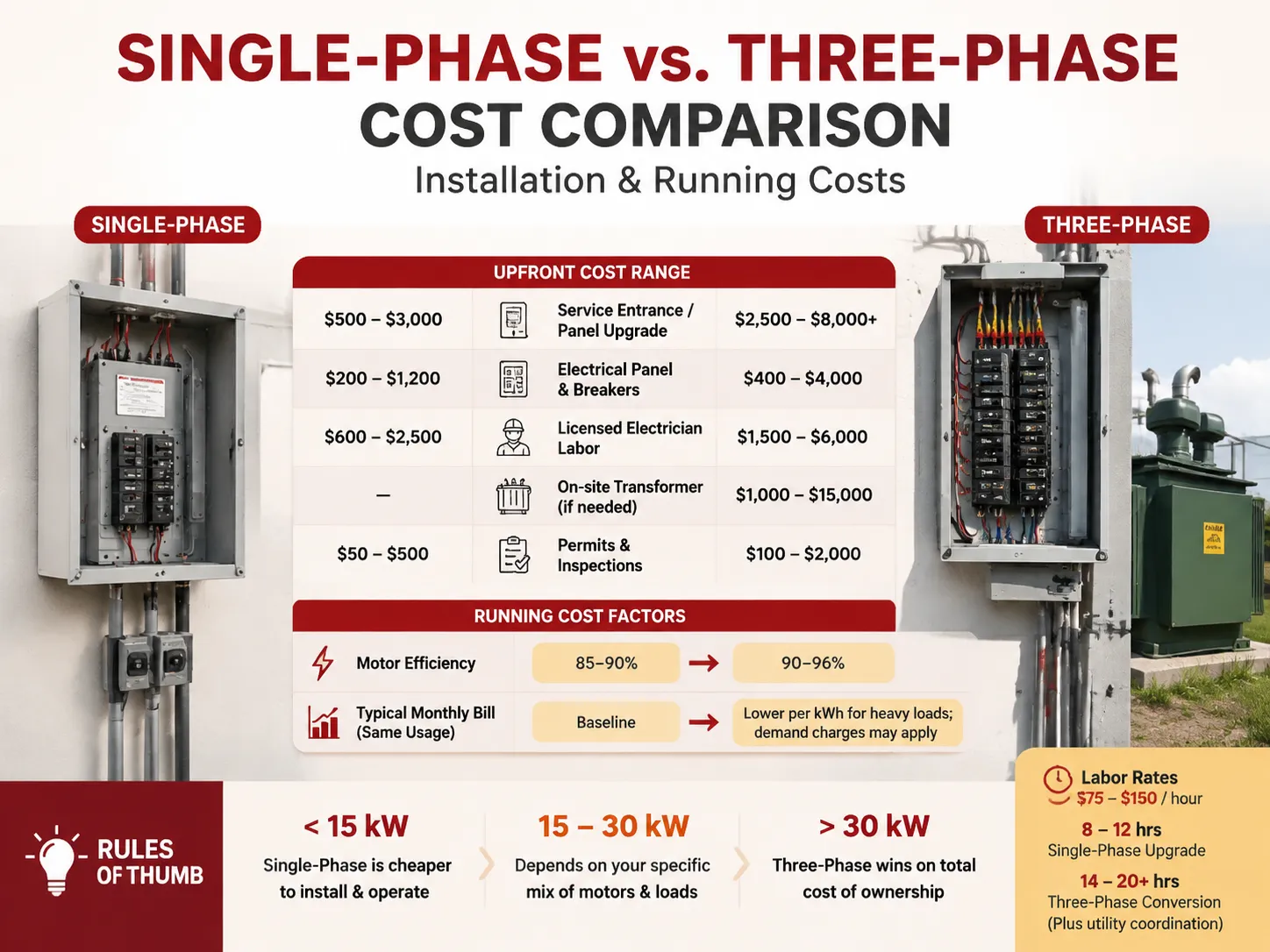
| بند التكلفة | أحادي الطور | ثلاثي الطور |
|---|---|---|
| مدخل الخدمة / ترقية اللوحة | $500–$3,000 | $2,500–$8,000+ |
| التحويل الكامل من أحادي الطور إلى ثلاثي الطور | — | $3,500–$25,000 (يشمل المحول، اللوحة، العمالة) |
| اللوحة الكهربائية وقواطع الدائرة | $200–$1,200 | $400–$4,000 |
| عمالة كهربائي مرخص | $600–$2,500 | $1,500–$6,000 |
| محول في الموقع (إذا لزم الأمر) | — | $1,000–$15,000 |
| التصاريح والتفتيشات | $50–$500 | $100–$2,000 |
| كفاءة المحرك | 85–90% | 90–96% |
| الفاتورة الشهرية النموذجية (نفس نمط الاستخدام) | الأساس | تكلفة أقل لكل كيلوواط ساعة مقدمة للأحمال الثقيلة؛ قد تنطبق رسوم الطلب |
قد تساعد نتائج تحليل التكلفة في تقديم تقديرات مفيدة: بين 15 كيلوواط و30 كيلوواط، قد يكون من المنطقي اختيار تقنية ثلاثي الطور، وللأحمال أقل من 15 كيلوواط استخدم أحادي الطور. إذا احتجنا لمقارنة تكلفة الخدمة الكهربائية، نجد أنها تتراوح من $75 في الساعة حتى $150 لأعلى معدلات العمالة تكلفة. عادةً ما يستغرق استبدال خدمة أحادي الطور 8-12 ساعة، بينما تتطلب عملية استبدال خدمة ثلاثي الطور 14-20 ساعة؛ بالإضافة إلى ذلك، غالبًا ما يكون التعاون مع شركة المرافق ضروريًا لإعداد نموذج مناسب لتوريد الطاقة.
كيفية تحديد الخيار المناسب لك
يمكن أن توجهك الخطوات التالية للوصول إلى القرار الصحيح:
- استشر لوحة الاسم الخاصة بالمحرك أو الآلة. إذا أظهرت “3-phase only” فأنت بحاجة إلى تزويد ثلاثي الطور بدون جدال، مما يعني أن وجود محول طور هو خيار جيد لكنه غير مجدٍ اقتصاديًا على المدى الطويل.
- اجمع الحمل الكلي. إذا كان الحمل أقل من 15-20 كيلوواط والمحركات لا تتجاوز 5 حصان، فإن أحادي الطور مقبول، ولكن إذا كان الحمل الكلي أكثر من 30 كيلوواط أو يجب تشغيل عدة محركات عالية القدرة، فيجب استخدام تزويد ثلاثي الطور.
- اسأل عن المحرك الذي ستقوم بتركيبه. كن مستعدًا لتنفيذ تزويد كهربائي ثلاثي الطور إذا كان المحرك أكثر من 5-10 حصان بسبب الكفاءة والتوافر والسعر.
- حلل إمكانيات التطوير المستقبلي. إذا كانت الشركة تفكر في شراء معدات جديدة مثل الآلات، الشواحن، وأنظمة التكييف في المستقبل القريب، فقد يوفر وجود تزويد ثلاثي الطور الكثير من المال مقارنة بتركيب تزويد كهربائي كامل.
- تحقق من إمكانيات التزويد الكهربائي. من الضروري فحص الخيارات المتاحة التي تقدمها شركة المرافق الكهربائية في المنطقة قبل وضع الميزانية واتخاذ القرار بشأن المشروع.
هل يمكنك التحويل من أحادي الطور إلى ثلاثي الطور؟
هناك طريقتان:
- ترقية خدمة المرافق تتطلب الاتصال بشركة المرافق الخاصة بك لتأسيس خدمة ثلاثية الطور لممتلكاتك. يمكن أن تتراوح التكلفة بين 3,500 و 25,000 دولار أمريكي اعتمادًا على مسافة أقرب خط ثلاثي الطور، وأحجام الخدمة الخاصة بك، والمحولات التي يجب تركيبها، وقوانين منطقتك. هذه الطريقة هي الخيار الصحيح طويل الأمد للأحمال الصناعية الثقيلة.
- تشمل محولات الطور المحولات الدوارة والثابتة، والتي تسمح باستخدام الآلات ثلاثية الطور من مصدر طاقة أحادي الطور. تنطبق هذه الطريقة على بعض الحالات وهي أقل كفاءة، على الرغم من أن المحركات الكبيرة قد تتطلب بعض التخفيض في الأداء.
اختيار القواطع ومعدات التبديل لكل نظام
عند تحديد نوع الإمداد الخاص بك، يجب أن يتوافق جهاز الحماية الخاص بك معه. يجب أن تكون المعدات الخاصة بالاتصالات ثلاثية الطور مجهزة بقواطع إما من نوع ثلاثي الأقطاب أو رباعي الأقطاب، لذا يجب أن تكون هناك مفاتيح أوتوماتيكية ثلاثية الطور ولوحات مناسبة حسب تصنيف الفولتية. لا ينبغي إعادة استخدام المعدات المخصصة للأنظمة أحادية الطور فقط. النقاط التالية مهمة للتذكر:
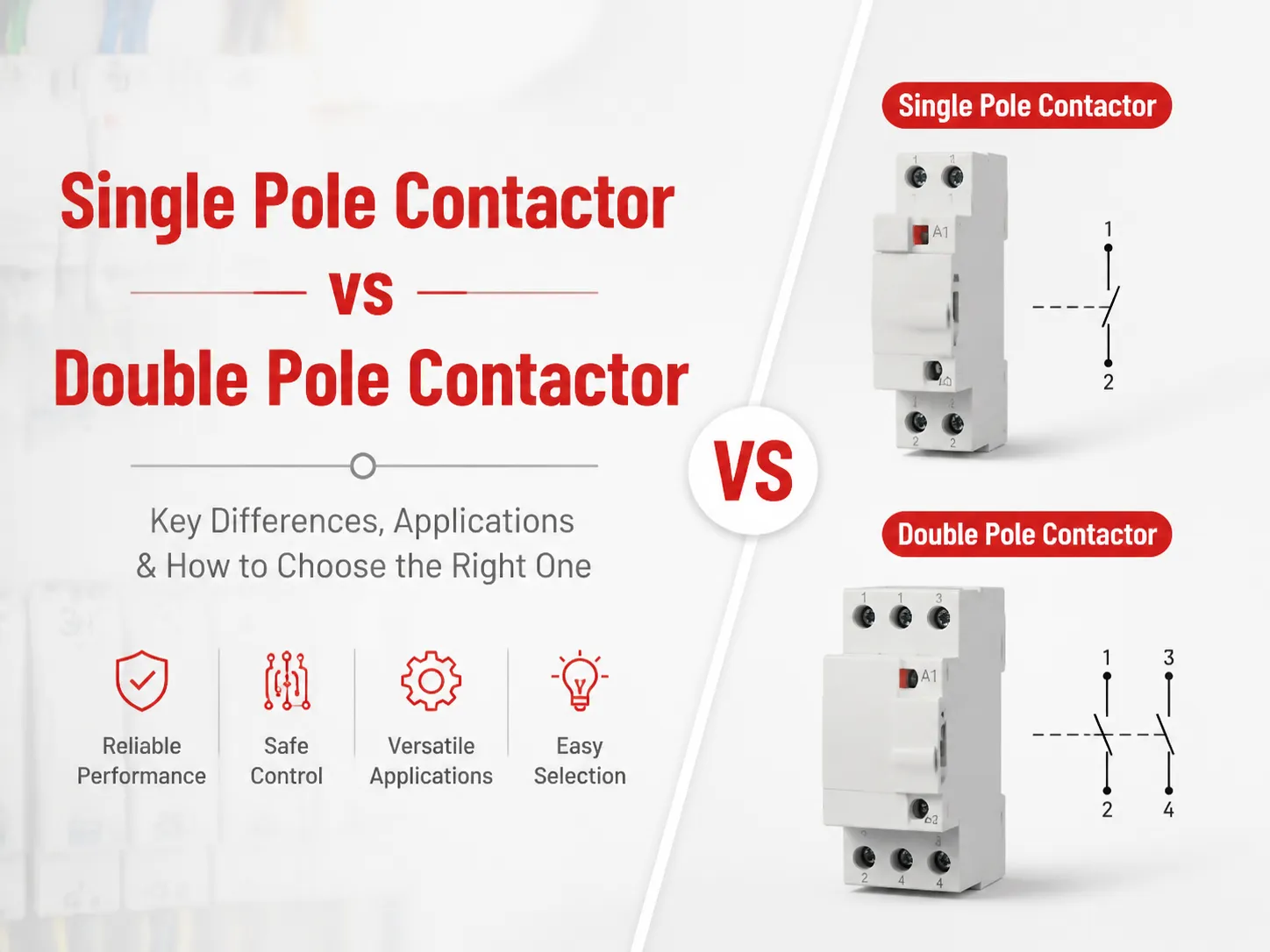
- في حالة الأجهزة أحادية الطور، تُستخدم قواطع ذات قطب واحد (120 فولت) وقواطع ذات قطبين (240 فولت).
- يجب أن تستخدم المعدات ثلاثية الطور قواطع ذات ثلاثة أقطاب (مع قطب رابع في حالة أنظمة النيوترال) مصنفة وفقًا لجهد النظام.
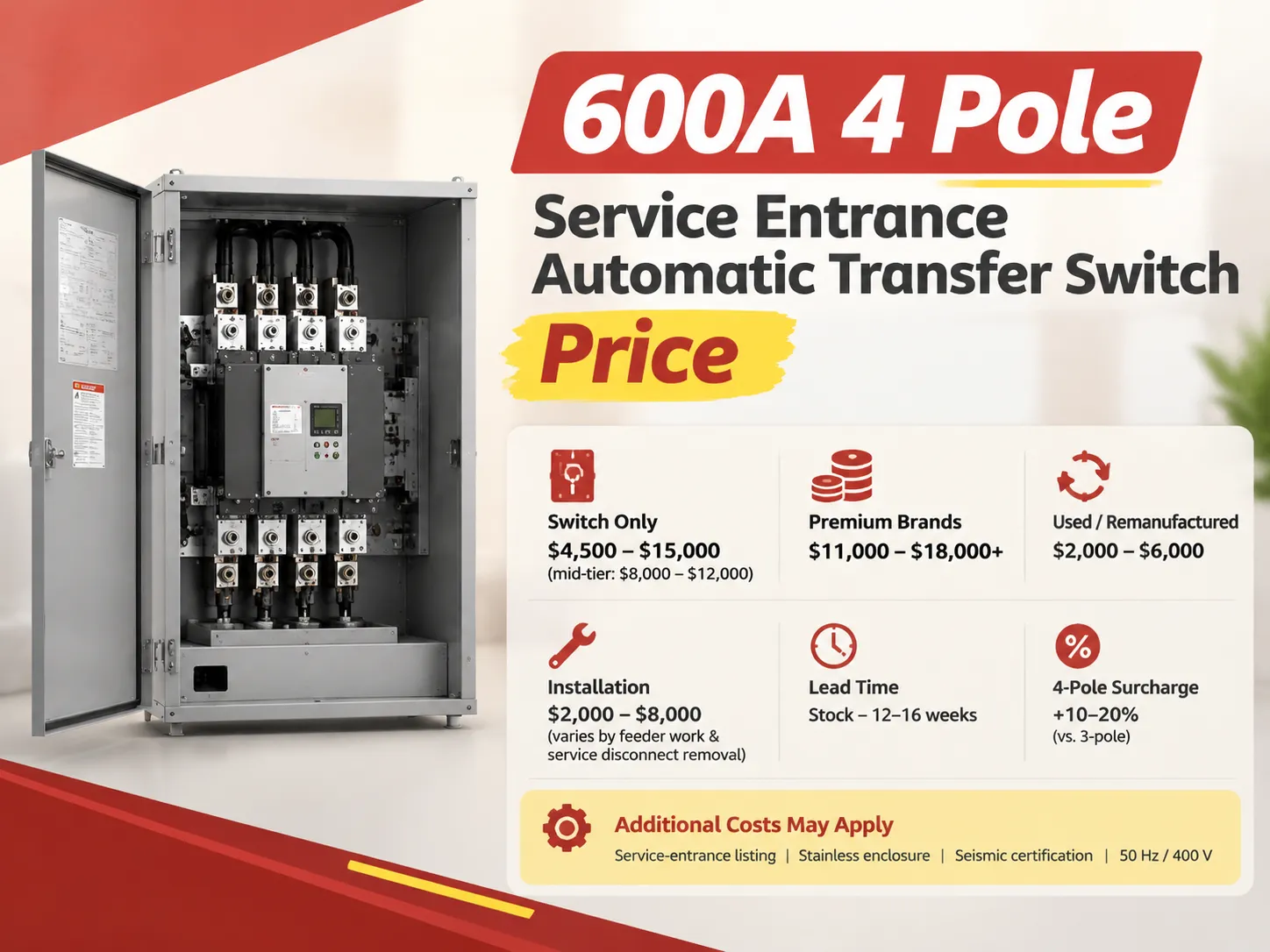
- يجب أن تتطابق المولدات والمفاتيح الأوتوماتيكية، لا يمكنك استخدام ATS أحادي الطور لتبديل إمداد ثلاثي الطور والعكس صحيح. هناك أنواع مختلفة من معدات فصل الطور.
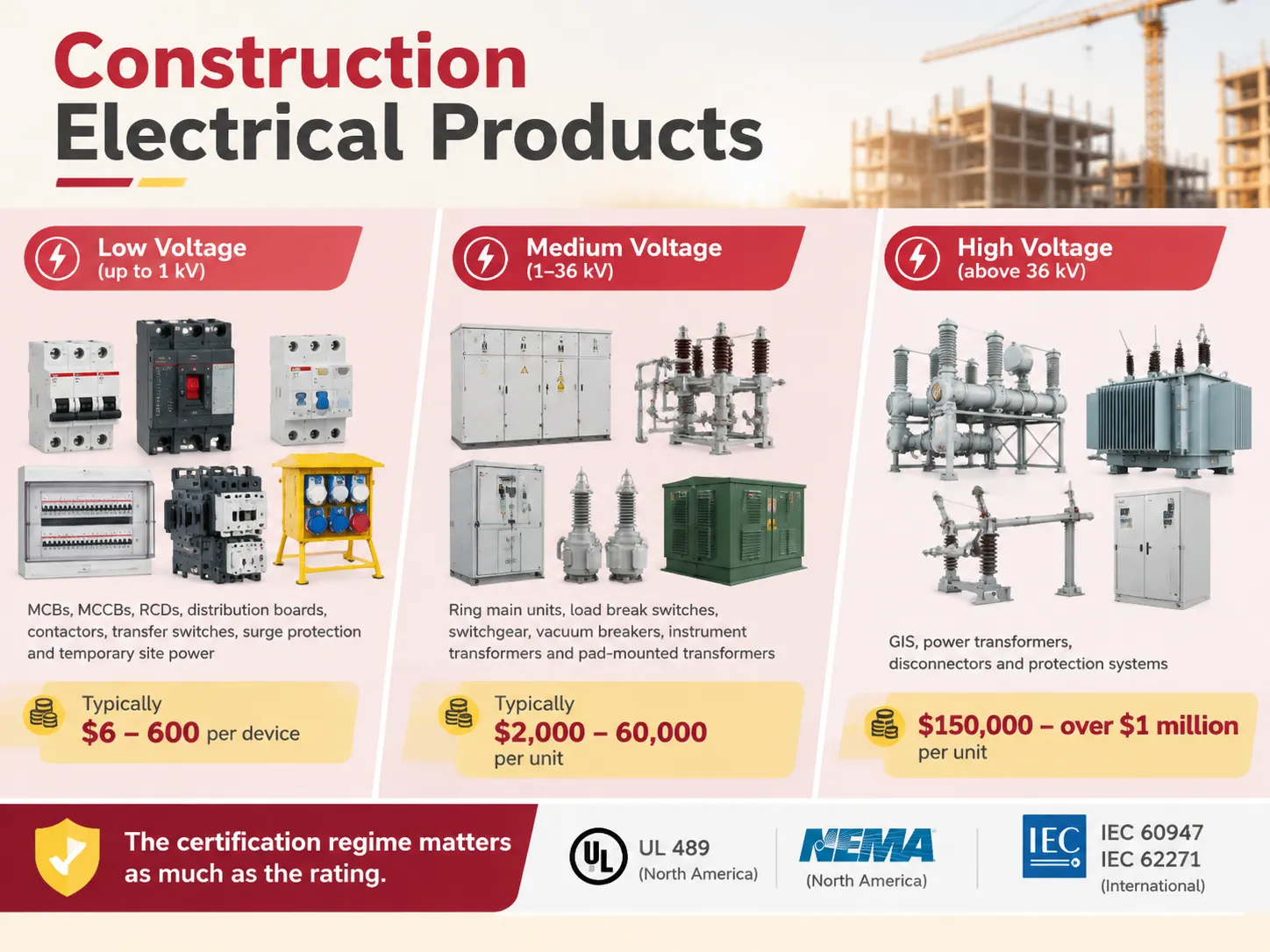
- يجب أن تكون معدات التبديل معتمدة وفقًا لمتطلبات معايير IEC و UL.
عند بناء نظام توزيع الطاقة، فإن توفير معدات التبديل والقواطع المناسبة من البداية سيمنع الأخطاء في العملية. نقطة انطلاق جيدة هي دليل MCB مقابل MCCB, ، التي تشرح كيف تحمي فئات القواطع المختلفة مستويات الأحمال المختلفة عبر أنظمة أحادية وثلاثية الطور.
الأسئلة الشائعة
هل 220 فولت أحادي الطور أم ثلاثي الطور؟
عندما نتحدث عن مصطلح 220 فولت، يمكن أن نعني أحد جهدين. أولاً، في معظم الدول خارج أمريكا الشمالية، يكون جهد الطور القياسي 220-230 فولت بين الحيادي والحي. ومع ذلك، غالبًا ما يُعتبر الطور A ببساطة الجهد بين الأطوار في نظام ثلاثي الطور؛ على سبيل المثال، في حالة جهد دلتا المتوفر في التركيبات القديمة عند 220 فولت، وفي حالة الاتصال النجمي مع جهد نموذجي 380/220 فولت، حيث يكون جهد الطور مساويًا لجهد الطور-الحيادي. لتعريف نوع الجهد، ببساطة عد عدد الموصلات – 2 أسلاك (حي وحيادي) تشير إلى تكوين أحادي الطور، بينما 3 أو 4 أسلاك (3 أطوار + نيوترال اختياري) تعني أن النظام ثلاثي الطور.
أيهما أفضل، ثلاثي الطور أم أحادي الطور؟
It actually depends on your usage. For homes and small stores of 15-20kW, a single-phase system is easier and cheaper to operate and is perfectly sufficient. However, for factories, workshops, and commercial buildings, as well as data centers, and for installations with motors larger than 5 HP or a total load higher than 30kW, a three-phase system is preferable because it is much more energy-efficient (90-96% vs 85-90% for motors) and also ensures stable power delivery and smoother operation with less vibration and at lower prices.
Is 240V single-phase or 3 phase?
In North American households, 240V is mostly a single-phase power supply (i.e., the well-known 120/240V split-phase power supply with its center-tapped transformer). However, 240V can also be a three-phase power supply in certain systems (for instance, 240V delta three-phase supply employed with various industrial components, or 240V phase-to-phase voltage of the 415/240V wye supply). To find out which type of 240V system you are working with, count the number of wires at the terminals of the equipment and examine the panel setup.
What are the disadvantages of three-phase power?
Cost and difficulty are the two major drawbacks: three-phase services cost significantly more to set up (service upgrade costs are from $3,500 to $25,000, which includes charges for transformers and workers), and require more wires, a bigger panel, three-pole breakers, and more complicated installation. Not all regions have three-phase electricity supplies, meaning that you are effectively paying for power you will not be using if your loads are small. Some energy providers can charge fees for the supply of three-phase electricity; also, the fault current level is much higher so your protection devices must be rated appropriately, namely according to their AIC rating.
المراجع
- NFPA 70 — National Electrical Code (NEC), Articles 220 & 430: Branch circuit, feeder, and motor calculations
- IEEE Std 141 — IEEE Recommended Practice for Electric Power Distribution for Industrial Plants
- NEMA MG 1 — Motors and Generators: efficiency and application standards
- IEC 60038 — IEC standard voltages
- Universal Technical Institute — Single vs. Three-Phase Power: Key Differences and Best Uses
- Enginist — Single-Phase vs Three-Phase: Engineering Comparison & Cost Analysis
- LatestCost — Three-Phase vs Single-Phase Electricity Cost Comparison 2026
الخلاصة
Single-phase power and three-phase power are not simply two ways of using electricity; each one is useful for different applications. Single-phase power is inexpensive, easy to use, and adequate for homes and light commercial activities with up to 15-20 kilowatts of electricity. Three-phase power is a source of constant energy, which is 1.73 times more power at the same level of current than single-phase electricity, requires little energy to run motors, runs engines smoothly, and has no limits in the amount of energy it distributes; due to that, it is widely used in power-intensive enterprises like factories or data centers, although they have to invest more initially.
Just choose a way to figure this out based on checking the nameplates of your equipment and determining your real load requirements and expected expansion. And when it’s time to choose your protective gear such as breakers, panels or transfer switches depending on the power supply you decide to use, HUYU Global offers you controlled MCB, MCCB, and RCCB devices as well as single-phase and three-phase automatic transfer switches depending on the IEC standards.