
عندما تبحث عن خدمات كهربائية في الولايات المتحدة الأمريكية، ستجد مجموعة من القوائم، بما في ذلك قائمة تابعة لتكتل بنية تحتية من Fortune 500 وعمل صغير يضم شاحنتين يتعامل في الغالب مع تركيب مراوح السقف. على الرغم من أن كلاهما قد يكون في نفس الصناعة، إلا أنهما لا يتنافسان على نفس الوظائف، ولن يكون هناك تشابه بين عروض الأسعار الخاصة بهما. يمكن فهم صناعة الخدمات الكهربائية في الولايات المتحدة الأمريكية بشكل أفضل من خلال التعرف على أنها تتكون من أربعة قطاعات مختلفة مكدسة فوق بعضها البعض، وأفضل طريقة لإضاعة شهر هي إرسال عرض سعر لتركيب مولد احتياطي بقدرة 400 كيلوواط إلى القطاع الخطأ.
ما يلي في النص هو دليل عملي لهذه القطاعات من السوق: قائمة بعشر شركات أمريكية في صناعة الخدمات الكهربائية، مجال تخصصها، مقرها الرئيسي، مدة مشاريعها، والتكاليف المتكبدة للوظائف المختلفة. كما يناقش قطاعًا مهمًا لا ينتبه إليه معظم العملاء – نوع المزود المناسب الأفضل للتعامل مع مشروعهم.
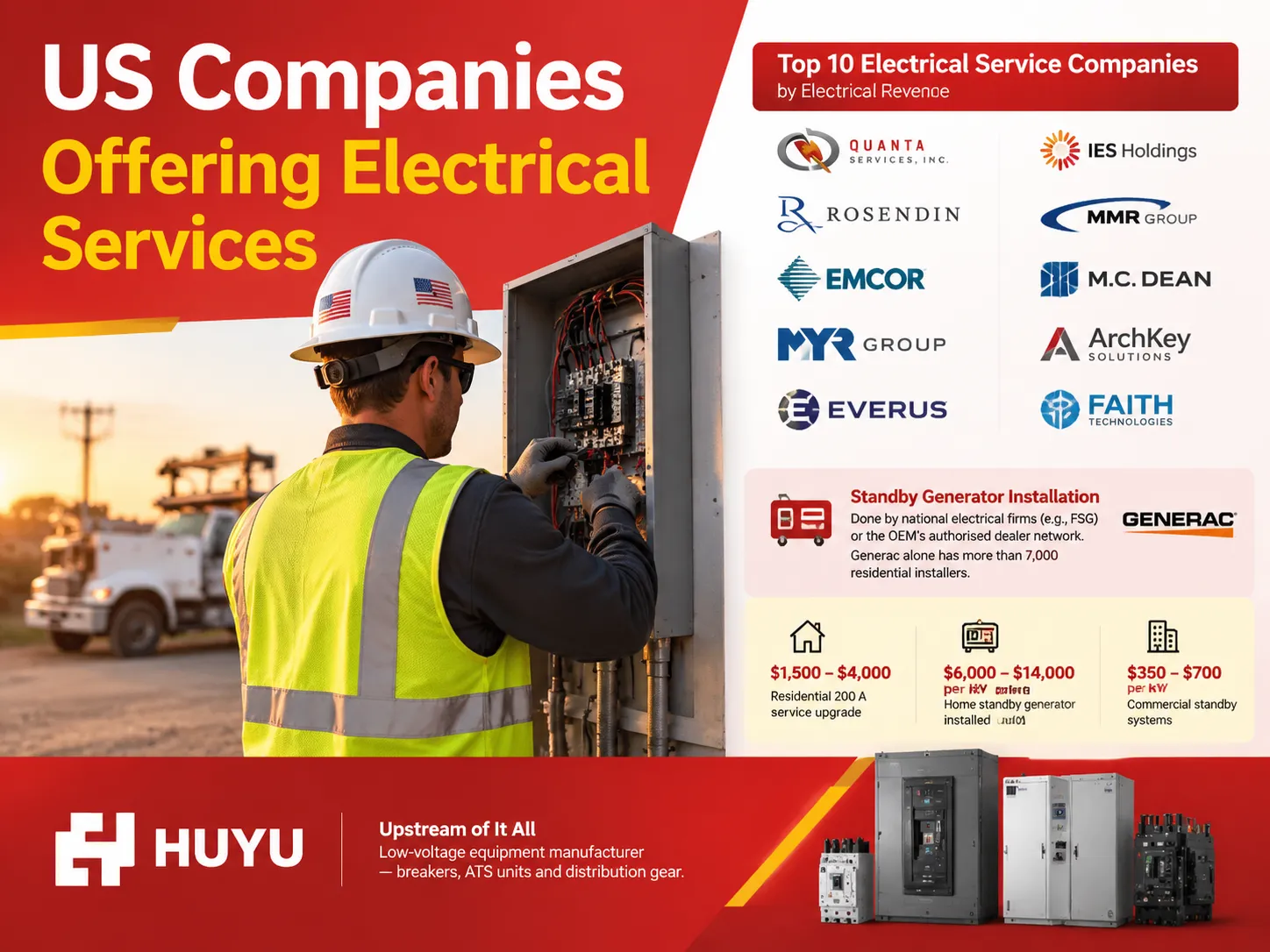
إليكم قائمة بأبرز عشرة مزودي خدمات كهربائية في الولايات المتحدة من حيث الإيرادات — Quanta Services (هيوستن، ~ US$ 13.5 مليار)، Rosendin (سان خوسيه، ~ US$ 3.7 مليار)، الفرع الكهربائي لشركة EMCOR (نوروالك، كونيتيكت؛ ~ US$ 3.6 مليار)، MYR Group (ثورنتون، كولورادو؛ ~ US$ 3.4 مليار)، Everus (بيسمارك، داكوتا الشمالية؛ ~ US$ 2.8 مليار)، IES Holdings (هيوستن، ~ US$ 2.5 مليار)، MMR Group (باتون روج، ~ US$ 2.3 مليار)، M.C. Dean (تايسونز، فيرجينيا؛ ~ US$ 1.9 مليار)، ArchKey Solutions (سانت لويس، ~ US$ 1.7 مليار)، وFaith Technologies (مينا شا، ويسكونسن، ~ US$ 1.4 مليار). هم اللاعبون الرئيسيون عندما يتعلق الأمر بالخدمة الوظيفية للمرافق، والصناعات، والمؤسسات الحيوية. إذا ركزنا على تركيب المولدات الاحتياطية، يتم تنفيذ الأعمال إما من قبل شركة خدمات كهربائية وطنية مثل FSG أو من خلال شبكة الامتيازات الخاصة بالشركة المصنعة الأصلية مثل Generac التي لديها أكثر من 7,000 مورد يعملون في قطاع السكن فقط.
الطبقات الأربع لسوق الخدمات الكهربائية في الولايات المتحدة
الهيكل يأتي قبل الأسماء. يمكن تصنيف غالبية المقاولين الكهربائيين في الولايات المتحدة تحت واحدة من الطبقات الأربع التي تميزها الخصائص المتعلقة بالتراخيص، تكوين الطاقم، والعقود التجارية.
- الطبقة 1 – المرافق التي تقدم خدمات النقل والتوزيع. هذه الفرق مسؤولة عن تركيب المحطات الفرعية، العمل على خطوط النقل بجهد 69-765 كيلو فولت، وصيانة دوائر التوزيع. يتم منح العمل من خلال اتفاقيات الخدمة الرئيسية للمرافق. أمثلة على هذه الشركات هي Quanta و MYR Group. بالتأكيد لن تكون مفيدة للمطاعم.
- الطبقة 2 – الشركات الصناعية والشركات ذات الأهمية الحيوية. يمكن اعتبار مصانع البتروكيماويات، ومرافق تصنيع أشباه الموصلات، ومراكز البيانات، والمستشفيات أمثلة على ذلك. هناك جهود عالية الجهد في الموقع، ورسومات هندسية، ودراسات قوس كهربائي، ووثائق تشغيل. الشركات المشاركة – MMR، M.C. Dean، وFaith Technologies.
- الطبقة 3 – البناء التجاري وقطاع الخدمات. يمكن وضع ترقيات المكاتب، والتجزئة، والمباني متعددة العائلات، والمؤسسات التعليمية في هذه الطبقة. الجهود الكهربائية المعنية 120/208 فولت، 277/480 فولت، تمديدات أنابيب وأسلاك ذاتية التنفيذ ومكالمات الخدمة. الشركات العاملة في هذا القطاع – Rosendin، EMCOR، ArchKey وآلاف اللاعبين الإقليميين.
- الطبقة 4 – البناء السكني والخدمات التجارية الخفيفة. فيما يتعلق بهذه الخدمات، يمكن اعتبار تبديل اللوحات، وشواحن المركبات الكهربائية، والمولدات. المشغلون العاملون في هذه الشركات هم كهربائيون معتمدون يديرون الأعمال من سياراتهم.
عادةً ما تُتخذ قرارات شراء سيئة عندما تقوم المؤسسات بتوظيف شركات الطبقة 1 لخدمات الطبقة 4 والعكس صحيح. لن يرسل مقاول المرافق أبدًا مركبة لإصلاح قاطع دائرة AFCI المتعطل، في حين أن شركة الطبقة 4 لا يمكنها تقديم حزمة مفاتيح كهربائية بجهد 15 كيلو فولت.
عشر شركات أمريكية تقدم خدمات كهربائية، جنبًا إلى جنب
القائمة أدناه مرتبة حسب إيرادات المقاولات الكهربائية، باستخدام تصنيفات ENR وModern Distribution Management التي يعتبرها القطاع نفسه مرجعًا. القائمة الكاملة لـ المقاولين الكهربائيين العاملين في جميع أنحاء الولايات المتحدة تتجاوز عشرة بكثير عند احتساب اللاعبين الإقليميين الأقوياء — مثل Miller Electric، Guarantee Electrical، Cupertino Electric، Helix Electric وآخرين الذين يحملون حجمًا جادًا في أسواقهم المحلية.
| الشركة | المقر الرئيسي | الإيرادات الكهربائية | مخصصة لـ |
|---|---|---|---|
| خدمات كوانتا | هيوستن، تكساس | ~$13.5 مليار | خدمات المرافق T&D، المحطات الفرعية، الطاقات المتجددة |
| روزندين | سان خوسيه، كاليفورنيا | ~$3.7 مليار | مراكز البيانات، أشباه الموصلات، حرم التكنولوجيا |
| EMCOR (القطاع الكهربائي) | نوروالك، كونيتيكت | ~$3.6 مليار | تجاري، رعاية صحية، حزم ميكانيكية + كهربائية |
| مجموعة MYR | ثورنتون، كولورادو | ~$3.4 مليار | خطوط T&D والمحطات الفرعية، البناء التجاري والصناعي |
| مجموعة إيفيروس للإنشاءات | بيسمارك، داكوتا الشمالية | ~$2.8 مليار | المرافق، النقل، الصناعي |
| آي إي إس هولدينغز | هيوستن، تكساس | ~$2.5 مليار | صناعي، مراكز بيانات، بناء سكني جديد |
| مجموعة MMR | باتون روج، لويزيانا | ~$2.3 مليار | مصافي، أدوات قياس، تحويل صناعي |
| إم. سي. دين | تايسونز، فيرجينيا | ~$1.9 مليار | مهام حيوية، حكومي آمن، سيبر-فيزيائي |
| حلول آرتش كي | سانت لويس، ميزوري | ~$1.7 مليار | تجاري، رعاية صحية، تعليم |
| فيث تكنولوجيز | ميناشا، ويسكونسن | ~$1.4 مليار | تصنيع، مراكز بيانات، تصنيع مسبق |
ما يجيده كل من العشرة فعليًا
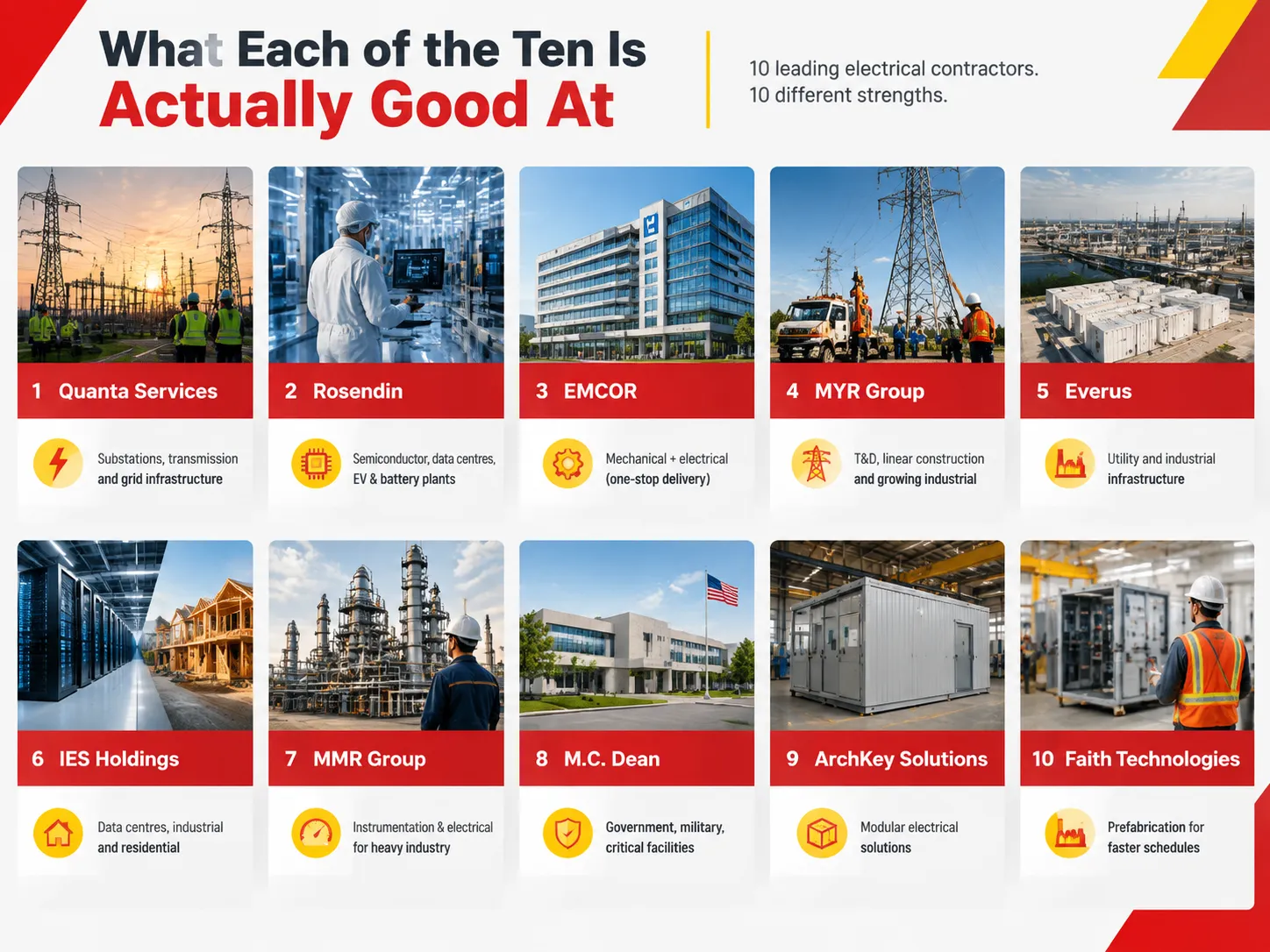
Quanta Services هي مقاول كهربائي ضخم في الولايات المتحدة. معظم مشاريع الشركة مرتبطة ببنية تحتية للطاقة الكهربائية مثل المحطات الفرعية وإعادة بناء خطوط النقل. من المنطقي تمامًا وجود Quanta في قائمة المقاولين لأن الشركة يمكنها تعبئة 40,000 موظفًا وأساطيلها في أي مكان. ومع ذلك، هناك جانب سلبي لاستخدام هذا المقاول في عمليات البناء؛ فالعميل ربما لا يكون كبيرًا بما يكفي لجعل الطلب جذابًا لـ Quanta.
روزندين هي شركة مملوكة للموظفين، مما يجعل الطاقم يعمل على مشاريع كبيرة مع معدلات احتفاظ عالية. تشمل الكفاءة الأساسية لروزندين الأعمال الهندسية في مجال تكنولوجيا الساحل الغربي، مثل مصانع تصنيع أشباه الموصلات، مراكز البيانات الضخمة، أو مصانع البطاريات. كونها مملوكة للموظفين يعني اتخاذ قرارات بطيئة جدًا على مستوى الإدارة العليا.
تقدم EMCOR خدمات ميكانيكية وكهربائية خلال عقد واحد. هناك سبب يجعل العملاء يفضلون هذا التعاون الفني؛ فهو يبسط بشكل كبير عملية البناء لأن العمليات الميكانيكية والكهربائية منسقة جيدًا دون قضاء وقت إضافي.
مجموعة MYR هي مجموعة شركات تقدم خدمات كهربائية من خلال شركاتها الفرعية، والتي كانت ضمن أفضل 5 مقاولين في الولايات المتحدة الأمريكية لما يقرب من ثلاثين عامًا حتى الآن. التخصص الرئيسي للشركة هو عمليات النقل والتوزيع، مثل بناء خطوط نقل عالية الجهد ومحطات فرعية تربط الطاقة الكهربائية من المولد إلى المستهلكين. ومع ذلك، فإن القطاعات التجارية والصناعية في السوق أقل تطورًا. تتفوق الشركة في مشاريع البناء الخطية ومن غير المرجح أن تتمكن من استيعاب أي عمليات بناء ضخمة في هيكل الشركة.
تنبثق Everus من MDU Resources وتركز على كل من المرافق والبنى التحتية الصناعية. تعمل IES Holdings في قطاع الصناعة ومراكز البيانات بشكل أكثر تنوعًا مما كان متوقعًا، ولديها قطاع بناء سكني كبير في الولايات المتحدة يمنحها رؤية فريدة لدورات أسواق الإسكان.
تتخصص مجموعة MMR في المجالات الكهربائية وأجهزة القياس للصناعات الثقيلة. إذا كانت منشأتك تعمل بأوقات توقف تُقاس بالورديات بدلاً من الأسابيع، فأنت تتحدث لغتهم. كما تتشكل الميزانيات أيضًا بناءً على كيفية توظيف المقاول: شركة تركيب كهربائي تجارية التي تنفذ بنفسها فرق القنوات والأسلاك ستحافظ على الجدول الزمني بشكل أفضل من تلك التي تتعاقد مع العمالة، وفي حالة إيقاف تشغيل مصفاة، يُقاس الفرق بأيام من الإنتاج المفقود.
M.C. Dean هي الشركة التي تعمل في البيئات التي يكون فيها الفشل مستحيلًا - مراكز البيانات المملوكة للحكومة، القواعد العسكرية، ومراكز الاستخبارات. بدأت العمل في عام 1949، وتقع في تايسونز، فيرجينيا، وتوظف حوالي 9,000 موظف، منهم 1,000 لديهم تصريح أمني. وقد اشترت غالبية أسهم Bells Power Group، وهي شركة راسخة في المملكة المتحدة تساعد في تصميم وتركيب وصيانة أنظمة إمداد الكهرباء منذ عام 1898، مما يظهر اتجاه السوق.
ArchKey Solutions and Faith Technologies occupy the last places in the top ten companies. Faith Technologies stands out due to its method of prefabrication; they manufacture electrical holes in a factory.
Standby Generator Installation: The Layer Most Buyers Get Wrong
The point at which standby generator installation diverges from the actual reality is in clarifying who wants to install a generator. Firms like M.C. Dean, MYR and Faith Technologies are all in the generator installation business. However, they’re likely to refuse any residential contracts using a 22 kW generator.
Indeed, the reality of the standby generator installation market breaks down into three distinct areas:
| Channel | Typical size | Installed cost | Who does it |
|---|---|---|---|
| Residential dealer network | 7–26 kW | $6,000–$14,000 | Generac (7,000+ installers), Kohler, Briggs & Stratton certified dealers |
| National commercial electrical firm | 500 kW–4 MW+ | $350–$700 per kW | FSG, Power Plus, GenServe, regional integrators |
| Mission-critical / OEM direct | 2–50 MW | Project-bid | Cummins, Caterpillar, Kohler, M.C. Dean |
Two statistics lend credence to the cost of the outages. EPRI and Primen estimate the average cost of a one-hour outage for industrial and digital economy businesses to be in the neighborhood of $7,800 per hour, while the EIA data indicates that the average major outage will take about nine hours in 2024—more than double the average in the previous decade. A cold storage facility of 300,000 sq ft loses all its product by the end of the eighth hour.
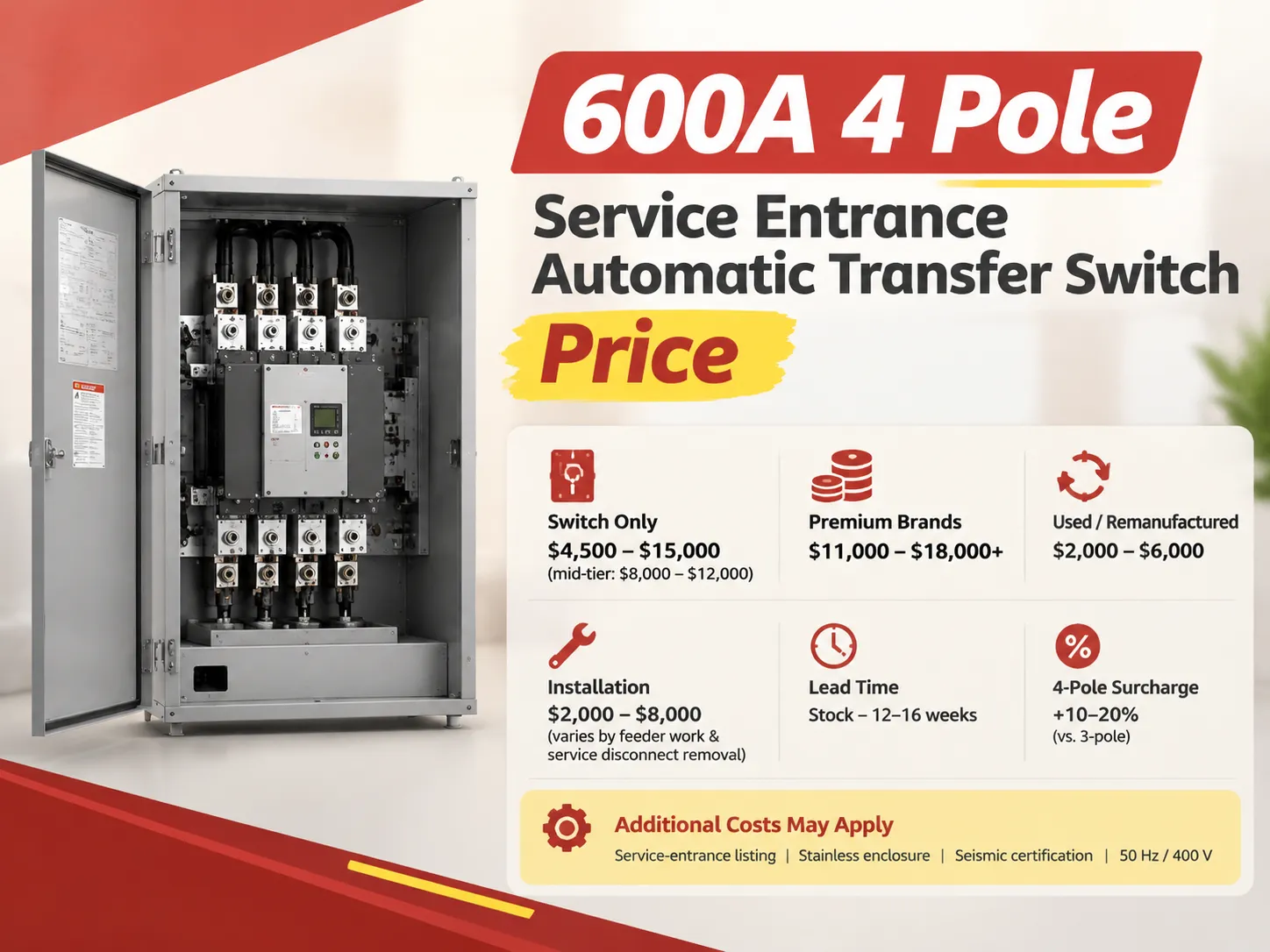
What counts in this context is not the generator but the transfer of power. The load of the data center needs transferring in less than 10 seconds to remain within UPS operating time. Hospitals are held to this same standard under NFPA 99, which also has NFPA 110 Level 1 testing criteria. Commercial and industrial stand-by systems under NEC Article 701 and 702 are allowed as much as 60 seconds.A three-phase automatic transfer switch sized to the full service — not to the emergency load — is what determines whether you land inside that window or outside it, and it is the single most common item buyers under-spec.
The other thing to consider is fuel capacity. The NFPA 110 requires Level 1 life safety systems to have minimum fuel supplies of 24 hours and Level 2 systems, 8 hours. You can also expect trouble if no one has tested the generator on load at least once per month. According to data, idle-only generators fail on demand in 15 to 20 percent of cases, compared to less than 3 percent of failure in the same situation for generators that have been tested for 30 minutes every month.
Delivery Timelines: What “Lead Time” Really Means for Each Layer
In the context of this industry, lead time signifies three different things, and contractors will choose whichever version makes them look most favorable. It is recommended to ask contractors to provide information on all three types of lead time: equipment lead time (i.e. the time from the factory to the site), permit lead time (i.e. the time from application through approval to energisation), and construction duration (i.e. the time from mobilisation to substantial completion).
| Project type | المعدات | Permit / utility | Build |
|---|---|---|---|
| Residential 200 A service upgrade | 1–2 weeks | 2–6 weeks | 1–3 days |
| Home standby generator (22 kW) | 3–10 weeks | 2–8 weeks | 1–3 days |
| Commercial tenant fit-out | 2–8 weeks | 4–12 weeks | 6–20 weeks |
| Commercial generator, 500 kW–2 MW | 20–52 weeks | 8–24 weeks | 2–8 weeks |
| Medium-voltage switchgear package | 20–40 weeks | 8–20 weeks | 8–20 weeks |
| Utility substation | 30–60 weeks | 12–36 months | 12–24 months |
During the supply crunch of 2022-2023, the lead time for medium-voltage switchgear increased to more than 60 weeks, and while it has improved since, the standard now is still in the range of 20-40 weeks. If your construction schedule is tight, you may not want to waste your time going back and forth with the contractor; instead, order the gear ahead of time or design around readily available equipment.
What Electrical Services Cost in the US
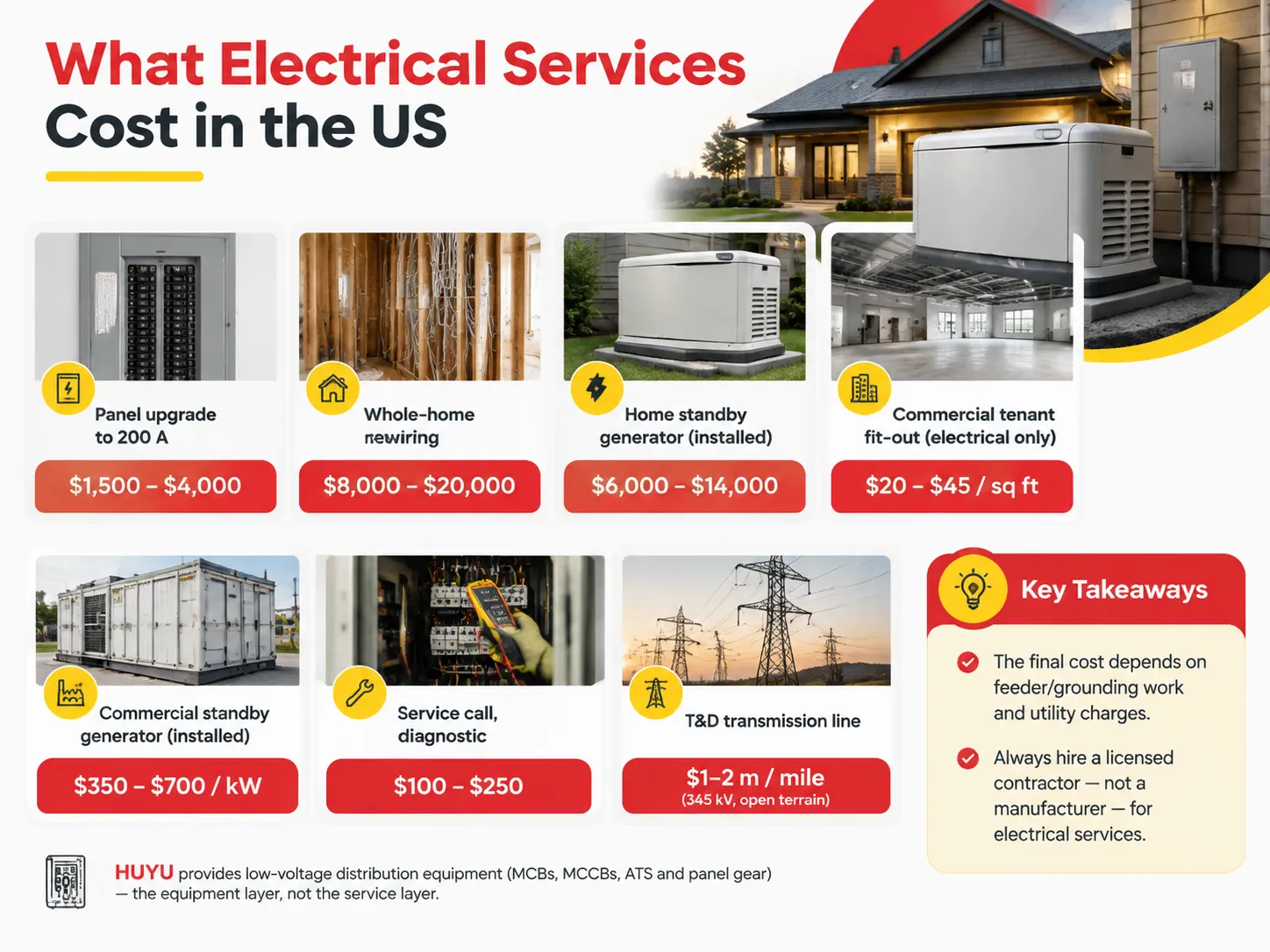
The following figures represent the actual levels of cost confronted by American buyers. These figures assume the presence of licensed contractors, the obtaining of permits and the having of standard access.
| الخدمة | التكلفة النموذجية | ملاحظات |
|---|---|---|
| Residential panel upgrade to 200 A | 1,500–4,000 دولار | Add $500–$2,000 if the utility must replace the service drop |
| Whole-home rewiring | $8,000–$20,000 | Driven by wall access; finished walls cost the most |
| Home standby generator, installed | $6,000–$14,000 | 22 kW class, including transfer switch and pad |
| Commercial tenant fit-out, electrical only | $20–$45 per sq ft | Data-heavy or lab space runs well above this |
| Commercial standby generator, installed | $350–$700 per kW | 100 kW to 2 MW; paralleling gear adds cost fast |
| Service call, diagnostic | $100–$250 | Typically waived if you approve the repair |
| T&D transmission line | $1–2 m per mile (345 kV, open terrain) | Urban routing and river crossings multiply this |
For a residential service, replacing a 200 A electrical panel usually lands between $1,500 and $4,000, and the spread comes almost entirely from two things: how much of the existing feeder and grounding electrode conductor has to be redone, and whether the utility charges to disconnect and reconnect. Get those two answered in writing before you sign anything.
One important thing that explains a lot about pricing in the USA is the fact that many pieces of equipment behind the wall are imported. HUYU produces low-voltage equipment, including MCBs, MCCBs, automatic transfer switches and switchboards. HUYU only plays the role of equipment supplier but does not provide any services.
How to Choose a Provider for Your Scenario
Identify the layer corresponding to the task, and after that, find out the things that go wrong in that layer.
- The first filter that identifies which class of license is required is a voltage one. The line between high voltage and low voltage in the NEC sits at 600 V nominal, and crossing it changes who can legally perform the work, what drawings are required, and how much the insurance costs. A contractor who is excellent at 480 V building work may hold no qualification at 13.8 kV.
- When it comes to homeowners and the installation of standby generators, it’s crucial to ensure that you go through a factory-authorized dealer. That way, your warranty won’t be voided and you can be sure that the dealer will take care of the load calculation and sizing. Also, ensure that the dealer provides the transfer switch model in the quote.
- If you are dealing with a commercial contractor about a fit-out or service, make inquiries about the superintendent, including how many projects they are currently juggling. This knowledge gives you the ability to know whether the contractor is likely to be attentive to your project or if their attention might be diverted.
- It is important to ascertain whether industrial contractors offer arc-flash study capability, coordination study deliverables, and have a commissioning plan in writing.
- When you deal with mission-critical contractors, you should ask them about their experience with NFPA 110 and NFPA 99 standards. You can also obtain a load-bank report from another job that is similar to your own. It’s important that you don’t deal with hospitals that refuse to provide you with commissioning contracts.
- When it comes to utility or generation interconnections, find out if the contractor has an existing agreement with the utility and whether they self-generate or subcontract the work. Subcontracting usually means that the contractor has scheduling problems.
Regardless of your choice of contractor, you need to ask them three critical questions that will determine whether they can satisfactorily do the job. You need to ask them who their superintendent is and how many projects they are working on currently. This gives you a sense of how much attention they can devote to your project.
الأسئلة الشائعة
Who is the biggest electrical contractor in the USA?
Quanta Services is located in Houston, Texas, and its electric power segment has given it a revenue of about $13.5 billion each year. This means that Quanta makes more than thrice the revenue earned by the next biggest electric contractor, Rosendin, which earns close to $3.7 billion in revenues. Quanta mainly focuses on utility transmission and distribution, substations, and renewable interconnections as compared to commercial buildings. While measuring total electrical revenue, including service work, the next companies waiting in the line behind Quanta Services are EMCOR’s electrical segment and MYR Group.
Who is the largest electrical supplier in the US?
Whether the question is about the distribution of electrical equipment or its manufacturing defines the answer completely. WESCO International is the largest distributor of electrical supplies with an annual revenue of around $23.5 billion, followed by Sonepar North America (~$19.0 bn), Grainger (~$17.9 bn), Graybar (~$12.9 bn) and Rexel North America (~$10.1 bn). These distributors are used by contractors to purchase breakers and switchgear supplies. With regard to manufacturing, countries and manufacturers within the industry are divided according to their product specialties, for example, Schneider Electric, Eaton, ABB and Siemens are considered leaders in medium voltage distribution and switchgear production, while HUYU’s products comprise low-voltage breakers, ATS units and distribution boxes.
Who are the major electrical contractors in the US?
The leading companies in terms of revenue in electrical contracts are Quanta Services, Rosendin, EMCOR, MYR Group, Everus Construction Group, IES Holdings, MMR Group, M.C. Dean, ArchKey Solutions and Faith Technologies. Right under them is the exceptionally strong second tier of regional players with substantial market strength. The second tier is made up of local players such as Cupertino Electric and Helix Electric from the West Coast, Miller Electric from the southeast region and Guarantee Electrical from the Middle West region. For most building owners, the second tier becomes more relevant than the first ten as these companies are the ones which actually bid for medium-sized projects.
Is there a shortage of electricians in the USA?
Indeed, this is a more permanent situation rather than a temporary one . As per Bureau of Labor Statistics, the employment opportunities for electricians are going to grow rapidly in the next ten years. This might mean approximately 81000 job openings each year! Out of this, 20000 will be created due to retirements alone. The earnings of the electricians have also been growing which was $63190 median earnings in May. The highest paid top 10% of the employees earn at least $108510, showing the ongoing wage growth occurring along with shortage situation. According to the estimates of Associated Builders and Contractors, construction industry will need to find about 349000 workers by 2026. Most of the workers in the construction industry (around 20%) are already over 55 years.
المراجع
- U.S. Bureau of Labor Statistics — Occupational Outlook Handbook: Electricians
- U.S. Bureau of Labor Statistics — OES Wage Data for Electricians
- M.C. Dean — Corporate Site and Capability Statement
- MYR Group — Investor Materials and Segment Reporting
- Quanta Services — Investor Relations and Annual Report
- NFPA 110 — Standard for Emergency and Standby Power Systems
- NFPA 99 — Health Care Facilities Code
- NFPA 70 — National Electrical Code (Articles 700, 701, 702)
- U.S. Energy Information Administration — Electric Power Monthly and Reliability Data
- Global Market Insights — U.S. Stationary Generators Market
الخلاصة
The electrical services sector in the United States has distinct levels of buyer knowledge. At the substation or interconnection level, consumers should focus on the service agreements and switchgear required by Quanta, MYR and Everus. At the data center or hospital level, buyers consider the commissioning documents offered by Rosendin, M.C. Dean and Faith Technologies. When it comes to home panels or stand-by generators, consumers should find a licensed electrician or an authorized dealer, who can conduct load calculation and transfer switch sizing.
There are three main takeaways here. First, separate equipment lead time, permit lead time and build duration into your schedule because the number that will halt the project will rarely be the one that the contractor tells you. Second, make sure to spec the transfer switch for complete service, not just for the emergency load. That’s where the failure of standby generator installation gets uncovered by the authorities, and therefore, this is where the 10-second rule is won or lost. Third, ensure the licenses and permits are in order because every year millions of American homeowners pay for the panel upgrades that the utility never authorized, since nobody bothered to pull the necessary permits first.