
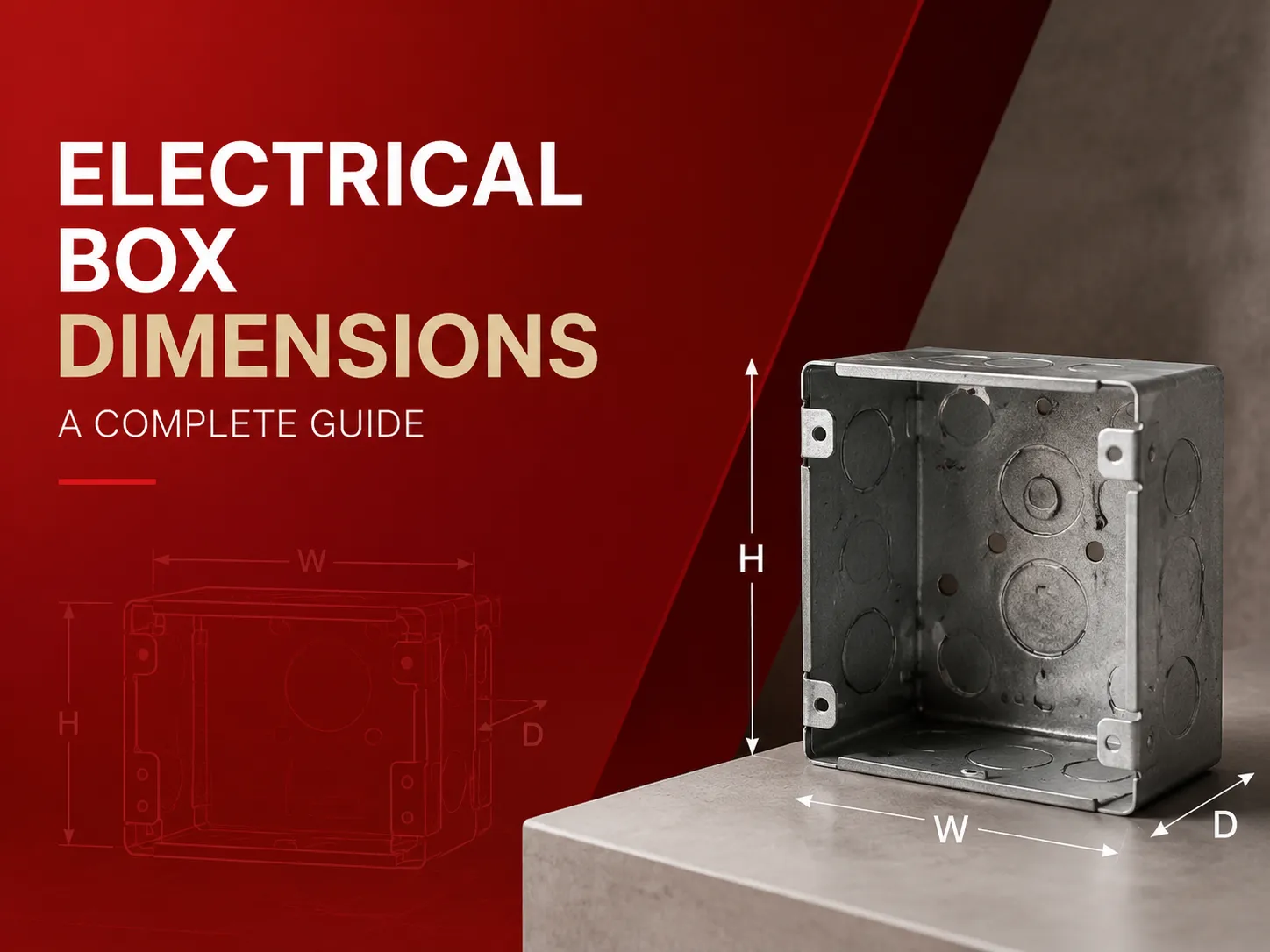
An electrician working on a hotel remodel recently had the fun experience of trying to fit a jumbled mess of wires back into a junction box after opening it. The junction box was a regular 4″ square box with a depth of 1.25″, typically used with a single circuit. However, the box contained four circuits! Three additional circuits had been pulled into the box over time, leaving a total of seven conductors in the box, which is almost double the maximum number of conductors allowed in this type of junction box! The cover plate barely fit onto the junction box. One of the biggest reasons why this happens is the complete lack of understanding concerning how the dimensions (e.g., width, height, and depth) of electrical boxes are determined and their importance. Electrical boxes are not just containers for splicing. The volume, shape, and depth of a box all affect how long a connection will last, as well as how much heat will dissipate from the connection.
Why Electrical Box Dimensions Are a Safety Requirement, Not a Preference
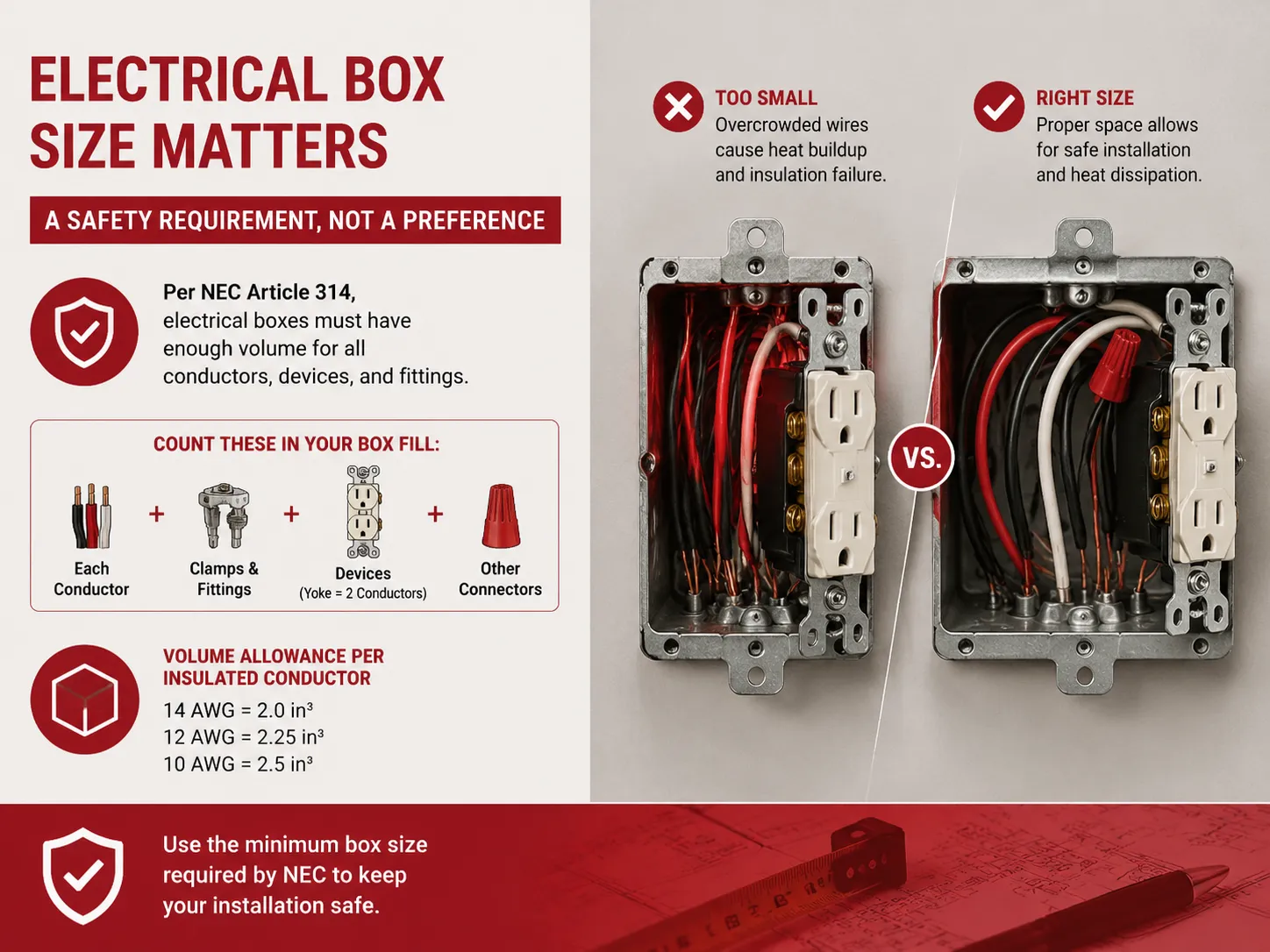
According to the National Electrical Code (NEC) Article 314, there are limits on how many conductors can fit inside a box based on the size of the box. When calculating your box, you must account for the following items: each wire (un-insulated or bare), each clamp that will attach to the wire, any devices that will be installed, and any other fittings that will be installed. If you have a box that is too small to accommodate the number of conductors; it will put pressure on the conductors and impede the dissipation of heat, causing the insulation to fail when the device is pushed into place. The NEC set minimum size requirements for boxes; therefore, if you use the minimum size box, you will be safe from this problem. The NEC assigns a volume allowance per insulated conductor based on its size (14 AWG = 2.0 cubic inches, 12 AWG = 2.25 cubic inches, 10 AWG = 2.5 cubic inches) to allow for the additional items that you have inside your box. For example, when doing your full box fill calculation, you will need to include ground wires, internal clamps, any cable connectors, and the device that will be installed inside the box. A single receptacle or switch yoke will be equal to two conductors for the purpose of this calculation.
The resulting total determines the minimum box volume required. Resources from the National Fire Protection Association (NFPA) and electrical trade publications like EC&M provide detailed box‑fill examples.
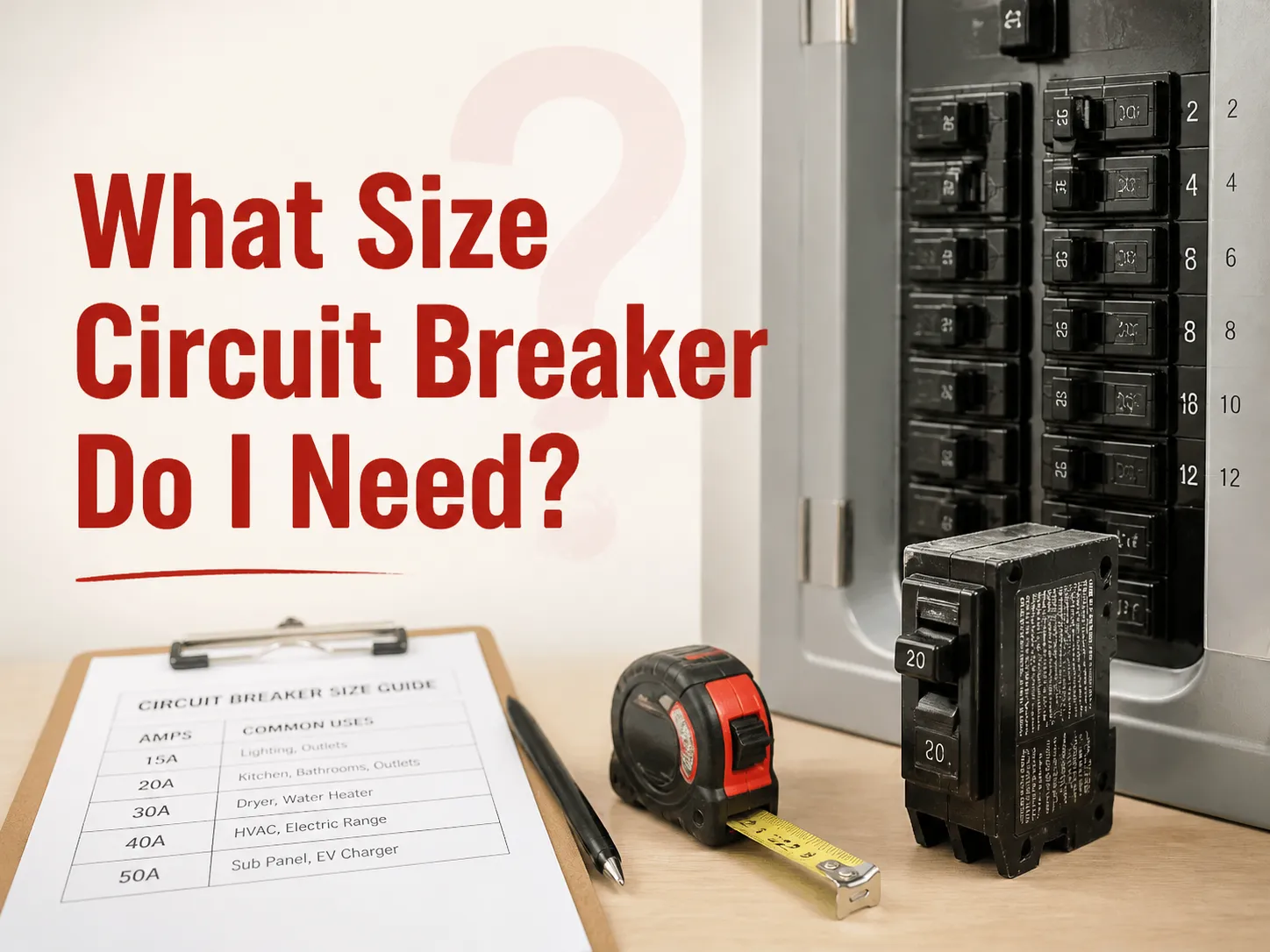
For a more specific look at the devices that fit into these enclosures, our guide on what size circuit breaker you need explains the overcurrent protection that the circuit breaker panel — itself a very large electrical box — must provide. And for an understanding of the protective devices housed within many enclosures, our article on what UL 489 breakers are explains the certification framework that governs the breakers installed in panelboards and load centres.
Common Electrical Box Types and Their Typical Dimensions
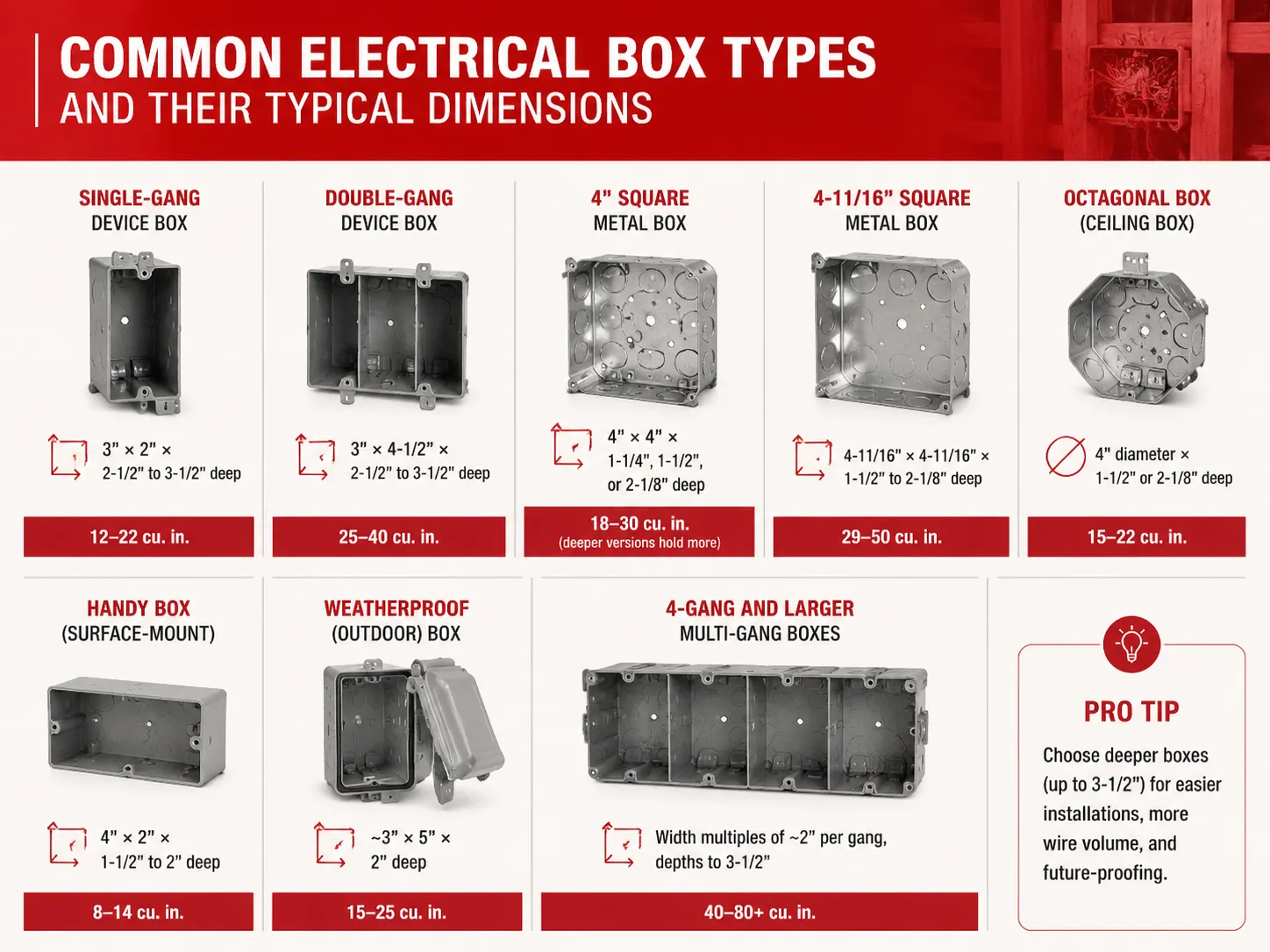
Not all electrical boxes are interchangeable. The box type determines where it can be installed — in a wall, on a surface, outdoors — and what it can contain. The following table summarises the four most common box types and the dimensions you will typically encounter on a supply house shelf.
| Box Type | Typical Dimensions (Width × Height × Depth) | Typical Volume (Cubic Inches) | Common Use |
|---|---|---|---|
| Single‑Gang Plastic or Metal Device Box | 3″ × 2″ × 2‑1/2″ to 3‑1/2″ deep | 12–22 cu. in. | One switch or one duplex receptacle |
| Double‑Gang Device Box | 3″ × 4‑1/2″ × 2‑1/2″ to 3‑1/2″ deep | 25–40 cu. in. | Two switches or two receptacles side by side |
| 4‑Inch Square Metal Box | 4″ × 4″ × 1‑1/4″, 1‑1/2″, or 2‑1/8″ deep | 18–30 cu. in. (deeper versions hold more) | Junction box, or device box with a plaster ring |
| 4‑11/16″ Square Metal Box | 4‑11/16″ × 4‑11/16″ × 1‑1/2″ to 2‑1/8″ deep | 29–50 cu. in. | Larger junction boxes, multiple splices, commercial applications |
| Octagonal Box (Ceiling Box) | 4″ diameter × 1‑1/2″ or 2‑1/8″ deep | 15–22 cu. in. | Ceiling light fixtures, smoke detectors |
| Handy Box (Surface‑Mount Utility Box) | 4″ × 2″ × 1‑1/2″ to 2″ deep | 8–14 cu. in. | Surface‑mounted switch or receptacle in garages, basements |
| Weatherproof (Outdoor) Box | Single‑gang: ~3″ × 5″ × 2″ deep | 15–25 cu. in. | Outdoor receptacles and switches, with gasketed covers |
| 4‑Gang and Larger Multi‑Gang Boxes | Width multiples of ~2″ per gang, depths to 3‑1/2″ | 40–80+ cu. in. | Multiple switches in one location |
Single gang electrical boxes are the most commonly used type of electrical box in a residential setting; they are usually 3″ high by 2″ wide. The depth of the boxes varies, with the older homes having 2-1/4″ deep boxes. Installing a modern USB or smart receptacles that are much deeper than a traditional duplex receptacle can create difficulties because the deeper the device, the more difficult it will be to install in a box that is too shallow. A box that is too shallow will force you to cram wires in, which creates pressure on connections and can cause arcing or an open circuit over time. Therefore, most electricians are now using 3-1/2″ deep single gang electrical boxes as a standard, even though the building code allows for the installation of a shallower box. The extra cubic inches of volume in the box costs very little and makes every future installation or replacement of the device that is housed in the box much easier than doing it with a box that has a shallower depth.
How the 6/12 Rule Affects Box Placement and Size
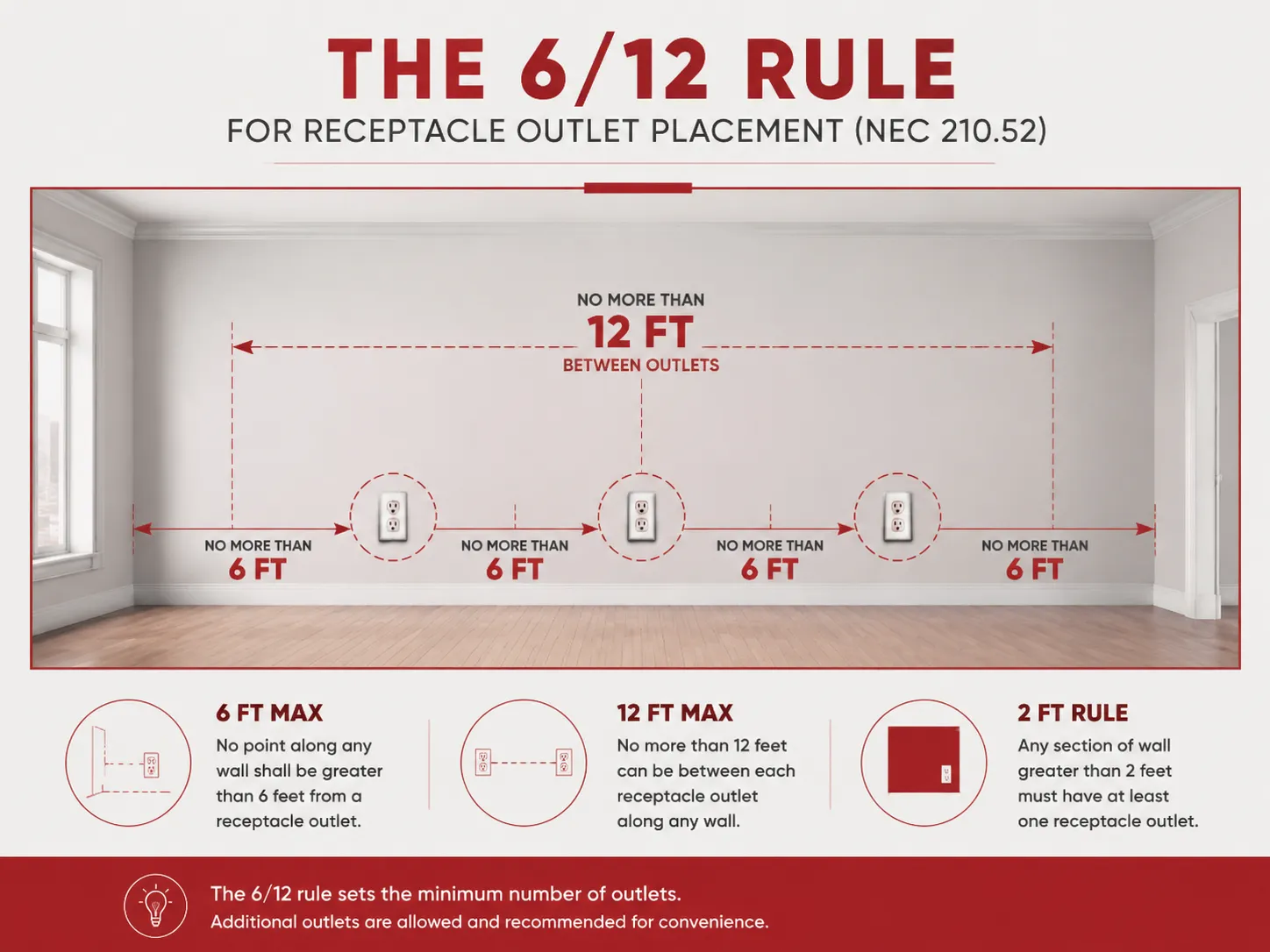
The “6/12 rule” is a spacing rule, not a box dimension rule, which affects the quantity and position of the boxes you need for your electrical installation. According to NEC Article 210.52, no point along any wall shall be greater than six feet from a receptacle outlet. Therefore, no more than twelve feet can be between each receptacle outlet along any wall. Any section of wall greater than two feet must have at least one receptacle outlet installed on it. This means the 6/12 rule establishes an absolute minimum number of outlet boxes in a large room and subsequently defines how many circuits will be supplied and the total load calculation for that room’s electrical panel. The 6/12 rule is an example of a minimum requirement; installing additional outlets, even if it exceeds the number required by this rule, is allowed and often provides extra convenience. Knowing the 6/12 rule will allow you to create an accurate electrical plan for a room so that you can determine the proper location and size of each outlet box in the room according to the conductors exposed to them.
What Can Go Wrong When the Box Is Too Small
Undersized boxes do have real-world consequences. When a box is over-filled, the result will always be that the conductors’ insulation has degraded from trapped heat; this will occur over time. The insulation becomes brittle, and eventually, the insulation will crack. A cracked conductor will create either a ground fault or a short-circuit that may not trip the breaker until after the arc has already begun. In addition, if the box is too shallow, the conductors will not be able to be folded neatly behind the device; when installed, the wires will become too compressed against the back of the box and may either loosen a terminal screw or break a wire nut due to pressure. Unreliable connections create problems in diagnosing electrical issues and can create a fire hazard. Following the box-fill calculation will alleviate all of these problems.
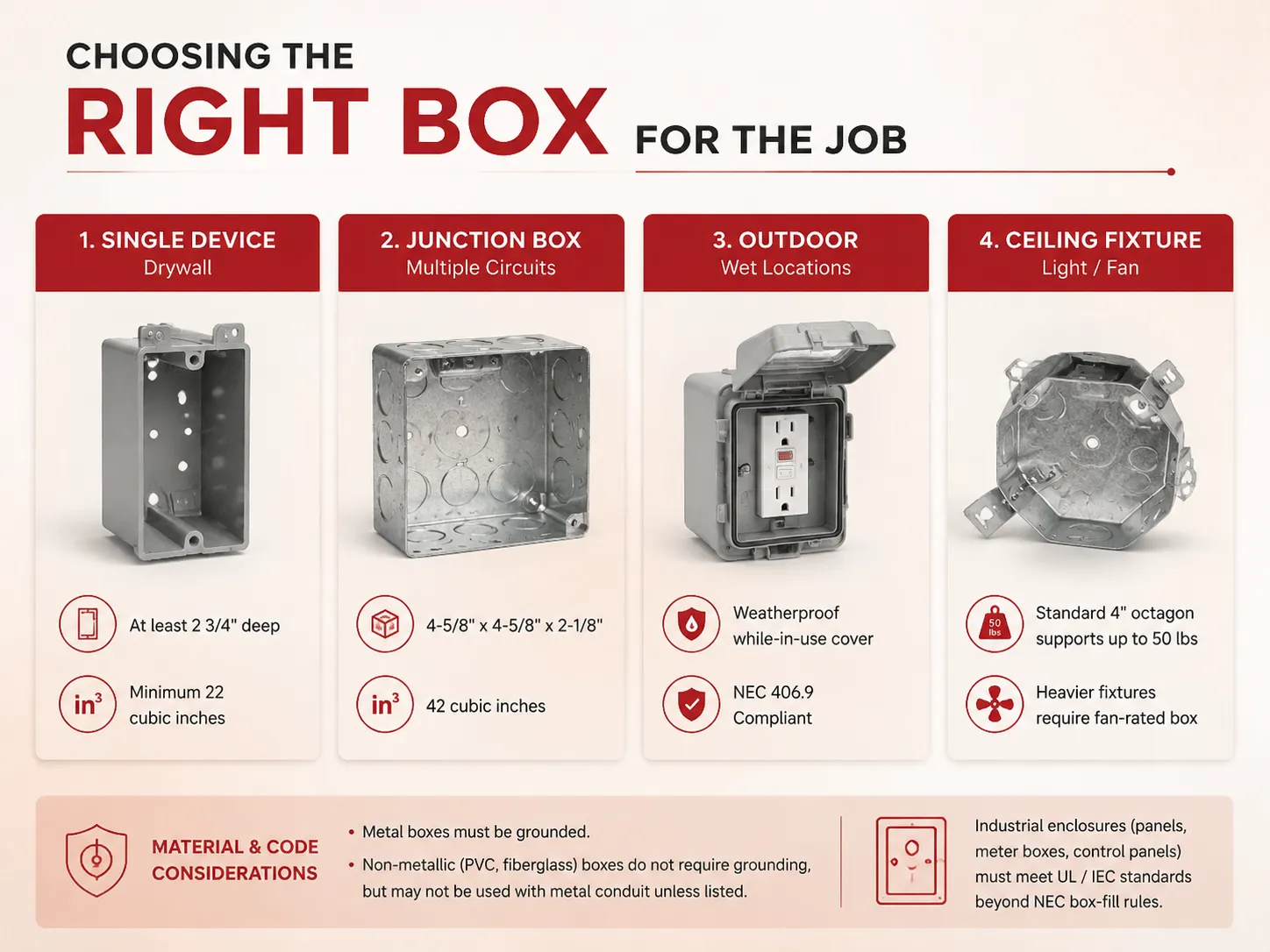
Choosing the Right Box for the Job
Choosing an appropriate size and style for your electrical box depends upon what kind of electrical circuit you are working within, as well as how many conductors will be installed together within this circuit. The following are some practical recommendations:
- For a single switch or receptacle in drywall: A single gang metallic or plastic device box that is at least 2 3/4 inches deep and contains a volume of at least 22 cubic inches will provide room for a standard device and its associated wiring without overcrowding.
- For a junction box with multiple circuits: The square metal box with the dimensions of 4-5/8″ x 4-5/8″, as well as the depth of 2-1/8″, has a volume of 42 cubic inches and is used more than any other box found in commercial electric rooms. A blank cover or plaster ring can be installed over this box, which has multiple conduit entry points.
- For outdoor installations: A weatherproof, single-gang outlet box, along with a ‘while-in-use’ cover, meets the requirements for weather sealing under NEC 406.9 for receptacles installed in wet areas. The increased depth of the outdoor box also allows for adequate space so that the GFCI outlet is not crowded.
- For ceiling fixtures: An octagonal box rated for the fixture weight is mandatory. A standard 4‑inch octagon box supports up to 50 pounds; heavier fixtures require a fan‑rated box with reinforced mounting ears.
The box material — PVC, fibreglass, or metal — depends on the wiring method and the grounding requirements. Metal boxes must be grounded; non‑metallic boxes do not require grounding but may not be used with metal conduit unless specifically listed. For industrial enclosures such as distribution boards, meter boxes, and control panels that house circuit breakers and other protective devices, the dimensional requirements extend beyond the NEC box‑fill rules to the UL and IEC standards that govern panelboard construction. HUYU supplies circuit breakers and related protective equipment that fit into the standard panel form factors used in IEC and North American markets, from miniature breakers like the HUM18‑63 MCB that mount on DIN rail within a distribution board, to molded case breakers like the HYM1 MCCB that fit larger commercial and industrial enclosures.
Frequently Asked Questions
What is the 6 12 rule in electrical?
According to NEC 210.52, a receptacle outlet must be no more than 6 feet away from any point on an exterior wall and 12 feet apart from other receptacle outlets. A wall that’s 2 feet or wider requires at least one receptacle outlet. This defines the minimum quantity of electrical boxes to be installed in each room.
What are the four types of electrical boxes?
Four popular types of electrical boxes include: device (used for switches and receptacles), junction (used to splice conductors), ceiling (octagonal or round, used to support light fixtures), and weatherproof (used for installation outdoors). Each box has specific characteristics that make it suitable for their intended applications.
What is the size of a square box electrical?
Electrical metal boxes (EMBs) in the United States are generally manufactured in 4″ x 4″, 1-1/4″ deep to 2-1/8″ deep, with volumes from 18 to 30 cu in. Another common size is 4-11/16″ x 4-11/16″, with a maximum of 50 cu in of capacity.
Are there different size outlet boxes?
Outlet boxes vary by gang and depth. The most commonly purchased standard outlet box (single-gang) is approximately three inches high, two inches wide and varies in depth from 1.5 inches to 3.5 inches. Deeper outlet boxes offer greater cubic volume for both the device and conductors, which is especially important to consider when using a smart switch or a receptacle equipped with USB charging ports, as these devices are longer than a standard duplex outlet.
References
- NFPA 70 (NEC) Article 314 — Outlet, Device, Pull, and Junction Boxes; Conduit Bodies; and Handhole Enclosures. National Fire Protection Association.
- Leviton — Electrical Boxes and Enclosures — Product specifications and installation guides for residential and commercial boxes.
- Hubbell — Raco and Bell Electrical Boxes — Metal and weatherproof box catalogues and technical data.
- Electrical Construction & Maintenance (EC&M) — Articles on box sizing, fill calculations, and NEC compliance.
The dimensions of an electrical box are not arbitrary. They are written into the code after decades of fire investigations and insulation failures, and they exist to give every wire, every splice, and every device the space it needs to operate safely for the life of the building. Whether you are installing a single switch in a bedroom or pulling a dozen circuits into a commercial junction box, the box you choose — its type, its volume, its depth — is the foundation on which every connection inside it depends.