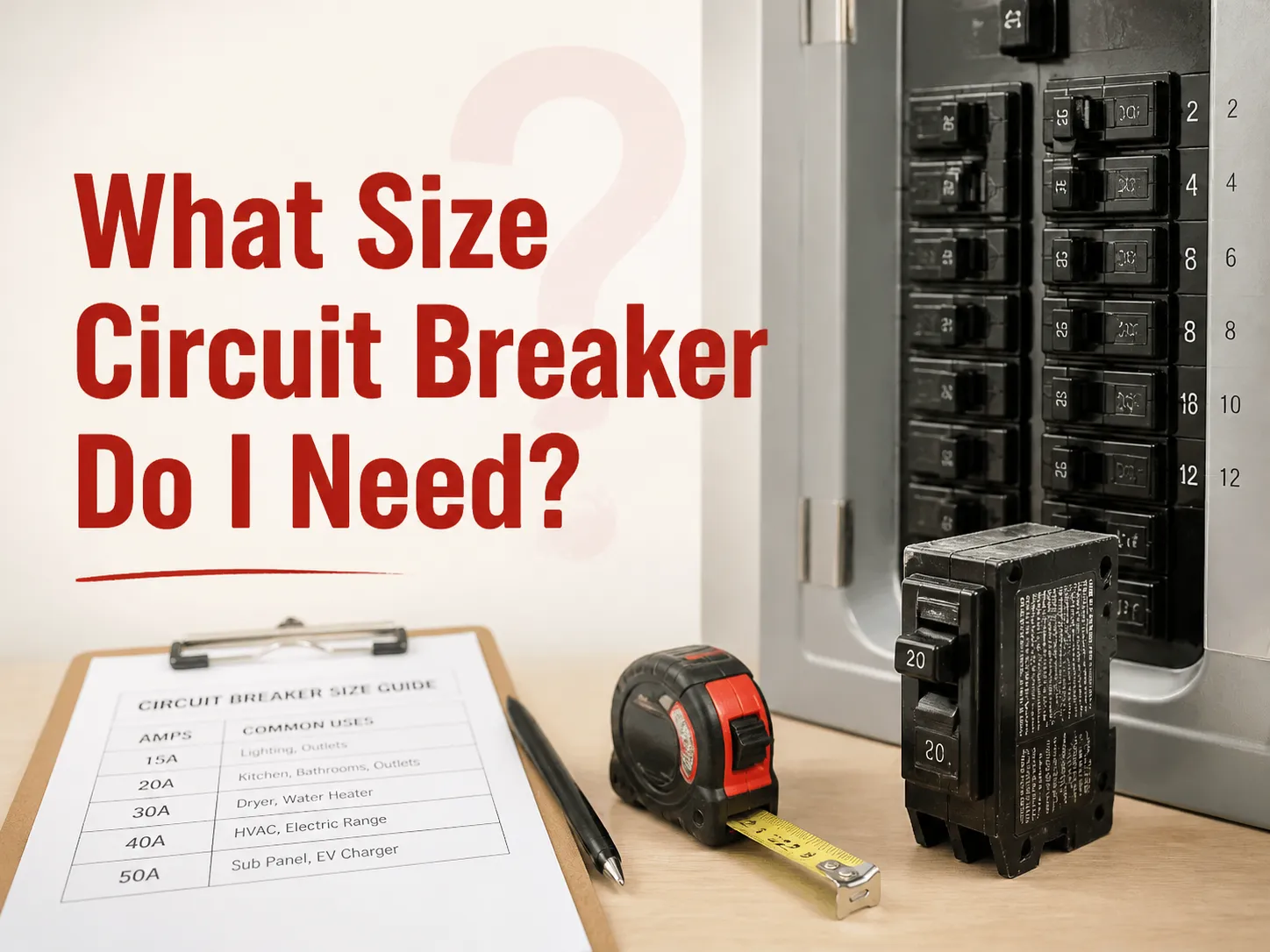


En casi todos los hogares, negocios o fábricas hay un elemento crítico de seguridad que la mayoría de las personas da por sentado; el Panel Eléctrico contiene nuestras emociones (tanto las buenas como las malas) así como algunos interruptores que probablemente nunca se han utilizado hasta que ocurre algo como una sobretensión o alguien tropieza con su aspiradora. Este es el mismo lugar donde un electrodoméstico se “salta” y provoca que toda la habitación, incluidos todos los elementos eléctricos, pierda energía — este interruptor se conoce como Interruptores Automáticos. De hecho, aunque no se usen mucho en el día a día, los Interruptores Automáticos son el equipo más importante en su sistema eléctrico.
En conclusión, los interruptores automáticos evitan que se transmita una cantidad excesiva de electricidad cortando el suministro de energía eléctrica si hay una sobrecorriente debido a una carga excesiva o si un usuario ha creado una situación en la que un circuito eléctrico está defectuoso. Los mecanismos usados en los interruptores automáticos permiten a los usuarios desconectar la energía excesiva sin tener que comprar fusibles nuevos; sin embargo, una vez que un interruptor automático se ha disparado, debe ser reiniciado antes de volver a usarse. Los tipos de clasificaciones para los interruptores automáticos son: la cantidad de corriente que el interruptor puede manejar, las clasificaciones de voltaje, la clasificación para interrupción, el número nominal de polos en un interruptor automático y la clasificación para las características de disparo.

¿Qué es exactamente un interruptor automático?
El interruptor automático es un componente eléctrico que se conecta tanto al sistema de distribución eléctrica (Suministro de Energía) como a la distribución de electricidad a través del cableado eléctrico hacia los dispositivos eléctricos en todo el edificio (Luces, Tomas de corriente). Las funciones principales del interruptor automático incluyen monitorear el sistema eléctrico y desconectar el suministro eléctrico a ese circuito eléctrico cuando detecta una cantidad insegura de corriente. El interruptor automático también proporciona protección al cableado circundante contra el sobrecalentamiento, protege los dispositivos eléctricos conectados al circuito para evitar daños y finalmente protege a las personas que puedan entrar en contacto con el circuito para evitar descargas eléctricas o quemaduras.
Una forma de visualizar el interruptor automático es pensar en cómo operaría un guardia de seguridad frente a una discoteca. Durante una noche normal, el guardia de seguridad “dejaría” pasar a los invitados normales y cotidianos sin problemas. Sin embargo, si hubiera una multitud inesperada que se precipitara hacia la puerta (una sobretensión no deseada de corriente), o si alguien intentara forzar la entrada a la discoteca (en caso de un cortocircuito), el guardia cerraría la puerta de inmediato. El guardia continúa disponible para cumplir su función de mantener a los invitados fuera de peligro (el propósito principal de usar un interruptor automático en lugar de un fusible). Una vez que la situación se estabiliza, el guardia puede permitir que otro invitado entre nuevamente al club, así como el interruptor automático puede ser reiniciado para permitir que el suministro eléctrico fluya de nuevo.
El Interruptor Automático ha existido durante mucho tiempo. Thomas Edison patentó su primer Sistema Automático de Interrupción de Circuito en 1879 para usarlo como parte de los sistemas de iluminación que desarrolló. Los primeros tipos de cuchilla y cartucho comenzaron a aparecer alrededor de 1900. En 1924, Hugo Stotz diseñó y construyó el primer Interruptor Automático Miniatura Termomagnético verdadero combinando ambos mecanismos de disparo en un solo dispositivo pequeño. El diseño de 1924 todavía se utiliza hoy en día y los Interruptores Automáticos Miniatura disponibles para la compra hoy en día usan exactamente las mismas dos funciones que los Interruptores Automáticos originales.
¿Cómo funciona un interruptor automático?
Los dos sensores detectan condiciones de sobrecorriente y cortocircuito instantáneo, respectivamente. El sensor térmico detecta corriente excesiva a través de dispositivos sensibles a la temperatura (termistores) que se vuelven inutilizables cuando superan su temperatura nominal permitida. El sensor magnético detecta la presencia de una gran cantidad de corriente (como la que se encuentra en cortocircuitos). Además de detectar condiciones de sobrecorriente, el sensor térmico protege contra daños en el equipo causados por calentamiento excesivo debido a situaciones prolongadas de sobrecarga, mientras que el sensor magnético protege contra daños en el equipo debido a niveles de corriente que aumentan rápidamente en condiciones de cortocircuito.
El diseño termomagnético del interruptor es el más utilizado. El mecanismo de disparo en muchos interruptores eléctricos opera bajo el mismo principio que este diseño de interruptor; cuando la corriente excede un cierto nivel, activa un circuito electrónico que abre el interruptor. Algunos mecanismos electrónicos de disparo permiten al usuario abrir o cerrar manualmente el circuito mediante un interruptor de palanca. En contraste, la mayoría de los interruptores eléctricos utilizan mecanismos de disparo mecánicos que abren y cierran el circuito automáticamente.
| Tipo de falla | Qué sucede | Elemento de detección | Tiempo de respuesta |
|---|---|---|---|
| Sobrecarga (por ejemplo, demasiados aparatos en un circuito) | La corriente excede modestamente la clasificación; el calor se acumula durante segundos o minutos | Tira bimetálica que se dobla al calentarse, liberando el pestillo | De segundos a minutos — lento y dependiente del calor, lo cual es intencional |
| Cortocircuito (el conductor activo toca el neutro o tierra) | La corriente se dispara a cientos o miles de amperios casi instantáneamente | Solenoide electromagnético que tira del pestillo para abrirlo | Un medio ciclo o menos (aproximadamente 8-16 milisegundos) |
El retardo en la característica térmica de un interruptor es una característica deseable, no un defecto. Cuando un motor arranca, momentáneamente extrae una corriente varias veces mayor que su corriente normal de operación; por lo tanto, la tira bimetálica debe haber estado sometida a períodos prolongados de calor antes de que se dispare (abra los contactos) para que la corriente de arranque no cause disparos molestos. Sin embargo, la fuerza electromagnética generada por un cortocircuito directo es tan fuerte que hará que un interruptor se dispare dentro de un ciclo de CA antes de que el cableado pueda sobrecalentarse y/o causar un incendio.
Abrir los contactos de un interruptor automático es solo una parte de detener el flujo de corriente pesada. Cuando un interruptor automático interrumpe el flujo de corriente pesada, el proceso de arco eléctrico ioniza el aire entre los contactos al abrirse y crea un arco eléctrico que continuará conduciendo a menos que sea interrumpido. Esta es la razón por la que los interruptores están diseñados con control de arco para que puedan estirar, enfriar y separar los arcos eléctricos de los puntos de interrupción. Los interruptores automáticos tienen una clasificación de capacidad de interrupción (medida en kA) que ayuda a determinar la corriente máxima de falla que puede ser interrumpida de forma segura por el interruptor. Un interruptor automático residencial típicamente tiene una capacidad de interrupción de 5-10 kA, mientras que un interruptor automático industrial de caja moldeada tendrá una clasificación de 25-100 kA. Seleccionar un interruptor automático con una capacidad de interrupción menor que la corriente de falla disponible es una violación grave de seguridad y no despejará las fallas, sino que podría explotar.

Curvas de disparo: qué significan las letras B, C y D
Los Interruptores Automáticos Miniatura (MCBs) tienen una letra delante de la clasificación de corriente (B16, B32, etc.) para indicar la curva de disparo. La curva de disparo determina cuánta sobrecarga (disparo instantáneo) tolerará el disparo magnético (disparo instantáneo) antes de que haga contacto. Usar la curva de disparo correcta es importante al seleccionar el MCB adecuado para la carga porque:
| Curva | Umbral de disparo instantáneo | Cargas típicas | Notas |
|---|---|---|---|
| Tipo B | 3-5 × corriente nominal | Cargas resistivas: iluminación, calentadores, tomas en entornos residenciales | Más sensible; no para motores o transformadores |
| Tipo C | 5-10 × corriente nominal | Motores pequeños, controladores fluorescentes y LED, cargas comerciales generales | La opción más común para uso general |
| Tipo D | 10-20 × corriente nominal | Transformadores, motores grandes, equipos de soldadura, maquinaria con alta corriente de arranque | Tolera grandes picos de arranque sin disparos molestos |
| Tipo K / Z | Especializados | Protección de semiconductores (Z), protección de motores (K) | Aplicaciones industriales específicas |
Usar la curva de disparo correcta para una carga puede ser el factor decisivo para recibir protección útil al usar un MCB o frustrarse por la cantidad de veces que un MCB lo desconecta. Si un circuito de motor grande usa un MCB Tipo B, puede dispararse continuamente si necesita arrancar su motor grande; si un circuito de iluminación usa un MCB Tipo D y ocurre una falla, puede tardar demasiado en dispararse y proteger el cableado. Tenga cuidado de asegurarse de que el MCB tenga la curva de disparo adecuada para la carga que está protegiendo; si no está seguro, generalmente es más seguro usar la siguiente curva de disparo superior en lugar de usar una clasificación de corriente más alta en la misma curva de disparo.
Los principales tipos de interruptores automáticos
Los interruptores pueden dividirse en diferentes categorías según cómo fueron fabricados (tipo de construcción), función (cómo funcionan), clasificación de voltaje y número de polos. Los siguientes son los diferentes tipos de interruptores que verá en uso.
| Tipo | Nombre completo | Clasificación típica | Dónde se encuentra |
|---|---|---|---|
| MCB | Interruptor Automático Miniatura | 5-125 A | Unidades de consumo residenciales, tableros de distribución comerciales pequeños |
| MCCB | Interruptor Automático de Caja Moldeada | 16-1,600 A | Paneles comerciales, alimentadores industriales, grandes HVAC y maquinaria |
| ACB | Interruptor Automático de Aire | 400-6,300 A | Equipos de conmutación industriales, generadores y entradas principales, centros de datos |
| VCB | Interruptor Automático de Vacío | Hasta clase 40 kV | Distribución de media tensión, subestaciones, conmutación de motores |
| RCCB / ELCB | Interruptor Automático de Corriente Residual / Fuga a Tierra | 25-100 A, sensibilidad de 30-300 mA | Protección contra descargas en enchufes y áreas húmedas |
| RCBO | Interruptor Automático de Corriente Residual con Sobrecorriente | 6-63 A | Combina MCB + RCCB en un solo módulo |
| GFCI / AFCI | Interruptor de Circuito por Falla a Tierra / Falla de Arco | 15-50 A | Cocinas, baños, exteriores en EE. UU. (GFCI); dormitorios, áreas de estar (AFCI) |
| SF6 / Aceite | Interruptor aislado por gas o aceite | Alta tensión | Redes de transmisión, subestaciones de alta tensión |
Hay dos puntos principales de confusión: Primero, los RCCB y RCBO no son dispositivos de protección contra sobrecorriente como la mayoría piensa; más bien, son dispositivos que detectan corriente de fuga a tierra (ya sea a través de una persona o del aislamiento), por lo que interrumpen el circuito aproximadamente treinta milisegundos después de que ocurre la fuga. Por lo tanto, bajo los códigos actuales, todos los enchufes deben tener instalados RCCB o RCBO. En segundo lugar, en el cableado residencial de EE. UU., las funciones de AFCI y GFCI a menudo se combinan en el mismo dispositivo cuando se requieren en dormitorios/áreas de estar según las disposiciones del código actual. La relación entre estos dispositivos de corriente residual y sobrecorriente se explica con mayor profundidad en nuestra guía RCCB vs RCBO.
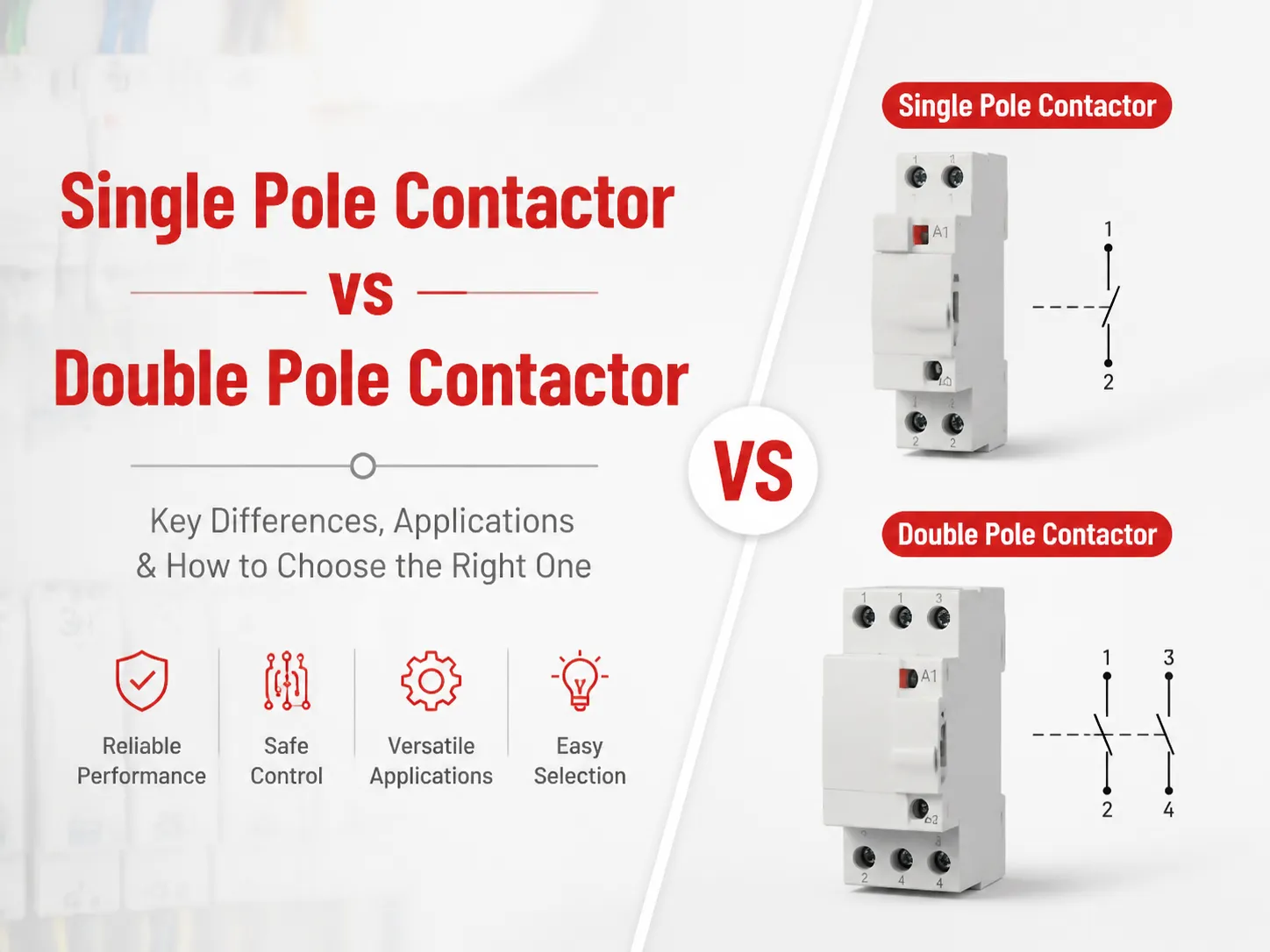
Los interruptores pueden tener una configuración de un solo polo (una fase de 120V), doble polo (dos fases para aparatos/principales de 240V en Norteamérica) o de tres o cuatro polos (tres fases de energía industrial/comercial). Los interruptores de un solo polo proporcionan protección contra sobrecorriente para circuitos derivados de 120 Voltios; los interruptores de doble polo proporcionan protección contra sobrecorriente para cargas de 240 Voltios como secadoras, cocinas, calentadores de agua y cargadores de vehículos eléctricos y dispararán ambos polos al mismo tiempo. Muchos de los errores más comunes cometidos por propietarios que hacen bricolaje se deben a la selección incorrecta del número de polos, por lo que se recomienda que un profesional experimentado realice las instalaciones de paneles o actualizaciones de viviendas, ya que han completado este proceso cientos de veces antes.

Interruptor automático vs fusible: ¿cuál es la diferencia?
Aparte de cumplir el mismo propósito de proporcionar protección para el cableado y el equipo, cada tipo tiene un método único de operación. La capacidad de un fusible para proteger contra una condición de sobrecarga es a través de un conductor metálico que se funde a una corriente superior a su capacidad, creando una ruptura física en el circuito eléctrico. En un interruptor automático, este proceso se realiza mediante el movimiento mecánico del interruptor. Esta diferencia crea la base para las comparaciones entre estos dos tipos de dispositivos de protección.
| Propiedad | Fusible | Interruptor automático |
|---|---|---|
| Después de un disparo | Elemento destruido — debe ser reemplazado | Restablecido al mover la palanca — reutilizable |
| Velocidad de respuesta | Extremadamente rápida (buena limitación de corriente) | Rápida, pero ligeramente más lenta que un fusible equivalente en fallas muy altas |
| Protección contra manipulación | Fácil de vencer colocando un fusible más grande o una moneda detrás de uno | Más difícil de vencer; los disparos se repiten visiblemente |
| ¿Restablecimiento remoto? | No — reemplazo físico | Algunos tipos industriales pueden rearmarse eléctricamente |
| Costo por evento | Parte barata, pero cada falla cuesta un fusible nuevo | Costo inicial más alto, costo por disparo casi nulo |
| Discriminación/selectividad | Buena; los fusibles coordinan bien en serie | Requiere una clasificación cuidadosa entre unidades aguas arriba y aguas abajo |
| Dónde se prefieren | Protección de semiconductores, puntos industriales de alta capacidad de falla, algunos automotrices/marinos | En todos los demás lugares — hogares, distribución comercial e industrial |
La mayoría de los usuarios concluiría que una actualización de una caja de fusibles a un panel de interruptores automáticos es el mejor retorno de su inversión. Un fusible no proporciona ninguna indicación de sobrecargas repetitivas del circuito y, por lo tanto, ofrece oportunidades para reparaciones inseguras y/o peligrosas; por otro lado, con un interruptor automático, el usuario puede identificar claramente el circuito que se disparó y simplemente restablecerlo. Los interruptores automáticos también ofrecen protección contra fallas a tierra y fallas de arco, características que ningún tipo de fusible puede ofrecer. En algunas ocasiones, un fusible superará a un interruptor automático, como cuando se trata de corrientes de falla muy altas o la necesidad de limitación rápida de corriente mientras se protege equipo eléctrico sensible; sin embargo, en edificios, los interruptores automáticos han sido la mejor opción durante muchos años.
Interruptor automático vs interruptor: ¿cuál es la diferencia?
La manija de un interruptor automático a menudo se confunde con un interruptor porque son similares, pero son tipos diferentes de dispositivos. Un interruptor (por ejemplo, interruptor de luz, aislador, contactor) está diseñado para ser usado u operado regularmente (lo encenderá/apagará muchas veces), y no tiene ninguna capacidad de detección. Un interruptor automático, por otro lado, está destinado a un servicio poco frecuente y está específicamente diseñado para dispararse automáticamente cuando detecta una falla, cortando automáticamente la corriente.
Como resultado de estas diferencias, existen dos reglas básicas. Primero, un interruptor no lo protege de fallas; solo puede controlar su circuito, y por lo tanto el circuito que proviene de un interruptor debe estar protegido por otros dispositivos aguas arriba del interruptor. Segundo, un interruptor automático no está destinado para conmutación diaria; sus contactos no están diseñados para miles de operaciones, y cada vez que lo dispara manualmente, la vida útil de ese interruptor se reduce. Si desea tener un dispositivo de conmutación y también proporcionar algún tipo de protección, el producto ideal sería un desconectador con fusible o interruptor automático, o un interruptor automático protector de motor (para circuitos de máquinas). En el lado de alta tensión, esta diferencia también se encuentra en subestaciones, donde utilizan desconectadores separados para conmutación (solo conmutan cuando no hay corriente) e interruptores automáticos para interrumpir corrientes de falla.
Interruptor automático principal vs interruptor automático de circuito derivado: ¿cuál es la diferencia?
Las personas frecuentemente confunden los dos tipos de interruptores en un panel de interruptores (el principal y el derivado) porque ambos desconectan la electricidad de un panel; sin embargo, cumplen funciones completamente diferentes. El interruptor principal desconecta la energía de todo el panel desde la compañía eléctrica, mientras que los interruptores derivados (las largas filas de manijas de 15 y 20 amperios) protegen cada circuito individual (por ejemplo, cocina, dormitorios, unidad de aire acondicionado, secadora). Dependiendo del tamaño de la casa de una persona y de cuánta electricidad se use cada día, muchas personas encontrarán que el interruptor principal tendrá una clasificación entre 100 y 200 amperios en un hogar.
Comprender la distinción entre estos dos interruptores es vital debido a cómo ayudan a proteger contra descargas eléctricas e incendios. El interruptor principal protege los conductores de servicio, proporcionando a los bomberos y/o electricistas una única forma segura de desconectar la energía de un edificio, mientras que los interruptores de rama protegen los cables más pequeños ubicados dentro de las paredes que van a cada habitación en particular; por lo tanto, cuando ocurre un cortocircuito o falla eléctrica dentro de un interruptor de rama, potencialmente solo puede dejar fuera de servicio una habitación en lugar de toda la casa. Cuando una persona escucha “el interruptor principal se disparó”, generalmente indica que el uso total de electricidad superó la capacidad del servicio o que ocurrió una falla eléctrica significativa entre el interruptor principal y los interruptores de rama. Por lo tanto, antes de que una persona restablezca el interruptor principal, debe desconectar suficientes electrodomésticos o dispositivos electrónicos para reducir el consumo total de electricidad por debajo de la clasificación máxima del panel de interruptores.

¿Qué marcas fabrican interruptores?
Hay dos categorías distintas de fabricantes en la industria de interruptores: actores globales con una amplia presencia en Norteamérica y Europa, y empresas enfocadas en productos de nicho cuyos productos certificados se pueden encontrar en todo el mundo.
| Marca | Mercado residencial | Conocido por |
|---|---|---|
| Square D (Schneider Electric) | EE. UU. / Francia | Paneles QO y Homeline — los interruptores residenciales más instalados en Norteamérica |
| Eaton (incl. Cutler-Hammer) | EE. UU. / Irlanda | Series BR y CH, línea comercial e industrial fuerte |
| Siemens | Alemania | Gran portafolio industrial y residencial, línea residencial MP/QP |
| ABB | Suiza / Suecia | Gama Tmax MCCB, estándar industrial global, interruptores SACE |
| Leviton | EE. UU. | Interruptores residenciales más una línea creciente de interruptores inteligentes/conectados |
| General Electric (ahora parte de las marcas ABB/Smart Breaker) | EE. UU. | Paneles legacy THQL/THQB aún comunes en casas antiguas |
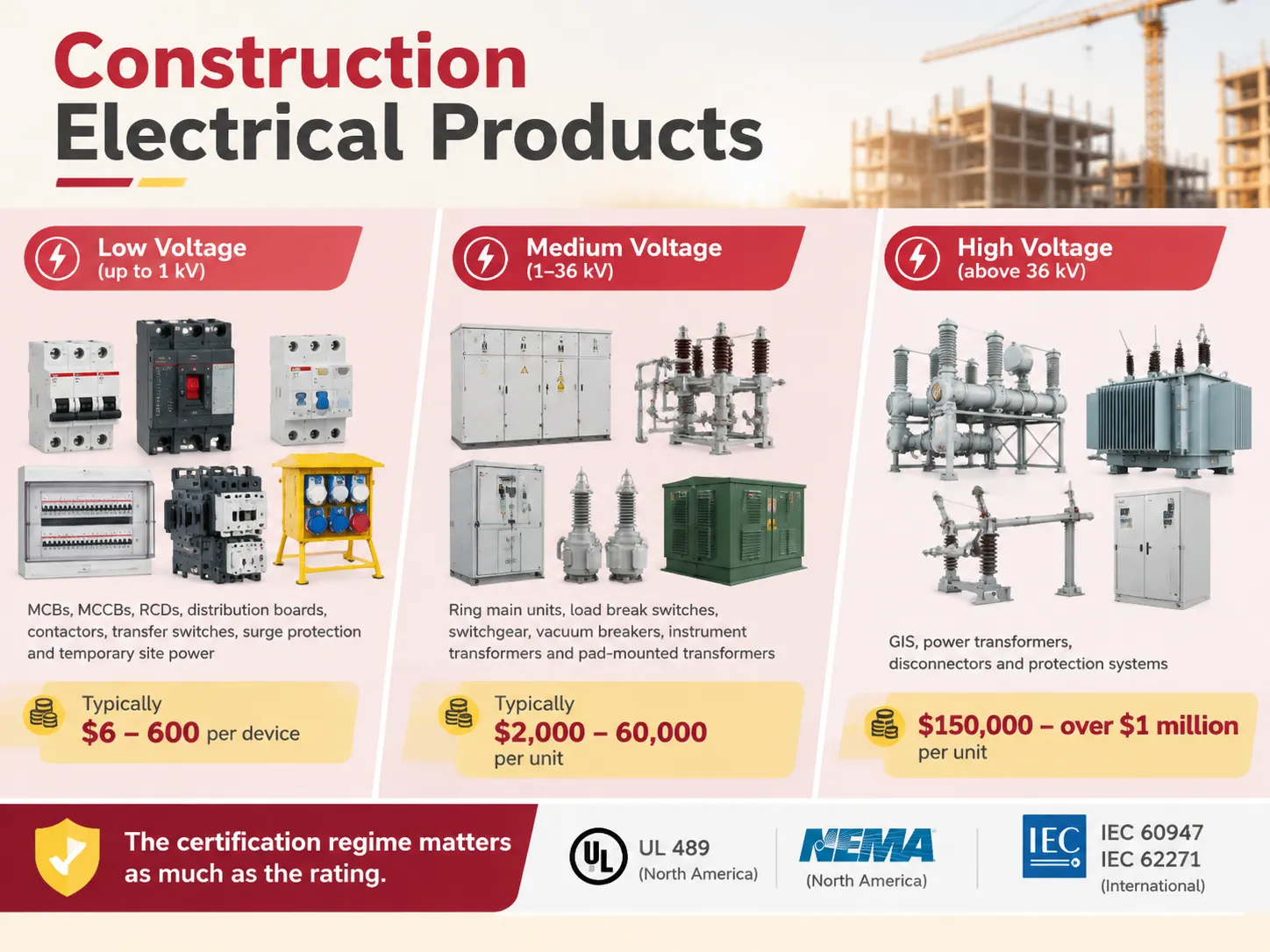
| Legrand / Hager / Chint / HUYU y fabricantes globales certificados similares | Europa / China | Gamas completas de MCB/MCCB/RCBO certificadas según IEC 60898 e IEC 60947, suministrando a OEM y mercados de proyectos en todo el mundo |
Al comprar interruptores automáticos, la regla más importante respecto a la compatibilidad del producto es que, en Norteamérica, los interruptores automáticos son específicos para cada panel. Por ejemplo, un interruptor Square D no encajará en un panel Eaton, y tratar de instalar uno en un panel para el que no está destinado no solo crea una violación del código, sino también un peligro legítimo de incendio. Para evitar este problema, simplemente coincida el interruptor automático de reemplazo con el nombre del fabricante y la serie del panel existente (consulte nuestra Guía de referencia Eaton vs. Cutler-Hammer para la compatibilidad del producto) o, si decide cambiar de marca, puede simplemente reemplazar todo el panel. Los interruptores automáticos de diferentes fabricantes son compatibles y pueden montarse en rieles DIN en mercados fuera de Norteamérica (es decir, mercados IEC), y por lo tanto empresas como HUYU pueden distribuir sus interruptores automáticos miniatura (MCBs) certificados en más de 100 países. Para clientes industriales y de proyectos, la certificación es mucho más importante que el logo del producto; la certificación para Norteamérica es UL 489 para interruptores automáticos, IEC 60898 para MCBs, IEC 60947-2 para interruptores automáticos en caja moldeada (MCCBs) y interruptores automáticos de aire (ACBs), y los informes de prueba certificados para esas certificaciones.
¿Cuánto cuestan los interruptores automáticos?
El precio de un interruptor varía más que muchos otros tipos de componentes eléctricos porque los interruptores automáticos pueden ir desde $6 (repuesto residencial) hasta más de $100,000 (transmisión). Por lo tanto, al crear un presupuesto para un proyecto, es útil tener un desglose de los posibles rangos de precios en cada categoría para cada año hasta 2026:
| Tipo de interruptor | Costo de la pieza (típico) | Costo instalado (electricista) |
|---|---|---|
| Térmico-magnético estándar unipolar (15-30 A) | $6-18 | $130-250 incluyendo llamada de servicio |
| Bipolar (30-100 A) | $10-40 | $150-300 |
| Interruptor GFCI | $40-100 | $200-350 |
| Interruptor AFCI o combinación AFCI/GFCI | $30-100 | $175-350 |
| Interruptor inteligente con monitoreo de energía | $50-300+ | $250-500 |
| MCB (IEC, 6-63 A, riel DIN) | $3-25 | Varía según el mercado |
| MCCB (100-1,600 A) | $45-1,600+ | Precio para proyectos |
| ACB (630-6,300 A) | $800-5,000+ | Precio para proyectos |
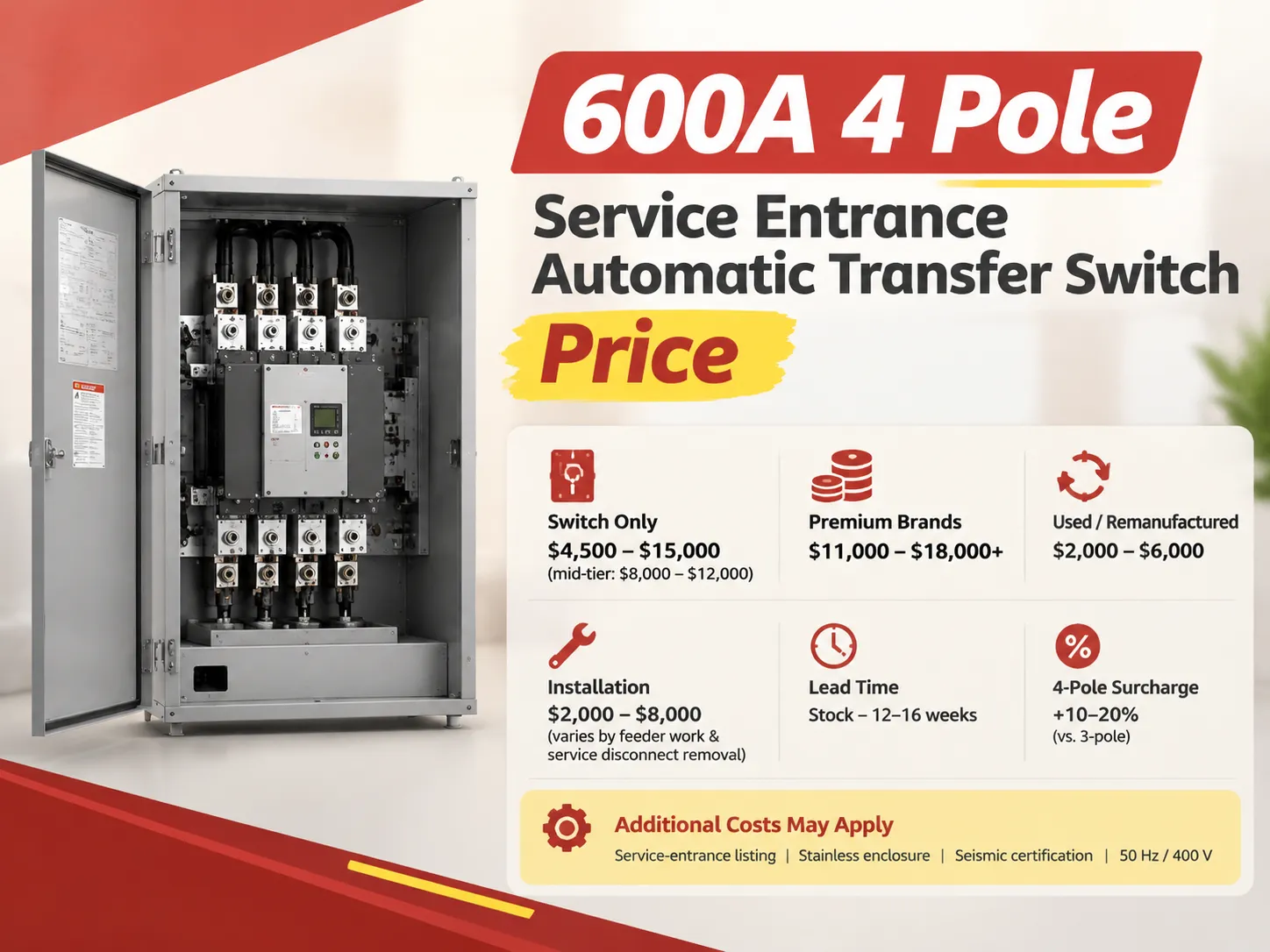
| Interruptor de media/alta tensión | $5,000-100,000+ | Proyectos de subestaciones |
Los principales factores que influyen en el precio son amperaje, capacidad de interrupción, características de protección y marca. Un interruptor térmico-magnético básico de 20 A en $6-12 frente a una unidad combinada AFCI/GFCI en $50-100 es aproximadamente un multiplicador de cinco a ocho veces, justificado por los microprocesadores y sensores dentro de la unidad inteligente. La imagen completa del costo — incluyendo el reemplazo del panel y cuando un cambio de interruptor $200 se convierte en una actualización de panel $2,000-4,000 — se detalla en nuestro guía de costos de reemplazo de interruptores.

Cómo elegir el interruptor automático adecuado
Para seleccionar un nuevo interruptor automático, siga estos cinco pasos EN ORDEN: Cada paso limita y restringe sus opciones para el siguiente paso.
- La capacidad de corriente del cable = amperaje del breaker, ¡NO amperaje del aparato! Las Normas de la Industria establecen que el breaker está para proteger el cable, por lo que el breaker NUNCA debe exceder la capacidad de corriente de ese cable. Por lo tanto, un breaker de 15 amperios protege un cable de cobre 14 AWG, un breaker de 20 amperios protege un cable 12 AWG, y un breaker de 30 amperios protege un cable 10 AWG. NUNCA actualice un breaker para eliminar disparos molestos hasta que haya verificado el tamaño del cable; esta es una de las principales causas de incendios en viviendas.
- 80% of Breaker’s Rating is Maximum Continuous Load: The National Electrical Code requires circuit breakers to be rated for continuous (3-hour or more) loads at no more than 80% of the breaker’s capacity. A continuous 12 amps (1,440 watts at 120 volts) on a 15 amp breaker are fine, and 16 amps (1,920 watts) on a 20 amp breaker are fine. For an explanation of how to perform the calculation converting watts-to-amps for continuous loads, please see our 15-Amp Circuit Capacity Guide.
- Type Matches Hazard: A Ground Fault Circuit Interrupter (GFCI) circuit breaker must be used on receptacles located in kitchens, bathrooms, garages, and outside. An Arc Fault Circuit Interrupter (AFCI) breaker must be used in bedrooms and living areas under current code. Lastly, a motor or transformer circuit must use the proper trip curve (usually C or D) to minimize nuisance trips during startup.
- Number of Poles = Voltage: A single pole breaker is used on 120-volt branch circuits; a double pole breaker is used on 240-volt loads and on disconnects from the service panel; a breaker for a three-phase system must be either a three- or four-pole breaker.
- Interrupting Rating and Certifications: The interrupting or breaking capacity (kA) of a circuit breaker must be adequate for the available fault current at the main panel, and ONLY certified devices (in North America, the certification mark is UL 489; in the rest of the world, the certification marks are IEC 60898/60947) should be purchased from authorized dealers. Counterfeit breakers are an increasing problem. When counterfeit breakers fail, it is usually during a fire.
Installation, resetting, and replacement
Resetting a tripped circuit breaker is something every homeowner ought to be aware of. When a circuit breaker trips, it will revert to the middle or OFF position on its handle. To reset the circuit breaker, turn the handle completely to the OFF position, and then fully back to the ON position. If after you have reset the circuit breaker it does not trip again, it is likely that the overload causing the circuit breaker to trip was an isolated event. If the circuit breaker trips again immediately after being reset, you most likely have a larger electrical issue, and you should stop attempting to reset the breaker and investigate the problem further.
Circuit breakers do eventually wear out, and the wear will usually result from a mechanical failure in the latching mechanism or the electrical contacts rather than a failure of the sensing mechanism (the electronic part). A circuit breaker that is very hot, buzzing or humming, has a burnt smell, and/or has tripped many more times than it previously did, or has failed to trip completely, is likely going to need to be replaced. Testing a faulty breaker is fairly easy if you have access to a multimeter; you’ll need to check that the breaker will hold the correct amount of current load and trip when it is supposed to. But if a circuit breaker begins showing any of the above warning signs, it will be in your best interest to replace it instead of trying to continue using it until it finally does fail on you.
Replacing a circuit breaker in a panel that is live has some inherent risk involved. Depending on the configuration of your panel and where the service lugs (terminals) on your circuit breaker panel are mounted, the service lugs remain energized even when the main has been turned OFF. In the vast majority of cases in the United States, it is against the law to rewire or replace a circuit breaker while working on the live side of the service because there is a high likelihood that an arc flash will occur if you come into contact with the energized lugs while doing so. The cost of hiring an electrician to replace a circuit breaker is typically between $130-$250 to provide you with peace of mind and protection against the risk of an arc flash. The same professional judgment should be applied on the panel level: whether or not your aging 100 A service is capable of handling the entire electrical load of a modern home, and whether or not the current code requires you to have a panel rated at 200 A, is a question that you should be able to have answered by a licensed electrician after a load calculation has been performed, not a guess.
Why does a circuit breaker keep tripping?
A repeatedly tripping breaker is not the source of the problem; it is an indication of a problem. A tripped breaker indicates that there is something wrong with the electrical circuit or with what is connected to it. Identifying the cause of the problem means understanding the following four major categories of electrical faults or problems.
- Overloaded circuit – Too many appliances or devices drawing power from a single circuit are causing an overload of electrical current. The solution to this is to balance the load on the circuit or to install a new circuit for the additional high-wattage electrical devices, and not to use a higher-rated circuit breaker.
- Cortocircuito – An electrical short happens when an energized wire touches either a neutral or ground wire. This condition can happen inside an appliance or in an extension cord when either the cord or the appliance is damaged. A short circuit will usually trip instantly, and there may be a burnt smell associated with it.
- Ground Fault – A ground fault occurs when current leaks to ground (earth) through a person, water, or damaged insulation on an electric wire. Ground fault protection devices (GFCIs and RCCBs) are critically important to ensure the safety of people using electricity.
- A Breaker Failure – After decades and thousands of operations, a breaker eventually will wear out and will no longer trip and will fail to hold on to its rated current.
Diagnosing which family you are in — and why a breaker that “trips for no reason” almost always has a reason — is exactly what our circuit breaker tripping guide walks through step by step. It is important to note: If a breaker trips when an appliance is plugged in, the appliance is most likely the cause. If a breaker trips when nothing is connected, suspect either the wiring or the breaker and call a licensed electrician to investigate further; do not experiment with either the wire or the breaker.
Preguntas Frecuentes
How do I reset a circuit breaker?
To reset the circuit breaker(s), locate the circuit breaker that tripped (the lever/circuit breaker will be in between the OFF/ON position) Move the lever fully to the OFF position, and then move it firmly to the ON position. If the circuit breaker(s) remains in the ON position, then the trip was probably a temporary overload. However, if the circuit breaker(s) immediately or shortly thereafter trips again, do not reset the circuit breaker(s) again and contact a professional to determine why the circuit breaker(s) keep tripping.
What’s the difference between a circuit breaker and a fuse?
Fuses protect electrical circuits by melting a wire (metal element), and therefore, when a fuse is blown it has to be replaced every time. Circuit breakers protect electrical circuits by using a mechanical switch to open the circuit. This allows circuit breakers to be reset and reused many times. Additionally, circuit breakers have the ability to provide both ground fault protection and arc fault protection which fuses cannot; therefore, circuit breakers have replaced fuses in virtually all modern buildings.
What is the difference between a main breaker and a circuit breaker?
The term circuit breaker refers to all circuit breakers. The main breaker is a circuit breaker that is larger than the others (typically 100-200 amps) that disconnects the entire electrical service from the utility company. Branch circuit breakers are the smaller circuit breakers that are used to protect individual circuits in the building. All circuit breakers will trip automatically in response to electrical faults, however, the main circuit breaker protects the conductors that carry the electrical service, while branch circuit breakers protect single circuits.
What is the difference between a circuit breaker and a switch?
A switch is a manual control device that is intended for frequent operation, without providing any protective function. A circuit breaker is a protective device that will automatically open the circuit if there is an overload condition or short circuit and is not intended to be used thousands of times a day. A switch does not provide protection for a circuit; a circuit breaker is not intended for daily use. Some devices are designed to have both functions; therefore, these products are referred to as switch-disconnectors or motor-protective devices.
Referencias
- Schneider Electric — What Is a Circuit Breaker?
- Eaton — Circuit Breaker Fundamentals
- RealPars — Circuit Breakers Explained
- Family Handyman — How Circuit Breakers Work
- NFPA — National Electrical Code (NEC)
Conclusión
A circuit breaker protects every electrical system from excessive voltage and current. It is a switch that automatically responds to excessive voltage and/or current (i.e. thermal and magnetic overload) and opens the circuit as fast or faster than a fused circuit. If you are new to circuit breakers, it is important to understand the thermal/magnetic trip mechanism that opens the breaker, the trip characteristics of breakers of types B, C, and D according to their rated load and type of electrical load, how do MCBs, MCCBs, RCBOs differ; when and why you should use circuit breakers instead of fuses; and to what extent you should use the main breaker with regard to branch circuit breakers; how to determine the correct certification for the circuit breaker and the manufacturer of the circuit breaker to ensure compatibility with your circuit breaker panel; and how to use the ratings of circuit breakers to size correctly the circuit breaker for your installation. All of the above may be obtained from the circuit breaker manufacturer or an electrical contractor, and if not, you must refer to a qualified electrical contractor to obtain such information to ensure your equipment remains protected by the circuit breakers. Assuming that you have taken advantage of the above information, you can expect your circuit breaker(s) to continue protecting all of your equipment for many years to come until such time as the circuit breakers have reached their rated life (which they do not use) and have provided the necessary protection for each piece of your equipment.