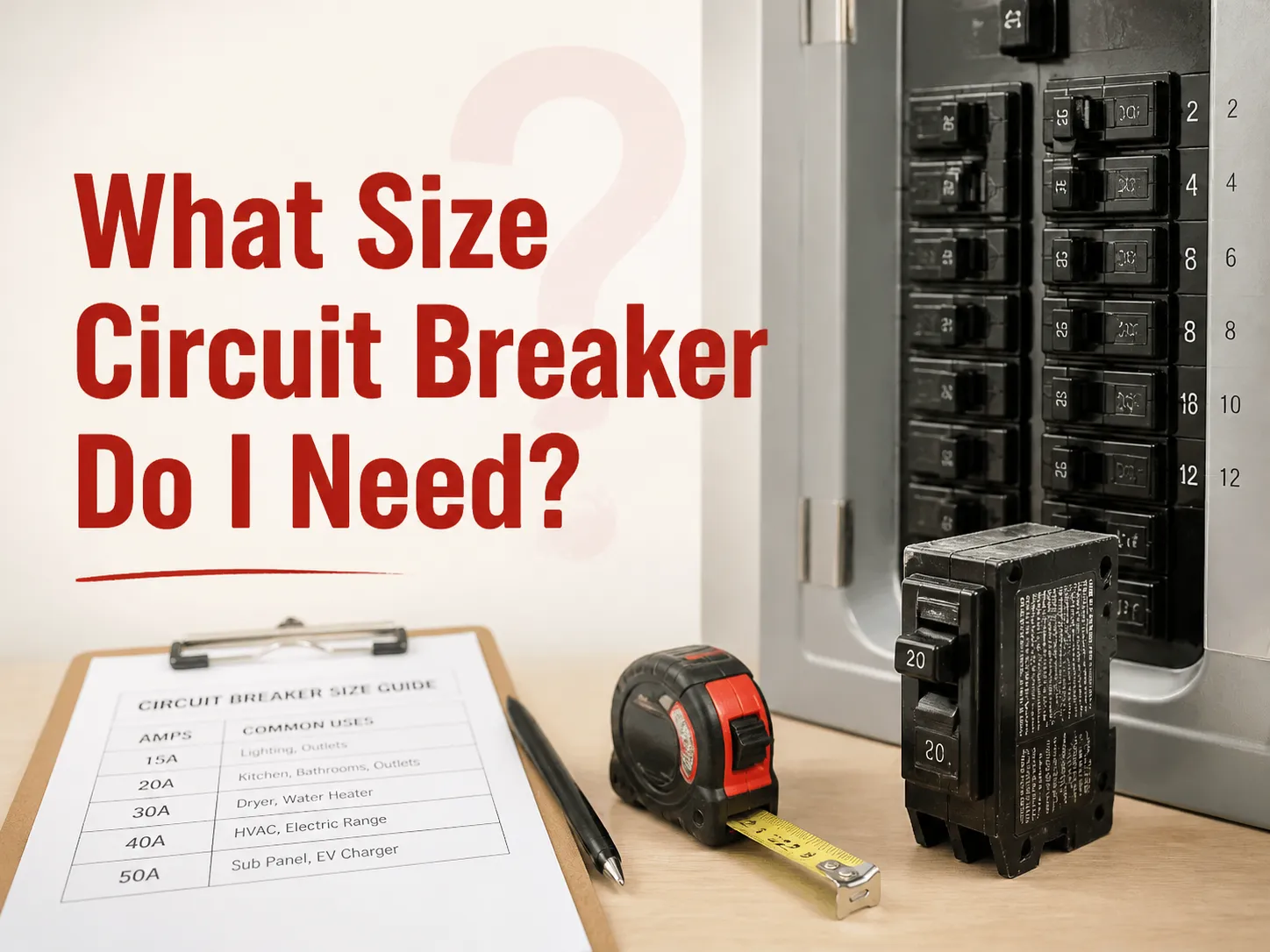


Почти в каждом доме, бизнесе или на фабрике есть критически важный элемент безопасности, который большинство людей воспринимает как должное; Электрический щит содержит наши эмоции (как положительные, так и отрицательные), а также несколько выключателей, которые, вероятно, никогда не использовались до тех пор, пока не произошло что-то вроде скачка напряжения или кто-то не споткнулся о свой пылесос. Именно в этом месте прибор выходит из строя и приводит к отключению электроэнергии во всей комнате, включая все электрические устройства — этот выключатель известен как автоматический выключатель (Circuit Breakers). На самом деле, хотя они могут не использоваться часто в повседневной жизни, автоматические выключатели являются самым важным элементом вашего электрического оборудования.
В заключение, автоматические выключатели предотвращают передачу чрезмерного количества электричества, отключая подачу электроэнергии при возникновении перегрузки из-за чрезмерной нагрузки или если пользователь создал ситуацию, при которой электрическая цепь неисправна. Механизмы, используемые в автоматических выключателях, позволяют пользователям отключать избыточную энергию без необходимости покупать новые предохранители; однако после срабатывания автоматический выключатель должен быть сброшен перед повторным использованием. Типы характеристик автоматических выключателей включают: величину тока, который выключатель может выдержать, номинальное напряжение, номинал отключающей способности, количество полюсов в автоматическом выключателе и характеристики срабатывания.

Что такое автоматический выключатель?
Автоматический выключатель — это электрический компонент, который подключается как к системе распределения электроэнергии (источник питания), так и к распределению электроэнергии через электропроводку к электрическим устройствам по всему зданию (освещение, розетки). Основные функции автоматического выключателя включают мониторинг электрической системы и отключение подачи электроэнергии к этой электрической цепи при обнаружении небезопасного уровня тока. Автоматический выключатель также защищает окружающие провода от перегрева, защищает электрические устройства, подключенные к цепи, от повреждений и, наконец, защищает людей, которые могут контактировать с цепью, от поражения электрическим током или ожогов.
Один из способов представить себе автоматический выключатель — это подумать о том, как охранник работает у входа в ночной клуб.
В обычную ночь охранник «пропускает» обычных гостей без проблем.
Однако если внезапно у дверей собирается толпа людей (нежелательный скачок тока), или кто-то пытается прорваться в клуб силой (в случае короткого замыкания), охранник немедленно захлопывает дверь.
Охранник продолжает выполнять свою функцию — защищать гостей от опасности (вот основное отличие использования автоматического выключателя от предохранителя).
После стабилизации ситуации охранник может впустить нового гостя, так же как автоматический выключатель можно сбросить, чтобы снова пропустить электрический ток.
| Автоматический выключатель существует уже очень давно. | Томас Эдисон запатентовал свою первую автоматическую систему прерывания цепи в 1879 году для использования в разработанных им осветительных системах. | Первые типы с ножевыми контактами и картриджные начали появляться около 1900 года. | Время реакции |
|---|---|---|---|
| В 1924 году Хуго Штоз разработал и создал первый настоящий термомагнитный миниатюрный автоматический выключатель, объединяющий оба механизма срабатывания в одном небольшом устройстве. | Конструкция 1924 года используется и сегодня, а миниатюрные автоматические выключатели, доступные для покупки, используют точно такие же две функции, как и оригинальные выключатели. | Как работает автоматический выключатель? | Два датчика обнаруживают перегрузку и мгновенное короткое замыкание соответственно. |
| Термальный датчик фиксирует чрезмерный ток через температурочувствительные устройства (термисторы), которые становятся непригодными при превышении допустимой температуры. | Ток мгновенно возрастает до сотен или тысяч ампер | Электромагнитный соленоид, который резко открывает защёлку | Половина цикла или меньше (около 8-16 миллисекунд) |
Задержка в тепловой характеристике выключателя — это желательное свойство, а не недостаток. При запуске двигателя он кратковременно потребляет ток, в несколько раз превышающий нормальный рабочий ток; поэтому биметаллическая пластина должна подвергаться длительному нагреву, прежде чем сработает (разомкнёт контакты), чтобы пусковой ток не вызывал ложных срабатываний. Однако электромагнитная сила, создаваемая коротким замыканием, настолько велика, что выключатель сработает в течение одного цикла переменного тока до того, как проводка перегреется и/или возникнет пожар.
Размыкание контактов выключателя — лишь часть процесса остановки сильного тока. Когда автоматический выключатель прерывает сильный ток, электрическая дуга ионизирует воздух между контактами при их размыкании и создаёт электрическую дугу, которая будет продолжать проводить ток, если её не прервать. Поэтому выключатели проектируются с системой управления дугой, которая позволяет растягивать, охлаждать и отделять электрические дуги от точек размыкания. Автоматические выключатели имеют номинал отключающей способности (измеряется в кА), который помогает определить максимальный ток короткого замыкания, который выключатель может безопасно прервать. Типичный бытовой автоматический выключатель имеет отключающую способность 5-10 кА, тогда как промышленный автоматический выключатель в литом корпусе имеет номинал 25-100 кА. Выбор выключателя с отключающей способностью ниже доступного тока короткого замыкания является серьёзным нарушением техники безопасности и не позволит устранить неисправность, а может привести к взрыву.

Характеристики срабатывания: что означают буквы B, C и D
Миниатюрные автоматические выключатели (MCB) имеют букву перед номиналом тока (B16, B32 и т.д.), которая указывает характеристику срабатывания. Характеристика срабатывания определяет, какой перегрузке (моментальному срабатыванию) магнитный расцепитель будет сопротивляться до срабатывания. Правильный выбор характеристики срабатывания важен при подборе MCB для нагрузки, потому что:
| Кривая | Порог моментального срабатывания | Типичные нагрузки | Примечания |
|---|---|---|---|
| Тип B | 3-5 × номинального тока | Резистивные нагрузки: освещение, нагреватели, розетки в жилых помещениях | Самая чувствительная; не подходит для двигателей или трансформаторов |
| Тип C | 5-10 × номинального тока | Малые двигатели, драйверы люминесцентных и светодиодных ламп, общие коммерческие нагрузки | Наиболее распространённый универсальный выбор |
| Тип D | 10-20 × номинального тока | Трансформаторы, крупные двигатели, сварочное оборудование, машины с высоким пусковым током | Допускает большие пусковые токи без ложных срабатываний |
| Тип K / Z | Специализированные | Защита полупроводников (Z), защита двигателей (K) | Узкоспециализированные промышленные применения |
Использование правильной кривой срабатывания для нагрузки может стать решающим фактором в том, получите ли вы эффективную защиту при использовании MCB или будете разочарованы количеством отключений, вызванных MCB. Если в цепи большого двигателя используется MCB типа B, он может постоянно срабатывать при запуске большого двигателя; если в цепи освещения используется MCB типа D и возникает неисправность, срабатывание может занять слишком много времени, чтобы защитить проводку. Будьте внимательны и убедитесь, что MCB имеет правильную кривую срабатывания для нагрузки, которую он защищает; если вы не уверены, обычно безопаснее использовать следующую более высокую кривую срабатывания, чем использовать более высокий номинал тока на той же кривой срабатывания.
Основные типы автоматических выключателей
Выключатели можно разделить на разные категории в зависимости от конструкции, функции (принципа работы), номинального напряжения и количества полюсов. Ниже приведены различные типы выключателей, которые вы можете встретить в эксплуатации.
| Тип | Полное наименование | Типичный номинал | Где используется |
|---|---|---|---|
| МCB | Миниатюрный автоматический выключатель | 0,5-125 А | Потребительские распределительные щиты для жилых помещений, небольшие коммерческие распределительные щиты |
| MCCB | Автоматический выключатель в литом корпусе | 16-1 600 А | Коммерческие панели, промышленные фидеры, крупное HVAC и оборудование |
| ACB | Воздушный автоматический выключатель | 400-6,300 А | Промышленное распределительное оборудование, генераторы и главные вводы, дата-центры |
| ВКВ | Вакуумный выключатель | До класса 40 кВ | Средневольтное распределение, подстанции, переключение двигателей |
| УЗО / ДЗВ | Устройство защитного отключения / Устройство защитного отключения по току утечки | 25-100 A, чувствительность 30-300 мА | Защита от поражения электрическим током на розетках и во влажных зонах |
| RCBO | Устройство защитного отключения с защитой от перегрузки по току | 6-63 А | Совмещает MCB + RCCB в одном модуле |
| УЗО / АФЗ | Устройство защитного отключения по току утечки на землю / по дуге | 15-50 А | Кухни, ванные комнаты, улица (GFCI); спальни, жилые помещения (AFCI) в США |
| SF6 / Масляный | Газо- или маслонаполненный выключатель | Высокое напряжение | Линии передачи, высоковольтные подстанции |
Существует два основных момента путаницы: во-первых, RCCB и RCBO не являются устройствами защиты от перегрузки по току, как многие думают; они предназначены для обнаружения тока утечки на землю (через человека или изоляцию) и прерывают цепь примерно через тридцать миллисекунд после возникновения утечки. Поэтому согласно текущим нормам все розетки должны быть оснащены RCCB или RCBO. Во-вторых, в жилой электропроводке США функции AFCI и GFCI часто объединены в одном устройстве, когда это требуется для спален и жилых помещений согласно действующим нормам. Взаимосвязь между этими устройствами защитного отключения по току утечки и по перегрузке подробно объясняется в нашем Руководство по УЗО и дифференциальным автоматам (RCCB vs RCBO).
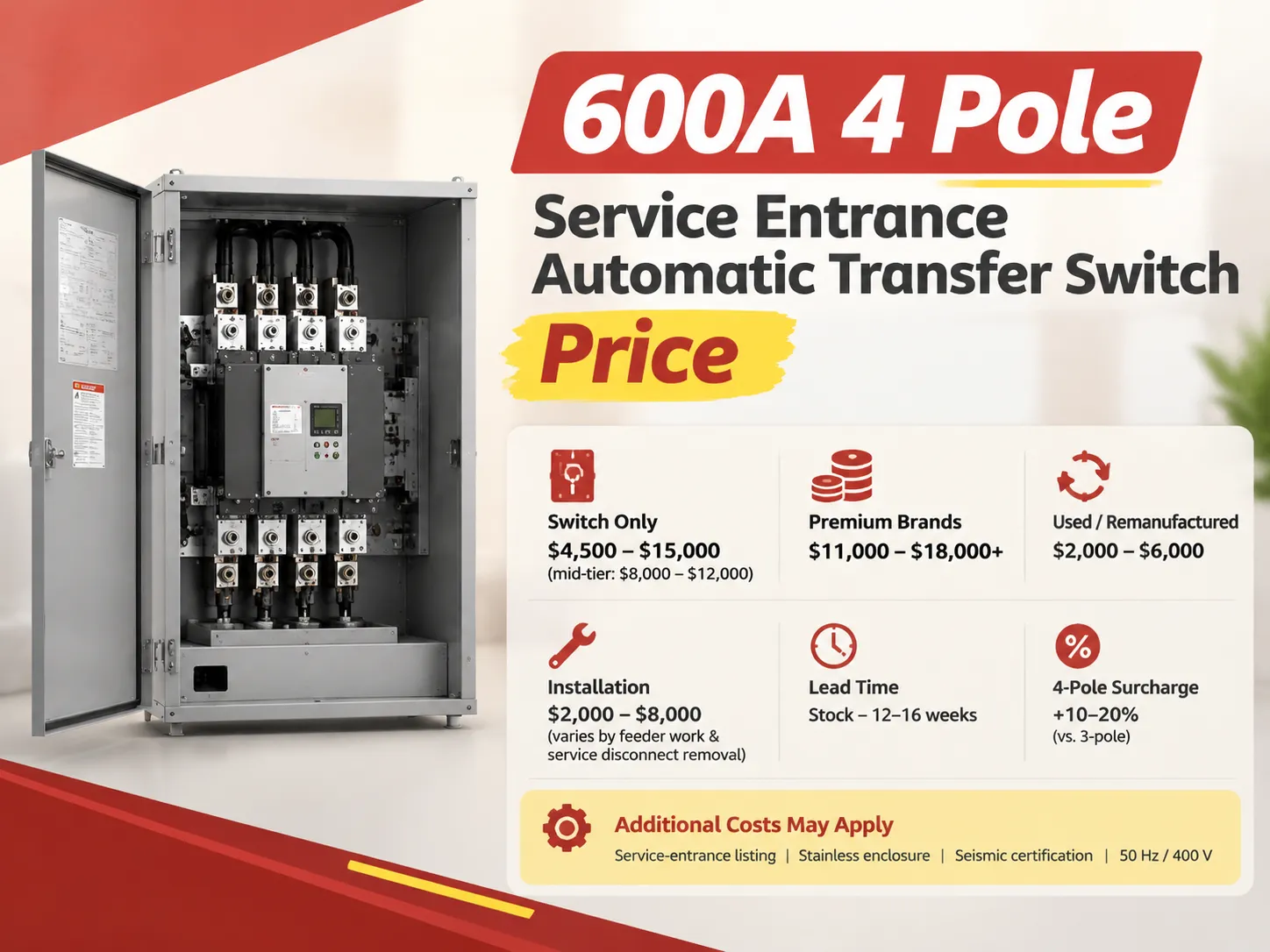
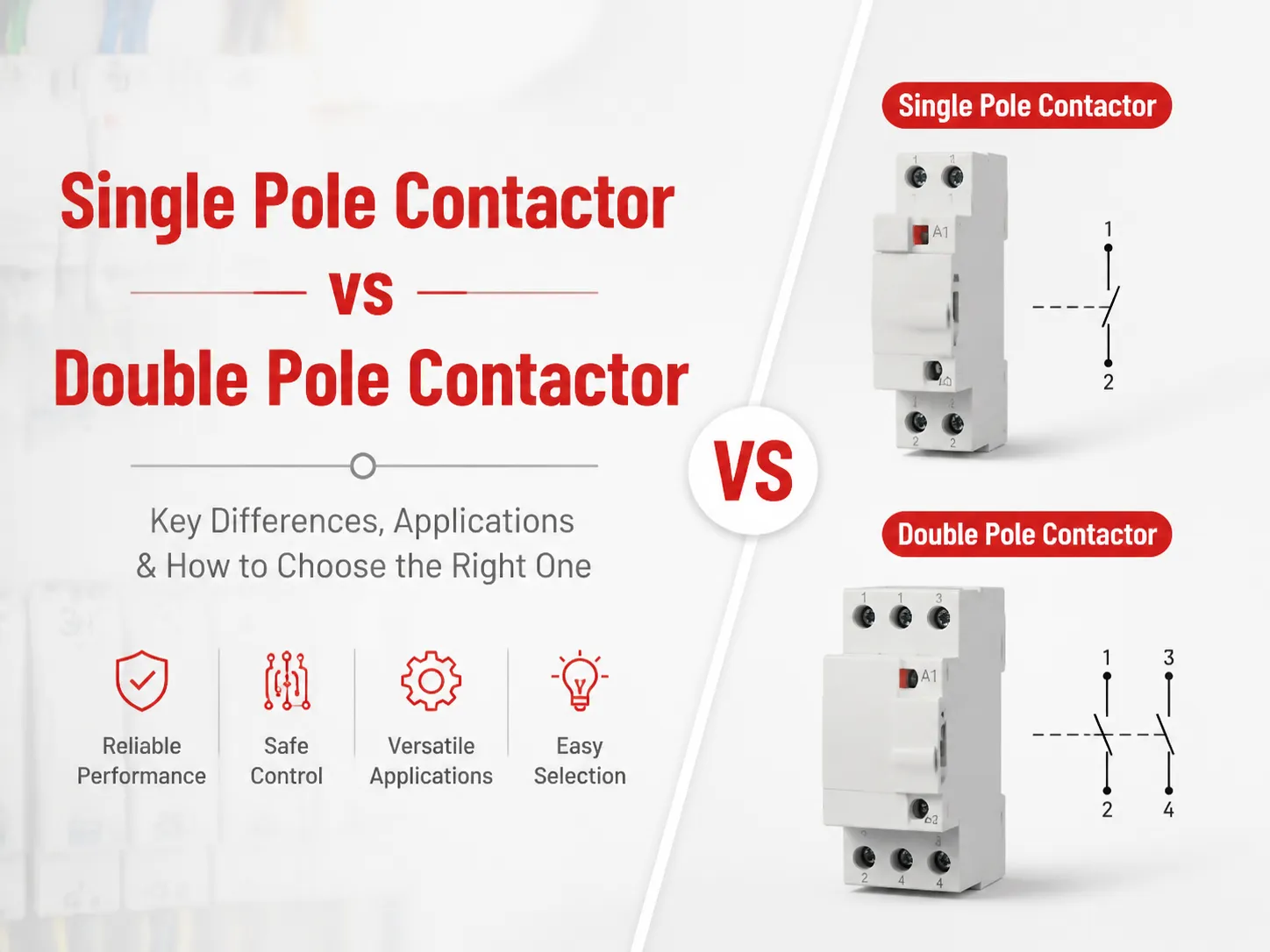
Выключатели могут иметь однофазную (одна линия 120 В), двухфазную (две линии для 240 В приборов/главных линий в Северной Америке) или трех- и четырехфазную (три фазы промышленного/коммерческого питания) конфигурацию. Однофазные выключатели обеспечивают защиту от перегрузки для ответвительных цепей 120 В; двухфазные — для нагрузок 240 В, таких как сушилки, плиты, водонагреватели и зарядные устройства для электромобилей, и отключают обе линии одновременно. Многие распространенные ошибки домашних мастеров связаны с неправильным выбором количества полюсов, поэтому рекомендуется привлекать опытных специалистов для установки панелей и модернизации жилья, так как они выполняли этот процесс сотни раз.

Выключатель или предохранитель: в чем разница?
Помимо общей функции защиты проводки и оборудования, каждый тип имеет уникальный принцип работы. Предохранитель защищает от перегрузки за счет металлического проводника, который плавится при токе выше номинала, создавая физический разрыв цепи. В выключателе этот процесс осуществляется механическим перемещением переключателя. Эта разница лежит в основе сравнения этих двух типов защитных устройств.
| Свойство | Предохранитель | Автоматический выключатель |
|---|---|---|
| После срабатывания | Элемент поврежден — требуется замена | Сброс путем перевода рукоятки — многоразовый |
| Скорость срабатывания | Очень высокая (хорошее ограничение тока) | Быстрая, но немного медленнее, чем у эквивалентного предохранителя при очень высоких токах короткого замыкания |
| Защита от вмешательства | Легко обойти, установив предохранитель большего номинала или монету за ним | Труднее обойти; срабатывания видны повторно |
| Возможен дистанционный сброс? | Нет — требуется физическая замена | Некоторые промышленные типы могут быть повторно включены электрически |
| Стоимость за событие | Дешёвая деталь, но каждый сбой требует нового предохранителя | Более высокая первоначальная стоимость, почти нулевая стоимость за срабатывание |
| Селективность/разграничение | Хорошая; предохранители хорошо координируются в серии | Требуется тщательное градуирование между верхними и нижними устройствами |
| Где предпочтительно | Защита полупроводников, промышленные объекты с высокими токами повреждения, некоторые автомобильные/морские применения | Везде в остальных случаях — жилые дома, коммерческие и промышленные распределительные сети |
Большинство пользователей придут к выводу, что обновление с предохранительного щита до панели с автоматическими выключателями является лучшей инвестицией. Предохранитель не даёт никакой информации о повторяющихся перегрузках цепи и, следовательно, создаёт условия для небезопасного и/или опасного ремонта; с другой стороны, с автоматическим выключателем пользователь может чётко определить цепь, которая сработала, и просто сбросить её. Автоматические выключатели также обеспечивают защиту от замыканий на землю и дуговых замыканий — функции, которые не могут быть обеспечены никаким типом предохранителя. В некоторых случаях предохранитель превосходит автоматический выключатель, например, при очень высоких токах повреждения или необходимости быстрого ограничения тока при защите чувствительного электрооборудования; однако в зданиях автоматические выключатели уже много лет являются лучшим выбором.
Автоматический выключатель против выключателя: в чём разница?
Рукоятка выключателя часто принимается за выключатель, поскольку они похожи, но это разные типы устройств. Выключатель (например, световой выключатель, изолятор, контактор) предназначен для регулярного использования (вы будете включать/выключать его много раз) и не имеет возможности обнаружения неисправностей. Автоматический выключатель, напротив, предназначен для редкого обслуживания и специально разработан для автоматического срабатывания при обнаружении неисправности путём автоматического отключения тока.
В результате этих различий существуют два основных правила. Во-первых, выключатель не защищает от неисправностей; он может только управлять цепью, и поэтому цепь, идущая от выключателя, должна быть защищена другими устройствами выше по потоку. Во-вторых, автоматический выключатель не предназначен для ежедневного переключения; его контакты не рассчитаны на тысячи операций, и каждый раз при ручном срабатывании срок службы выключателя уменьшается. Если вам нужно устройство для переключения и одновременно обеспечение некоторой защиты, идеальным продуктом будет разъединитель с предохранителем или автоматическим выключателем, либо моторный защитный автоматический выключатель (для цепей машин). На стороне высокого напряжения это различие также присутствует на подстанциях, где используют отдельные разъединители для переключения (они переключаются только при отсутствии тока) и автоматические выключатели для прерывания токов повреждения.
Main breaker vs branch circuit breaker: what is the difference?
People frequently confuse the two types of breakers in a breaker panel (the main and the branch) because they both disconnect electricity from a panel; however, they serve entirely different functions. The main breaker disconnects power to the entire panel from the electrical utility, while branch breakers (the long rows of 15- and 20-amp handles) protect each individual circuit (e.g., kitchen, bedrooms, AC unit, dryer). Depending on the size of a person’s home and how much electricity is used each day, many people will find that the main breaker will be rated between 100-200 amps in a home.
Understanding the distinction between these two breakers is vital because of how they help protect against electrical shock and fire. The main breaker protects the service conductors, giving firefighters and/or electricians a single safe way to disconnect power from a building, whereas branch breakers protect the smaller wires located within walls that run to each particular room; therefore, when an electrical short or failure occurs within a branch breaker, it can potentially only take one room out of service instead of the entire house. When an individual hears “the main breaker tripped,” it usually indicates that either the total electricity usage exceeded the service capacity or that a significant electrical fault occurred between the main and branch breakers. Therefore, before an individual resets the main breaker, they should unplug enough appliances or electronic devices to bring the total electricity consumption below the maximum rating of the breaker panel.

Which brands make circuit breakers?
There are two distinct categories of manufacturers in the circuit breaker industry: global players with an extensive presence in North America and Europe, and companies focused on niche products where their certified products can be found across the globe.
| Бренд | Home market | Known for |
|---|---|---|
| Square D (Schneider Electric) | US / France | QO and Homeline panels — the most widely installed residential breakers in North America |
| Eaton (incl. Cutler-Hammer) | US / Ireland | BR and CH series, strong commercial and industrial line |
| Сименс | Germany | Huge industrial and residential portfolio, MP/QP residential line |
| ABB | Switzerland / Sweden | Tmax MCCB range, global industrial standard, SACE breakers |
| Eaton CH | US | Residential breakers plus a growing smart/connected breaker line |
| General Electric (now part of ABB/Smart Breaker brands) | US | Legacy THQL/THQB panels still common in older homes |
| Legrand / Hager / Chint / HUYU and similar certified global manufacturers | Europe / China | Full MCB/MCCB/RCBO ranges certified to IEC 60898 and IEC 60947, supplying OEM and project markets worldwide |
When purchasing circuit breakers, the most important rule regarding product compatibility is that, in North America, circuit breakers are panel-specific. As an example, a Square D breaker will not fit an Eaton panel, and trying to install one in a panel that it is not intended for creates not only a code violation, but also a legitimate fire hazard. To avoid this issue, simply match the replacement circuit breaker to the manufacturer’s name and series of the existing panel (see our Eaton vs. Cutler-Hammer Reference Guide for product compatibility) or, if you choose to switch brands, you can simply replace the entire panel. Circuit breakers from different manufacturers are compatible and can be mounted on DIN-rail tracks in markets outside of North America (i.e., IEC markets), and therefore companies like HUYU can distribute their certified miniature circuit breakers (MCBs) in over 100 countries. For industrial and project clients, the certification is much more important than the product logo; the certification for North America is UL 489 for circuit breakers, IEC 60898 for MCBs, IEC 60947-2 for molded case circuit breakers (MCCBs) and air circuit breakers (ACBs), and the certified test reports for those certifications.
How much do circuit breakers cost?
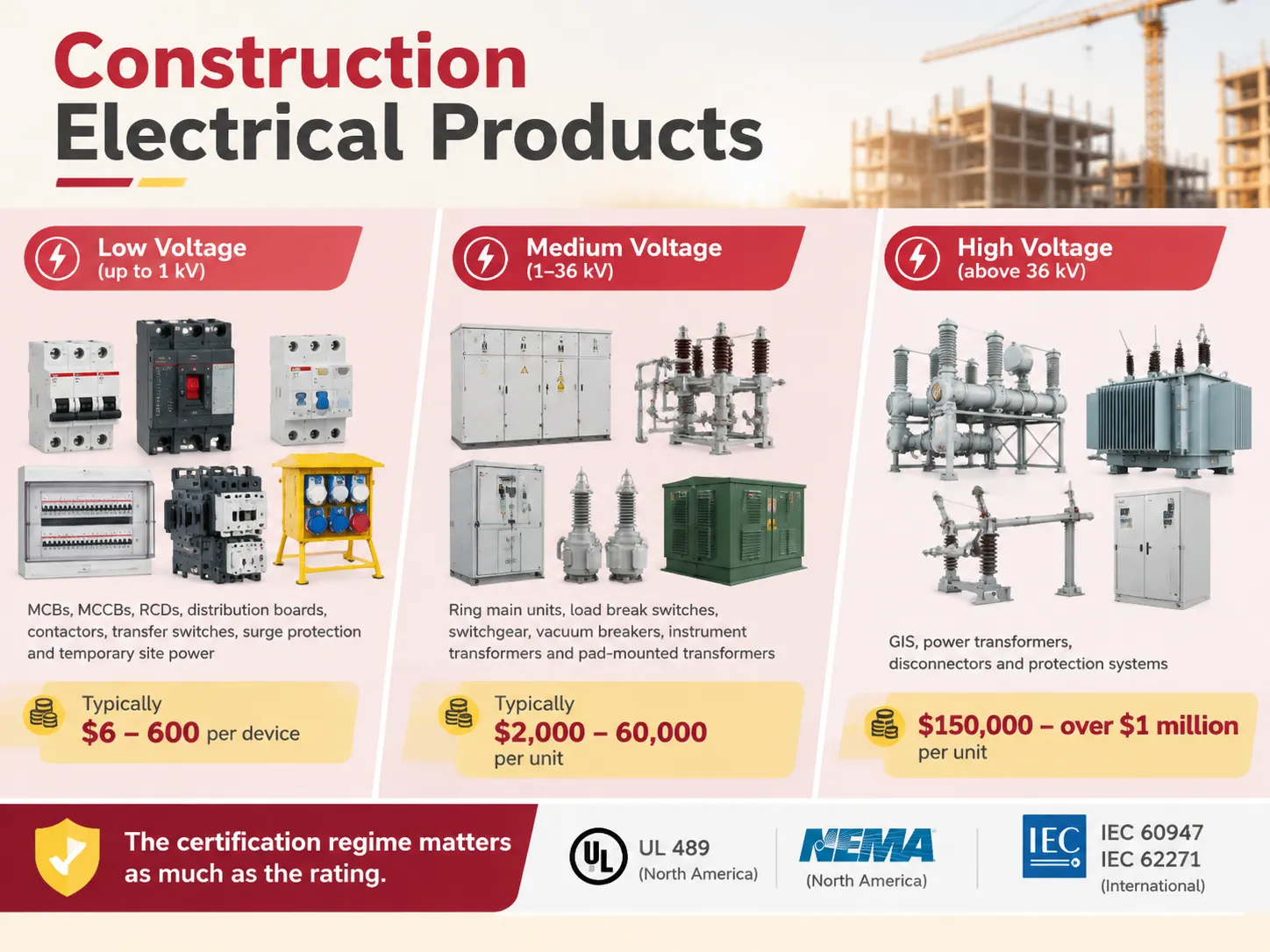
Pricing for Breaker varies more than many other types of electrical components because circuit breakers can range from $6 (residential spare) to over $100,000 (transmission). Therefore, when creating a budget for a project, it helps to have a breakdown of the possible price ranges in each category for each year leading up to 2026:
| Тип выключателя | Part cost (typical) | Installed cost (electrician) |
|---|---|---|
| Standard single-pole thermal-magnetic (15-30 A) | $6-18 | $130-250 including service call |
| Double-pole (30-100 A) | $10-40 | $150-300 |
| GFCI breaker | $40-100 | $200-350 |
| AFCI or combination AFCI/GFCI | $30-100 | $175-350 |
| Smart breaker with energy monitoring | $50-300+ | $250-500 |
| MCB (IEC, 6-63 A, DIN-rail) | $3-25 | Varies by market |
| MCCB (100-1,600 A) | $45-1,600+ | Project-priced |
| ACB (630-6,300 A) | $800-5,000+ | Project-priced |
| Medium/high-voltage breaker | $5,000-100,000+ | Substation projects |
The big price drivers are amperage, interrupting rating, protection features, and brand. A basic 20 A thermal-magnetic breaker at $6-12 versus a combination AFCI/GFCI unit at $50-100 is roughly a five-to-eight-times multiplier — justified by the microprocessors and sensors inside the smart unit. The full cost picture — including panel replacement and when a $200 breaker swap turns into a $2,000-4,000 panel upgrade — is detailed in our руководство по стоимости замены автоматических выключателей.

How to choose the right circuit breaker
To select a new circuit breaker, follow these five steps IN ORDER: Each step limits and restricts your options for the next step.
- Wire ampacity = Breaker amperage, NOT appliance amperage! The Industry Standards state that the breaker is there to protect the wire, so the breaker should NEVER exceed the ampacity of that wire. Therefore, a 15 amp breaker protects a 14 AWG copper wire, a 20 amp breaker protects a 12 AWG wire, and a 30 amp breaker protects a 10 AWG wire. NEVER upgrade a breaker to eliminate nuisance trips until you have verified the wire size; this is one of the leading causes of houses burning down.
- 80% of Breaker’s Rating is Maximum Continuous Load: The National Electrical Code requires circuit breakers to be rated for continuous (3-hour or more) loads at no more than 80% of the breaker’s capacity. A continuous 12 amps (1,440 watts at 120 volts) on a 15 amp breaker are fine, and 16 amps (1,920 watts) on a 20 amp breaker are fine. For an explanation of how to perform the calculation converting watts-to-amps for continuous loads, please see our 15-Amp Circuit Capacity Guide.
- Type Matches Hazard: A Ground Fault Circuit Interrupter (GFCI) circuit breaker must be used on receptacles located in kitchens, bathrooms, garages, and outside. An Arc Fault Circuit Interrupter (AFCI) breaker must be used in bedrooms and living areas under current code. Lastly, a motor or transformer circuit must use the proper trip curve (usually C or D) to minimize nuisance trips during startup.
- Number of Poles = Voltage: A single pole breaker is used on 120-volt branch circuits; a double pole breaker is used on 240-volt loads and on disconnects from the service panel; a breaker for a three-phase system must be either a three- or four-pole breaker.
- Interrupting Rating and Certifications: The interrupting or breaking capacity (kA) of a circuit breaker must be adequate for the available fault current at the main panel, and ONLY certified devices (in North America, the certification mark is UL 489; in the rest of the world, the certification marks are IEC 60898/60947) should be purchased from authorized dealers. Counterfeit breakers are an increasing problem. When counterfeit breakers fail, it is usually during a fire.
Installation, resetting, and replacement
Resetting a tripped circuit breaker is something every homeowner ought to be aware of. When a circuit breaker trips, it will revert to the middle or OFF position on its handle. To reset the circuit breaker, turn the handle completely to the OFF position, and then fully back to the ON position. If after you have reset the circuit breaker it does not trip again, it is likely that the overload causing the circuit breaker to trip was an isolated event. If the circuit breaker trips again immediately after being reset, you most likely have a larger electrical issue, and you should stop attempting to reset the breaker and investigate the problem further.
Circuit breakers do eventually wear out, and the wear will usually result from a mechanical failure in the latching mechanism or the electrical contacts rather than a failure of the sensing mechanism (the electronic part). A circuit breaker that is very hot, buzzing or humming, has a burnt smell, and/or has tripped many more times than it previously did, or has failed to trip completely, is likely going to need to be replaced. Testing a faulty breaker is fairly easy if you have access to a multimeter; you’ll need to check that the breaker will hold the correct amount of current load and trip when it is supposed to. But if a circuit breaker begins showing any of the above warning signs, it will be in your best interest to replace it instead of trying to continue using it until it finally does fail on you.
Replacing a circuit breaker in a panel that is live has some inherent risk involved. Depending on the configuration of your panel and where the service lugs (terminals) on your circuit breaker panel are mounted, the service lugs remain energized even when the main has been turned OFF. In the vast majority of cases in the United States, it is against the law to rewire or replace a circuit breaker while working on the live side of the service because there is a high likelihood that an arc flash will occur if you come into contact with the energized lugs while doing so. The cost of hiring an electrician to replace a circuit breaker is typically between $130-$250 to provide you with peace of mind and protection against the risk of an arc flash. The same professional judgment should be applied on the panel level: whether or not your aging 100 A service is capable of handling the entire electrical load of a modern home, and whether or not the current code requires you to have a panel rated at 200 A, is a question that you should be able to have answered by a licensed electrician after a load calculation has been performed, not a guess.
Why does a circuit breaker keep tripping?
A repeatedly tripping breaker is not the source of the problem; it is an indication of a problem. A tripped breaker indicates that there is something wrong with the electrical circuit or with what is connected to it. Identifying the cause of the problem means understanding the following four major categories of electrical faults or problems.
- Overloaded circuit – Too many appliances or devices drawing power from a single circuit are causing an overload of electrical current. The solution to this is to balance the load on the circuit or to install a new circuit for the additional high-wattage electrical devices, and not to use a higher-rated circuit breaker.
- Короткое замыкание – An electrical short happens when an energized wire touches either a neutral or ground wire. This condition can happen inside an appliance or in an extension cord when either the cord or the appliance is damaged. A short circuit will usually trip instantly, and there may be a burnt smell associated with it.
- Ground Fault – A ground fault occurs when current leaks to ground (earth) through a person, water, or damaged insulation on an electric wire. Ground fault protection devices (GFCIs and RCCBs) are critically important to ensure the safety of people using electricity.
- A Breaker Failure – After decades and thousands of operations, a breaker eventually will wear out and will no longer trip and will fail to hold on to its rated current.
Diagnosing which family you are in — and why a breaker that “trips for no reason” almost always has a reason — is exactly what our circuit breaker tripping guide walks through step by step. It is important to note: If a breaker trips when an appliance is plugged in, the appliance is most likely the cause. If a breaker trips when nothing is connected, suspect either the wiring or the breaker and call a licensed electrician to investigate further; do not experiment with either the wire or the breaker.
Часто задаваемые вопросы
How do I reset a circuit breaker?
To reset the circuit breaker(s), locate the circuit breaker that tripped (the lever/circuit breaker will be in between the OFF/ON position) Move the lever fully to the OFF position, and then move it firmly to the ON position. If the circuit breaker(s) remains in the ON position, then the trip was probably a temporary overload. However, if the circuit breaker(s) immediately or shortly thereafter trips again, do not reset the circuit breaker(s) again and contact a professional to determine why the circuit breaker(s) keep tripping.
What’s the difference between a circuit breaker and a fuse?
Fuses protect electrical circuits by melting a wire (metal element), and therefore, when a fuse is blown it has to be replaced every time. Circuit breakers protect electrical circuits by using a mechanical switch to open the circuit. This allows circuit breakers to be reset and reused many times. Additionally, circuit breakers have the ability to provide both ground fault protection and arc fault protection which fuses cannot; therefore, circuit breakers have replaced fuses in virtually all modern buildings.
What is the difference between a main breaker and a circuit breaker?
The term circuit breaker refers to all circuit breakers. The main breaker is a circuit breaker that is larger than the others (typically 100-200 amps) that disconnects the entire electrical service from the utility company. Branch circuit breakers are the smaller circuit breakers that are used to protect individual circuits in the building. All circuit breakers will trip automatically in response to electrical faults, however, the main circuit breaker protects the conductors that carry the electrical service, while branch circuit breakers protect single circuits.
What is the difference between a circuit breaker and a switch?
A switch is a manual control device that is intended for frequent operation, without providing any protective function. A circuit breaker is a protective device that will automatically open the circuit if there is an overload condition or short circuit and is not intended to be used thousands of times a day. A switch does not provide protection for a circuit; a circuit breaker is not intended for daily use. Some devices are designed to have both functions; therefore, these products are referred to as switch-disconnectors or motor-protective devices.
Ссылки
- Schneider Electric — What Is a Circuit Breaker?
- Eaton — Circuit Breaker Fundamentals
- RealPars — Circuit Breakers Explained
- Family Handyman — How Circuit Breakers Work
- NFPA — National Electrical Code (NEC)
Заключение
A circuit breaker protects every electrical system from excessive voltage and current. It is a switch that automatically responds to excessive voltage and/or current (i.e. thermal and magnetic overload) and opens the circuit as fast or faster than a fused circuit. If you are new to circuit breakers, it is important to understand the thermal/magnetic trip mechanism that opens the breaker, the trip characteristics of breakers of types B, C, and D according to their rated load and type of electrical load, how do MCBs, MCCBs, RCBOs differ; when and why you should use circuit breakers instead of fuses; and to what extent you should use the main breaker with regard to branch circuit breakers; how to determine the correct certification for the circuit breaker and the manufacturer of the circuit breaker to ensure compatibility with your circuit breaker panel; and how to use the ratings of circuit breakers to size correctly the circuit breaker for your installation. All of the above may be obtained from the circuit breaker manufacturer or an electrical contractor, and if not, you must refer to a qualified electrical contractor to obtain such information to ensure your equipment remains protected by the circuit breakers. Assuming that you have taken advantage of the above information, you can expect your circuit breaker(s) to continue protecting all of your equipment for many years to come until such time as the circuit breakers have reached their rated life (which they do not use) and have provided the necessary protection for each piece of your equipment.