

Si le pregunta a cualquier electricista cuál es el cable más versátil en una instalación residencial o comercial ligera, la respuesta casi siempre será la misma: 12 AWG (calibre 12). De hecho, es el cable más pequeño permitido por el Código Eléctrico Nacional para circuitos ramales de 20 amperios; es decir, los circuitos ramales que suministran la mayoría de la cocina, baño, garaje y equipos eléctricos. Sin embargo, las preguntas sobre el tema nunca dejan de aparecer: ¿cuántos amperios tiene el cable #12? ¿Es igual a su contraparte 12 AWG? ¿Puedo pasar por él 25 amperios durante algún tiempo? Y también, ¿por qué el cable en la tienda cuesta mucho más que el THHN en el almacén?
Este manual responde a cada una de estas preguntas: qué dimensiones físicas tiene el 12 AWG, cuáles son las reglas de ampacidad según los requisitos del Código, dónde debe y dónde no debe usarse este cable, cuál es su precio por pie para todos los tipos comunes de aislamiento, cómo se compara el cable con los calibres 14, 10 y 8 y dónde comprarlo.
El diámetro del conductor de cobre 12 AWG es de 0.0808 pulgadas (2.05 mm), siendo el mínimo requerido por el NEC para circuitos de 20 amperios (NEC 240.4 (D)). El nivel máximo de ampacidad para este tipo de conductor es de 20 amperios a 60°C (cable NM-B) y 25 amperios a 75°C (THHN/THWN en conducto) según la Tabla 310.15 (B) (16) del NEC. Esto significa que, aunque el cable tiene una capacidad máxima de 25 amperios, se debe respetar el límite de 20 amperios porque el interruptor debe proteger el cable. No se recomienda usar 25 amperios en cable 12 AWG para circuitos de aplicación general.
¿Qué es el cable calibre 12? Tamaños y dimensiones
“Calibre” se refiere a un sistema de cableado llamado American Wire Gauge (AWG); en el AWG, los números más bajos indican cables más gruesos. El cobre sólido calibre 12 tiene un diámetro de 0.0808 pulgadas (aproximadamente 2.05 mm) con una sección transversal de aproximadamente 3.31 mm² (6530 mils circulares). El aislamiento aumenta el diámetro total del cable a aproximadamente 0.119-0.128 pulgadas, dependiendo del tipo de aislamiento utilizado y si el cable tiene conductor trenzado o sólido.
Existen dos formas de cable; conductor sólido, que es un solo cable rígido usado en cables NM-B (Romex), y cable trenzado, que está compuesto por 19 hilos torcidos juntos y se usa en cables THHN, así como en aplicaciones flexibles. Este último es más flexible y tiene mayor tolerancia a la flexión, lo que hace que el cable trenzado sea más adecuado para diversos sistemas eléctricos.

¿Cuántos amperios puede transportar el 12 AWG? Las reglas del Código
La capacidad del cable 12 AWG de cobre está determinada por la clasificación de temperatura del aislamiento, mientras que la especificación del circuito está determinada por el mecanismo de protección del interruptor. Existen dos tipos de valores:
- Capacidad del conductor (capacidad física del cable), como se indica en la Tabla 310.15(B)(16) del NEC, donde el cable tiene una capacidad de 25 amperios a 75°C (cables THHN/THWN en tubería) y 30 amperios a 90°C (cable THHN con terminales que pueden trabajar a 90°C).
- Capacidad del circuito (la capacidad del mecanismo de protección), según lo establecido en NEC 240.4(D), donde el interruptor automático debe proporcionar protección para cable de cobre 12 AWG con una tasa que no exceda los 20 amperios.
El uso significa que un circuito de 12 AWG tiene un interruptor automático nominal de 20 amperios, mientras que el cable puede operar bajo carga continua de 16 amperios (regla 80%). Existe una clasificación de 25 amperios a 75°C para margen de seguridad y para algunas excepciones en el código, no para conectar un interruptor automático de 25A a un cable de 12 AWG. Si hay dudas sobre el cable a utilizar, se aconseja seguir el circuito con clasificación inferior que garantice la seguridad del cable.
Tipos de 12 AWG: THHN, NM-B, UF-B, MC — Cuál es la diferencia
Existen diferentes estilos de aislamiento/construcción para 12 AWG, cada uno con sus códigos de instalación.
| Tipo | Construcción | Capacidad de corriente (12 AWG Cu) | Donde se utiliza |
|---|---|---|---|
| THHN/THWN-2 | Conductor único, aislamiento de PVC + chaqueta de nylon | 25A (75°C); 30A (90°C) | Conducto y bandeja portacables en comercial/industrial; 600V; ubicaciones húmedas o secas |
| NM-B (Romex) | 2-4 conductores en una vaina de PVC, sólido o trenzado | 20A (60°C) | Residencial y comercial ligero, oculto en paredes/techos |
| UF-B | Estilo NM con chaqueta resistente a la humedad | 20A (60°C) | Alimentadores subterráneos a cobertizos/garajes y recorridos exteriores |
| Cable MC | Conductores dentro de una armadura metálica flexible | 20A (clasificación típica a 75°C) | Comercial, recorridos expuestos, áreas con clasificación contra incendios |
| THW/THWN simple | Similar a la familia THHN | 25A (75°C) | Ubicaciones húmedas, alimentadores industriales |
Una de las buenas opciones para recorridos en conducto es THHN/THWN-2, que es menos costoso por pie que el cable NM-B ya que solo se usa un conductor en este cable, mientras que NM-B (la marca Romex propiedad de Southwire) es el cable estándar usado en instalaciones residenciales. UF-B se usa para instalación de cable subterráneo, y MC es el nombre del cable blindado usado en instalaciones comerciales.
Dónde se usa el calibre 12 (y dónde no)
Según el Artículo 210 del código NEC, los circuitos para pequeños electrodomésticos en la cocina, área de comedor y lavandería deben ser de 20 amperios (210.52), y al mismo tiempo, los circuitos para el baño también deben ser de 20 amperios (210.11(C)(3)). Todos estos circuitos deben instalarse con cable 12 AWG. Otras aplicaciones estándar:
- Tomas de cocina y comedor – se requieren circuitos para pequeños electrodomésticos de 20 amperios según el código;
- Circuitos de tomas para baño – 20 amperios y equipados con GFCI;
- Tomas de garaje y taller – 20 amperios para herramientas incluyendo sierras de mesa y colectores de polvo;
- Unidades de aire acondicionado de ventana – 15 amperios funcionan en un circuito de 20 amperios con cable 12 AWG;
- Tomas de uso general e iluminación en un edificio de nueva construcción – muchos electricistas implementan cable 12 AWG en todo el edificio con o sin mezcla con 14.
- Recorridos de alimentadores a subpaneles y estructuras – normalmente, los recorridos cortos de alimentadores dentro de la capacidad permitida; los recorridos largos de alimentadores deben ser 10 AWG o más gruesos.
Donde 12 AWG es inapropiado: los circuitos de iluminación de 15A pueden funcionar bien con cable 14 AWG; los electrodomésticos de 240V por encima de 20A deben conectarse usando al menos cable 10 AWG; las corridas largas de alimentación deben usar cable de mayor tamaño debido a la caída de voltaje. Si está cableando un subpanel o un electrodoméstico pesado, nuestra guía para lo que un circuito de 15 amperios puede realmente soportar y el Desglose MCB vs MCCB le ayudará a emparejar correctamente el cable con el interruptor y la carga.

12 AWG vs 14, 10 y 8 Gauge: Cómo elegir
| AWG (cobre) | Diámetro | Máximo circuito (NEC 240.4(D)) | Capacidad de corriente 75°C | Uso Típico |
|---|---|---|---|---|
| 14 AWG | 0641″ (1.63 mm) | 15A | 20A | Iluminación, circuitos generales de 15A |
| 12 AWG | 0808″ (2.05 mm) | 20A | 25A | Tomas de cocina/baño/garaje, herramientas |
| 10 AWG | 1019″ (2.59 mm) | 30A | 35A | Calentadores de agua, unidades de AC, cargadores EV |
| 8 AWG | 1285″ (3.26 mm) | 40A | (14×85mm) | Secadoras, alimentadores de subpanel |
| 6 AWG | 162″ (4.11 mm) | 55A | 65A | Cocina, alimentadores pesados |
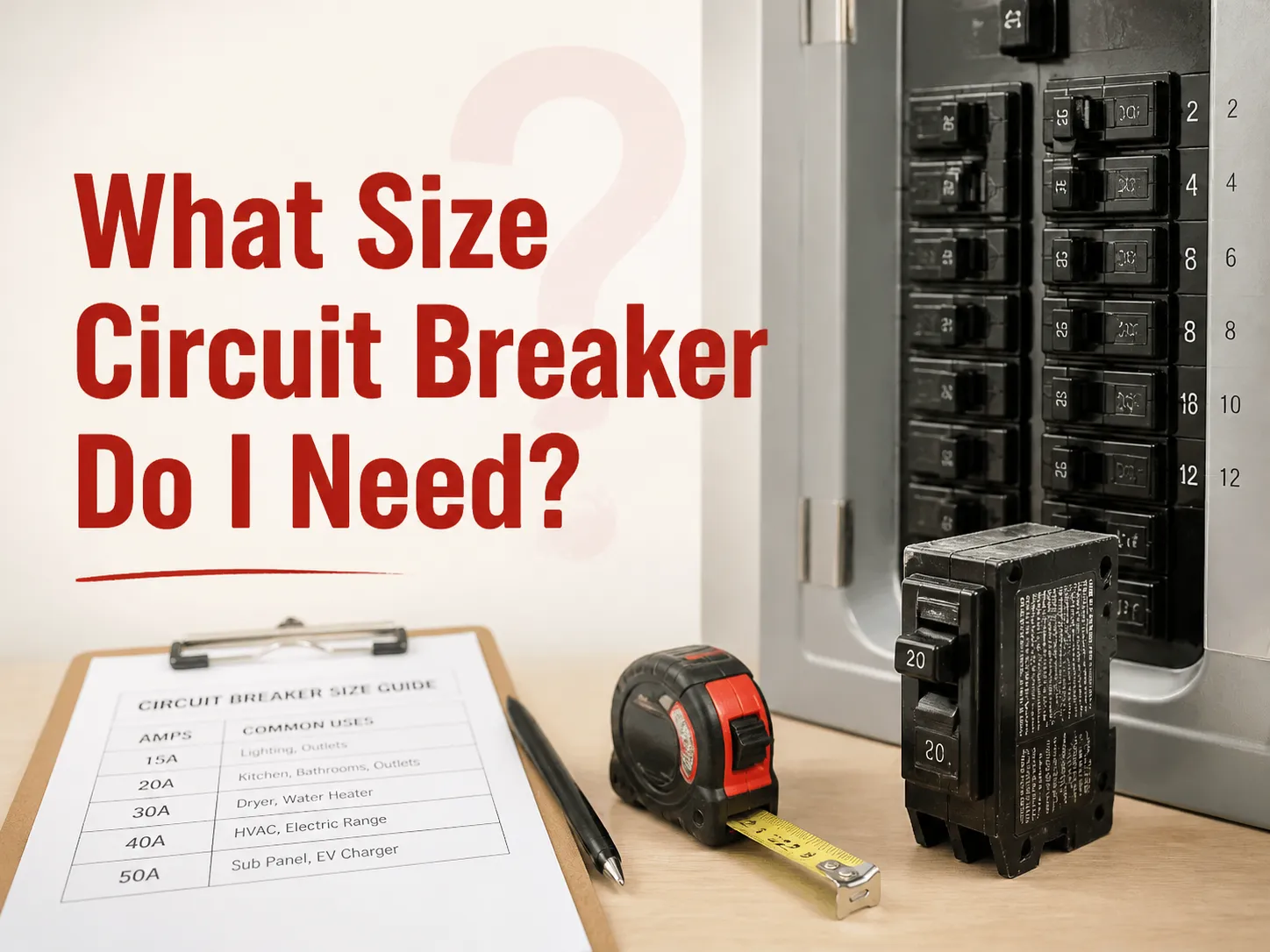
La regla básica es que los cables deben coincidir con el interruptor automático, y el interruptor automático debe coincidir con la carga. Siempre que el circuito esté diseñado para una carga potencial de 20A (por ejemplo, en cocinas, baños, garajes y talleres) tiene sentido usar cable 12 AWG. Para circuitos que son estrictamente circuitos de iluminación de 15A, se recomienda usar cable de cobre 14 AWG porque ahorrará dinero y cumplirá con los códigos eléctricos locales. Para cargas que operan a 240V y demandan de 25-30A, es mejor cambiar a 10 AWG. Muchos electricistas hacen un esfuerzo por no cambiar el tamaño del cable durante el trabajo y a menudo usan cable 12 AWG incluso cuando no es requerido por las regulaciones, ya que el costo adicional es mínimo y no hay que temer usar el cable incorrecto.
Caída de voltaje y longitud de recorrido
La caída de voltaje es uno de los costos que pasa desapercibido en cables largos. Para un circuito que transporta 20A por 50 pies, el cable de cobre 12 AWG mostrará una caída de voltaje de aproximadamente 2.8V (2.31%), lo cual es aceptable bajo las recomendaciones del Código Eléctrico Nacional (NEC) del 3% para circuitos derivados. Sin embargo, el cable de cobre 14 AWG en una carrera similar tendrá una caída de 4.5V (3.75%), que está por encima del límite. El cableado extendido reduce el torque de arranque de los motores, atenúa las luces y puede causar otros problemas. En la práctica, si necesitamos transportar 20A por distancias mayores a 75-100 pies, se recomienda cambiar a cable 10 AWG o usar dos circuitos. Si el cable debe ser más largo que 100 pies, es necesario calcular la caída de voltaje según el Capítulo 9, tabla 8 del NEC.
Cobre vs Aluminio
Debido a que el cobre es casi tan buen conductor como la eficacia teórica del 100% (95%), pero por sus muchas ventajas, el cobre es el metal preferido para usarse en circuitos derivados. Aunque el aluminio es casi un tercio más ligero, los códigos especifican que los cables de aluminio deben ser dos calibres más grandes que los cables de cobre y que se deben usar conexiones especiales con este material. Por lo tanto, los cables calibre 12 nunca serán de aluminio; sin embargo, este último se usaría para minimizar costos en cables alimentadores principales.

¿Cuánto cuesta el cable calibre 12?
Las tarifas del mercado del cobre varían, pero los precios del cobre 12 AWG en EE. UU. se mantienen constantes.
| Producto | Precio típico |
|---|---|
| THHN 12 AWG conductor individual (suelto) | $0.39-0.56 por pie (precio al por mayor para 1000 pies en el extremo bajo) |
| Cable 12/2 NM-B (tipo Romex, con tierra) | $0.50-0.80 por pie |
| Cable 12/3 NM-B (para circuitos de 3 vías, con tierra) | $0.70-1.10 por pie |
| Bobina de 100 pies de 12 AWG NM-B | $20-35 |
| Bobina de 250-500 pies de 12 AWG NM-B (al por mayor) | $50-170 dependiendo de la marca y el precio del cobre |
| Equivalente 10 AWG 12/2 NM-B (para comparación) | alrededor de $1.20 por pie |
Comprar al por mayor es una excelente manera de ahorrar dinero: los carretes de cable de 500 pies de 12/2 NM-B de un mayorista tienen precios hasta 30% más bajos que los cobrados por comprar cortes voluminosos de 50 pies en un punto de venta minorista. Muchos mayoristas en línea (como Wire & Cable Your Way y WesBell) publican precios de cable en línea que son mucho más bajos que los de los grandes minoristas convencionales para cables similares registrados por UL.
Marcas y Fabricantes Recomendados
El cable listado por UL se trata como un producto de naturaleza commodity debido a que lo que importa más es el aislamiento y el cobre utilizado para el cable, y todas las marcas líderes ofrecen cumplimiento con UL 83/1063. Pero hay algunas marcas que se han mantenido firmes en la industria de fabricación de cables:
- Southwire — la compañía de cables más grande en los EE. UU. Su marca de cable Romex se ha convertido en un estándar en cables NM-B. Se vende en todas las principales cadenas de tiendas y distribuidores de cables.
- Cerro Wire — una empresa bien conocida en los EE. UU. Tiene precios que son 10-15% más altos que otras marcas, pero ofrece aislamiento de alta calidad.
- Wire & Cable Your Way — un distribuidor que vende cables Southwire y muchos cables similares a precios bajos.
- WesBell Electronics — la empresa se especializa en ventas directas y ofrece cable THHN por pie.
- General Cable/Prysmian — fabricante de cables industriales THHN y cables para bandejas.
Al comprar cables, asegúrese de verificar el presidente de UL, y la impresión en el cable (12-2 w/Grd NM-B 600V), el código de fecha de fabricación de los carretes NM-B, y asegúrese de que el cable esté correctamente marcado. La diferencia de precio entre cables económicos y premium es solo de varios dólares. Para el interruptor que protege ese cable, emparejarlo con un certificado interruptor UL 489 y entender cómo detectar un interruptor defectuoso cierra el ciclo en un circuito seguro, y en ubicaciones húmedas el Guía de protección GFCI explica la capa adicional que los circuitos de 12 AWG necesitan en cocinas y baños.
Preguntas Frecuentes
¿Cuántos amperios puede transportar un cable #12?
Según la Tabla 310.15(B)(16) del NEC, el cobre 12 AWG puede transportar una corriente de 25A a 75 grados Celsius (THHN/THWN en conducto) y 30A a 90 grados Celsius. Sin embargo, se indica en NEC 240.4(D) que para la mayoría de las aplicaciones debe asegurarse que no sea más de 20A porque los cables NM-B y las terminaciones estándar están clasificados para 60 grados Celsius. El resultado práctico para el diseño del circuito es el siguiente: 12 AWG significa circuito de 20 amperios.
¿Qué grosor tiene el cable eléctrico calibre 12?
El diámetro del cable de cobre desnudo de 12 AWG es de 0.0808 pulgadas (2.05 mm). El diámetro del cable con aislamiento THHN es aproximadamente 0.128 pulgadas (3.25 mm) y el conjunto completo del cable NM-B es aproximadamente 0.4 x 0.2 pulgadas. Es claramente más grueso que el 14 AWG (0.0641″) y notablemente más delgado que el 10 AWG (0.1019″).
¿Son lo mismo 12 gauge y 12 AWG?
Sí, AWG significa American Wire Gauge y no hay diferencia entre 12 AWG y 12 gauge. Es un sistema de identificación del tamaño del cable que se usa en Norteamérica. Ambos términos se utilizan para describir cable de cobre con un diámetro de 0.0808 pulgadas y una capacidad de circuito de 20A (Cabe mencionar que en algunos países el área transversal del cable se mide en mm2 – 12 AWG es aproximadamente 3.3-4 mm2.).
¿Se pueden pasar 25 amperios por un cable de 12 gauge?
No, es imposible para circuitos ramales normales. Aunque el 12 AWG THHN está clasificado para 25 amperios a 75 grados Celsius, el NEC 240.4(D) establece el límite para ese cable en 20A para cables de cobre y 20A para cables 12 AWG con clasificación de aislamiento de 60 grados Celsius en la mayoría de los casos.
Referencias
- WesBell Electronics — THHN 12 AWG cobre trenzado: especificaciones y precios
- Lapp Tannehill — datos técnicos del cable de construcción 12 AWG THHN
- ToolsRadar — cable 12 gauge para circuitos de 20 amperios: análisis de capacidad y costo
- QL Cables — precios de NM-B 14-6 AWG y resumen de cumplimiento NEC
- NFPA 70 — Código Eléctrico Nacional (NEC 240.4, Tabla 310.15(B)(16), Artículo 210)
Conclusión
El cable 12 AWG es bien conocido por ser el cable de mejor desempeño en cuanto a conducción eléctrica, siendo adecuado para asistir a varios electrodomésticos como herramientas, dispositivos de cocina y mucho más. Su funcionamiento se basa en los siguientes principios: el cable tiene una capacidad máxima de transportar 25 amperios a 75 grados Celsius, pero el interruptor regular es de 20 amperios. Al momento de comprar el cable, ciertos aspectos como el tipo de aislamiento (NM-B en el caso de viviendas residenciales, THHN en caso de cableado en conductos), la longitud del cable y su material (se debe preferir cobre sobre aluminio) adquieren una importancia primordial. Finalmente, con el precio fluctuando entre $0.40 y $0.80 por pie, el uso de 12 AWG en un proyecto es una tarea trivial en cuanto a presupuesto.