
Você está visualizando ou pesquisando todas as opções disponíveis para criar um centro de carga com disjuntor principal para sua garagem, tiny home, oficina ou adição de subpainel de 100 amperes. Existem ótimos concorrentes como Square D, Siemens, GE e Eaton. Uma das marcas mais vendidas é o centro de carga com disjuntor principal Eaton BR de 100 amperes. Seja como for, você provavelmente está se perguntando se é um bom investimento ou apenas uma compra pelo nome da marca. Esta análise abordará as várias características, bem como as limitações do painel Eaton BR de 100 amperes.
Resposta rápida: O centro de carga com disjuntor principal Eaton BR de 100 amperes é um dos painéis residenciais mais acessíveis em 2026. O painel oferece um disjuntor principal de 100A, 120/240V monofásico, possui 10 a 12 espaços, permite até 24 circuitos, tem neutro plug-on, possui certificação UL e vem com garantia de dez anos. Oferece uma velocidade de instalação muito boa e tem um preço em torno de $80–$130. A principal vantagem do painel é a rapidez na instalação, assim como o custo dos disjuntores da série BR e a instalação de disjuntores tandem. O painel é mais adequado para garagens, oficinas, casas pequenas, galpões e instalações de subpainéis. A principal desvantagem é que a Eaton utiliza barras condutoras de alumínio em vez de cobre, em comparação com painéis de alta qualidade.
O Que É o Centro de Carga com Disjuntor Principal Eaton BR de 100 Amperes?
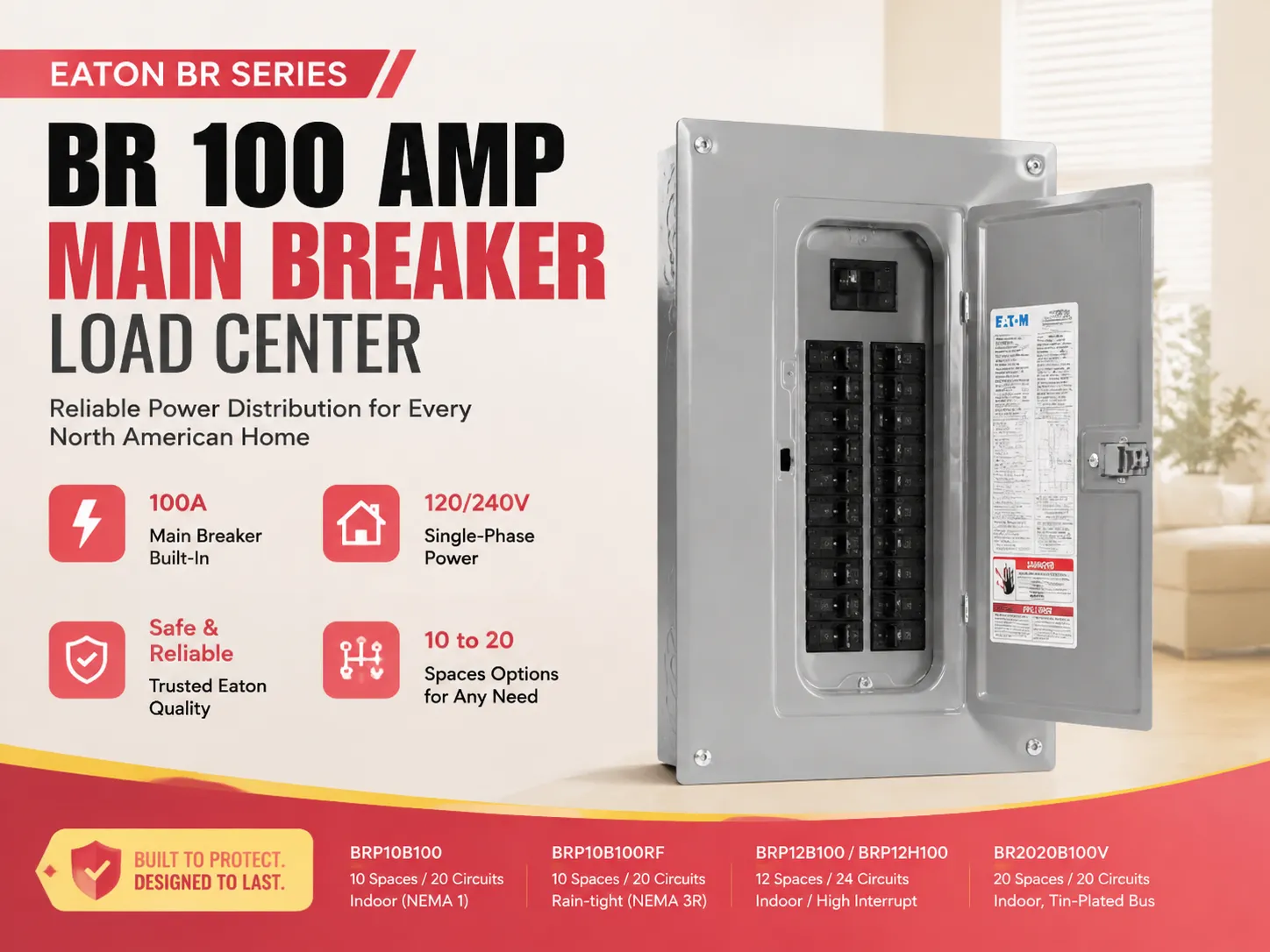
O Centro de Carga com Disjuntor Principal Eaton BR de 100 Amperes é a unidade de distribuição elétrica usada em residências para receber energia da concessionária. O termo “disjuntor principal” refere-se ao fato de que um disjuntor classificado para 100 Amperes está integrado no próprio centro de carga, servindo como dispositivo de desconexão do serviço. O disjuntor permite desligar o fornecimento de energia para todo o edifício com um único interruptor. A unidade utiliza energia padrão monofásica de 120-240V. O estilo específico do centro de carga mais comum entre os consumidores é:
| Modelo | Espaços / Circuitos | Invólucro | Preço Típico |
|---|---|---|---|
| BRP10B100 | 10 espaços / 20 circuitos | Interno (NEMA 1) | $85–$110 |
| BRP10B100RF | 10 espaços / 20 circuitos | À prova de chuva (NEMA 3R) | $95–$130 |
| BRP12B100 | 12 espaços / 24 circuitos | Interno (NEMA 1) | $85–$115 |
| BRP12H100 | 12 espaços / 24 circuitos | Interno, alta capacidade de interrupção (22 kAIC) | $90–$120 |
| BR2020B100V | 20 espaços / 20 circuitos | Interno, barra condutora niquelada | $120–$170 |
A série BR da Eaton é a linha econômica da sua série premium CH, e tem sido um pilar do trabalho elétrico residencial na América do Norte por décadas. Se você deseja entender melhor a linhagem da marca, nosso artigo sobre se Eaton é o mesmo que Cutler-Hammer explica a história da empresa e a relação entre as linhas de produtos.
Especificações Principais em Resumo
| Especificação | Detalhe |
|---|---|
| Classificação de amperagem | Disjuntor principal de 100A |
| Tensão | 120/240V CA, monofásico |
| Espaços | 10 ou 12 (dependendo do modelo) |
| Máximo de circuitos | 20 ou 24 (com disjuntores tandem/quad) |
| Material da barra condutora | Alumínio (niquelado em alguns modelos) |
| Classificação de interrupção | 10 kAIC (22 kAIC nos modelos H) |
| Invólucro | NEMA 1 (interno) ou NEMA 3R (à prova de chuva) |
| Faixa de fios | #6 a 1/0 AWG Cu/Al |
| Disjuntor principal | Neutro plug-on, incluído |
| Certificações | UL 50, UL 67, Certificado UL |
| Garantia | Garantia limitada de 10 anos |
| Dimensões (modelo 12 espaços) | 18,75″A x 14,31″L x 3,88″P |
| Peso | ~15 lb (10 espaços) a ~35 lb (12 espaços com tampa) |
Por que as Pessoas Compram: 6 Características de Destaque
O painel Eaton BR de 100 ampères destaca-se pelos seguintes motivos:
Design Plug-On Neutral (PON) economiza tempo significativo de instalação
O sistema plug-on neutral BR elimina a necessidade do pigtail que era necessário para modelos antigos de disjuntores AFCI e GFCI. Em vez de usar um pigtail branco para conectar cada disjuntor a uma barra neutra, os disjuntores encaixam diretamente no barramento neutro. Eletricistas relataram redução no tempo de instalação de 15 a 30 minutos por painel. Proprietários que optam pela auto-instalação também acharão o trabalho significativamente mais fácil.
Todos os espaços aceitam disjuntores tandem e quad
Em contraste com alguns outros painéis que suportam apenas o uso de disjuntores tandem em espaços designados, cada espaço de polo no painel Eaton BR aceita qualquer tipo de disjuntor — padrão, tandem ou quad. Se você optar por um modelo de 10 espaços, terá o benefício de até 20 circuitos. Um painel de 12 espaços pode acomodar até 24 circuitos. Para uma garagem ou oficina, essa opção cria mais oportunidades.
Disjuntores Eaton estão prontamente disponíveis
Os disjuntores Eaton BR estão entre os mais populares na América do Norte e podem ser encontrados em muitas lojas de varejo, incluindo Home Depot, Lowe’s e Menard’s, além de fornecedores elétricos. Os disjuntores BR mais usados são vendidos a preços muito razoáveis ($5-$9 para disjuntores padrão, e $35-$45 para AFCI ou GFCI). Portanto, se você possui um painel com disjuntor BR, pode ter certeza de que os custos de manutenção não serão muito altos.
Instalação fácil
A Eaton cuidou de adicionar recursos convenientes que podem mudar significativamente a experiência dos instaladores. Esses recursos incluem abas de compensação para drywall auto nivelantes que eliminam o uso de calços, opção de fixação por furo em formato de chave que permite instalação rápida em montantes, parafusos neutros recuados para facilitar a fiação, neutros internos que proporcionam mais espaço no calha, entre outros.
Versões para ambientes internos e externos
Se você precisa de um painel para instalação externa, o BRP10B100RF (NEMA 3R) possui a tampa à prova de chuva adequada para instalação ao ar livre — uma solução perfeita para instalações adjacentes ao medidor ou em uma garagem.
Boa garantia
A Eaton oferece uma garantia de 10 anos para seus disjuntores, que supera a garantia de 5 anos oferecida pelos modelos Square D (Homeline) e Siemens.
Desvantagens e limitações honestas
Todo produto tem suas falhas. Aqui está o que você deve saber antes de adquirir o produto.
Barra de barramento de alumínio: A série BR incorpora uma barra de barramento de alumínio (modelo recente usa alumínio estanhado). A vantagem do cobre sobre o alumínio é a maior condutividade. Assim, painéis caros como Square D QO e Eaton CH preferem cobre para seus produtos. Na maioria dos casos de aplicações residenciais, isso não faz diferença, mas em áreas de clima úmido ou costeiro, o cobre é o investimento melhor.
Bloqueio de marca: Depois de instalar o modelo BR, você nunca mais poderá usar outra marca de disjuntores. Essa é uma das razões pelas quais a rede de disjuntores de reposição pode algum dia deixar de existir — mas devido ao número de consumidores, esse risco é baixo.
Não é uma atualização de serviço para casas maiores: 100 amperes serão suficientes para uma garagem, uma oficina ou uma casa pequena com aparelhos a gás. No entanto, casas com aquecimento elétrico, carros elétricos, banheiras de hidromassagem ou aparelhos elétricos podem precisar de 200 amperes. Nosso artigo sobre se uma caixa de disjuntores de 200 amperes é agora necessária ajuda você a descobrir qual você precisa.
Não possui medição inteligente: O BR é um painel de estilo antigo, ao contrário dos painéis inteligentes Leviton ou Span. É possível adicionar disjuntores inteligentes ou dispositivos de monitoramento, mas eles não estão incluídos neste item.
Bordas internas afiadas: O painel automático em questão possui bordas internas de metal afiadas. Ao lidar com fios, você deve garantir o uso de luvas apropriadas.
Melhores Casos de Uso: Quem Deve Comprar?
O centro de carga principal com disjuntor de 100 amperes Eaton BR é ideal para:
| Aplicação | Por Que Ele Se Encaixa |
|---|---|
| Garagem / oficina destacada | 100A é suficiente para ferramentas, iluminação e uma tomada para soldador; 10–20 circuitos cobrem tudo |
| Casa pequena / ADU / galpão | Compacto, acessível e fácil de fiação como serviço principal ou subpainel |
| Oficina / espaço para hobby | Muitos circuitos ramificados de 120V e 240V cabem com disjuntores tandem |
| Adição de subpainel | Alimentado por um painel principal de 200A com um alimentador de 100A — comum para ampliações e celeiros |
| Casas pequenas antigas (aquecimento a gás) | Serviço de 100A cobre residências típicas com aparelhos a gás com espaço para expansão |
| Pedestais externos / medidores | Versão NEMA 3R suporta exposição ao clima |
| Renovação / revenda de imóvel | Baixo custo mantém o orçamento do projeto alinhado enquanto atende ao código com disjuntores AFCI/GFCI |
Antes de se comprometer, vale a pena entender como os centros de carga se encaixam no seu sistema geral. Nosso guia sobre tendências de atualização de painéis elétricos residenciais para 2026 cobre o que os proprietários estão instalando este ano, desde tipos de disjuntores até proteção contra surtos para toda a casa.
Quanto Custa?
O preço depende do modelo, tipo de invólucro e onde você compra. Aqui estão os preços realistas de mercado para 2026:
| Item | Faixa de Preço |
|---|---|
| Eaton BRP10B100 (painel interno de 10 espaços) | $85–$110 |
| Eaton BRP10B100RF (NEMA 3R de 10 espaços) | $95–$130 |
| Eaton BRP12H100 (12 espaços internos, 22 kAIC) | $90–$120 |
| Eaton BR2020B100V (painel de 20 espaços) | $120–$170 |
| Disjuntor padrão BR (15/20A) | $5–$9 cada |
| Disjuntor BR AFCI | $35–$45 cada |
| Disjuntor BR GFCI | $35–$50 cada |
| Disjuntor de dupla função AFCI/GFCI | $40–$55 cada |
| Instalação profissional (painel 100A, somente mão de obra) | $500–$1.500 |
| Substituição completa do painel 100A (materiais + mão de obra) | $1.000–$2.500 |
Se você está comparando orçamentos para substituição de painel, nossa análise de custo de substituição de painel elétrico oferece uma visão detalhada do que influencia a conta final — incluindo taxas de permissão e tarifas de mão de obra.
Eaton BR vs. Principais Concorrentes
Veja como o painel Eaton BR de 100 ampères se compara aos dois maiores concorrentes na mesma faixa de preço.
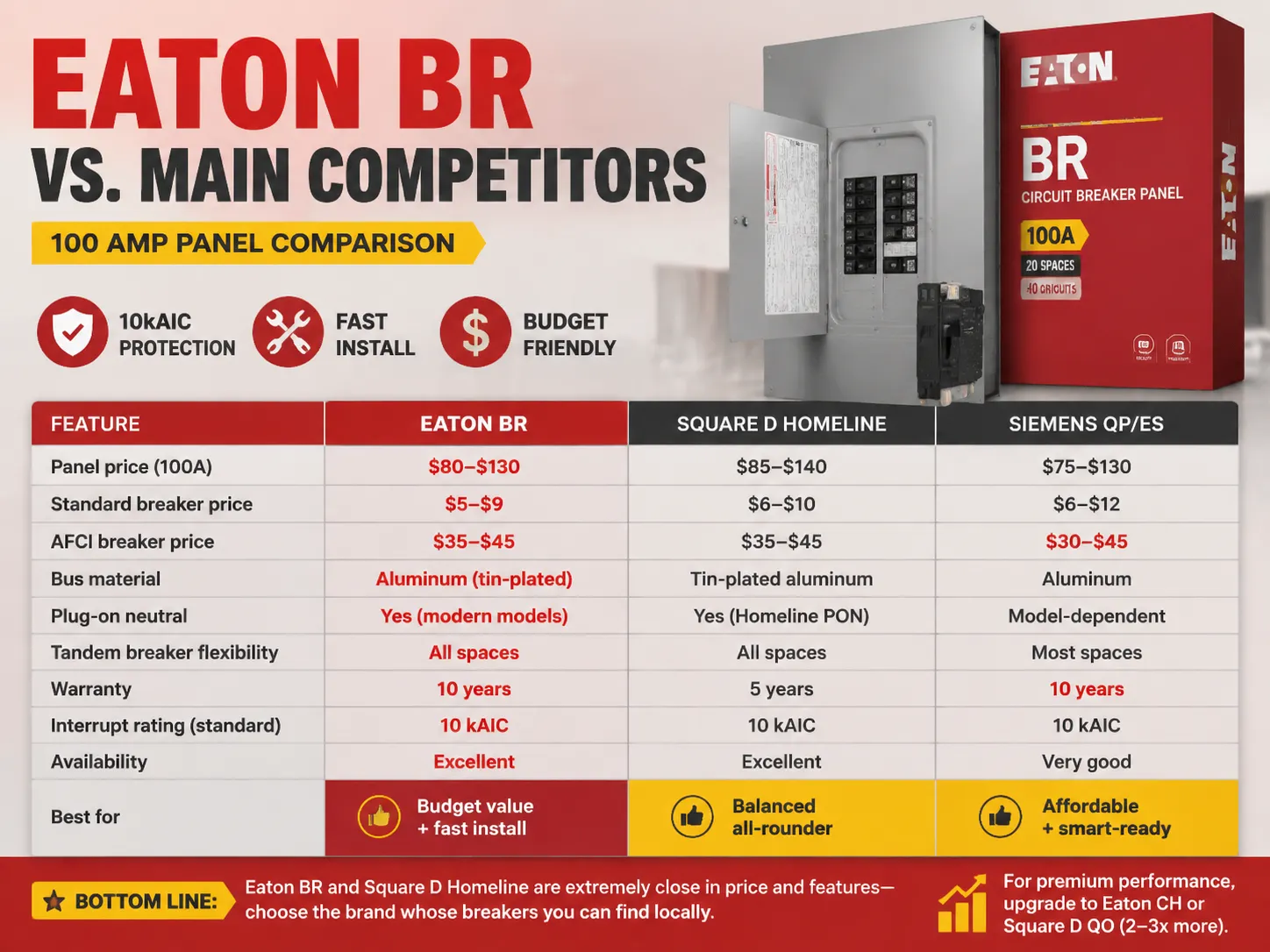
| Característica | Eaton BR | Square D Homeline | Siemens QP/ES |
|---|---|---|---|
| Preço do painel (100A) | $80–$130 | $85–$140 | $75–$130 |
| Preço do disjuntor padrão | $5–$9 | $6–$10 | $6–$12 |
| Preço do disjuntor AFCI | $35–$45 | $35–$45 | $30–$45 |
| Material do barramento | Alumínio (banhado a estanho) | Alumínio banhado a estanho | Alumínio |
| Neutro plug-on | Sim (modelos modernos) | Sim (Homeline PON) | Depende do modelo |
| Flexibilidade para disjuntor tandem | Todos os espaços | Todos os espaços | A maioria dos espaços |
| Garantia | 10 anos | 5 anos | 10 anos |
| Classificação de interrupção (padrão) | 10 kAIC | 10 kAIC | 10 kAIC |
| Disponibilidade | Excelente | Excelente | Muito boa |
| Melhor para | Valor econômico + instalação rápida | Versátil equilibrado | Acessível + pronto para smart |
Resumo dos concorrentes: Ao comparar o Eaton BR com o Square D Homeline, ambos têm preço semelhante e as mesmas características, portanto a escolha para a maioria dos clientes depende da disponibilidade de disjuntores de cada marca em suas lojas locais. A Siemens afirma ter preços mais baixos em disjuntores AFCI e recursos impressionantes de compatibilidade com casas inteligentes. Para quem procura algo mais sofisticado, as linhas Eaton CH e Square D QO podem ser uma boa opção, embora sejam 2 a 3 vezes mais caras que BR e Homeline.
Alternativas: Outros Modelos Eaton BR
Se o painel de 10–12 espaços não se encaixa no seu plano, aqui estão outras configurações Eaton BR que valem a pena considerar:
| Família do Modelo | Espaços / Circuitos | Melhor Para |
|---|---|---|
| BRP8 (8 espaços) | 8 / 16 | Subpainéis compactos, pequenas lojas |
| BRP10 (10 espaços) | 10 / 20 | Garagem padrão e oficina |
| BRP12 (12 espaços) | 12 / 24 | Melhor equilíbrio entre espaço e tamanho |
| BR2020 (20 espaços) | 20 / 20 | Lojas maiores, ampliações |
| BR3030 / BR4040 (30–40 espaços) | 30–40 / 30–40 | Serviço residencial completo de 100A (raro) |
| Versões BR 200A (BRP200) | 20–40 espaços | Atualizações completas de serviço 200A |
Para muitos trabalhos de 100 ampères, não há dúvida de que o modelo BRP12 de 12 espaços / 24 circuitos é de longe a melhor escolha, pois é suficientemente espaçoso para acomodar iluminação, tomadas e vários circuitos de 240 volts sem uso desnecessário do espaço na parede.
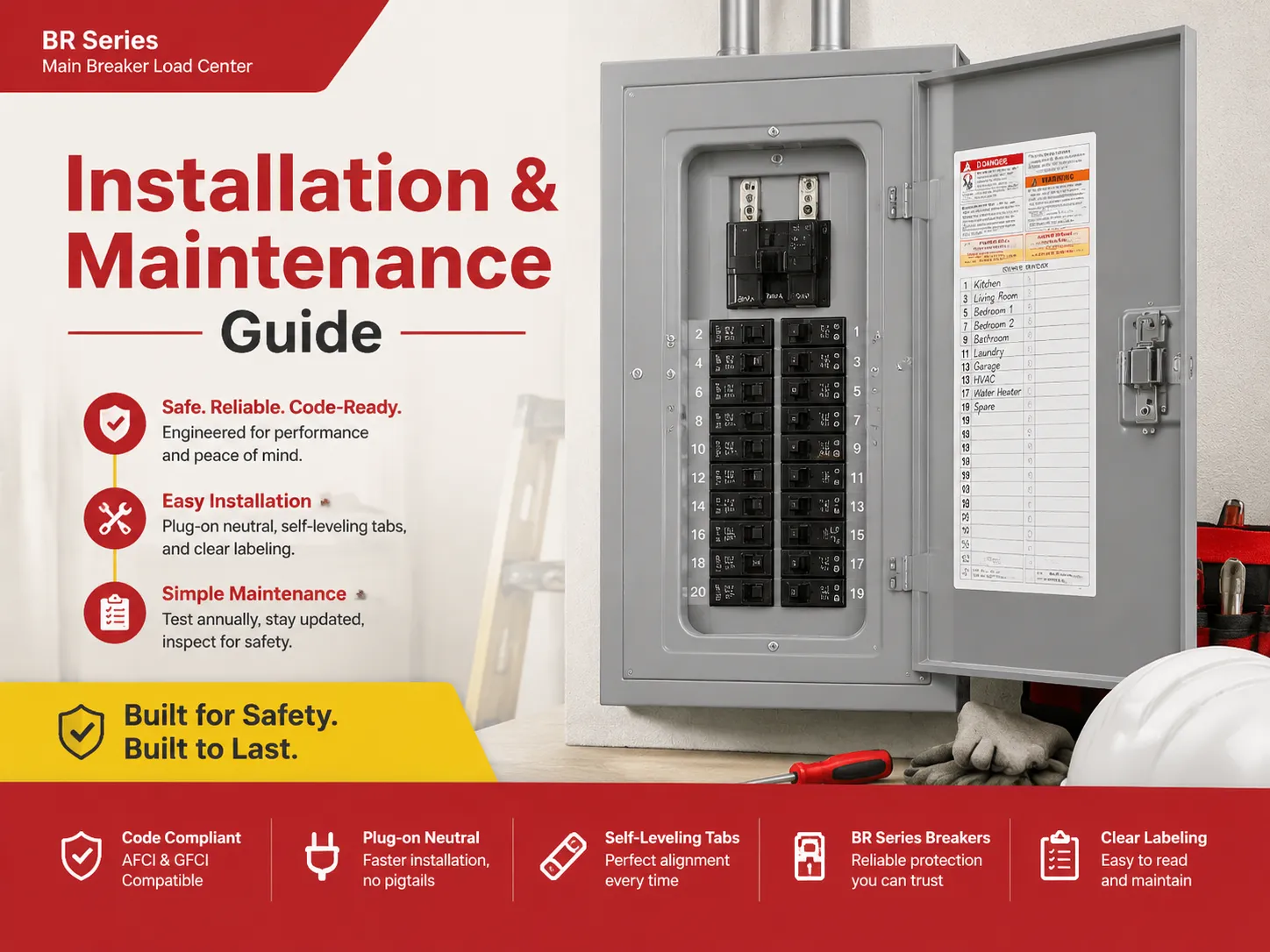
Guia de Instalação e Manutenção
Visão Geral da Instalação
- Planejamento do circuito: Faça uma lista dos circuitos ramais que você precisará e verifique quais requisitos de conformidade relacionados existem nos códigos locais de construção (requisitos AFCI para circuitos de quartos e salas, requisitos GFCI para áreas úmidas, etc.)
- Desconecte a alimentação: Lembre-se que, embora este seja um painel de disjuntores, a área não protegida está sempre energizada a menos que tenha sido separada da energia pela companhia elétrica ou por um profissional licenciado. Abra painéis de disjuntores somente quando estiverem sem energia.
- Fixe o painel na parede: Use um dos suportes tipo chave para pendurar o painel e depois fixe-o com parafusos. O sistema de auto-nivelamento ajudará a evitar discrepâncias na parede de drywall.
- Conecte os fios de serviço: Prenda os fios da rede ao terminal do disjuntor (deve ser apertado conforme as especificações, geralmente entre 25 e 50 in-lb). A bitola do fio deve variar de #6 a 1/0 AWG em fio de cobre ou alumínio.
- Conecte o fio terra e o fio neutro: De acordo com as leis locais, o fio terra e o fio neutro são ligados no painel principal e separados no subpainel.
- Adicione os disjuntores dos circuitos ramais: Os disjuntores podem ser simplesmente encaixados na barra coletora. Os módulos AFCI e GFI possuem uma saída especial que permite conectá-los diretamente sem necessidade de fiação adicional.
- Prossiga com a fiação: Cada circuito ramal deve ter fios fase, neutro e terra conectados.
- Fixe a tampa e rotule cada um dos circuitos ramais instalados usando um rotulador que atribui números automaticamente conforme a ordem de instalação dos circuitos.
- Testando o painel: Lembre-se de ligar a energia novamente e, após a energia estar ligada, certifique-se de verificar a funcionalidade de cada disjuntor usando os botões especiais nos dispositivos de teste AFCI e GFI.
Nota: Geralmente, em muitas regiões, a instalação do painel requer permissões, bem como acordos com a autoridade local. Embora o trabalho realizado no lado dos circuitos derivados do painel não exija permissão, verifique os códigos elétricos locais para detalhes.
Dicas de manutenção
- Teste anual dos disjuntores: Pressione os botões de teste AFCI/GFCI todos os anos e certifique-se de que o disjuntor desarme.
- Verifique o calor: Se a face do painel ou qualquer alavanca de disjuntor estiverem incomumente quentes, isso pode significar que há uma conexão solta — chame um eletricista.
- Atualize a legenda: Atualize o cronograma do painel toda vez que adicionar um circuito.
- Inspecione corrosão: Em ambientes úmidos, verifique os terminais, bem como o barramento, para alterações de cor durante o teste anual.
Se você estiver tentando diagnosticar a condição de um painel existente antes de substituí-lo, nosso guia sobre quanto tempo duram os painéis elétricos explica as expectativas de vida útil e os sinais de alerta que indicam a necessidade de substituição.
Perguntas Frequentes
O painel Eaton BR 100 amp é um bom painel?
Absolutamente. O painel principal Eaton BR de 100 amp é reconhecido como um dos melhores produtos de baixo custo no mercado. Ele possui um disjuntor principal de 100 amp, bem como de 10 a 12 espaços para acomodar de 20 a 24 circuitos com disjuntores duplos. Utiliza um design moderno plug-on neutral que é listado pela UL e possui um período de garantia de dez anos. O preço típico para este painel de disjuntores está entre $80 e $130. A única desvantagem em comparação com marcas mais caras como Square D QO ou Eaton CH é que ele utiliza um barramento de alumínio em vez de cobre, o que raramente é um problema para a maioria das aplicações residenciais.
Quantos disjuntores cabem em um painel Eaton BR de 100 amp?
Um painel Eaton BR padrão de 10 espaços pode aceitar no máximo 10 disjuntores de tamanho completo, ou pode utilizar disjuntores tandem que podem contar até 20 circuitos. O painel de 12 espaços pode aceitar 12 disjuntores de tamanho completo ou um máximo de 24 circuitos. A vantagem do painel BR é que ele permite o uso de disjuntores tandem e quad em todos os espaços disponíveis, aumentando efetivamente o número de circuitos sem aumento correspondente no tamanho do painel. No entanto, deve-se ter em mente que a carga total que pode ser suportada é limitada a 100 amps conforme o projeto do disjuntor principal.
Posso usar um painel Eaton BR de 100 amp como subpainel?
Definitivamente! O centro de carga Eaton BR de 100 amps pode ser usado efetivamente como um subpainel alimentado a partir do painel principal de 200 amps. Para isso, o parafuso de aterramento precisa ser removido para separar o neutro e o terra. Após isso, o disjuntor alimentador de 100 amps no painel principal deve ser conectado e os condutores alimentadores devem ser conduzidos até ele. O disjuntor principal do subpainel também atuará como ponto local de desconexão. Também é recomendado verificar os códigos locais, pois os requisitos de aterramento para subpainéis podem variar.
Qual é a diferença entre os painéis Eaton BR e CH?
Eaton BR é o que se pode descrever como a linha econômica de produtos residenciais, enquanto Eaton CH é uma linha de alta qualidade. A linha CH utiliza barramentos de COBRE, possui garantias limitadas vitalícias e características de disparo ligeiramente mais rápidas, mas custa de 2 a 3 vezes mais que a linha BR. BR, por outro lado, utiliza barramentos de alumínio (banhados a estanho em suas versões mais recentes), tem um período de garantia de 10 anos, e seu preço para painéis de 100A está dentro dos limites de $80 – $130. Para quase todas as necessidades residenciais e comerciais leves, a série BR é totalmente suficiente em termos de qualidade, sendo consideravelmente mais barata.
O painel Eaton BR de 100 ampères é compatível com disjuntores Square D?
Não, os disjuntores não são intercambiáveis entre marcas. Um painel Eaton BR necessita de disjuntores Eaton BR (ou equivalentes listados pela UL projetados para atender às especificações BR). Disjuntores Square D Homeline não podem ser usados e nunca devem ser forçados em um painel BR. O fato de que, uma vez escolhida a marca do painel, todas as futuras compras de disjuntores também devem corresponder a essa marca é uma razão para fazer uma escolha cuidadosa da marca do painel.
Referências
- Especificações do Produto Eaton BRP10B100RF — Ficha técnica oficial da Eaton para o centro de carga com disjuntor principal plug-on neutral BR 100A, incluindo dimensões, classificações e certificações.
- Catálogo do Centro de Carga Plug-On Neutral Eaton BR — Catálogo de produtos Eaton cobrindo toda a série BR, tecnologia PON e benefícios de instalação.
- Menards — Centro de Carga Eaton BRP12H100 100A — Listagem de varejo mostrando preços reais, especificações e descrições de recursos para o modelo de 12 espaços.
- NFPA 70 (Código Elétrico Nacional) — Código regulador para instalação de painéis elétricos, desconectadores de serviço e requisitos de disjuntores nos Estados Unidos.
- UL Solutions — Organismo de certificação de segurança cujos padrões UL 50 e UL 67 cobrem invólucros de centros de carga e segurança de quadros de distribuição.
- Escolhendo a Marca Certa de Painel Elétrico (2026) — Comparação independente de eletricistas entre painéis Eaton, Square D, Siemens e Leviton, incluindo referências de preço e notas de garantia.
Conclusão: Você Deve Comprar?
Com reputação como uma escolha principal, o centro de carga com disjuntor principal Eaton BR 100 ampere oferece excelente valor aos clientes. Ele fornece um painel UL listado bem construído com sua avançada tecnologia plug-on neutral, flexibilidade de expansão com disjuntores tandem, disponibilidade de disjuntores acessíveis e garantia de uma década.
Adquira se: você está instalando a fiação em sua garagem, oficina, tiny house, ADU ou subpainel, e deseja uma opção confiável sem gastar muito. O painel tem capacidade para 10-12 espaços / 20-24 circuitos, adequado para quase qualquer projeto de 100 ampere.
Evite se: você está atualizando para uma casa totalmente elétrica que requer um painel maior de 200A, reside em área costeira com alta umidade e precisa de um sistema de barramento de cobre para maior segurança (neste caso, pode optar pelo Eaton CH ou Square D QO), ou se necessita de medição inteligente integrada (Leviton é uma opção neste caso).
Para a maioria dos clientes, o painel Eaton BR 100 ampere é uma escolha inteligente, pois oferece valor pelo dinheiro e é confiável a longo prazo com manutenção anual.