

Você conecta um secador de cabelo, e a tomada do banheiro faz um clique, desligando a energia enquanto o botão “TEST” salta para fora. Ou a geladeira para de funcionar, também devido a uma tomada GFCI na cozinha. Ou você até leva um pequeno choque ao tocar na sua máquina de lavar. Esses eventos indicam uma falha de aterramento, que é um dos problemas elétricos mais frequentes e perigosos em ambientes domésticos e de trabalho. Saber o que é uma falha de aterramento, como ela ocorre e como se proteger contra ela pode até salvar sua vida.
Neste guia, o autor explicará as falhas de aterramento em terminologia simples: o que são; como ocorrem; o que as torna perigosas; como os GFCIs funcionam; como identificá-las; e como repará-las.
Em termos simples: Uma falha de aterramento pode ser definida como um caminho não intencional para a eletricidade ir de um condutor elétrico ativo para o aterramento — isso pode ser uma superfície metálica aterrada de um aparelho, canos ou a terra. Isso pode acontecer se a isolação falhar; o fio condutor tocar um corpo metálico; ou houver água que conecta a eletricidade ativa com o aterramento. Como o corpo humano também pode servir como caminho para o aterramento, é por isso que esse tipo de falha elétrica é perigoso — é devido ao fato de que, em caso de falha de aterramento, a corrente elétrica pode passar através de uma pessoa.
Falha de Aterramento em Termos Simples
Em um circuito elétrico típico, a corrente flui pelo fio, realiza seu trabalho e retorna pelo fio neutro sem ser desviada. Uma falha de aterramento ocorre quando essa corrente sai do caminho previsto e encontra seu caminho através de alguma estrutura metálica de um aparelho, água ou encanamento, ou através de um ser humano.
Em outras palavras, pense em uma mangueira de jardim onde a água normalmente flui da torneira para o aspersor. Mas quando a mangueira está rasgada, a água vaza da mangueira, e se você estiver nesse spray, ficará encharcado. Então, em um circuito elétrico, quando a corrente está vazando, como no caso da mangueira, se essa corrente passar por um humano, você receberá um choque elétrico.
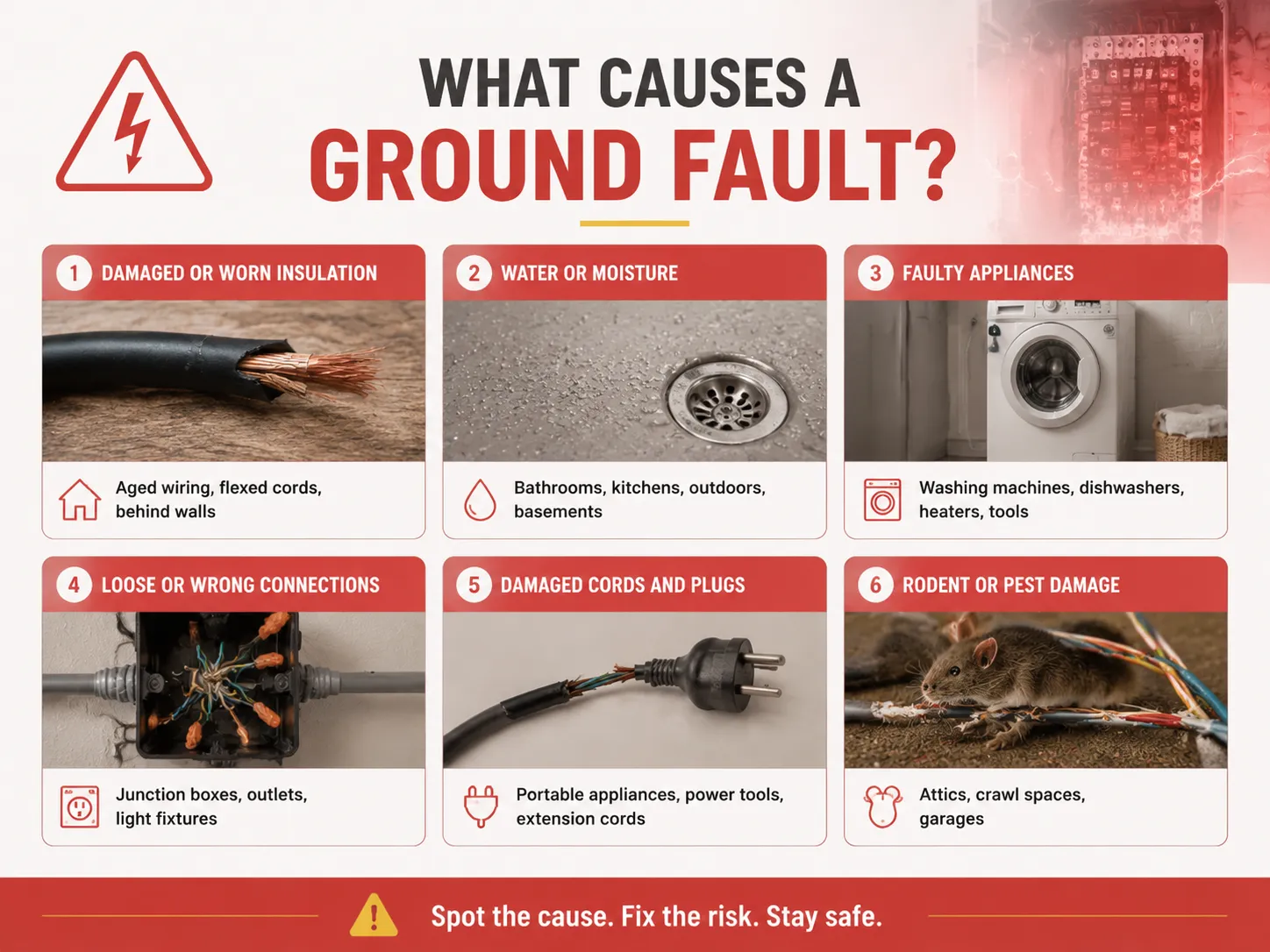
O Que Causa uma Falha de Aterramento?
As falhas de aterramento geralmente vêm de uma destas situações:
| Causa | Como Isso Acontece | Localização Típica |
|---|---|---|
| Isolação danificada ou desgastada | Isolação do cabo rachada, desgastada ou roída por roedores, expondo o fio ativo ao metal | Fiação envelhecida, cabos flexíveis, atrás das paredes |
| Água ou umidade | A água faz a ponte entre partes ativas e o aterramento; mesmo pequenas quantidades conduzem corrente suficiente para causar vazamento | Banheiros, cozinhas, áreas externas, porões |
| Aparelhos defeituosos | Fiação interna falha e toca o chassi metálico de um aparelho | Máquinas de lavar, lava-louças, aquecedores, ferramentas |
| Conexões soltas ou incorretas | Um fio ativo entra em contato com um fio de aterramento, conduíte ou caixa metálica | Caixas de junção, tomadas, luminárias |
| Cabos e plugues danificados | Cabos cortados, pinçados ou derretidos expõem condutores ativos | Aparelhos portáteis, ferramentas elétricas, extensões |
| Danos causados por roedores ou pragas | Ratos roem a isolação dos fios em sótãos e paredes | Sótãos, espaços de rastejo, garagens |
Por Que Uma Falha de Aterramento É Perigosa?
Falhas de aterramento apresentam uma ameaça por duas razões – choque e incêndio.
- Perigo de Choque: O corpo humano é um excelente condutor. Se você estiver em contato com qualquer aparelho que esteja apresentando uma falha de aterramento e estiver em contato com o solo através de condições úmidas, a corrente passará por você. A corrente pode ser tão pequena quanto 10-20 mA, o que causará contrações musculares, tornando você incapaz de soltar o objeto. A corrente pode ser de 100 mA, o que será letal. Os GFCIs são projetados para detectar falhas de aterramento tão baixas quanto 4-6 mA.
- Perigo de Incêndio: Se a corrente vazar através de material de alta resistência, calor será produzido. A falha de aterramento contínua manterá o aquecimento do material e pode causar um incêndio em um local onde não há conexão de aterramento adequada.
A parte triste é que uma falha de aterramento pode não disparar um disjuntor. Um disjuntor padrão ativa-se apenas durante sobrecarga ou curto-circuito.
Falha de Aterramento vs Curto-Circuito vs Falha de Arco
Esses três termos são confundidos, mas significam coisas diferentes:
| Termo | O Que Acontece | Exemplo | Proteção |
|---|---|---|---|
| Falha de aterramento | Corrente vaza do fio fase para o aterramento (terra, metal, água) | Fio fase toca a estrutura do aparelho | GFCI (tomada ou disjuntor) |
| Curto-circuito | Corrente vai do fio fase diretamente para o neutro sem carga | Fios fase e neutro entram em contato | Disjuntor / fusível (corrente alta) |
| Falha de arco | Faísca/arco ao longo de fiação danificada (frequentemente intermitente) | Cabo danificado na parede fazendo arco através de uma abertura | AFCI (interruptor de circuito por falha de arco) |
Uma falha de aterramento refere-se ao cenário onde a corrente faz contato e flui para o solo. Um curto-circuito ocorre quando o fio fase entra em contato com o neutro. Se houver arco elétrico, cria-se uma falha de arco. Atualmente, GFCIs, AFCIs e disjuntores estão todos sendo usados como dispositivos de proteção.
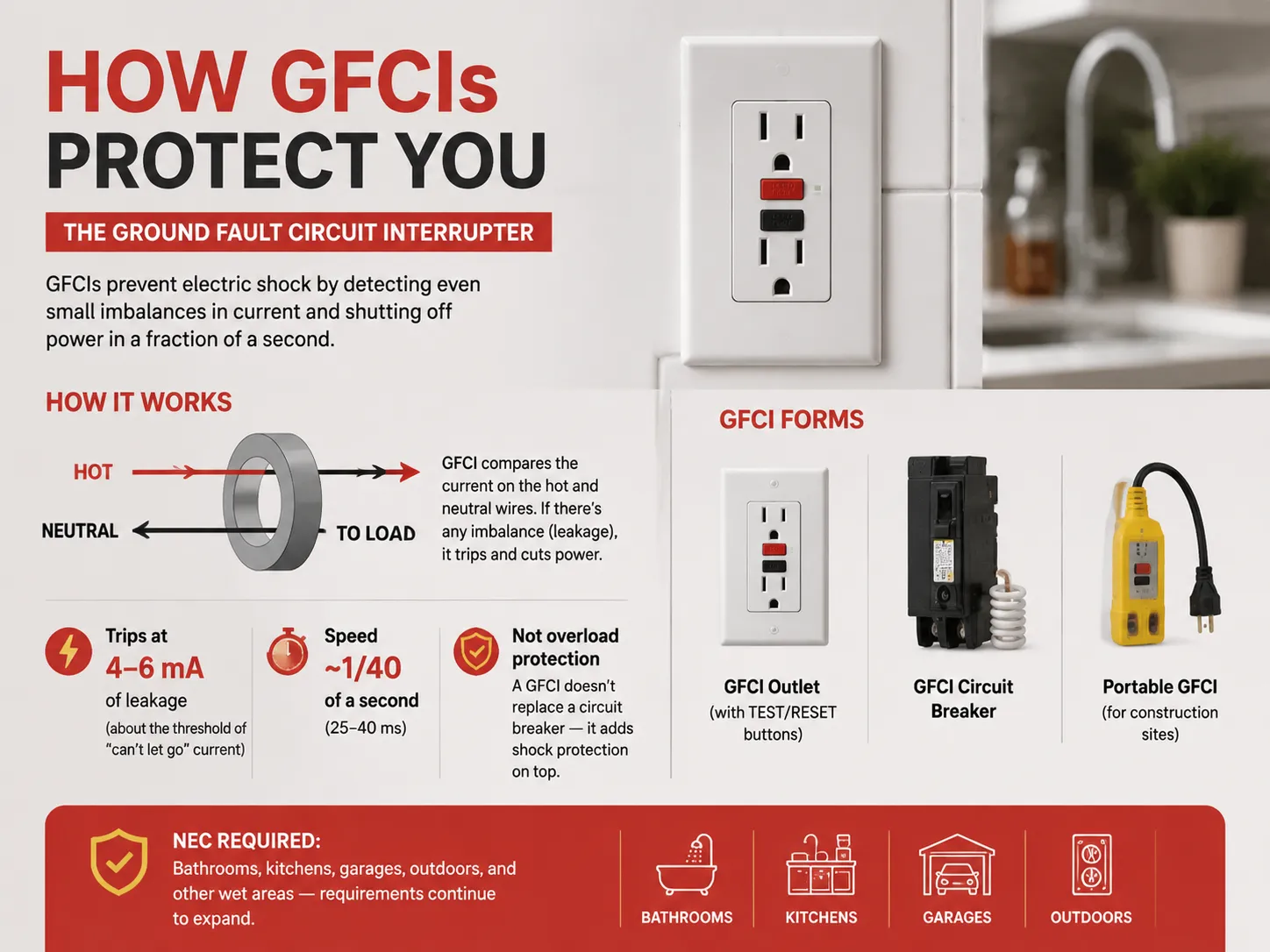
Como os GFCIs Protegem Você: O Interruptor de Circuito por Falha de Aterramento
Um Interruptor de Circuito por Falha à Terra (GFCI) é um dispositivo que previne choques elétricos fatais causados por riscos de falha à terra. O princípio de funcionamento é bastante simples: a corrente que flui pelo fio quente é igual à que retorna pelo neutro. O GFCI utiliza seu transformador de corrente interno para comparar ambas as correntes e, caso haja um desequilíbrio, detectar que há uma fuga em algum ponto do circuito.
- Desarma em: 4–6 mA de fuga (o limiar crítico onde as pessoas levam choque)
- Velocidade: ~1/40 de segundo (25 a 40 milissegundos)
- Formas: tomada GFCI, disjuntor e GFCIs portáteis para canteiros de obras
- Não é proteção contra sobrecarga: O GFCI não substitui a função de um disjuntor
Portanto, seguir as normas para proteção contra falha à terra é muito importante porque o Código Elétrico Nacional (NEC) exige proteção contra falha à terra há anos. Para entender as normas e como os GFCIs são projetados, nosso estudo aprofundado sobre o significado completo de GFCI e como ele funciona cobre o dispositivo em detalhes, nossa comparação entre disjuntores vs GFCIs mostra onde cada um pertence no seu sistema, e se você está adquirindo hardware de proteção, a série VR-11 RCCB é um exemplo típico de como a proteção por corrente residual é incorporada em formatos modernos de disjuntores.
Onde os GFCIs são exigidos
A proteção contra falha à terra é necessária sempre que houver risco de choques, o que ocorre principalmente perto da água, ao ar livre ou quando as pessoas estão em contato com superfícies aterradas. Áreas comuns exigidas pelo código elétrico moderno incluem:
- Banheiros (todas as tomadas)
- Tomadas na bancada da cozinha (dentro de 6 pés da pia)
- Garagem e porão não acabado
- Tomadas externas
- Espaço rastejante e áreas não acabadas
- Lavanderia / pia de serviço
- Área da piscina, spa e banheira de hidromassagem
- Certos aparelhos (circuito para lava-louças e triturador de lixo)
É possível instalar GFCIs em casas antigas sem Interruptores de Circuito por Falha à Terra (GFCI) e isso requer apenas que a primeira tomada do circuito atual seja substituída por uma tomada GFCI — protegendo assim todos os dispositivos conectados a esse circuito contra um possível choque.
Como Saber Se Você Tem Uma Falha à Terra
Falhas à terra podem se manifestar de várias formas, portanto, é importante estar atento a esses sinais. Ao avaliar falhas à terra, preste atenção ao seguinte:
- Se o GFCI continuar desarmando: Se um GFCI não resetar ou continuar desarmando, isso normalmente indica que há uma falha à terra na linha.
- Se você receber um choque: Se houver qualquer forma de choque de máquinas ou estruturas metálicas, isso é um indicativo de perigo.
- Se um disjuntor desarmar: Se o disjuntor desarmar sem motivo aparente, isso é uma preocupação principalmente (especialmente com GFCI).
- Se houver um zumbido próximo às tomadas: Felicidade e equipamentos associados à paz e tranquilidade.
- Se houver cheiro de fio queimado próximo a uma tomada, interruptor ou máquina: Isso indica aquecimento por corrente devido a fuga de corrente.
- Se você perceber que a parte externa da máquina está quente: Você sentirá vibrações ou choques ao trabalhar no equipamento.
Se algum dos itens acima ocorrer, pare de usar este dispositivo imediatamente e verifique-o sem demora.
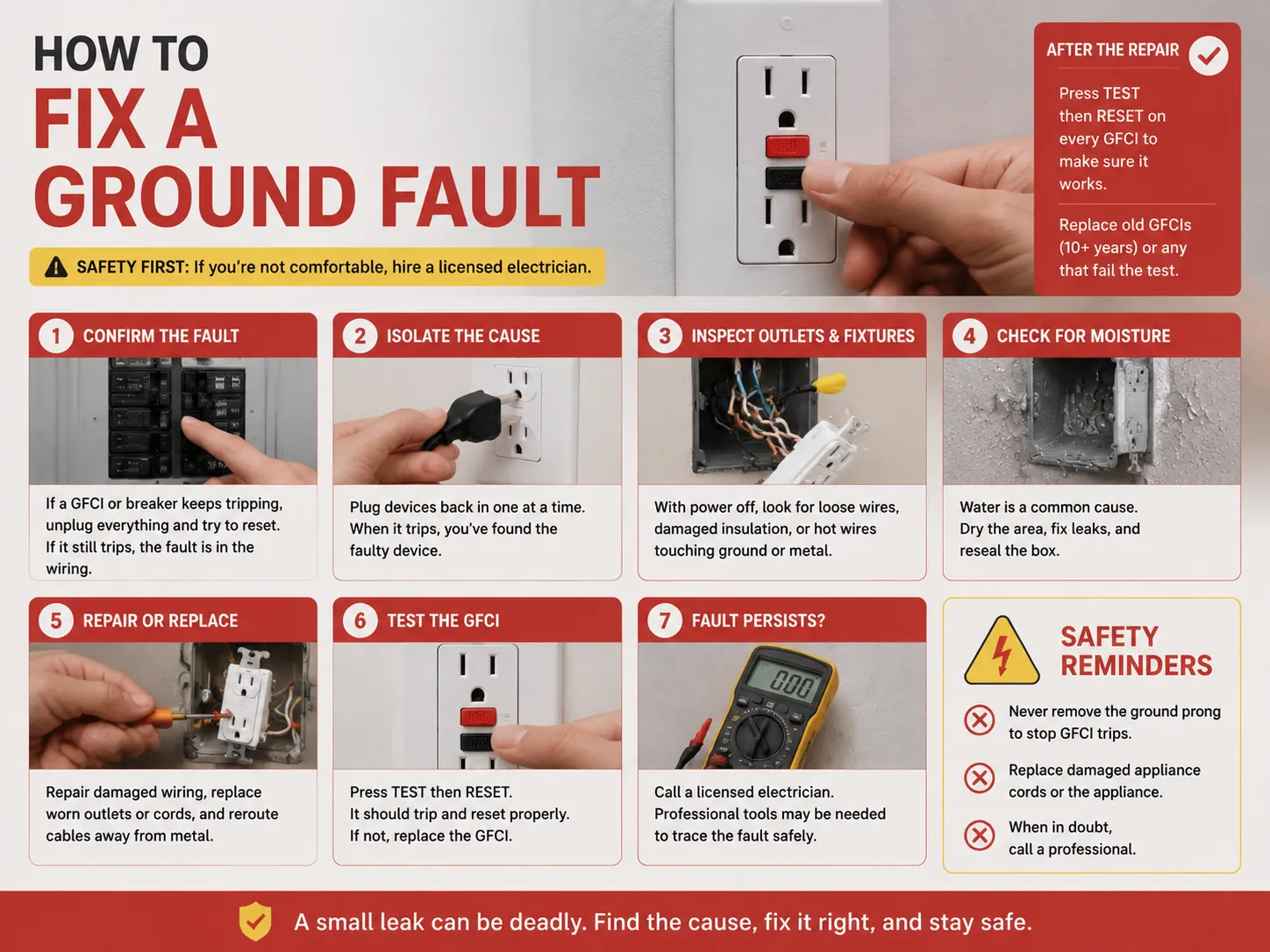
Como Corrigir uma Falha de Terra
Corrigir uma falha de terra é um processo metódico, e o trabalho elétrico pode ser perigoso—se você não tiver certeza, chame um eletricista qualificado. Os passos gerais são os seguintes:
- Determine a falha: Se o GFCI ou disjuntor continuar desarmando, o problema está nesse circuito. Desconecte tudo do circuito e reinicie para ver se ainda desarma. Se não desarmar, então há um problema dentro do próprio circuito; se desarmar, a falha está na fiação fixa.
- Encontre a falha por raciocínio dedutivo: Conecte os dispositivos um a um para identificar qual causa o desarme do GFCI.
- Examine as tomadas e instalações: Desligue a energia do painel, abra a caixa da tomada e inspecione por fios soltos, isolamento danificado, fios quentes, fios de aterramento ou danos por umidade.
- Procure por umidade: A água é a principal causa de falhas de terra em banheiros, cozinhas, porões e áreas externas. Seque a caixa, repare o vazamento e faça nova vedação.
- Faça o reparo: Resolva o problema em si, seja reparando a fita isolante, substituindo tomadas ou trocando fios desgastados.
- Teste o GFCI: O GFCI deve estar funcionando agora. Pressione TEST e RESET em cada unidade para garantir que estão operando corretamente. Se você tiver um GFCI antigo (mais de 10 anos) ou que não testar corretamente, é hora de instalar um novo.
- Contate um eletricista qualificado se o problema persistir. Uma falha de terra constante na fiação fixa pode exigir o uso de multímetro ou megômetro para localizar o problema—ferramentas altamente técnicas que requerem um profissional para operar corretamente.
Se o problema for causado por um aparelho defeituoso, não tente apenas reparar o fio—substitua o aparelho. Nunca corte o pino de aterramento de um aparelho como forma de corrigir um problema no GFCI, pois isso elimina sua margem de segurança.
Como Prevenir Falhas de Terra
Instale GFCIs em todas as áreas úmidas ou externas — este passo simples é a melhor proteção que você pode ter.
- Mantenha a água longe da eletricidade: Não use máquinas próximas a pias ou banheiras; não deixe fios sobre pisos molhados; e use apenas tomadas e tampas apropriadas para áreas externas.
- Verifique regularmente os cabos: Substitua os fios assim que notar rachaduras ou sinais de mordidas por animais.
- Evite sobrecarregar os circuitos: O superaquecimento causa danos ao isolamento e outras falhas.
- Use dispositivos adequados para uso externo: equipamentos à prova de intempéries, tomadas externas protegidas por GFCI, GFCI portátil para ferramentas.
- Proteja a fiação contra pragas e danos físicos: vede todas as aberturas por onde roedores possam entrar e não passe fios por baixo de tapetes ou em aberturas de portas.
- Teste os GFCIs mensalmente: pressione TEST – ele deve desarmar; pressione RESET – ele deve restaurar.
Perguntas Frequentes
Como você corrige uma falha de terra?
A primeira coisa a fazer é confirmar que tudo no circuito está desligado, e então tentar resetar o interruptor de circuito por falha à terra (GFCI) ou disjuntor. Se o circuito ainda estiver energizado, conecte os aparelhos um de cada vez — quando disparar, você saberá qual aparelho está causando o problema. Se mesmo com tudo desligado o circuito disparar, o problema está na fiação fixa: desligue a alimentação do circuito, abra as caixas de interruptores e/ou tomadas, e verifique conexões defeituosas ou quaisquer fios que estejam permitindo que a eletricidade toque outro fio ou caixa metálica. Corrija o problema e teste o circuito. Se os problemas persistirem, chame um eletricista.
O que é uma falha à terra em termos simples?
Simplificando, uma falha à terra ocorre quando a eletricidade sai do caminho e acaba na terra. Normalmente, o fluxo de eletricidade vai da linha de energia para a linha neutra. Uma falha à terra ocorre quando a eletricidade encontra outro caminho para a terra através de um fio rompido tocando um dispositivo metálico, através da água ou através de uma pessoa. Isso é perigoso porque uma pessoa pode conduzir a eletricidade. Um dispositivo GFCI detecta esse vazamento em um nível muito baixo de 4 a 6 miliamperes e corta a corrente imediatamente antes que um choque grave aconteça.
Como saber se você tem uma falha à terra?
As indicações de uma falha à terra são as seguintes: uma tomada GFCI dispara repetidamente ou não pode ser resetada; um disjuntor é ativado sem causa visível; um aparelho causa sensação de formigamento ou choque leve; pode-se ouvir zumbido ou estalos em uma tomada; é detectado odor desagradável; ou a superfície de um aparelho causa desconforto. Se seu aparelho tem proteção GFCI, ele será o primeiro indicador.
O que causa uma falha à terra?
As razões pelas quais isso ocorre com mais frequência são: isolamento do fio quebrado ou danificado (por exemplo, rachado, desgastado ou roído por roedores), água tocando fios energizados e aterrando-os (por exemplo, em banheiros, cozinhas, ao ar livre), fiação incorreta em aparelhos e corpos metálicos tocando seus fios, conexões soltas ou incorretas, ou fiação ou plugues danificados. Em outras palavras: qualquer situação em que fios energizados possam entrar em contato com a terra.
Referências
- NFPA 70 — Código Elétrico Nacional (NEC), Artigo 210.8: requisitos para GFCI
- UL 943 — Norma para Interruptores de Circuito por Falha à Terra
- OSHA — requisitos de segurança elétrica e proteção contra falha à terra (29 CFR 1926.404)
- Comissão de Segurança de Produtos de Consumo dos EUA — orientações de segurança elétrica
- Fundação Internacional de Segurança Elétrica — recursos de segurança para GFCI e falha à terra
- Siemens — documentação técnica de proteção contra falha à terra
Conclusão
Falha à terra é um fluxo indesejado de corrente de um fio energizado para a terra e é um dos problemas elétricos mais graves. Essa situação ocorre quando há isolamento defeituoso, água, aparelho com mau funcionamento ou conexão solta. Essa situação é perigosa porque mesmo um pequeno vazamento de 30 mA pode matar uma pessoa e não é detectado por um disjuntor comum.
Os GFCIs são usados para resolver esse problema, pois esses dispositivos podem detectar vazamentos na faixa de 4 a 6 mA e interromper o fluxo de eletricidade em apenas 1/40 de segundo. Assim, os GFCIs são exigidos pelos códigos de construção em todos os lugares onde pessoas e água interagem.
É importante aprender os sintomas da falha de aterramento e testar os GFCIs todo mês. Certifique-se de que os cabos e fios sejam inspecionados regularmente também. E quando você estiver construindo ou atualizando um sistema, escolha dispositivos de proteção de fabricantes que atendam às normas relevantes. HUYU Global fabrica RCCBs, RCBOs e MCBs certificados construídos segundo as normas IEC — o tipo de proteção contra corrente residual e sobrecorrente que funciona junto com os GFCIs para manter os circuitos seguros. Para entender a diferença entre dispositivos de corrente residual e disjuntores, nosso Guia RCCB vs RCBO é uma boa leitura complementar.