

Вы подключаете фен, и розетка в ванной щелкает, отключая питание, при этом кнопка “TEST” выскакивает. Или холодильник перестает работать, также из-за розетки GFCI на кухне. Или вы даже получаете небольшой удар током при прикосновении к стиральной машине. Эти события указывают на наличие замыкания на землю, которое является одной из наиболее часто встречающихся и опасных электрических проблем в бытовой и рабочей среде. Знание того, что такое замыкание на землю, как оно происходит и как защититься от него, может даже спасти вашу жизнь.
В этом руководстве автор объяснит замыкания на землю простыми терминами: что это такое; как они происходят; почему они опасны; как работают GFCI; как их определить; и как их ремонтировать.
Проще говоря: замыкание на землю можно определить как непреднамеренный путь для электричества от активного проводника к земле — это может быть заземленная металлическая поверхность прибора, трубы или земля. Это может произойти, если изоляция повреждена; токоведущий провод касается металлического корпуса; или присутствует вода, которая соединяет активное электричество с землей. Поскольку тело человека также может служить путем к земле, именно поэтому этот вид электрической неисправности опасен — из-за того, что при замыкании на землю электрический ток может проходить через человека.
Замыкание на землю простыми словами
В типичной электрической цепи ток течет по проводу, выполняет свою работу и возвращается обратно по нейтральному проводу без сбоев. Замыкание на землю — это ситуация, когда ток уходит не туда, куда должен, и находит путь через металлический каркас прибора, воду или сантехнику, либо через человека.
Другими словами, представьте садовый шланг, по которому вода обычно течет от крана к разбрызгивателю. Но когда шланг порван, вода вытекает из него, и если вы попадаете под этот поток, вы промокаете. Так и в электрической цепи, когда ток протекает утечкой, как в случае с порванным шлангом, если этот ток проходит через человека, вы получите электрический удар.
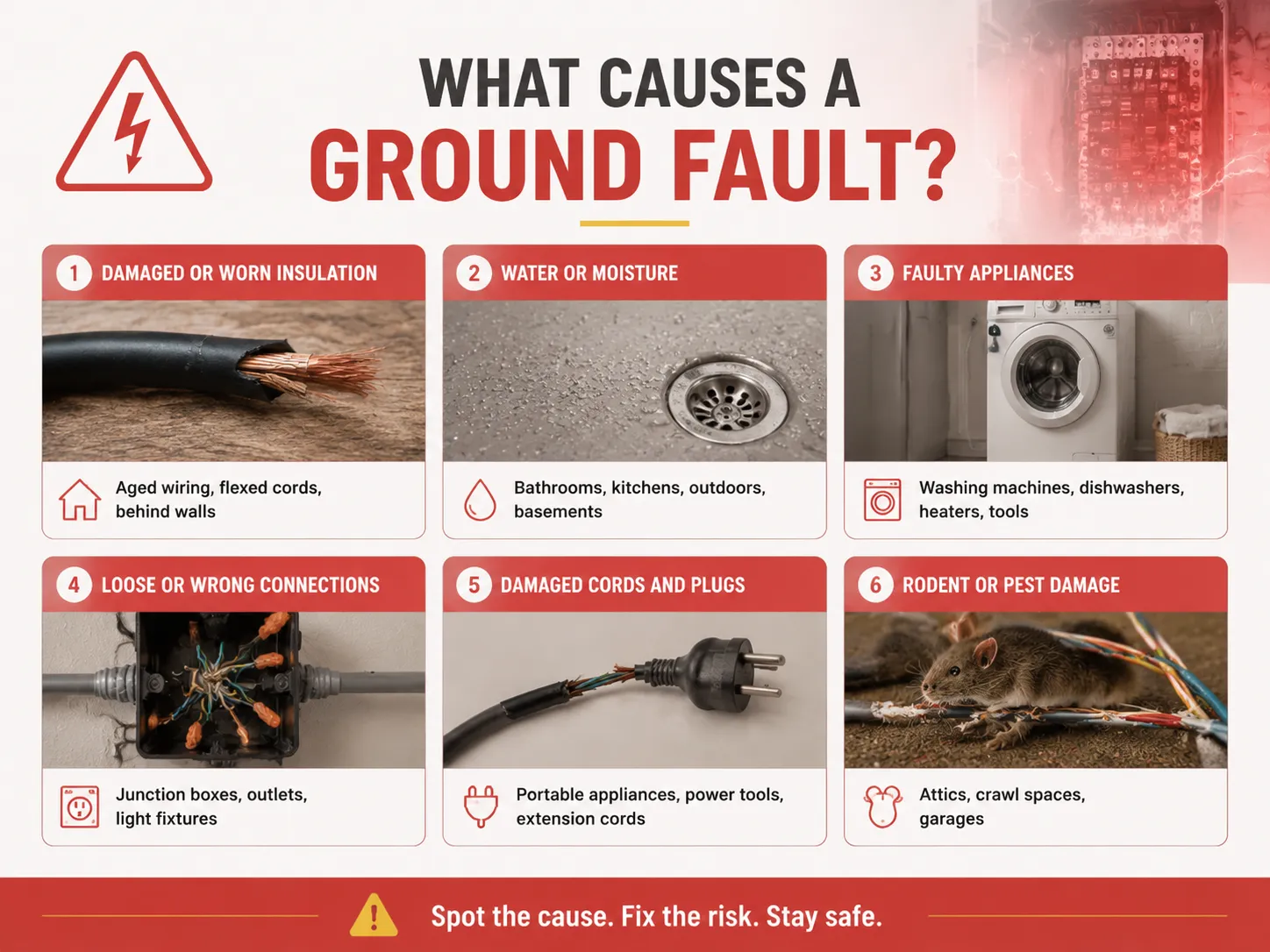
Что вызывает замыкание на землю?
Замыкания на землю обычно возникают в одной из следующих ситуаций:
| Причина | Как это происходит | Типичное место |
|---|---|---|
| Поврежденная или изношенная изоляция | Трещины, истирание или повреждение изоляции кабеля грызунами, обнажающее активный провод к металлу | Стареющая проводка, гибкие шнуры, за стенами |
| Вода или влага | Вода образует мост между активными частями и землей; даже небольшое количество проводит достаточно тока для утечки | Ванные комнаты, кухни, улица, подвалы |
| Неисправные приборы | Внутренняя проводка выходит из строя и касается металлического корпуса прибора | Стиральные машины, посудомоечные машины, обогреватели, инструменты |
| Ослабленные или неправильные соединения | Активный провод касается заземляющего провода, трубопровода или металлической коробки | Распределительные коробки, розетки, светильники |
| Поврежденные шнуры и вилки | Перерезанные, защемленные или расплавленные шнуры обнажают активные проводники | Портативные приборы, электроинструменты, удлинители |
| Повреждение грызунами или вредителями | Мыши грызут изоляцию проводов на чердаках и в стенах | Чердаки, подполья, гаражи |
Почему замыкание на землю опасно?
Замыкания на землю представляют угрозу по двум причинам – поражение электрическим током и пожар.
- Опасность поражения током: человеческое тело является отличным проводником. Если вы контактируете с любым прибором, у которого произошло замыкание на землю, и при этом вы находитесь в контакте с землей через влажные условия, ток пройдет через вас. Ток может быть всего 10-20 мА, что вызовет сокращение мышц и сделает невозможным разжать хватку. Ток в 100 мА может быть смертельным. УЗО (GFCI) предназначены для обнаружения замыканий на землю с током утечки всего 4-6 мА.
- Опасность пожара: если ток протекает через материал с высоким сопротивлением, выделяется тепло. Продолжающееся замыкание на землю будет нагревать материал и может вызвать пожар в месте, где отсутствует надлежащий заземляющий контакт.
Печально, что замыкание на землю может не сработать на автоматическом выключателе. Стандартный автоматический выключатель срабатывает только при перегрузке или коротком замыкании.
Замыкание на землю против короткого замыкания против дугового замыкания
Эти три термина часто путают, но они означают разные вещи:
| Термин | Что происходит | Пример | Защита |
|---|---|---|---|
| Замыкание на землю | Ток протекает от фазы к земле (земля, металл, вода) | Фазный провод касается корпуса прибора | УЗО (розетка или автомат) |
| Короткое замыкание | Ток идет от фазы напрямую к нулю без нагрузки | Фазный и нулевой провода касаются друг друга | Автоматический выключатель / предохранитель (высокий ток) |
| Дуговое замыкание | Искрение/дуговой разряд вдоль поврежденной проводки (часто прерывистый) | Поврежденный кабель в стене искрит через зазор | AFCI (устройство защиты от дуговых замыканий) |
Замыкание на землю — это ситуация, когда ток контактирует и течет на землю. Короткое замыкание происходит, когда фаза контактирует с нулем. Если возникает искрение электричества, это дуговое замыкание. В настоящее время для защиты используются УЗО (GFCI), AFCI и автоматические выключатели.
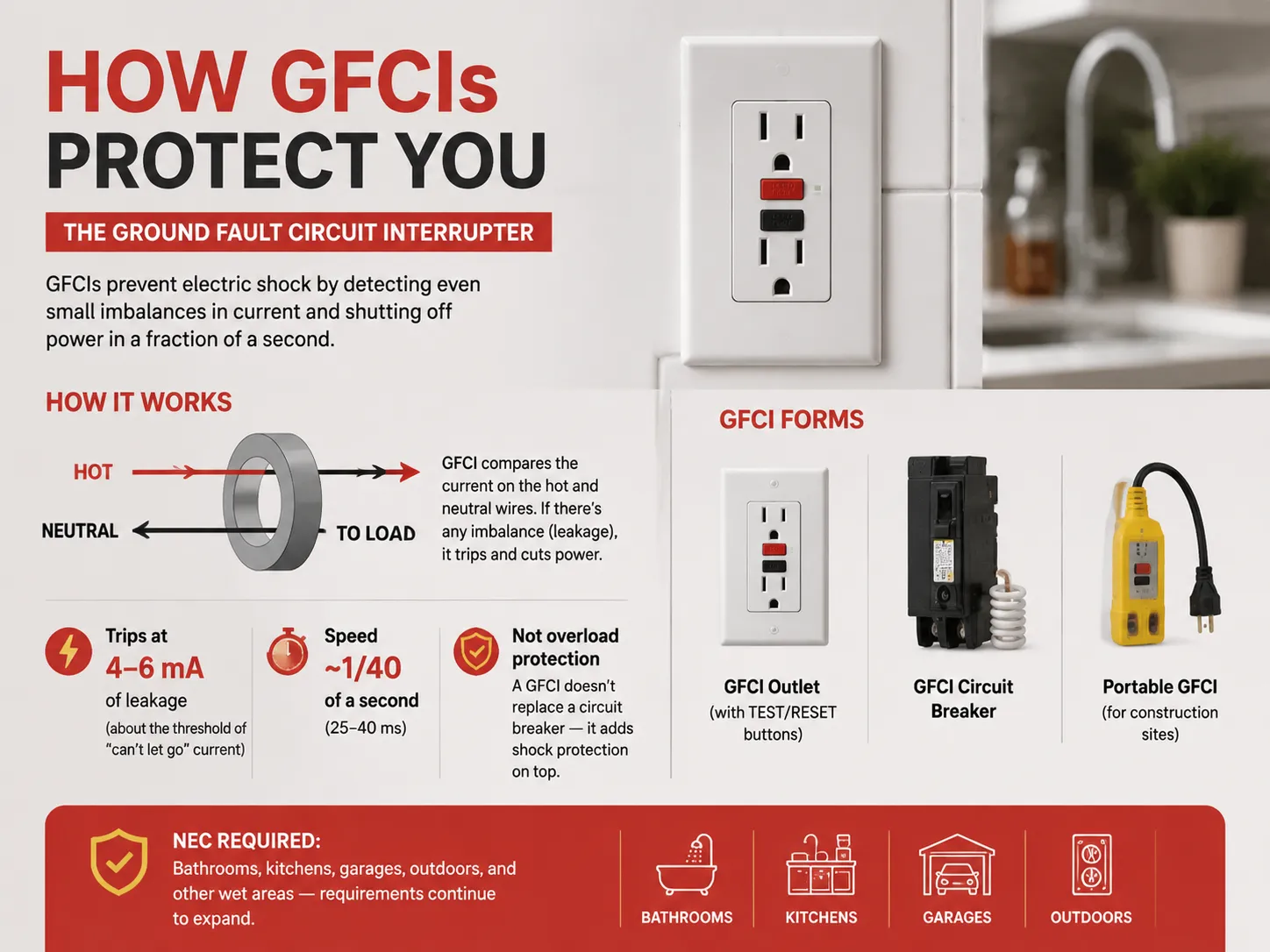
Как УЗО защищают вас: устройство защитного отключения (Ground Fault Circuit Interrupter)
Устройство защитного отключения (УЗО) — это устройство, предотвращающее смертельные электрические удары, вызванные замыканиями на землю. Принцип работы достаточно прост: ток, протекающий по фазному проводу, равен току, возвращающемуся по нейтрали. УЗО использует внутренний трансформатор тока для сравнения обоих токов и, при обнаружении дисбаланса, фиксирует утечку в цепи.
- Срабатывание при: 4–6 мА утечки (критический порог, при котором происходит поражение человека электрическим током)
- Скорость: ~1/40 секунды (25–40 миллисекунд)
- Формы: розетка с УЗО, автоматический выключатель и переносные УЗО для строительных площадок
- Не является защитой от перегрузки: УЗО не заменяет функцию автоматического выключателя
Поэтому соблюдение стандартов защиты от замыканий на землю крайне важно, поскольку Национальный электротехнический кодекс (NEC) требует защиту от замыканий на землю уже много лет. Чтобы понять стандарты и принцип работы УЗО, наш подробный обзор полного названия УЗО и его принципа работы подробно рассматривает устройство, а наше сравнение автоматических выключателей и УЗО показывает, где каждое из них применяется в вашей системе, а если вы подбираете защитное оборудование, то серия VR-11 RCCB является типичным примером того, как защита по остаточному току встроена в современные форм-факторы автоматических выключателей.
Где требуется установка GFCI
Защита от замыканий на землю необходима всегда, когда существует риск поражения током, что происходит преимущественно вблизи воды, на открытом воздухе или при контакте людей с заземленными поверхностями. Общие зоны, требуемые современным электротехническим кодексом, включают:
- Ванные комнаты (все розетки)
- Розетки на кухонной столешнице (в пределах 6 футов от раковины)
- Гараж и неотделанный подвал
- Наружные розетки
- Подпольные и неотделанные помещения
- Прачечная / хозяйственная раковина
- Зона бассейна, спа и гидромассажной ванны
- Определённые приборы (цепь для посудомоечной машины и измельчителя отходов)
Возможно установить УЗО в старых домах без устройств защитного отключения, для этого достаточно заменить первую розетку в цепи на розетку с УЗО — таким образом защищая все устройства, подключённые к этой цепи, от возможного поражения током.
Как определить наличие замыкания на землю
Замыкания на землю могут проявляться по-разному, поэтому важно обращать внимание на эти признаки. При оценке замыканий на землю обратите внимание на следующее:
- Если УЗО постоянно срабатывает: Если УЗО не сбрасывается или продолжает срабатывать, это обычно указывает на наличие замыкания на землю в цепи.
- Если вы получили удар током: Любая форма удара от машин или металлических рам свидетельствует об опасности.
- Если срабатывает автоматический выключатель: Если автоматический выключатель срабатывает без видимой причины, это вызывает беспокойство (особенно в случае с УЗО).
- Если возле розеток слышен жужжащий звук: Это может указывать на неисправность и требует внимания.
- Если ощущается запах горелой проводки рядом с розеткой, выключателем или машиной: Это признак нагрева проводки из-за утечки тока.
- Если корпус машины кажется горячим на ощупь: Вы можете ощущать вибрации или удары при работе с оборудованием.
Если происходит любое из вышеуказанного, немедленно прекратите использование этого устройства и сразу же проверьте его.
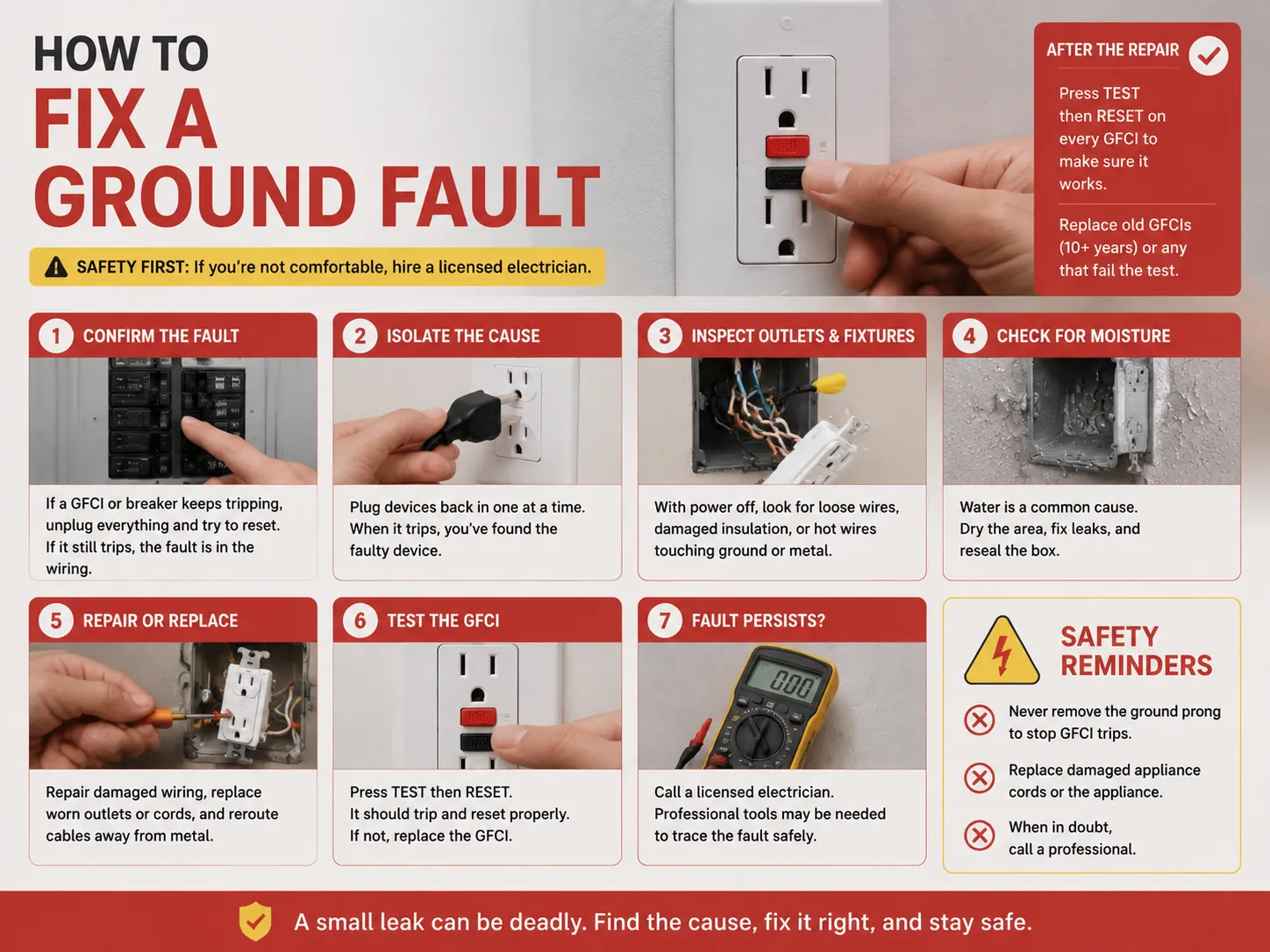
Как устранить замыкание на землю
Исправление замыкания на землю — это методичный процесс, и электромонтажные работы могут быть опасны — если вы не уверены в своих силах, вызовите квалифицированного электрика. Общие шаги следующие:
- Определите неисправность: если GFCI или автоматический выключатель постоянно срабатывает, проблема в этой цепи. Отключите все устройства от цепи и сбросьте автомат, чтобы проверить, сработает ли он снова. Если он не срабатывает, значит проблема в самой цепи; если срабатывает, неисправность в фиксированной проводке.
- Найдите неисправность методом дедукции: подключайте устройства по одному, чтобы определить, какое из них вызывает срабатывание GFCI.
- Проверьте розетки и приборы: отключите питание панели, откройте коробку розетки и осмотрите её на предмет ослабленных проводов, повреждённой изоляции, нагретых проводов, заземляющих проводов или повреждений от влаги.
- Проверьте наличие влаги: вода является основной причиной замыканий на землю в ванных комнатах, кухнях, подвалах и на улице. Высушите коробку, устраните протечку и заново герметизируйте её.
- Выполните ремонт: устраните саму проблему, будь то ремонт изоляционной ленты, замена розеток или замена изношенных проводов.
- Проверьте GFCI: теперь GFCI должен работать. Нажмите TEST и RESET на каждом устройстве GFCI, чтобы убедиться в их правильной работе. Если у вас старый GFCI (старше 10 лет) или устройство не проходит тест, пора установить новое.
- Обратитесь к квалифицированному электрику, если проблема сохраняется. Постоянное замыкание на землю в фиксированной проводке может потребовать использования мультиметра или мегомметра для поиска неисправности — это высокотехнические инструменты, требующие профессионального обращения.
Если проблема вызвана неисправным прибором, не пытайтесь просто ремонтировать провод — замените прибор. Никогда не обрезайте заземляющий контакт у прибора как способ решения проблемы с GFCI, так как это устранит вашу защиту.
Как предотвратить замыкания на землю
Устанавливайте GFCI во всех влажных и наружных зонах — этот простой шаг является лучшей защитой.
- Держите воду подальше от электричества: не используйте приборы возле раковин или ванн; не позволяйте проводам лежать на влажных полах; используйте только соответствующие наружные розетки и крышки.
- Регулярно проверяйте шнуры: заменяйте провода при появлении трещин или если их повредили животные.
- Избегайте перегрузки цепей: перегрев вызывает повреждение изоляции и другие неисправности.
- Используйте подходящие устройства для наружного применения: влагозащищённое оборудование, наружные розетки с защитой GFCI, переносные GFCI для инструментов.
- Защищайте проводку от вредителей и механических повреждений: герметизируйте все отверстия, через которые могут проникнуть грызуны, и не прокладывайте провода под коврами и через дверные проёмы.
- Тестируйте GFCI каждый месяц: нажмите TEST — устройство должно сработать; нажмите RESET — устройство должно восстановить работу.
Часто задаваемые вопросы
Как исправить замыкание на землю?
The first thing to do is confirm that everything on the circuit is unplugged, and then try resetting the ground fault circuit interrupter (GFCI) or circuit breaker. If the circuit is still live, plug in the appliances one at a time — when it trips, you will know which appliance is causing the problem. If even with everything unplugged the circuit trips, the problem lies in the fixed wiring: turn off power supply to the circuit, open the switches and/or outlet boxes, and check for faulty connections or any wires that are allowing electricity to touch any other wire or metal box. Fix the issue and test the circuit. If problems persist, call an electrician.
What is a ground fault in simple terms?
To put it simply, a ground fault is when electricity goes off course and ends up in the ground. Normally, the flow of electricity goes from the power line to the neutral line. A ground fault occurs when the electricity finds another way to the ground through a broken wire touching a metal device, through water, or through a person. This is dangerous because a person can conduct the electricity. A GFCI device detects such leak at a very low level of 4 to 6 milliamperes and cuts off the current immediately before a serious shock happens.
How do you know if you have a ground fault?
The indications of a ground fault are as follows: a GFCI socket does trip time and again or cannot be reset; a circuit breaker is activated without visible cause; an appliance causes you to feel a tingling or minor shock; humming or crackling can be heard from an outlet; an offensive odor is detected; or the surface of an appliance makes you feel uncomfortable. If your appliance has GFIC protection, it will be the first indicator.
What causes a ground fault?
The reasons that this occurs most often are: wire insulation that has broken or been damaged (for example, cracked, worn, or eaten by rodents), water touching live wires and grounding them (for instance, in bathrooms, kitchens, open air), wrong wiring in appliances and metal bodies touching their wires, loose or incorrect connections, or damaged wiring or plugs. In other words: any situation in which live wires may come into contact with the ground.
Ссылки
- NFPA 70 — National Electrical Code (NEC), Article 210.8: GFCI requirements
- UL 943 — Standard for Ground-Fault Circuit-Interrupters
- OSHA — electrical safety and ground fault protection requirements (29 CFR 1926.404)
- U.S. Consumer Product Safety Commission — electrical safety guidance
- Electrical Safety Foundation International — GFCI and ground fault safety resources
- Siemens — ground fault protection technical documentation
Заключение
Ground fault is an undesirable current flow from a live wire to the ground and is one of the most serious electrical problems. This situation occurs when there is faulty insulation, water, a malfunctioning appliance, or loose connection. This situation is dangerous because even a small leak of 30 mA can kill a person and is not detected by a regular circuit breaker.
GFCIs are used to solve the issue here since these devices can detect leaks in a range of 4 to 6 mA and interrupt the flow of electricity in just 1/40 of a second. Thus GFCIs are required by the building codes everywhere where people and water interact.
It is important to learn the symptoms of the ground fault and test the GFCIs every month. Make sure the cables and wires are inspected regularly as well.And when you’re building or upgrading a system, choose protection devices from manufacturers that meet the relevant standards. HUYU Global manufactures certified RCCBs, RCBOs, and MCBs built to IEC standards — the kind of residual-current and overcurrent protection that works alongside GFCIs to keep circuits safe. For the difference between residual current devices and breakers, our Руководство по УЗО и дифференциальным автоматам (RCCB vs RCBO) is a good next read.