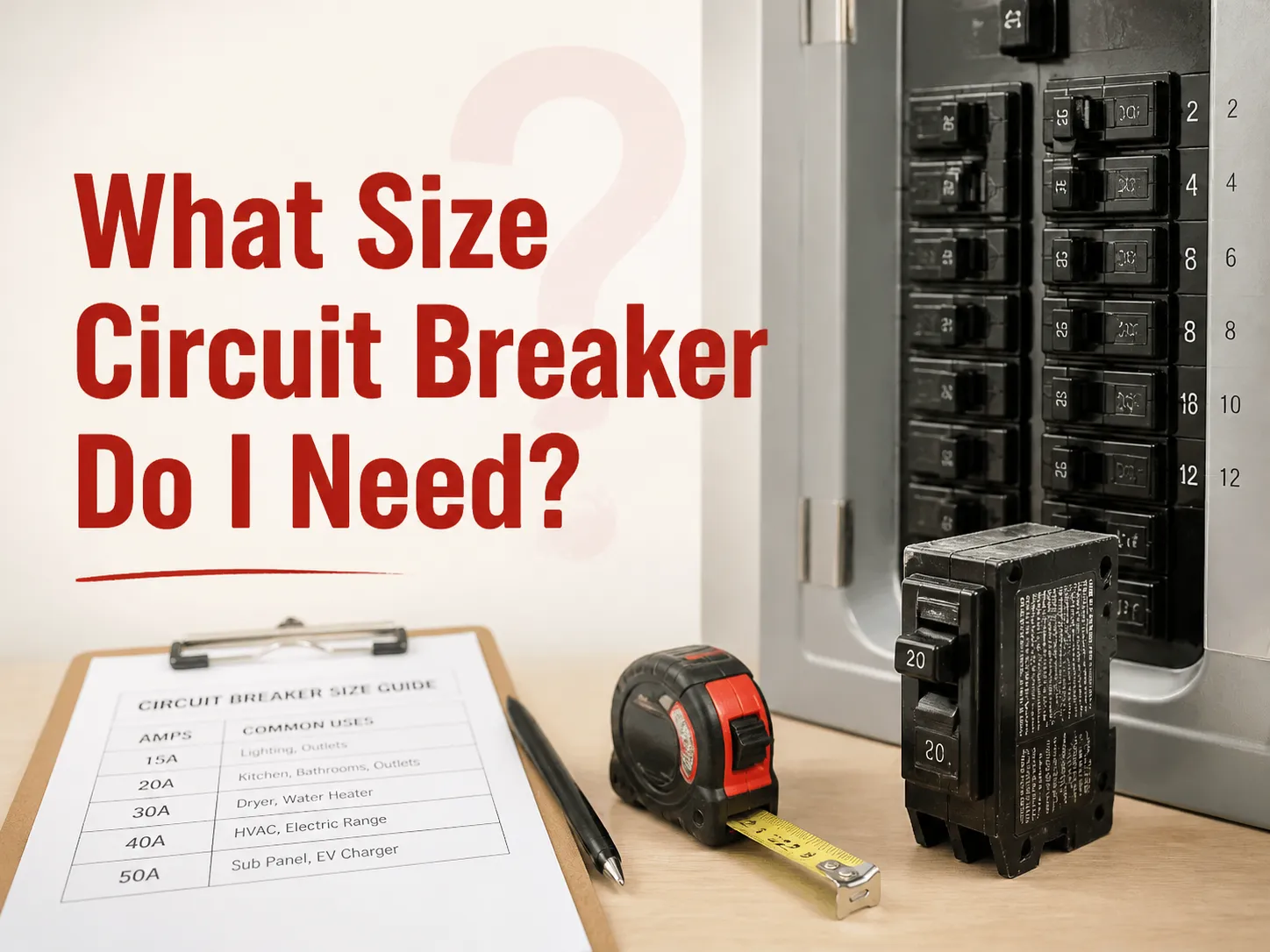


ในเกือบทุกบ้าน ธุรกิจ หรือโรงงาน มีองค์ประกอบสำคัญด้านความปลอดภัยที่คนส่วนใหญ่มองข้าม; แผงไฟฟ้าประกอบด้วยอารมณ์ของเรา (ทั้งดีและร้าย) รวมถึงสวิตช์บางตัวที่อาจไม่เคยถูกใช้งานจนกว่าจะเกิดเหตุการณ์บางอย่าง เช่น การกระชากไฟฟ้าหรือมีคนสะดุดกับเครื่องดูดฝุ่น นี่คือสถานที่เดียวกันที่อุปกรณ์ไฟฟ้าอาจเกิดการ “ตัดวงจร” และส่งผลให้ห้องทั้งหมดรวมถึงอุปกรณ์ไฟฟ้าทั้งหมดสูญเสียพลังงาน — สวิตช์นี้เรียกว่า Circuit Breakers ในความเป็นจริง แม้ว่าจะไม่ได้ใช้งานบ่อยในแต่ละวัน Circuit Breakers เป็นอุปกรณ์ที่สำคัญที่สุดในระบบไฟฟ้าของคุณ.
สรุปแล้ว circuit breakers ป้องกันไม่ให้กระแสไฟฟ้าเกินปริมาณที่กำหนดโดยการตัดการจ่ายพลังงานไฟฟ้าเมื่อเกิดกระแสเกินเนื่องจากโหลดเกินหรือหากผู้ใช้สร้างสถานการณ์ที่วงจรไฟฟ้ามีข้อบกพร่อง กลไกที่ใช้ใน circuit breakers ช่วยให้ผู้ใช้สามารถตัดพลังงานเกินโดยไม่ต้องซื้อฟิวส์ใหม่ อย่างไรก็ตาม เมื่อ circuit breaker ถูกตัดวงจรแล้ว จะต้องรีเซ็ตก่อนนำกลับมาใช้ใหม่ ประเภทของการจัดอันดับสำหรับ circuit breakers ได้แก่ ปริมาณกระแสไฟฟ้าที่เบรกเกอร์สามารถรับได้, การจัดอันดับแรงดันไฟฟ้า, การจัดอันดับสำหรับการตัดวงจร, จำนวนขั้วที่จัดอันดับใน circuit breaker และการจัดอันดับลักษณะการตัดวงจร.

circuit breaker คืออะไร?
Circuit Breaker เป็นส่วนประกอบไฟฟ้าที่เชื่อมต่อกับทั้งระบบจ่ายไฟฟ้า (Power Supply) และการแจกจ่ายไฟฟ้าผ่านสายไฟฟ้าไปยังอุปกรณ์ไฟฟ้าทั่วทั้งอาคาร (ไฟ, ปลั๊กไฟ) ฟังก์ชันหลักของ Circuit Breaker ได้แก่ การตรวจสอบระบบไฟฟ้าและตัดการจ่ายไฟฟ้าไปยังวงจรไฟฟ้านั้นเมื่อพบกระแสไฟฟ้าที่ไม่ปลอดภัย Circuit Breaker ยังช่วยป้องกันสายไฟรอบข้างจากการร้อนเกินไป ปกป้องอุปกรณ์ไฟฟ้าที่เชื่อมต่อกับวงจรจากความเสียหาย และสุดท้ายปกป้องบุคคลที่อาจสัมผัสกับวงจรจากการถูกไฟฟ้าช็อตหรือถูกไฟไหม้.
วิธีหนึ่งในการจินตนาการถึง Circuit Breaker คือการคิดถึงวิธีที่ยามรักษาความปลอดภัยทำงานหน้าคลับไนท์ ในคืนปกติ ยามจะ “ปล่อย” แขกปกติผ่านไปโดยไม่มีปัญหา อย่างไรก็ตาม หากมีฝูงชนที่ไม่คาดคิดแห่เข้ามาที่ประตู (กระแสไฟฟ้าเกินที่ไม่ต้องการ) หรือหากมีคนพยายามบังคับเข้าไปในคลับไนท์ (ในกรณีของการลัดวงจร) ยามจะปิดประตูทันที ยามยังคงพร้อมทำหน้าที่ปกป้องแขกจากอันตราย (จุดประสงค์ทั้งหมดของการใช้ Circuit Breaker แทนการใช้ฟิวส์) เมื่อสถานการณ์สงบลง ยามสามารถอนุญาตให้แขกคนอื่นเข้าคลับได้ เช่นเดียวกับที่ Circuit Breaker สามารถรีเซ็ตเพื่อให้กระแสไฟฟ้าไหลได้อีกครั้ง.
Circuit Breaker มีมาเป็นเวลานานมาก โธมัส เอดิสัน ได้จดสิทธิบัตรระบบตัดวงจรอัตโนมัติครั้งแรกในปี 1879 เพื่อใช้เป็นส่วนหนึ่งของระบบไฟฟ้าที่เขาพัฒนา ประเภทใบมีดและตลับฟิวส์เริ่มปรากฏขึ้นประมาณปี 1900 ในปี 1924 ฮิวโก้ สต็อทซ์ ได้ออกแบบและสร้าง Miniature Circuit Breaker แบบ Thermal-Magnetic ตัวแรกที่รวมกลไกการตัดวงจรทั้งสองไว้ในอุปกรณ์ขนาดเล็กเดียว การออกแบบจากปี 1924 ยังคงถูกใช้งานจนถึงปัจจุบัน และ Miniature Circuit Breakers ที่มีจำหน่ายในปัจจุบันใช้ฟังก์ชันสองอย่างเดียวกับ Circuit Breakers ดั้งเดิม.
Circuit Breaker ทำงานอย่างไร?
เซ็นเซอร์สองตัวตรวจจับกระแสเกินและสภาวะลัดวงจรทันทีตามลำดับ เซ็นเซอร์ความร้อนตรวจจับกระแสไฟฟ้าเกินผ่านอุปกรณ์ที่ไวต่ออุณหภูมิ (เทอร์มิสเตอร์) ซึ่งจะไม่สามารถใช้งานได้เมื่ออุณหภูมิสูงเกินค่าที่กำหนด เซ็นเซอร์แม่เหล็กตรวจจับการมีอยู่ของกระแสไฟฟ้าปริมาณมาก (เช่นที่พบในลัดวงจร) นอกจากการตรวจจับสภาวะกระแสเกินแล้ว เซ็นเซอร์ความร้อนยังปกป้องอุปกรณ์จากความเสียหายที่เกิดจากความร้อนสูงเกินเนื่องจากภาวะโหลดเกินเป็นเวลานาน ในขณะที่เซ็นเซอร์แม่เหล็กปกป้องอุปกรณ์จากความเสียหายที่เกิดจากระดับกระแสไฟฟ้าที่เพิ่มขึ้นอย่างรวดเร็วในสภาวะลัดวงจร.
การออกแบบเบรกเกอร์แบบ thermal-magnetic เป็นที่นิยมใช้มากที่สุด กลไกการตัดวงจรในสวิตช์ไฟฟ้าหลายตัวทำงานตามหลักการเดียวกับการออกแบบเบรกเกอร์นี้ เมื่อกระแสไฟฟ้าเกินระดับที่กำหนด จะทำให้วงจรอิเล็กทรอนิกส์เปิดสวิตช์ กลไกการตัดวงจรอิเล็กทรอนิกส์บางชนิดอนุญาตให้ผู้ใช้เปิดหรือปิดวงจรด้วยตนเองโดยใช้สวิตช์โยก ในทางตรงกันข้าม เบรกเกอร์ไฟฟ้าส่วนใหญ่ใช้กลไกการตัดวงจรแบบกลไกที่เปิดและปิดวงจรโดยอัตโนมัติ.
| ประเภทของความผิดพลาด | สิ่งที่เกิดขึ้น | องค์ประกอบตรวจจับ | เวลาในการตอบสนอง |
|---|---|---|---|
| โหลดเกิน (เช่น มีอุปกรณ์ไฟฟ้ามากเกินไปในวงจรเดียว) | กระแสไฟฟ้าเกินระดับเล็กน้อย; ความร้อนสะสมเป็นวินาทีหรือเป็นนาที | แถบไบเมทัลที่โค้งงอเมื่อร้อน ทำให้กลไกล็อคปล่อยออก | ใช้เวลาหลายวินาทีถึงนาที — ช้าและขึ้นอยู่กับความร้อน ซึ่งเป็นไปโดยเจตนา |
| ลัดวงจร (สายไฟร้อนสัมผัสกับสายดินหรือสายกลาง) | กระแสไฟฟ้าพุ่งสูงขึ้นเป็นร้อยหรือพันแอมป์เกือบจะทันที | โซลินอยด์แม่เหล็กไฟฟ้าที่ดึงกลอนให้เปิดออก | ครึ่งรอบคลื่นหรือเร็วกว่านั้น (ประมาณ 8-16 มิลลิวินาที) |
ความล่าช้าในลักษณะความร้อนของเบรกเกอร์เป็นคุณสมบัติที่ต้องการ ไม่ใช่ข้อบกพร่อง เมื่อมอเตอร์เริ่มทำงาน มันจะดึงกระแสไฟฟ้าชั่วคราวที่สูงกว่ากระแสไฟฟ้าปกติหลายเท่า ดังนั้นแถบไบเมทัลจึงต้องได้รับความร้อนเป็นเวลานานก่อนที่จะทำงาน (เปิดหน้าสัมผัส) เพื่อไม่ให้กระแสไฟฟ้าที่พุ่งขึ้นในช่วงเริ่มต้นทำให้เบรกเกอร์ทำงานโดยไม่จำเป็น อย่างไรก็ตาม แรงแม่เหล็กไฟฟ้าที่เกิดจากการลัดวงจรโดยตรงนั้นมีความแรงมากจนทำให้เบรกเกอร์ทำงานภายในรอบคลื่น AC เดียวก่อนที่สายไฟจะร้อนเกินไปและ/หรือเกิดไฟไหม้.
การเปิดหน้าสัมผัสของเบรกเกอร์เป็นเพียงส่วนหนึ่งของการหยุดการไหลของกระแสไฟฟ้าหนัก เมื่อเบรกเกอร์ตัดกระแสไฟฟ้าหนัก กระบวนการลัดวงจรไฟฟ้าจะทำให้อากาศระหว่างหน้าสัมผัสที่เปิดเกิดการไอออนไนซ์และสร้างประกายไฟฟ้าที่จะยังคงนำไฟฟ้าต่อไปจนกว่าจะถูกตัด นี่คือเหตุผลที่เบรกเกอร์ถูกออกแบบให้มีการควบคุมประกายไฟเพื่อให้สามารถยืดเยื้อ เย็นตัว และแยกประกายไฟออกจากจุดที่ถูกตัด เบรกเกอร์ถูกจัดอันดับด้วยค่าการตัดกระแส (วัดเป็น kA) ซึ่งช่วยกำหนดกระแสลัดวงจรสูงสุดที่เบรกเกอร์สามารถตัดได้อย่างปลอดภัย เบรกเกอร์สำหรับที่อยู่อาศัยทั่วไปจะมีค่าการตัดกระแสประมาณ 5-10 kA ในขณะที่เบรกเกอร์แบบเคสขึ้นรูปสำหรับอุตสาหกรรมจะมีค่าระหว่าง 25-100 kA การเลือกเบรกเกอร์ที่มีค่าการตัดกระแสต่ำกว่ากระแสลัดวงจรที่เกิดขึ้นจริงถือเป็นการละเมิดความปลอดภัยอย่างร้ายแรงและจะไม่สามารถตัดกระแสลัดวงจรได้ แต่กลับอาจทำให้เกิดการระเบิด.

กราฟการตัด: ความหมายของตัวอักษร B, C และ D
เบรกเกอร์ขนาดเล็ก (MCBs) จะมีตัวอักษรนำหน้าค่ากระแส (เช่น B16, B32) เพื่อระบุกราฟการตัด กราฟการตัดกำหนดว่าการโอเวอร์โหลด (การตัดทันที) ที่แม่เหล็กไฟฟ้าจะทนได้ก่อนที่จะทำงาน การใช้กราฟการตัดที่ถูกต้องเป็นสิ่งสำคัญเมื่อเลือก MCB ที่เหมาะสมกับโหลด เพราะ:
| เส้นโค้ง | เกณฑ์การตัดทันที | โหลดทั่วไป | หมายเหตุ |
|---|---|---|---|
| ประเภท B | 3-5 เท่าของค่ากระแสที่กำหนด | โหลดแบบต้านทาน: ไฟส่องสว่าง, ฮีตเตอร์, ปลั๊กไฟในที่อยู่อาศัย | มีความไวสูงสุด; ไม่เหมาะสำหรับมอเตอร์หรือหม้อแปลง |
| ประเภท C | 5-10 เท่าของค่ากระแสที่กำหนด | มอเตอร์ขนาดเล็ก, ไดร์เวอร์หลอดฟลูออเรสเซนต์และ LED, โหลดเชิงพาณิชย์ทั่วไป | ตัวเลือกทั่วไปที่ใช้บ่อยที่สุด |
| ประเภท D | 10-20 เท่าของค่ากระแสที่กำหนด | หม้อแปลง, มอเตอร์ขนาดใหญ่, อุปกรณ์เชื่อม, เครื่องจักรที่มีกระแสเริ่มต้นสูง | ทนต่อกระแสเริ่มต้นสูงโดยไม่ทำให้เกิดการตัดโดยไม่จำเป็น |
| ประเภท K / Z | เฉพาะทาง | การป้องกันเซมิคอนดักเตอร์ (Z), การป้องกันมอเตอร์ (K) | การใช้งานเฉพาะในอุตสาหกรรม |
การใช้เส้นโค้งทริปที่ถูกต้องสำหรับโหลดสามารถเป็นปัจจัยตัดสินว่าคุณจะได้รับการป้องกันที่ใช้งานได้เมื่อใช้ MCB หรือจะรู้สึกหงุดหงิดกับจำนวนครั้งที่ถูกตัดโดย MCB หากวงจรมอเตอร์ขนาดใหญ่ใช้ MCB ประเภท B อาจเกิดการทริปอย่างต่อเนื่องหากคุณต้องการสตาร์ทมอเตอร์ขนาดใหญ่ของคุณ; หากวงจรไฟส่องสว่างใช้ MCB ประเภท D และคุณประสบกับความผิดพลาด อาจใช้เวลานานเกินไปในการทริปและปกป้องสายไฟ โปรดระมัดระวังเพื่อให้แน่ใจว่า MCB มีเส้นโค้งทริปที่เหมาะสมกับโหลดที่มันปกป้อง; หากคุณไม่แน่ใจ โดยปกติจะปลอดภัยกว่าที่จะใช้เส้นโค้งทริปที่สูงกว่าถัดไปแทนการใช้เรตติ้งกระแสที่สูงกว่าบนเส้นโค้งทริปเดียวกัน.
ประเภทหลักของเบรกเกอร์
เบรกเกอร์สามารถแบ่งออกเป็นหมวดหมู่ต่าง ๆ ตามวิธีการผลิต (ประเภทของโครงสร้าง), ฟังก์ชัน (วิธีการทำงาน), เรตติ้งแรงดันไฟฟ้า และจำนวนขั้ว ต่อไปนี้คือประเภทต่าง ๆ ของเบรกเกอร์ที่คุณจะพบในการใช้งาน.
| ประเภท | ชื่อเต็ม | เรตติ้งทั่วไป | สถานที่ที่พบ |
|---|---|---|---|
| MCB | มินิเอเจอร์ เซอร์กิต เบรกเกอร์ | 5-125 A | ยูนิตผู้บริโภคที่อยู่อาศัย, แผงจ่ายไฟขนาดเล็กสำหรับเชิงพาณิชย์ |
| MCCB | โมลด์เคส เซอร์กิต เบรกเกอร์ | 16-1,600 แอมป์ | แผงควบคุมเชิงพาณิชย์, ฟีดเดอร์อุตสาหกรรม, ระบบ HVAC ขนาดใหญ่และเครื่องจักร |
| ACB | เบรกเกอร์วงจรอากาศ | 400-6,300 แอมป์ | สวิตช์เกียร์อุตสาหกรรม, เครื่องกำเนิดไฟฟ้าและอินคัมเมอร์หลัก, ศูนย์ข้อมูล |
| VCB | เบรกเกอร์สูญญากาศ | สูงสุดระดับ 40 kV | การกระจายแรงดันกลาง, สถานีย่อย, การสวิตช์มอเตอร์ |
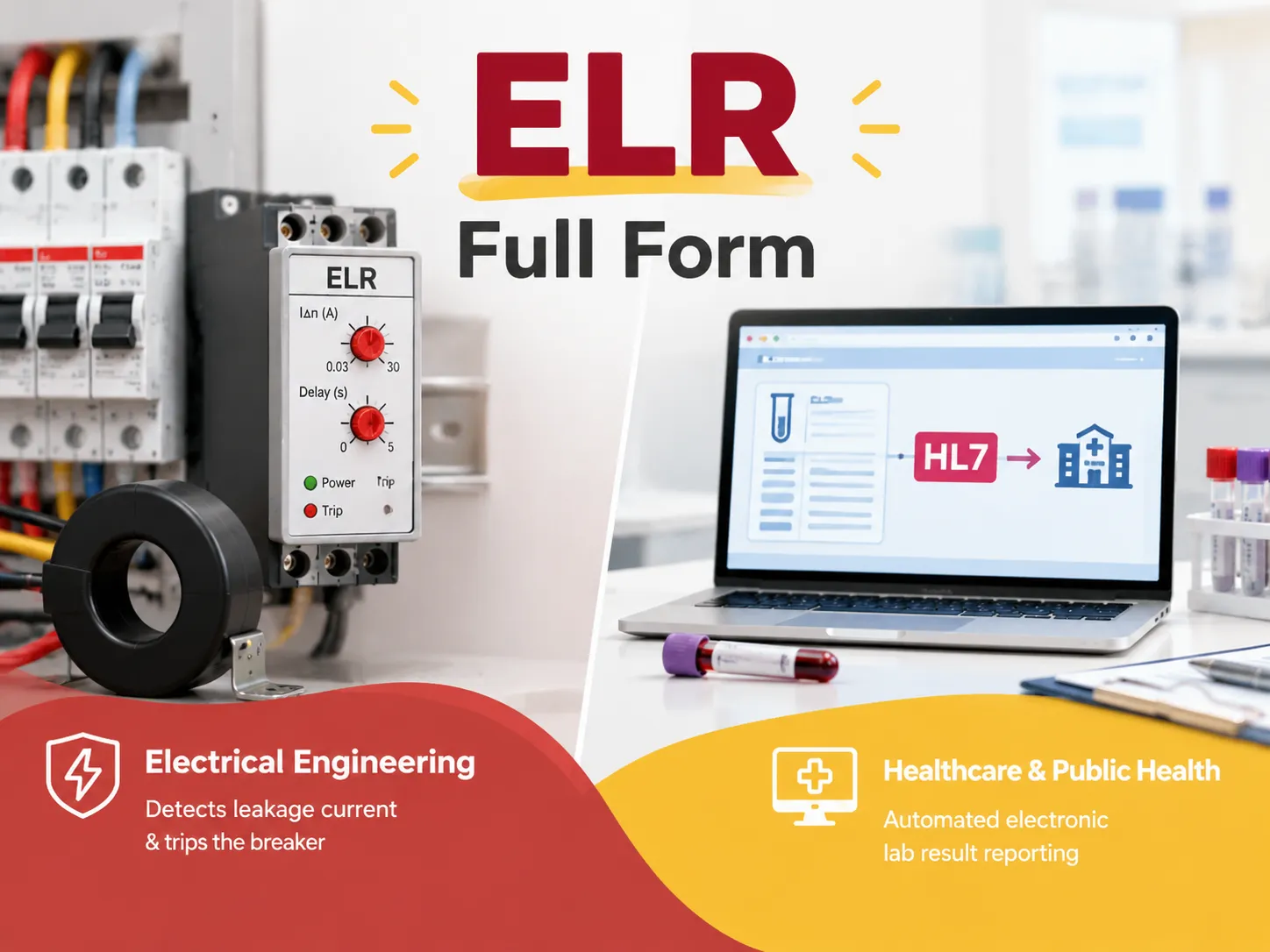
| RCCB / ELCB | เบรกเกอร์กระแสตกค้าง / รั่วไหลของไฟฟ้า | 25-100 A, ความไว 30-300 mA | การป้องกันไฟช็อตที่เต้ารับและพื้นที่เปียก |
| RCBO | เบรกเกอร์กระแสตกค้างพร้อมกระแสเกิน | 6-63 แอมป์ | รวม MCB + RCCB ในโมดูลเดียว |
| GFCI / AFCI | ตัวตัดวงจรไฟฟ้ารั่ว / ตัวตัดวงจรไฟฟ้าโค้ง | 15-50 แอมป์ | ห้องครัว, ห้องน้ำ, กลางแจ้งในสหรัฐฯ (GFCI); ห้องนอน, พื้นที่อยู่อาศัย (AFCI) |
| SF6 / น้ำมัน | เบรกเกอร์ที่ใช้แก๊สหรือฉนวนด้วยน้ำมัน | แรงดันสูง | เครือข่ายส่งไฟฟ้า, สถานีย่อยแรงดันสูง |
มีจุดสับสนหลักสองประการ: ประการแรก RCCB และ RCBO ไม่ใช่อุปกรณ์ป้องกันกระแสเกินตามที่คนส่วนใหญ่เข้าใจ แต่เป็นอุปกรณ์ที่ตรวจจับกระแสรั่วไหลสู่ดิน (ผ่านบุคคลหรือฉนวน) ดังนั้นจะตัดวงจรภายในเวลาประมาณสามสิบมิลลิวินาทีหลังจากเกิดการรั่วไหล ดังนั้นตามรหัสปัจจุบัน เต้ารับทั้งหมดควรติดตั้ง RCCB หรือ RCBO ประการที่สอง ในระบบสายไฟฟ้าภายในบ้านในสหรัฐฯ ฟังก์ชันของ AFCI และ GFCI มักจะถูกรวมอยู่ในอุปกรณ์เดียวกันเมื่อจำเป็นในห้องนอน/พื้นที่อยู่อาศัยตามข้อกำหนดของรหัสปัจจุบัน ความสัมพันธ์ระหว่างอุปกรณ์ตรวจจับกระแสรั่วไหลและอุปกรณ์ป้องกันกระแสเกินนี้อธิบายอย่างละเอียดใน คู่มือ RCCB vs RCBO.
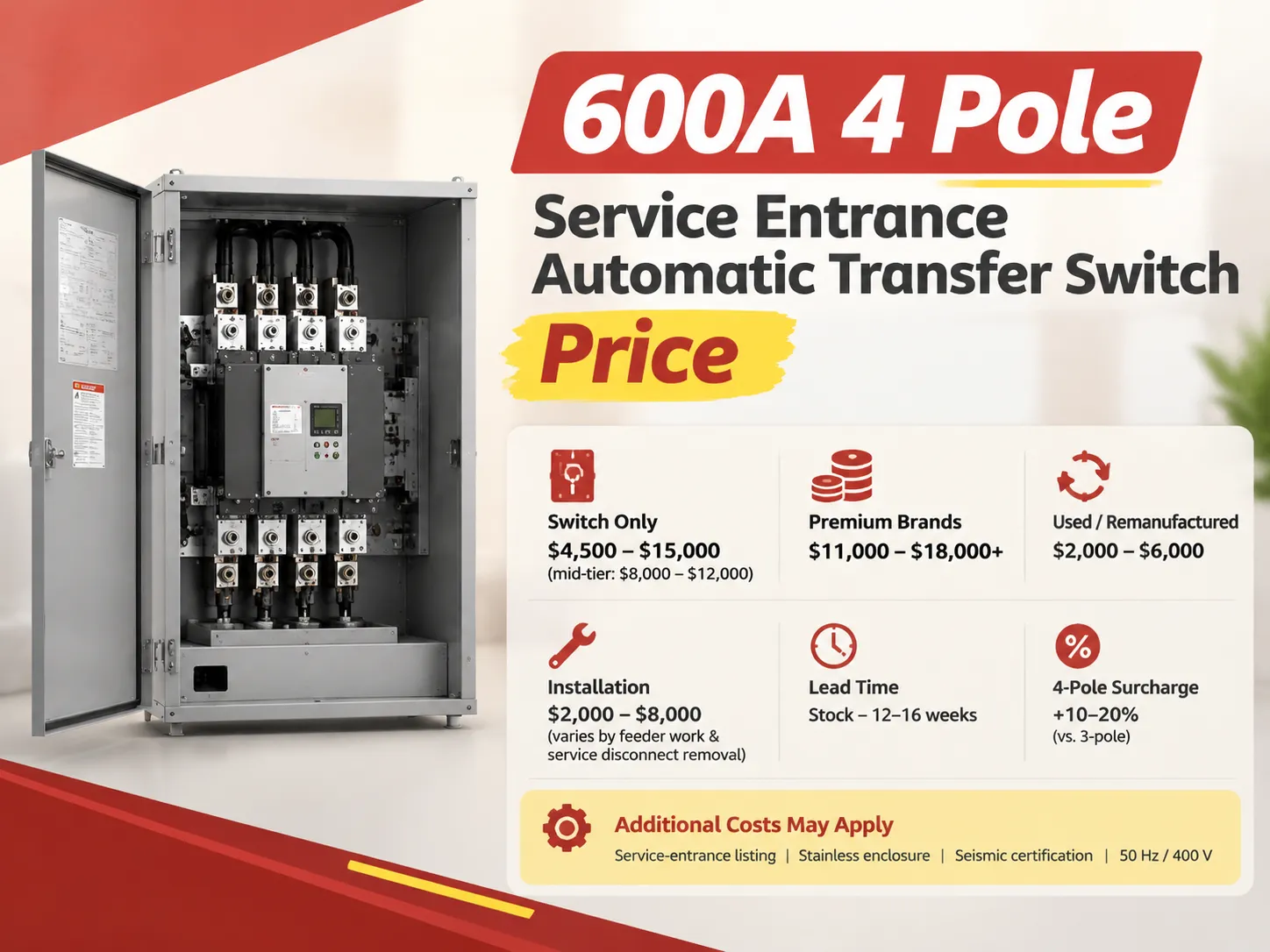
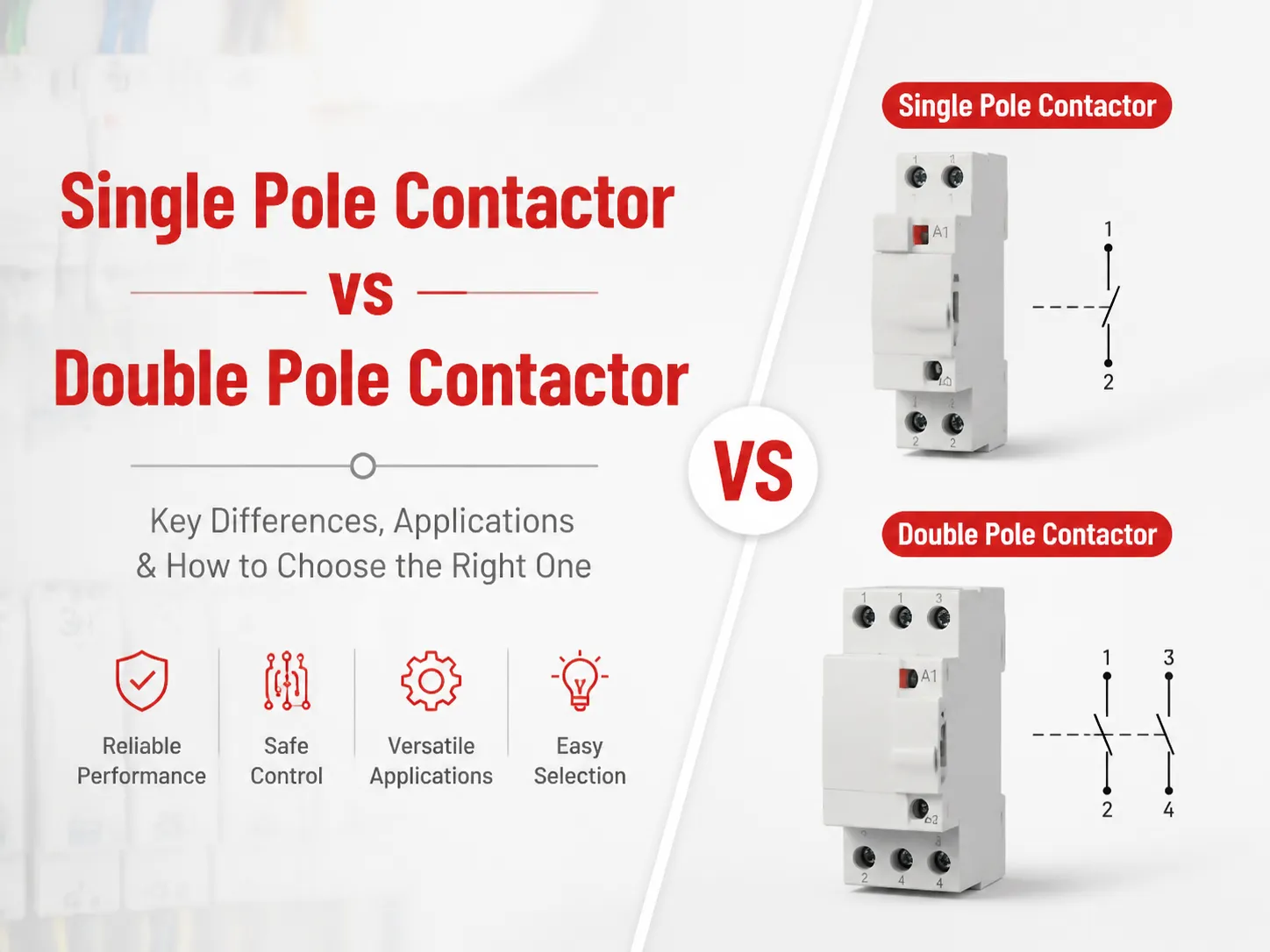
เบรกเกอร์สามารถมีการกำหนดค่าแบบขั้วเดียว (ขา 120V หนึ่งขา), ขั้วคู่ (สองขาสำหรับเครื่องใช้ไฟฟ้า/อินคัมเมอร์ 240V ในอเมริกาเหนือ) หรือสามหรือสี่ขั้ว (สามเฟสของไฟฟ้าอุตสาหกรรม/พาณิชย์) เบรกเกอร์ขั้วเดียวให้การป้องกันกระแสเกินสำหรับวงจรสาขา 120 โวลต์; เบรกเกอร์ขั้วคู่ให้การป้องกันกระแสเกินสำหรับโหลด 240 โวลต์ เช่น เครื่องอบผ้า, เตา, เครื่องทำน้ำอุ่น และเครื่องชาร์จรถยนต์ไฟฟ้า และจะตัดวงจรทั้งสองขาพร้อมกัน ความผิดพลาดที่พบบ่อยที่สุดของเจ้าของบ้านที่ทำเองเกิดจากการเลือกจำนวนขั้วไม่ถูกต้อง ดังนั้นจึงแนะนำให้มีผู้เชี่ยวชาญที่มีประสบการณ์ทำการติดตั้งแผง/ปรับปรุงที่อยู่อาศัยเนื่องจากพวกเขาได้ทำกระบวนการนี้มาหลายร้อยครั้งแล้ว.

เบรกเกอร์กับฟิวส์: แตกต่างกันอย่างไร?
นอกจากจะมีวัตถุประสงค์เดียวกันในการป้องกันสายไฟและอุปกรณ์แล้ว แต่ละประเภทมีวิธีการทำงานที่แตกต่างกัน ฟิวส์ป้องกันภาวะกระแสเกินโดยใช้ตัวนำโลหะที่ละลายเมื่อมีกระแสเกินความจุ ทำให้เกิดการตัดวงจรทางกายภาพ ในขณะที่เบรกเกอร์ทำงานผ่านการเคลื่อนที่เชิงกลของสวิตช์ ความแตกต่างนี้เป็นพื้นฐานสำหรับการเปรียบเทียบระหว่างอุปกรณ์ป้องกันทั้งสองประเภทนี้.
| คุณสมบัติ | ฟิวส์ | เบรกเกอร์วงจร |
|---|---|---|
| หลังจากตัดวงจร | องค์ประกอบถูกทำลาย — ต้องเปลี่ยนใหม่ | รีเซ็ตโดยการพลิกด้ามจับ — ใช้ซ้ำได้ |
| ความเร็วในการตอบสนอง | เร็วมาก (จำกัดกระแสได้ดี) | เร็ว แต่ช้ากว่าฟิวส์ที่เทียบเท่าบนความผิดพลาดสูงมากเล็กน้อย |
| การป้องกันการปลอมแปลง | ง่ายต่อการเอาชนะโดยการติดตั้งฟิวส์ที่ใหญ่กว่าหรือเหรียญไว้ด้านหลังฟิวส์หนึ่งตัว | ยากต่อการเอาชนะ; การตัดวงจรจะเกิดขึ้นซ้ำอย่างชัดเจน |
| สามารถรีเซ็ตได้จากระยะไกลหรือไม่? | ไม่ — ต้องเปลี่ยนด้วยมือ | บางประเภทในอุตสาหกรรมสามารถปิดวงจรใหม่ได้ด้วยไฟฟ้า |
| ต้นทุนต่อเหตุการณ์ | ชิ้นส่วนราคาถูก แต่ทุกความผิดพลาดต้องใช้ฟิวส์ใหม่ | ต้นทุนเริ่มต้นสูงกว่า แต่ต้นทุนต่อการตัดวงจรแทบเป็นศูนย์ |
| การแยกแยะ/การเลือกสรร | ดี; ฟิวส์ประสานงานกันได้ดีในชุดอนุกรม | ต้องการการจัดลำดับอย่างระมัดระวังระหว่างหน่วยต้นทางและปลายทาง |
| ที่ที่เหมาะสม | การป้องกันเซมิคอนดักเตอร์, จุดอุตสาหกรรมที่มีความจุความผิดพลาดสูง, บางส่วนของยานยนต์/เรือ | ทุกที่อื่น — บ้าน, การค้า, การกระจายอุตสาหกรรม |
ผู้ใช้ส่วนใหญ่จะสรุปว่าการอัปเกรดจากกล่องฟิวส์เป็นแผงเบรกเกอร์วงจรเป็นการลงทุนที่ให้ผลตอบแทนดีที่สุด ฟิวส์ไม่แสดงสัญญาณของการโอเวอร์โหลดซ้ำซ้อนของวงจรและจึงเปิดโอกาสให้เกิดการซ่อมแซมที่ไม่ปลอดภัยและ/หรือเป็นอันตราย; ในทางกลับกัน ด้วยเบรกเกอร์วงจร ผู้ใช้สามารถระบุวงจรที่ตัดได้อย่างชัดเจนและสามารถรีเซ็ตได้ง่าย เบรกเกอร์วงจรยังมีการป้องกันความผิดพลาดกราวด์และความผิดพลาดโค้งไฟฟ้า ซึ่งเป็นคุณสมบัติที่ฟิวส์ไม่สามารถให้ได้ ในบางกรณี ฟิวส์จะทำงานได้ดีกว่าเบรกเกอร์วงจร เช่น เมื่อจัดการกับกระแสความผิดพลาดสูงมากหรือความจำเป็นในการจำกัดกระแสอย่างรวดเร็วในขณะที่ปกป้องอุปกรณ์ไฟฟ้าที่ไวต่อความเสียหาย; อย่างไรก็ตาม ในอาคาร เบรกเกอร์วงจรเป็นตัวเลือกที่ดีที่สุดมาหลายปีแล้ว.
Circuit breaker vs switch: what is the difference?
A breaker handle is often mistaken for a switch because they are similar, but they are different types of devices. A switch (e.g., light switch, isolator, contactor) is intended to be regularly used or operated (you will turn it on/off many times), and it does not have any ability to sense. A circuit breaker, on the other hand, is intended for infrequent service and is specifically designed to automatically trip when it detects a fault by automatically shutting off the current.
As a result of these differences, there are two basic rules. First, a switch does not protect you from faults; it can only control your circuit, and therefore the circuit that comes from a switch must be protected by other devices upstream of the switch. Second, a circuit breaker is not intended for daily switching; its contacts are not designed for thousands of operates, and each time you manually trip it, the life expectancy of that breaker is decreased. If you want to have a switching device and also provide some form of protection, the ideal product would be a switch disconnector with a fuse or circuit breaker, or a motor protective circuit breaker (for machine circuits). On the high-voltage side, this difference is also found in substations, where they use separate disconnectors for switching (they will only switch when there is no current) and circuit breakers for interrupting fault currents.
Main breaker vs branch circuit breaker: what is the difference?
People frequently confuse the two types of breakers in a breaker panel (the main and the branch) because they both disconnect electricity from a panel; however, they serve entirely different functions. The main breaker disconnects power to the entire panel from the electrical utility, while branch breakers (the long rows of 15- and 20-amp handles) protect each individual circuit (e.g., kitchen, bedrooms, AC unit, dryer). Depending on the size of a person’s home and how much electricity is used each day, many people will find that the main breaker will be rated between 100-200 amps in a home.
Understanding the distinction between these two breakers is vital because of how they help protect against electrical shock and fire. The main breaker protects the service conductors, giving firefighters and/or electricians a single safe way to disconnect power from a building, whereas branch breakers protect the smaller wires located within walls that run to each particular room; therefore, when an electrical short or failure occurs within a branch breaker, it can potentially only take one room out of service instead of the entire house. When an individual hears “the main breaker tripped,” it usually indicates that either the total electricity usage exceeded the service capacity or that a significant electrical fault occurred between the main and branch breakers. Therefore, before an individual resets the main breaker, they should unplug enough appliances or electronic devices to bring the total electricity consumption below the maximum rating of the breaker panel.

Which brands make circuit breakers?
There are two distinct categories of manufacturers in the circuit breaker industry: global players with an extensive presence in North America and Europe, and companies focused on niche products where their certified products can be found across the globe.
| แบรนด์ | Home market | Known for |
|---|---|---|
| Square D (Schneider Electric) | US / France | QO and Homeline panels — the most widely installed residential breakers in North America |
| Eaton (incl. Cutler-Hammer) | US / Ireland | BR and CH series, strong commercial and industrial line |
| ซีเมนส์ | เยอรมนี | Huge industrial and residential portfolio, MP/QP residential line |
| เอเอบี | Switzerland / Sweden | Tmax MCCB range, global industrial standard, SACE breakers |
| เลวิตัน | US | Residential breakers plus a growing smart/connected breaker line |
| General Electric (now part of ABB/Smart Breaker brands) | US | Legacy THQL/THQB panels still common in older homes |
| Legrand / Hager / Chint / HUYU and similar certified global manufacturers | Europe / China | Full MCB/MCCB/RCBO ranges certified to IEC 60898 and IEC 60947, supplying OEM and project markets worldwide |
When purchasing circuit breakers, the most important rule regarding product compatibility is that, in North America, circuit breakers are panel-specific. As an example, a Square D breaker will not fit an Eaton panel, and trying to install one in a panel that it is not intended for creates not only a code violation, but also a legitimate fire hazard. To avoid this issue, simply match the replacement circuit breaker to the manufacturer’s name and series of the existing panel (see our Eaton vs. Cutler-Hammer Reference Guide for product compatibility) or, if you choose to switch brands, you can simply replace the entire panel. Circuit breakers from different manufacturers are compatible and can be mounted on DIN-rail tracks in markets outside of North America (i.e., IEC markets), and therefore companies like HUYU can distribute their certified miniature circuit breakers (MCBs) in over 100 countries. For industrial and project clients, the certification is much more important than the product logo; the certification for North America is UL 489 for circuit breakers, IEC 60898 for MCBs, IEC 60947-2 for molded case circuit breakers (MCCBs) and air circuit breakers (ACBs), and the certified test reports for those certifications.
How much do circuit breakers cost?
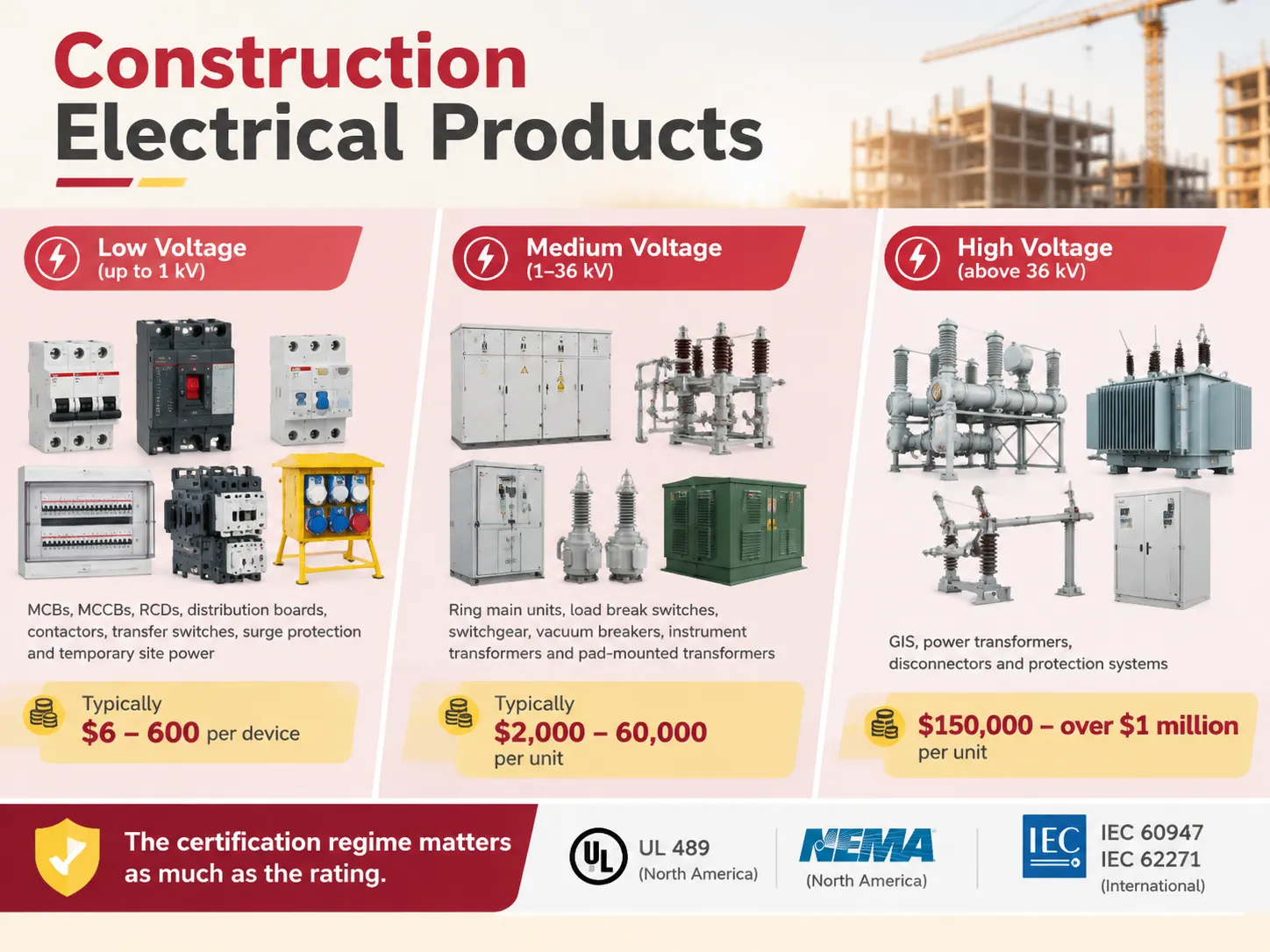
Pricing for Breaker varies more than many other types of electrical components because circuit breakers can range from $6 (residential spare) to over $100,000 (transmission). Therefore, when creating a budget for a project, it helps to have a breakdown of the possible price ranges in each category for each year leading up to 2026:
| ประเภทเบรกเกอร์ | Part cost (typical) | Installed cost (electrician) |
|---|---|---|
| Standard single-pole thermal-magnetic (15-30 A) | $6-18 | $130-250 including service call |
| Double-pole (30-100 A) | $10-40 | $150-300 |
| GFCI breaker | $40-100 | $200-350 |
| AFCI or combination AFCI/GFCI | $30-100 | $175-350 |
| Smart breaker with energy monitoring | $50-300+ | $250-500 |
| MCB (IEC, 6-63 A, DIN-rail) | $3-25 | Varies by market |
| MCCB (100-1,600 A) | $45-1,600+ | Project-priced |
| ACB (630-6,300 A) | $800-5,000+ | Project-priced |
| Medium/high-voltage breaker | $5,000-100,000+ | Substation projects |
The big price drivers are amperage, interrupting rating, protection features, and brand. A basic 20 A thermal-magnetic breaker at $6-12 versus a combination AFCI/GFCI unit at $50-100 is roughly a five-to-eight-times multiplier — justified by the microprocessors and sensors inside the smart unit. The full cost picture — including panel replacement and when a $200 breaker swap turns into a $2,000-4,000 panel upgrade — is detailed in our circuit breaker replacement cost guide.

How to choose the right circuit breaker
To select a new circuit breaker, follow these five steps IN ORDER: Each step limits and restricts your options for the next step.
- Wire ampacity = Breaker amperage, NOT appliance amperage! The Industry Standards state that the breaker is there to protect the wire, so the breaker should NEVER exceed the ampacity of that wire. Therefore, a 15 amp breaker protects a 14 AWG copper wire, a 20 amp breaker protects a 12 AWG wire, and a 30 amp breaker protects a 10 AWG wire. NEVER upgrade a breaker to eliminate nuisance trips until you have verified the wire size; this is one of the leading causes of houses burning down.
- 80% of Breaker’s Rating is Maximum Continuous Load: The National Electrical Code requires circuit breakers to be rated for continuous (3-hour or more) loads at no more than 80% of the breaker’s capacity. A continuous 12 amps (1,440 watts at 120 volts) on a 15 amp breaker are fine, and 16 amps (1,920 watts) on a 20 amp breaker are fine. For an explanation of how to perform the calculation converting watts-to-amps for continuous loads, please see our 15-Amp Circuit Capacity Guide.
- Type Matches Hazard: A Ground Fault Circuit Interrupter (GFCI) circuit breaker must be used on receptacles located in kitchens, bathrooms, garages, and outside. An Arc Fault Circuit Interrupter (AFCI) breaker must be used in bedrooms and living areas under current code. Lastly, a motor or transformer circuit must use the proper trip curve (usually C or D) to minimize nuisance trips during startup.
- Number of Poles = Voltage: A single pole breaker is used on 120-volt branch circuits; a double pole breaker is used on 240-volt loads and on disconnects from the service panel; a breaker for a three-phase system must be either a three- or four-pole breaker.
- Interrupting Rating and Certifications: The interrupting or breaking capacity (kA) of a circuit breaker must be adequate for the available fault current at the main panel, and ONLY certified devices (in North America, the certification mark is UL 489; in the rest of the world, the certification marks are IEC 60898/60947) should be purchased from authorized dealers. Counterfeit breakers are an increasing problem. When counterfeit breakers fail, it is usually during a fire.
Installation, resetting, and replacement
Resetting a tripped circuit breaker is something every homeowner ought to be aware of. When a circuit breaker trips, it will revert to the middle or OFF position on its handle. To reset the circuit breaker, turn the handle completely to the OFF position, and then fully back to the ON position. If after you have reset the circuit breaker it does not trip again, it is likely that the overload causing the circuit breaker to trip was an isolated event. If the circuit breaker trips again immediately after being reset, you most likely have a larger electrical issue, and you should stop attempting to reset the breaker and investigate the problem further.
Circuit breakers do eventually wear out, and the wear will usually result from a mechanical failure in the latching mechanism or the electrical contacts rather than a failure of the sensing mechanism (the electronic part). A circuit breaker that is very hot, buzzing or humming, has a burnt smell, and/or has tripped many more times than it previously did, or has failed to trip completely, is likely going to need to be replaced. Testing a faulty breaker is fairly easy if you have access to a multimeter; you’ll need to check that the breaker will hold the correct amount of current load and trip when it is supposed to. But if a circuit breaker begins showing any of the above warning signs, it will be in your best interest to replace it instead of trying to continue using it until it finally does fail on you.
Replacing a circuit breaker in a panel that is live has some inherent risk involved. Depending on the configuration of your panel and where the service lugs (terminals) on your circuit breaker panel are mounted, the service lugs remain energized even when the main has been turned OFF. In the vast majority of cases in the United States, it is against the law to rewire or replace a circuit breaker while working on the live side of the service because there is a high likelihood that an arc flash will occur if you come into contact with the energized lugs while doing so. The cost of hiring an electrician to replace a circuit breaker is typically between $130-$250 to provide you with peace of mind and protection against the risk of an arc flash. The same professional judgment should be applied on the panel level: whether or not your aging 100 A service is capable of handling the entire electrical load of a modern home, and whether or not the current code requires you to have a panel rated at 200 A, is a question that you should be able to have answered by a licensed electrician after a load calculation has been performed, not a guess.
Why does a circuit breaker keep tripping?
A repeatedly tripping breaker is not the source of the problem; it is an indication of a problem. A tripped breaker indicates that there is something wrong with the electrical circuit or with what is connected to it. Identifying the cause of the problem means understanding the following four major categories of electrical faults or problems.
- Overloaded circuit – Too many appliances or devices drawing power from a single circuit are causing an overload of electrical current. The solution to this is to balance the load on the circuit or to install a new circuit for the additional high-wattage electrical devices, and not to use a higher-rated circuit breaker.
- ไฟฟ้าลัดวงจร – An electrical short happens when an energized wire touches either a neutral or ground wire. This condition can happen inside an appliance or in an extension cord when either the cord or the appliance is damaged. A short circuit will usually trip instantly, and there may be a burnt smell associated with it.
- Ground Fault – A ground fault occurs when current leaks to ground (earth) through a person, water, or damaged insulation on an electric wire. Ground fault protection devices (GFCIs and RCCBs) are critically important to ensure the safety of people using electricity.
- A Breaker Failure – After decades and thousands of operations, a breaker eventually will wear out and will no longer trip and will fail to hold on to its rated current.
Diagnosing which family you are in — and why a breaker that “trips for no reason” almost always has a reason — is exactly what our circuit breaker tripping guide walks through step by step. It is important to note: If a breaker trips when an appliance is plugged in, the appliance is most likely the cause. If a breaker trips when nothing is connected, suspect either the wiring or the breaker and call a licensed electrician to investigate further; do not experiment with either the wire or the breaker.
คำถามที่พบบ่อย
How do I reset a circuit breaker?
To reset the circuit breaker(s), locate the circuit breaker that tripped (the lever/circuit breaker will be in between the OFF/ON position) Move the lever fully to the OFF position, and then move it firmly to the ON position. If the circuit breaker(s) remains in the ON position, then the trip was probably a temporary overload. However, if the circuit breaker(s) immediately or shortly thereafter trips again, do not reset the circuit breaker(s) again and contact a professional to determine why the circuit breaker(s) keep tripping.
What’s the difference between a circuit breaker and a fuse?
Fuses protect electrical circuits by melting a wire (metal element), and therefore, when a fuse is blown it has to be replaced every time. Circuit breakers protect electrical circuits by using a mechanical switch to open the circuit. This allows circuit breakers to be reset and reused many times. Additionally, circuit breakers have the ability to provide both ground fault protection and arc fault protection which fuses cannot; therefore, circuit breakers have replaced fuses in virtually all modern buildings.
What is the difference between a main breaker and a circuit breaker?
The term circuit breaker refers to all circuit breakers. The main breaker is a circuit breaker that is larger than the others (typically 100-200 amps) that disconnects the entire electrical service from the utility company. Branch circuit breakers are the smaller circuit breakers that are used to protect individual circuits in the building. All circuit breakers will trip automatically in response to electrical faults, however, the main circuit breaker protects the conductors that carry the electrical service, while branch circuit breakers protect single circuits.
What is the difference between a circuit breaker and a switch?
A switch is a manual control device that is intended for frequent operation, without providing any protective function. A circuit breaker is a protective device that will automatically open the circuit if there is an overload condition or short circuit and is not intended to be used thousands of times a day. A switch does not provide protection for a circuit; a circuit breaker is not intended for daily use. Some devices are designed to have both functions; therefore, these products are referred to as switch-disconnectors or motor-protective devices.
อ้างอิง
- Schneider Electric — What Is a Circuit Breaker?
- Eaton — Circuit Breaker Fundamentals
- RealPars — Circuit Breakers Explained
- Family Handyman — How Circuit Breakers Work
- NFPA — National Electrical Code (NEC)
สรุป
A circuit breaker protects every electrical system from excessive voltage and current. It is a switch that automatically responds to excessive voltage and/or current (i.e. thermal and magnetic overload) and opens the circuit as fast or faster than a fused circuit. If you are new to circuit breakers, it is important to understand the thermal/magnetic trip mechanism that opens the breaker, the trip characteristics of breakers of types B, C, and D according to their rated load and type of electrical load, how do MCBs, MCCBs, RCBOs differ; when and why you should use circuit breakers instead of fuses; and to what extent you should use the main breaker with regard to branch circuit breakers; how to determine the correct certification for the circuit breaker and the manufacturer of the circuit breaker to ensure compatibility with your circuit breaker panel; and how to use the ratings of circuit breakers to size correctly the circuit breaker for your installation. All of the above may be obtained from the circuit breaker manufacturer or an electrical contractor, and if not, you must refer to a qualified electrical contractor to obtain such information to ensure your equipment remains protected by the circuit breakers. Assuming that you have taken advantage of the above information, you can expect your circuit breaker(s) to continue protecting all of your equipment for many years to come until such time as the circuit breakers have reached their rated life (which they do not use) and have provided the necessary protection for each piece of your equipment.