
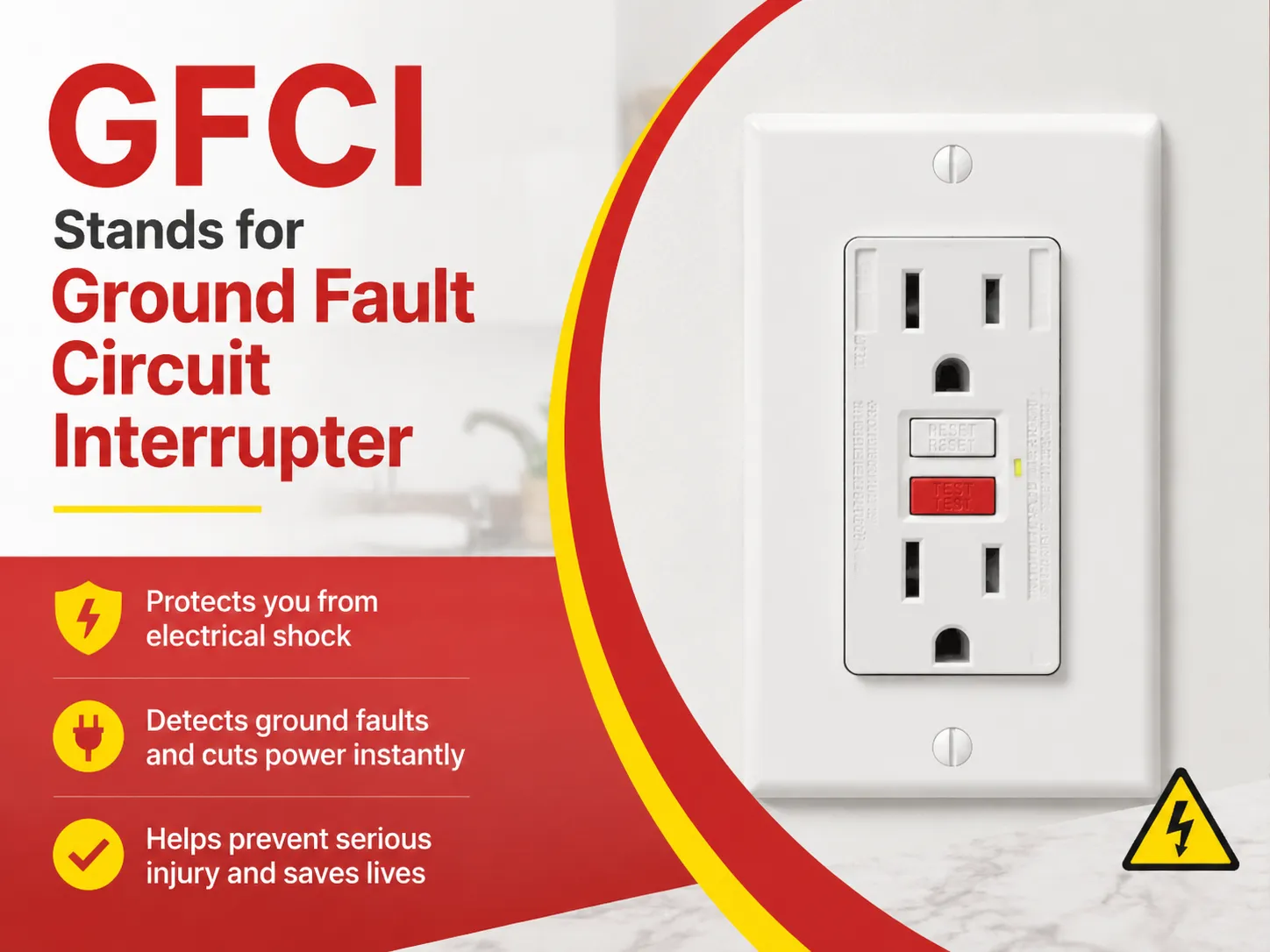
Bạn có thể đang đọc một bảng thông số kỹ thuật, chuẩn bị cho một bài kiểm tra về điện, hoặc đơn giản là cố gắng tìm hiểu cách các ổ cắm trong bếp của bạn hoạt động khi bạn bắt gặp câu nói “GFCI có nghĩa là nhiễu mạch lỗi đất.” Điều này có thể nghe đúng, nhưng thực ra sai. GFCI thực sự có nghĩa là bộ ngắt mạch lỗi đất. Bạn có thể nghĩ rằng sự khác biệt giữa từ “interrupter” và “interference” chỉ là về chính tả, nhưng không chỉ là chính tả; đó là sự khác biệt về ý nghĩa. Trong bài viết này, bạn sẽ tìm thấy các giải thích về GFCI là gì, tại sao “nhiễu mạch lỗi đất” là sai và cách GFCI hoạt động, những nguyên nhân có thể khiến thiết bị ngắt mạch và những gì bạn không nên cắm vào GFCI.
Trả lời nhanh: Thuật ngữ chính xác GFCI, viết tắt của Ground Fault Circuit Interrupter, thường bị hiểu nhầm thành các tên khác như nhiễu mạch lỗi đất và mạch cầu chì lớn trong thuật ngữ điện. Thuật ngữ này chỉ thiết bị ngắt mạch điện khi phát hiện lỗi đất. Theo Bộ Quy chuẩn Điện Quốc gia và các mã UL, ý nghĩa của GFCI có thể được hiểu đúng theo cách này.
GFCI thực sự có nghĩa là gì
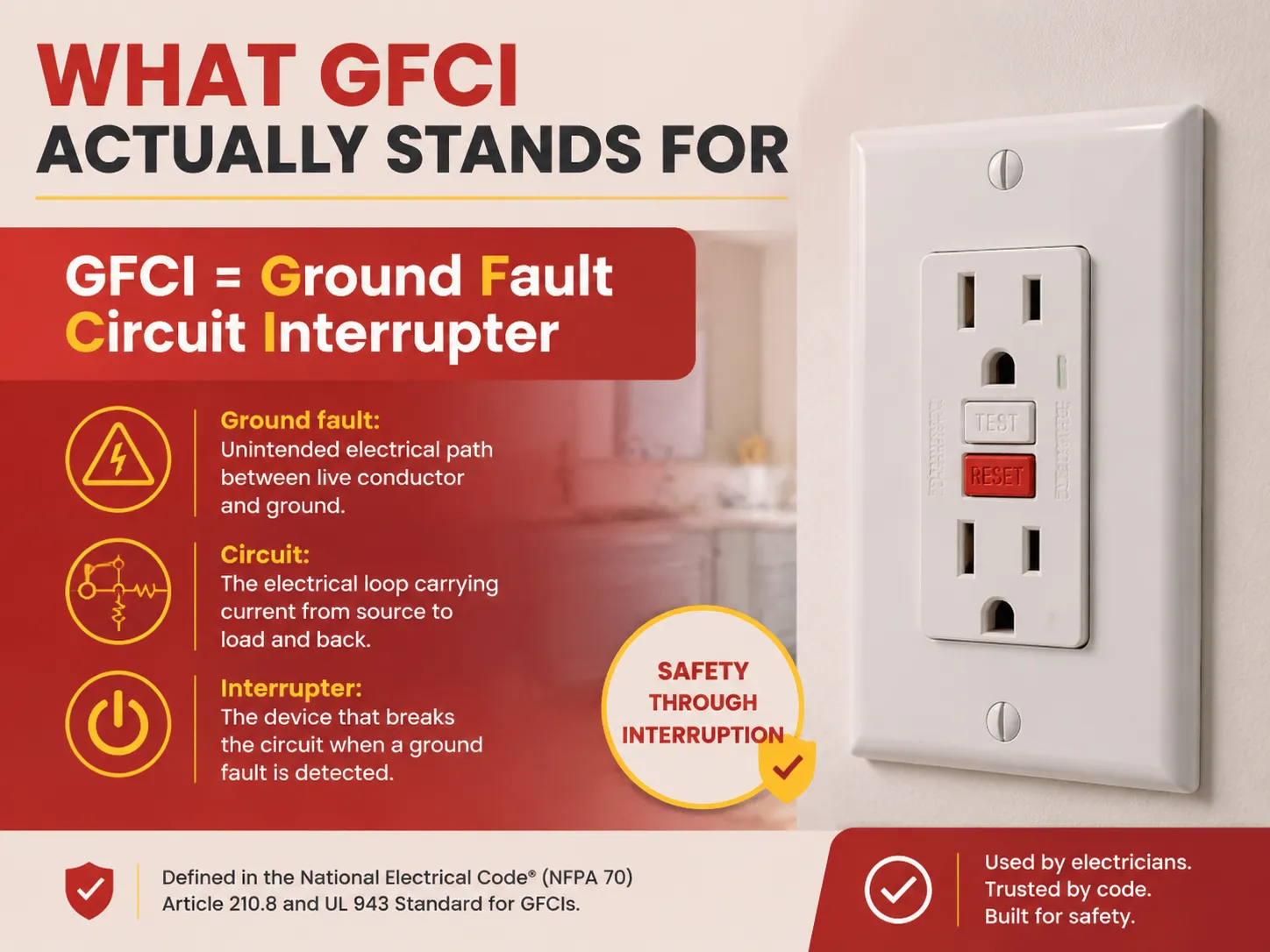
Từ viết tắt GFCI có nghĩa là: Ground Fault Circuit Interrupter.
Hãy xem định nghĩa của từng từ:
- Lỗi đất: một dòng điện không chủ ý giữa dây nóng và đất (ví dụ: qua người, qua nước, qua dây bị đứt hoặc qua vỏ thiết bị).
- Mạch: đường dẫn điện làm cho dòng điện chảy từ N đến L theo một vòng kín.
- Bộ ngắt: một thiết bị tạo ra sự ngắt mạch khi xảy ra lỗi đất.
Đây không chỉ là ý kiến cá nhân. Nó được quy định trong Bộ Quy chuẩn Điện Quốc gia (NFPA 70), nơi thuật ngữ “ground-fault circuit-interrupter” được sử dụng trong Điều 210.8 và các điều khoản liên quan khác. Nó cũng được sử dụng trong UL 943, tiêu chuẩn an toàn cho GFCI. Hơn nữa, tất cả các chương trình đào tạo điện, tài liệu của nhà sản xuất (ví dụ: Leviton, Eaton, Legrand) và báo cáo kiểm tra đều sử dụng thuật ngữ ’interrupter.“
Tại sao “Nhiễu Mạch Lỗi Đất” là sai
Thuật ngữ “interference” ngụ ý sự gián đoạn, cản trở hoặc nhiễu loạn mạch bởi thiết bị, giống như nhiễu điện từ (EMI). Đây không phải là chức năng của GFCI. GFCI không gây nhiễu cho hoạt động bình thường của mạch vì nó hoạt động âm thầm và gần như vô hình trong mạch, cho phép dòng điện chảy qua như bình thường. Chức năng duy nhất của nó là ngắt dòng điện ngay khi phát hiện lỗi đất. Do đó, nó hoàn toàn không phải là sự nhiễu loạn.
Nhưng sự nhầm lẫn này xuất phát từ đâu? Dưới đây là một số giải thích:
- Âm thanh: các từ “interrupter” và “interference” bắt đầu bằng cùng các chữ cái và có âm thanh khá giống nhau, dẫn đến sự nhầm lẫn.
- Tự động hoàn thành: các công cụ kiểm tra chính tả và AI đôi khi thay thế “interference” bằng từ đó vì nó được sử dụng phổ biến hơn.
- Nhầm lẫn với EMI: mọi người thường nhầm “interference” với “nhiễu điện từ” (EMI).
Từ chính xác, được xác minh theo NEC và UL, là interrupter, và GFCIs không thể có nghĩa là “ground fault circuit interference.” Một ví dụ về lỗi đó là GFCI được viết với nghĩa “ground fault circuit interference”.
GFCI là gì và nó làm gì?
Thiết bị ngắt mạch lỗi điện là một thiết bị phòng ngừa hoạt động nhanh được sử dụng để bảo vệ cá nhân khỏi nguy cơ điện giật. Thiết bị so sánh dòng điện trong nguồn đang chảy qua dây nóng với dòng điện trong dây trung tính. Thông thường, các dòng điện này bằng nhau. Tuy nhiên, khi một phần dòng điện bị mất qua đất như khi tay ướt chạm vào thiết bị, làm rơi máy sấy tóc vào nước, hoặc dây bị hỏng. GFCI cảm nhận sự mất cân bằng dòng điện và ngắt dòng điện trong tối đa 1/40 giây.
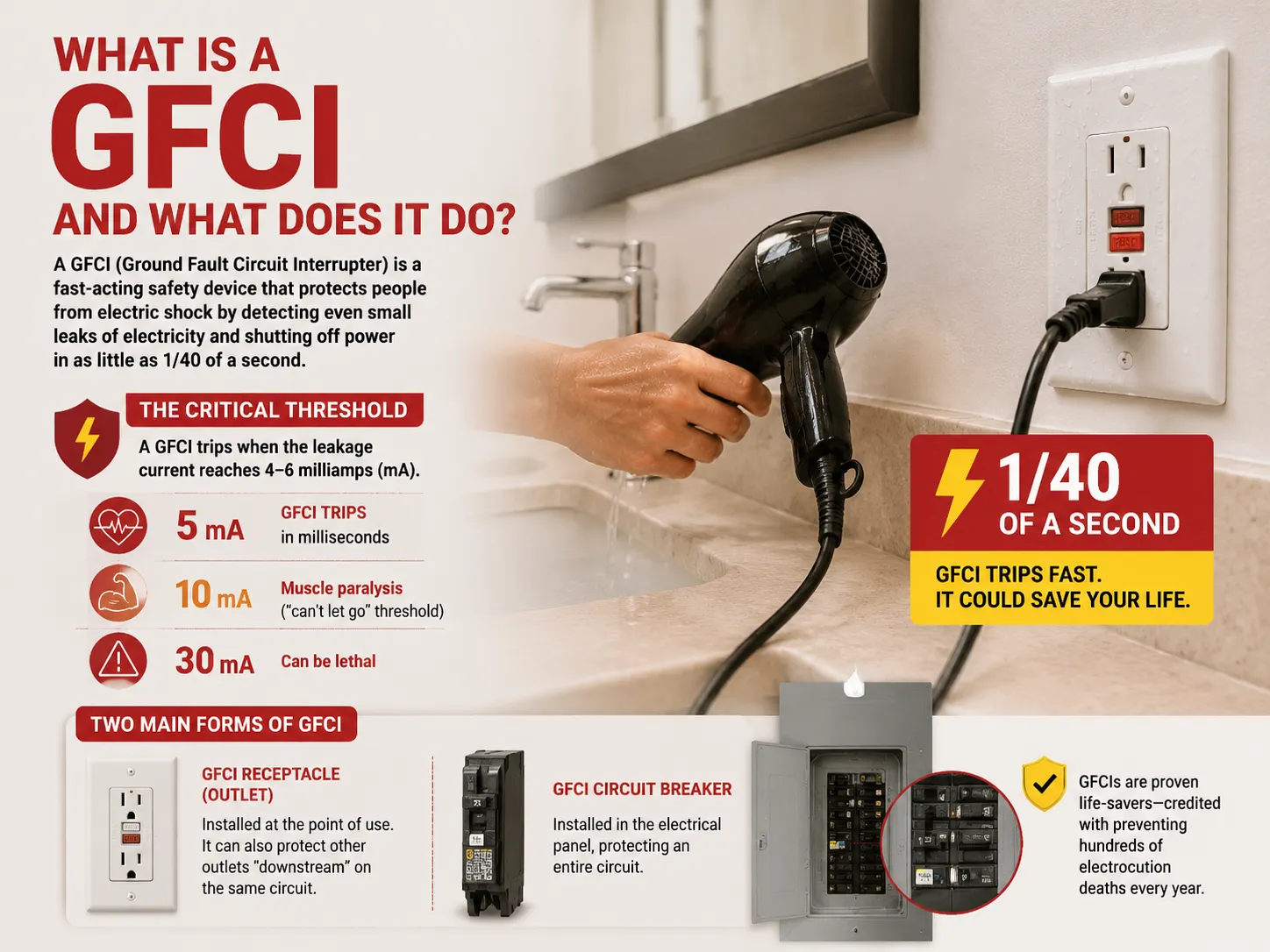
Mức quan trọng: GFCI được kích hoạt ở mức 4 đến 6 mA. So sánh, 10 mA có thể gây liệt cơ (ngưỡng “không thể buông tay”), trong khi mức gây chết người khoảng 30 mA. Trong mili giây, GFCIs kích hoạt ở 5 mA và ngăn chặn điện giật trước khi quá muộn. Đó là lý do Ủy ban An toàn Sản phẩm Tiêu dùng chủ yếu công nhận GFCIs đã cứu hàng trăm người khỏi điện giật. GFCIs có hai loại chính:
- Ổ cắm GFCI: ổ cắm với các nút TEST và RESET mà chúng ta biết có thể được tìm thấy tại các vị trí sử dụng. Nó cũng có thể bảo vệ các ổ cắm khác trên mạch của nó.
- Bộ ngắt mạch GFCI: đặt tại bảng điện, bảo vệ toàn bộ mạch khỏi nguy hiểm.
Bài viết của chúng tôi về bộ ngắt mạch và bộ ngắt mạch lỗi đất giải thích cách hai thiết bị hoạt động cùng nhau.
Cách GFCI phát hiện lỗi đất
GFCI chứa một biến áp nhỏ được gọi là biến dòng (CT) bao quanh cả dây nóng và dây trung tính. Đây là cách nó hoạt động:
- Hoạt động bình thường: Dòng điện chảy qua dây nóng và trở lại qua dây trung tính với lượng dòng điện bằng nhau. Các trường từ hủy bỏ nhau, do đó biến áp không phát hiện dòng điện.
- Lỗi đất: Dòng điện bị chuyển hướng qua người, nước hoặc chỗ hỏng xuống đất thay vì theo đường đi thông thường. Do đó, dây nóng có dòng điện nhiều hơn dây trung tính.
- Mất cân bằng: Biến áp phát hiện sự khác biệt từ 4–6 miliampe.
- Tín hiệu: Biến dòng kích hoạt một solenoid mở cơ học các tiếp điểm và ngắt nguồn điện khỏi ổ cắm.
- Đặt lại: Người dùng cần nhấn nút reset để bật lại nguồn vì GFCI giữ thông tin về lỗi.
GFCI là loại bảo vệ hoàn toàn khác với bộ ngắt mạch vì nó phát hiện rò rỉ đất chứ không phải quá tải.
Sự thật và bằng chứng: Tiêu chuẩn & Mã
Đây là bằng chứng tài liệu giải quyết câu hỏi một lần và mãi mãi:
| Nguồn | Nội dung |
|---|---|
| NFPA 70 (Mã điện quốc gia) | Định nghĩa và yêu cầu “ground-fault circuit-interrupters” trong Điều 210.8 (đơn vị cư trú), Điều 210.12 (lỗi hồ quang), và Điều 680 (hồ bơi). Thuật ngữ chính thức là “interrupter.” |
| UL 943 | Tiêu chuẩn an toàn có tiêu đề “Tiêu chuẩn An toàn cho Bộ ngắt mạch dò dòng điện rò.” GFCI được UL liệt kê được kiểm tra để ngắt mạch ở mức 4–6 mA trong vòng 25 ms. |
| NEC 210.8 | Yêu cầu bảo vệ GFCI cho các ổ cắm phòng tắm, mặt bàn bếp, nhà để xe, ngoài trời, tầng hầm, không gian crawl, khu vực giặt ủi và quầy bar ướt. |
| Tài liệu nhà sản xuất | Leviton, Eaton, Legrand, Hubbell — trang sản phẩm và hướng dẫn lắp đặt của mọi nhà sản xuất lớn đều sử dụng thuật ngữ “ground fault circuit interrupter.” |
| Sử dụng từ điển/ngành | Các bảng thuật ngữ ngành điện (IEEE, ESFI, OSHA) đều định nghĩa GFCI là “ground fault circuit interrupter.” |
Tất cả các cơ quan chính thống về điện đều tránh sử dụng thuật ngữ “interference.” Nếu bạn được kiểm tra hoặc thi cấp phép dựa trên từ viết tắt này, câu trả lời bạn phải chọn luôn là từ “interrupter.”
Nơi Cần Có GFCI
Theo NEC 210.8, các khu vực sau trong môi trường dân cư bắt buộc phải được trang bị bảo vệ Ground Fault Circuit Interrupter (GFCI):
- Phòng tắm phải có bảo vệ GFCI cho tất cả các ổ cắm.
- Đối với mặt bàn bếp, tất cả các ổ cắm trong phạm vi 6 feet từ bồn rửa phải được bảo vệ bằng GFCI.
- Bảo vệ GFCI phải được cung cấp trong tất cả các nhà để xe hoặc tầng hầm chưa hoàn thiện.
- Tất cả các ổ cắm ngoài trời, bao gồm cả những ổ cắm sử dụng trong không gian crawl và các tòa nhà chưa hoàn thiện phải được trang bị GFCI.
- Phòng giặt ủi phải tuân thủ các yêu cầu về GFCI.
- Quầy bar ướt phải được trang bị bảo vệ GFCI.
- Bảo vệ GFCI cũng được yêu cầu cho nhà thuyền, hồ bơi và spa.
Tuy nhiên, các yêu cầu về GFCI mở rộng cũng áp dụng trong môi trường thương mại và công nghiệp. Các mã hiện hành đã trở nên nghiêm ngặt hơn (2020 và 2023) liên quan đến các thiết bị trước đây không yêu cầu GFCI hoạt động.
Nguyên nhân khiến GFCI ngắt mạch là gì?
GFCI ngắt mạch bất cứ khi nào nó phát hiện dòng điện rò ra đất. Các nguyên nhân phổ biến nhất:
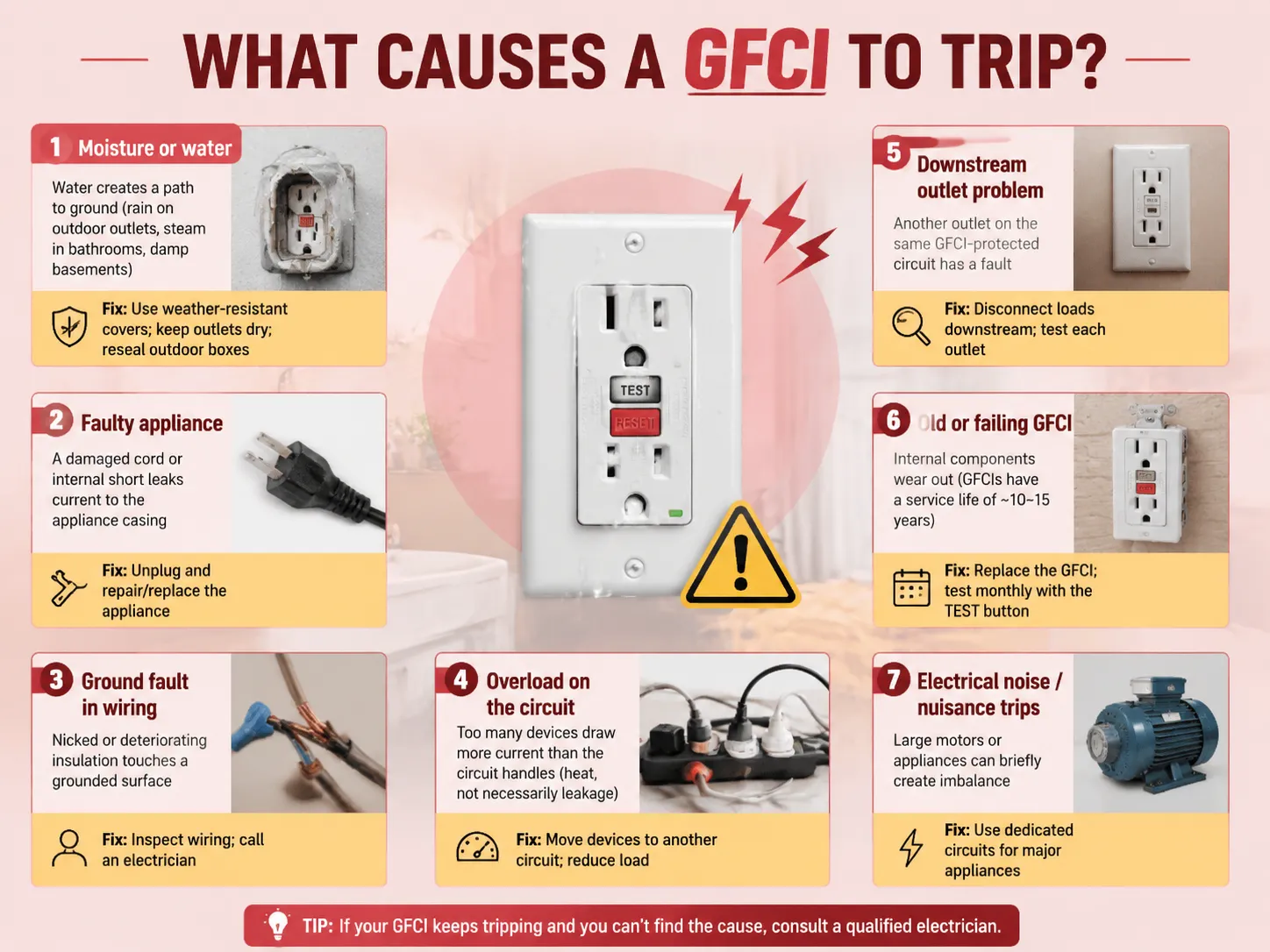
| Nguyên nhân | Điều gì đang xảy ra | Khắc phục |
|---|---|---|
| Độ ẩm hoặc nước | Nước tạo đường dẫn ra đất (mưa trên ổ cắm ngoài trời, hơi nước trong phòng tắm, tầng hầm ẩm ướt) | Sử dụng nắp chống thời tiết; giữ ổ cắm khô ráo; bịt kín lại hộp ngoài trời |
| Thiết bị bị lỗi | Dây cáp bị hỏng hoặc chập bên trong làm rò dòng điện ra vỏ thiết bị | Rút phích cắm và sửa chữa/thay thế thiết bị |
| Lỗi dòng rò trong dây dẫn | Lớp cách điện bị trầy xước hoặc xuống cấp chạm vào bề mặt nối đất | Kiểm tra dây dẫn; gọi thợ điện |
| Quá tải trên mạch | Quá nhiều thiết bị kéo dòng điện vượt quá khả năng của mạch (nhiệt, không nhất thiết là rò rỉ) | Chuyển thiết bị sang mạch khác; giảm tải |
| Vấn đề ổ cắm phía sau | Một ổ cắm khác trên cùng mạch được bảo vệ bởi GFCI bị lỗi | Ngắt kết nối tải phía sau; kiểm tra từng ổ cắm |
| GFCI cũ hoặc hỏng | Các thành phần bên trong bị mòn (GFCI có tuổi thọ khoảng 10–15 năm) | Thay thế GFCI; kiểm tra hàng tháng bằng nút TEST |
| Nhiễu điện / ngắt mạch không mong muốn | Động cơ lớn hoặc thiết bị có thể tạo ra sự mất cân bằng tạm thời | Sử dụng mạch riêng cho các thiết bị lớn |
Để biết thêm về chẩn đoán ngắt mạch lặp lại ở cấp độ bộ ngắt mạch, xem các bài viết của chúng tôi về nguyên nhân khiến bộ ngắt mạch ngắt và liệu bộ ngắt mạch ngắt liên tục có nguy hiểm hay không.
Những thiết bị không nên cắm vào GFCI
Đây là một chi tiết quan trọng cần lưu ý. Các quy chuẩn xây dựng quy định sự cần thiết của an toàn GFCI trong một số trường hợp, nhưng có một số thiết bị không nên hoạt động trên các mạch được trang bị an toàn GFCI vì việc tắt đột ngột có thể dẫn đến hư hỏng.
- Tủ lạnh và tủ đông: nếu GFCI ngắt mạch đột ngột, tủ lạnh sẽ tắt mà bạn không nhận biết được và tình trạng này dẫn đến thực phẩm bị hỏng. Trong nhiều trường hợp, thợ điện thường đặt tủ lạnh trên các mạch riêng biệt và đảm bảo chỉ có bảo vệ GFCI ở những nơi được quy định bởi mã, ví dụ như khi đặt cách bồn rửa dưới 6 feet.
- Máy bơm hố thu nước: trong trường hợp GFCI đã ngắt mạch, máy bơm sẽ tắt và tầng hầm bị ngập nước. Quy chuẩn hiện hành quy định các mạch máy bơm hố thu nước phải có bảo vệ GFCI, do đó nên sử dụng các bộ ngắt mạch GFCI có cảm biến báo động hoặc máy bơm hố thu nước chạy bằng pin.
- Thiết bị hỗ trợ sự sống và máy y tế: những thiết bị này phải luôn hoạt động và cần nguồn điện được đảm bảo liên tục.
- Tủ đông và tủ đông trong gara: vấn đề tương tự như đối với tủ lạnh.
- Máy tính/máy chủ (trong một số trường hợp): việc ngắt mạch không mong muốn có thể dẫn đến mất thông tin quan trọng, do đó phải lắp đặt các mạch không gián đoạn.
Điều chính ở đây là tuân theo hướng dẫn của NEC là bắt buộc nếu bảo vệ GFCI được yêu cầu trong trường hợp của bạn vì một số thiết bị có mạch riêng biệt tách biệt với các thiết bị khác và được trang bị cầu dao GFCI có báo động để thông báo cho bạn về tình trạng ngắt mạch. Trong trường hợp bạn không chắc chắn các yêu cầu hiện hành là gì, luôn tốt hơn khi liên hệ với thợ điện có giấy phép.
GFCI và Cầu dao: Có phải là cùng một thứ?
Không — chúng bảo vệ chống lại các nguy hiểm khác nhau:
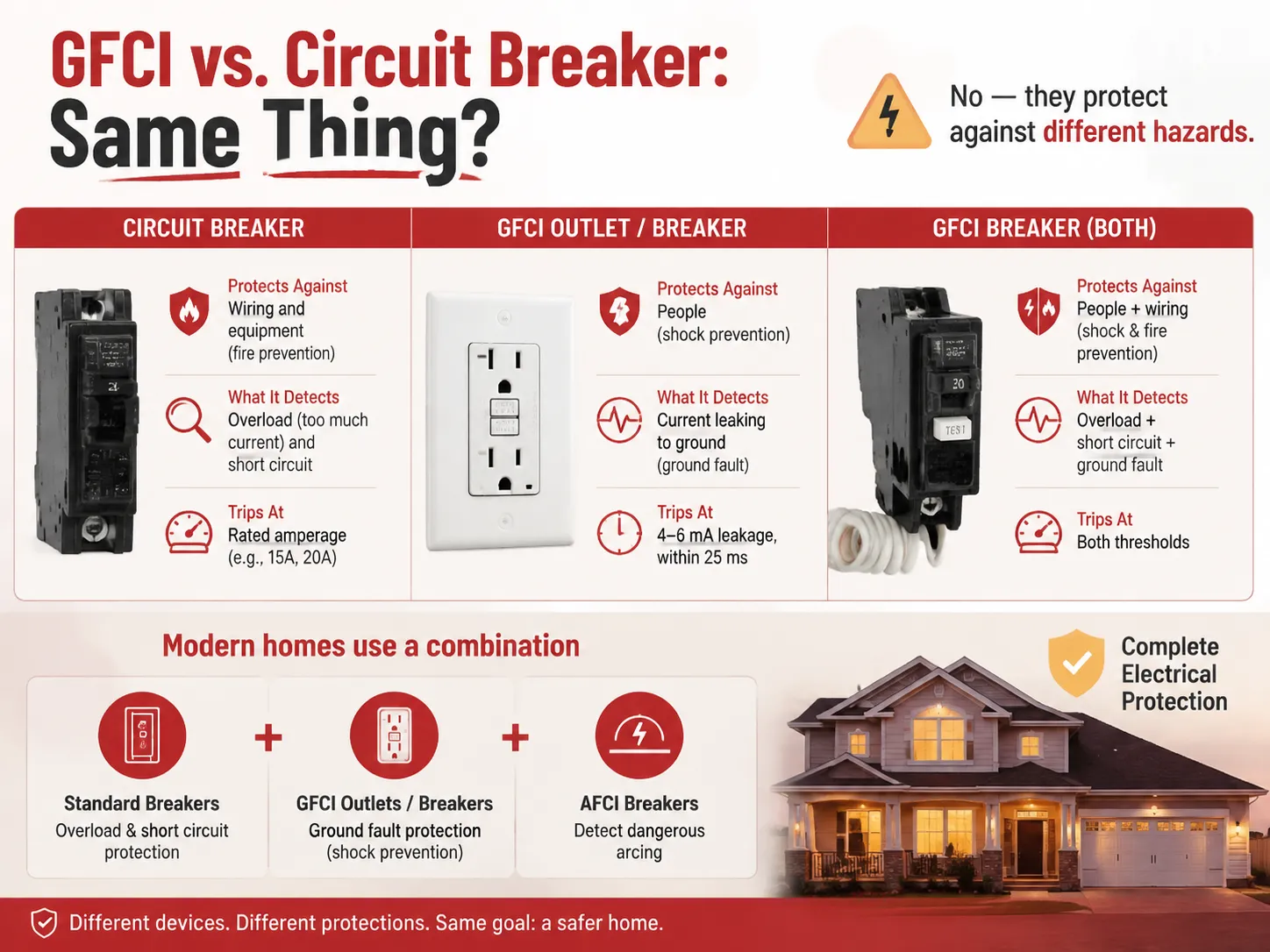
| Thiết bị | Bảo vệ chống lại | Phát hiện được | Ngắt ở |
|---|---|---|---|
| Cầu dao | Điện dây và thiết bị (phòng cháy) | Quá tải (dòng điện quá lớn) và ngắn mạch | Dòng định mức (ví dụ: 15A, 20A) |
| GFCI | Con người (phòng chống điện giật) | Dòng điện rò rỉ xuống đất (sự cố rò đất) | Rò rỉ 4–6 mA, trong vòng 25 ms |
| Cầu dao GFCI (cả hai) | Con người + dây điện | Quá tải + ngắn mạch + sự cố rò đất | Cả hai ngưỡng |
Nhà ở hiện nay tích hợp cầu dao tiêu chuẩn để bảo vệ quá tải mạch, ổ cắm GFCI (Ground Fault Circuit Interrupter) hoặc cầu dao GFCI để bảo vệ chống sốc điện, và cầu dao mạch cung cấp để phát hiện mức dòng hồ quang không an toàn. Nếu bạn muốn hiểu về các thiết bị dòng dư liên quan được sử dụng ở các khu vực khác trên thế giới, so sánh của chúng tôi về RCCB và RCBO bao gồm các phiên bản quốc tế của cùng một khái niệm.
Câu hỏi thường gặp
GFCI có phải là viết tắt của ground fault circuit interrupter không?
Đúng vậy — GFCI có nghĩa là ground fault circuit interrupter. Đây là phiên bản chính xác được quy định bởi Mã điện quốc gia (NFPA 70), UL 943 và tất cả các nhà sản xuất hàng đầu. GFCI giám sát dòng điện đi ra qua dây nóng so với dòng điện trả về trên dây trung tính, và GFCI ngắt mạch gần như ngay lập tức trong khoảng 1/40 giây nếu sự khác biệt đạt khoảng 4-6 miliampe (sự cố rò đất). Tất cả các trạng thái mở rộng khác như nhiễu mạch sự cố rò đất đều sai.
Những thiết bị nào không nên cắm vào GFCI?
Các thiết bị có thể nguy hiểm nếu mất điện là tủ lạnh (thực phẩm hỏng), máy bơm hố ga (ngập lụt), thiết bị y tế và hỗ trợ sự sống (nguy hiểm đến tính mạng), và máy tính/máy chủ quan trọng (nguy cơ mất dữ liệu). Tuy nhiên, quy định vẫn yêu cầu phải có GFCI ở nhiều nơi này. Trong hầu hết các trường hợp, điều này có thể đạt được bằng cách sử dụng mạch riêng biệt, cầu dao GFCI có báo động hoặc pin dự phòng; bảo vệ không nên bị bỏ qua. Hãy tham khảo chuyên gia cho tình huống của bạn và kiểm tra các quy định địa phương.
GFCI có ý nghĩa gì đối với lắp đặt mạch, cầu chì tổng, mạch xung, thiết bị ngắt mạch sự cố rò đất, lắp đặt mạch sự cố rò đất?
Câu trả lời đúng là ground fault circuit interrupter. Tất cả các lựa chọn khác đều sai; “grand fuse circuitry” nhầm lẫn GFCI với cầu chì; “impulse” không liên quan đến chức năng của GFCI; và “ground fault circuitry installation” mô tả một lắp đặt chung chung chứ không phải thiết bị. Thuật ngữ phù hợp với định nghĩa trong NEC và UL chỉ có ground fault circuit interrupter — thiết bị ngắt mạch ngay khi phát hiện lỗi nối đất.
Điều gì có thể khiến ground fault circuit interrupter (GFCI) nhảy?
Khi GFCI nhận biết dòng điện rò rỉ xuống đất (4–6 mA), nó sẽ nhảy. Các nguyên nhân thường gặp bao gồm: sự hiện diện của độ ẩm hoặc nước trong khu vực ổ cắm (như mưa, hơi nước, tầng hầm ẩm ướt); thiết bị bị lỗi có dây hỏng hoặc chập bên trong; lỗi nối đất trong hệ thống dây điện (lớp cách điện bị trầy xước); quá tải mạch do kết nối quá nhiều thiết bị; sự cố ở các ổ cắm phía sau cùng được bảo vệ bởi GFCI; GFCI cũ hoặc hỏng (tuổi thọ khoảng 10-15 năm); và nhiễu do động cơ lớn gây ra. Nếu GFCI nhảy quá thường xuyên, cần rút tất cả thiết bị ra khỏi mạch. Sau đó, phải đặt lại và cắm lại từng thiết bị một để xác định nguồn gây lỗi, hoặc cần nhờ đến sự trợ giúp của thợ điện chuyên nghiệp.
Tài liệu tham khảo
- NFPA 70 (Mã điện quốc gia) — Bộ quy chuẩn chính thức định nghĩa “ground-fault circuit-interrupter” và chỉ rõ nơi cần bảo vệ GFCI (Điều 210.8, Điều 680).
- UL 943 — Tiêu chuẩn An toàn cho Ground-Fault Circuit-Interrupters — Tiêu chuẩn an toàn UL chứng nhận GFCI, quy định ngưỡng nhảy 4–6 mA và thời gian nhảy 25 ms.
- An toàn điện OSHA — Hướng dẫn an toàn lao động tại Mỹ về việc sử dụng GFCI trong xây dựng và công nghiệp nói chung, củng cố thuật ngữ chính xác và ứng dụng bắt buộc.
- Quỹ An toàn Điện Quốc tế (ESFI) — Tổ chức phi lợi nhuận cung cấp giáo dục người tiêu dùng về kiểm tra, lắp đặt GFCI và vai trò cứu sống của bảo vệ lỗi nối đất.
- An toàn điện CPSC — Dữ liệu của Ủy ban An toàn Sản phẩm Tiêu dùng Mỹ về các trường hợp điện giật được ngăn chặn nhờ GFCI và hướng dẫn an toàn điện gia đình.
- U.S. Department of Energy — Vận hành ổ cắm GFCI — Hướng dẫn thực tế về cách hoạt động của ổ cắm GFCI, cách kiểm tra hàng tháng và nguyên nhân gây nhảy.
Kết luận
Rõ ràng GFCI có nghĩa là Ground Fault Circuit Interrupter chứ không phải “ground fault circuit interference.” Từ “interrupter” được dùng vì nó mô tả chức năng của thiết bị này — tạm thời ngắt mạch sau khi phát hiện lỗi nối đất. Trong khi đó, từ “interference” chỉ sự can thiệp gây gián đoạn hoạt động bình thường, điều hoàn toàn trái ngược với chức năng của GFCI.
Đây là những điểm cần ghi nhớ:
- Thuật ngữ chính xác là interrupter, đã được NEC, UL 943, OSHA và tất cả nhà sản xuất xác nhận chính thức.
- GFCI so sánh dòng điện đi ra và dòng điện đi vào; nó nhảy ở mức 4-6 mA trong vòng vài mili giây.
- Nó bảo vệ con người nhưng không bảo vệ dây dẫn vì trong khi bảo vệ mạch ngăn quá tải, GFCI hoạt động để ngăn ngừa sốc điện.
- Đảm bảo GFCI được kiểm tra hàng tháng bằng nút TEST, và được thay thế sau mỗi 10-15 năm.
- Tránh kết nối thiết bị hỗ trợ sự sống và lưu trữ thực phẩm vào các mạch GFCI nơi việc ngắt mạch có thể gây hại — thay vào đó, chọn các mạch không có GFCI hoặc có tín hiệu báo động nếu được phép theo quy định.
Lần tới khi bạn thấy “GFCI là viết tắt của ground fault circuit interference” trên mạng, bạn sẽ biết chắc chắn rằng điều này sai và lý do tại sao.