
หากคุณค้นหาแอมแปร์ของสายไฟ 8 AWG บนอินเทอร์เน็ต คุณมักจะพบคำตอบเช่น 40, 50 หรือ 55 แอมป์ คำกล่าวเหล่านี้ตรงกันเนื่องจากผู้คนอ้างอิงตารางเดียวกันและเข้าใจอย่างถูกต้อง ความแตกต่างอยู่ที่ปัจจัยอื่นที่ไม่เกี่ยวข้องกับทองแดง เช่น การจัดอันดับฉนวน ความร้อนของขั้วต่อ และการมีอากาศถ่ายเท.
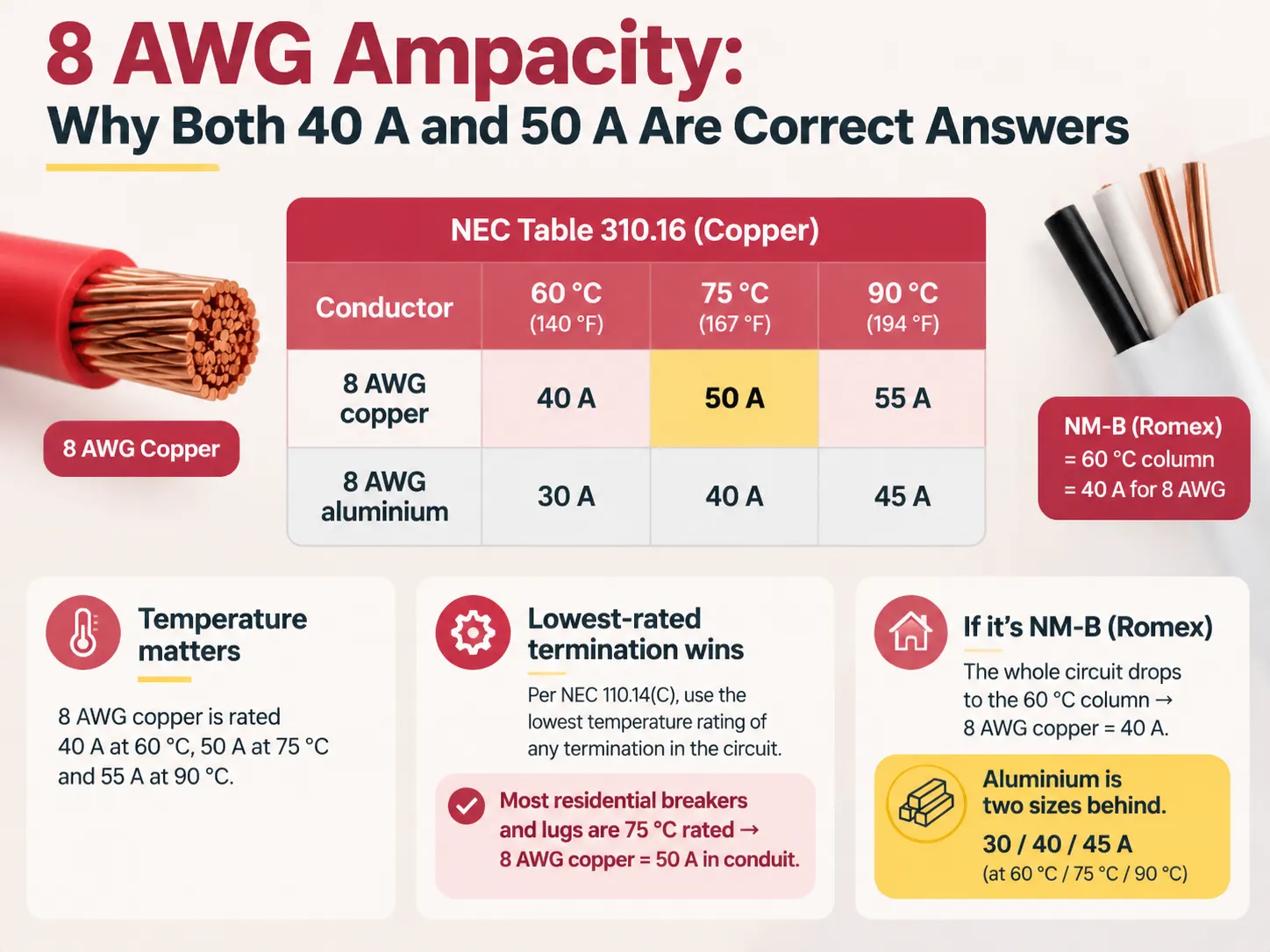
โดยสรุป การจัดอันดับสำหรับทองแดงขนาด 8 เกจประมาณ 40 A ที่ 60 องศาเซลเซียส, 50 A ที่ 75 องศาเซลเซียส และ 55 A ที่ 90 องศาเซลเซียส ตามที่แสดงในตาราง NEC 310.16 การจัดอันดับที่จะใช้จะเป็นค่าที่ต่ำที่สุดในวงจรตามที่ระบุในรหัส NEC 110.14(c): เนื่องจากในบ้านพักอาศัยส่วนใหญ่ ขั้วต่อและเบรกเกอร์ได้รับการจัดอันดับที่ 75 องศา ดังนั้นทองแดงขนาด 8 เกจจึงเป็นตัวนำ 50 A ในท่อร้อยสาย การเดินสายใด ๆ ที่ทำในท่อ NM-B (Romex) จะทำให้การจัดอันดับลดลงไปที่คอลัมน์ 60 องศา ทำให้เป็นตัวนำ 40 A.
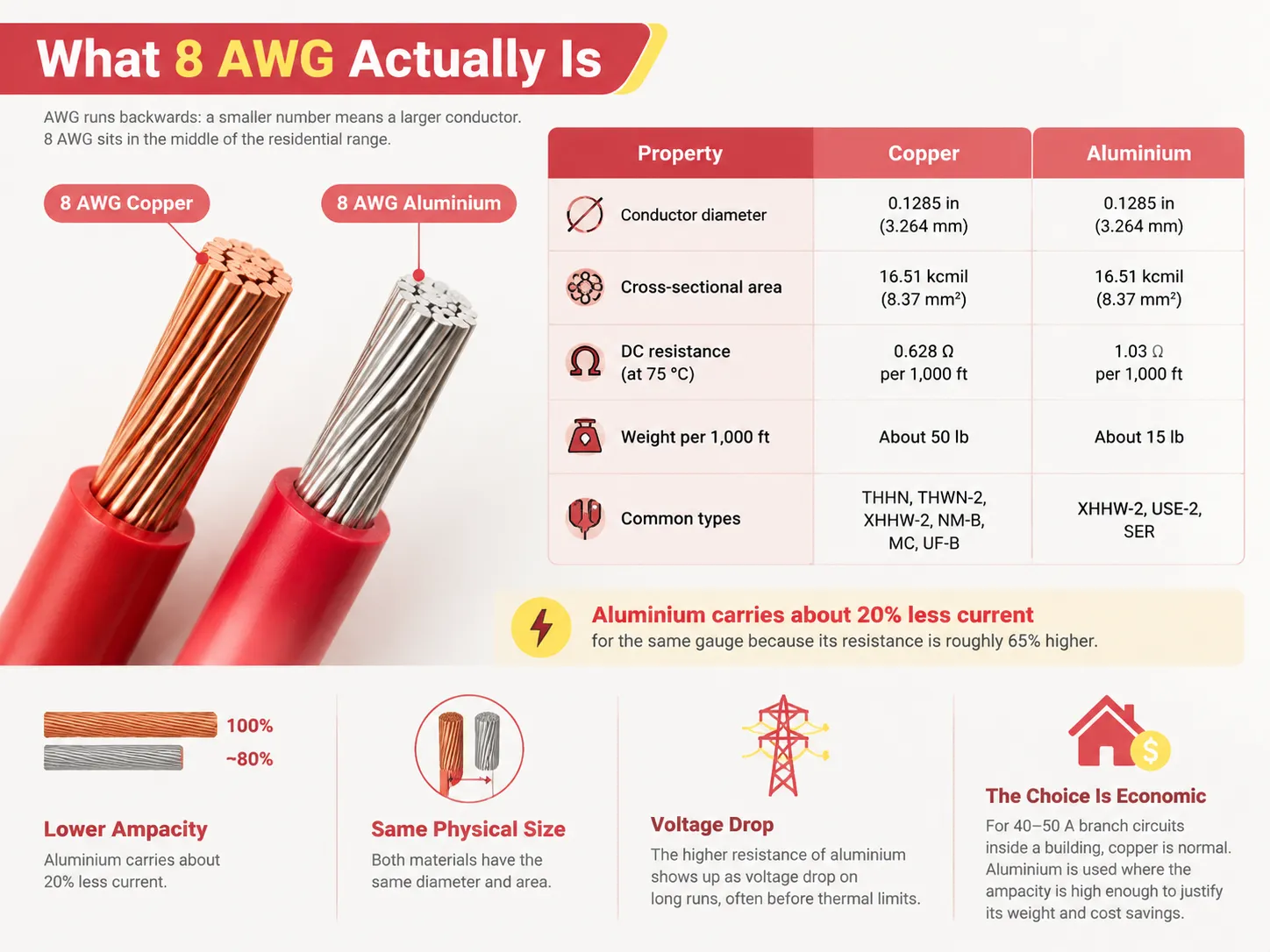
8 AWG คืออะไรจริง ๆ
American Wire Gauge มีลำดับย้อนกลับ หมายเลขยิ่งเล็ก สายไฟยิ่งใหญ่ 8 AWG อยู่ตรงกลางของช่วงบ้าน อยู่เหนือ 14, 12 และ 10 AWG ที่ใช้สำหรับวงจรสาขาปกติ แต่ต่ำกว่า 6 และ 4 AWG ที่ใช้สำหรับฟีดเดอร์และทางเข้าบริการขนาดใหญ่กว่า.
| คุณสมบัติ | ทองแดง | อะลูมิเนียม |
|---|---|---|
| เส้นผ่านศูนย์กลางตัวนำ | 1285 นิ้ว (3.264 มม.) | 1285 นิ้ว (3.264 มม.) |
| พื้นที่หน้าตัด | 51 kcmil (8.37 มม.²) | 51 kcmil (8.37 มม.²) |
| ความต้านทาน DC ที่ 75 °C | 628 โอห์ม ต่อ 1,000 ฟุต | 03 โอห์ม ต่อ 1,000 ฟุต |
| น้ำหนักต่อ 1,000 ฟุต | ประมาณ 50 ปอนด์ | ประมาณ 15 ปอนด์ |
| ประเภททั่วไป | THHN, THWN-2, XHHW-2, NM-B, MC, UF-B | XHHW-2, USE-2, SER |
แม้ว่าทั้งสองโลหะจะมีขนาดเดียวกัน แต่พฤติกรรมแตกต่างกันมาก อะลูมิเนียมมีแอมแปร์น้อยกว่าทองแดงขนาดเดียวกันประมาณ 20% เนื่องจากความต้านทานของมันสูงกว่าทองแดงประมาณ 65% ผลลัพธ์คือแนวทางอุตสาหกรรมของอะลูมิเนียมแนะนำให้ใช้ขนาดสายไฟที่ใหญ่กว่าทองแดงสองขนาด สำหรับการเดินสายระยะยาว ความแตกต่างของความต้านทานจะแสดงออกมาในรูปของแรงดันตกคร่อมก่อนที่จะถึงข้อจำกัดด้านความร้อน
การเลือกใช้ระหว่างสองชนิดนี้มักเป็นเรื่องทางเศรษฐกิจมากกว่าทางเทคนิค และมีประวัติยาวนานทั้งในด้านสาธารณูปโภคและวงจรสาขาของการติดตั้ง — เหตุผลเบื้องหลังนี้อธิบายไว้ใน ทำไมทองแดงและอะลูมิเนียมจึงถูกใช้สำหรับการส่งกำลังไฟฟ้า. สำหรับวงจรสาขาขนาด 40 หรือ 50 แอมป์ภายในอาคาร ทองแดงเป็นคำตอบปกติ; อะลูมิเนียมจะปรากฏในกรณีที่แอมแปร์สูงพอที่น้ำหนักและการประหยัดต้นทุนมีความสำคัญมากกว่าการเพิ่มขนาดสาย.
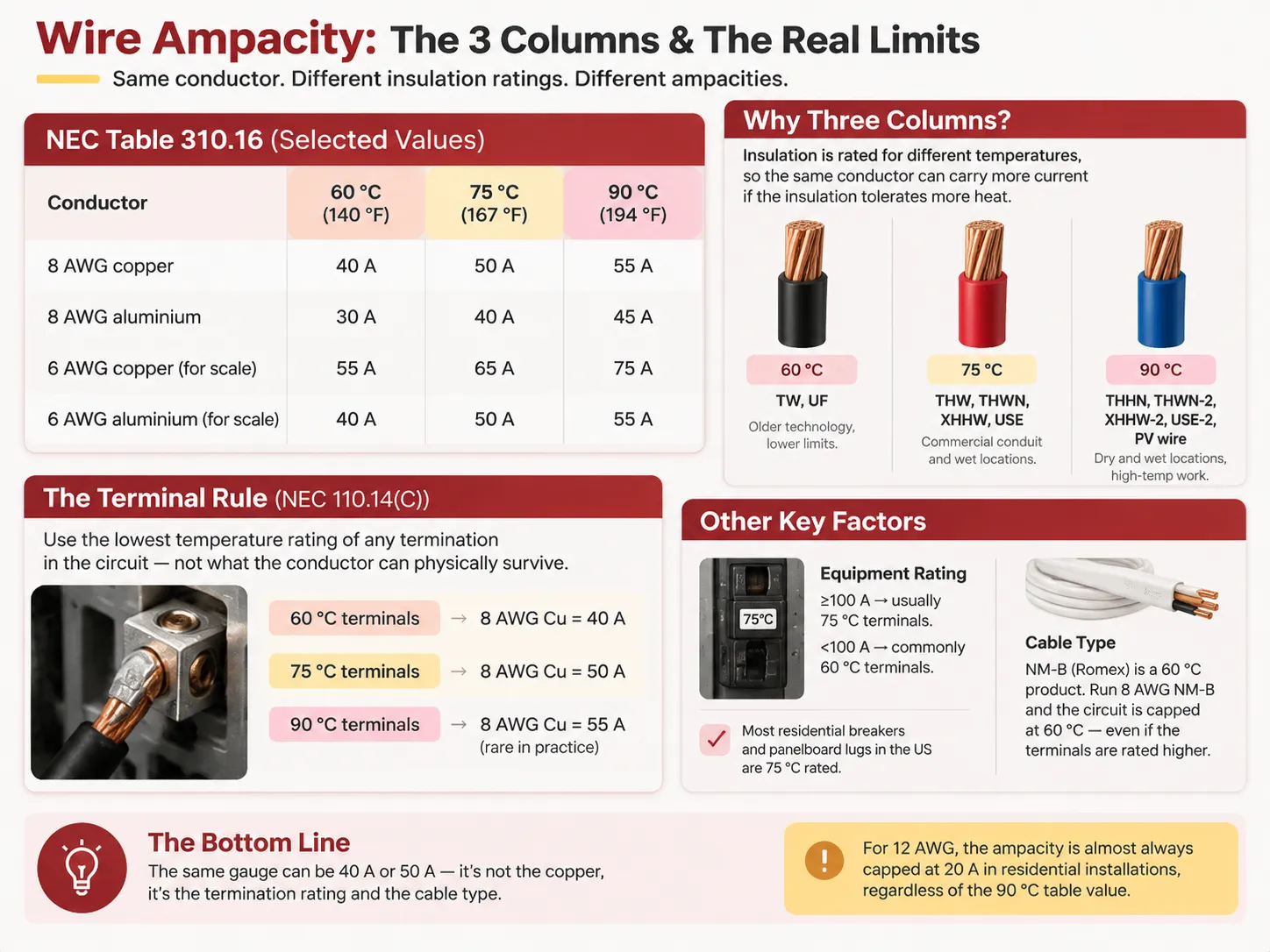
ตารางแอมแปร์ และเหตุผลที่มีสามคอลัมน์
ตัวเลขเหล่านี้มาจากตาราง NEC 310.16 ซึ่งระบุแอมแปร์ที่อนุญาตสำหรับตัวนำที่มีฉนวนไม่เกิน 2000 โวลต์ และทำงานที่อุณหภูมิ 30 องศาเซลเซียส โดยมีตัวนำที่นำกระแสไม่เกินสามตัวในท่อหรือสายเคเบิล.
| ตัวนำ | 60 °C (140 °F) | 75 °C (167 °F) | 90 °C (194 °F) |
|---|---|---|---|
| ทองแดง 8 AWG | 40 แอมป์ | 50 แอมป์ | 55 แอมป์ |
| อะลูมิเนียม 8 AWG | 30 แอมป์ | 40 แอมป์ | 45 A |
| ทองแดง 6 AWG (เพื่อการเปรียบเทียบ) | 55 แอมป์ | 65 แอมป์ | 75 A |
| อะลูมิเนียม 6 AWG (เพื่อการเปรียบเทียบ) | 40 แอมป์ | 50 แอมป์ | 55 แอมป์ |
คอลัมน์เป็นสิ่งจำเป็นเนื่องจากฉนวนถูกผลิตด้วยการจัดอันดับอุณหภูมิที่แตกต่างกัน และตัวนำอาจรับกระแสได้มากขึ้นก่อนที่จะร้อนเกินไปเนื่องจากฉนวนสามารถทนต่ออุณหภูมิที่คาดไว้ได้.
- ฉนวน 60 °C: TW, UF เทคโนโลยีเก่า ขีดจำกัดต่ำกว่า.
- ฉนวน 75 °C: THW, THWN, XHHW, USE ท่อร้อยสายทั่วไป สถานที่เปียกในงานเชิงพาณิชย์.
- ฉนวน 90 °C: THHN, THWN-2, XHHW-2, USE-2, สาย PV สถานที่แห้งและเปียก รวมถึงสภาพการทำงานที่อุณหภูมิสูง.
สิ่งหนึ่งที่ควรเน้นเกี่ยวกับ 90 °C คือมักทำให้เกิดความสับสนเมื่อจัดการกับสายขนาดนั้นเพราะคอลัมน์ 90 °C เป็นฐานการลดค่ากำลังและไม่ใช่การจัดอันดับที่ควรใช้สำหรับการต่อสาย มันใช้เพื่อกำหนดว่าอุณหภูมิแวดล้อมและการมัดตัวนำส่งผลต่อการคำนวณอย่างไร และจากนั้นจึงตรวจสอบกับคอลัมน์อุณหภูมิที่สามารถใช้สำหรับการต่อสายเฉพาะได้ 55 A ไม่สามารถใช้เป็นค่าดัดแปลงสำหรับทองแดง 8 AWG ได้เนื่องจากขัดต่อรหัส วิธีการกำหนดกำลังไฟฟ้าทำงานทีละขั้นตอน รวมถึงปัจจัยการแก้ไขและปรับแต่ง ได้อธิบายในบทนำนี้ของ วิธีการกำหนดกำลังไฟฟ้าขั้นต่ำของวงจร.
กฎการต่อสายที่ตัดสินคำตอบ
ตาม NEC 110.14(C) ฉันต้องเลือกกำลังไฟฟ้าของตัวนำโดยอิงจากการจัดอันดับอุณหภูมิต่ำสุดของการต่อสายใด ๆ ไม่ใช่อุณหภูมิสูงสุดที่ฉนวนตัวนำสามารถทนได้ กล่าวอีกนัยหนึ่ง ปัจจัยจำกัดคือการเชื่อมต่อ ไม่ใช่ตัวนำเอง.
ในทางปฏิบัติ:
- ขั้วต่อที่จัดอันดับ 60 °C → ควรใช้คอลัมน์ 60 °C → ทองแดง 8 AWG = 40 A.
- ขั้วต่อที่จัดอันดับ 75 °C → ควรใช้คอลัมน์ 75 °C → ทองแดง 8 AWG = 50 A.
- ขั้วต่อที่จัดอันดับ 90 °C → ควรใช้คอลัมน์ 90 °C → ทองแดง 8 AWG = 55 A – ซึ่งในทางปฏิบัติแทบจะไม่เคยใช้.
อุปกรณ์ที่จัดอันดับ 100 A หรือมากกว่าจะได้รับการจัดอันดับสำหรับขั้วต่อที่ 75 °C ในขณะที่อุปกรณ์ที่จัดอันดับต่ำกว่า 100 A มักจะได้รับการจัดอันดับสำหรับขั้วต่อที่ 60 °C ดังนั้นจึงเป็นที่มาของ 40 A เบรกเกอร์วงจรที่อยู่อาศัยส่วนใหญ่และขั้วต่อแผงควบคุมที่ขายในสหรัฐอเมริกาจะจัดอันดับที่ 75 °C ซึ่งอนุญาตให้มีการใช้งานจริงจำนวนมากกับสาย 8 AWG ที่ 50 A – โดยมีเงื่อนไขว่าการจัดอันดับจริงได้รับการตรวจสอบกับฉลากเบรกเกอร์ รายการแผงควบคุม และแผ่นชื่ออุปกรณ์แล้ว.
40 A ที่สองมาจากประเภทสาย NM-B ซึ่งรู้จักกันทั่วไปในชื่อ Romex เป็นสาย 60 °C หมายความว่าตัวนำ 8 AWG ใน NM-B จะกำหนดวงจรทั้งหมดให้ใช้คอลัมน์ต่ำกว่าแม้ว่าการเชื่อมต่ออื่นจะจัดอันดับสูงกว่า ผลลัพธ์คือขนาดเดียวกันอาจใช้เป็นตัวนำ 40 A ในการใช้งานหนึ่งและ 50 A ในอีกการใช้งานหนึ่งที่ห่างกันเพียงยี่สิบฟุต.
หลักการเดียวกันนี้อธิบายว่า 12 AWG ถูกจำกัดที่ 20 A ในเกือบทุกสถานการณ์ที่อยู่อาศัยแม้ว่าตัวนำ 12 AWG ที่มีฉนวน 90 °C จะสามารถรับกระแสได้ 30 A ในตาราง ด้านล่าง 8 AWG ตัวเลขจะถูกล็อกโดยกฎตัวนำขนาดเล็ก; ที่ 8 AWG ตัวเลขเหล่านี้ไม่ถูกล็อก ซึ่งทำให้ขนาดนี้ขึ้นอยู่กับรายละเอียดการติดตั้งอย่างแท้จริง.
Breaker Sizing: 240.4 and the Next-Size-Up Rule
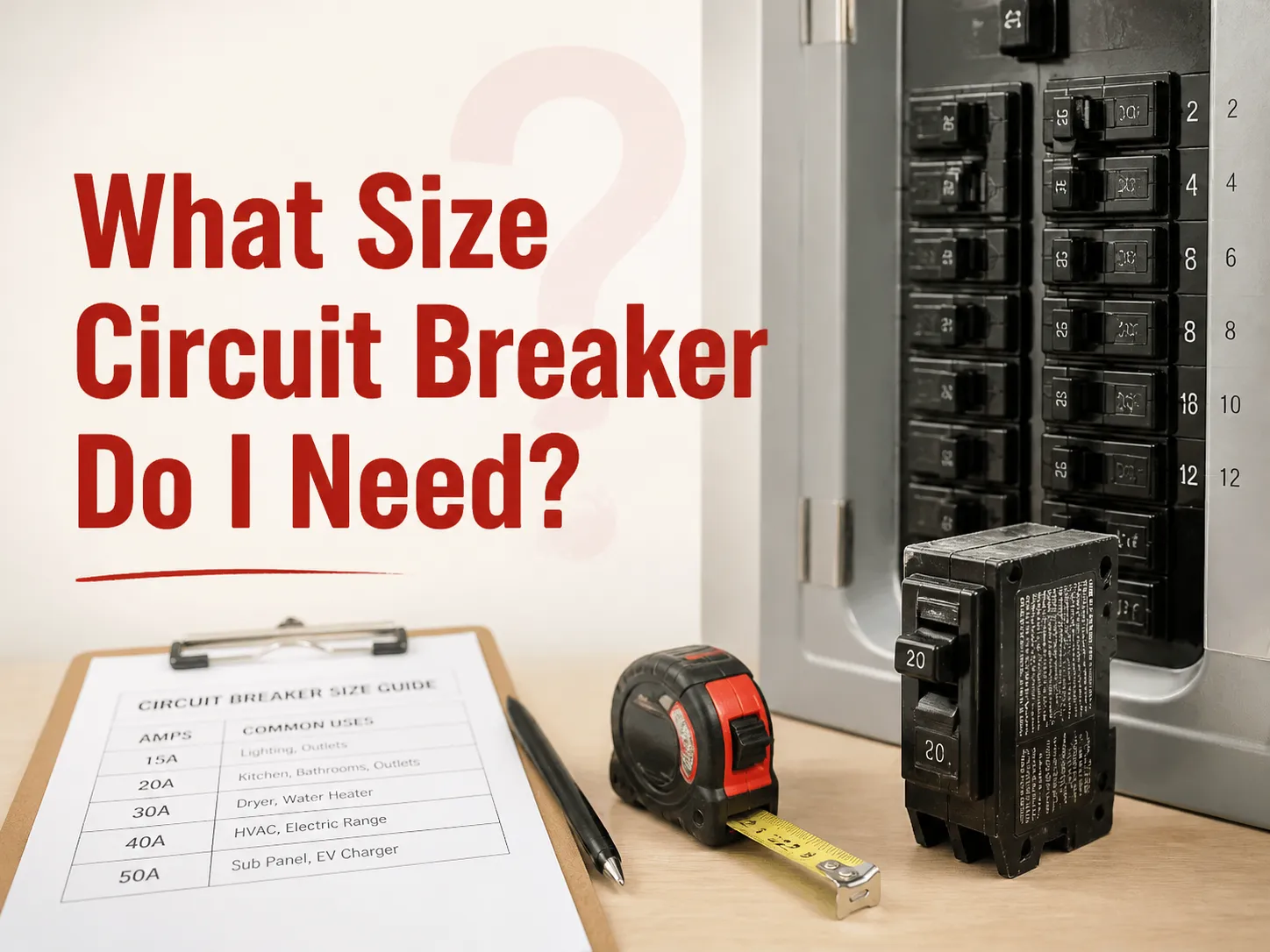
Most online guides falsely state the following: NEC 240.4(D) does not apply to 8 AWG. The small conductor rule pertains to 18, 16, 14, 12, and 10 AWG, and states that the maximum rating is 15 A for the 14 AWG copper, 20 A for the 12 AWG copper, and 30 A for the 10 AWG copper. Because 8 AWG surpasses the limit, the rule in NEC 240.4 applies directly to it, and it is protected by the general rule, where NEC 240.4(B) grants a right to use the next standard overcurrent device size after the ampacity of the wire.
The calculations for 8 AWG copper with the temperature of 75 °C are as follows:
- Ampacity: 50 A.
- Sizes of circuit breakers: 15, 20, 25, 30, 35, 40, 45, 50, 60, 70, 80.
- Next standard size is 45 A, then 50 A. Because the ampacity of the wire is 50 A, one can use a 50 A circuit breaker at 75 °C.
However, there are two constraints. First, because NEC 240.4(D) does not set a limit on the size of 8 AWG wire, it becomes your sole obligation to confirm this or that rating for the amperage of the circuit breaker, so you have to be confident in your calculation. Besides, NEC 240.4(B) is not suitable for multioutlet power circuits, so 50 A circuit breaker at 8 AWG is forbidden under this condition.
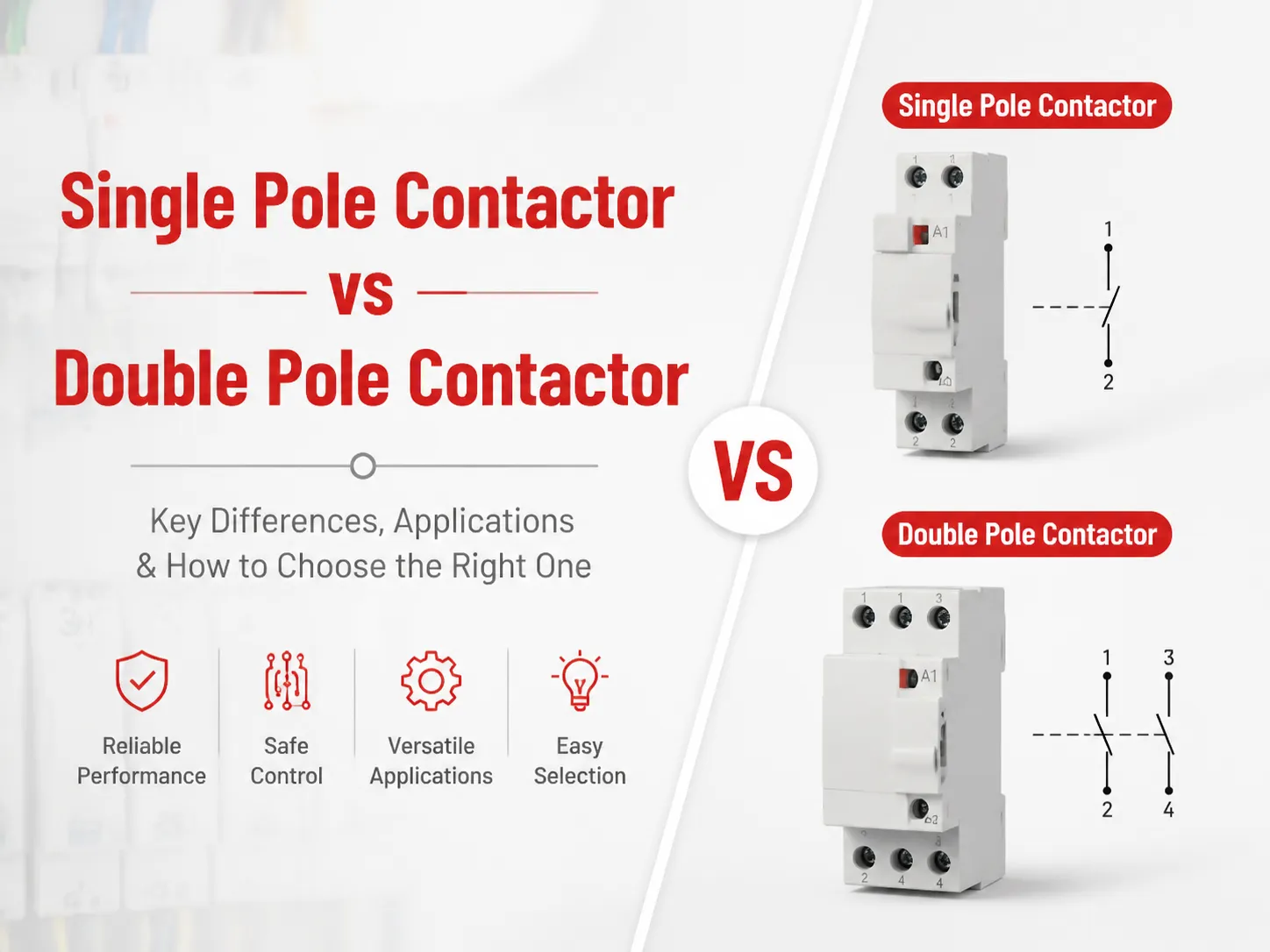
If you need to have the circuit of 60 A, there is no way to use 8 AWG copper for that. Where the breaker sits in a two-pole configuration and how that affects the rest of the circuit is a separate question, and the differences are laid out in this comparison of 50 amp single-pole and double-pole breakers.
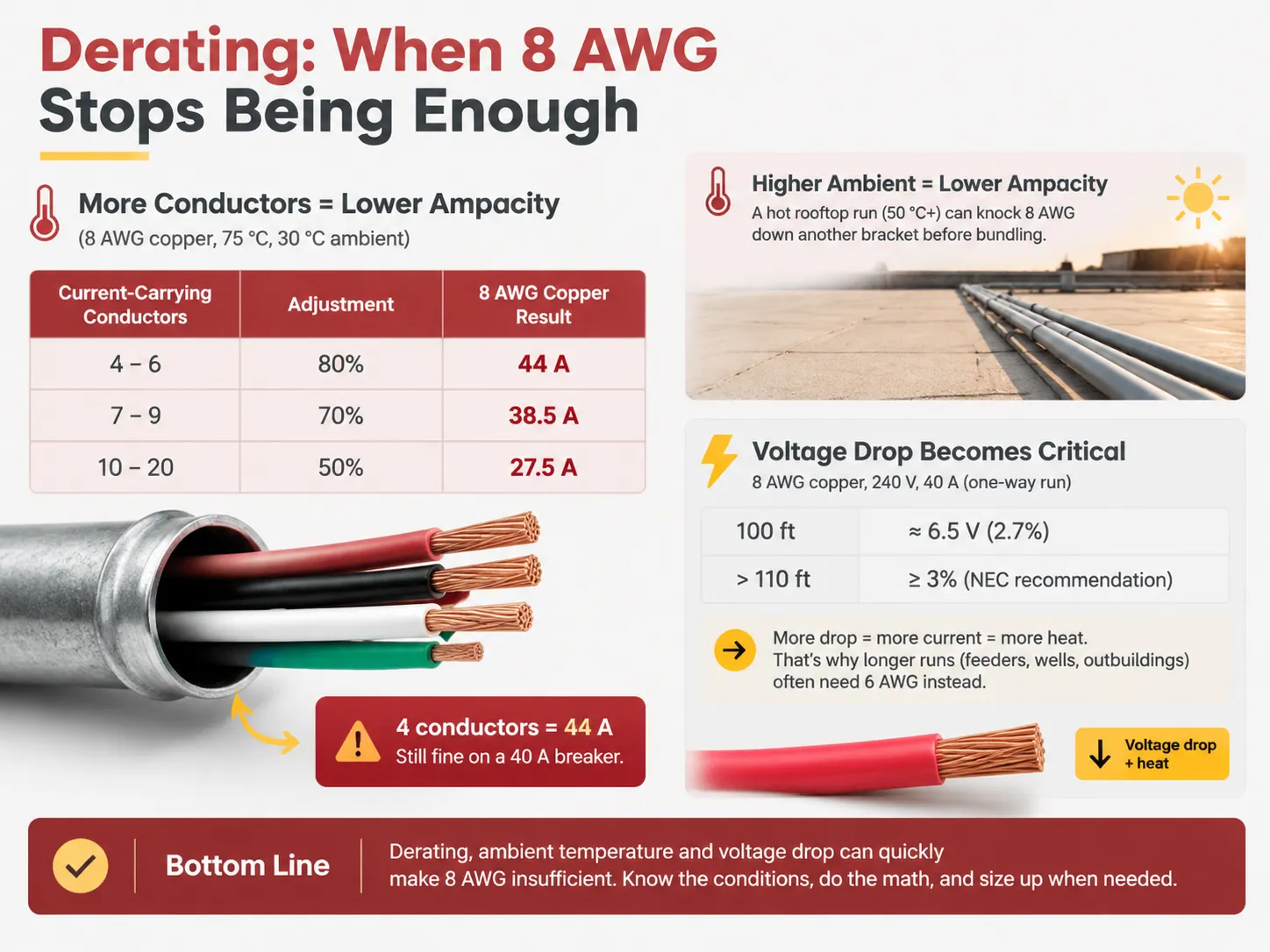
Derating: When 8 AWG Stops Being Enough
The table prescribes only a maximum of three current-carrying conductors and 30 °C of ambient temperature, but both assumptions are usually inaccurate. At 8 AWG, this creates an immediate problem, as no small conductor backstop will save you.
| สภาพ | Adjustment | 8 AWG copper result |
|---|---|---|
| 4–6 current-carrying conductors | 80% | 55 A × 0.80 = 44 A |
| 7–9 current-carrying conductors | 70% | 55 A × 0.70 = 38.5 A |
| 10–20 current-carrying conductors | 50% | 55 A × 0.50 = 27.5 A |
For example, when looking at the first row of the table, if we run four wires of 8 AWG THHN copper through one PVC conduit, we get derated ampacity of 44 A. If we then compare this with the terminal value of ampacity at 75°C which is 50 A, we get 44 A, which means we are fine with our 40 A breaker. If we keep adding conductors to bring the count to seven, the derated ampacity drops to 38.5 A. At this stage, we cannot use 8 AWG wire any longer and we need to switch to 6 AWG wire.
Ambient temperature adds to the problem. The ampacities of wires are determined under the assumption of ambient temperature of 30 C. Under the hotter conditions, correction factors come into play. If we have a conduit running on the roof in hot climate, it gets real hot, around 50 C, and even before we account for the factors of bundling this brings our 8 AWG ampacity down another notch. Finally, if we have continuous load amounting to 125% of the wire’s capacity, we are likely to end up with disappointed numbers on the end of our calculations.
Voltage Drop: The Constraint That Stops Being Theoretical
It is at 8 AWG that one should start to refer to voltage drop as a determining factor when selecting the wire size rather than confirm it. For example, stranded 8 AWG copper has a DC resistance of roughly 0.628 Ω/1000 ft when the temperature is 75 °C. AC resistance is even higher.
Now, a 240 V circuit carrying 40 A would provide the following values: with 100 ft run in one direction, the voltage drop would be approximately 6.5 V or around 2.7%. So, anywhere from 110 ft onward you will face the NEC’s allowed maximum since the 3% limit for branch circuits is highly recommended.
3% and 5% limits are recommendations that are not legally enforced, but recommendations are there for a reason. If the voltage reaches 5%, due to this under-voltage a motor would draw more current than with the normal voltage leading to potential heating of wires. It is usually the case that the most often used 8 AWG circuit would require more powerful wires to cope with the distance. Sizing a feeder for a large service makes the trade-off concrete in the same way, as this guide to wire sizing for a 100 amp service shows.
What 8 AWG Is Actually Used For
The uses of the material are derived from the ratings. 8 AWG copper wire allows for carrying currents within the range of 40–50 A according to known applications, including:
- Feeders for subpanels. The 8/3 cable connecting the subpanel drawing a current of 40 or 50 A in the garage, for instance, provided the sum of the load and the connection distance do not exceed the limits;
- AC and heat pump units. Many central air conditioning units require maximum protection against overcurrent being equal to 40/50 A;
- Electric powered water heaters. Tank water heaters having a power of 9 kW and working at 240 volts may be equipped with heaters using 8/2 wire and a breaker rated at 40 A.
- Cooktops and wall ovens. Relatively small separated units may be powered by 8 AWG cables, however, many ovens require the use of 6 AWG wire nowadays.
- Generators and transfer switches. The 8/3 SOOW portable generator cable supplies a 50 A inlet box;
- Electric charging for EV vehicles. A regular 8 AWG job is represented by a charger rated for 32 A and using a 40 A breaker.
- Solar PV circuits. This circuit must meet the requirements of the NEC Article 690, where 8 AWG THHN or PV types of wire for wire runs suitable for source and output are widely used.
Note that most of these circuits are circuits dedicated to a single unit of load rather than multi-outlet circuits, which is not accidental. The reason for the difference in application is that a dedicated circuit has only one known load, thus allowing for the definite answer for derating and terminal issues. Multi-outlet circuits, on the contrary, do not lead to such definite answer because the reason for the difference is that the two types of circuits are treated differently by electrical code.
Grounding Conductor and Cable Configurations
The equipment grounding conductor is determined by the rating of the overcurrent device rather than the ungrounded conductors. For a circuit rated at 40 or 50 A, table 250.122 advises a 10 AWG copper wire. The wire does not have to correspond to the wire size of the hot wires, and therefore, it is unnecessary to oversize the grounding conductor simply because the hot conductors are bigger.
| การกำหนดค่า | Conductors | การใช้งานทั่วไป |
|---|---|---|
| 8/2 | Hot, neutral, ground | Water heater, 240 V load with no neutral requirement |
| 8/3 | Two hots, neutral, ground | Subpanel feed, 120/240 V mixed loads, generator inlet |
| 8/4 | Three hots, neutral, ground or four conductors for three-phase work | Three-phase equipment and specialized feeders |
The figure that follows the slash indicates the quantity of conductors carrying the current, rather than the grounding conductor. As a result, the number of wires used in an 8/2 cable is three. Knowing whether the load will require a neutral conductor is vital when determining the cable configuration for that subpanel, for this will determine whether it will work for 120-volt circuits or not at all.
A Five-Step Method for Any 8 AWG Job
- Determine the lowest rating of terminals in the circuit. The options are the label of the breaker, the listing of the panelboard, and the nameplate of the appliance. This becomes the column to use.
- Then you have to identify the kind of the cable or conductor. If any of these types is NM-B, it means the current drops to the 60 degrees Celsius column despite the terminals’ ratings.
- Then proceed with the 90-degree Celsius value for derating. It equals 55 amperes for copper and 45 amperes for aluminum. Also, don’t forget to apply the correction factors, including conductor-count and ambient temperature correction factors.
- Choose the minimal value among the derated value and the terminals value, and that is the real ampacity.
- Now determine the size of the breaker based on that value by selecting the smallest size mentioned in 240.4(B), remembering that 240.4(D) doesn’t apply to 8 AWG and 240.4(B) does not apply to the multi-outlet receptacle circuits.
Make sure you check the voltage drop over the actual length of the run and upsize if the wire needs to be improved. If something changes in the point number five, then the wire should be recalculated, while the calculations will stay the same.
คำถามที่พบบ่อย
How many amps can an 8 AWG handle?
An 8 AWG copper wire is capable of carrying an electrical current of 40 A for a temperature of 60°C, 50 A for a temperature of 75°C, and 55 A for a temperature of 90°C according to NEC Table 310.16. An 8 AWG aluminum wire will carry 30 A for a temperature of 60°C, 40 A for 75°C, and 45 A for 90°C, but it will not carry the highest possible current for the three given temperatures. The limiting factor in those instances is the lowest current considering the termination method, material of cable, and derating values; in practical applications, this value is usually around 40 A when NM-B aluminum cable is used and approximately 50 A when utilizing conduit installation operating at 75°C.
Is 8 AWG good for 40 amps?
Indeed, this is a prudent decision. Copper’s rating at a temperature of 60 degrees Celsius is an important factor in the use of NM-B cable regarding compliance, which in the case of an 8 AWG copper NM-B circuit powered by a 40 amp breaker is guaranteed. Mostly, this is how various domestic HVAC equipment are rated.
Will 8 AWG carry 60 amps?
When handling standard installations, an 8 AWG copper wire will not carry more than 55 A even at the temperature of 90 °C, and so that number applies to the derating of the wire, rather than its terminal capacity. To get a current of 60 A, a wire of 6 AWG will be needed, with a terminal capacity of 65 A at 75 °C. Therefore, the claim that 8 AWG is able to carry a current of 60 A is based on the wrong column Read or best ignores 110.14(C).
Will 8 AWG handle 50 amps?
This is true in cases where termination ratings are 75 °C and the conductor is not NM-B. Table 310.16 indicates that the rating is 50 A at 75 °C for 8 AWG copper, which corresponds to the standard overcurrent device rating. Since 8 AWG is larger than the limit specified in the small conductor rule found in 240.4(D), it is allowed to use the 50 A circuit breaker according to 240.4(B) as long as this is not a multi-outlet branch circuit supplying receptacles. Always check the breaker and panel markings before using them.
อ้างอิง
- NFPA — NFPA 70 National Electrical Code, Tables 310.16, 250.122 and 310.15(C)(1), and Sections 110.14(C), 240.4 and 690.8
- Southwire — conductor ampacity, resistance and cable construction data for building wire
- EC&M Magazine — ampacity adjustment, correction factor and terminal temperature guidance
- International Association of Electrical Inspectors — code interpretation on conductor sizing and overcurrent protection
- NEMA — building wire and cable standards, and terminal temperature rating practice
- Grainger — current US pricing and specification data for 8 AWG building wire and cable assemblies
- Eaton — circuit breaker terminal ratings and panelboard termination specifications
- US Department of Energy — residential wiring and electrical load guidance
สรุป
The 8 AWG wire caters for three ampacity ratings, as it is subject to three thermal insulation, meaning that the ampacity rating to use is determined by the weakest termination used in the circuit, and the wire type. When using copper, the ampacity ratings will be 40 A at 60 C, 50 A at 75 C and 55 A at 90 C while with aluminum wire, the ratings are 30 A at 60 C, 40 A at 75 C and 45 A at 90 C, which means that the amperage rating of 8 AWG wire used in NM-B cable is 40 A, while for the wiring done with conduits is 50 A at 75 degree terminations. One has first to check the terminal ratings before dealing with the ampacity of the wire run, so that one has to repeat the following three steps one after another.