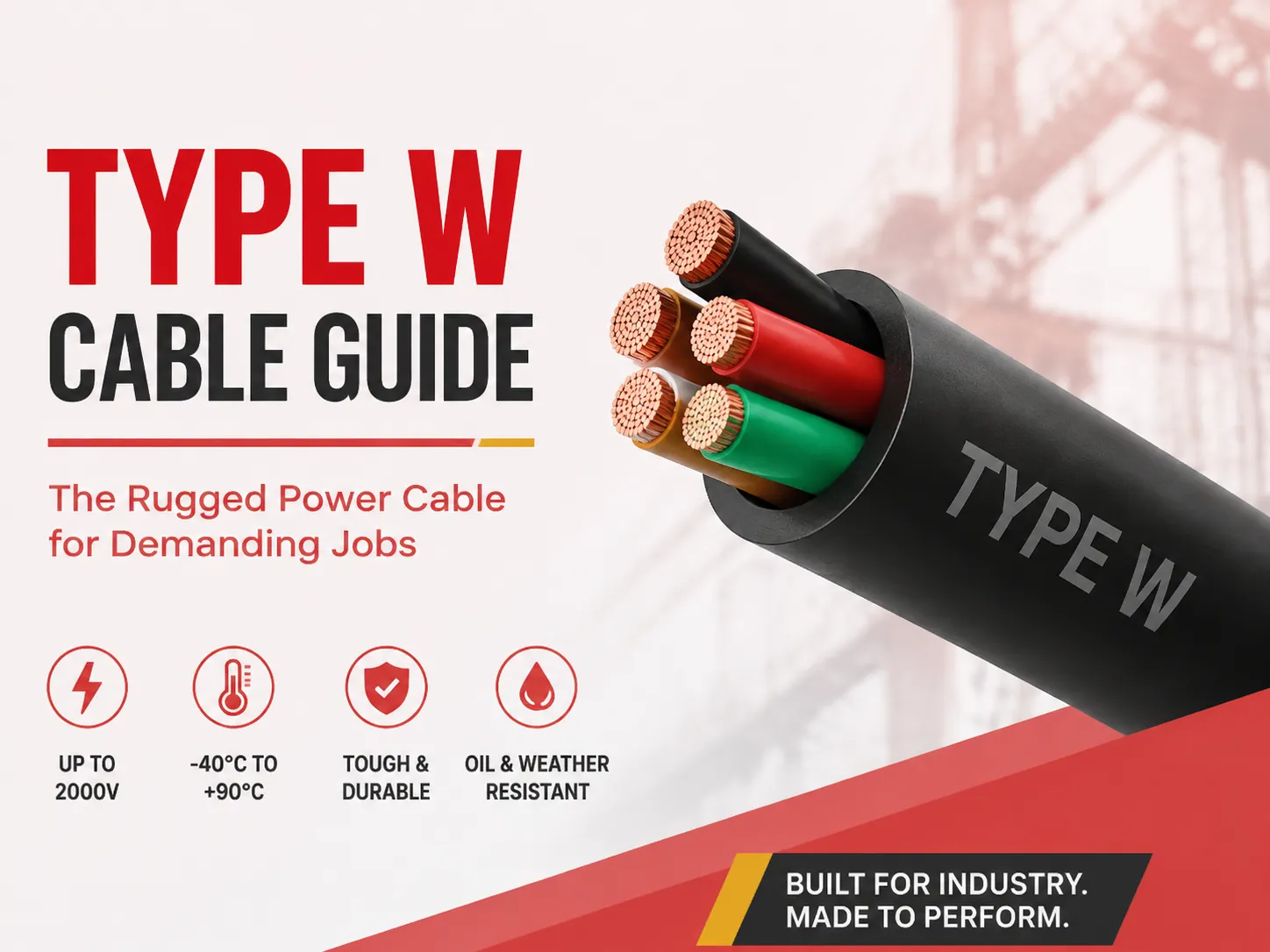
หากคุณเคยระบุสายเคเบิลสำหรับไซต์ก่อสร้าง เครื่องกำเนิดไฟฟ้า การทำเหมือง หรือระบบจ่ายไฟแบบพกพา คุณอาจเคยเจอคำว่า “Type W” และสับสนกับความหมายของมัน “W” หมายถึงอะไร? น้ำ? สภาพอากาศ? สายไฟ? และความแตกต่างจาก SOOW ที่มี “W” ด้วยคืออะไร? นี่คือข้อมูลที่คุณต้องรู้: Type W หมายถึงการกำหนดของ UL สำหรับสายไฟฟ้ากำลังแบบพกพาที่มีความทนทานสูง โดยมีแรงดันไฟฟ้าสูงสุดถึง 2000 โวลต์ ผลิตด้วยฉนวน EPDM หนาและแจ็คเก็ต CPE แข็งที่เหมาะสำหรับสภาพแวดล้อมอุตสาหกรรมที่รุนแรงที่สุด บทความนี้กล่าวถึงความหมายที่แท้จริงของ Type W การใช้งาน วิธีแยกแยะจาก SOOW และสายไฟแบบพกพาอื่น ๆ รวมถึงวิธีเลือกใช้อย่างถูกต้อง.
หมายเหตุสั้น ๆ: Type W เกี่ยวข้องกับการจัดประเภทของ UL สำหรับสายไฟฟ้ากำลังแบบพกพาที่เหมาะสมกับแรงดันไฟฟ้าสูงสุดถึง 2000V (เนื่องจากตัวนำเดี่ยวยังได้รับการจัดอันดับ RHH/RHW สำหรับ 600V พร้อมกัน) Type W มีฉนวนยาง EPDM แบบเทอร์โมเซตและแจ็คเก็ตที่ทำจากวัสดุ CPE หรือ CSPE อุณหภูมิการทำงานอยู่ในช่วง -40°C ถึง +90°C ในขณะที่โครงสร้างเหมาะสำหรับการใช้งานในสภาพแวดล้อมที่รุนแรง เช่น การทำเหมือง งานก่อสร้าง การขุดเจาะ หรือในปั๊ม ตัวอักษร ”W” บ่งชี้ว่านี่คือสายเคเบิลประเภทเฉพาะซึ่งไม่ควรสับสนกับความหมายของ ”W” ใน SOOW เพราะที่นี่หมายความว่าสายไฟทนต่อสภาพอากาศ Type W มีข้อได้เปรียบมากกว่า SOOW เนื่องจากให้แรงดันไฟฟ้าสูงกว่า ฉนวนดีกว่า และทนทานมากกว่า.
“Type W” หมายความว่าอย่างไร?
กำหนดโดย Underwriters Laboratory การกำหนด Type W จัดประเภทสายเคเบิลที่ทนทานพอที่จะใช้งานในสภาพแวดล้อมที่รุนแรงกว่า นอกจากนี้ยังเป็นที่รู้จักในชื่อสายไฟฟ้ากำลังแบบพกพา และเป็นหนึ่งในประเภทสายเคเบิลหลักที่ใช้สำหรับการจ่ายไฟในสถานที่เชิงพาณิชย์.
คุณสมบัติที่กำหนดของสาย Type W:
- การจัดอันดับแรงดันไฟฟ้า: Type W ได้รับการจัดอันดับสำหรับแรงดันไฟฟ้าสูงสุดถึง 2000 โวลต์ AC หรือ DC (เมื่อใช้ตัวนำหลายตัว) ซึ่งสูงกว่ามาตรฐานสายไฟแรงดันต่ำทั่วไปอย่างมาก ตัวนำแต่ละตัวยังได้รับการจัดอันดับคู่ RHH/RHW ที่แรงดันไฟฟ้า 600 โวลต์.
- ฉนวน: ยาง EPDM (ethylene propylene diene monomer) แบบเทอร์โมเซตให้วัสดุฉนวนที่ทนทานและทนความร้อนสูง.
- แจ็คเก็ต: แจ็คเก็ต CPE (chlorinated polyethylene) หรือ CSPE ให้การปกป้องที่เชื่อถือได้ต่อสารกัดกร่อนและความชื้น.
- ช่วงอุณหภูมิ: -40°С ถึง +90°С.
- ตัวนำ: 1 ถึง 5 ตัวนำ (สีดำ ขาว แดง เขียว ส้ม) เหมาะสำหรับความยืดหยุ่นสูง; ขนาด AWG ตั้งแต่ 8 AWG ถึง 500 MCM เมื่อใช้เป็นตัวนำเดี่ยว และตั้งแต่ 8
- AWG ถึง 4/0 AWG เมื่อใช้เป็นสายตัวนำหลายตัว.
สรุปแล้ว สาย Type W คือสายที่ใช้เมื่อสายต่อมาตรฐานหรือแม้แต่สาย SOOW ไม่สามารถทนต่อกระแสและแรงดันไฟฟ้าที่ต้องการในไซต์งาน เหมือง ฯลฯ.
ความสับสนของ “W”: Type W กับ W ใน SOOW
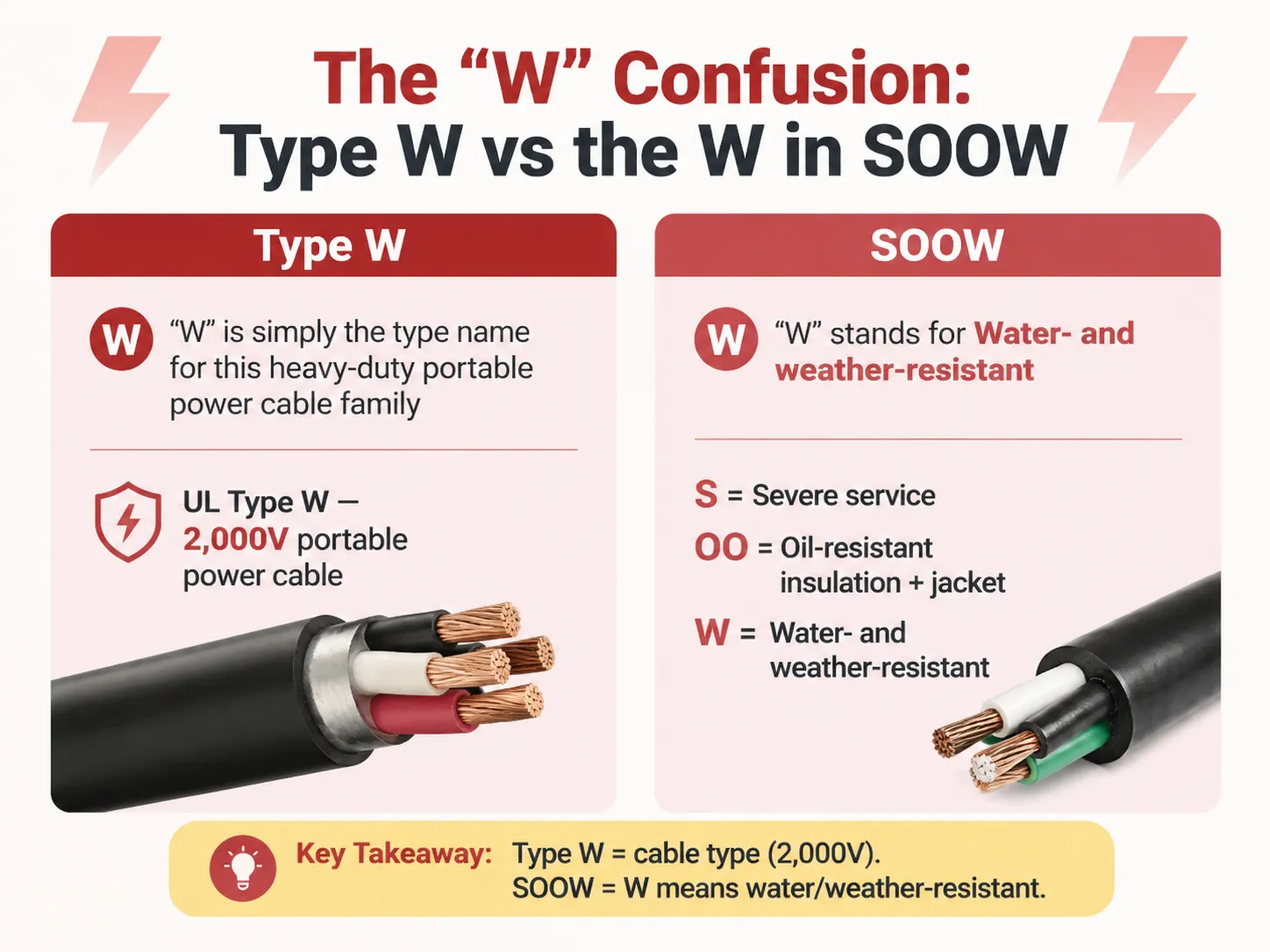
ตัวอักษร “W” ปรากฏในสองประเภทของการกำหนดสายเคเบิลที่แตกต่างกันและหมายถึงความหมายที่แตกต่างกันโดยสิ้นเชิง ซึ่งเป็นสาเหตุหลักของความสับสน.
| การกำหนด | ความหมายของ “W” | ความหมายเต็ม |
|---|---|---|
| พิมพ์ W (สายไฟพกพา) | “W” คือเพียง ชื่อประเภท สำหรับสายไฟพกพาที่มีความทนทานสูงนี้ | UL Type W — สายไฟพกพา 2,000V |
| SOOW (สายไฟบริการ) | “W” หมายถึง ทนต่อน้ำและสภาพอากาศ | S = บริการหนัก, OO = ฉนวนและแจ็คเก็ตทนน้ำมัน, W = ทนต่อน้ำ/สภาพอากาศ |
ดังนั้น แม้ว่า “Type W” และ “SOOW” จะมี “W” อยู่ในชื่อทั้งคู่ แต่ใน “Type W” นั้น “W” เป็นส่วนหนึ่งของชื่อสายเคเบิล เช่นเดียวกับประเภทอื่น ๆ เช่น “Type G” และ “Type SC” ในขณะที่ใน “SOOW” “W” ทำหน้าที่เป็นคำคุณศัพท์ที่บ่งชี้ว่าสายเคเบิลนั้นทนน้ำ ดังนั้น ผู้ที่ค้นหาความหมายของ “type w” ที่เกี่ยวข้องกับสายเคเบิลจะมักจะหมายถึงสายไฟพกพา UL Type W มากกว่าความทนน้ำ.
ข้อมูลจำเพาะของสาย Type W
นี่คือภาพรวมของสาย Type W ทั่วไป:
| พารามิเตอร์ | ค่า |
|---|---|
| ประเภทสายเคเบิล | UL Type W (สายไฟพกพา) |
| การจัดอันดับแรงดันไฟฟ้า | 2,000V AC/DC (หลายตัวนำ); ตัวนำเดี่ยวระดับคู่ RHH/RHW 600V |
| ฉนวน | ยาง EPDM แบบเทอร์โมเซต |
| แจ็คเก็ต | CPE หรือ CSPE |
| ช่วงอุณหภูมิ | -40°C ถึง +90°C |
| จำนวนตัวนำ | 1-5 (สีดำ, ขาว, แดง, เขียว, ส้ม) |
| การบิดเกลียว | ทองแดงบิดเกลียวแบบเชือก (ยืดหยุ่น) |
| ขนาดตัวนำเดี่ยว | 8 AWG ถึง 500 MCM |
| ขนาดหลายตัวนำ | 8 AWG ถึง 4/0 AWG |
| ความต้านทาน | ทนต่อการขีดข่วน, การกระแทก, น้ำมัน, เคมี และสภาพอากาศได้ดีเยี่ยม |
| การรับรอง | UL 1650, การทดสอบเปลวไฟ MSHA, การทดสอบเปลวไฟ UL, ICEA S-75-381 / NEMA WC-58, CSA, RoHS |
คุณสมบัติที่โดดเด่นที่นี่คือการจัดอันดับ 2,000V (ประมาณ 3.3 เท่าของ 600V SOOW) พร้อมแจ็คเก็ตหนาและแข็งแรงที่ทนต่อหิน ยานพาหนะ หรือสภาพอากาศเลวร้ายได้อย่างไม่มีปัญหา.
สายเคเบิลประเภท W ใช้ทำอะไร?
ประเภท W เป็นที่นิยมในทุกที่ที่เครื่องจักรเคลื่อนที่ต้องการแรงดันไฟฟ้าสูง กระแสไฟสูง และโครงสร้างที่แข็งแรง:
- การทำเหมือง — ให้พลังงานแก่สว่าน สายพานลำเลียง ปั๊ม และอุปกรณ์ขนส่ง (ได้รับการอนุมัติ MSHA สำหรับการทำเหมือง).
- การก่อสร้าง — จ่ายไฟฟ้าชั่วคราวจากเครื่องกำเนิดไฟฟ้าไปยังแผงควบคุม เครื่องเชื่อม และเครื่องจักรหนัก.
- การเช่าเครื่องกำเนิดไฟฟ้า — เชื่อมต่อเครื่องกำเนิดไฟฟ้ากับกล่องแจกจ่ายและอุปกรณ์ถ่ายโอน.
- น้ำมัน ก๊าซ และแท่นขุดเจาะ — ให้พลังงานแก่ปั๊มโคลน วินช์ และอุปกรณ์ในไซต์ขุดเจาะ.
- การขนส่งทางทะเล — จ่ายไฟฟ้าฝั่งและการดำเนินงานทางทะเลหนัก.
- ความบันเทิง — รับประกันการแจกจ่ายพลังงานสูงจากรถบรรทุกผลิต.
- อุตสาหกรรม — จ่ายไฟฟ้าชั่วคราวสำหรับการบำรุงรักษา การหยุดทำงาน และเครื่องจักรขนส่ง.
- ปั๊มและเครน — มอเตอร์ที่ใช้กระแสไฟสูงในระยะทางไกล.
ด้วยการจัดอันดับเป็น RHH/RHW ประเภท W สามารถทำหน้าที่เป็นสายเชื่อมต่ออเนกประสงค์ในท่อร้อยสายได้.
ประเภท W กับ SOOW: ความแตกต่างหลัก
| คุณสมบัติ | พิมพ์ W | SOOW |
|---|---|---|
| หมวดหมู่ | สายไฟพกพา | สายบริการ |
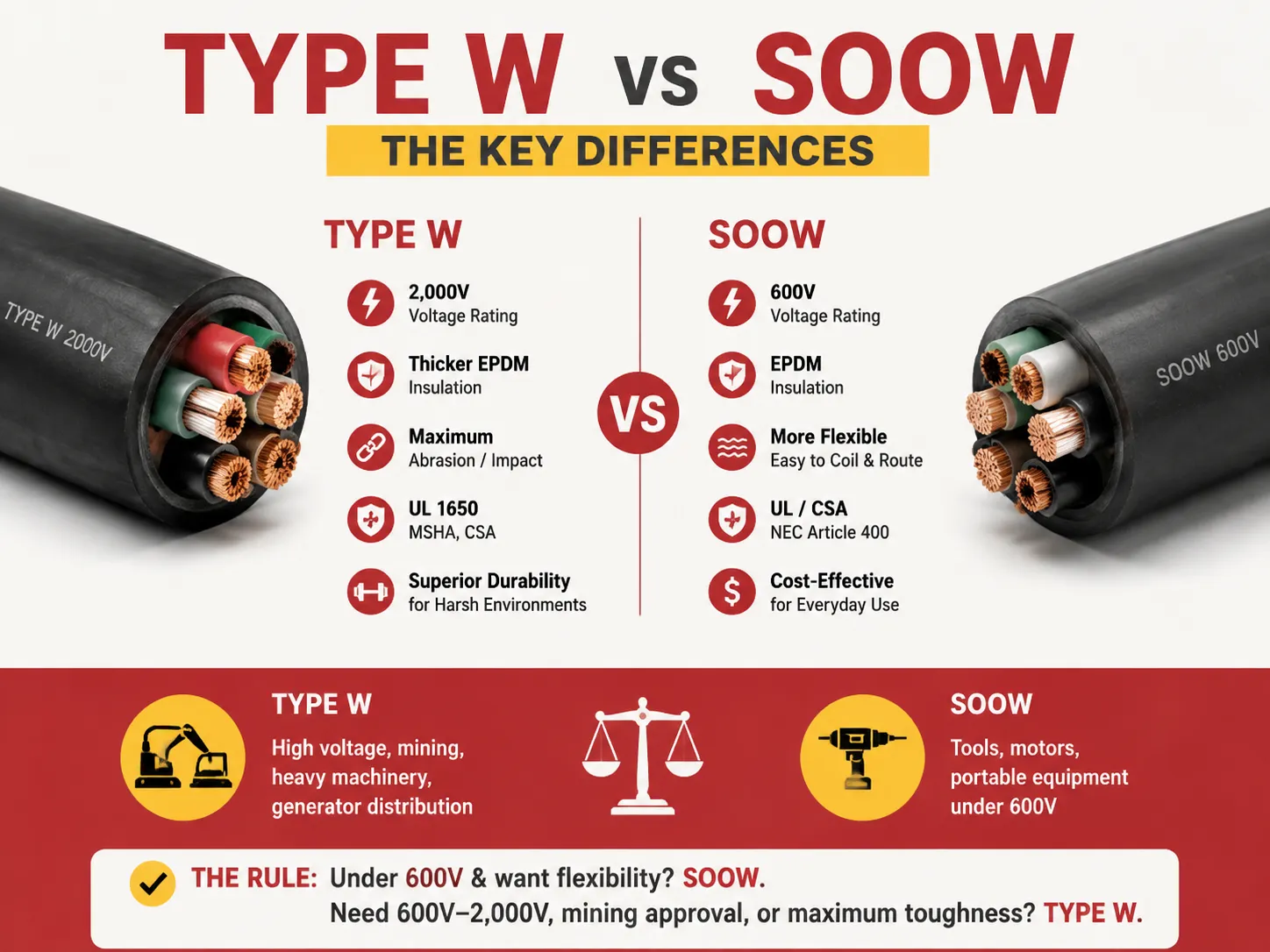
| การจัดอันดับแรงดันไฟฟ้า | 2,000V | 600V |
| ฉนวน | EPDM หนากว่า | EPDM (บางกว่า) |
| แจ็คเก็ต | CPE/CSPE หนัก — ทนต่อการขีดข่วน/แรงกระแทกสูงสุด | CPE — แข็งแรงแต่ยืดหยุ่นมากกว่า |
| ความยืดหยุ่น | แข็งกว่า หนักกว่า | ยืดหยุ่นมากกว่า ง่ายต่อการม้วนและจัดเส้นทาง |
| ความทนทาน | ดีเยี่ยม — ทนต่อยานพาหนะ หิน และแรงกดทับ | ดี — เหมาะกับไซต์งานส่วนใหญ่ |
| ขนาดทั่วไป | 8 AWG ถึง 4/0 (หลายตัวนำ); สูงสุด 500 MCM เดี่ยว | 18 ถึง 6 AWG ทั่วไป |
| การอนุมัติหลัก | UL 1650, MSHA, CSA | UL/CSA, NEC บทความ 400 |
| ค่าใช้จ่าย | ราคาสูงกว่าต่อตารางฟุต (ทองแดง + ฉนวนมากกว่า) | ต่ำกว่า |
| เหมาะสำหรับ | แรงดันไฟฟ้าสูง การทำเหมือง เครื่องจักรหนัก การแจกจ่ายเครื่องกำเนิดไฟฟ้า | เครื่องมือ มอเตอร์ อุปกรณ์พกพาภายใต้ 600V |
สรุป: ต้องการต่ำกว่า 600V และต้องการความยืดหยุ่น? เลือก SOOW; ต้องการ 600V-2,000V สามารถรับรองความเหมาะสมกับการทำเหมืองหรือทำงานที่ความต้านทานแรงดึงสูงสุด? เลือกประเภท W.
ประเภท W กับสายเคเบิลพกพาอื่น ๆ (SJOOW, SEOOW, STOW, ประเภท G)
ครอบครัวสายเคเบิลพกพามีสมาชิกหลายประเภท; นี่คือการเปรียบเทียบประเภท W:
| ประเภทสายเคเบิล | แรงดันไฟฟ้า | คุณสมบัติหลัก | การใช้งานที่ดีที่สุด |
|---|---|---|---|
| SJOOW | 300V | “สายบริการ ”จูเนียร์” — บาง ยืดหยุ่น | เครื่องมือเบา เครื่องใช้ขนาดเล็ก |
| SOOW | 600V | สายบริการสำหรับงานหนัก ทนน้ำมันและน้ำ | เครื่องมือและอุปกรณ์อุตสาหกรรมทั่วไป |
| SEOOW | 600V | Thermoplastic elastomer jacket | Freezing environments, extreme cold |
| STOW | 600V | Thermoplastic (PVC) jacket | Consumer-grade extension cords |
| พิมพ์ W | 2,000V | Heavy portable power cable, MSHA | Mining, high-voltage distribution, heavy equipment |
| Type G | 2,000V | Very similar to Type W; ground conductors included in the assembly | Portable power distribution with integrated ground |
Type W and Type G can almost be regarded as siblings as both of them are portable power cables rated at 2,000V, which means they can withstand and endure a lot of wear and tear. What separates Type W from Type G however is that Type G constructions typically come with grounding conductors as part of the package while Type W depends on the conductor arrangement that has been specified to achieve grounding. In most instances high voltage portable work can be achieved through the usage of either dressing; it is just important to check which dressing is most appropriate for the job at hand.
Approvals & Standards
Type W cable possesses numerous certifications that guarantee its success in many applications:
- UL 1650 — This is the portable power cable standard.
- UL Type W listing — Rated for 2,000V in any configuration.
- UL dual rated RHH/RHW — indicates that the single conductors are rated for 600V as general building wire.
- MSHA flame test — Approved for mining use (needed for underground applications).
- ICEA S-75-381 / NEMA WC-58 — They are recognized portable cables standards.
- CSA approval — The Canadian qualification.
- RoHS — This means that the restricted hazardous substances are not present.
If your project is connected to MSHA, you will need Type W cable — SOOW won’t make it through the inspection.
How to Choose: Type W or SOOW?
Proceed to ask the following questions in order:
- What is the required voltage for the equipment? For any voltage greater than 600V, Type W is the choice. For voltages equal to or below 600V, both options would suffice.
- How severe is the working environment? If mining is involved (severe pressure from rocks, equipment being dragged over cables, heavy crushing etc.), it is advisable to go with Type W since its jacket is thicker.
- Do you need permission from MSHA? If the application is taking place underground, choose Type W.
- How flexible should your cable be? If flexing around tight corners, twisting and turning is required, it is preferable to go for SOOW.
- Working under how much money? Type W has a higher price than SOOW, if less than 600V is needed, choose SOOW.
Safety & Usage Rules
- Examine before every use — look for any damage such as cuts, scrapes, compression areas, or exposed wires; Type W is durable, but it is not indestructible.
- Do not use as a permanent building wire within walls — it is a portable wire; for permanent electrical work, the wiring used is THHN/THWN with conduit.
- Do not direct bury unless the construction is designed to be buried — check the jacket markings and local requirements.
- Choose the correct ampacity according to the load — Type W wire can take 2,000V but this refers to the voltage capacity and not the ampacity.
- Prevent damage — use ramps or elevated ways where trucks and cars travel on the cable; avoid putting the cable in standing and stagnant water.
- Scrape off the oil and other chemicals immediately after the cable is overexposed to them — the coat of the cable can be oil-resistant, but it will hold longer without these chemicals.
Prices & Where to Buy
The reason behind the higher price of Type W in comparison to SOOW is that Type W uses more copper and heavier insulation material. Typical pricing estimates per foot for 2025-2026 (for multi-conductor copper wire) is as follows:
| Conductor Size | Typical Price per Foot |
|---|---|
| 8 AWG (3-4 conductors) | $4-$8 |
| 6 AWG | $6-$12 |
| 4 AWG | $8-$16 |
| 2 AWG | $12-$24 |
| 1 AWG | $15-$30 |
| 1/0 AWG | $18-$38 |
Different pricing applies depending on the wiring installation, based on the conductor number, insulation material, and supplier; however, the cost is lowered greatly when purchased in bulk from the wire distributor.For buyers building distribution systems around portable power — generators, transfer switches, and the protection gear behind them — pairing the right cable with the right MCB/MCCB protection and a certified เบรกเกอร์ UL 489 keeps the whole power chain safe and code-compliant — and when a breaker eventually needs replacing, the costs in our breaker replacement guide help you budget the job.
คำถามที่พบบ่อย
What is the main difference between Type W and SOOW cables?
The differences between them consist of their ratings and durability: Type W has a tough portable power cable rated for extreme use with voltages of up to 2,000V thanks to its thick layers of EPDM insulation and CPE jacket while SOOW is a more flexible and less costly cable rated for 600V use. Type W is also MSHA-approved for use in mines. Use SOOW at less than 600V if flexibility is required; choose Type W for any higher voltage or maximum durability.
Does SOOW cable need to be in conduit?
NO – SOOW is a service cord that makes it possible to operate without conduit’s help in a flexible application (NEC Article 400). Its use for permanent installation is not permitted, and it is not approved for underground installation. Permanent installation requires the use of building wires (THHN/THWN) and conduit, while SOOW can be employed for portable power supply tasks.
What voltage is SOOW rated for?
SOOW has a voltage rating of 600 volts (plus 300V versions referred as junior SJOOW). SOOW cable can be used for applications involving most power tools, motors as well as machinery. However, Type W cable is required for higher voltage systems as well as for mining operations requiring MSHA approval.
Can Type W cable be used as building wire?
Single conductor Type W is a dual rated cable with both RHH and RHW ratings up to 600 volts. For this reason, single conductor Type W can be used as industrial hook-up wire in conduit up to 600 volts. However, while multi-conductor Type W is meant to be used for temporary power, using this type for permanent installation is not recommended. Always check local codes in accordance to the specific use of the cable.
อ้างอิง
- Allied Wire & Cable — Type W Cable Specifications and Applications
- UL — UL 1650 Portable Power Cable Standard & Type W Listing
- MSHA — Mine Safety and Health Administration Cable Requirements
- NFPA 70 (NEC) — Article 400 Flexible Cords and Cables
- NEMA — NEMA WC-58 Portable and Power Feeder Cables
- AutomationDirect — Portable Cord and Type W Selection Guide
สรุป
Type W is the UL designation used for the heavy-duty flexible power cable that is sought after in industrial environments when the task is major and the surroundings difficult: rated for 2000 volts, made of the EPDM rubber material and CPE plastic, able to work in the temperature range from -40 to +90 degrees Celsius, MSHA compliant for mining applications. The “W” refers to the type of the cable and not to the “water resistant” W in SOOW, which is a different cable type working on 600 volts with higher flexibility and lower cost. Use SOOW cable for general-purpose portable tools, and Type W for high voltage power distribution, mining, generators, and heavy machinery — and always combine this cable with approved safety equipment.