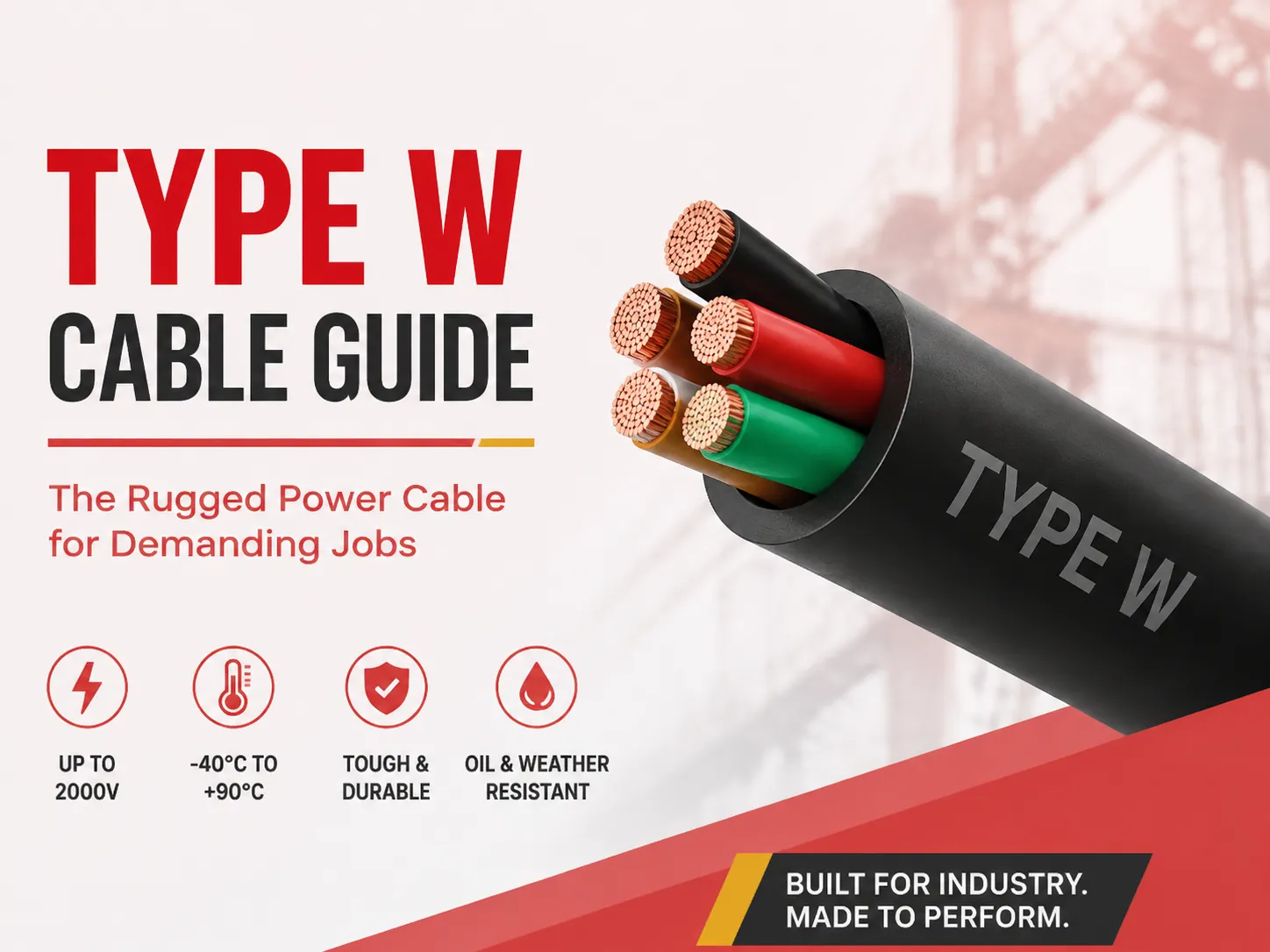
إذا وجدت نفسك تحدد كابلًا لموقع بناء، أو مولد كهربائي، أو عملية تعدين، أو نظام توزيع طاقة محمول، فمن المحتمل أنك صادفت مصطلح “Type W” وواجهت الارتباك الذي يسببه. “W” ماذا تعني؟ ماء؟ طقس؟ سلك؟ وما الفرق بينها وبين SOOW التي تحتوي أيضًا على “W”؟ إليك المعلومات التي تحتاج إلى معرفتها: يشير Type W إلى تصنيف UL لكابل طاقة محمول ثقيل التحمل بجهد يصل إلى 2000 فولت، مصنوع بعزل EPDM سميك وغطاء CPE صلب مناسب لأكثر الظروف الصناعية قسوة. تناقش المقالة ما يعنيه Type W فعليًا، وتطبيقاته، وكيفية تمييزه عن SOOW والكابلات المحمولة الأخرى، وكيفية اختيار النوع المناسب.
ملاحظة موجزة: يرتبط Type W بتصنيف UL لكابل طاقة محمول مناسب للجهد العالي حتى 2000 فولت (حيث تتلقى الموصلات الفردية أيضًا تصنيف RHH/RHW بجهد 600 فولت). يتميز Type W بعزل مطاط EPDM حراري وغطاء مصنوع من مواد CPE أو CSPE، وتتراوح درجة حرارة التشغيل من -40°م إلى +90°م، بينما البناء مثالي للاستخدام في بيئات قاسية مثل التعدين، مواقع البناء، حفر الحفارات، أو في المضخات. تشير الحرف ”W” إلى أن هذا نوع محدد من هذا النوع من الكابلات ولا يمكن الخلط بين معناه ومعنى ”W” في SOOW، لأن هنا تعني أن الحبل مقاوم للطقس. يتمتع Type W بمزايا كبيرة على SOOW حيث يوفر تصنيف جهد أعلى، وعزل أفضل، ومتانة أكبر.
ماذا يعني “Type W”؟
تم تأسيس تصنيف Type W من قبل مختبرات Underwriters، ويصنف نوعًا من الكابلات التي تتحمل التطبيقات الأكثر قسوة. يُعرف أيضًا باسم كابل طاقة محمول، وهو أحد الأنواع الرئيسية للكابلات المستخدمة في توصيل الطاقة في البيئات التجارية.
الخصائص المحددة لكابل Type W:
- تصنيفات الجهد: يُصنف Type W لجهد عالي يصل إلى 2000 فولت AC أو DC (عند استخدام عدة موصلات) وهو أعلى بكثير من تصنيف الكابلات منخفضة الجهد القياسية. كما تلبي الموصلات الفردية تصنيف RHH/RHW المزدوج عند جهد 600 فولت.
- العزل: يوفر مطاط EPDM (إيثيلين بروبيلين دايين مونومر) الحراري مادة عزل مرنة ومقاومة لدرجات الحرارة العالية.
- الغطاء: يوفر غطاء CPE (كلوريد البولي إيثيلين) أو CSPE حماية موثوقة ضد المواد المسببة للتآكل والرطوبة.
- نطاق درجة الحرارة: من -40°م إلى +90°م.
- الموصلات: من 1 إلى 5 موصلات (أسود، أبيض، أحمر، أخضر، برتقالي) مناسبة لمرونة عالية؛ مقاسات AWG تتراوح من 8 AWG إلى 500 MCM عند استخدامها كموصلات فردية ومن 8
- AWG إلى 4/0 AWG عند استخدامها كأسلاك متعددة الموصلات.
لتلخيص الأمر، تُستخدم كابلات Type W عندما لا يستطيع كابل التمديد القياسي أو حتى كابل SOOW تحمل التيار والجهد المطلوبين في موقع العمل، أو في المناجم، وما إلى ذلك.
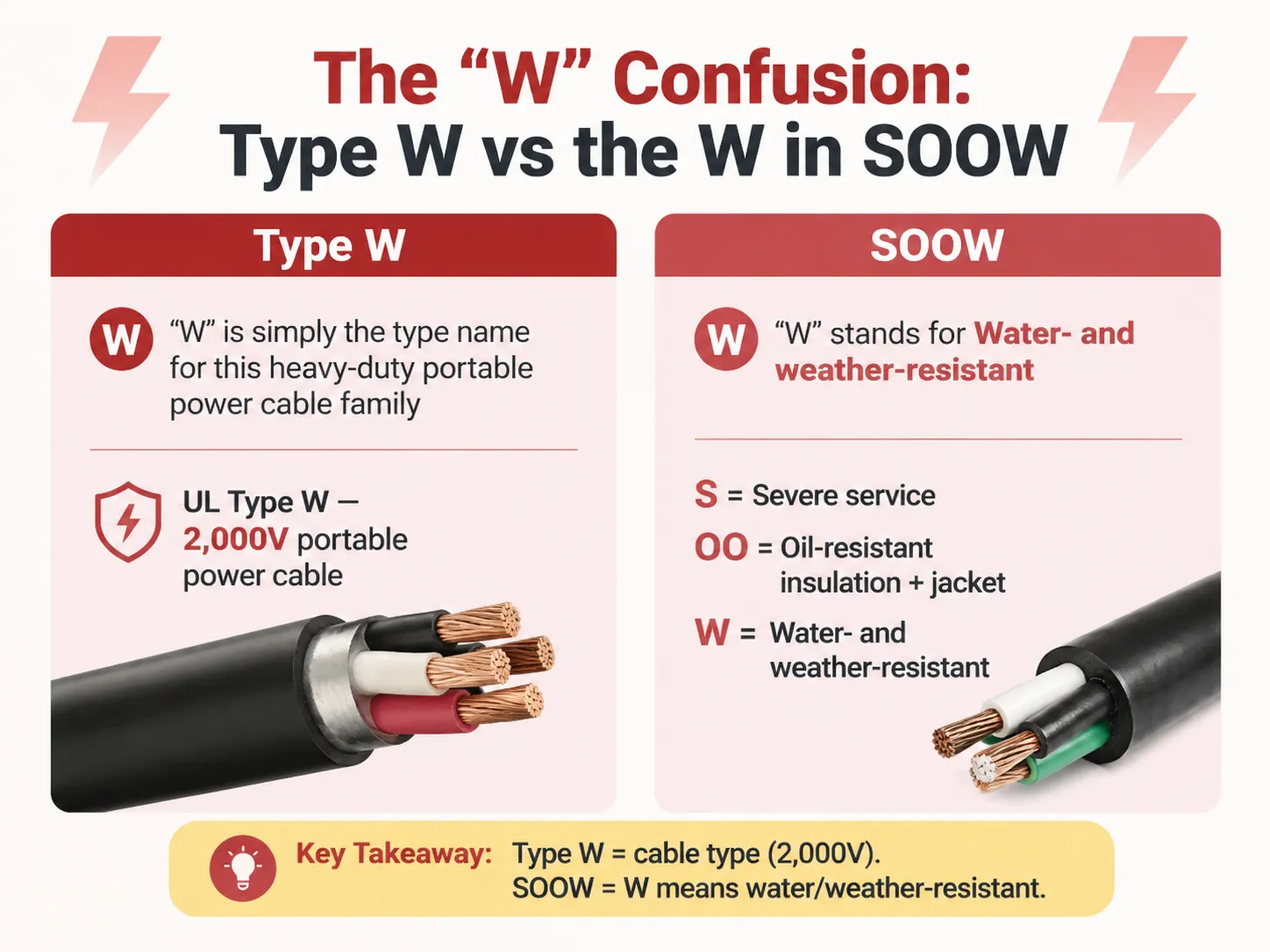
ارتباك “W”: Type W مقابل الـ W في SOOW
تأتي الحرف “W” في نوعين مختلفين من تصنيفات الكابلات وتشير إلى معانٍ مختلفة تمامًا، مما يجعلها أكبر مصدر للارتباك.
| التصنيف | ما معنى “W” | المعنى الكامل |
|---|---|---|
| النوع W (كابل طاقة محمول) | “W” هو ببساطة اسم النوع لهذه العائلة من كابلات الطاقة المحمولة الثقيلة | UL Type W — كابل طاقة محمول 2000 فولت |
| SOOW (سلك خدمة) | “W” تعني مقاوم للماء والطقس | S = خدمة شديدة، OO = عزل وجاكيت مقاومان للزيت، W = مقاوم للطقس/الماء |
وبالتالي، على الرغم من أن كلًا من “Type W” و “SOOW” يحتويان على “W” في أسمائهما، في الأول “W” هو عنصر في اسم الكابل، تمامًا كما توجد أنواع مثل “Type G” و “Type SC”. أما في “SOOW”، فإن “W” تعمل كصفة تشير إلى أن الكابل مقاوم للماء. لذلك، فإن أي شخص يبحث عن “معنى النوع w” فيما يتعلق بالكابلات سيكون في الغالب يبحث عن كابل الطاقة المحمول UL Type W بدلاً من مقاومة الماء.
مواصفات كابل النوع W
إليك الصورة الكاملة لكابل النوع W النموذجي:
| VRL22B / VRL22B+ | القيمة |
|---|---|
| نوع الكابل | UL Type W (كابل طاقة محمول) |
| تصنيف الجهد | 2000 فولت AC/DC (متعدد الموصلات)؛ موصل فردي مصنف مزدوج RHH/RHW 600 فولت |
| العزل | مطاط EPDM حراري |
| الجاكيت | CPE أو CSPE |
| نطاق درجة الحرارة | -40°C إلى +90°C |
| عدد الموصلات | 1-5 (أسود، أبيض، أحمر، أخضر، برتقالي) |
| التجميع | نحاس مجدول على شكل حبل (مرن) |
| أحجام الموصل الفردي | 8 AWG إلى 500 MCM |
| أحجام الموصل متعدد | 8 AWG إلى 4/0 AWG |
| المقاومة | مقاومة ممتازة للاحتكاك، الصدمات، الزيت، المواد الكيميائية، والطقس |
| الموافقات | UL 1650، اختبار اللهب MSHA، اختبار اللهب UL، ICEA S-75-381 / NEMA WC-58، CSA، RoHS |
الميزات الملحوظة هنا هي تصنيف 2,000 فولت (حوالي 3.3 أضعاف تصنيف 600 فولت SOOW)، إلى جانب غلاف سميك وقوي لا يواجه مشكلة مع الصخور أو المركبات أو الطقس السيئ.
ما هو استخدام كابل النوع W؟
يُفضل النوع W في كل مكان تحتاج فيه الآلات المحمولة إلى جهد عالي، تيار عالي، وبناء قوي:
- التعدين — تشغيل المثاقب، الناقلات، المضخات، ومعدات النقل (معتمد من MSHA للتعدين).
- البناء — إمداد كهربائي مؤقت من المولدات إلى اللوحات، وأجهزة اللحام، والآلات الثقيلة.
- تأجير المولدات — توصيل المولدات إلى صناديق التوزيع ونقل المعدات.
- النفط والغاز ومنصات الحفر — تشغيل مضخات الطين، الونشات، والأجهزة في مواقع الحفر.
- النقل البحري — توفير طاقة الشاطئ والعمليات البحرية الثقيلة.
- الترفيه — ضمان توزيع طاقة عالية من شاحنات الإنتاج.
- الصناعة — إمداد كهربائي مؤقت للصيانة، فترات التوقف، وآلات النقل.
- المضخات والرافعات — المحركات التي تستخدم تيارًا عاليًا لمسافات طويلة.
بفضل تصنيفه كـ RHH/RHW، يمكن للنوع W أن يعمل كسلك اتصال متعدد الاستخدامات في المواسير.
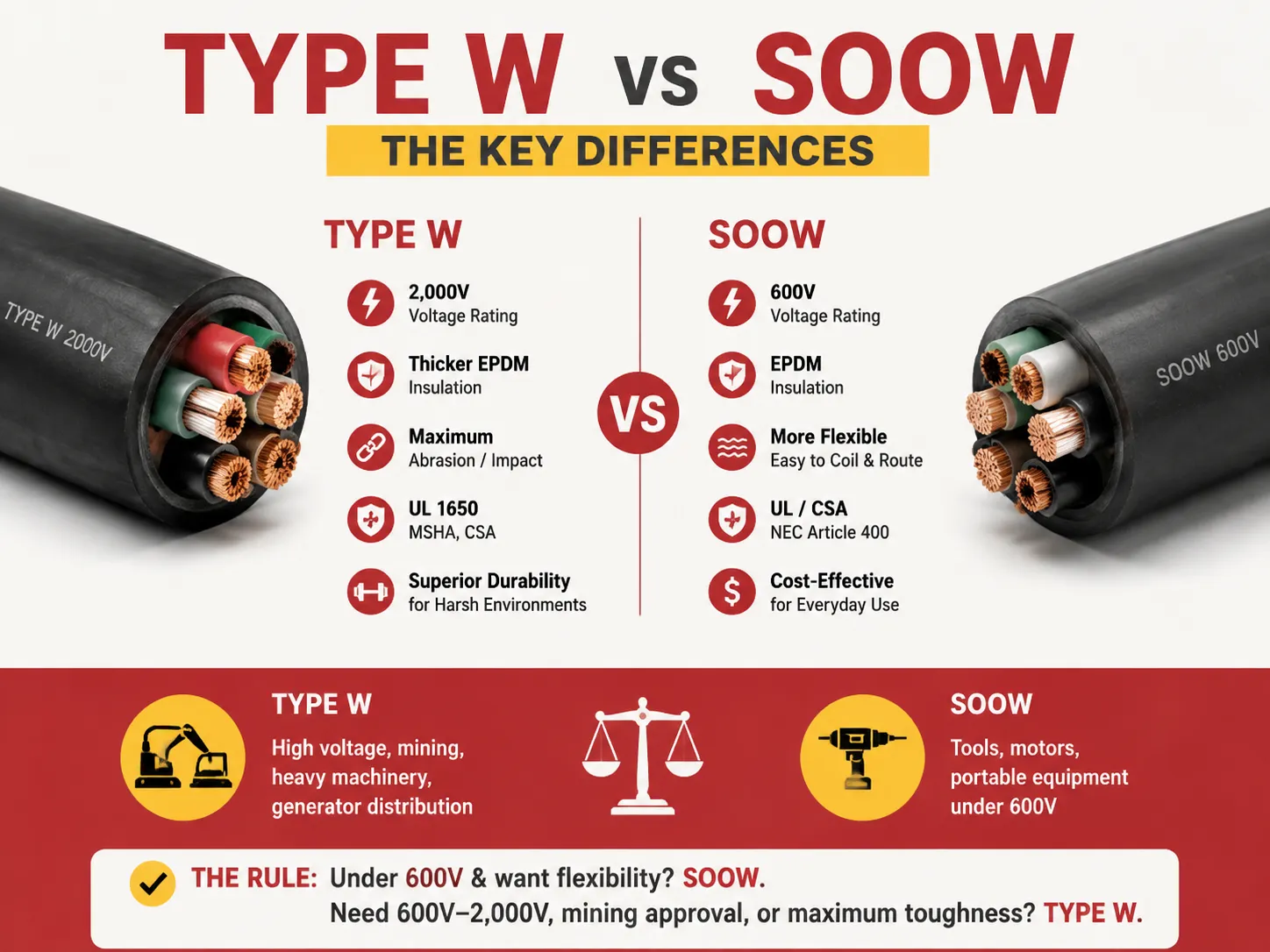
النوع W مقابل SOOW: الفروقات الرئيسية
| الميزة | النوع W | SOOW |
|---|---|---|
| الفئة | كابل طاقة محمول | سلك خدمة |
| تصنيف الجهد | 2,000 فولت | 600 فولت |
| العزل | EPDM أكثر سمكًا | EPDM (أرق) |
| الجاكيت | CPE/CSPE ثقيل — أقصى مقاومة للاحتكاك/الصدمات | CPE — قوي لكنه أكثر مرونة |
| المرونة | أكثر صلابة وأثقل | أكثر مرونة، أسهل في اللف والتوجيه |
| المتانة | متفوقة — تتحمل المركبات، الصخور، والضغط | جيدة — مناسبة لمعظم مواقع العمل |
| الأحجام النموذجية | من 8 AWG إلى 4/0 (متعدد الموصلات)؛ حتى 500 MCM مفرد | من 18 إلى 6 AWG نموذجية |
| الموافقات الرئيسية | UL 1650، MSHA، CSA | UL/CSA، NEC المادة 400 |
| التكلفة | أعلى لكل قدم (نحاس وعزل أكثر) | أقل |
| الأفضل لـ | جهد عالي، التعدين، الآلات الثقيلة، توزيع المولدات | الأدوات، المحركات، المعدات المحمولة تحت 600 فولت |
باختصار: هل تحتاج إلى أقل من 600 فولت ومرونة؟ اختر SOOW؛ هل تحتاج من 600 فولت إلى 2,000 فولت، ويمكنك تحمل شهادة ملاءمته للتعدين أو العمل بأقصى قوة شد؟ اختر النوع W.
النوع W مقابل كابلات المحمول الأخرى (SJOOW، SEOOW، STOW، النوع G)
عائلة كابلات المحمول لها العديد من الأعضاء؛ إليك كيف يقارن النوع W:
| نوع الكابل | الجهد | الميزة الرئيسية | أفضل استخدام |
|---|---|---|---|
| SJOOW | 300 فولت | “سلك خدمة ”صغير" — رقيق ومرن | الأدوات الخفيفة، الأجهزة الصغيرة |
| SOOW | 600 فولت | سلك خدمة للخدمات الشديدة، مقاوم للزيت والماء | الأدوات والمعدات الصناعية العامة |
| SEOOW | 600 فولت | غلاف مطاطي حراري بلاستيكي | Freezing environments, extreme cold |
| STOW | 600 فولت | Thermoplastic (PVC) jacket | Consumer-grade extension cords |
| النوع W | 2,000 فولت | Heavy portable power cable, MSHA | Mining, high-voltage distribution, heavy equipment |
| Type G | 2,000 فولت | Very similar to Type W; ground conductors included in the assembly | Portable power distribution with integrated ground |
Type W and Type G can almost be regarded as siblings as both of them are portable power cables rated at 2,000V, which means they can withstand and endure a lot of wear and tear. What separates Type W from Type G however is that Type G constructions typically come with grounding conductors as part of the package while Type W depends on the conductor arrangement that has been specified to achieve grounding. In most instances high voltage portable work can be achieved through the usage of either dressing; it is just important to check which dressing is most appropriate for the job at hand.
Approvals & Standards
Type W cable possesses numerous certifications that guarantee its success in many applications:
- UL 1650 — This is the portable power cable standard.
- UL Type W listing — Rated for 2,000V in any configuration.
- UL dual rated RHH/RHW — indicates that the single conductors are rated for 600V as general building wire.
- MSHA flame test — Approved for mining use (needed for underground applications).
- ICEA S-75-381 / NEMA WC-58 — They are recognized portable cables standards.
- CSA approval — The Canadian qualification.
- RoHS — This means that the restricted hazardous substances are not present.
If your project is connected to MSHA, you will need Type W cable — SOOW won’t make it through the inspection.
How to Choose: Type W or SOOW?
Proceed to ask the following questions in order:
- What is the required voltage for the equipment? For any voltage greater than 600V, Type W is the choice. For voltages equal to or below 600V, both options would suffice.
- How severe is the working environment? If mining is involved (severe pressure from rocks, equipment being dragged over cables, heavy crushing etc.), it is advisable to go with Type W since its jacket is thicker.
- Do you need permission from MSHA? If the application is taking place underground, choose Type W.
- How flexible should your cable be? If flexing around tight corners, twisting and turning is required, it is preferable to go for SOOW.
- Working under how much money? Type W has a higher price than SOOW, if less than 600V is needed, choose SOOW.
Safety & Usage Rules
- Examine before every use — look for any damage such as cuts, scrapes, compression areas, or exposed wires; Type W is durable, but it is not indestructible.
- Do not use as a permanent building wire within walls — it is a portable wire; for permanent electrical work, the wiring used is THHN/THWN with conduit.
- Do not direct bury unless the construction is designed to be buried — check the jacket markings and local requirements.
- Choose the correct ampacity according to the load — Type W wire can take 2,000V but this refers to the voltage capacity and not the ampacity.
- Prevent damage — use ramps or elevated ways where trucks and cars travel on the cable; avoid putting the cable in standing and stagnant water.
- Scrape off the oil and other chemicals immediately after the cable is overexposed to them — the coat of the cable can be oil-resistant, but it will hold longer without these chemicals.
Prices & Where to Buy
The reason behind the higher price of Type W in comparison to SOOW is that Type W uses more copper and heavier insulation material. Typical pricing estimates per foot for 2025-2026 (for multi-conductor copper wire) is as follows:
| Conductor Size | Typical Price per Foot |
|---|---|
| 8 AWG (3-4 conductors) | $4-$8 |
| 6 AWG | $6-$12 |
| 4 AWG | $8-$16 |
| 2 AWG | $12-$24 |
| 1 AWG | $15-$30 |
| 1/0 AWG | $18-$38 |
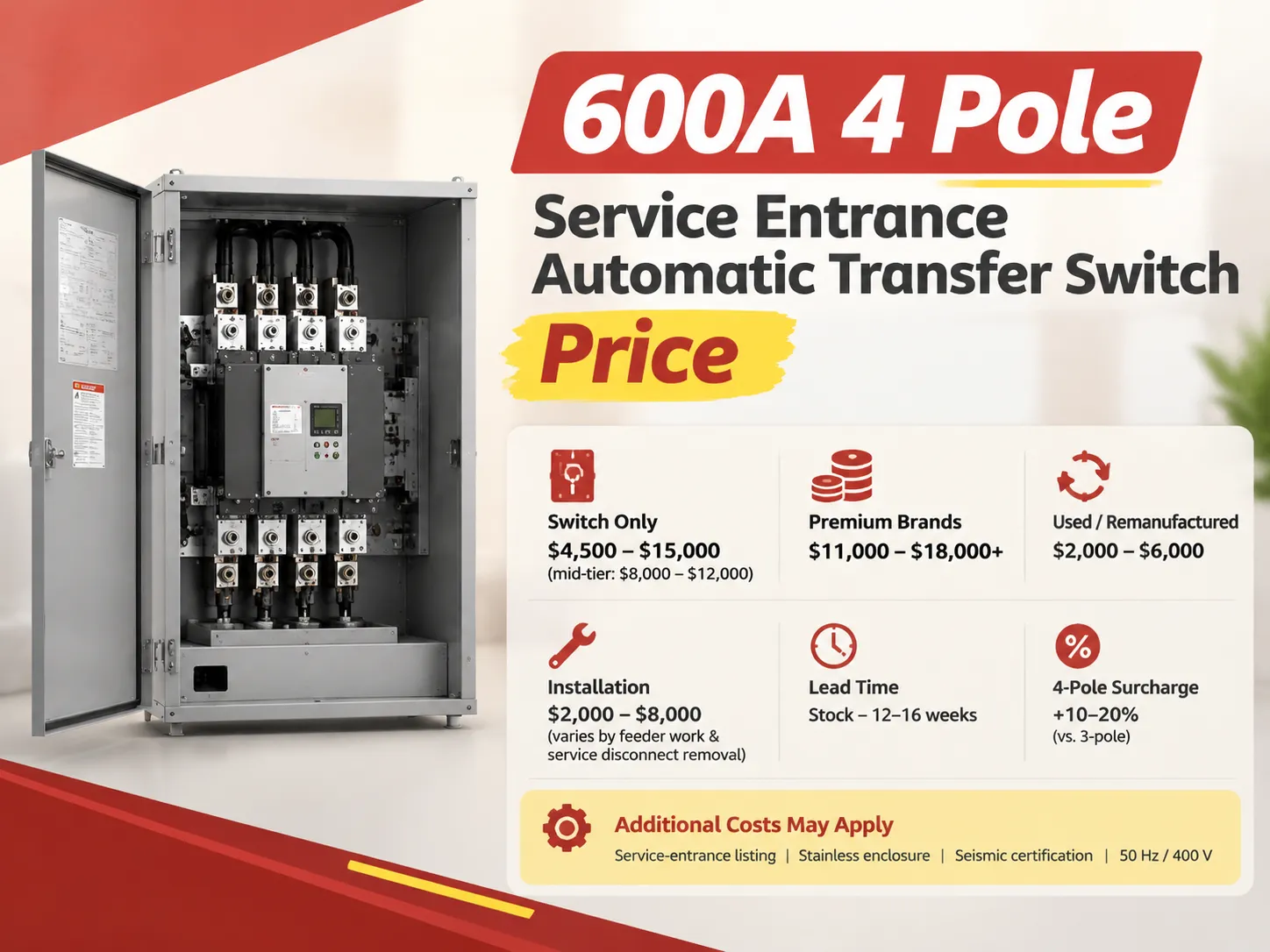
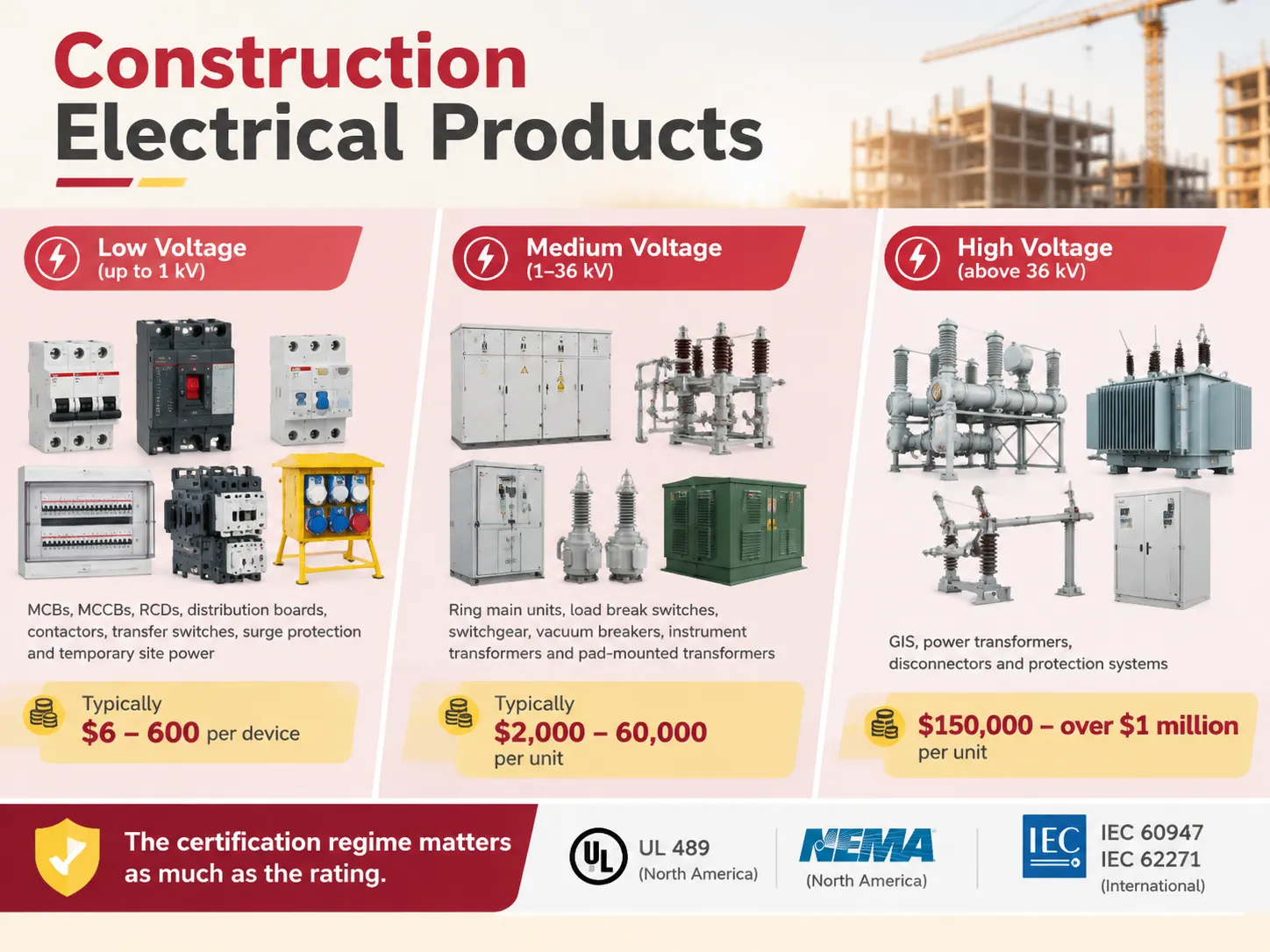
Different pricing applies depending on the wiring installation, based on the conductor number, insulation material, and supplier; however, the cost is lowered greatly when purchased in bulk from the wire distributor.For buyers building distribution systems around portable power — generators, transfer switches, and the protection gear behind them — pairing the right cable with the right MCB/MCCB protection and a certified قاطع UL 489 keeps the whole power chain safe and code-compliant — and when a breaker eventually needs replacing, the costs in our breaker replacement guide help you budget the job.
الأسئلة الشائعة
What is the main difference between Type W and SOOW cables?
The differences between them consist of their ratings and durability: Type W has a tough portable power cable rated for extreme use with voltages of up to 2,000V thanks to its thick layers of EPDM insulation and CPE jacket while SOOW is a more flexible and less costly cable rated for 600V use. Type W is also MSHA-approved for use in mines. Use SOOW at less than 600V if flexibility is required; choose Type W for any higher voltage or maximum durability.
Does SOOW cable need to be in conduit?
NO – SOOW is a service cord that makes it possible to operate without conduit’s help in a flexible application (NEC Article 400). Its use for permanent installation is not permitted, and it is not approved for underground installation. Permanent installation requires the use of building wires (THHN/THWN) and conduit, while SOOW can be employed for portable power supply tasks.
What voltage is SOOW rated for?
SOOW has a voltage rating of 600 volts (plus 300V versions referred as junior SJOOW). SOOW cable can be used for applications involving most power tools, motors as well as machinery. However, Type W cable is required for higher voltage systems as well as for mining operations requiring MSHA approval.
Can Type W cable be used as building wire?
Single conductor Type W is a dual rated cable with both RHH and RHW ratings up to 600 volts. For this reason, single conductor Type W can be used as industrial hook-up wire in conduit up to 600 volts. However, while multi-conductor Type W is meant to be used for temporary power, using this type for permanent installation is not recommended. Always check local codes in accordance to the specific use of the cable.
المراجع
- Allied Wire & Cable — Type W Cable Specifications and Applications
- UL — UL 1650 Portable Power Cable Standard & Type W Listing
- MSHA — Mine Safety and Health Administration Cable Requirements
- NFPA 70 (NEC) — Article 400 Flexible Cords and Cables
- NEMA — NEMA WC-58 Portable and Power Feeder Cables
- AutomationDirect — Portable Cord and Type W Selection Guide
الخلاصة
Type W is the UL designation used for the heavy-duty flexible power cable that is sought after in industrial environments when the task is major and the surroundings difficult: rated for 2000 volts, made of the EPDM rubber material and CPE plastic, able to work in the temperature range from -40 to +90 degrees Celsius, MSHA compliant for mining applications. The “W” refers to the type of the cable and not to the “water resistant” W in SOOW, which is a different cable type working on 600 volts with higher flexibility and lower cost. Use SOOW cable for general-purpose portable tools, and Type W for high voltage power distribution, mining, generators, and heavy machinery — and always combine this cable with approved safety equipment.