
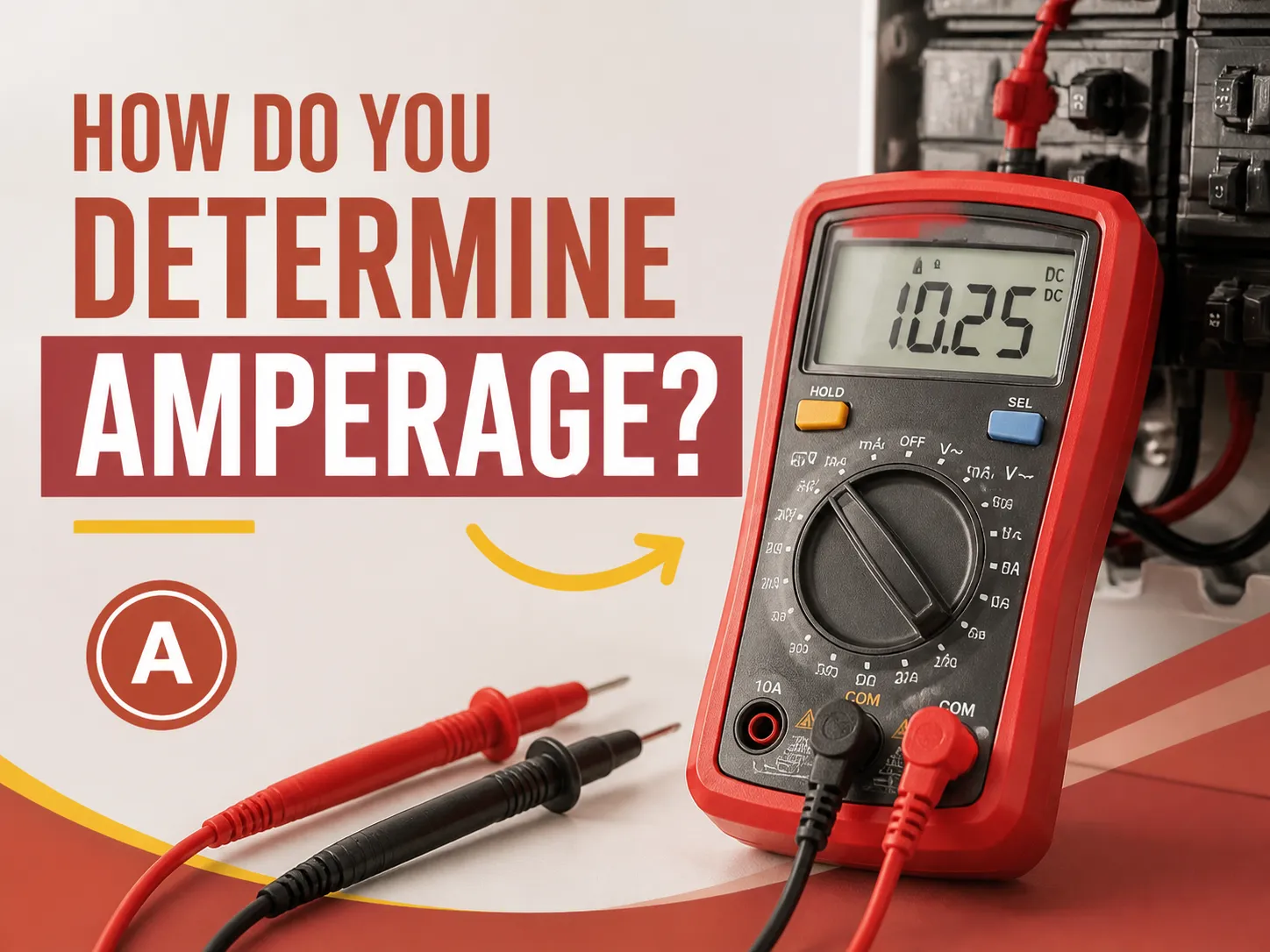
لا يهم إذا كنت تقوم بتحديد حجم دائرة كهربائية، أو تشخيص قاطع دائرة يفصل، أو اختيار بطاريتك، أو شراء مولد، فالسؤال دائمًا يعود إلى الأمبيرات – كم التيار الذي يحتاجه هذا فعليًا؟ قد يبدو الأمر وكأنه شيء واحد، ولكن عند الحديث عن الأمبيرات، ما تحتاجه حقًا هو ثلاث طرق لمعرفة ذلك: يمكنك قراءته، أو حسابه، أو قياسه.
ملخص: يمكنك معرفة الأمبيرات بطرق مختلفة: (1) عن طريق فحص لوحة الاسم – معظم الأجهزة تخبرك بالأمبيرات الخاصة بها؛ (2) عن طريق حسابها – إذا كان الحمل معروفًا، يمكن تطبيق الصيغة I = P ÷ V أو قانون أوم I = V ÷ R؛ (3) عن طريق القياس – يمكنك استخدام مقياس الأمبير لالتقاط السلك أو قطع الدائرة واستخدام الملتيميتر لإجراء القياس على التوالي.
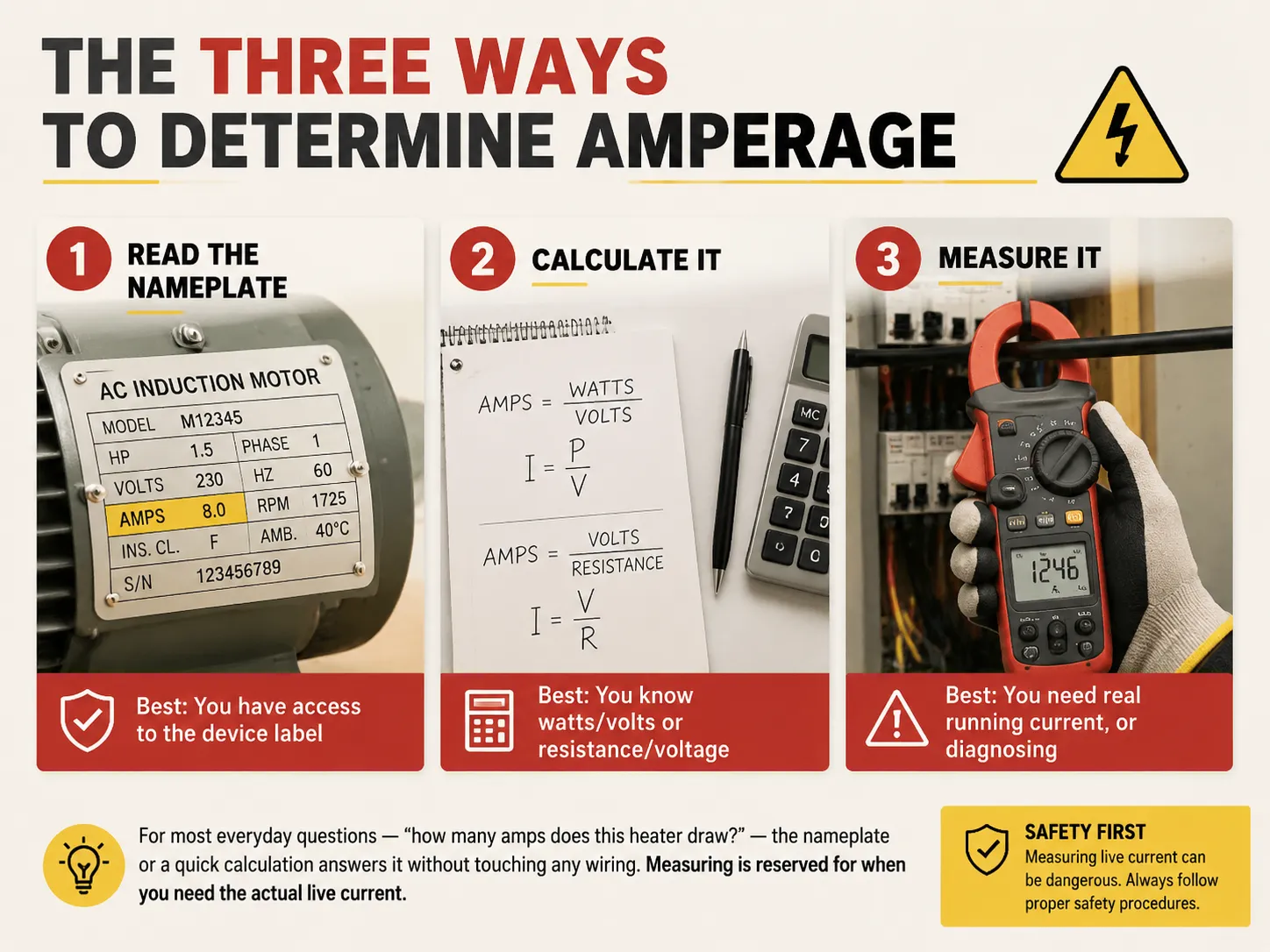
الطرق الثلاث لتحديد الأمبيرات
هناك ثلاث طرق حقيقية لمعرفة الأمبيرات لأي حمل أو دائرة، ومعرفة هذه الطرق يوفر الوقت ويقلل المخاطر.
| الطريقة | الأفضل عند | الدقة | المخاطر |
|---|---|---|---|
| قراءة لوحة الاسم | لديك وصول إلى ملصق الجهاز | جيدة (القيم المصنفة) | لا شيء |
| حسابها | تعرف الواط/الفولت أو المقاومة/الجهد | جيدة (تعتمد على المدخلات) | لا شيء |
| قياسها | تحتاج إلى التيار الفعلي أثناء التشغيل، أو للتشخيص | ممتازة (قراءة فعلية) | خطر كهربائي — يجب اتباع قواعد السلامة |
في معظم الحالات، على سبيل المثال، “كم أمبير يستخدم هذا السخان”، توفر لوحة الاسم أو الحساب السريع إجابة دون لمس الأسلاك. يجب القياس فقط عندما تحتاج إلى معرفة الخطأ الحقيقي؛ فقط مقياس الكماشة أو الملتيميتر المتسلسل يمكن أن يوفر لك هذه المعلومات.
الطريقة 1: قراءة لوحة الاسم
الملصق هو أسرع وأأمن طريقة لمعرفة الأمبيرات. كل جهاز، أداة، محرك، وشاحن يحتوي على لوحة اسم تعرض مواصفاته الكهربائية:
- الأمبيرات المصنفة: بعض لوحات الاسم تحدد الأمبيرات بصيغة “Amps: X A” و “Current: X A”.
- الواط والفولت: بعض الملصقات تعطي قراءات بالواط (أو كيلوواط) والفولت؛ استخدم الصيغة أدناه لتحويلها.
- التركيبة المصنفة: تشير أجهزة HVAC إلى FLA (أمبيرات الحمل الكامل)، RLA (أمبيرات الحمل المصنفة)، و MCA (الحد الأدنى لسعة الدائرة) — FLA هو التيار أثناء التشغيل و MCA هو لحجم السلك فيما يتعلق بالأمبيرات.
- المحركات: حاول معرفة تصنيف FLA عند الجهد المطلوب (تختلف الأمبيرات للمحرك عند 120 فولت و 240 فولت).
على سبيل المثال، يمكن حساب سخان مساحة معلم بـ “1500W، 120V” كما يلي: الأمبيرات = 1500 ÷ 120 = 12.5A. هذا هو السبب في أن السخانات تحتوي على تعليمات تقول، “لا تستخدم على دائرة 15A مع أحمال أخرى” — 12.5A قريب من الحد الأقصى المسموح به للأمبيرات 80% وهو 12A.
الطريقة 2: حسابها (الصيغ)
إذا تم تزويدك بقيم الواط، الكيلوواط أو المقاومة في لوحة الاسم، هناك صيغتان أساسيتان لحساب الأمبيرات:
تطبيق صيغة القدرة التي يمكن استخدامها في معظم الحالات.
الأمبيرات = الواط ÷ الفولت (I=P÷V)
- سخان بقدرة 1500 واط وجهد 120 فولت ينتج عنه 12.5 أمبير.
- فرن بقدرة 3000 واط وجهد 240 فولت ينتج عنه 12.5 أمبير (نفس القدرة ولكن نصف الأمبيرات)
- مولد بقوة 5 كيلو واط وجهد 240 فولت له تيار كهربائي في هذه الحالة يساوي 5,000 ÷ 240 ≈ 20.8A.
قانون أوم ينطبق عندما يكون المقاومة معروفة.
- الأمبير = الفولت ÷ الأوم (I=V÷R)
- على سبيل المثال في دائرة 12 فولت مع حمل 4 أوم، يجب حساب: 12 ÷ 4 = 3 A.
تطبيق حسابات الثلاث مراحل في الوضع الصناعي.
- الأمبير = الواط ÷ (الفولت × 1.732 × معامل القدرة)
- على سبيل المثال، محرك 10 كيلو واط يستهلك طاقة ثلاثية الطور 400 فولت، معامل القدرة 0.85 → 10,000 ÷ (400 × 1.732 × 0.85) ≈ 17A. (للحصول على رقم تقريبي يرجى تجاهل معامل القدرة وحساب ضمن نطاق 15%)
الطريقة 3: قياس التيار (الأدوات والخطوات)
إذا كنت تحتاج إلى التيار الفعلي للحمل لمحرك محمل، أو دائرة تحافظ على نقطة فصلها، أو لاختبار تفريغ البطارية، فعليك إجراء قياس التيار. الطريقتان:
| الأداة | كيف تعمل | الأفضل لـ | السعر |
|---|---|---|---|
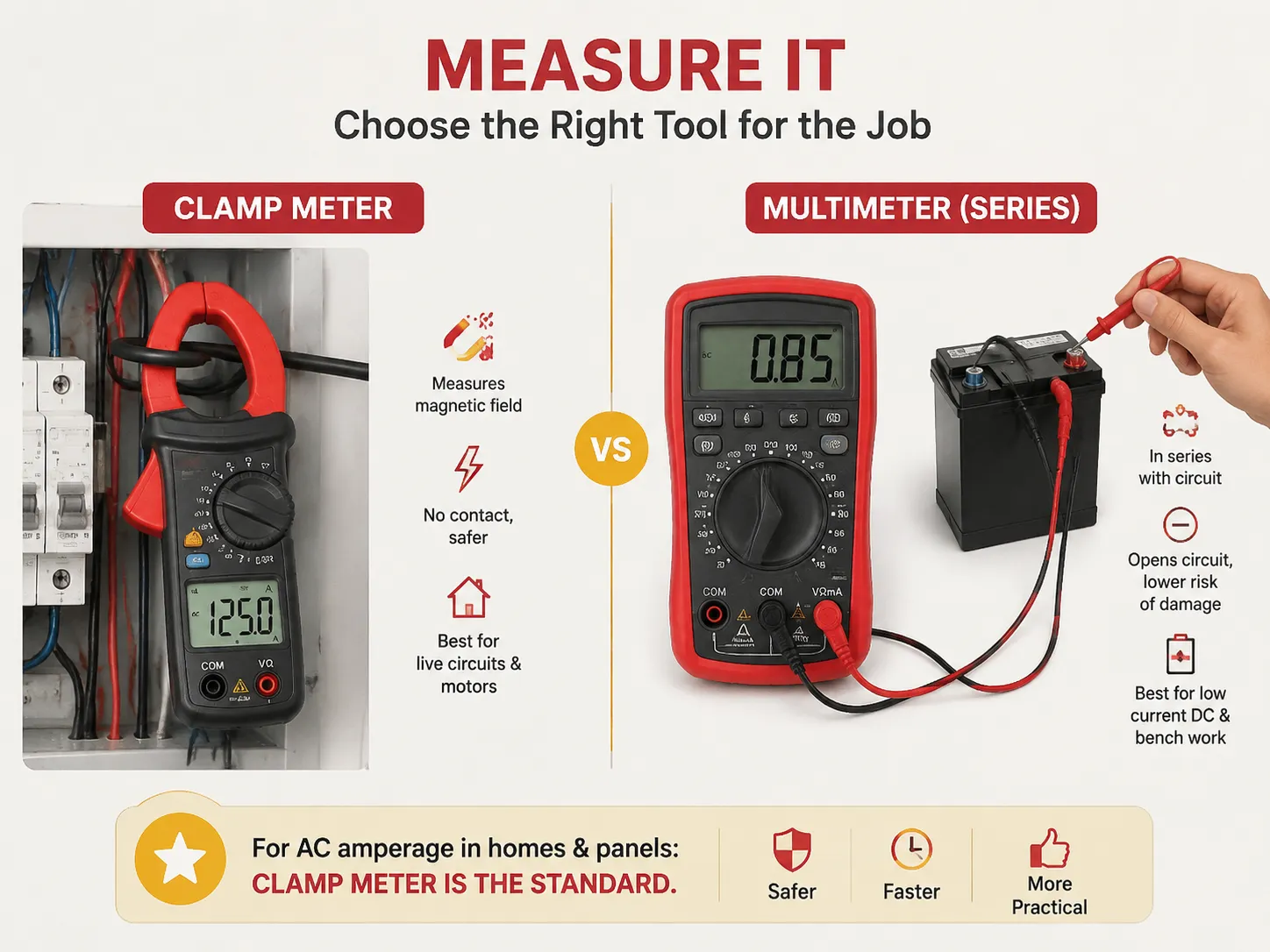
| مقياس المشبك (الأميتر) | الفكوك تحيط بموصل واحد؛ تقيس المجال المغناطيسي — لا حاجة للاتصال المباشر | الدوائر الحية، المحركات، تيار الجهاز الكامل | $30-$150 |
| الملتيميتر (على التوالي) | يفتح الدائرة ويمرر التيار عبر المقياس | التيار المستمر المنخفض (البطاريات، الحساسات)، العمل على المنضدة | $20-$100 |
مقياس المشبك هو الأداة المفضلة لقياس التيار المتردد لأنه يقيس التيار دون قطع الدائرة أو الاتصال بالمكونات الحية. لذلك، هو أكثر أمانًا وأسهل استخدامًا من الملتيميتر الأساسي في قراءة تيارات المنازل ولوحات التوزيع.
استخدام مقياس المشبك بشكل صحيح
إليك دليل خطوة بخطوة حول كيفية استخدام مقياس التيار القابض:
- للبدء، يجب تحديد ما إذا كان القياس سيتم باستخدام التيار المتردد (A~) أو التيار المستمر.
- بعد ذلك، إذا كان المقياس يحتوي على زر الصفر، فيجب ضبطه على الصفر.
- عند قياس التيار، يجب تثبيت موصل واحد فقط في القابض في كل مرة.
- بعد الانتهاء من ذلك، نحتاج إلى أخذ قراءة على الشاشة.
- من أجل الحصول على قراءة دقيقة، يجب أن تكون فكوك القابض مثبتة بإحكام وفي وضع عمودي.
- أخيرًا، تذكر أنه على الرغم من أن لوحة اسم المحرك تشير إلى تصنيف FLA الخاص به، إلا أن التيار تحت الحمل الفعلي قد يكون أكثر مما تشير إليه لوحة الاسم.
استخدام الملتيميتر على التوالي
عند العمل مع دوائر التيار المستمر (البطاريات، الألواح الشمسية، الحساسات) والتيار المتردد المنخفض على منصة الاختبار، من المحتمل أن تستخدم الملتيميتر على التوالي.
- أولاً، قم بإيقاف تشغيل الطاقة عن الدائرة وافصل سلكًا واحدًا حتى تتمكن من فتح الدائرة.
- بعد ذلك، قم بتوصيل الأسلاك: الأسود إلى COM والأحمر إلى مقبس A (الأمبير) واضبط المؤشر.
- قم بتوصيل الملتيميتر على التوالي مع الحمل، بحيث يتدفق التيار في الدائرة عبر الملتيميتر: المصدر → الملتيميتر → الحمل.
- ابدأ بالقياس على نطاق تيار عالي (مثل 10A) أولاً، ثم عندما تكون القراءة منخفضة انتقل إلى التيارات الأقل. ولكن لا تبدأ بتيار منخفض وإلا ستنفجر الفيوز!
- ثم قم بتشغيل الطاقة وخذ القراءة.
لا توصل الملتيميتر المضبوط على قياس الأمبيرات عبر مصدر طاقة لأن ذلك سيؤدي إلى دائرة قصر مميتة!
قواعد السلامة عند قياس التيار
- مقاييس القابض آمنة عند العمل حول الأسلاك المشحونة؛ الملتيمترات على التوالي ليست كذلك. لقياس التيار المتردد في المنزل/لوحة التوزيع، يجب استخدام مقياس القابض فقط — لن تلامس الأسلاك حتى.
- لا تستخدم مقياس القابض على كابل يحتوي على عدة أسلاك، لأنك ستحصل على قراءة خاطئة (قريبة من الصفر) ولن تعطيك أي معلومات مفيدة.
- تذكر: كسر قاعدة اللوحة خطير؛ حتى لمس لوحة القواطع يعني عمل على التيار الحي؛ إذا لم تكن مدربًا على ذلك، توقف عن القيام به فورًا.
- قبل البدء في فحص مقياسك، تأكد من تصنيفه وفقًا لـ CAT III في حالة دائرة التوزيع و CAT IV لدخول الخدمة.
- للقياسات على التوالي، قم بإيقاف تشغيل الطاقة أولاً، وصل مقياسك، ثم أعد تشغيل الطاقة.
- إذا كان لديك شكوك، قم بحساب أو تحقق من معلومات لوحة الاسم، لأن في معظم الحالات، لا تعتمد قياسات الأمبير على القياسات الحية.
تفسير الأمبير: الواط، الفولت وقاعدة 80%
إليك ما يجب فعله مع الأمبير:
- الواط = الأمبير × الفولت — حساب الطاقة والتكاليف.
- تصنيف الأمبير مقابل تصنيف القاطع – يجب ألا تتجاوز الأحمال تصنيف الدائرة، على سبيل المثال، قاطع دائرة 15A يحد الحمل الكلي إلى 1,800 واط.
- قاعدة 80% للأحمال التي تعمل باستمرار لأكثر من ثلاث ساعات – يتم تحديد الحمل إلى 80% من تصنيف الدائرة. على سبيل المثال، إذا كنت تستخدم دائرة 15A، فإن أقصى استهلاك للطاقة يساوي 1,440 واط. إذا كنت تستخدم دائرة 20A، يجب ألا يكون استهلاك الطاقة أعلى من 1,920 واط.
- اندفاع المحرك – تسحب المحركات من 5 إلى 8 أضعاف التيار التشغيلي عند بدء تشغيلها.
- التفاعل بين الجهد والتيار – مع سحب تيار 1,500 واط للسخان اعتمادًا على الجهد، إذا تم توصيل السخان بجهد 120 فولت، فإنه يسحب 12.5 أمبير، بينما عند توصيله بجهد 240 فولت، ينخفض التيار إلى 6.25 أمبير.
الأمبير مقابل الفولت مقابل الواط: ما الفرق؟
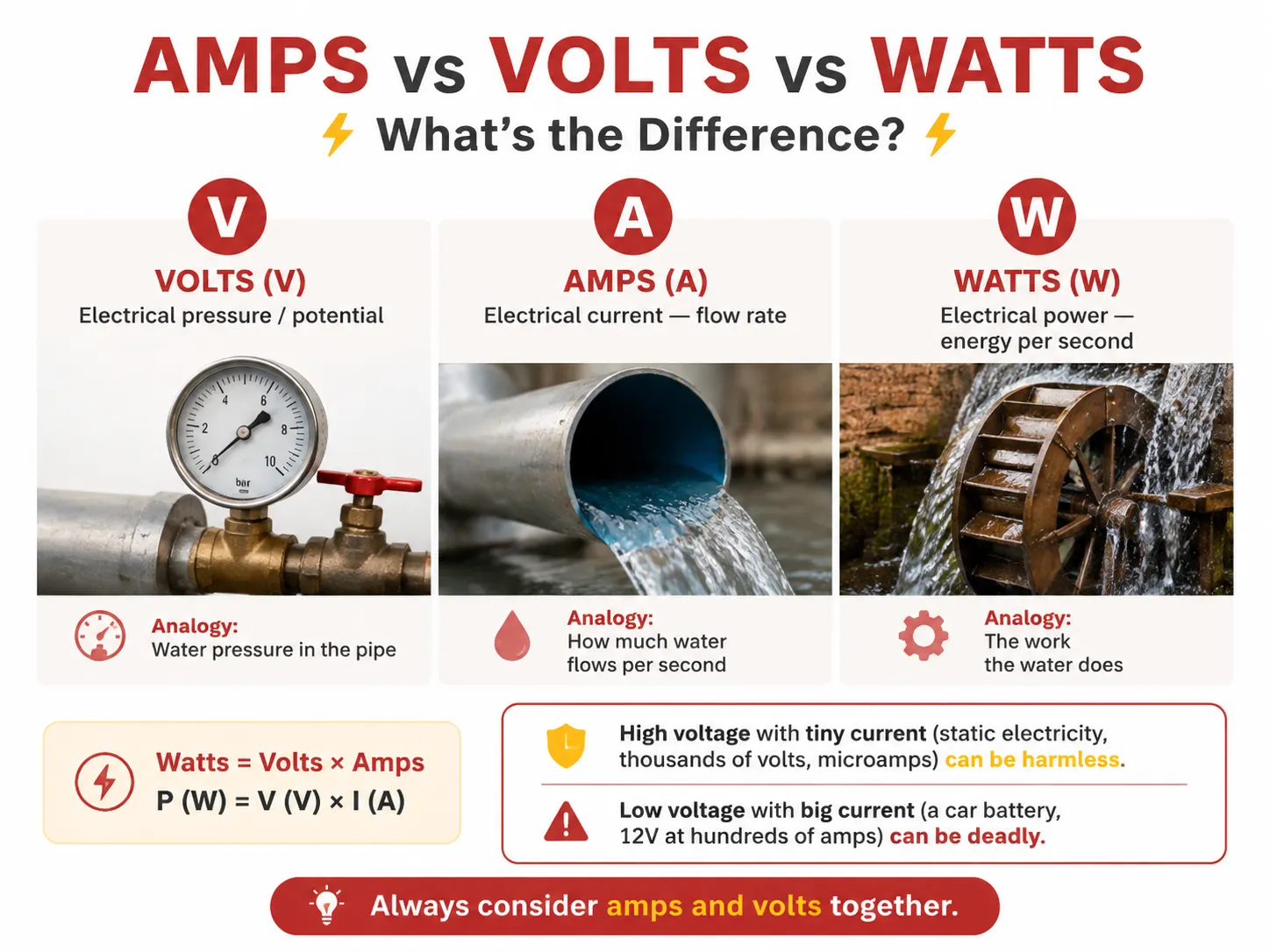
الوحدات الثلاث تصف أشياء مختلفة، وخلطها يسبب أخطاء حقيقية:
| الوحدة | القياسات | التشبيه |
|---|---|---|
| الفولت (V) | الضغط الكهربائي / الجهد | ضغط الماء في الأنبوب |
| الأمبير (A) | التيار الكهربائي — معدل التدفق | كمية الماء التي تتدفق في الثانية |
| الواط (W) | القدرة الكهربائية — الطاقة في الثانية | العمل الذي يقوم به الماء |
الفولت هو القوة، والأمبير هو التوجيه، والواط هو عامل القدرة، بمعنى أن الواط = الفولت × الأمبير. إذا كان الجهد عاليًا والتيار منخفضًا (كما في الكهرباء الساكنة، آلاف الفولتات وميكروأمبيرات) فقد يكون غير ضار. ومع ذلك، إذا كان الجهد منخفضًا والتيار عاليًا (على سبيل المثال، بطارية سيارة بجهد 12 فولت تعمل على مئات الأمبيرات) فقد يكون قاتلًا. يجب دائمًا مراعاة أن الأمبير والفولت يجب أن يسيرا معًا.
كيفية معرفة ما إذا كان منزلك 100A أو 200A
خطوات بسيطة لا تتطلب معدات:
- لقراءة القاطع الرئيسي، حدد القاطع المرئي في اللوحة. يحمل رقمًا مثل “100” أو “200” يشير إلى سعته.
- لقراءة قاعدة العداد، قد يكون هناك قراءة على مأخذ العداد أو بطاقة المرافق.
- انظر إلى الملصق الداخلي الذي عادةً ما يشير إلى حجم القاطع الرئيسي وحجم الحافلة الكهربائية.
- اتصل بمزود الكهرباء واطلب معلومات حول حجم خدمتك.
أهمية المعلومات: خدمة 100A تمنعك من إضافة أي أجهزة تستهلك طاقة كبيرة مثل السيارات الكهربائية، السخانات، والأفران؛ خدمة 200A هي المعيار الحديث. إذا كانت القواطع تفصل بانتظام عند إضافة حمل، وكان القاطع الرئيسي 100A، فقد يكون الترقية هي الحل الحقيقي — وإذا كان القاطع يتصرف بشكل غير صحيح،, معرفة كيفية التمييز إذا كان القاطع تالفًا يفصل جهازًا مهترئًا عن دائرة محملة فعليًا بشكل زائد. لتفاصيل الحجم والتكلفة، دليلنا إلى ما يمكن أن تحمله دائرة 15 أمبير و تكلفة استبدال القاطع الأرقام تساعد في الحساب العملي.
الأسئلة الشائعة
ما يعادل 20 أمبير؟
20 أمبير عند 120 فولت تعادل خرج طاقة قدره 2400 واط (الواط = الأمبير × الفولت). ثم لدينا 4800 واط عند 240 فولت. يسمح قاطع دائرة 20 أمبير في دائرة 120 فولت بحمل طاقة قصوى قدرها 1920 واط (وفقًا لقاعدة 80%) أو حتى 2400 واط في التشغيل غير المستمر. 20 أمبير يعادل أجهزة مثل أي ميكروويف كبير (يستهلك 1000-1200 واط عند 120 فولت) أو غلاية كهربائية لأنه مؤشر قياسي لدائرة المطبخ.
كيف تعرف إذا كان المنزل 100 أمبير أو 200 أمبير؟
إحدى الطرق الحاسمة لتحديد كمية الخدمة الكهربائية التي لديك هي ببساطة فتح لوحة الكهرباء وفحص الرقم المطبع على القاطع الرئيسي (المفتاح الكبير الموجود في أعلى اللوحة). هذا الرقم يكون إما 100 أو 120 أو أحيانًا 150 أو 225. تصنيف القاطع الرئيسي يشير إلى حجم الخدمة الكهربائية. يمكنك أيضًا فحص الملصق على قاعدة العداد وكذلك الملصق داخل لوحة الكهرباء لتقدير كمية الخدمة المقدمة. الكهرباء المزودة من المرفق عادة ما تكون 100 أمبير في المنازل القديمة و200 أمبير في أي بناء جديد.
كيف أحسب الأمبير؟
هناك ثلاث خيارات لمعرفة عدد الأمبيرات التي يحتاجها جهازك للعمل: (1) فحص لوحة الاسم لأن معظم الأجهزة تدرج استهلاك الأمبير؛ (2) استخدام الصيغة الأمبير = الواط ÷ الفولت (باستخدام قانون أوم، I = V ÷ R)؛ أو (3) قياس الأمبير باستخدام مقياس. الخيار الأخير يتطلب إما تثبيت مقياس التيار حول أحد الأسلاك التي تحمل التيار في الدائرة، أو توصيل مقياس متعدد في سلسلة مع جهاز يستهلك طاقة قليلة نسبيًا. في معظم الحالات، تكون لوحة الاسم أو الحساب كافية هنا وهو آمن لأنه لا يوجد خطر.
هل 5 أمبير تساوي 5 فولت؟
لا — هما يقيسان أشياء مختلفة. الأمبير يقيس التيار (الكهرباء أثناء انتقالها)، والفولت يقيس الضغط الكهربائي (فرق الجهد). خمسة أمبير هو قياس للتيار؛ خمسة فولت هو قياس للضغط. أيضًا الطاقة التي يقدمانها معًا بالواط تُحسب باستخدام: الواط = الفولت * الأمبير: 5V * 5A = 25W. مصدر 5 فولت يمكنه توفير تيار من ميكروأمبيرات إلى العديد من الأمبيرات حسب الحمل؛ الأمبير والفولت لا يمكن أن يكونا متساويين أبدًا.
المراجع
- NFPA 70 (NEC) — تحديد حجم الدائرة وقاعدة الحمل المستمر 80%
- OSHA — إرشادات السلامة الكهربائية وقياس التيار
- Fluke — كيفية قياس التيار باستخدام مقياس المشبك
- وزارة الطاقة الأمريكية — حسابات الطاقة والطاقة
- IEC 61010 — متطلبات السلامة لمعدات القياس الكهربائية
- IEC — وحدات النظام الدولي: تعريفات الأمبير، الفولت، والواط
الخلاصة
يعتمد العثور على التيار الكهربائي على ثلاث خطوات تحتاج إلى معرفتها مسبقًا: يمكن قراءة لوحة الاسم (الطريقة الأسرع والأكثر أمانًا)، يمكنك حساب التيار وفقًا للصيغة A= (W/V) (أو باستخدام قانون أوم)، ويمكنك قياس التيار بمساعدة إما مقياس المشبك (لدائرة حية، من المهم اتباع جميع احتياطات السلامة)، أو مقياس متعدد (لدائرة التيار المستمر) مع الحفاظ على حد السلامة 80%. شيء واحد يجب تذكره هو أن الأمبير والفولت هما شيئان مختلفان (في دائرة 20A ستحصل على 2400W من دائرة 120V). فهم التيار الكهربائي — وكيف يرتبط بأجهزة الحماية خلفه، من أساسيات MCBs مقابل MCCBs بـ معايير قواطع UL 489 — هو أساس العمل الكهربائي الآمن.