
سواء كنت تقوم بترقية خدمة منزلك السكني القديمة من 60A إلى 100A، أو تركيب خط تغذية إلى كراج منفصل، أو توصيل ورشة عمل جديدة، فإن السؤال الأول دائمًا هو نفسه — ما نوع الأسلاك (نحاس أو ألومنيوم) التي أحتاجها لخدمة 100 أمبير؟ الجواب يعتمد على قانونين مختلفين ينطبقان، حيث يمكن للخدمة السكنية استخدام NEC 310.12 وبالتالي تتطلب 83% للسعة (4 AWG نحاس أو 2 AWG ألومنيوم)، بينما تعني الخدمة التجارية أنك تحتاج إما إلى 3 AWG نحاس (لضمان السعة الكاملة) أو 1 AWG ألومنيوم. إذا قمت بذلك بشكل صحيح، ستجتاز الفحص؛ وإذا أخطأت، فإما أن تفشل في الفحص أو ترتفع حرارة أكثر الأسلاك حساسية في موقع البناء الخاص بك. الدليل التالي سيوفر لك جميع أحجام الأسلاك التي تحتاجها، والقوانين التي تستند إليها، وحسابات مختلفة تتعلق بأسلاك النحاس والألومنيوم، وتفاصيل كاملة عن عملية التركيب.
باختصار: وفقًا لـ NEC 310.12 (قاعدة 83%)، لخدمة سكنية 100A أحادية الطور 120/240V، الحد الأدنى للنحاس هو 4 AWG وللألومنيوم هو 2 AWG. للاستخدام التجاري، أو الخدمات ثلاثية الطور، أو خطوط التغذية الفرعية 100A، تنطبق متطلبات NEC 310.16 الكاملة للسعة: الحد الأدنى للنحاس هو 3 AWG وللألومنيوم هو 1 AWG. يمكن أيضًا أن يكون 2 AWG نحاس (115A) مناسبًا للعديد من دوائر 100A وفقًا لـ NEC 240.4(B). 6 AWG لا يلبي المتطلبات لأنه أقل من المطلوب (65A عند 75 درجة مئوية). قم بضبط الحجم إلى القيم في عمود 75 درجة مئوية، واضبط إلى حجم أكبر لأي مسافات تزيد عن ~100-150 قدم، وتحقق مرتين مع المفتش المحلي والمرافق المحلية في مشروعك.
الإجابة المباشرة: حجم السلك لخدمة 100A
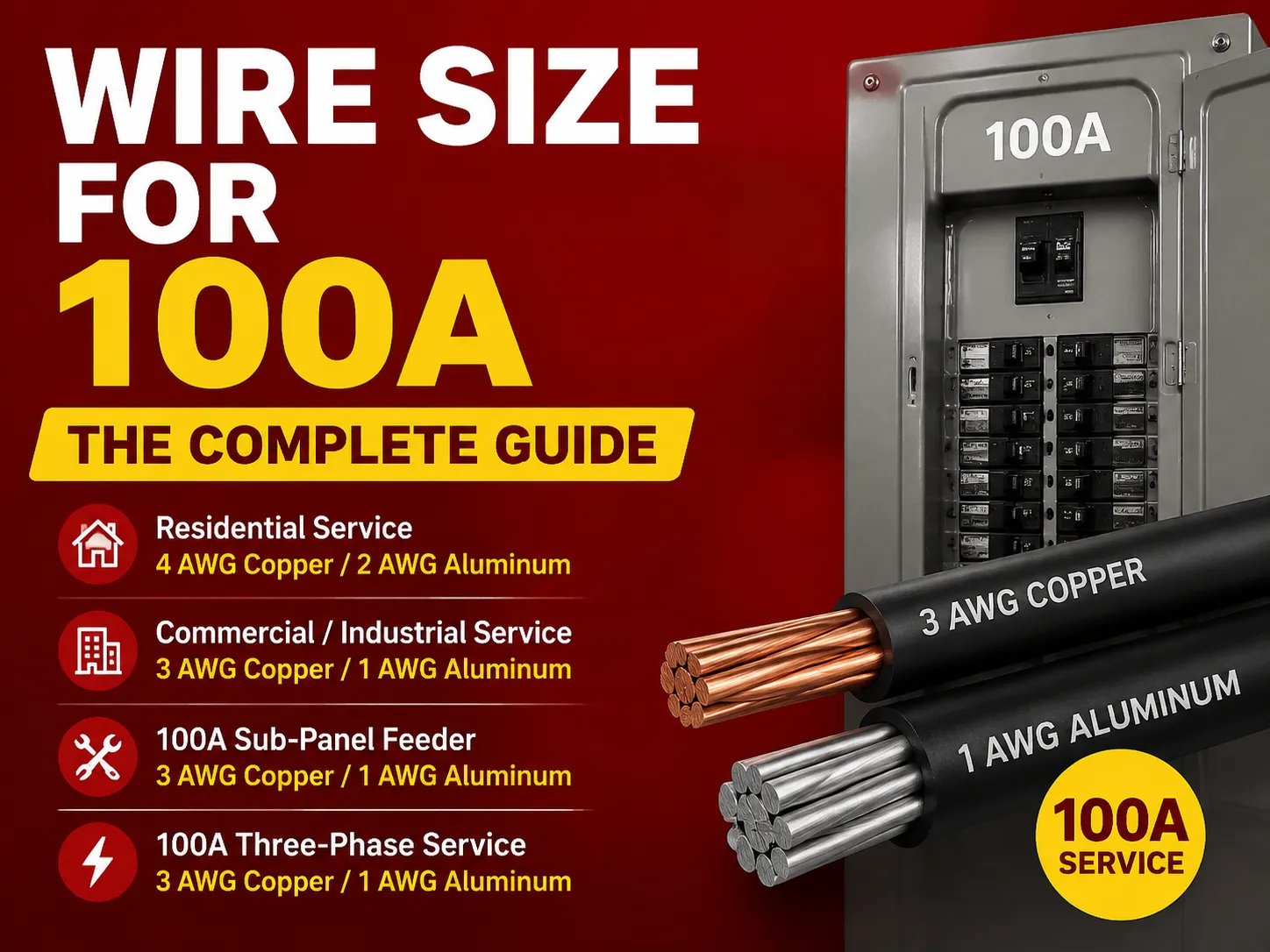
هنا الإجابة الكاملة في جدول واحد. الصف الذي تحتاجه يعتمد على نوع الهيكل وما إذا كانت هذه هي مدخل الخدمة أو خط التغذية.
| السيناريو | النحاس | الألمنيوم | أساس الكود |
|---|---|---|---|
| خدمة السكن السكني (طور واحد 120/240 فولت، معظم المنازل) | 4 AWG | 2 AWG | NEC 310.12 (قاعدة 83%) |
| الخدمة التجارية / الصناعية (طور واحد أو ثلاثي الطور) | 3 AWG | 1 AWG | NEC 310.16 (السعة الكاملة) |
| خط تغذية لوحة فرعية 100A (كراج، ورشة عمل، وحدة سكنية إضافية) | 3 AWG | 1 AWG | NEC 310.16 (بدون استثناء السكن) |
| خدمة ثلاثية الطور 100A (أي إشغال) | 3 AWG | 1 AWG | NEC 310.16 (بدون استثناء السكن) |
هنا ثلاث توضيحات يجب ملاحظتها:
- 6 AWG غير مناسب لحمل حمل 100A لأن النحاس بحجم 6AWG يمكنه فقط حمل 65A عند درجة حرارة 75 درجة مئوية. لذلك يجب أن يكون جزءًا من دائرة 50-60A.
- سلك النحاس 3 AWG مفيد لحمل 100A بالضبط عند 75 درجة مئوية.
- 2 AWG نحاس يعمل أيضًا لأنه لديه سعة 115A عند 75 درجة، لذا وفقًا لـ NEC 240.4(B) يمكن توصيله بدائرة تستخدم قاطع 100A.
NEC 310.12 وقاعدة 83% (خدمات السكن)
يسمح NEC 310.12 بأن يتم تحديد حجم موصلات الخدمة وخطوط التغذية الكاملة للمنزل عند 83% من تصنيف الخدمة لوحدة سكنية واحدة (أو وحدة سكنية فردية) تعمل بنظام أحادي الطور 120/240V. السبب وراء هذه القاعدة هو أن الأحمال في المنزل متنوعة. بالفعل، من المستحيل أن تعمل جميع الأحمال الكهربائية معًا في نفس الوقت. لذلك، يسمح NEC باستخدام أحجام موصلات أصغر من تلك المحددة في الجداول العامة.
الحساب لـ 100A يكون كالتالي: 100 × 0.83 = 83A السعة المطلوبة. للتحقق من السعة، نحتاج إلى معرفة تصنيف درجة الحرارة ‒ إذا كنا نتحدث عن 75°C:
- 4 AWG نحاس (85A) → يمكنه تحمل 83A → هو حجم نحاس قياسي لخدمات السكنية 100A.
- 2 AWG ألومنيوم (90A) → يمكنه تحمل 83A → هو حجم ألومنيوم قياسي لخدمات السكنية 100A.
هذا هو السبب في قول الناس “خدمة 100A تساوي 4 AWG نحاس أو 2 AWG ألومنيوم” – تنص القاعدة على أنه حجم واحد أصغر من الحجم في الجداول العامة. ومع ذلك، لا ينطبق على
- المباني التجارية، التجزئة، المكاتب، المخازن، أو التصنيع.
- خدمات ثلاثية الطور.
- الموصلات الفرعية للوحات الفرعية ‒ تستخدم السعة الكاملة حسب 310.16 حتى لو استُخدمت في نفس المنزل.
NEC 310.16: السعة الكاملة للمباني التجارية واللوحات الفرعية
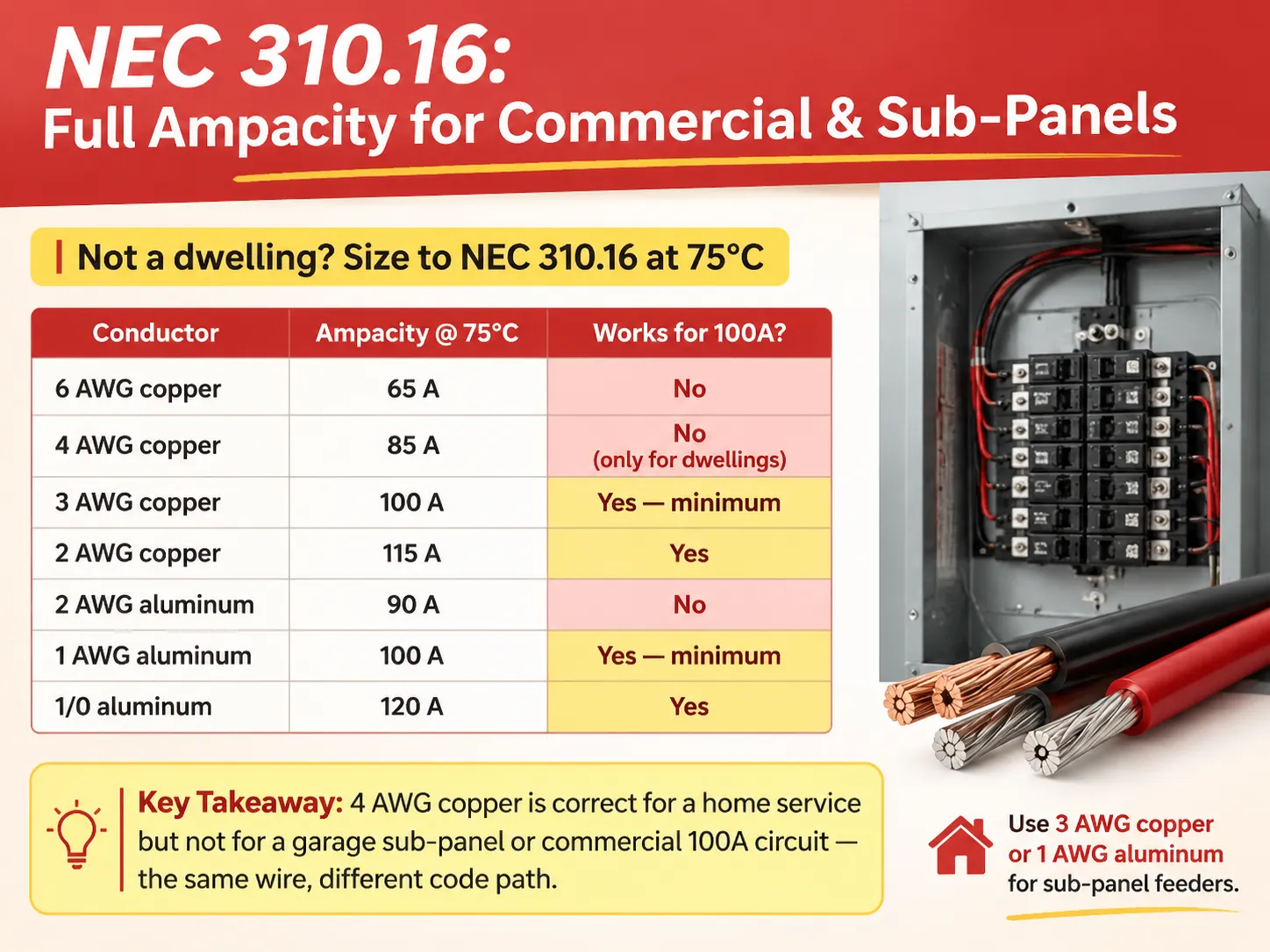
عندما لا ينطبق استثناء السكن، يتم تحديد الحجم حسب NEC 310.16 عند 75°C (المعيار لنهايات معدات الخدمة):
| الموصل | السعة الأمبيرية @ 75°C | هل يعمل لـ 100A؟ |
|---|---|---|
| 6 AWG نحاس | 65 أ | لا (دائرة 50-60A) |
| 4 AWG نحاس | 85 أ | لا تحت 310.16 (فقط تحت 310.12 للسكن) |
| 3 AWG نحاس | 100 أ | نعم — الحد الأدنى |
| 2 AWG نحاس | 115 أ | نعم (اختيار شائع للهوامش) |
| 2 AWG ألومنيوم | 90 أمبير | لا تحت 310.16 (فقط تحت 310.12) |
| 1 AWG ألومنيوم | 100 أ | نعم — الحد الأدنى |
| 1/0 ألومنيوم | 120 أمبير | نعم (هامش إضافي) |
النتيجة الرئيسية: على الرغم من أن 4 AWG نحاس مقبول لخدمة المنزل، إلا أنه لا يعمل للوحة فرعية في المرآب أو سلك دائرة تجارية 100A — يمكن الموافقة على هذا السلك ولكن ليس عبر طريقة معيار الموصل الفرعي للوحة الفرعية. هنا يظهر معظم الالتباس ولهذا السبب المعيار لسلك النحاس للوحة الفرعية هو 3 AWG نحاس أو 1 AWG ألومنيوم.
النحاس مقابل الألومنيوم: ما الفرق
كلاهما متوافق مع الكود؛ الاختيار يعتمد على الاقتصاد بالإضافة إلى انضباط التركيب:
| العامل | النحاس | الألمنيوم |
|---|---|---|
| التكلفة النسبية | الأساس (غالي) | أقل بحوالي 40-60% عند هذا الحجم |
| الحجم المطلوب لـ 100A (310.16) | 3 AWG | 1 AWG (حجمين أكبر) |
| الوزن | أثقل | حوالي ثلث الوزن — أسهل في السحب |
| الموصلية | أعلى | ~60% من موصلية النحاس |
| قواعد التوصيل | المعيار | مركب مضاد للأكسدة، أطراف مصنفة AL، عزم دوران صحيح — إلزامي |
| التآكل | ضئيلة | يتأكسد عند نقاط التوصيل إذا لم يُعالج |
الألمنيوم هو عمليًا المادة الأكثر شيوعًا المستخدمة لكل من مدخل الخدمة 100A وكذلك للمغذيات الطويلة. تركيبها معروف أيضًا بين العمال الكهربائيين المعتمدين. هناك ثلاثة أساسيات يجب استخدامها في جميع التركيبات الألمنيوم: مركب توصيل مضاد للأكسدة، أطراف بتصنيف AL/CU، ومفتاح عزم دوران وفقًا لتوصيات الشركة المصنعة.
ماذا يعني سلك “2-2-2-4”؟
إذا كنت تختار مغذي سكني 100A، يُشار إلى الكابل بأنه “2-2-2-4” (قد يظهر هذا كـ “2-2-2-4 SER” أو “2-2-2-4 AL”). هذا التدوين يوضح الموصلات فيه: موصلان بحجم 2 AWG هما الساقان الحارتان، وموصل آخر بحجم 4 AWG هو النوع المحايد بالإضافة إلى موصل واحد بحجم 4 AWG لغرض التأريض.
- موصلان 2 AWG حار + 2 AWG محايد يوفران دائرة 120/240 فولت.
- 4 AWG هو التأريض للمعدات.
- بما أن هذا نوع كابل SER من الألمنيوم، فإنه يفي بمتطلبات التركيب الكهربائي السكني القياسية 100A وفقًا لـ NEC 310.12 (2 AWG = 90A، أكثر من كفاية خرج الجهد 83A).
للسؤال، “هل يكفي سلك 2-2-2-4 لـ 100 أمبير؟” الجواب هو “نعم” للخدمة السكنية ومغذي 100A، حيث ينطبق تنظيم 83%. ومع ذلك، لن يعمل للخدمات التجارية عند 100A التي تحتاج إلى كابلات 1 AWG للساقين الحارين.
هل يتحمل سلك 6 قياس 100 أمبير؟
سلك نحاسي 6 AWG مناسب لـ 65A عند 75°C (55A عند 60°C) وهو غير كافٍ لخدمة 100A لأن ارتفاع حرارة هذا السلك يمكن أن يضر العزل ويخلق خطر حريق خطير. من الأفضل استخدام هذا السلك في دوائر التيار المنخفض، حتى 50-60A. للوظائف التي تتطلب 100A أو أكثر يجب استخدام أحجام أسلاك 3 AWG نحاس أو 1 AWG ألومنيوم.
هل سلك #3 نحاسي جيد لـ 100 أمبير؟
بالفعل. نحاس 3 AWG مصنف لـ 100A عند 75°C؛ مما يجعله الحد الأدنى الدقيق لدائرة عامة 100A، خدمة تجارية، أو مغذي لوحة فرعية وفقًا لـ NEC 310.16. يختار العديد من الكهربائيين نحاس 2 AWG (115A) لمزيد من السعة، تخفيض التصنيف، أو المسافات الطويلة؛ وهذا مقبول بالفعل. للخدمة السكنية فقط، نحاس 4 AWG كافٍ. باختصار، عند السؤال هل سلك #3 نحاسي جيد لـ 100 أمبير؛ هذا السلك مصنف بشكل صحيح.
طول التشغيل وهبوط الجهد
السعة الحالية ليست القيد الوحيد — المسافات الطويلة تفقد الجهد. الحد الأقصى الموصى به للبقاء ضمن هبوط 3% عند 240 فولت:
| الموصل | أقصى طول تشغيل تقريبي باتجاه واحد (انخفاض 3%) |
|---|---|
| 3 AWG نحاس | ~147 قدم |
| 2 AWG نحاس | ~185 قدم |
| 1 AWG نحاس | ~234 قدم |
| 1 AWG ألومنيوم | ~142 قدم |
| 1/0 ألومنيوم | ~178 قدم |
| نحاس 4 AWG (310.12 السكني) | ~116 قدم |
| ألومنيوم 2 AWG (310.12 السكني) | ~112 قدم |
معلومات عامة: السعة الحالية جيدة للأطوال حتى حوالي 100 قدم، يُفضل زيادة الحجم بمقدار واحد من 100-150 قدم، وللأطوال حوالي 150 قدم وما فوق، ستحتاج السعة الحالية إلى زيادة حجم واحد على الأقل (على سبيل المثال، من نحاس 3 AWG إلى 2 AWG أو من ألومنيوم 1 AWG إلى 1/0). بشكل عام، المسافات الطويلة في المناطق الريفية عادة ما تحتاج إلى زيادة أكثر من حجم واحد.
تحديد حجم الموصل المحايد وموصل التأريض
يجب أن تشمل التركيبة الكاملة لـ 100A موصلات النيوترال والتأريض كما يلي:
- النيوترال: يتم تحديده بشكل صحيح وفقًا للحمل غير المتوازن المحسوب (جدول NEC 220)، وهو يعادل الموصلات الحارة للدائرة لخدمة 100A في معظم الحالات، بينما يكون بحجم أقل بمقدار واحد إذا سمحت الحسابات بذلك.
- موصل قطب التأريض (GEC) – يتم تحديد حجمه وفقًا لجدول NEC 250.66 – عادةً ما يكون GEC من النحاس بحد أدنى 8 AWG لخدمات الموصلات النحاسية 4 AWG أو الألومنيوم 2 AWG؛ تحقق من الجدول لحجم السلك المناسب.
- تأريض المعدات (الفرعي): يتم تحديد حجمه وفقًا لجدول NEC 250.122 – عادةً ما يكون 8 AWG نحاس أو 6 AWG ألومنيوم لمغذي 100A.
- أقطاب التأريض: لخدمة المبنى المؤرضة بواسطة قضيبين على مسافة مناسبة من بعضهما البعض (جدول NEC 250.52).
من أكثر الأخطاء الشائعة التي يمكن التحكم بها في أعمال الخدمة الخلط بين الجدولين 250.66 (GEC) و250.122 (تأريض المعدات) – اختر الجدول الصحيح للسلك المناسب.
تفاصيل اللوحة الفرعية: المرآب المنفصل وورشة العمل
تشغيل 100A إلى مرآب منفصل أو ورشة عمل أو وحدة سكنية ملحقة (ADU) يتطلب مراعاة أكواد وتنظيمات إضافية:
- يجب تركيب مغذي بأربعة أسلاك؛ يشمل ذلك سلكين حارين من اللوحة الرئيسية، نيوترال واحد، وتأريض المعدات (NEC 250.32). تذكر أن تركيب مغذي بثلاثة أسلاك في مبنى منفصل غير مقبول.
- يجب عزل النيوترال. يجب التأكد من أن شريط النيوترال في اللوحة الفرعية منفصل عن شريط التأريض. توفر اللوحة الرئيسية الربط بينهما.
- التأريض ضروري للهيكل الجديد. يجب أن يكون للمبنى المنفصل نظام تأريض خاص به (عادةً قضبان تأريض موجودة للاستخدام).
- نوع الكابل عادةً ما يكون 1 AWG SER ألومنيوم أو 3 AWG نحاس في المواسير لمغذي 100A؛ يجب أن يلتزم ذلك بـ 310.16.
- قم بحساب الأحمال – من الضروري إجراء حسابات الأحمال قبل شراء الأسلاك. قد تتطلب وحدة سكنية ملحقة مع تدفئة كهربائية ووحدة شحن EV تيارًا بقوة 125A وليس 100A.
الأخطاء الشائعة في تركيبات 100A
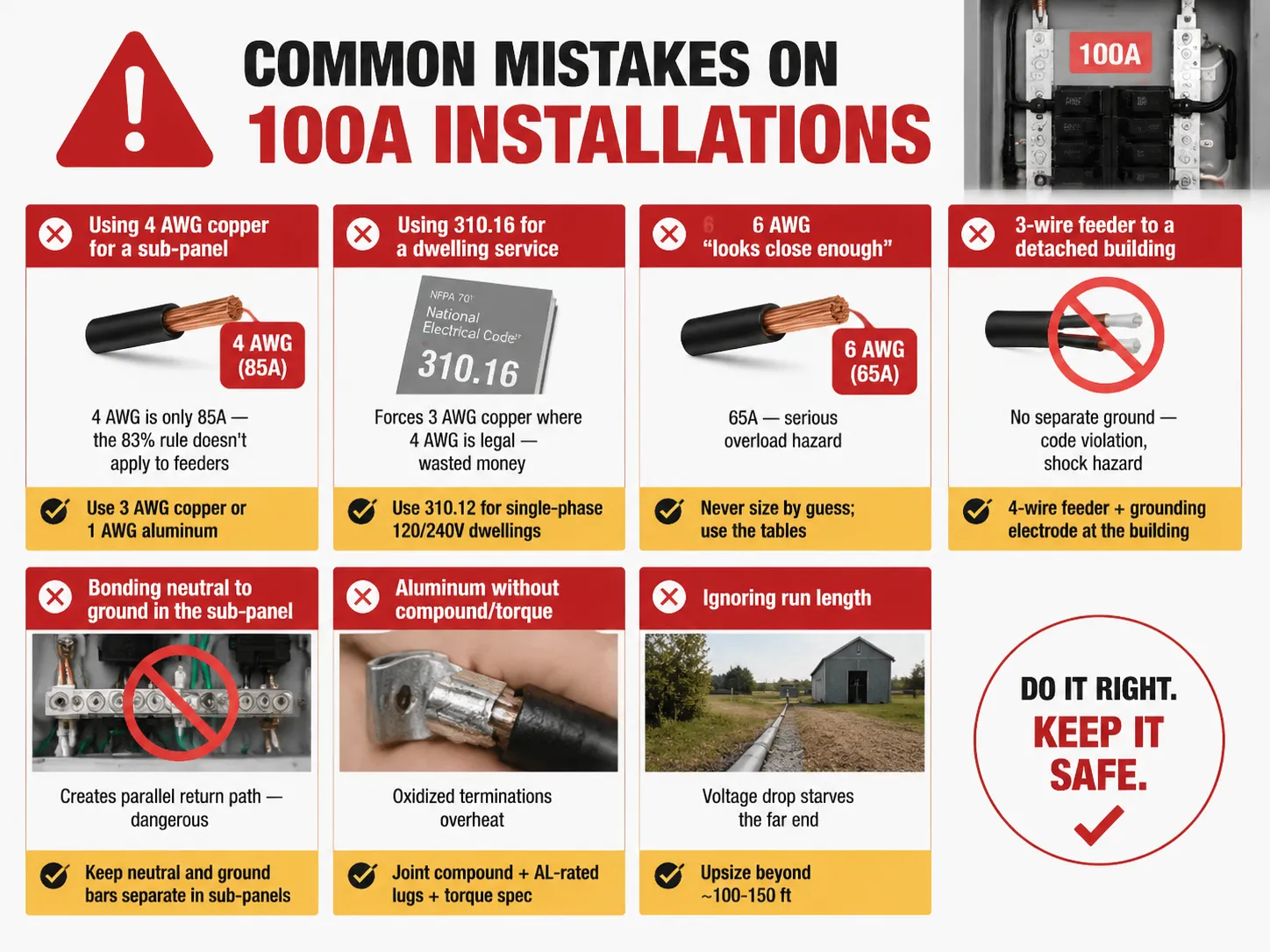
| الخطأ | لماذا هو خطأ | النهج الصحيح |
|---|---|---|
| استخدام 4 AWG نحاس للوحة فرعية | 4 AWG هو فقط 85A — قاعدة 83% لا تنطبق على المغذيات | 3 AWG نحاس أو 1 AWG ألومنيوم لمغذيات 100A |
| استخدام 310.16 لخدمة السكن | فرض استخدام 3 AWG نحاس حيث يكون 4 AWG قانونيًا — هدر في المال | استخدم 310.12 للمساكن أحادية الطور 120/240 فولت |
| 6 AWG “يبدو قريبًا بما فيه الكفاية” | 65A — خطر حمل زائد خطير | لا تحدد الحجم بالتخمين؛ استخدم الجداول |
| مغذي بثلاثة أسلاك إلى مبنى منفصل | No separate ground — code violation, shock hazard | 4-wire feeder + grounding electrode at the building |
| Bonding neutral to ground in the sub-panel | Creates parallel return path — dangerous | Keep neutral and ground bars separate in sub-panels |
| Aluminum without compound/torque | Oxidized terminations overheat | Joint compound + AL-rated lugs + torque spec |
| تجاهل طول السلك | Voltage drop starves the far end | Upsize beyond ~100-150 ft |
اعتبارات التكلفة والتصريح
Upgrade to a 100A service or installation of a new electrical feeder has the following costs:
- Materials include: panel – $60-$200, 100A main breaker – $30-$80, 2-2-2-4 aluminum SER – $1.50-$3 per foot, 3 AWG copper – $3-$6 per foot, meter base and hardware – $50-$150.
- Jobs will run at $800-$2,500 for a service upgrade and $500-$1,500 for a sub-panel feeder, based on run distance and access through walls.
- The permit and inspection normally cost $50-$300 and are required. Inspectors check wire and grounding size and bonding to be finished.
- Utility coordination is needed as the utility will own the meter and service connection.
When the project also involves panelboard and breakers, matching certified protection devices — and understanding the breaker types involved, from the basics of MCBs and MCCBs بـ معايير قواطع UL 489 — keeps the whole install compliant end to end. And once the 100A main is in, every branch circuit behind it follows the same sizing discipline — the limits explained for a 15-amp circuit’s wattage apply at every level of the panel.
المعايير الدولية: ملاحظة سريعة
Outside of North America, the determination of 100A wiring is done differently as most of the world implements methods consistent with IEC/BS 7671 standards (current and correction factor method) instead of using a simplified service table.
- In the UK (BS 7671), cable sizes are determined based on the installation method. For instance, a 100A single-phase connection usually requires a copper wire of between 25 and 50mm² depending on how long the cable is.
- In Europe (IEC 60364), the straightforward method is used.
- In Australia (AS/NZS 3000), method-based calculations are used for insulation and often result in use of 25 to 35mm² wires.
- In Canada (CE Code), a similar argument to that put forth by the NEC is used; installations may be based on 83%-like formulas.
The NEC procedure is based on rules pertaining specifically to the US and/or Canada installations; hence, if the location of the job is different from those two places it would be wise to hire an engineer or electrician to carry out the calculations.
الأسئلة الشائعة
What size wire do we need for a 100 amp service?
According to NEC 310.12 for residential systems with 100A service (single phase), it is allowed to use 4 AWG copper or 2 AWG aluminum conductors. Whereas in commercial systems with three-phase or 100A sub-panel system, the full ampacity from the NEC 310.16 has to be applied, which means a minimum of 3 AWG copper or 1 AWG aluminum conductors. In terms of size for the GEC, 8 AWG copper conductor must be used as per 250.66 along with upsizing for distances of more than 100-150 feet.
Is #3 copper good for 100 amps?
Indeed – 3 AWG copper is rated precisely as 100A at 75°C, it is exactly the minimum required for 100A regular circuit, commercial service or sub-panel feeding based on NEC 310.16. However, a large number of electricians use 2 AWG copper (115A) instead to provide more headroom due to derating. For household services only, 4 AWG copper is considered okay.
Is 2-2-2-4 wire good for 100 amps?
Indeed, when it comes to residential applications, “2-2-2-4” SER cable (2 AWG hot wires, 2 AWG neutral wire, and 4 AWG ground wire) is considered as the standard aluminum type for 100A residential service as stated in NEC 310.12 (it should be noted that 2 AWG aluminum wire is rated at 90A, which is more than enough for the 83A needed). But when it comes to commercial applications, 1 AWG aluminum wire or 3 AWG copper wire needed for 100A commercial service is required.
Will 6 gauge wire handle 100 amps?
No. 6 AWG copper wire has a rating of just 65 amperes at a temperature of 75°C (55 amperes at 60°C), which is not suitable for 100 amperes. The wire will get hot, allowing for very high risks of fire. 6 AWG copper is appropriate for circuits carrying 50-60 amperes (for example with ranges, ovens, or small sub-panels). For 100A use either 3 AWG copper or 1 AWG aluminum wire (in general) or 4 AWG copper or 2 AWG aluminum wire (for dwelling services).
المراجع
- NFPA 70 — National Electrical Code (NEC): Articles 230, 240, 250, 310
- Mike Holt — NEC 310.12 83% Rule and Conductor Sizing
- OSHA 1910.303 — المتطلبات الكهربائية العامة
- EC&M Magazine — Service and Feeder Sizing Articles
- IEC 60364 — التركيبات الكهربائية منخفضة الجهد (دولي)
- NEMA — Conductor and Wiring Standards
الخلاصة
The process of determining appropriate wire sizes for a service rated at 100 A depends on how you answer the question: does the 83% dwelling rule apply? According to NEC 310.12, in the case of residential applications, the standard wire sizing practice requires the use of 4 AWG copper wire or 2 AWG aluminum wire. In the case of commercial installations, systems equipped with three-phase motors, and hundred-amp sub-panels, the applicable wire sizes that comply with the code requirements concerning their ampacity correspond either with 3 AWG copper wire or with 1 AWG aluminum wire; therefore, in practice, 2 AWG copper wire is often used. When the panel and breakers are part of the job, understanding the protection devices — like recognizing a failing breaker and the practical pricing in تكلفة استبدال القاطع — keeps the whole project safe, legal, and on budget.