
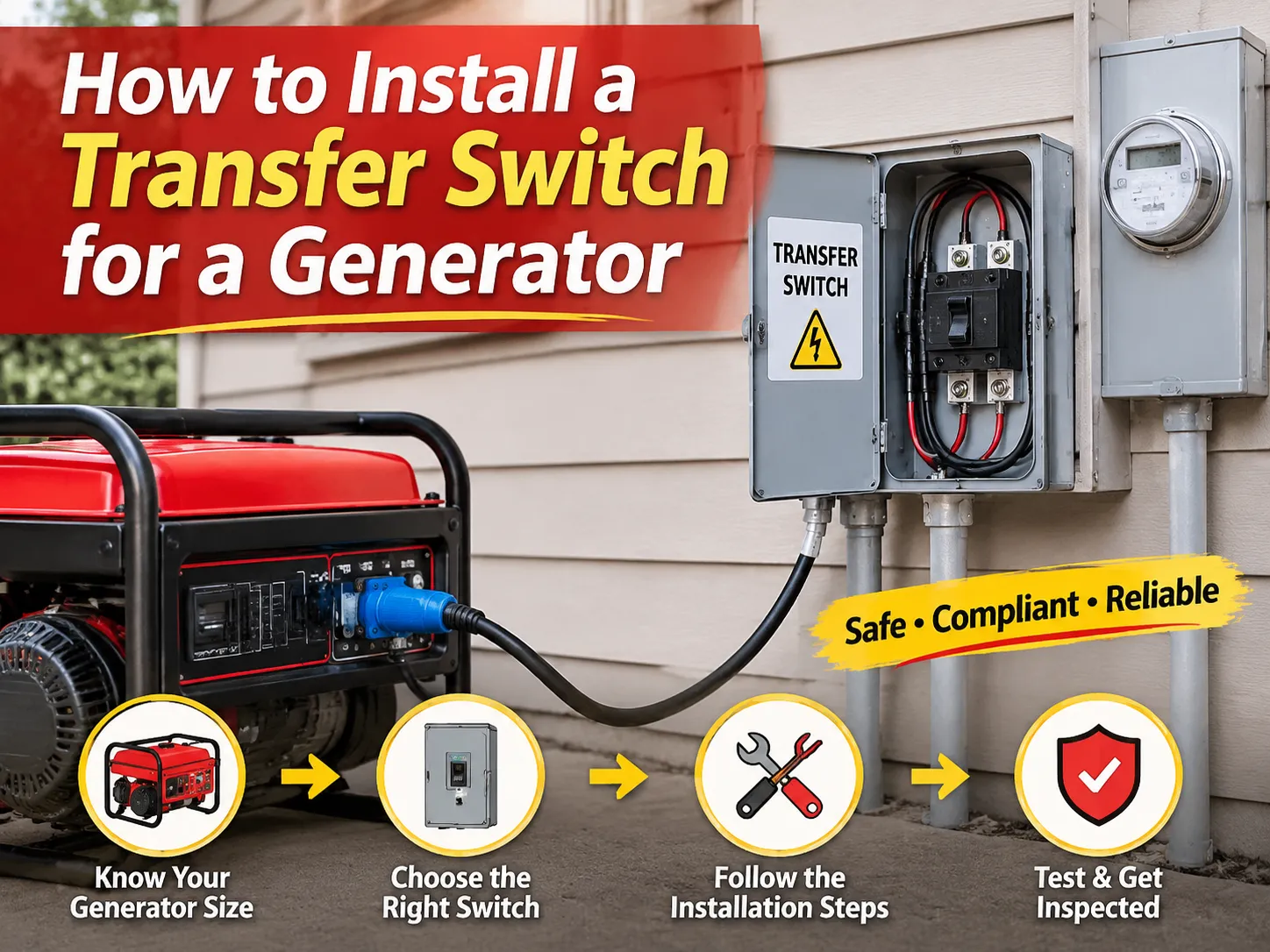
كل شتاء، هناك شخص في منزل غير مدفأ يحدق في اللوحة، ويلقي نظرة نحو المولد في المرآب، ويتساءل إذا كان كابل ومشبكين من نوع أليغاتور كافيين. هذا غير كافٍ، والتبرير لذلك ليس في الأوراق الرسمية. السبب هو أن التغذية العكسية للوحة تضع جهدًا من المولد على جانب المستخدم من التركيب، مما يجعل من الممكن أن يلتقي به عامل الخط القادم لاستعادة الشبكة. لهذا السبب يوجد مفتاح تحويل، ولماذا تدور التركيبة حول مسألة أساسية واحدة: كيفية ضمان عدم اتصال جانب المستخدم من المولد والشبكة فعليًا، وكيفية إثبات ذلك.
مجموعة المتطلبات الموضحة أدناه تستند إلى افتراض أن الدائرة المعنية هي دائرة أحادية الطور تعمل في أمريكا الشمالية وأنها تستخدم مولدًا محمولًا أو احتياطيًا. التسلسل متعمد تمامًا؛ عملية تحديد الحجم هي الخطوة الأولى، لأنها تؤثر على كل إجراء آخر يتم اتخاذه لاحقًا في العملية، ثم الانتقال إلى العمل الميكانيكي، ثم إلى الموصلات، والموصل المحايد والتأريض، والتي تبين بشكل غير متوقع أنها قرارات مهمة يتركها عدد مفاجئ من الأشخاص للمفتش للتعامل معها.
يجب أن يكون لمفتاح التحويل تصنيف يساوي أو يزيد عن خرج المولد الخاص بك ويجب أن يحتوي على الأسلاك ذات الحجم المناسب لذلك التصنيف وأن يتم تركيبه بطريقة لا تتحد فيها تيارات إمداد الطاقة من المرافق وتيارات قدرة المولد في نقطة واحدة. على سبيل المثال، سيولد المولد المحمول بقوة 10,000 واط خرجًا يقارب 41.7 أمبير على 240 فولت، لذا يُنصح بشراء مفتاح 50 أمبير وأسلاك نحاسية بحجم 6 AWG. تتراوح تكاليف الأجهزة في حالة المفاتيح اليدوية المسبقة التوصيل بين $400 و $800، بينما يمكن أن يكلف طقم القفل المرخص $50-$150. تشمل التكاليف الإضافية عمل الكهربائيين، والذي يُقدر بين $300 و $600، والتصاريح. يمكن تقسيم التركيب إلى أربع عمليات ميكانيكية وثلاث كهربائية: اختيار الدوائر، تركيب المفتاح، تركيب صندوق المدخل وسحب الكابلات، توصيل تغذية المرافق وتغذية المولد بعد إجراء الاختبار. يجب قراءة القسم المتعلق بالموصل المحايد أولاً لأنه يمثل المكان الذي تفشل فيه الاعتبارات المتعلقة بهذا العمل في الغالب.
مفتاح التحويل الذي تحتاجه فعليًا
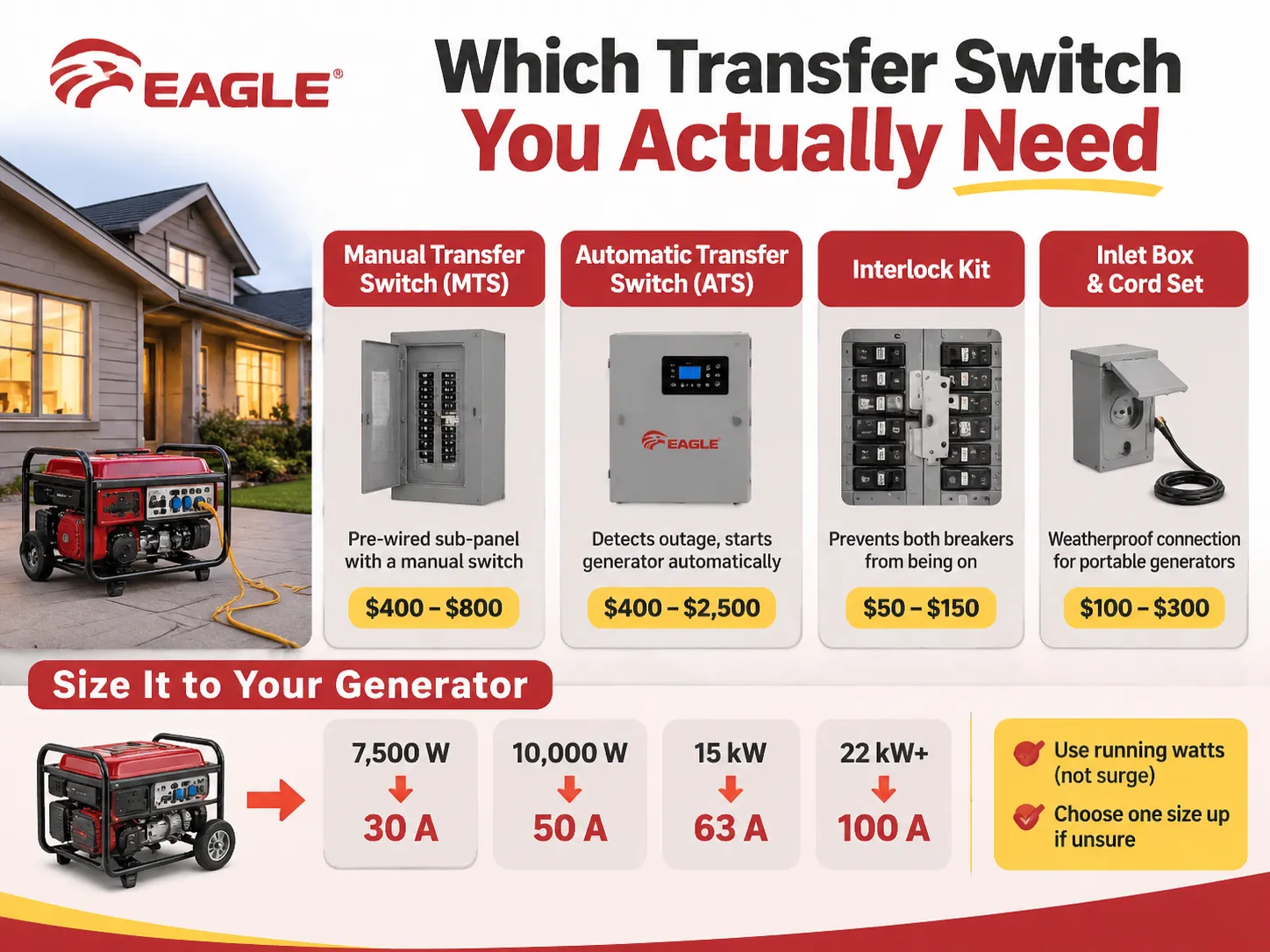
تم تحديد أربعة أنواع من الأجهزة كمفاتيح تحويل، ولا يمكن استخدامها بدلًا من بعضها البعض. سيعتمد اختيارك هنا على ما إذا كان لديك مولد محمول أو ثابت، وما إذا كان هناك أحد في المنزل أثناء انقطاع التيار الكهربائي، وحجم المنزل الذي يحتاج إلى تزويده بالطاقة.
| المنتج | تكلفة الأجهزة | ما يقوم به | يناسب |
|---|---|---|---|
| مفتاح تحويل يدوي (MTS) | $400 إلى $800 | لوحة فرعية مسبقة التوصيل مع 6 إلى 16 دائرة فرعية وآلية ذات وضعين يتم تحريكها يدويًا | المولدات المحمولة، الملاك الحاضرون أثناء الانقطاعات |
| مفتاح تحويل تلقائي (ATS) | $400 إلى $2,500 | يستشعر فقدان المرافق، يشغل المولد، ينقل الحمل، يعيد النقل ويبرد عند الاستعادة | مولدات الطوارئ مع وحدة تحكم بدء ذات سلكين |
| مجموعة القفل المتداخل | $50 إلى $150 | لوحة انزلاقية مدرجة توقف القاطع الرئيسي وقاطع المولد من العمل معًا | لوحات حديثة بمساحتين مجاورتين فارغتين، تغطية كاملة للمنزل |
| صندوق مدخل ومجموعة كابل | $100 إلى $300 | نقطة الاتصال المقاومة للعوامل الجوية على الجدار الخارجي، بالإضافة إلى الكابل الموصل إلى المولد | كل تركيب محمول، إلى جانب واحد من المذكور أعلاه |
على عكس الجهاز الكهربائي، يجب أن يكون المفتاح لوحة فرعية، ويجب إجراء هذا التمييز عند العداد. سيأتي مع قواطع خاصة به، ومجموعة من الأسلاك المركبة في المصنع، وسيقوم المثبت بنقل الدوائر الفرعية المناسبة من اللوحة الرئيسية إليه. نطاق مفتاح النقل اليدوي من فئة PC يعرض البناء: موضعان متداخلان للكسر، حاوية مشتركة، وسعة طرفية لكل من تغذية المرافق والمولد. مجموعة القفل المتداخل تؤدي وظيفة معاكسة. فهي لا تضيف فعليًا أي شيء إلى عدد الدوائر - بل تجعل اللوحة آمنة، ولهذا السبب تعمل بشكل جيد في منزل حيث يكون المولد كبيرًا بما يكفي لتشغيل كل شيء.
تحديد حجم المفتاح بالنسبة للمولد، وليس للوحة
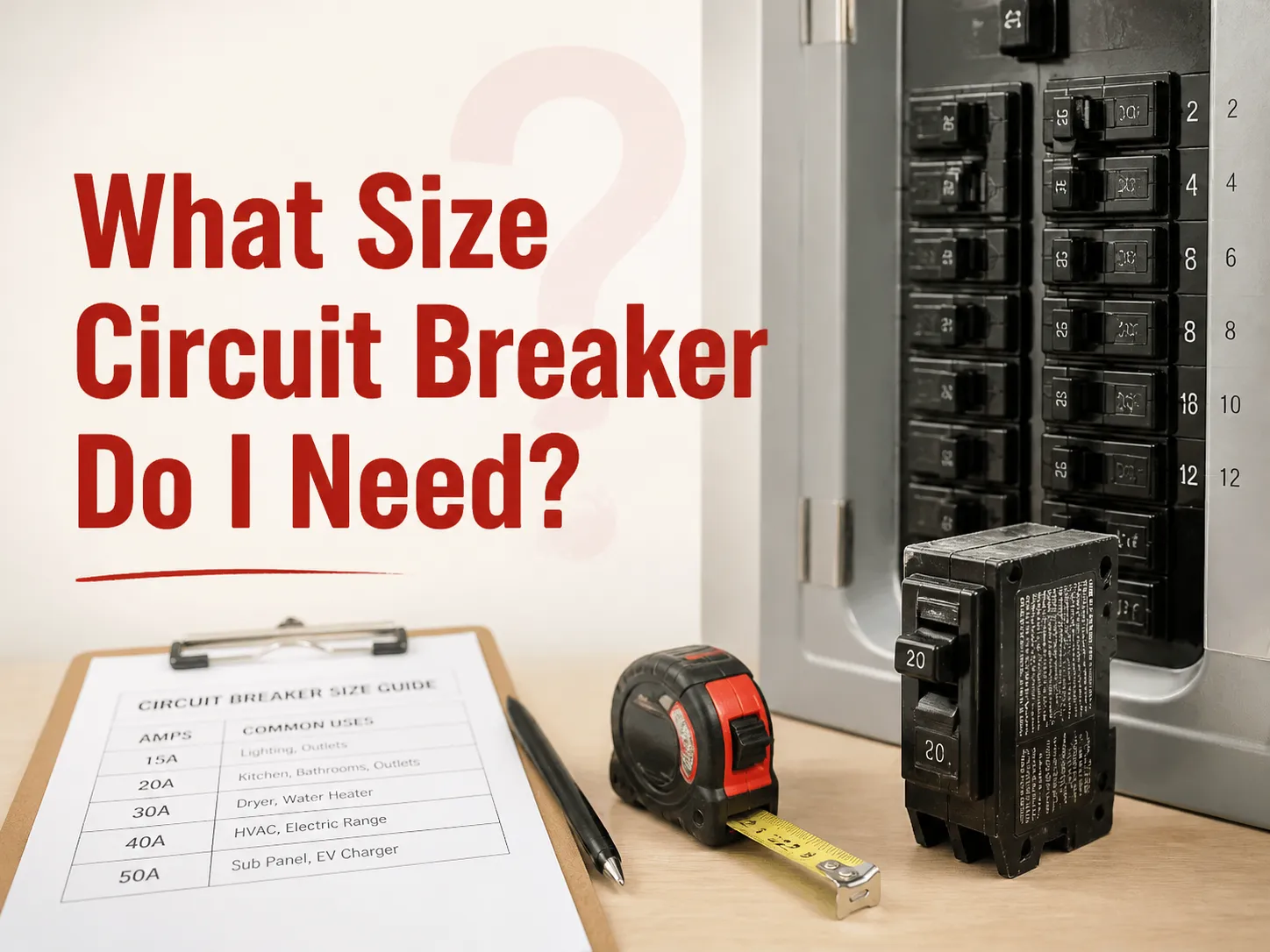
يتم تحديد تصنيف الأمبير بقسمة القدرة المستمرة للمولد على 240 فولت. تنتج آلة بقوة 10 كيلو واط 41.7 أمبير، وهو ما يتوافق مع مفتاح 50 أمبير. ينتج مولد بقوة 7.5 كيلو واط 31.3 أمبير لمفتاح 30 أمبير بينما ينتج مولد بقوة 12 كيلو واط 50 أمبير بالضبط مما يجعله الحد الأعلى للوحدات المتحركة الشائعة.
عند حساب الأمبير، استخدم هذين القاعدتين: تُستخدم الواطات التشغيلية ولا تُستخدم أبدًا الواطات اللحظية لأن المفتاح مصنف للحمل المستمر. لا تقلل أبدًا من تصنيف المفتاح حيث أن مفتاح 30 أمبير على مولد 50 أمبير سيحد فقط من خرج المولد مما يجعل التخمين حول تشغيل المولد غير ضروري. اختيار مفتاح بتصنيف أعلى لن يسبب ضررًا؛ ومع ذلك، اختيار مفتاح بتصنيف أقل سيكون مخالفًا للمنطق السليم.
فوق نطاق المحمول، يتغير الحساب. تحتاج وحدة 15 كيلو واط إلى جهاز 63 أمبير عند 240 فولت، وهو نطاق الحجم حيث مفتاح النقل التلقائي 63 أمبير يقع، وينتقل مولد الطوارئ الكامل للمنزل بقوة 22 كيلو واط إلى مفتاح مصنف للخدمة 100 أمبير. بعد هذه النقطة، يتم تصنيف المفتاح للخدمة، وليس للجهاز، لأنه يتم إدخاله بين العداد واللوحة الرئيسية.
الأدوات والمواد قبل البدء
الأدوات عادية مع استثناء واحد. مفك عزم الدوران مطلوب. قيمة العزم مذكورة على أطراف القواطع ومفاتيح النقل، وعادةً ما يسبب الطرف المفكوك الفشل بعد فترة من الزمن.
مفكات معزولة، محرك مربع، قواطع أسلاك مصنفة لـ 6 AWG، مفك عزم الدوران بوحدة إنش-رطل، جهاز اختبار جهد ثنائي القطب (تذكر أن مفك النيون ليس جهاز اختبار)، قلم جهد غير تلامسي، شريط سحب الأسلاك، مثقاب مع مناشير لاختراق الجدار، وهاتف لالتقاط الصور قبل وبعد العمل يجب أن تكون ضمن مجموعة أدواتك أيضًا. لا يمكن اعتبار الصور مجرد صور فقط. فهي دليل على التأريض والربط الصحيحين عند تركيب الغطاء.
المواد: مفتاح، صندوق مدخل مصنف NEMA 3R في حال تم تركيبه في الخارج، أربعة أسلاك بمقاس منظم، أنابيب وتركيبات، قاطع ثنائي القطب لتغذية الكهرباء، مادة عازلة للطقس، ملصقات، كابل مولد بطول كافٍ. تأتي مجموعات الأدوات غالبًا مع كابل بطول 10 أقدام، والذي يتبين أنه قصير جدًا بالنظر إلى أن المولد يتم تركيبه بعيدًا عن المنزل ويذهب العادم إلى الجانب المقابل.
الخطوة 1 إلى الخطوة 4: التصريح، العزل، الدوائر والتركيب
- الخطوة 1. الحصول على الموافقة مسبقًا. تتطلب معظم البلديات الحصول على تصريح كهربائي مع فحص مفتاح التحويل، والذي عادة ما يكلف في نطاق 150 إلى 300 دولار. من الأكثر فعالية من حيث التكلفة الحصول على التصريح أولاً بدلاً من بعد الانتهاء من كل العمل. في بعض الولايات القضائية، لا يمكن جدولة الفحوصات بأثر رجعي على الإطلاق.
- الخطوة 2. فصل وفحص. قم بإيقاف تشغيل قاطع الدائرة الرئيسي أولاً. بعد ذلك، استخدم جهاز اختبار ثنائي القطب لفحص الأطراف. يشير الاختبار في اللوحة أثناء إيقاف تشغيل القاطع الرئيسي إلى حالة عمل القاطع الرئيسي ولكنه لا يعني أن الأطراف آمنة إذا حدث شيء للقاطع الرئيسي أو كان هناك مصدر طاقة آخر.
- الخطوة 3. اختيار الدوائر. عند استخدام مفتاح يدوي، يمكنك توصيل حوالي 5-16 دائرة. يجب عليك إعداد قائمة دقيقة تشمل فقط الأجهزة التي تحتاج إلى توصيلها أثناء العمل. احسب حملين إذا كانا 240 فولت. لا تقع في فخ تضمين الفرن والمجفف حيث أنه من المستحيل للمولدات المحمولة تشغيل هذه الأجهزة.
- الخطوة 4. تركيب المفتاح. تحتاج إلى وضعه بالقرب من اللوحة الرئيسية بحيث تكون مسارات الأنابيب قصيرة. نقص المساحة تحت الغلاف أو طول السلك الخاطئ هو مشكلة في الكود تحتاج إلى تسوية إضافية. يجب أيضًا تركيب المفتاح بشكل مستوٍ.
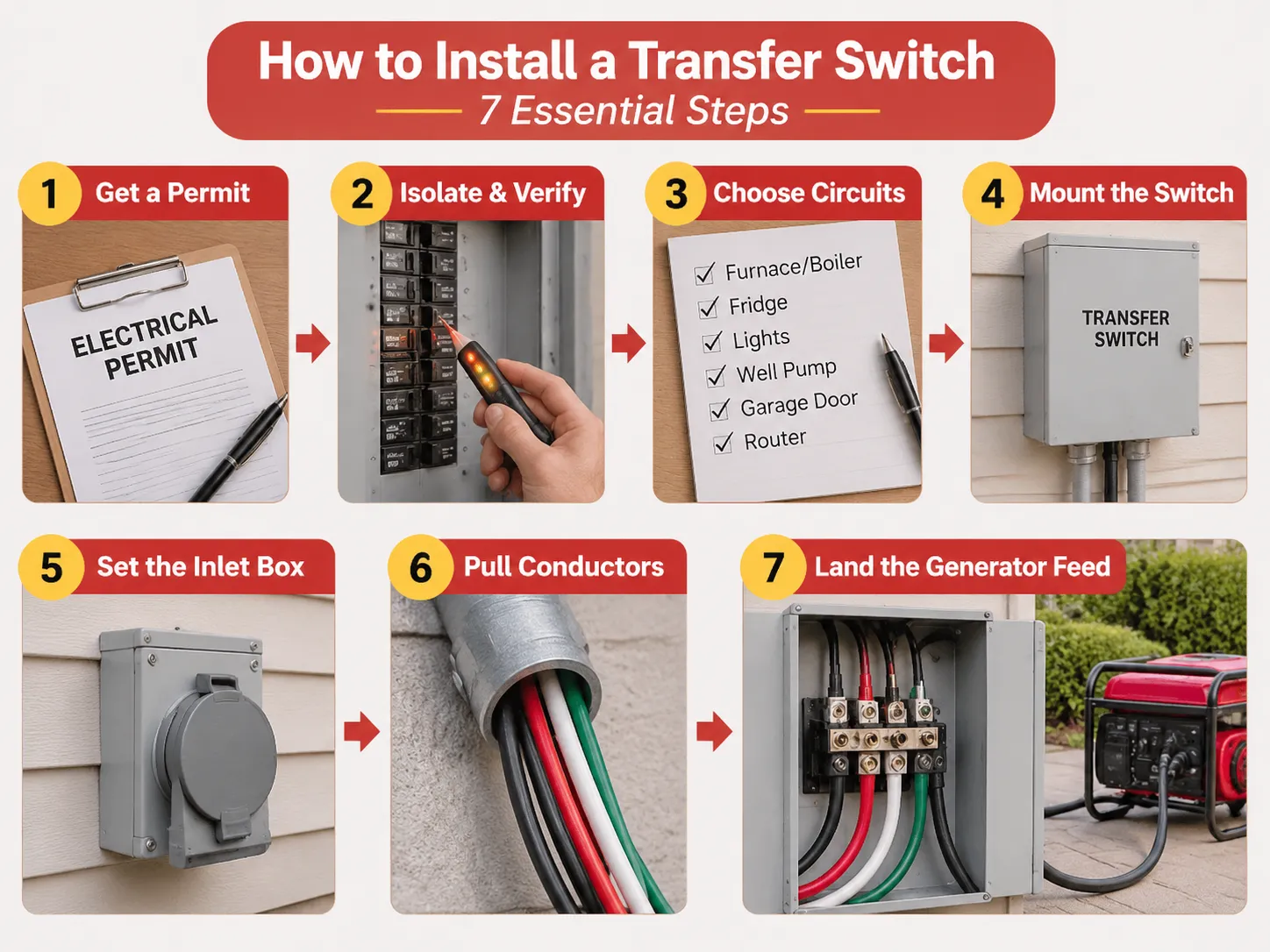
الخطوة 5 إلى الخطوة 7: الأنابيب، الموصلات وصندوق المدخل
- الخطوة 5. تثبيت صندوق المدخل في مكانه. يجب وضع الصندوق مثاليًا على جدار خارجي، ليس بعيدًا جدًا عن مكان تركيب المولد. يجب أيضًا اختيار الارتفاع بحيث لا يكون هناك ثلج أو مياه راكدة على الكابل. يوفر مدخل NEMA 14-50R سلكين ساخنين، واحد محايد وواحد تأريض. النوع الآخر الشائع من المدخل هو CS6375، وسيعتمد اختيارك على قابس المولد. اختيار النوع الخاطئ سيجعلك مضطرًا لشراء مدخل آخر أو محول. في أي حال، المحولات 50A غير مفضلة في بيئة رطبة.
- الخطوة 6. سحب الموصلات. لنظام 50 أمبير، يلزم أربعة موصلات نحاسية 6 AWG، واحد أسود، واحد أحمر، واحد أبيض، وواحد أخضر.
- Step 7. Land the generator feed from the generator to the hot bar. The generator feed making the hot, neutral and ground connections. Once these connections have been made, conduct the utilities connection from the two-pole breaker in the main panel. The two connections should be kept separated in the enclosure. The conductors should be dressed to avoid crossing of moving contacts.
Wiring the Switch: Utility Side, Generator Side, and the Breaker That Feeds It
The utility side comes from a new two-pole breaker in the main panel, sized to the switch rating. For a 50 A switch that is a 50 A two-pole breaker, and a standard thermal-magnetic device of the kind in this 63 A miniature circuit breaker range is what the circuit expects: 6 kA or 10 kA interrupting capacity, C curve for mixed loads, and a torque value that has to be honoured on both lugs.
The generator-side voltage-derived comes into the inlet box. Within a manual switch, there are two breaker positions for each branch circuit: one fed from the utility bus and the other, in turn, fed from the generator bus. And the mechanism ensures that only one bus is energized at any time. This is the whole trick, and it is mechanical-as opposed to electronic-in nature. There’s no way to bypass it with a software bug or a stuck relay.
Within an automatic switch, the logic is contrary. A controller would monitor both sources, start the generator, wait for the frequencies and voltages to stabilize, and then activate the motor-operated mechanism. This transfer is temporarily delayed for two reasons: first, an accelerating generator produces low voltage at low frequency, and closing onto a load at this time causes failure of compressor motors; second, a changeover is put on hold for a second reason, which lies in order that the utility can settle down before handing back the house.
The Neutral Question That Fails More Inspections Than Anything Else
There are two valid ways to manage the neutral, and making the incorrect choice will lead to either shock risks or nuisance trips.
- Solid neutral, non-separately derived. The neutral of the generator and that of the utility are linked at the switch, while the generator frame remains bonded as part of the same grounding system. In this configuration, the generator’s neutral has to be unbonded from the frame, as the presence of two separate bonds in the system results in neutral current going through the ground conductors. That is the most common setup for portable generators feeding an isolation switch.
- Switched neutral, separately derived. When the switch disconnects the neutral together with hots, the generator becomes a separately derived system, and the neutral is bonded either at the generator or switch while having the grounding electrode conductor going to the grounding system of the building. This arrangement is used in much larger stationary setups and for switches rated for the service.
- The failure mode assumes the use of a portable generator with a bonded neutral in a solid neutral switch. In that case, it results in parallel neutral paths, ground current, and nuisance tripping of GFCI devices every time the generator is on. Look for the instructions that specify whether the generator neutral is bonded, examine the switch instructions for the arrangement suitable for this case, and note what you’ve found. If the two instructions contradict each other, you’ll have to do something minor yet specific to fix this issue.
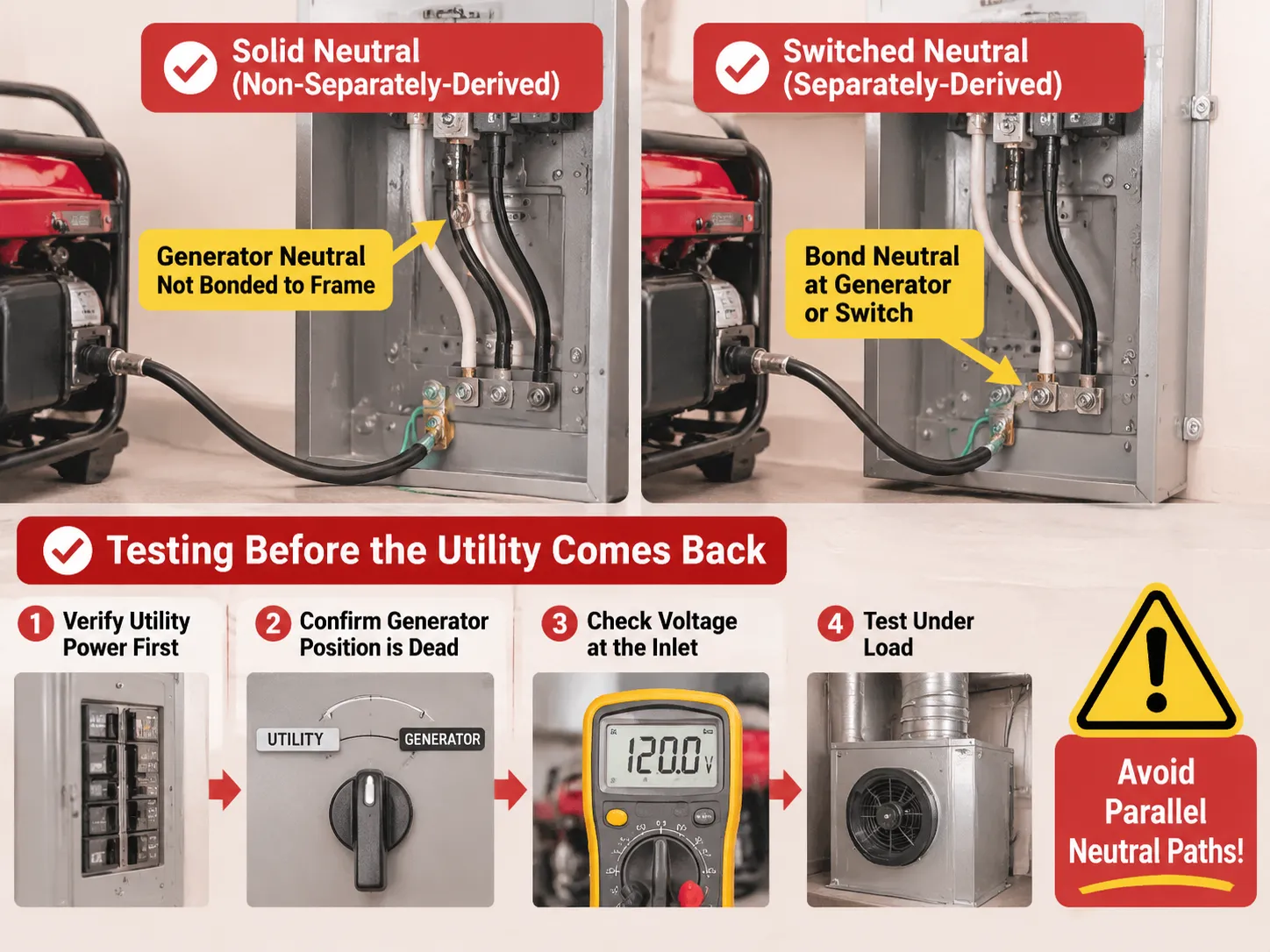
Testing Before the Utility Comes Back
To ensure your safety while testing, you should start with resetting the generator by disconnecting it from the system and then checking power on the utility panel. This will show whether there is any voltage present on circuits being backed up. Following that, plug the generator in and see if there is no power in the same circuits.
After that, you will have to start the generator outside, then connect the cord and check voltage before switching on the generator. You should expect reading of 240V between the two hot phases, 120V on hot vs neutral and 120V on hot vs ground. When the neutral is missing, you will read 120V on hot vs ground and some strange voltage on hot vs neutral.
After that you have to switch to the generator and start checking the loads on circuits one by one from the highest power draw unit in each of the circuits. The best way to test the system would be to start a furnace fan. The key point here is taking the voltage when all the load is connected.
What the Job Actually Costs
The cost of the hardware for a 10-circuit manual transfer switch with an inlet and cable ranges from $500 to $900. In an installation of a manual transfer switch that has been prewired, the labor customary to be about from 2 to 4 hours, which will be costing roughly around $300 to $600. Adding the cost of the permit will bring the total to around $850 to $1,800 for the simplest of installations.
Interlock kits are relatively cheaper as compared to the previous options. The cost of interlock kits is from $50 to $150 and that of the electrician is about $150 to $400 as the task involves placing only one circuit breaker and a faceplate. You can also find expensive automatic whole house switches that may cost you $800 to $2,500 as the switch alone will take a longer period to install. For scale at the larger end, the pricing structure on a 600 A four-pole service entrance automatic transfer switch shows how quickly switchgear pricing moves once the device becomes service-rated.
Mistakes That Get Installations Redone
Double male cord. Using a cord with both ends being a male plug to connect generator to dryer outlet is the most hazardous shortcut in the industry. It backfeeds the panel and energizes service conductors, which may kill utility personnel or damage the generator when the grid goes back online. In addition to this, it is against code everywhere, and no inspector will let it go.
Undersized conductors. A 50 A switch fed using 10 AWG wire simply because it happens to be available on the truck. Even though the breaker does its job, the wire overheats, and the failure can take place months later.
Generator placed too close to the house. The total number of fatalities due to carbon monoxide poisoning in America reaches about 100 each year, and nearly 80% of those happen in domestic settings. So, the generator must be kept outside, at a considerable distance from the doors and windows, exhaust pointing away from the house and a battery-powered CO alarm operating on all floors.
No load calculation. When the generator is connected to a switch with many circuits that cannot be supported by the generator, the breaker will trip at the first cold night. So, the watts for all devices must be calculated to avoid any problem.
Unmarked circuits. A panel directory made with a pencil and never updated can create a problem during the blackout that happens in the middle of the night. It is recommended to print the panel directory so there is a copy available when needed.
Manual or Automatic: Which One Belongs in Your House
Manual switches are based on the premise that the individual is in the house, awake, and able to venture out into inclement weather. This is acceptable for most homes and outages, which last hours rather than days. However, manual switches fail houses with wet basements containing a sump pump, people with medical conditions, or an owner on the move.
On the other hand, automatic switches operate on the understanding that a generator is permanently installed and supplied with a start signal, has been provided with enough fuel to run for several days, and has a functioning exercise regimen. The 100 A automatic transfer switch is the size band that suits a service-rated residential installation, with adjustable transfer and retransfer delays so the generator is not asked to accept load before it is ready.The trade is legit: an ATS costs about 2 to 4 times more than a manual switch plus required equipment like a battery, controller and yearly service costs. In exchange you get lights without needing to leave bed.
A practical way could help reduce costs. You could set a large manual switch and leave space in the box for a controller later on. Panel and input costs are usually high, and it is easy to change a mechanism later.
الأسئلة الشائعة
Can I install a generator transfer switch myself?
In various localities it is possible for a resident to apply for an electrical permit for installation on their personal single-family house and perform the necessary work pending inspection. It is the conditions that are important rather than the permission: the panel should be turned off, the wires should be of adequate size, the neutral connection should correspond to the one on the generator, and the installation should be performed properly. If anything in those four requirements is questionable, then the answer should be ‘no’. Interlocking kits are the easiest choice for DIY enthusiasts, but still need to be certified and compatible with the given model of the electrical panel.
How much does it cost to put in a generator transfer switch?
If you’re purchasing a hard-wired 10-circuit manual switch, your hardware expenses will generally fall in the range of $400 to $800, while installation by an electrician will run between $300 and $600. Permits will often cost from $50 to $300, for a total installed cost of between approximately $850 and $1,800. Interlock kits run from $50 to $150 in parts and from $150 to $400 for installation. A whole-house automatic switching mechanism for the use of a standby generator runs from $800 to $2,500, with the actual cost of installing such a switch higher, since service conductors and wiring for the control of the generator are necessary. An inlet box and a long enough cord often add about $100 to $300 to the installation estimate, but are sometimes left out.
Can a homeowner install a generator transfer switch?
Often, the permit is the determining aspect, and not really the talent. Some municipal building departments allow owner-permit electrical work on an owner-occupied single-family dwelling and with the inspection; a very few require a licensed electrician to do anything that is considered to take place inside of the service panel. Be sure to call the authority having jurisdiction before you buy anything hardware-wise, since that is going to change the picture entirely. Note as well that the unpermitted installation could be enough for the insurer to deny a fire claim which is in fact much larger than the amount you saved on labour.
What size transfer switch do I need for a 10,000 watt generator?
The switch is rated for 50 A. The calculation of operating wattage divided by 240 V yields the result of 10,000 ÷ 240, which is 41.7 A. The next standard size switch is, therefore, 50 A. Only operating wattage should be considered and not starting wattage since a switch operates continuously on the same current. A 50 A switch requires six AWG wires made of copper material and a double pole 50 A breaker on the utility side. If the generator outlet is 30 A L14-30 versus 50 A 14-50 then both switch and inlet have to match the outlet and the generator will be limited by the socket.
Do I need a transfer switch if I only use extension cords?
No, and that is the only legally permissible option. Instead of wiring the generator into your house system, extension cords are used to connect the generator with an appliance, thus making the generator independent of the house wiring which prevents any backfeed. This means convenience and safety: runners through the doors, no fixed electrical loads such as contacting pumps or a furnace, and clogged path with obstacles in the dark. The minute you need to use electricity in a fixed installation, you must use a transfer device according to NECA702.
المراجع
- Electrical Engineering Portal — Installing a Manual Transfer Switch
- NFPA — National Electrical Code, Article 702 Optional Standby Systems
- Generac — Home Standby and Transfer Switch Products
- Reliance Controls — Manual Transfer Switch and Inlet Box Systems
- ASCO Power Technologies — Automatic Transfer Switch Engineering
الخلاصة
Installing the generator system is easy. The tough part is deciding. Size from running watts, keep switched and inlet matched to generator output and establish the neutral before pulling the first wire because that’s what fails inspection and puts current where it should not go.
Then buy hardware only once. A switch rated one size above your generator will cost only a bit more and will never let you down; a switch that is rated one size below will ruin the generator you already have. If you tell us what your generator’s continuous rating is, its outlet and whether or not its neutral is bonded we will tell you which board and which pole configuration you need for the job.