
في حال كانت منشأتك تستخدم مفاتيح كهربائية قديمة، قد تتساءل عما إذا كان بإمكانك تجديد قواطع الدائرة الكهربائية الخاصة بك أو يجب الحصول على أجهزة جديدة تمامًا. الجواب ليس بسيطًا، حيث يعتمد على نوع قاطع الدائرة في منشأتك. كما ورد في الكود الكهربائي الوطني (NEC) لعام 2020، يُسمح باستعادة قواطع الدائرة الكهربائية ذات الجهد المنخفض، وقواطع الدائرة ذات الجهد المتوسط، وقواطع الدائرة ذات الجهد العالي، بينما لا ينبغي تجديد قواطع الدائرة ذات الغلاف المصبوب (MCCBs)، وقواطع الدائرة GFCI، وقواطع AFCI وفقًا للمادة 210.15 والقسم 240.88 من NEC. وبالتالي، فإن هذا التمييز مهم جدًا لمديري المصانع، والمقاولين الكهربائيين، ومهندسي الصيانة الذين يحتاجون إلى موازنة التكاليف مع السلامة والامتثال للكود.
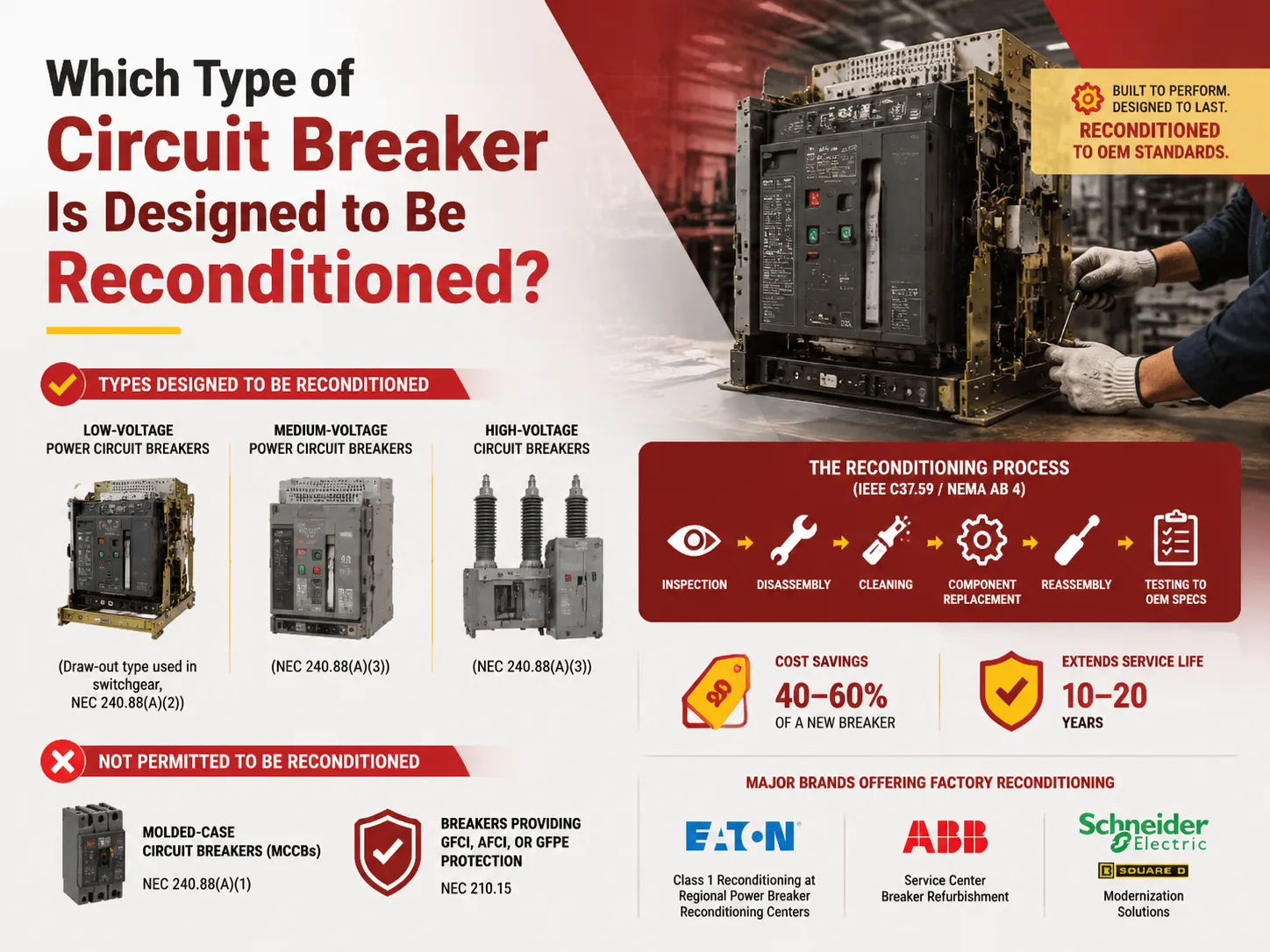
إجابة سريعة: تشمل قواطع الدائرة التي يمكن تجديدها قواطع الدائرة الكهربائية ذات الجهد المنخفض، وقواطع الدائرة ذات الجهد المتوسط، وقواطع الدائرة ذات الجهد العالي. لا يمكن تجديد قواطع الدائرة ذات الغلاف المصبوب كما هو مذكور في NEC 240.88(A)(1)، وأيضًا أي قاطع دائرة يوفر حماية GFCI أو حماية AFCI أو GFPE محظور بموجب NEC 210.15. من المصنعين البارزين الذين يقدمون تجديدًا مصنعياً: Eaton، ABB، و Schneider Electric / Square D. تتوافق عملية التجديد مع قواعد وأنظمة IEEE C37.59 و NEMA AB 4. بشكل عام، تكلف عملية التجديد 40-60٪ من تكلفة قاطع الدائرة الجديد وتضيف 10-20 سنة من عمر الخدمة.
أنواع قواطع الدائرة المسموح بإعادة تأهيلها
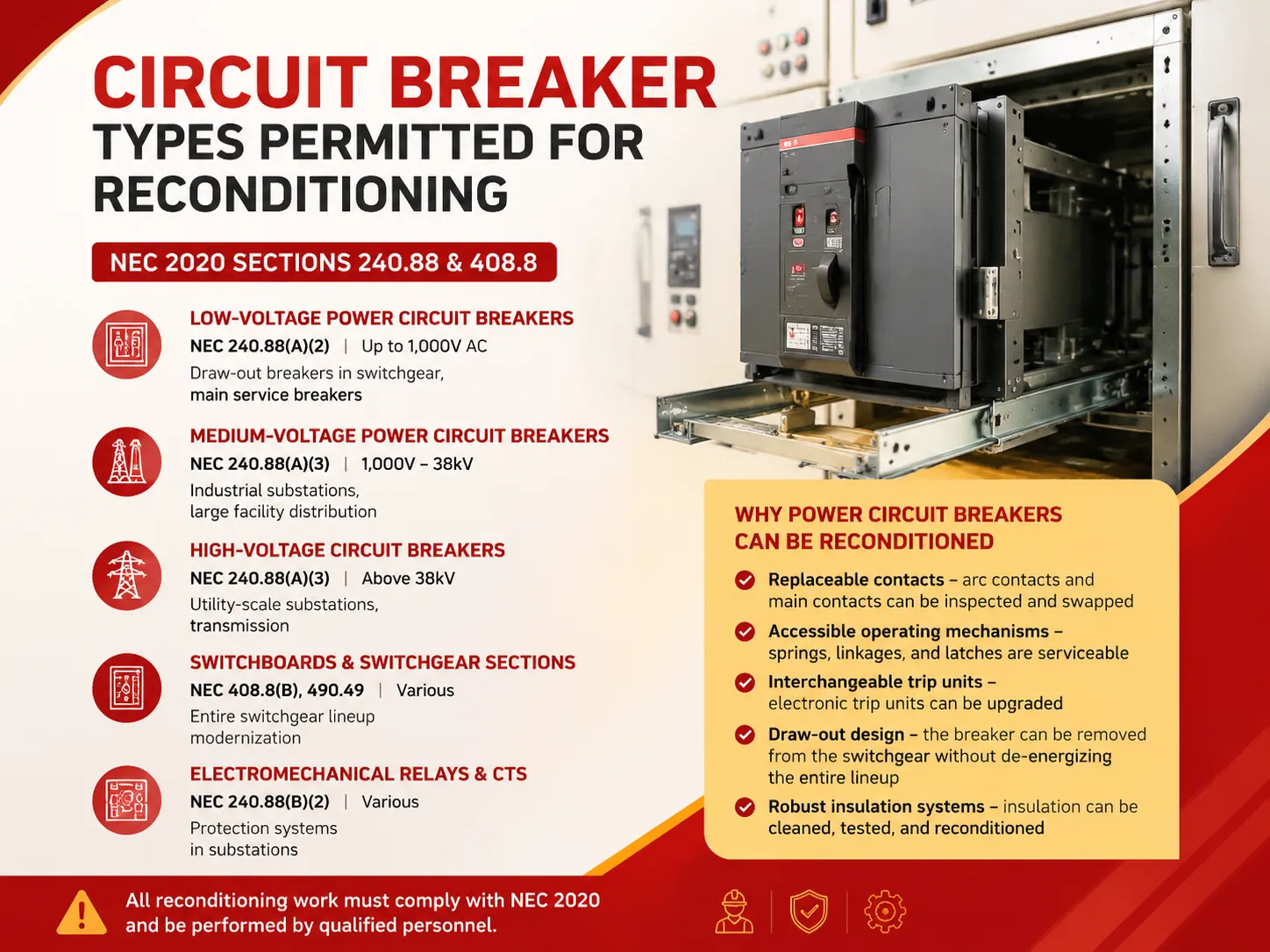
وفقًا للقسم 240.88(A) من NEC 2020، فإن أنواع قواطع الدائرة مسموح صراحةً بإعادة تأهيلها:
| نوع القاطع | مرجع NEC | التطبيق النموذجي | نطاق الجهد |
|---|---|---|---|
| قواطع الدائرة الكهربائية ذات الجهد المنخفض | 88(A)(2) | قواطع قابلة للسحب في المفاتيح الكهربائية، قواطع الخدمة الرئيسية | حتى 1000 فولت تيار متردد |
| قواطع الدائرة الكهربائية ذات الجهد المتوسط | 88(A)(3) | المحطات الفرعية الصناعية، توزيع المنشآت الكبيرة | من 1000 فولت إلى 38 كيلو فولت |
| قواطع الدائرة الكهربائية ذات الجهد العالي | 88(A)(3) | المحطات الفرعية على نطاق المرافق، النقل | فوق 38 كيلو فولت |
| لوحات المفاتيح وأقسام المفاتيح الكهربائية | 8(B)، 490.49 | تحديث كامل لتشكيلة المفاتيح الكهربائية | متنوع |
| المرحلات الحامية الكهروميكانيكية وCTs | 88(B)(2) | أنظمة الحماية في المحطات الفرعية | متنوع |
الخاصية الرئيسية المشتركة بين جميع قواطع الدائرة القابلة لإعادة التأهيل هي أنها من النوع القابل للسحب أو الإزالة والمصممة للصيانة — وليست وحدات مختومة. قواطع الدائرة الكهربائية ذات الجهد المنخفض، مثل تلك المستخدمة في قواطع الدائرة الهوائية المصنفة حتى 6300 أمبير, ، مصممة خصيصًا بآليات قابلة للصيانة ميدانيًا، وجهات اتصال قابلة للاستبدال، ووحدات فصل قابلة للوصول. وهذا يختلف جوهريًا عن قواطع الدائرة ذات الغلاف المصبوب، التي تكون مختومة في المصنع.
لماذا يمكن إعادة تأهيل قواطع الدائرة الكهربائية
تم تصميم قواطع الدائرة لتمكين الصيانة. تشمل خصائصها:
- جهات اتصال قابلة للاستبدال – يمكن إجراء فحص واستبدال جهات اتصال القوس والجهات الرئيسية
- آليات تشغيل قابلة للوصول – يمكن إجراء الصيانة على النوابض، والروابط، والأقفال الخاصة بالمفتاح
- وحدات الفصل القابلة للتبديل – يمكن ترقية وحدات الفصل الإلكترونية لقواطع الدائرة
- تصميم قابل للسحب – يمكن إزالة القاطع من اللوحة دون إيقاف تشغيل الطاقة
- أنظمة عزل واسعة النطاق – يمكن تنظيف العزل الحالي واختباره وإعادة تأهيله
للمزيد حول الفرق بين فئات القواطع، دليلنا عن ما هو MCCB و MCB يغطي الفروقات الهيكلية التي تحدد إمكانية الخدمة.
أنواع قواطع الدائرة المحظور إعادة تأهيلها
وفقًا لـ NEC 2020، هناك عناصر محظور إعادة تأهيلها. تنبع هذه الحظر من الطبيعة الحرجة للسلامة لهذا المعدات مما يجعل من الضروري أن أي تغييرات داخلية تؤثر على ميزات السلامة الخاصة بها.
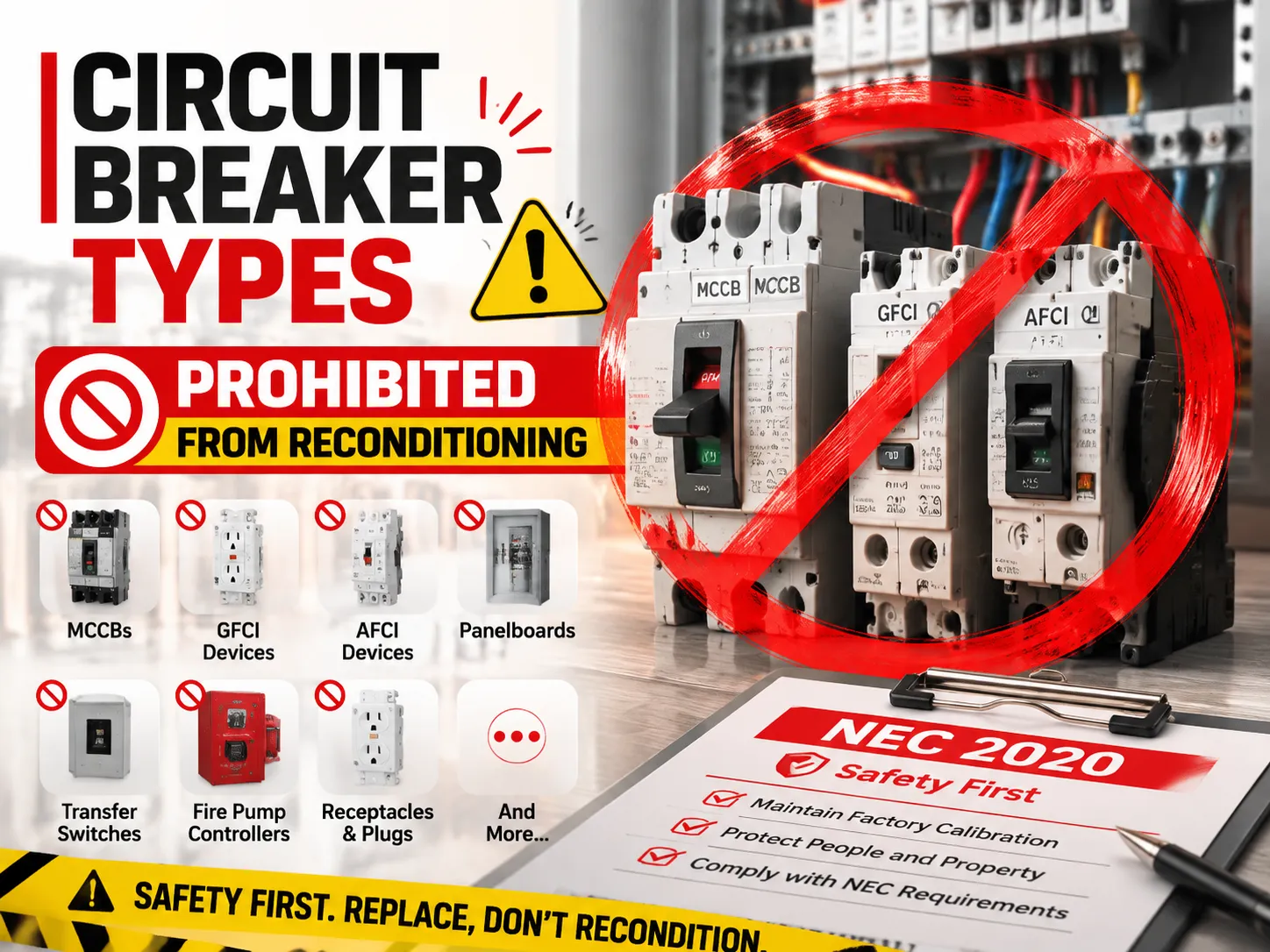
| المعدات المحظورة | مرجع NEC | السبب |
|---|---|---|
| قواطع الدائرة ذات الغلاف المصبوب (MCCBs) | 88(A)(1) | مختومة من المصنع؛ كسر الختم يبطل تصنيف UL والمعايرة |
| أجهزة حماية GFCI | 210.15(1) | حماية الأفراد الحرجة للسلامة؛ لا يمكن التحقق من المعايرة بعد إعادة التأهيل |
| أجهزة حماية AFCI | 210.15(2) | تكتشف الإلكترونيات المعقدة توقيعات القوس الكهربائي؛ قد تفوت إعادة التأهيل التدهور الطفيف |
| حماية المعدات من الأعطال الأرضية (GFPE) | 210.15(3) | يجب أن تظل وظيفة حماية المعدات معايرة من المصنع |
| وحدات الفصل الإلكترونية لقواطع التيار المنخفض | 88(B) | لا يمكن إعادة تأهيل الإلكترونيات بشكل موثوق؛ يجب استبدالها بجديدة |
| لوحات التوزيع | 8(A) | لا يمكن التحقق من السلامة الهيكلية واتصالات الحافلات بعد إعادة التأهيل |
| مفاتيح التحويل (أنظمة الطوارئ) | 5(C), 701.5(C), 702.5(A) | تتطلب تطبيقات السلامة الحيوية معدات جديدة |
| وحدات تحكم مضخات الحريق | 695.10 | معدات السلامة الحيوية الحرجة |
| مقابس ومقابس التوصيل | 3(A), 406.7 | لا يمكن الكشف بشكل موثوق عن التآكل وتدهور التلامس |
التأكيد على نقطة قواطع MCCBs: حتى إذا سمح سابقًا ببعض عمليات التفتيش وممارسات الصيانة الوقائية وفقًا لمعايير NEMA AB 4، يجب ملاحظة أن إعادة تأهيل قواطع الدائرة ذات الغلاف المصبوب قد تم حظرها في أحدث إصدار من NEC لعام 2020. لا تزال الصيانة (التنظيف، التشغيل، فحص العزم) صالحة، لكن لا يُسمح بأي تفكيك للهيكل الداخلي وإعادة تركيب قواطع الدائرة ذات الغلاف المصبوب.
العلامات التجارية التي تدعم إعادة تأهيل قواطع الدائرة
تدير شركات تصنيع معروفة مختلفة برامج إعادة التأهيل المصرح بها من قبل مصانعها. لا يستخدمون المجددين الذين يعملون نيابة عن شركات أخرى.
| العلامة التجارية | اسم البرنامج | التغطية | الضمان |
|---|---|---|---|
| إيتون | إعادة التأهيل من الفئة 1 (مراكز إعادة تأهيل قواطع الطاقة) | قواطع الطاقة LV/MV من Eaton وغير Eaton؛ إعادة تصنيع Magnum DS؛ ترقيات VCP-W FAME | 3 سنوات (سنة واحدة لتطبيقات بدء تشغيل المحركات) |
| ABB | مركز خدمة تجديد القواطع | قواطع ABB وغير ABB؛ نووية وغير نووية؛ LV وMV | سنة واحدة للقطع والعمل |
| شنايدر إلكتريك / سكوير دي | حلول التحديث / إعادة تأهيل قواطع الدائرة | Square D ومعظم العلامات التجارية OEM الكبرى؛ قواطع LV وMV؛ تحديث مفاتيح التوزيع | تختلف حسب النطاق |
| سيمنز | برامج الخدمة وإعادة التأهيل | Siemens والعلامات التجارية القديمة (ITE, Gould)؛ قواطع الطاقة LV وMV | تختلف حسب البرنامج |
| جي إي / فيرتيف | خدمات إعادة التأهيل | قواطع GE والعلامات التجارية القديمة؛ قواطع MV وHV | تختلف حسب البرنامج |
ما تقدمه كل علامة تجارية
في منطقة أمريكا الشمالية، أسست Eaton خمسة مراكز لإعادة تأهيل قواطع الطاقة. تشمل بروتوكولات الفئة 1 لديهم التفكيك الكامل للأجزاء، والتنظيف وفقًا لمعايير المكونات، وإعادة السطح، وأخيرًا اختبار الأداء النهائي. كما طوروا مفهوم ترقية FAME لبعض قواطع الجهد المتوسط المحددة بالإضافة إلى تحديث قواطع الدائرة بوحدة الفصل Digitrip RMS ونظام صيانة تقليل القوس Arcflash Reduction Maintenance System. يتم إضافة كل قاطع معاد تأهيله إلى قاعدة بيانات Pow-R-DB المركزية.
في مراكز الخدمة الخاصة بهم، تقدم ABB خدمات إعادة الاختبار لكل من نماذج قواطع الدائرة الخاصة بهم وتلك الخاصة بالمصنعين الآخرين. تشمل خدماتهم استلام المعدات، فحصها واختبارها، وتفكيكها. بالإضافة إلى تنظيف جميع الأجزاء، ستقوم ABB أيضًا بفحص التشققات، والتأكد من استبدال الأجزاء التالفة بالفعل، وتطبيق التزييت على جميع النقاط المتحركة، ثم إعادة تجميعها.
في برنامج حلول التحديث الخاص بها، دعت Schneider Electric إلى خدمة إعادة تكوين قواطع الدائرة الكهربائية ذات الجهد المنخفض والمتوسط. يتم تنفيذ إعادة التأهيل باستخدام الخطوات التالية: عبر جميع المراحل، بما في ذلك الاستبدال الجزئي للمكونات، غسل وتلوين التفاصيل، والتزييت.
المعايير الرئيسية: NEC، NEMA AB 4، IEEE C37.59 و UL 489
تحكم معايير متعددة إعادة تأهيل قواطع الدائرة. فهم أي منها ينطبق على حالتك ضروري للامتثال للكود:
| المعيار | الناشر | النطاق |
|---|---|---|
| المادة 210.15 و 240.88 من NEC | الجمعية الوطنية للحماية من الحرائق (NFPA) | يحدد ما يمكن إعادة تأهيله وما لا يمكن؛ يتطلب الإدراج كـ “معاد تأهيله” |
| الجمعية الوطنية لمصنعي المعدات الكهربائية AB 4 (NEMA AB 4) | الجمعية الوطنية لمصنعي المعدات الكهربائية (NEMA) | إرشادات لفحص وصيانة وقائية لقواطع الدائرة ذات الغلاف المصبوب (ليست إعادة تأهيل) |
| معايير معهد مهندسي الكهرباء والإلكترونيات C37.59 (IEEE C37.59) | معهد مهندسي الكهرباء والإلكترونيات (IEEE) | معيار لإعادة تأهيل معدات مفاتيح الطاقة؛ يحدد عملية إعادة التأهيل |
| UL 489 | UL | معيار لقواطع الدائرة ذات الغلاف المصبوب؛ ذو صلة كمقياس اختبار |
| سياسة NEMA بشأن المعدات المعاد تأهيلها | الجمعية الوطنية لمصنعي المعدات الكهربائية (NEMA) | مواقف الصناعة حول ملاءمة وسلامة المعدات المعاد تأهيلها |
| معايير PEARL | بيرل (PEARL) | معايير معتمدة من ANSI لفحص واختبار وإعادة تأهيل الأجهزة الكهربائية |
العامل الأساسي: يجب إزالة العلامة الأولية ويجب تحديد المعدات على أنها معاد تأهيلها عند تجديدها. توفر UL إجراءً لشهادة المعدات المعاد بناؤها. يتم وسم الأجهزة المجددة وفقًا للإجراء بعلامة UL التي تحتوي على كلمة “معاد بناؤه”، “معاد تصنيعه”، “معاد بناؤه”، أو “معاد تأهيله”. للمزيد عن معايير القواطع، راجع مقالتنا حول متطلبات قواطع UL 489.
عملية إعادة التأهيل خطوة بخطوة
وفقًا لـ Eaton Class 1 و IEEE C37.59، هذه هي العملية المتبعة عندما يحتاج قاطع الدائرة إلى إعادة تأهيل:
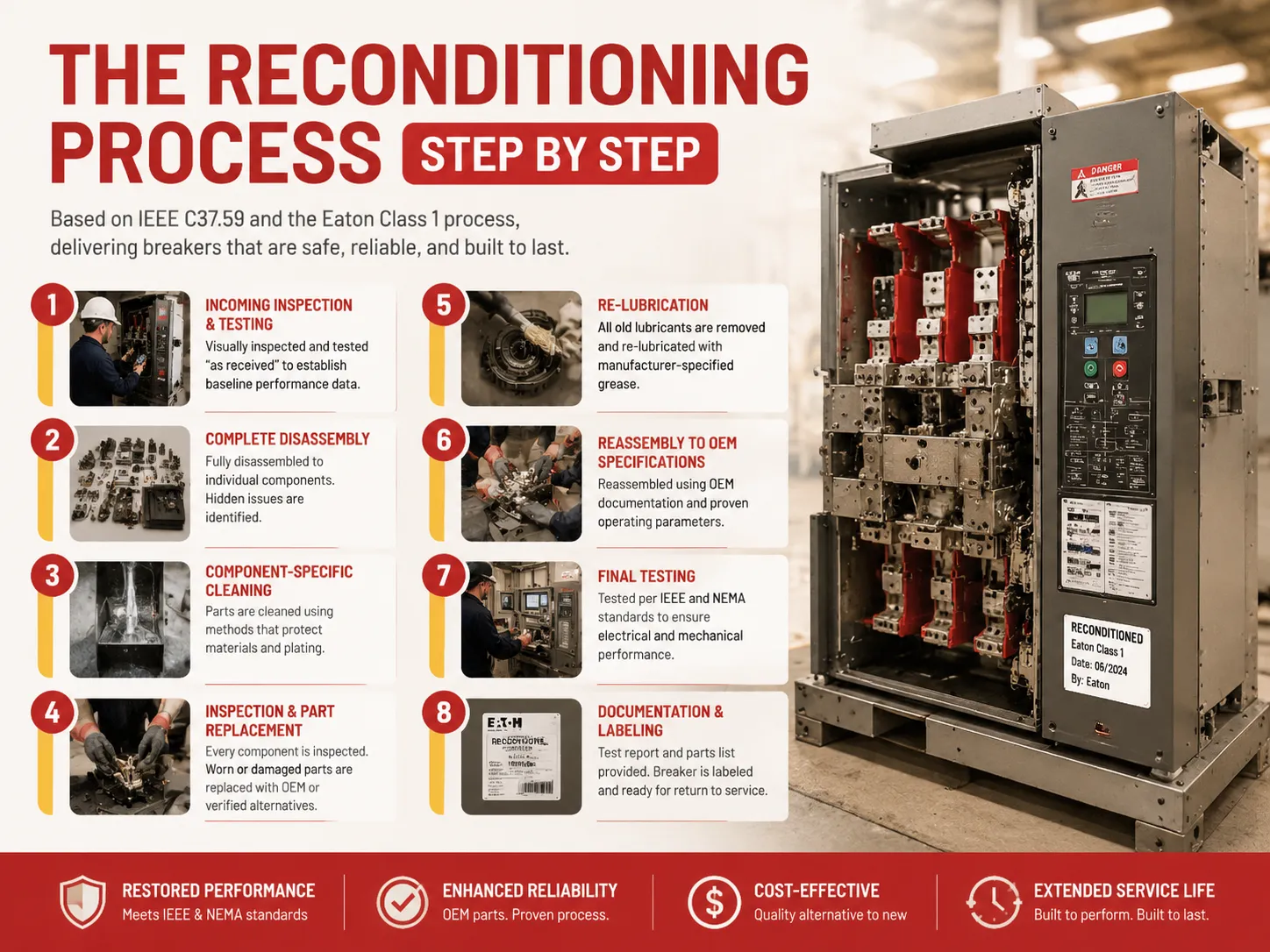
الخطوة 1: الفحص والاختبار الوارد
يتم استلام القاطع، وفحصه بصريًا، واختباره في حالة “كما هو وارد” لتوثيق الأداء الأساسي. تشمل القياسات المهمة المقاومة الكهربائية للاتصال (بالملي فولت)، مقاومة العزل، جهد التشغيل الميكانيكي والأبعاد. يتم توثيق المعلومات المستحصلة.
الخطوة 2: التفكيك الكامل
يتم تفكيك القاطع بالكامل ويتم تفكيكه إلى مكوناته بما في ذلك: نظام التشغيل، قناة القوس، حاجز العزل، الإطار وأنظمة أخرى. هذه هي المرحلة التي يتم فيها تحديد العيوب مثل رابط القيادة المعطوب، أو الاتصالات غير المحاذية، أو العزل التالف الذي يجعل الجهاز بأكمله عرضة للفشل عند اكتشاف العطل.
الخطوة 3: التنظيف الخاص بالمكونات
تحتاج أنواع المواد المختلفة إلى عمليات تنظيف مختلفة. يتم تنظيف المكونات غير الحاملة للتيار بشكل دقيق بحيث لا يبقى أي مادة غريبة مع الحفاظ على الخصائص العازلة والهيكلية. يتم تنظيف المكونات الحاملة للتيار دون الإضرار بالطلاء الأصلي. يتم تجديد أسطح التلامس بحيث تلعب المعادن وضغط التلامس دورها بشكل صحيح.
الخطوة 4: الفحص واستبدال الأجزاء
يجب فحص جميع الأجزاء بحثًا عن التشققات، التدهور، الصدأ، ودقة الحجم. يتم استبدال الأجزاء التي تعرضت للتآكل بأجزاء جديدة من الشركة المصنعة الأصلية، بينما الأجزاء التي لم تعد في الإنتاج ستحتاج إلى استبدال بمكونات معكوسة التصميم يجب أن تتوافق مع المعايير المذكورة في IEEE C37.59. قد تتطلب هذه المكونات التحقق في ظروف مختبرية صارمة مثل اختبارات الطاقة العالية. البدائل النموذجية للأجزاء التالفة قد تكون النوابض، الاتصالات، المقاومات، والبطانات.
الخطوة 5: إعادة التزييت
تم التخلص من جميع مواد التشحيم القديمة، وتم إعادة تشحيم الآلة ونقاط الاتصال باستخدام الشحم المحدد من قبل الشركة المصنعة. أحد الأسباب الرئيسية لفشل قواطع الدائرة هو التشحيم غير المناسب — حيث تؤدي الآليات الصلبة إلى إبطاء عملية إزالة الأعطال، مما ينتج عنه طاقة حادث قوس كهربائي أعلى بكثير.
الخطوة 6: إعادة التجميع وفقًا لمواصفات OEM
في عملية إعادة تجميع القاطع، يتم استخدام وثائق OEM. ومع ذلك، إذا لم تكن معلومات OEM متاحة، على سبيل المثال إذا كان المصنع الأصلي قد توقف عن العمل، ستستخدم Eaton بدلاً من ذلك قاعدة بيانات Pow-R-DB المركزية للسجلات من قواطع مماثلة ثبت أنها تعطي النتائج المطلوبة.
الخطوة 7: الاختبار النهائي
سيخضع قاطع الدائرة المعاد بناؤه لاختبارات حاسمة وفقًا لإرشادات IEEE و NEMA بما في ذلك:
- تقييم مقاومة العزل
- اختبار مقاومة التلامس (هبوط الميليفولت)
- تقييم التشغيل الميكانيكي (توقيت الفتح والإغلاق)
- اختبار فصل التيار الزائد (فصل طويل المدة، فصل قصير المدة، فصل فوري)
- تقييم مقاومة العزل الكهربائي
الخطوة 8: التوثيق ووضع العلامات
يتم إعداد تقرير الاختبار لإنشاء مقارنة بين نتائج الاختبار “كما تم الاستلام” و“النهائية”، مدعومًا بمعلومات تذكر جميع المكونات التي تم إصلاحها. يتم تزويد قاطع الدائرة بملصق تتبع يشير إلى أنه معاد تجديده، والذي يوضح اسم وتاريخ شركة التجديد. يصبح قاطع الدائرة جاهزًا للتشغيل مرة أخرى.
متى تختار إعادة التجديد مقابل الاستبدال
يعتمد القرار بين إعادة التجديد أو الاستبدال على نوع القاطع، العمر، الأهمية، والتكلفة. فيما يلي مصفوفة قرار عملية:
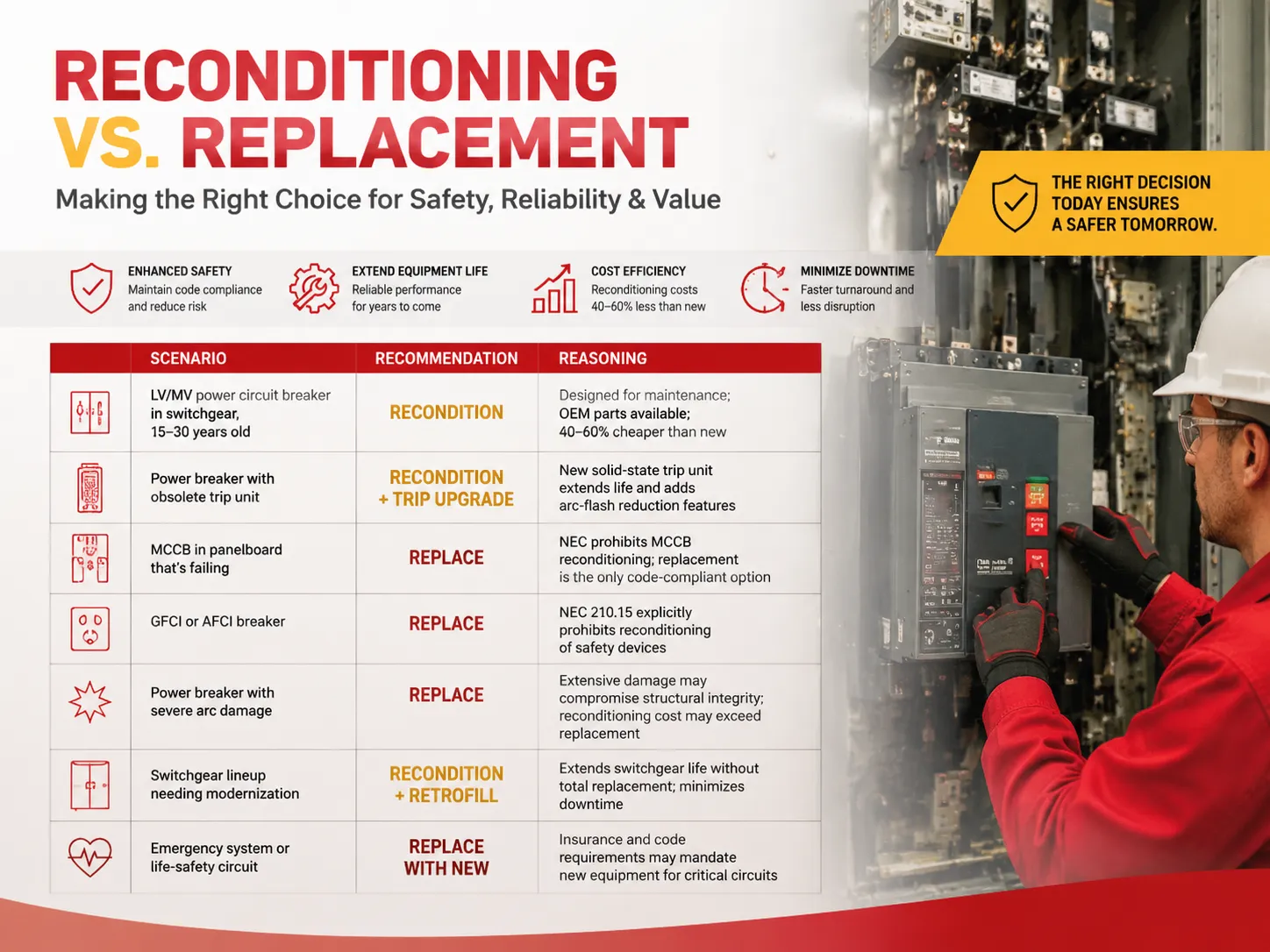
| السيناريو | التوصية | الأسباب |
|---|---|---|
| قاطع دائرة طاقة منخفض/متوسط الجهد في لوحة التوزيع، عمره 15–30 سنة | إعادة التجديد | مصمم للصيانة؛ قطع OEM متوفرة؛ 40–60% أرخص من الجديد |
| قاطع طاقة بوحدة فصل قديمة | إعادة التجديد + ترقية وحدة الفصل | وحدة فصل الحالة الصلبة الجديدة تمدد العمر وتضيف ميزات تقليل وميض القوس الكهربائي |
| قاطع MCCB في لوحة التوزيع التي تفشل | استبدال | يمنع NEC إعادة تأهيل MCCB؛ الاستبدال هو الخيار الوحيد المتوافق مع الكود |
| قاطع GFCI أو AFCI | استبدال | يمنع NEC 210.15 صراحة إعادة تأهيل أجهزة السلامة |
| قاطع طاقة مع تلف شديد بسبب القوس الكهربائي | استبدال | قد يؤدي التلف الشديد إلى الإضرار بالسلامة الهيكلية؛ قد تتجاوز تكلفة إعادة التأهيل تكلفة الاستبدال |
| تشكيلة مفاتيح التوزيع التي تحتاج إلى تحديث | إعادة تأهيل القواطع + ملء رجعي | يمدد عمر مفاتيح التوزيع دون استبدال كامل؛ يقلل من وقت التوقف |
| نظام الطوارئ أو دائرة السلامة الحيوية | استبدال بجديد | قد تفرض متطلبات التأمين والكود استخدام معدات جديدة للدوائر الحرجة |
للمساعدة في تشخيص ما إذا كان قاطعك يحتاج فعلاً إلى اهتمام، راجع دليلنا على كيفية معرفة ما إذا كان القاطع معطلاً. وإذا كان الاستبدال هو القرار الصحيح، فمقالنا عن تكلفة استبدال قاطع الدائرة الكهربائية يغطي التسعير عبر أنواع القواطع وتصنيفات الأمبير.
مقارنة التكلفة: إعادة التأهيل مقابل الجديد
عندما يتعلق الأمر بإعادة تأهيل قواطع الدائرة، تتراوح النفقات عادة بين 40 و60٪ من التكلفة الإجمالية لاقتناء معدات جديدة. وهذا صحيح بشكل خاص للنماذج الأكبر التي يمكن أن تساعد في توفير الكثير من المال:
| نوع القاطع | التكلفة الجديدة (تقريباً) | تكلفة إعادة التأهيل (تقريباً) | التوفير |
|---|---|---|---|
| قاطع طاقة LV، إطار 800A | 8,000–15,000 | 3,200–9,000 | 40–60% |
| قاطع طاقة LV، إطار 3200A | 20,000–40,000 | 8,000–24,000 | 40–60% |
| قاطع فراغ MV، 5kV | 15,000–30,000 | 6,000–18,000 | 40–60% |
| قاطع فراغ MV، 15kV | 25,000–50,000 | 10,000–30,000 | 40–60% |
| ترقية وحدة الفصل (Digitrip/AC-PRO) | 3,000–8,000 | مشمولة في إعادة التأهيل | توفير الحزمة |
نفقات إضافية: توفر عملية إعادة التأهيل التكاليف المرتبطة بتعديل مفاتيح التوزيع التي ستكون مطلوبة في حالة تغييرات في حجم القاطع الجديد، وتقلل من وقت الانتظار حيث تصل القواطع المعاد تأهيلها خلال 2-4 أسابيع مقارنة بالجديدة التي ستُسلم خلال 12-20 أسبوعًا، وتقلل من وقت التوقف بسبب إمكانية تنفيذ القاطع المعاد تأهيله فورًا في الحجرة الحالية.
اعتبارات السلامة ومتطلبات الوثائق
يمكن إجراء إعادة التأهيل فقط بواسطة أفراد معتمدين وفقًا للمعايير المقبولة. فيما يلي المتطلبات التي يجب التحقق منها قبل تركيب قاطع الدائرة المعاد تأهيله:
- الوسم: يتم وسم قاطع الدائرة المعاد تأهيله بكلمة “معاد التأهيل” مع اسم شركة إعادة التأهيل والتاريخ.
- الاختبار: الحصول على تقرير كامل يثبت نتائج الاختبار “كما استلم” و“النهائية” مع قائمة بالأجزاء المستبدلة.
- الشهادة: في حال كانت شهادة UL مطلوبة، تحقق من أن قاطع الدائرة موسوم بعلامة UL مع “معاد البناء” أو “معاد التأهيل”.”
- الموافقة من AHJ: قد يحتاج السلطة المختصة (مفتش الكهرباء) إلى إثبات إعادة التأهيل من شركة معتمدة – كن مستعدًا.
- الضمان: تحقق من شروط الضمان ومدته (Eaton: 3 سنوات؛ ABB: سنة واحدة؛ تختلف الأخرى).
- إمكانية التتبع: يجب على شركة إعادة التكييف القيام بحفظ السجلات المرتبطة بالرقم التسلسلي لقاطع الدائرة للرجوع إليها مستقبلاً.
- لا تقم بتركيب قاطع الدائرة المعاد تكييفه في دائرة السلامة الحياتية ما لم يوافق على التركيب كل من السلطة المختصة (AHJ) ووكيل التأمين الخاص بك.
كما تنص OSHA 29 CFR 1910.334(b)(2) على أنه بمجرد فصل الدائرة الكهربائية باستخدام جهاز الحماية، لا يُسمح بإعادة تشغيلها يدوياً حتى يتم التأكد من أن المعدات والدائرة يمكن تشغيلها بأمان.
الأسئلة الشائعة
ما هو قاطع الدائرة المعاد تأهيله؟
يشير قاطع الدائرة الكهربائية المعاد تأهيله إلى قاطع دائرة كهربائية للطاقة قد خضع لعملية ترميم في منشأة معتمدة من المصنع. وفقًا للمتطلبات المنصوص عليها في IEEE C37.59، تشمل العملية بأكملها فحصًا واردًا، تفكيكًا كاملاً، تنظيف المكونات، استبدال الأجزاء، إعادة تطبيق مواد التشحيم، إعادة تجميع المكونات وفقًا لمواصفات الشركة المصنعة الأصلية، والاختبار النهائي. بالإضافة إلى ذلك، يجب وسم قاطع الدائرة بأنه معاد تأهيله مع اسم وتاريخ شركة إعادة التأهيل، ويجب إزالة القائمة الأصلية بسبب متطلبات NEC.
ما هي أنواع قواطع الدائرة B و C و D؟
الأنواع B و C و D هي تصنيفات لقواطع الدائرة المصغرة (MCBs) فيما يتعلق بخصائص الفصل وليس أنواع قواطع الدائرة المصنفة وفقًا لـ NEC 240.88. قواطع النوع B تفصل عند ثلاثة إلى خمسة أضعاف التيار المقنن؛ وتستخدم في التطبيقات السكنية للدوائر ذات الأحمال المقاومة البحتة. بعد ذلك، لدينا قواطع النوع C التي تفصل عند خمسة إلى عشرة أضعاف التيار المقنن وتستخدم في الأنظمة الكهربائية التجارية والصناعية، وكذلك الدوائر ذات الأحمال الحثية، مثل الأضواء الفلورية والمحركات الصغيرة. النوع الثالث هو قواطع النوع D، التي تفصل عند عشرة إلى عشرين ضعف التيار المقنن وتتعامل مع تيار التدفق في المحولات والمحركات الكبيرة أو آلات اللحام. جميع الأنواع المذكورة أعلاه هي قواطع دوائر مصغرة، مغلفة بالقالب، ولا يمكن إعادة تأهيلها وفقًا لـ NEC 240.88(A)(1).
هل يُسمح بإعادة تأهيل قواطع الدائرة ذات الغلاف المصبوب؟
استنادًا إلى القسم 240.88(A)(1) من NEC لعام 2020، لا يُسمح بإعادة تأهيل قواطع الدائرة ذات الغلاف المصبوب. تأتي MCCBs كوحدات مختومة، لذا فإن كسر الأختام يعني فقدان قائمة UL وضمان الشركة المصنعة. على الرغم من وجود إرشادات للفحص والصيانة الوقائية لـ MCCBs في إرشادات NEMA AB 4، إلا أن ذلك لا يعادل إعادة التأهيل. الصيانة الروتينية مقبولة، لكن تفكيك أو تعديل الهيكل الداخلي لـ MCCB غير مقبول.
أي نوع من المعدات غير مسموح بإعادة تأهيله وفقًا للمادة 210؟
تنص NEC في المادة 210.15 على وجود ثلاثة أنواع من المعدات التي لا يُسمح بإعادة تأهيلها. وتشمل هذه (1) المعدات التي تزود الأفراد بحماية قاطع الدائرة ضد الأعطال الأرضية (GFCI)، (2) المعدات التي تزود بحماية قاطع الدائرة ضد أعطال القوس الكهربائي (AFCI)، و(3) المعدات التي توفر حماية ضد الأعطال الأرضية للمعدات (GFPE). سبب هذه الحظر هو أن الأجهزة التي يُطلب إعادة تأهيلها هي أيضًا أجهزة حرجة للسلامة تمتلك متطلبات معايرة وحساسية لا يمكن ضمانها حتى بعد إعادة تأهيلها. لذلك، إذا فشل أي من الأجهزة المعاد تأهيلها (GFCI، AFCI، أو GFPE) في الفصل عند العتبة المطلوبة، فسيتم خلق خطر على الحياة. كما تنص NEC على أنه لا يمكن إعادة تأهيل قواطع الدائرة ذات الغلاف المصبوب وفقًا للقسم 240.88(A)(1) ولا يمكن إعادة تأهيل وحدات الفصل الإلكترونية لقواطع الدائرة الكهربائية منخفضة الجهد وفقًا للقسم 240.88(B).
المراجع
- NFPA 70 — الكود الكهربائي الوطني (NEC) 2020، المواد 210.15 و240.88
- ANSI/NEMA AB 4-2023 — إرشادات الفحص والصيانة الوقائية لقواطع الدائرة ذات الغلاف المصبوب
- IEEE C37.59-2018 — المعيار لإعادة تأهيل معدات مفاتيح الطاقة الكهربائية
- UL 489 — المعيار لقواطع الدائرة ذات الغلاف المصبوب، مفاتيح الغلاف المصبوب وحاويات قواطع الدائرة
- UL — المعدات الكهربائية المعاد تأهيلها: دليل NEC 2020
- Eaton — إعادة تأهيل قواطع الدائرة من الفئة 1 لقواطع الدائرة الكهربائية منخفضة ومتوسطة الجهد
- ABB — خدمات تجديد قواطع الدائرة في مركز الخدمة
- Schneider Electric — حلول تحديث وترقية التوزيع الكهربائي
- PEARL — رابطة إعادة تأهيل الأجهزة الكهربائية المهنية
تشمل قواطع الدائرة القابلة لإعادة التأهيل قواطع الدائرة منخفضة الجهد، ومتوسطة الجهد، وعالية الجهد من النوع القابل للسحب والقابل للصيانة ميدانيًا والتي تُستخدم عادة في المحطات الفرعية ومفاتيح التوزيع. يعتمد تصميم قاطع الدائرة على استخدام جهات اتصال قابلة للاستبدال، وآلية سهلة الوصول، ووحدات فصل قابلة للتبديل مما يسمح بإعادة تأهيل عملية ومتوافقة مع NEC 240.88. تقدم الشركات المصنعة الكبرى مثل Eaton وABB وSchneider Electric خدمة إعادة التأهيل وفقًا لمعايير IEEE C37.59 مع ضمانات توازي ما يحصل عليه المعدات الجديدة.
من ناحية أخرى، يُحظر بشكل قاطع إعادة تأهيل قواطع الدائرة ذات الغلاف المصبوب، وأجهزة GFCI، وأجهزة AFCI، ومعدات GFPE وفقًا لـ NEC 210.15 و240.88 ويجب استبدالها إذا تعطلّت. أوضح NEC 2020 أن قواطع الدائرة المصممة للصيانة يمكن صيانتها بينما لا يمكن صيانة القواطع الحرجة للسلامة المختومة. عند اختيار إعادة التأهيل أو الاستبدال، حدد نوع قواطع الدائرة أولاً وقارن تكلفة الفشل، حتى تتمكن من فهم ما هو الأفضل — إعادة التأهيل أو استبدال قاطع الدائرة.