
В случае если на вашем объекте используются устаревшие коммутационные аппараты, вы можете задуматься, можно ли отремонтировать ваши автоматические выключатели или следует приобрести новые устройства. Ответ не так прост, так как он зависит от типа автоматического выключателя на вашем объекте. Согласно Национальному электротехническому кодексу (NEC) 2020 года, автоматические выключатели низкого напряжения, автоматические выключатели среднего напряжения и автоматические выключатели высокого напряжения допускается восстанавливать, в то время как автоматические выключатели в литом корпусе (MCCB), автоматические выключатели с защитой от утечки тока (GFCI) и автоматические выключатели с защитой от дугового замыкания (AFCI) не должны восстанавливаться согласно статье 210.15 и разделу 240.88 NEC. Следовательно, это различие очень важно для руководителей предприятий, электромонтажных подрядчиков и инженеров по техническому обслуживанию, которым необходимо сбалансировать расходы с безопасностью и соблюдением норм.
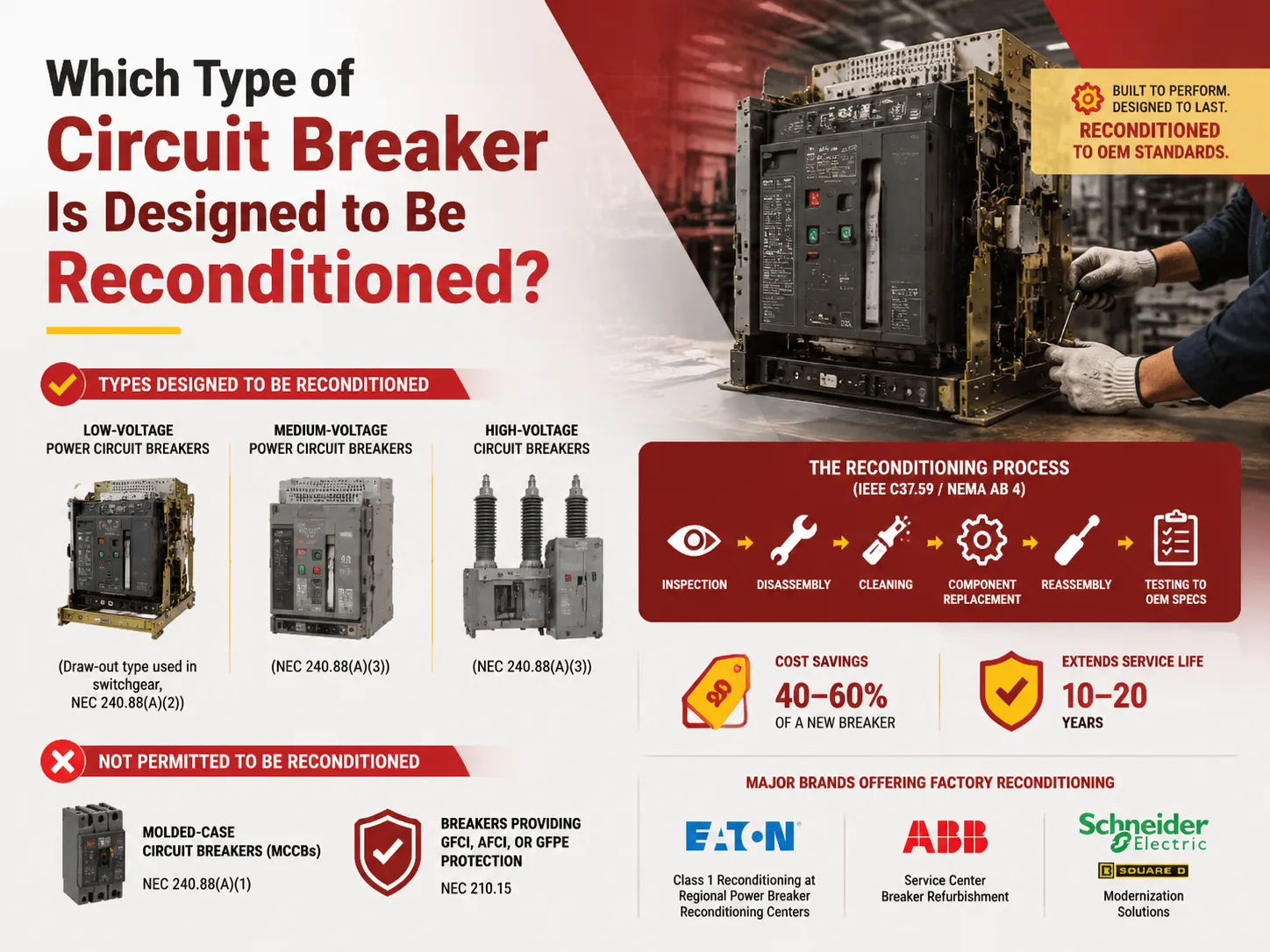
Краткий ответ: Автоматические выключатели, которые можно восстановить, включают автоматические выключатели низкого напряжения, автоматические выключатели среднего напряжения и автоматические выключатели высокого напряжения. Автоматические выключатели в литом корпусе не подлежат восстановлению, как указано в NEC 240.88(A)(1), а также любые автоматические выключатели, обеспечивающие защиту GFCI, AFCI или GFPE, запрещены NEC 210.15. Известные производители, предлагающие заводское восстановление, включают Eaton, ABB и Schneider Electric / Square D. Процесс восстановления соответствует правилам и нормам IEEE C37.59 и NEMA AB 4. Как правило, стоимость восстановления составляет 40-60% от стоимости нового автоматического выключателя и добавляет 10-20 лет срока службы.
Типы автоматических выключателей, разрешённых для восстановления
Согласно разделу 240.88(A) NEC 2020, следующие типы автоматических выключателей
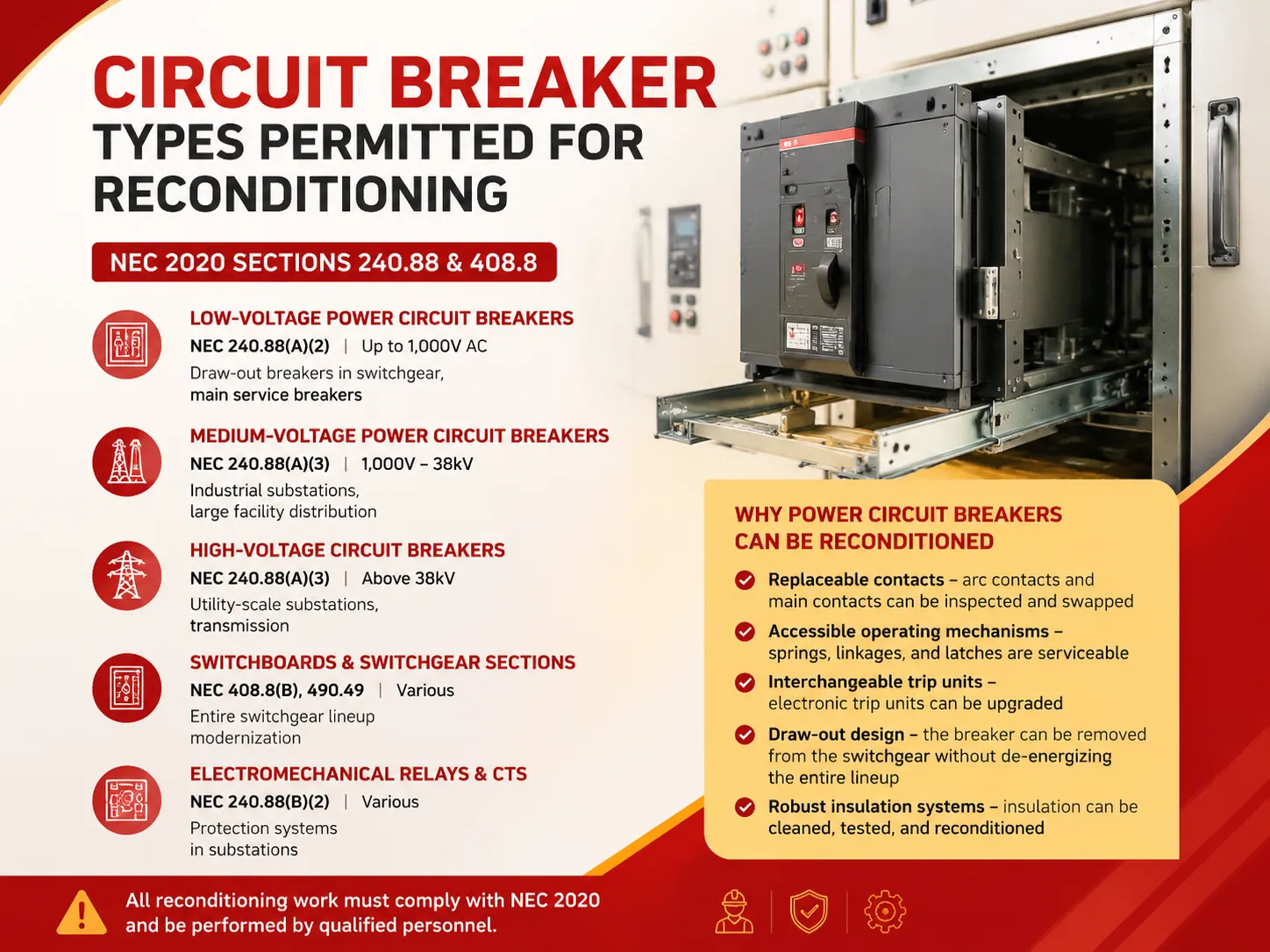
| Тип выключателя | явно разрешены к восстановлению: | Типичное применение | Диапазон напряжения |
|---|---|---|---|
| Ссылка на NEC | Автоматические выключатели низкого напряжения | 88(A)(2) | Выдвижные выключатели в коммутационных аппаратах, главные вводные выключатели |
| До 1000 В переменного тока | Автоматические выключатели среднего напряжения | 88(A)(3) | Промышленные подстанции, распределение на крупных объектах |
| 1000 В – 38 кВ | Автоматические выключатели среднего напряжения | Автоматические выключатели высокого напряжения | Подстанции коммунального масштаба, линии передачи |
| Выше 38 кВ | Щиты и секции коммутационных аппаратов | 8(B), 490.49 | Модернизация всего ассортимента коммутационных аппаратов |
| Различные | Электромеханические защитные реле и трансформаторы тока | 88(B)(2) | Модернизация всего ассортимента коммутационных аппаратов |
Системы защиты на подстанциях Ключевая характеристика всех восстанавливаемых автоматических выключателей заключается в том, что они выдвижного или съемного типа, предназначены для обслуживания — не герметичные устройства. Автоматические выключатели низкого напряжения, такие как, воздушные автоматические выключатели с номиналом до 6300 А,.
специально разработаны с механизмами, пригодными для обслуживания в полевых условиях, заменяемыми контактами и доступными расцепителями. Это принципиально отличается от автоматических выключателей в литом корпусе, которые герметично запаяны на заводе.
Почему автоматические выключатели можно восстанавливать
- Автоматические выключатели разработаны с возможностью обслуживания. Их характеристики включают:
- Заменяемые контакты – возможна проверка и замена дугогасительных и основных контактов
- Взаимозаменяемые расцепители – возможно обновление электронных расцепителей автоматических выключателей
- Выдвижная конструкция – выключатель можно извлечь из панели без отключения питания
- Обширные системы изоляции – существующую изоляцию можно очистить, протестировать и восстановить
Подробнее о различиях между категориями выключателей в нашем руководстве по что такое MCCB и MCB рассматриваются конструктивные различия, определяющие возможность обслуживания.
Типы автоматических выключателей, запрещённых к восстановлению
Согласно NEC 2020, существуют изделия, которые запрещено восстанавливать. Эти запреты обусловлены тем, что критически важный для безопасности характер этого оборудования требует, чтобы любые изменения внутри не влияли на его защитные функции.
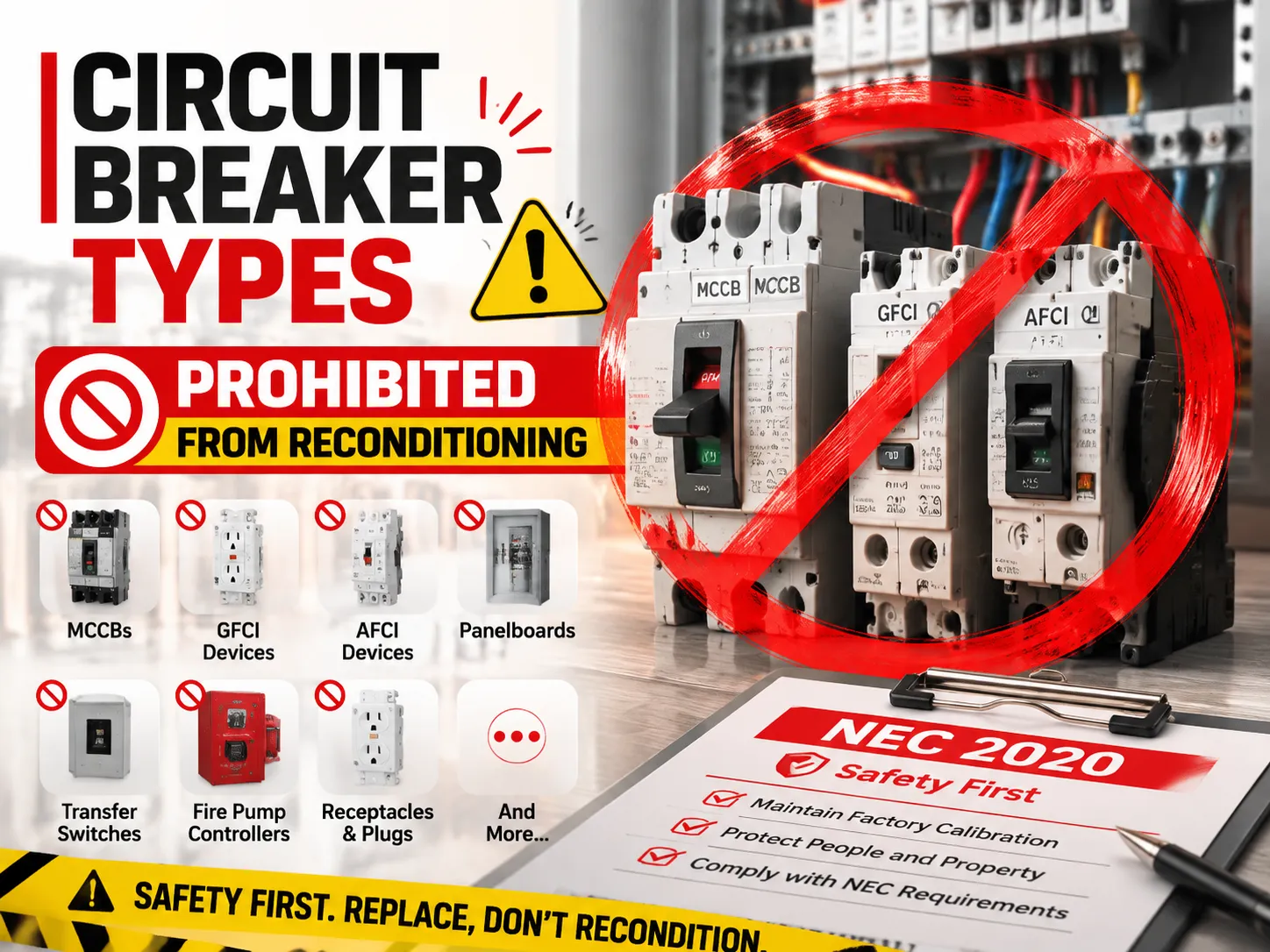
| Запрещённое оборудование | явно разрешены к восстановлению: | Причина |
|---|---|---|
| Автоматические выключатели в литом корпусе (MCCB) | 88(A)(1) | Заводская герметизация; нарушение пломбы аннулирует сертификат UL и калибровку |
| Устройства защиты от замыканий на землю (GFCI) | 210.15(1) | Защита персонала, критически важная для безопасности; калибровка не может быть проверена после восстановления |
| Устройства защиты от дуговых замыканий (AFCI) | 210.15(2) | Сложная электроника обнаруживает сигнатуры дуги; восстановление может не выявить тонкое ухудшение |
| Защита оборудования от замыканий на землю (GFPE) | 210.15(3) | Функция защиты оборудования должна оставаться откалиброванной на заводе |
| Электронные расцепители для низковольтных автоматических выключателей | 88(B) | Электроника не подлежит надежному восстановлению; должна быть заменена на новую |
| Распределительные щиты | 8(A) | Структурная целостность и соединения шин не могут быть проверены после восстановления |
| Переключатели передачи (аварийные системы) | 5(C), 701.5(C), 702.5(A) | Для приложений, связанных с безопасностью жизни, требуется новое оборудование |
| Контроллеры пожарных насосов | 695.10 | Критическое оборудование для обеспечения безопасности жизни |
| Розетки и штепсельные вилки | 3(A), 406.7 | Износ и деградация контактов не поддаются надежному обнаружению |
Подчеркивая важность MCCB: даже если ранее некоторые проверки и профилактическое обслуживание были разрешены согласно стандартам NEMA AB 4, следует отметить, что восстановление автоматических выключателей в литом корпусе запрещено в последнем издании NEC 2020 года. Обслуживание (чистка, эксплуатация, проверка крутящего момента) по-прежнему допустимо, но разборка внутренней структуры и реконструкция автоматических выключателей в литом корпусе не разрешены.
Бренды, поддерживающие восстановление автоматических выключателей
Разные известные производители управляют программами восстановления, авторизованными их заводами. Они не используют ремонтные компании, работающие от имени других фирм.
| Бренд | Название программы | Область охвата | Гарантия |
|---|---|---|---|
| Eaton | Восстановление класса 1 (Центры восстановления силовых автоматических выключателей) | Автоматические выключатели Eaton и не-Eaton низкого и среднего напряжения; восстановление Magnum DS; модернизация VCP-W FAME | 3 года (1 год для применений с пускателями двигателей) |
| ABB | Ремонт автоматических выключателей в сервисных центрах | Автоматические выключатели ABB и не-ABB; ядерные и неядерные; низкое и среднее напряжение | 1 год на запчасти и работу |
| Schneider Electric / Square D | Решения по модернизации / Восстановление автоматических выключателей | Square D и большинство основных OEM-брендов; автоматические выключатели низкого и среднего напряжения; модернизация распределительных устройств | Варьируется в зависимости от объема |
| Сименс | Программы обслуживания и восстановления | Siemens и устаревшие бренды (ITE, Gould); автоматические выключатели низкого и среднего напряжения | Варьируется в зависимости от программы |
| GE / Vertiv | Услуги по восстановлению | Автоматические выключатели GE и устаревшие бренды; автоматические выключатели среднего и высокого напряжения | Варьируется в зависимости от программы |
Что предлагает каждый бренд
В Северной Америке Eaton основал пять Центров восстановления силовых автоматических выключателей. Их протоколы класса 1 включают полную разборку деталей, очистку в соответствии со стандартами компонентов, восстановление поверхности и, в конечном итоге, окончательное тестирование производительности. Они также разработали концепцию модернизации FAME для некоторых специфических автоматических выключателей среднего напряжения, а также переоборудование автоматических выключателей с использованием расцепителя Digitrip RMS и системы обслуживания для снижения риска дугового разряда Arcflash Reduction Maintenance System. Каждый восстановленный автоматический выключатель добавляется в центральную базу данных Pow-R-DB.
В своих сервисных центрах ABB предлагает услуги повторного тестирования как для собственных моделей автоматических выключателей, так и для моделей других производителей. Их услуги включают прием оборудования, его осмотр и тестирование, а также разборку. Помимо очистки всех деталей, ABB также проверяет наличие трещин, обязательно заменяет уже поврежденные детали, наносит смазку на все движущиеся точки, а затем собирает устройство обратно.
В рамках программы Modernization Solutions Schneider Electric предлагает услугу перенастройки низковольтных и средневольтных силовых автоматических выключателей. Восстановление выполняется с использованием следующих этапов: на всех стадиях, включая частичную замену компонентов, мойку и покраску деталей, а также смазку.
Ключевые стандарты: NEC, NEMA AB 4, IEEE C37.59 и UL 489
Несколько стандартов регулируют восстановление автоматических выключателей. Понимание того, какой из них применим в вашем случае, имеет решающее значение для соблюдения норм:
| Стандарт | Издатель | Область применения |
|---|---|---|
| Статья NEC 210.15 и 240.88 | NFPA | Определяет, что можно и что нельзя восстановить; требует маркировки как “восстановленное” |
| NEMA AB 4 | NEMA | Руководства по инспекции и профилактическому обслуживанию автоматических выключателей в литом корпусе (не восстановление) |
| IEEE C37.59 | IEEE | Стандарт по восстановлению силового коммутационного оборудования; определяет процесс восстановления |
| UL 489 | UL | Стандарт для автоматических выключателей в литом корпусе; используется как эталон для тестирования |
| Политика NEMA по восстановленному оборудованию | NEMA | Позиции отрасли по пригодности и безопасности восстановленного оборудования |
| Стандарты PEARL | PEARL | Стандарты, аккредитованные ANSI, для инспекции, тестирования и восстановления электрических аппаратов |
Основной фактор: первоначальная маркировка должна быть удалена, а оборудование должно быть идентифицировано как восстановленное при ремонте. UL предоставляет процедуру сертификации для реконструированного оборудования. Устройства, отремонтированные в соответствии с процедурой, маркируются знаком UL с надписью “Rebuilt”, “Remanufactured”, “Rebuilt” или “Reconditioned”. Подробнее о стандартах для автоматических выключателей см. в нашей статье о Требованиях к автоматическим выключателям UL 489.
Процесс восстановления шаг за шагом
Согласно Eaton Class 1 и IEEE C37.59, это процесс, который выполняется, когда автоматический выключатель нуждается в восстановлении:
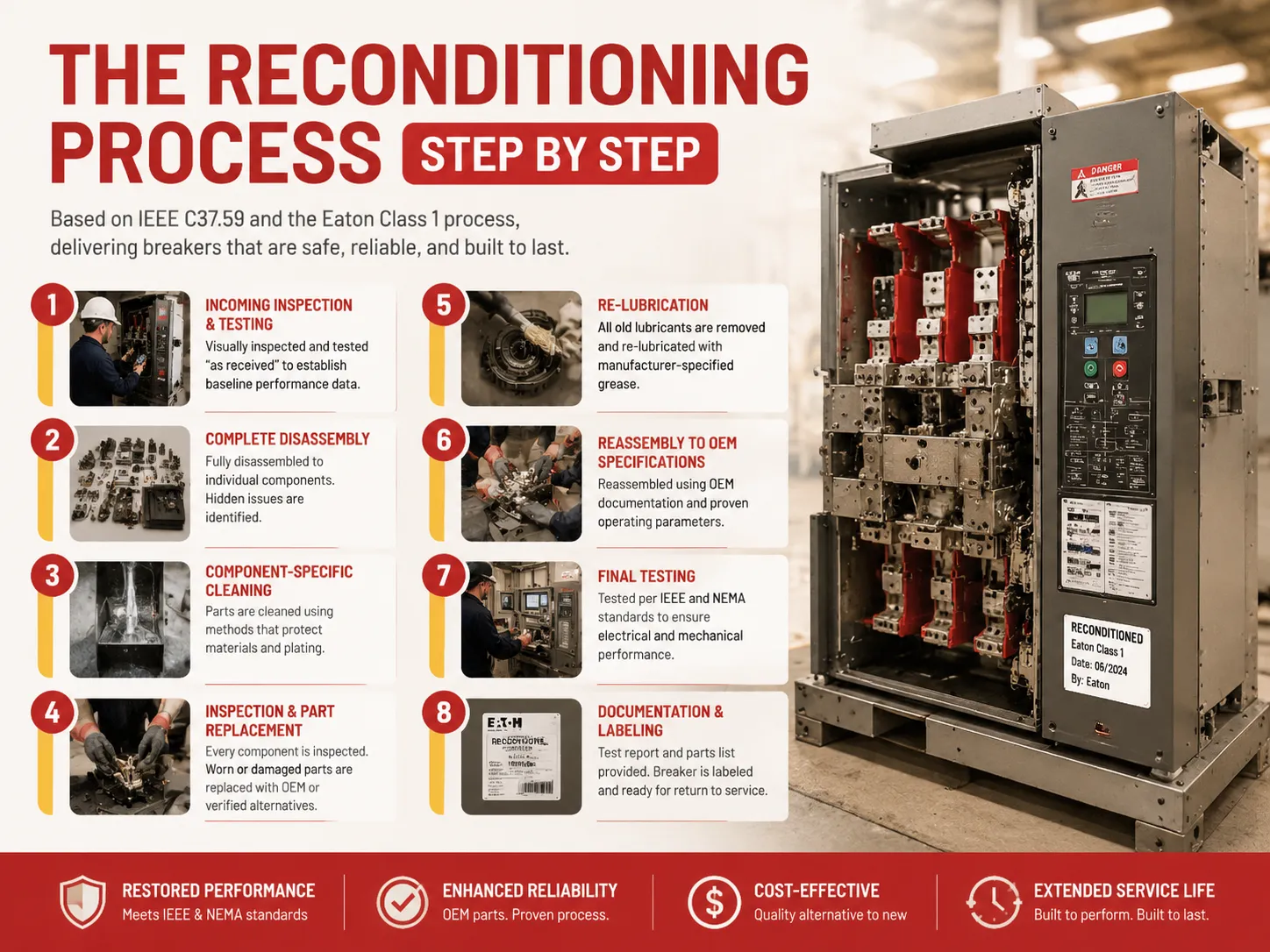
Шаг 1: Входной осмотр и тестирование
Автоматический выключатель принимается, визуально осматривается и тестируется в состоянии “как получено” для документирования базовых характеристик. Важные измерения включают сопротивление контактов (в милливольтах), сопротивление изоляции, механическое усилие срабатывания и размеры. Полученная информация документируется.
Шаг 2: Полная разборка
Автоматический выключатель полностью разбирается на компоненты, включая: приводной механизм, дугогасительную камеру, изоляционный барьер, корпус и другие системы. На этом этапе выявляются дефекты, такие как неисправная тяга привода, несоосные контакты, поврежденная изоляция, которые могут привести к отказу устройства при обнаружении неисправности.
Шаг 3: Очистка компонентов по типу
Различные материалы требуют различных методов очистки. Неконтактные компоненты тщательно очищаются так, чтобы не осталось посторонних материалов, при этом сохраняются диэлектрические и конструктивные характеристики. Контактные компоненты очищаются без повреждения оригинального покрытия. Контактные поверхности восстанавливаются для правильного функционирования металлургии и контактного давления.
Шаг 4: Осмотр и замена деталей
Все детали проверяются на наличие трещин, износа, коррозии и точности размеров. Изношенные детали заменяются новыми OEM-деталями, а детали, которые больше не производятся, заменяются обратным инжинирингом с соблюдением стандартов IEEE C37.59. Такие компоненты могут требовать проверки в строгих лабораторных условиях, например, при испытаниях высокой мощности. Типичные заменители изношенных деталей — пружины, контакты, шунты и втулки.
Шаг 5: Повторная смазка
Все устаревшие смазочные материалы были удалены, и машина, а также точки соединения повторно смазаны смазкой, указанной производителем. Одной из ключевых причин отказа автоматических выключателей является неправильная смазка — жесткие механизмы замедляют процесс устранения неисправностей, что приводит к значительно более высокой энергии дугового разряда.
Шаг 6: Сборка в соответствии с техническими требованиями OEM
В процессе сборки выключателя используется документация OEM. Однако, если информация OEM недоступна, например, если оригинальный производитель прекратил деятельность, Eaton использует централизованную базу данных Pow-R-DB с записями по аналогичным выключателям, которые доказали желаемые результаты.
Шаг 7: Финальное тестирование
Восстановленный автоматический выключатель проходит окончательное тестирование в соответствии с руководящими принципами IEEE и NEMA, включая:
- Оценку сопротивления изоляции
- Тест сопротивления контактов (падение напряжения в милливольтах)
- Оценку механической работы (время открытия-закрытия)
- Тест срабатывания по перегрузке (длительное, короткое, мгновенное срабатывание)
- Оценку диэлектрической прочности
Шаг 8: Документация и маркировка
Составляется отчет о тестировании для сравнения результатов “при поступлении” и “окончательных” испытаний, с указанием всех замененных компонентов. Автоматический выключатель снабжается этикеткой прослеживаемости, обозначающей его как восстановленный, с указанием названия и даты фирмы, выполнившей восстановление. Автоматический выключатель снова готов к эксплуатации.
Когда выбирать восстановление вместо замены
Решение о восстановлении или замене зависит от типа выключателя, возраста, критичности и стоимости. Вот практическая матрица решений:
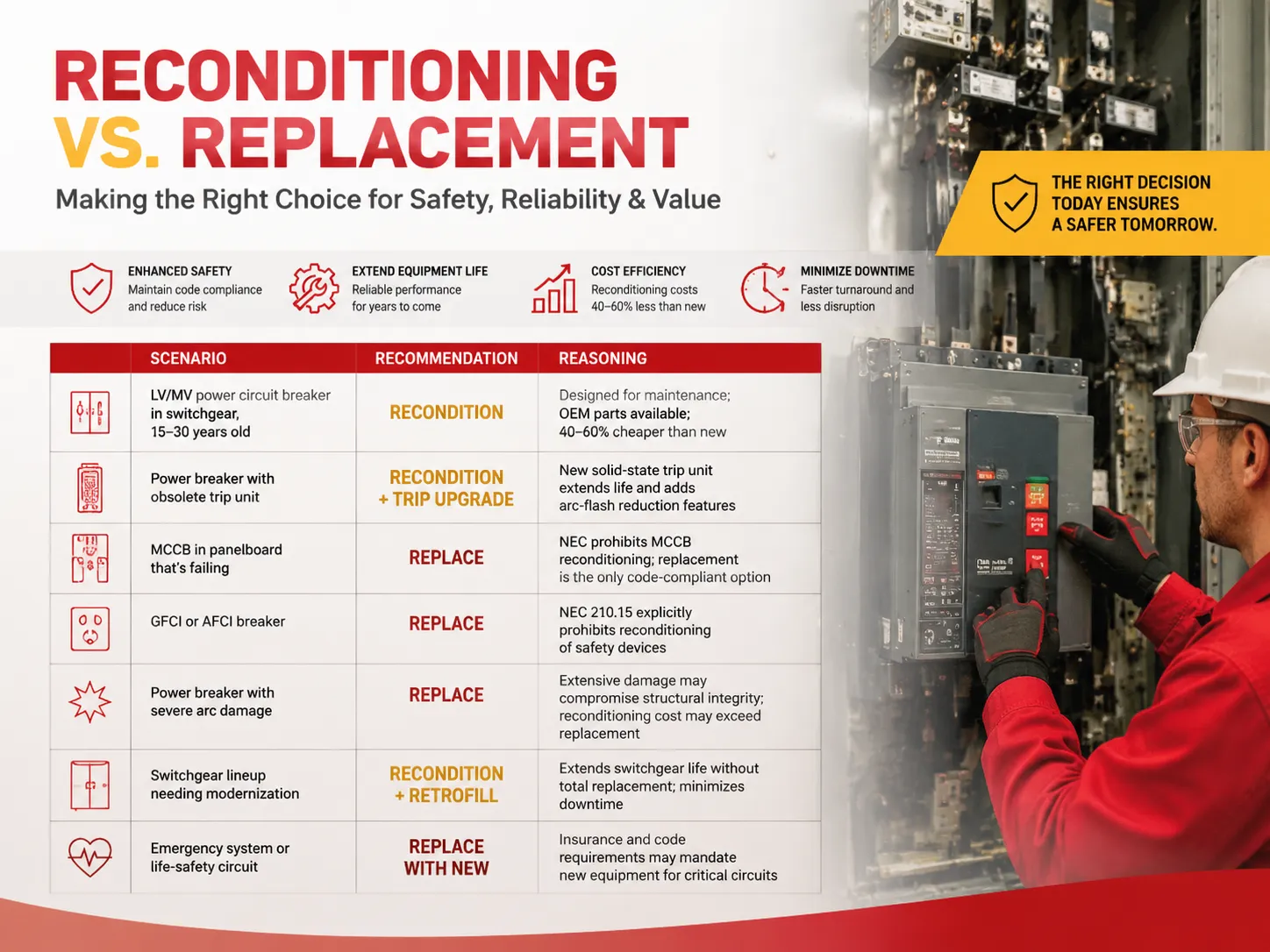
| Сценарий | Рекомендация | Обоснование |
|---|---|---|
| Низковольтный/средневольтный силовой автоматический выключатель в распределительном устройстве, возраст 15–30 лет | Восстановление | Предназначен для обслуживания; доступны OEM-детали; 40–60% дешевле нового |
| Силовой выключатель с устаревшим блоком срабатывания | Восстановление + обновление расцепителя | Новый твердотельный расцепитель продлевает срок службы и добавляет функции снижения дугового разряда |
| MCCB в распределительном щите, который выходит из строя | Заменить | NEC запрещает восстановление MCCB; замена — единственный соответствующий нормам вариант |
| УЗО или AFCI автоматический выключатель | Заменить | NEC 210.15 явно запрещает восстановление защитных устройств |
| Силовой автомат с серьезными повреждениями от дуги | Заменить | Значительные повреждения могут нарушить структурную целостность; стоимость восстановления может превысить стоимость замены |
| Линейка коммутационного оборудования, требующая модернизации | Восстановление автоматов + ретрофит | Продлевает срок службы коммутационного оборудования без полной замены; минимизирует время простоя |
| Аварийная система или цепь жизнеобеспечения | Заменить на новый | Требования страхования и нормативов могут требовать новое оборудование для критически важных цепей |
Для помощи в диагностике, действительно ли ваш автомат нуждается в обслуживании, смотрите наше руководство по том, как определить, что автомат неисправен. И если замена — правильное решение, наша статья о стоимости замены автоматического выключателя охватывает цены по типам автоматов и номиналам тока.
Сравнение стоимости: восстановленный vs новый
Когда речь идет о восстановлении автоматических выключателей, расходы обычно составляют от 40 до 60% от общей стоимости приобретения нового оборудования. Особенно это актуально для крупных моделей, которые могут помочь значительно сэкономить:
| Тип выключателя | Новая стоимость (примерно) | Стоимость восстановления (примерно) | Экономия |
|---|---|---|---|
| Низковольтный силовой автомат, корпус 800A | 8 000–15 000 | 3 200–9 000 | 40–60% |
| Низковольтный силовой автомат, корпус 3200A | 20 000–40 000 | 8 000–24 000 | 40–60% |
| Средневольтный вакуумный автомат, 5 кВ | 15 000–30 000 | 6 000–18 000 | 40–60% |
| Средневольтный вакуумный автомат, 15 кВ | 25 000–50 000 | 10 000–30 000 | 40–60% |
| Обновление расцепителя (Digitrip/AC-PRO) | 3 000–8 000 | Включено в восстановление | Комплексная экономия |
Дополнительные расходы: процесс восстановления экономит затраты, связанные с модификацией коммутационного оборудования, необходимой при изменении размера нового автомата, минимизирует время выполнения заказа, так как восстановленные автоматы поставляются за 2-4 недели в отличие от новых, которые доставляются за 12-20 недель, и сокращает время простоя благодаря возможности немедленного внедрения восстановленного автомата в текущий шкаф.
Вопросы безопасности и требования к документации
Восстановление может выполняться только сертифицированным персоналом в соответствии с принятыми стандартами. Вот требования, которые необходимо проверить перед установкой восстановленного автоматического выключателя:
- Маркировка: восстановленный автомат отмечен надписью “Reconditioned” с указанием названия компании по восстановлению и даты.
- Тестирование: получить полный отчет с результатами тестов “при получении” и “окончательными” вместе со списком замененных деталей.
- Сертификация: если требуется сертификация UL, убедитесь, что автомат отмечен знаком UL с пометкой “Rebuilt” или “Reconditioned”.”
- Одобрение AHJ: орган, имеющий юрисдикцию (электрический инспектор), может потребовать доказательства восстановления сертифицированной компанией — будьте готовы.
- Гарантия: проверьте условия и срок гарантии (Eaton: 3 года; ABB: 1 год; у других — по-разному).
- Отслеживаемость: Компания, выполняющая восстановление, должна вести учет, связанный с серийным номером автоматического выключателя для последующего использования.
- Не устанавливайте восстановленный автоматический выключатель в цепь жизнеобеспечения, если установка не одобрена уполномоченным органом (AHJ) и вашим страховым агентом.
Также OSHA 29 CFR 1910.334(b)(2) гласит, что после обесточивания цепи с помощью защитного устройства не разрешается вручную повторно подавать питание до тех пор, пока не будет установлено, что оборудование и цепь могут быть безопасно включены.
Часто задаваемые вопросы
Что такое восстановленный автоматический выключатель?
Восстановленный силовой автоматический выключатель — это силовой автоматический выключатель, который прошел процесс восстановления на заводском авторизованном предприятии. В соответствии с требованиями IEEE C37.59 весь процесс включает входной осмотр, полную разборку, очистку компонентов, замену деталей, повторное нанесение смазочных материалов, сборку компонентов согласно спецификациям OEM и окончательное тестирование. Кроме того, автоматический выключатель должен быть маркирован как восстановленный с указанием названия и даты фирмы, проводившей восстановление, а оригинальный сертификат должен быть снят в соответствии с требованиями NEC.
Что такое автоматические выключатели типов B, C и D?
Типы B, C и D — это классификации МКВ по характеристикам срабатывания, а не типы автоматических выключателей согласно NEC 240.88. Автоматические выключатели типа B срабатывают при токе в три-пять раз превышающем номинальный; они используются в жилых помещениях для цепей с чисто резистивной нагрузкой. Далее идут автоматические выключатели типа C, которые срабатывают при токе в пять-десять раз превышающем номинальный и применяются в коммерческих и промышленных электрических системах, а также в цепях с индуктивной нагрузкой, таких как люминесцентные лампы и малые двигатели. Третий тип — МКВ типа D, которые срабатывают при токе в десять-двадцать раз превышающем номинальный и предназначены для работы с пусковыми токами трансформаторов, крупных двигателей или сварочных аппаратов. Все перечисленные типы автоматических выключателей являются миниатюрными, литого корпуса и не подлежат восстановлению согласно NEC 240.88(A)(1).
Разрешено ли восстанавливать автоматические выключатели литого корпуса?
Согласно разделу NEC 240.88(A)(1) 2020 года, восстановление автоматических выключателей литого корпуса не допускается. MCCB поставляются как герметичные устройства, поэтому нарушение пломб означает потерю сертификата UL и гарантии производителя. Хотя в руководстве NEMA AB 4 предусмотрены рекомендации по инспекции и профилактическому обслуживанию MCCB, это не приравнивается к восстановлению. Регулярное техническое обслуживание допустимо, но разборка или модификация внутренней конструкции MCCB не допускается.
Какое оборудование не разрешается восстанавливать согласно статье 210?
NEC в статье 210.15 указывает, что существует три вида оборудования, которые не разрешается восстанавливать. К ним относятся (1) оборудование, обеспечивающее защиту персонала с помощью устройства защитного отключения (GFCI), (2) оборудование, обеспечивающее защиту от дугового замыкания (AFCI), и (3) оборудование, обеспечивающее защиту оборудования от замыканий на землю (GFPE). Причина этих запретов заключается в том, что устройства, которые требуется восстанавливать, также являются критически важными для безопасности и обладают требованиями к калибровке и чувствительности, которые не могут быть гарантированы даже после восстановления. Таким образом, если любое из восстановленных устройств (GFCI, AFCI или GFPE) не сработает при требуемом пороге, это создаст угрозу для жизни. Также NEC указывает, что формованные автоматические выключатели не могут быть восстановлены согласно разделу 240.88(A)(1), и электронные расцепители низковольтных автоматических выключателей не могут быть восстановлены согласно разделу 240.88(B).
Ссылки
- NFPA 70 — Национальный электротехнический кодекс (NEC) 2020, статьи 210.15 и 240.88
- ANSI/NEMA AB 4-2023 — Руководство по инспекции и профилактическому обслуживанию формованных автоматических выключателей
- IEEE C37.59-2018 — Стандарт по восстановлению силового коммутационного оборудования
- UL 489 — Стандарт для формованных автоматических выключателей, формованных переключателей и корпусов автоматических выключателей
- UL — Восстановленное электрическое оборудование: руководство NEC 2020 года
- Eaton — Восстановление автоматических выключателей класса 1 для низковольтных и средневольтных силовых автоматических выключателей
- ABB — Сервисные центры по восстановлению автоматических выключателей
- Schneider Electric — Решения по модернизации и обновлению электрических распределительных систем
- PEARL — Профессиональная лига по восстановлению электрического оборудования
Восстанавливаемые автоматические выключатели включают низковольтные, средневольтные и высоковольтные автоматические выключатели выдвижного, обслуживаемого в полевых условиях типа, которые обычно используются на подстанциях и в распределительных устройствах. Конструкция автоматического выключателя предусматривает заменяемые контакты, легко доступный механизм и взаимозаменяемые расцепители, что позволяет практическое восстановление в соответствии с NEC 240.88. Крупные производители, такие как Eaton, ABB и Schneider Electric, предлагают услуги по восстановлению согласно стандартам IEEE C37.59, гарантируя гарантии, сопоставимые с новыми изделиями.
С другой стороны, формованные автоматические выключатели, устройства GFCI, устройства AFCI и оборудование GFPE безусловно запрещены к восстановлению согласно NEC 210.15 и 240.88 и должны заменяться в случае неисправности. NEC 2020 четко указывает, что автоматические выключатели, предназначенные для обслуживания, могут обслуживаться, тогда как герметичные автоматические выключатели, критичные для безопасности, обслуживанию не подлежат. При выборе между восстановлением и заменой сначала определите тип автоматического выключателя и сравните стоимость возможного отказа, чтобы понять, что более целесообразно — восстановление или замена автоматического выключателя.