
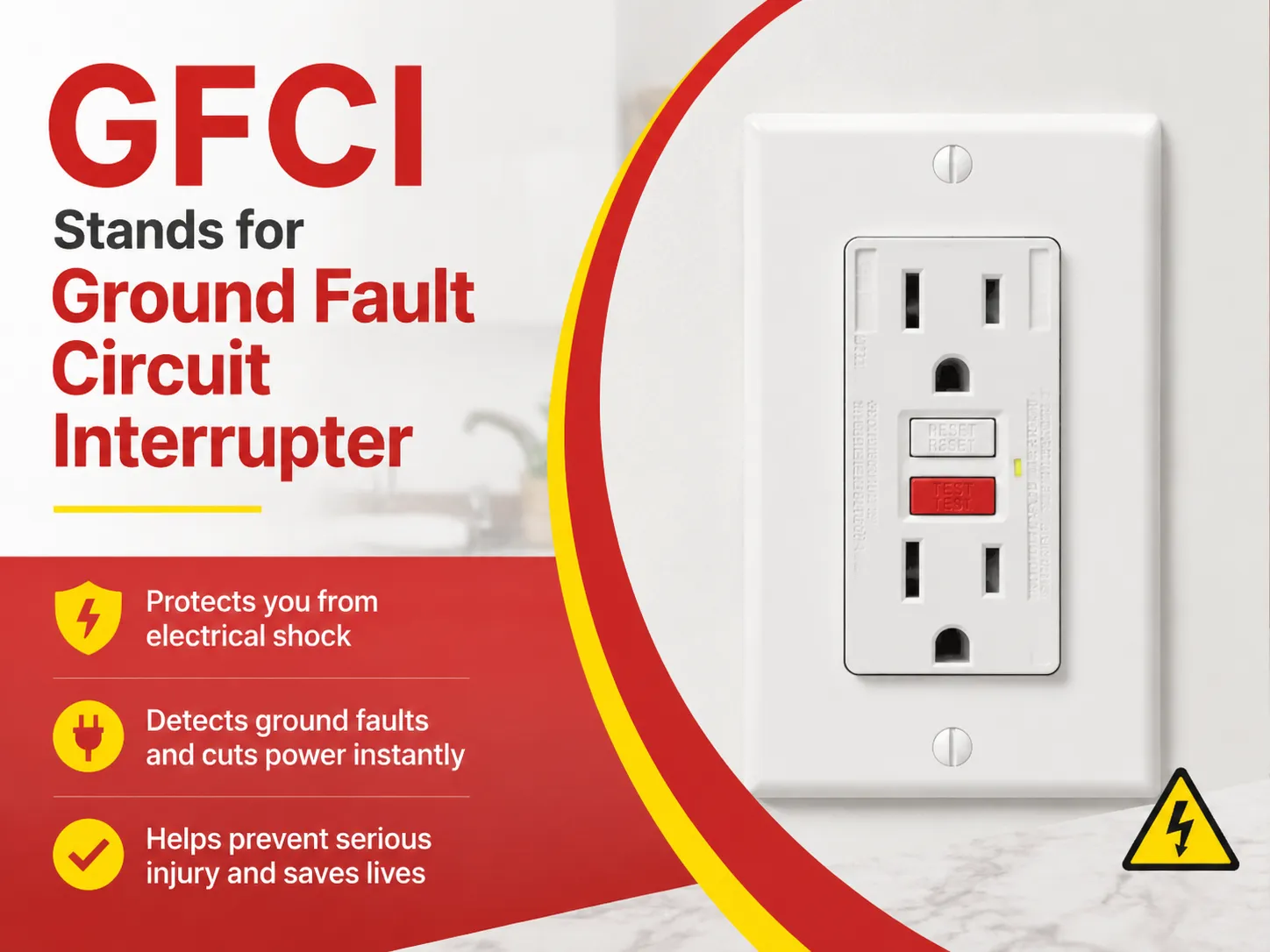
Вы можете читать технический лист, готовиться к тесту по электричеству или просто пытаться понять, как работают розетки на вашей кухне, когда наткнетесь на утверждение, что “GFCI означает ground fault circuit interference”. Это может звучать правильно, но это неверно. На самом деле GFCI означает ground fault circuit interrupter. Вы можете подумать, что разница между словами “interrupter” и “interference” заключается только в написании, но дело не только в написании; это разница в значении. В этой статье вы найдете объяснения, что такое GFCI, почему ground fault circuit interference неверно и как работает GFCI, что может вызвать срабатывание устройства и что не следует подключать к GFCI.
Краткий ответ: Правильный термин GFCI, который расшифровывается как Ground Fault Circuit Interrupter, часто неправильно понимается как другие названия, такие как ground fault circuit interference и grand fuse circuitry в электротехнической терминологии. Этот термин относится к устройству, которое разрывает электрическую цепь при обнаружении замыкания на землю. Согласно Национальному электротехническому кодексу и стандартам UL, значение GFCI можно правильно понять именно так.
Что на самом деле означает GFCI
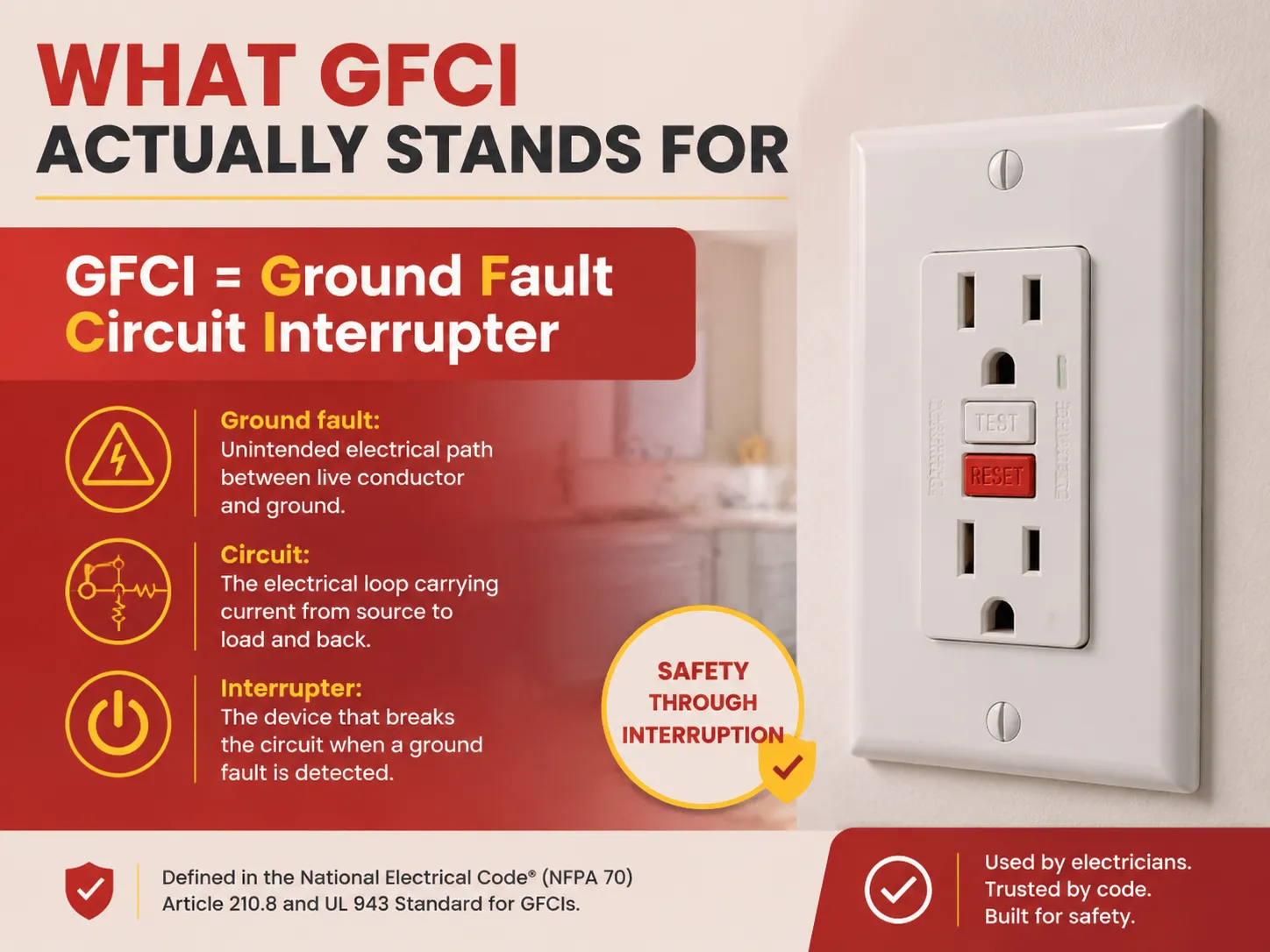
Аббревиатура GFCI расшифровывается как: Ground Fault Circuit Interrupter.
Рассмотрим определения каждого из слов:
- Замыкание на землю: непреднамеренный ток между фазным проводом и землей (например, через человека, через воду, через поврежденный провод или через корпус прибора).
- Цепь: электрический путь, по которому ток течет от N к L по замкнутому контуру.
- Прерыватель: устройство, которое разрывает цепь при возникновении замыкания на землю.
Это не просто мнение. Это закреплено в Национальном электротехническом кодексе (NFPA 70), где термин “ground-fault circuit-interrupter” используется в статье 210.8 и других связанных статьях. Он также используется в UL 943, который является стандартом безопасности для GFCI. Более того, все программы обучения по электротехнике, документация производителей (например, Leviton, Eaton, Legrand) и отчеты по инспекциям используют термин ’interrupter“.”
Почему термин “Ground Fault Circuit Interference” неверен
Термин “interference” подразумевает прерывание, помехи или вмешательство в работу цепи со стороны устройства, как, например, электромагнитные помехи (EMI). Это не то, что делает GFCI. GFCI не вмешивается в нормальную работу цепи, так как он находится в цепи незаметно и пропускает ток, как и должно быть. Его единственная функция — остановить ток сразу же при обнаружении замыкания на землю. Таким образом, это совсем не interference.
Но откуда возникает путаница? Вот некоторые объяснения:
- Звук: слова “interrupter” и “interference” начинаются с одинаковых букв и звучат похоже, что приводит к путанице.
- Автозаполнение: проверка орфографии и ИИ иногда заменяют “interference” на это слово, так как оно более распространено.
- Путаница с EMI: люди склонны путать “interference” с “electromagnetic interference” (EMI).
Точное слово, подтвержденное согласно NEC и UL, — interrupter, и GFCI не может означать “ground fault circuit interference”. Пример такой ошибки — когда GFCI пишут как “ground fault circuit interference”.
Что такое GFCI и как оно работает?
Устройство прерывания электрической цепи при неисправности — это быстрое предохранительное устройство, используемое для защиты людей от опасности поражения электрическим током. Устройство сравнивает ток в источнике, протекающий по фазному проводу, с током в нейтральном проводе. Обычно эти токи равны. Однако, когда часть тока уходит через землю, например, при касании прибора влажной рукой, падении фена в воду или повреждении провода, GFCI фиксирует дисбаланс тока и прекращает подачу электричества максимум за 1/40 секунды.
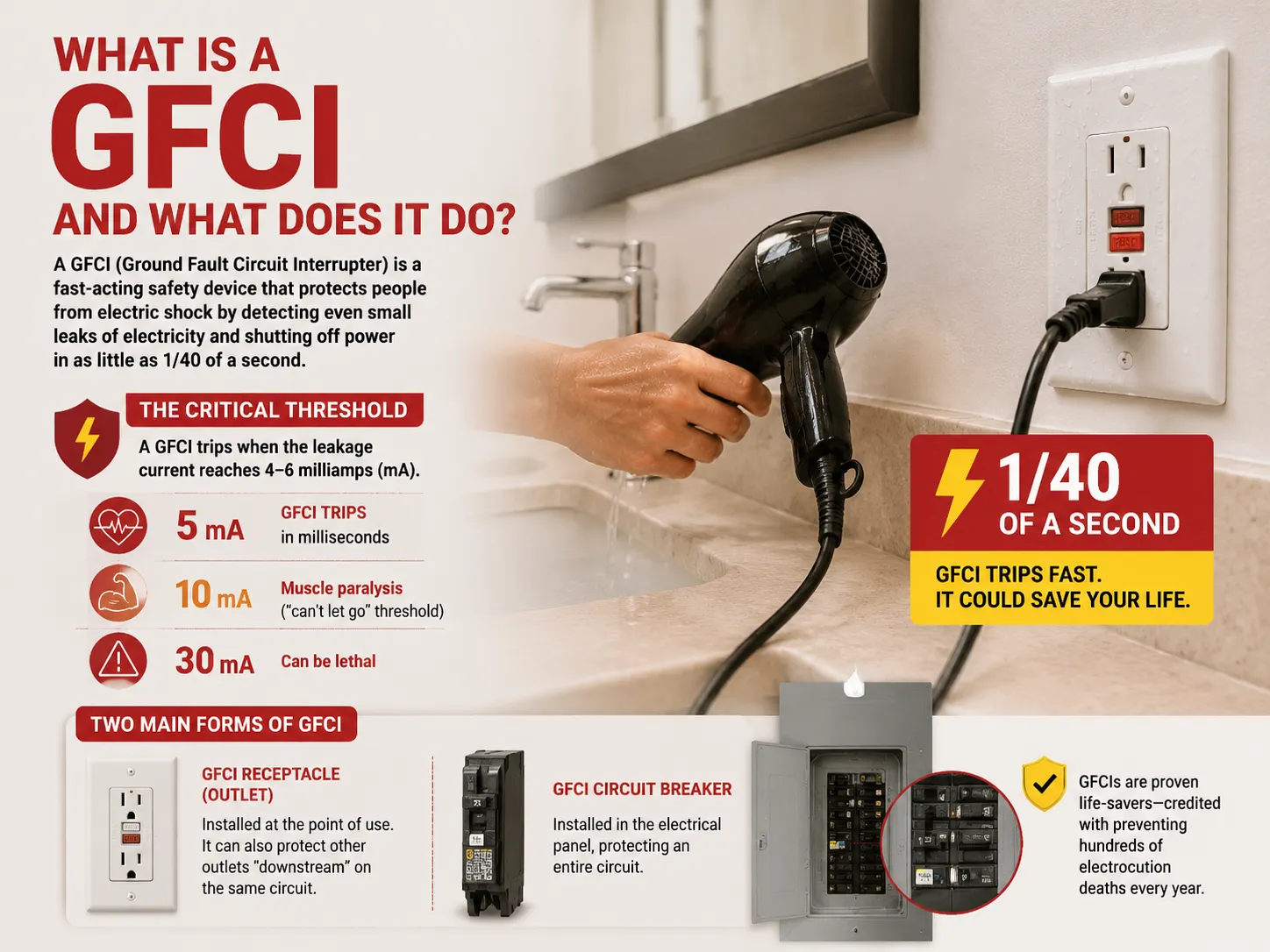
Критический уровень: GFCI срабатывает при отметке 4–6 мА. Для сравнения, 10 мА могут вызвать паралич мышц (порог “не могу отпустить”), а смертельный уровень — около 30 мА. В миллисекундах GFCI активируется при 5 мА и прекращает удар током до того, как станет слишком поздно. Именно поэтому Комиссия по безопасности потребительских товаров в основном признает заслугу GFCI в спасении сотен людей от поражения электрическим током. Существуют два основных типа GFCI:
- Розетка GFCI: розетка с кнопками TEST и RESET, которую мы знаем и которая может быть установлена в местах использования. Она также может защищать другие розетки в своей цепи.
- Автоматический выключатель GFCI: расположен в электрическом щите, защищая всю цепь от опасностей.
Наша статья о автоматических выключателях и устройствах прерывания цепи при замыкании на землю объясняет, как эти два устройства работают вместе.
Как GFCI обнаруживает замыкание на землю
GFCI содержит небольшой трансформатор, известный как трансформатор тока (CT), который охватывает как фазный, так и нейтральный провода. Вот как это работает:
- Нормальная работа: Ток течет по фазному проводу и возвращается по нейтральному проводу в равных количествах. Магнитные поля взаимно компенсируются, и трансформатор не фиксирует ток.
- Замыкание на землю: Ток отклоняется через человека, воду или повреждение на землю вместо обычного пути. Таким образом, фазный провод получает больший ток, чем нейтральный.
- Дисбаланс: Трансформатор фиксирует разницу от 4 до 6 миллиампер.
- Сигнал: Трансформатор тока активирует соленоид, который механически размыкает контакты и отключает питание розетки.
- Сброс: Пользователь должен нажать кнопку сброса, чтобы снова включить питание, так как GFCI сохраняет информацию о неисправности.
GFCI — это совершенно другой тип защиты по сравнению с автоматическим выключателем, так как он обнаруживает утечку на землю, а не перегрузки.
Факты и доказательства: стандарты и нормы
Вот документальные доказательства, которые окончательно решают вопрос:
| Источник | Что говорится |
|---|---|
| NFPA 70 (Национальный электрический кодекс) | Определяет и требует “ground-fault circuit-interrupters” в статье 210.8 (жилые помещения), статье 210.12 (дуговое замыкание) и статье 680 (бассейны). Официальный термин — “interrupter”.” |
| UL 943 | Стандарт безопасности называется “Стандарт безопасности для прерывателей цепи с защитой от замыканий на землю”. UL-сертифицированные GFCI тестируются на срабатывание при токе утечки 4–6 мА в течение 25 мс. |
| NEC 210.8 | Требует защиту GFCI для розеток в ванных комнатах, на кухонных столешницах, в гаражах, на открытом воздухе, в подвалах, подпольях, прачечных и влажных барах. |
| Литература производителя | Leviton, Eaton, Legrand, Hubbell — страницы продуктов и инструкции по установке каждого крупного производителя используют термин “ground fault circuit interrupter”.” |
| Использование в словарях/отрасли | Глоссарии электротехнической отрасли (IEEE, ESFI, OSHA) все определяют GFCI как “ground fault circuit interrupter”.” |
Все авторитетные источники по электричеству избегают термина “interference”. Если вам задают вопрос на основе этой аббревиатуры на экзамене или тесте, правильным ответом всегда должно быть слово “interrupter”.”
Где требуется установка GFCI
В соответствии с NEC 210.8 следующие зоны в жилых помещениях обязаны быть оснащены защитой Ground Fault Circuit Interrupter (GFCI):
- В ванных комнатах должна быть защита GFCI для всех розеток.
- Для кухонных столешниц все розетки в пределах 6 футов от раковины должны быть защищены GFCI.
- Защита GFCI должна быть обеспечена во всех гаражах и незавершённых подвалах.
- Все наружные розетки, включая используемые в подпольях и незавершённых зданиях, должны быть оснащены GFCI.
- Прачечные должны соответствовать требованиям по установке GFCI.
- Влажные бары должны быть оснащены защитой GFCI.
- Защита GFCI также требуется для лодочных гаражей, бассейнов и спа.
Однако расширенные требования к GFCI применимы и в коммерческих и промышленных условиях. Текущие нормы стали строже (2020 и 2023 годы) в отношении приборов, которые ранее не требовали функционирующего GFCI.
Что вызывает срабатывание GFCI?
GFCI срабатывает всякий раз, когда обнаруживает утечку тока на землю. Наиболее распространённые причины:
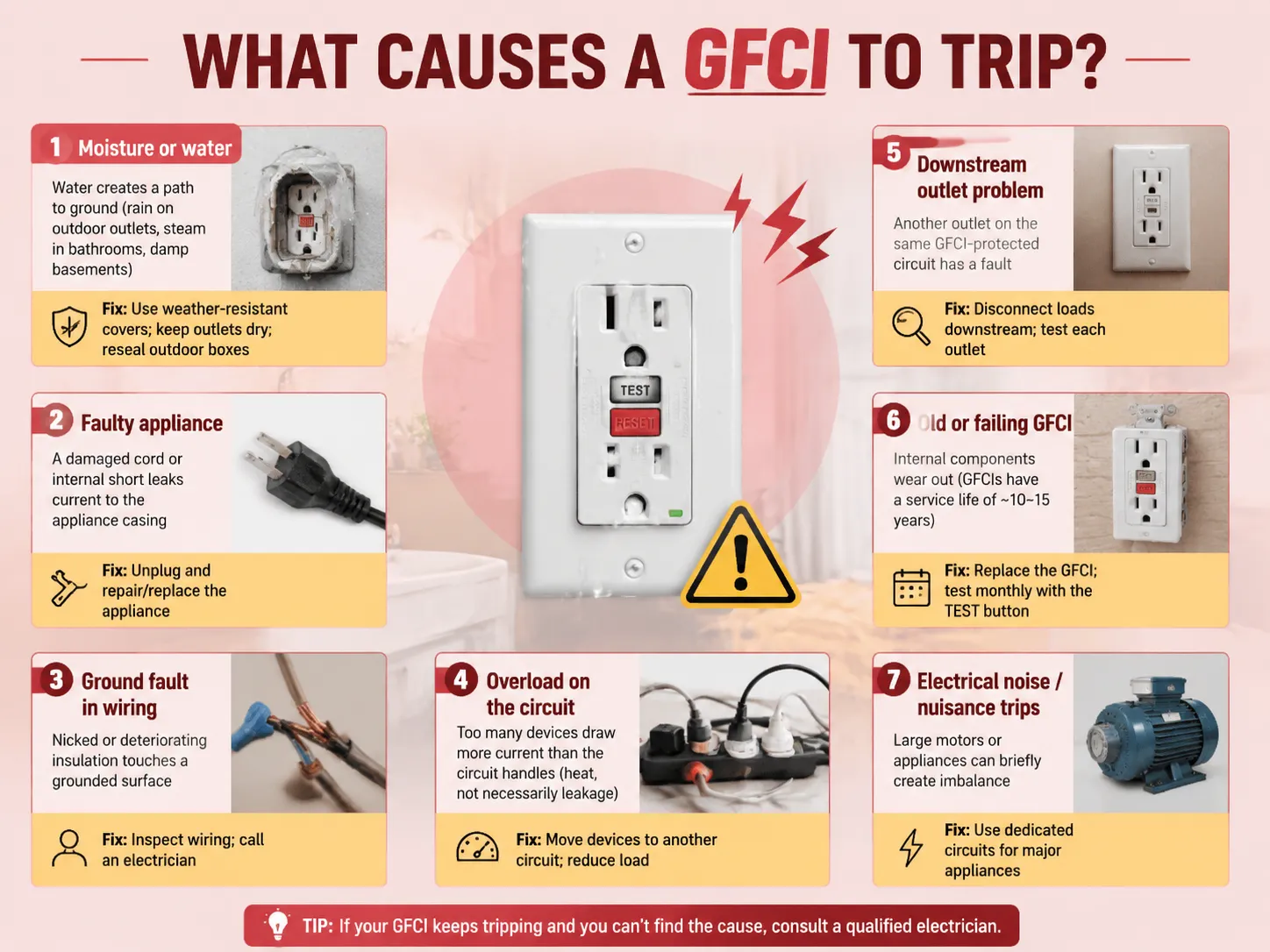
| Причина | Что происходит | Решение |
|---|---|---|
| Влага или вода | Вода создаёт путь к земле (дождь на наружных розетках, пар в ванных комнатах, влажные подвалы) | Используйте влагозащитные крышки; держите розетки сухими; заново герметизируйте наружные коробки |
| Неисправный прибор | Повреждённый шнур или внутреннее короткое замыкание вызывает утечку тока на корпус прибора | Отключите и отремонтируйте/замените прибор |
| Замыкание на землю в проводке | Повреждённая или изношенная изоляция касается заземлённой поверхности | Проверьте проводку; вызовите электрика |
| Перегрузка цепи | Слишком много устройств потребляют ток, превышающий возможности цепи (нагрев, не обязательно утечка) | Перенесите устройства на другую цепь; уменьшите нагрузку |
| Проблема с розеткой вниз по цепи | Другая розетка в той же цепи с защитой GFCI имеет неисправность | Отключите нагрузки вниз по цепи; проверьте каждую розетку |
| Старый или неисправный GFCI | Внутренние компоненты изнашиваются (срок службы GFCI примерно 10–15 лет) | Замените GFCI; ежемесячно проверяйте кнопку TEST |
| Электрические помехи / ложные срабатывания | Крупные моторы или приборы могут кратковременно создавать дисбаланс | Используйте выделенные цепи для крупных приборов |
Для дополнительной информации о диагностике повторяющихся срабатываний на уровне автоматического выключателя смотрите наши статьи о причинах срабатывания автоматического выключателя и опасности повторяющихся срабатываний автоматического выключателя.
Что не следует подключать к GFCI
Это важная деталь, на которую стоит обратить внимание. Строительные нормы указывают на необходимость защиты GFCI в некоторых случаях, однако существует несколько устройств, которые не должны работать на цепях с защитой GFCI, так как их неожиданное отключение может привести к повреждению.
- Холодильники и морозильники: если GFCI сработает неожиданно, холодильник отключится без вашего ведома, что приведет к порче продуктов. Во многих случаях электрики обычно подключают холодильники к выделенным цепям и обеспечивают защиту GFCI только там, где это требуется по нормам, например, если устройство находится менее чем в 6 футах от раковины.
- Насосы для откачки воды из подвала: в случае срабатывания GFCI насос отключается, и подвал заливает водой. Текущий кодекс требует, чтобы цепи насосов для откачки воды имели защиту GFCI, поэтому рекомендуется использовать либо GFCI-автоматы с сигнализацией, либо насосы с питанием от батареи.
- Аппараты жизнеобеспечения и медицинские машины: они должны оставаться в рабочем состоянии и требуют гарантированного энергоснабжения.
- Морозильники и гаражные морозильники: та же проблема, что и с холодильниками.
- Компьютеры/серверы (в некоторых случаях): нежелательное срабатывание автоматов может привести к потере важной информации, поэтому необходимо устанавливать бесперебойные цепи.
Главное здесь — следовать руководящим принципам NEC, если для вашего случая указана защита GFCI, так как некоторые приборы имеют выделенные цепи отдельно от других и оснащены автоматами GFCI с сигнализацией для уведомления о срабатывании. Если вы не уверены в актуальных требованиях, всегда лучше обратиться к лицензированному электрику.
GFCI против автоматического выключателя: одно и то же?
Нет — они защищают от разных опасностей:
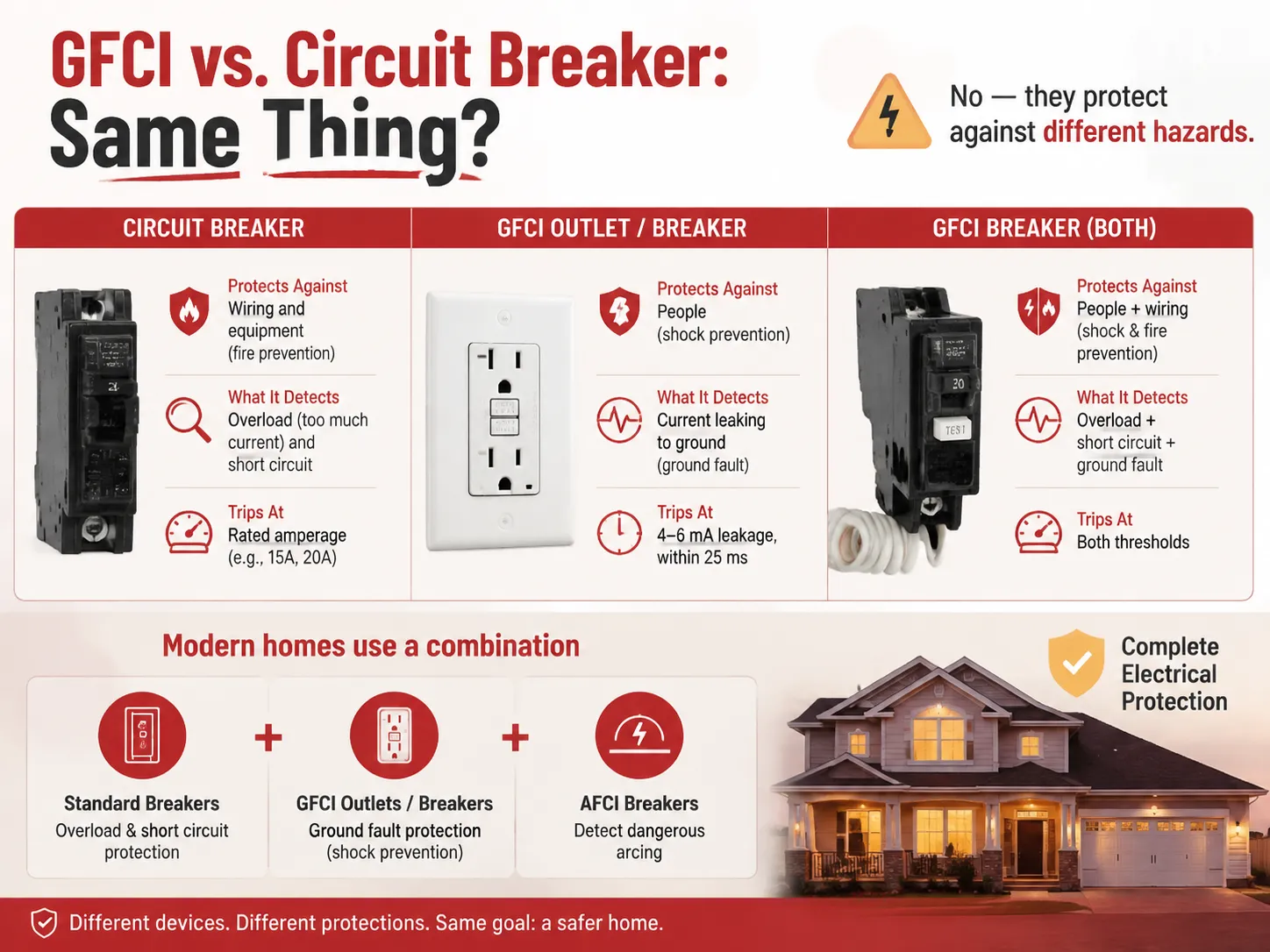
| Устройство | Защищает от | Что обнаруживает | Срабатывает при |
|---|---|---|---|
| Автоматический выключатель | Проводка и оборудование (предотвращение пожара) | Перегрузка (слишком большой ток) и короткое замыкание | Номинальный ток (например, 15A, 20A) |
| защиты для ванных комнат, кухонь, гаражей, наружных розеток, | Люди (предотвращение поражения электрическим током) | Ток утечки на землю (замыкание на землю) | Утечка 4–6 мА, в течение 25 мс |
| Автомат GFCI (оба) | Люди + проводка | Перегрузка + короткое замыкание + замыкание на землю | Оба порога |
Современные жилые дома оснащены стандартными автоматическими выключателями для защиты от перегрузки цепи, розетками или автоматами GFCI (Ground Fault Circuit Interrupter) для защиты от поражения током, а также автоматами с функцией обнаружения опасного уровня дугового тока. Если вы хотите понять связанные устройства остаточного тока, используемые в других странах, наше сравнение RCCB против RCBO охватывает международные версии той же концепции.
Часто задаваемые вопросы
Расшифровывается ли GFCI как прерыватель цепи замыкания на землю?
Да — GFCI означает прерыватель цепи замыкания на землю. Это правильное определение, приведенное в Национальном электрическом кодексе (NFPA 70), UL 943 и всеми ведущими производителями. GFCI контролирует ток, проходящий по фазному проводу, относительно возврата по нейтральному проводу, и отключает цепь почти за 1/40 секунды, если разница достигает примерно 4-6 миллиампер (замыкание на землю). Все другие варианты, такие как помехи цепи замыкания на землю, являются неправильными.
Что не следует подключать к GFCI?
Приборы, которые могут быть опасны при потере питания: холодильники (порча продуктов), дренажные насосы (затопление), медицинское и жизнеобеспечивающее оборудование (угроза жизни), а также важные компьютеры/серверы (риск потери данных). Тем не менее, кодекс все равно требует наличие GFCI во многих таких местах. В большинстве случаев это можно обеспечить с помощью выделенной цепи, автомата GFCI с сигнализацией или резервного аккумулятора; защиту нельзя игнорировать. Обратитесь к специалисту для вашей ситуации и проверьте местные нормы.
Что означает GFCI для установки цепей, главного предохранителя, цепи импульсного замыкания на землю, установки цепи замыкания на землю?
Правильный ответ — устройство защитного отключения (УЗО). Все остальные варианты неверны; “grand fuse circuitry” ошибочно принимает УЗО за предохранители; “impulse” не имеет отношения к работе УЗО; а “ground fault circuitry installation” описывает общую установку, а не устройство. Термин, соответствующий определению, приведённому в NEC и UL, — только ground fault circuit interrupter — устройство, которое отключает цепь при обнаружении утечки на землю.
Что может вызвать срабатывание устройства защитного отключения (GFCI)?
Когда GFCI обнаруживает утечку электрического тока на землю (4–6 мА), он срабатывает. Обычно это происходит по следующим причинам: наличие влаги или воды в зоне розеток (например, дождь, пар, влажные подвалы); неисправные приборы с повреждёнными проводами или короткими замыканиями внутри; утечка на землю в проводке (повреждённая изоляция); перегрузка цепи из-за подключения слишком большого количества устройств; неисправности на розетках, защищаемых одним GFCI; неисправные старые или изношенные GFCI (срок службы около 10-15 лет); и помехи, создаваемые крупными электродвигателями. Если GFCI срабатывает слишком часто, необходимо отключить все устройства в цепи. Устройство нужно сбросить и подключать оборудование по одному, чтобы выявить источник неисправности, либо обратиться за помощью к профессиональному электрику.
Ссылки
- NFPA 70 (Национальный электрический кодекс) — Авторитетный кодекс, определяющий “устройство защитного отключения” и указывающий места обязательной установки GFCI (Статья 210.8, Статья 680).
- UL 943 — Стандарт безопасности для устройств защитного отключения — Стандарт UL, сертифицирующий GFCI, устанавливающий порог срабатывания 4–6 мА и время отключения 25 мс.
- Безопасность электробезопасности OSHA — Руководство по безопасности на рабочих местах США по использованию GFCI в строительстве и промышленности, подтверждающее правильную терминологию и требования к применению.
- Международного фонда электрической безопасности (ESFI) — Некоммерческая организация, предоставляющая потребительское образование по тестированию, установке и жизненно важной роли защиты от утечек тока.
- Безопасность электробезопасности CPSC — Данные Комиссии по безопасности потребительских товаров США о предотвращённых поражениях электрическим током благодаря GFCI и рекомендации по безопасности в домашних электросетях.
- U.S. Department of Energy — Работа розеток с GFCI — Практические рекомендации по работе розеток с GFCI, их ежемесячному тестированию и причинам срабатывания.
Заключение
Очевидно, что GFCI означает Ground Fault Circuit Interrupter, а не “ground fault circuit interference”. Слово “interrupter” используется, так как оно определяет функцию данного устройства — временно разрывать цепь при обнаружении утечки на землю. Слово “interference” же означает помеху, вызывающую нарушение нормальной работы, что абсолютно противоположно функциям GFCI.
Вот что следует помнить:
- Термин — interrupter, что официально подтверждено NEC, UL 943, OSHA и всеми производителями.
- GFCI сравнивает токи на входе и выходе; срабатывает при утечке 4-6 мА за миллисекунды.
- Он защищает человека, но не провода, поскольку защита цепи предотвращает перегрузку, а GFCI работают для предотвращения поражения электрическим током.
- Убедитесь, что GFCI тестируются ежемесячно с помощью кнопок TEST и заменяются каждые 10-15 лет.
- Избегайте подключения оборудования жизнеобеспечения и хранения продуктов к цепям с GFCI, где срабатывание может быть опасным — вместо этого выбирайте цепи без GFCI или с сигналами тревоги, если это разрешено нормативами.
В следующий раз, когда вы увидите в интернете фразу “GFCI означает помехи в цепи утечки на землю”, вы точно будете знать, что это неверно и почему.